Speakers
Informatics Europe logo
SONO !UI
  • Register

ECSS brings together leading voices in Informatics to share insights on emerging trends, challenges, and strategic priorities in research and education. The 2026 edition continued this tradition, showcasing thought leaders driving change across Europe.

Click a speaker’s photo to learn more. Further names and details will follow.

Leaders Workshop

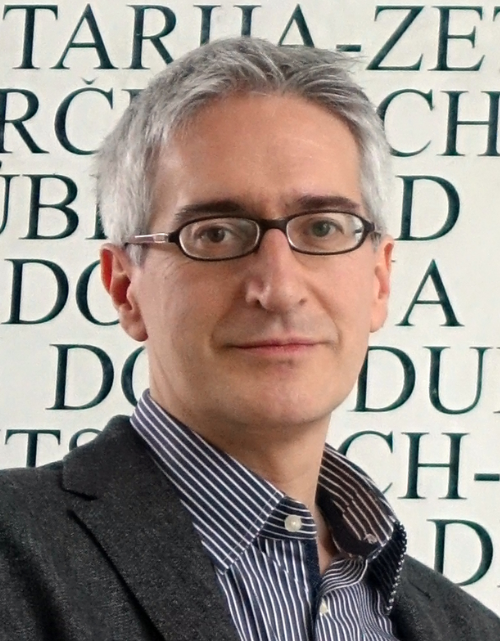
Carlos Baquero

Carlos Baquero

University of Porto (Portugal)

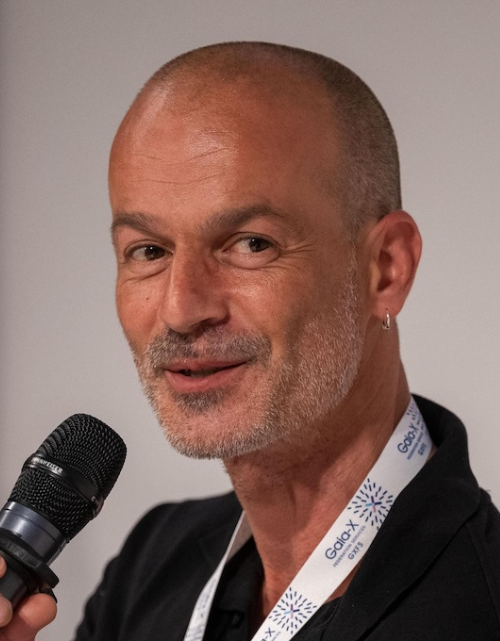
Gregor Engels

Gregor Engels

Bielefeld University (Germany)
Michel Chaudron

Michel Chaudron

Eindhoven University of Technology (the Netherlands)
Giovanni Russello

Giovanni Russello

University of Auckland (New Zealand)
  • Carlos Baquero
  • Gregor Engels
  • Michel Chaudron
  • Giovanni Russello
  • Carlos Baquero

    Beyond Traditional Peer Review: Disruptions and Opportunities in Scientific Publishing

    Abstract

    In today’s world, we are witnessing several challenges to the traditional formats of scientific publishing as a mechanism for sharing, validating, and receiving feedback on new ideas. These disruptions include over-reliance on metrics, predatory practices in publication venues, and metrics gaming by authors. Some of these behaviours not only hurt the development of science and add noise to the system, but also can ruin the career development of researchers. A second-order effect is the overload of the classic peer-review system. With increasingly capable AI agents, it looks as though the overload is poised to intensify, but maybe the same tools can also help transform the evaluation mechanisms and offer a fresh approach to replicability of results.

    Short Bio

    Carlos Baquero is a Professor at the Department of Informatics Engineering of the University of Porto in the field of Distributed Systems. His work covers topics such as probabilistic data structures, causality tracking, CRDTs, and distributed algorithms in general. He tries to address fundamental problems that can have a practical impact on actual systems, and some of the resulting research has been applied in production systems worldwide. He writes regularly for the Blog@CACM.

    Read More

  • Gregor Engels

    Digital Twin of Universities: a Human- and Data-centric Digital Transformation Approach for Future-oriented Universities

    Details will follow.

    Short Bio

    Between 1991 and 1997, Gregor Engels held the position of Chair of Software Engineering and Information Systems at the University of Leiden in the Netherlands. Since then, he has been a professor of Informatics at Paderborn University in Germany. Following his retirement in 2024, he became a senior professor at Bielefeld University in Germany, where he acts as a strategic advisor for the digital transformation of universities.
    He was the chairperson of the Software Innovation Lab at Paderborn University, which is part of the technology transfer institute SICP – Software Innovation Campus Paderborn. He is a founding member of Informatics Europe, a network organization of computer science departments across Europe.
    His research interests lie in socio-technical systems, model-driven software development, enterprise architecture, digital twins, and software quality assurance. He is involved in numerous initiatives examining the impact of computer science on the future of work, education, enterprises and society.
    He has published over 320 peer-reviewed scientific contributions and supervised 50 PhD projects. He has taught for over 40 years at bachelor’s, master’s and PhD level, as well as in professional education programmes.

    Read More

  • Michel Chaudron

    Doing Strategy in Academia: From Plans to Impact

    Short Bio

    Professor Michel R. V. Chaudron is a Full Professor of the Software Engineering group at Eindhoven University of Technology (TU/e), within the Department of Mathematics and Computer Science.
    With over two decades of academic experience, Professor Chaudron has previously held positions at the University of Gothenburg/Chalmers University of Technology (Sweden), Leiden University and at CMG (now CGI) as a professional software engineer.
    His research interests encompass software architecture, software design, software modelling, and empirical studies in industrial software engineering practice. Recently, he has focused on the architecting digital twins of the human body and on integrating AI in software development processes. He also works towards increasing inclusiveness of academics from the ‘Global South’ in the software engineering community. He is an active supporter of the Euromicro Software Engineering and Advanced Applications conference.

    Read More

  • Giovanni Russello

    Doing Strategy in Academia: From Plans to Impact

    Short Bio

    Professor Giovanni Russello is a Cyber Security specialist and the Head of the School of Computer Science at the University of Auckland, New Zealand. Giovanni previously served as the Director of the Cyber Security Research Programme, a multi-million-dollar project funded by the Ministry of Business, Innovation, and Employment, aimed at enhancing New Zealand’s cyber security posture and fostering collaboration between New Zealand and Australian researchers.
    Additionally, he is the founding Co-Director of the Cyber Security Foundry, the first multi-disciplinary center in New Zealand for Cyber Security, focused on strengthening collaboration between industry and academia. From 2013 to 2014, Giovanni held the position of founding CEO at a startup targeting the smartphone security market. His research interests include human-centered cyber security, policy-based security systems, privacy and confidentiality in cloud computing, smartphone security, and applied cryptography.

    Read More

  • Carlos Baquero
  • Gregor Engels
  • Michel Chaudron
  • Giovanni Russello

Education Research Workshop

Antonio Bucchiarone

Antonio Bucchiarone

University of L’Aquila | Fondazione Bruno Kessler (Italy)
Ana Belen Gil

Ana Belen Gil

University of Salamanca (Spain)

Kim Mens

Kim Mens

Université catholique de Louvain (Belgium)
Simona Motogna

Simona Motogna

Babeș-Bolyai University (Romania)

Enrico Nardelli

Enrico Nardelli

University of Rome "Tor Vergata" (Italy)
Jan Vahrenhold

Jan Vahrenhold

University of Münster (Germany)

  • Antonio Bucchiarone
  • Ana Belen Gil
  • Kim Mens
  • Simona Motogna
  • Enrico Nardelli
  • Jan Vahrenhold
  • Antonio Bucchiarone

    AIM-PRO: Building AI Literacy for Multidisciplinary Professional Readiness and Outreach

    Abstract

    As artificial intelligence reshapes professional and educational landscapes across Europe, a critical gap persists between the rapid advancement of AI technologies and the capacity of institutions and individuals to adopt them meaningfully. AIM-PRO (AI Literacy for Multidisciplinary Professional Readiness and Outreach) is a 36-month Erasmus+ Alliance for Innovation project, funded by the European Union and co-supported by Movetia, that directly addresses this challenge. Bringing together 15 partner organisations across 9 European countries, AIM-PRO develops open, scalable frameworks and tools to embed AI literacy within higher education institutions, vocational education and training providers, and small and medium enterprises. The project is structured around three interconnected skill pillars: deep tech (AI literacy), green skills (Sustainable AI), and resilience and entrepreneurial skills (AI and EntreComp). This presentation introduces the vision, goals, and conceptual foundations of AIM-PRO. It outlines how the project integrates four technological approaches, Open Education Technology, Generative AI, Model-Driven Engineering, and Digital Twin Engineering, to produce validated, competency-aligned learning resources. It further describes how AIM-PRO synthesises major European frameworks (DigComp, GreenComp, EntreComp, and UNESCO AI competency guidelines) into a unified model aligned with EQF levels 5 and 6, supported by open badge certification and digital credentials. AIM-PRO represents a collaborative, research-grounded response to the urgent need for responsible, inclusive, and future-ready AI education across Europe.

    Short Bio

    Antonio Bucchiarone is an Associate Professor at the University of L’Aquila and a Visiting Fellow at Fondazione Bruno Kessler (FBK) in Trento, Italy. His research focuses on software engineering for adaptive socio-technical systems, with a strong emphasis on the design and development of educational tools and AI-driven agents for learning. He specializes in adaptive and motivational digital systems, gamification, and applying Model-Driven Engineering to create models, languages, and platforms that foster engagement and adaptability.
    He is the Coordinator of the Erasmus+ AIM-PRO project (AI Literacy for Multidisciplinary Professional Readiness and Outreach) and has been actively involved in numerous national and European R&D initiatives, including the Erasmus+ ENCORE project on open educational resources. He serves as Senior Member of the IEEE and as Associate Editor for several journals, including IEEE Software, Journal of Object Technology (JOT), IEEE Transactions on Education, IEEE Transactions on Games, IEEE Technology and Society, and the International Journal of Serious Games.

    Read More

  • Ana Belen Gil

    TBA

    Short Bio

    Ana Belén Gil currently works at the Department of Computer Science and Automation , Universidad de Salamanca. Ana does research in Artificial Intelligence, Human-computer Interaction, Recommender systems and Databases.

    Read More

  • Kim Mens

    TBA

    Abstract

    Details will follow.

    Read More

  • Simona Motogna

    TBA

    Abstract

    Details will follow.

    Read More

  • Enrico Nardelli

    TBA

    Abstract

    Details will follow.

    Read More

  • Jan Vahrenhold

    TBA

    Abstract

    Details will follow.

    Read More

  • Antonio Bucchiarone
  • Ana Belen Gil
  • Kim Mens
  • Simona Motogna
  • Enrico Nardelli
  • Jan Vahrenhold

ECSS 2026 is organised by

Logo 1 H 300dpi       FEUP DEI cor

Silver Sponsors

Bronze Sponsors

         ARMIS Deloitte CTW BMW
rc logo main INESCTEC synopsys