
ECSS 2013 - Program/Registrations/Accommodation
Informatics and Innovation
08-09 October 2013, Amsterdam, Netherlands
With Pre-Summit Workshops on 7 October 2013
Deadline for Early Registration Extended to September 6, 2013 - Register Now!
The program of the 9th European Computer Science Summit, ECSS 2013, with the theme "Informatics and Innovation?" is now online.
As for the previous Summits, the program consists of special invited talks, workshops, panels and other interactive sessions devoted to common issues, problems and proposals in the area of Informatics (Computer Science/Computing/ICT). Special features of the 2013 Summit are as follows:
- Special focus on "Informatics and Innovation?"
- Pre-summit Workshop for Deans, Department Chairs and Research Directors on October 7, 2013 (see details below)
- Pre-summit Workshop on Innovation Management & Technology Entrepreneurship for Faculty on October 7, 2013 (see details below)
- Invited talks from key players in the field (see details below)
- Submitted talks by colleagues from all over Europe and beyond
The Summit is devoted to important and timely strategic issues and trends regarding all aspects of informatics: education, research, funding, entrepreneurship, management, career development, and policies. The speakers are an impressive group of world-class scientists and entrepreneurs:
- Francois Bancilhon, Data Publica, France
- Carl-Christian Buhr, European Commission, Belgium
- Frank van Harmelen, Vrije Universiteit Amsterdam, Netherlands
- Heleen Kist, Independent Strategy Consultant, United Kingdom
- Erik Meijer, Delft University of Technology, Netherlands and Applied Duality Inc., USA
- Anka Mulder, Delft University of Technology, Netherlands
- Pamela Zave, AT&T Laboratories, USA
Beyond this exciting group of speakers and discussions, the conference includes also a session with presentations selected from contributed papers and the Award Ceremony of the 2013 Informatics Europe Best Practices in Education Award.
Informatics Europe Members are specially invited to participate in the Informatics Europe General Assembly and Informatics Europe Initiatives Session (on October 8, afternoon) where important aspects of the association activities and administration will be presented and discussed, as well as plans for future activities and development.
Registrations
Registration to the conference is now open. Register early to benefit from the discounted fees. The deadline for early registration is 20 August 2013.
For details on the fees and current offers as well to register visit the conference registration page.
Accommodation
Because October is a busy month for the Amsterdam Hotels the local committee already booked some hotel rooms for you. To benefit of the discounted prices negotiated with the hotels, please use the link when you make your reservation. Please observe the respective hotel deadlines:
https://www.informatics-europe.org/ecss/ecss-2013/accommodation-2013.html
Come join this exciting and important event in the field of Informatics and participate by submitting your contribution!
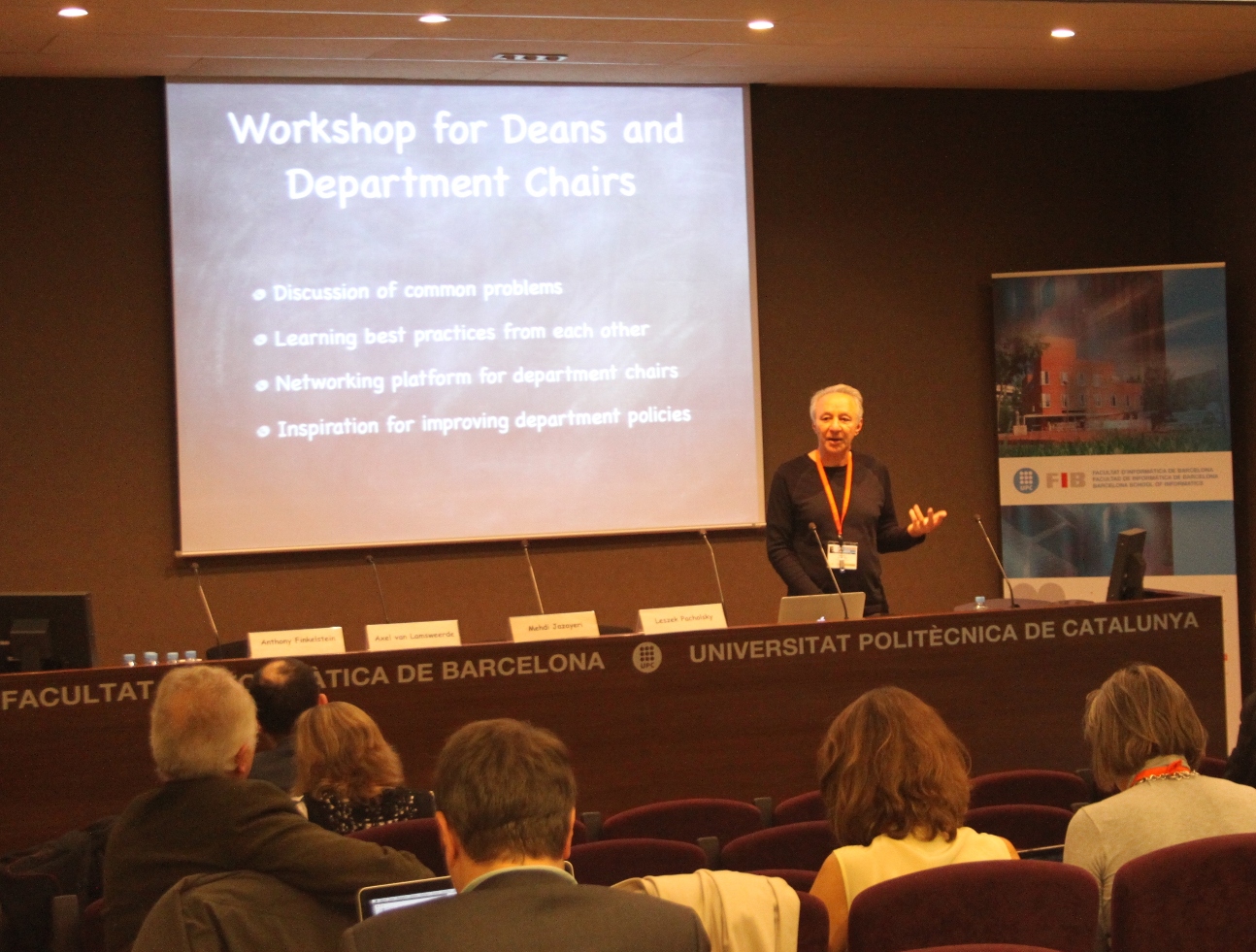
Workshop for Deans, Department Chairs and Research Directors
October 7, 2013 - CWI (room L016), Amsterdam, The Netherlans
Click here for a detailed program
Positioning of computer science within the university: hardcore or interdisciplinary: how to reach out?
Workshop chair: Prof. Mehdi Jazayeri, Faculty of Informatics, University of Lugano
With the expansion of informatics and its ever-growing pervasiveness in other disciplines and society in general, department chairs at informatics groups face ever-increasing challenges. The goal of the workshop is to provide a networking opportunity for department chairs, old and new, to share experiences, common challenges, practical strategies, and best practices. It provides a forum for strengthening your leadership and management competencies by exchanging best practices and by building relationships among department heads at European Informatics research institutions. This year's meeting focuses on an issue that is raised due to the amazing success of computer science: how to position computer science within the university, how to collaborate with other departments, how to identify interdisciplinary collaborations that benefit all parties, how to deal with the explosion of X-informatics and computational-X. There are many related issues: should computer science offer "service" courses or should we help other departments create their own courses? Is doing interdisciplinary research in conflict with doing hard-core computer science? Which disciplines are more amenable to collaboration with computer science? Should young researchers concentrate on computer science or collaboration with other disciplines?
The workshop will be a mixture of discussions/knowledge sharing/exchange of practical guidelines in smaller groups. Please bring the issues you are facing and approaches you have found to work. Both new and experienced department heads are invited for an exchange of best practices, new ideas and common challenges and practical strategies. Benefits for participants include:
- Learning best practices from heads of European Informatics departments and research labs
- Offering a networking platform for heads of European Informatics departments and research labs
- Inspiration for improving department processes
Speakers:
- Anthony Finkelstein, University College London, UK
- Mehdi Jazayeri, University of Lugano, Switzerland
- Tommi Mikkonen, Tampere University of Technology, Finland
- David Rosenblum, National University of Singapore, Singapore
- Wilhelm Schäfer, Paderborn University, Germany
--------Detailed Program - Monday, October 7, 2013----------
Workshop will be at the CWI, Room L016
10:15-10:30 Coffee
10:30-11:30 Workshop Opening: Mehdi Jazayeri, University of Lugano
"Positioning of informatics within the university: collaboration and competition" [Slides]
11:30-12:30 Anthony Finkelstein, University College London
"Been there, done that, got the t-shirt!"
12:30-14:00 Lunch (at the hall outside the room)
14:00-15:00 Tommi Mikkonen, Department of Pervasive Computing, Tampere University of Technology
"Software - the new math" [Slides]
15:00-16:00 Wilhelm Schäfer, Paderborn University
"Informatics as the key driver of a university´s strategic development plan" [Slides]
16:00-16:30 Coffee Break
16:30-17:30 David Rosenblum, National University of Singapore
"The mother of all disciplines?" [Slides]
17:30-17:50 Discussion
17:50 Closing of the workshop
18:00-19:30 Welcome drink at Restaurant Polder (across the street from CWI)
Workshop Innovation Management & Technology Entrepreneurship for Faculty
October 7, 2013 - CWI (room L017), Amsterdam, The Netherlands
Click here for a detailed program
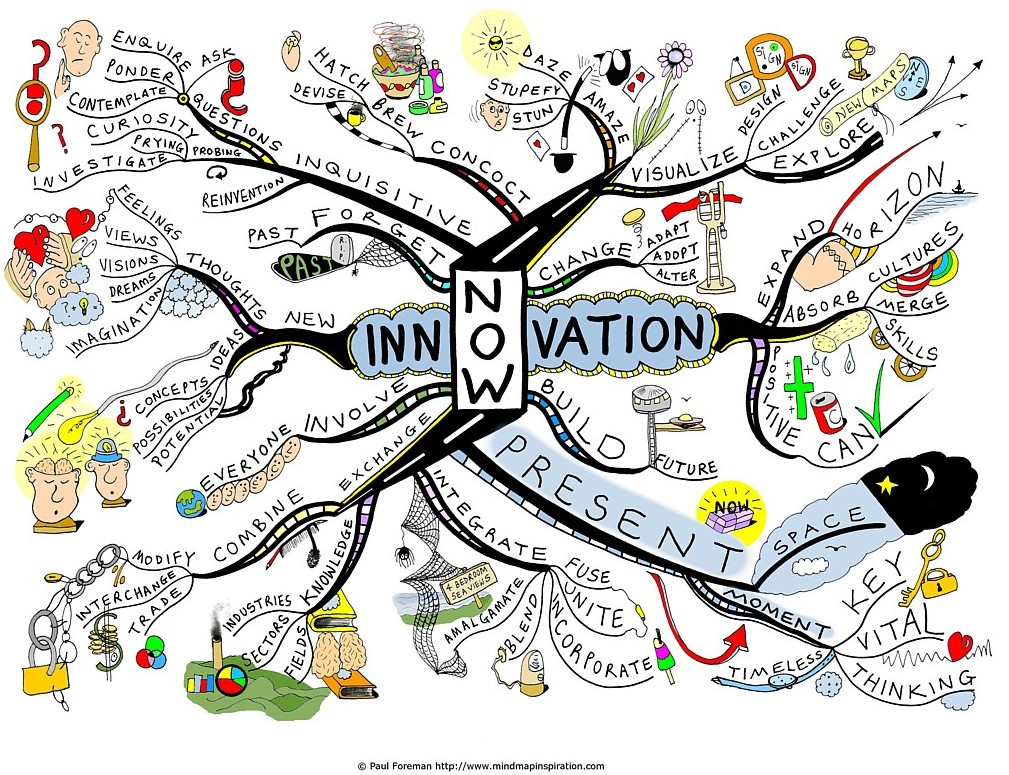
Innovation and entrepreneurship in the space between "magic" and "science"
Workshop chairs: Mark Harris, Innovaventures, Jeroen Klijs, TU München
Taking a pragmatic view of the fields helps to demystify them. One must recognize that the field of start-ups and entrepreneurship is not yet a «pure» science. Outcomes cannot yet be guaranteed.
In Math 2+2=4, all the time.
In Physics most experiments work 95% of the time. 200 years ago, it was maybe 60% of the time. Enough not to be random, but still too complex to understand and control all of the complexities.
Even recently CERN had to do more than 1 trillion collisions to be able to prove the Higgs boson subatomic particle.
Entrepreneurship is more like Physics 200 years ago. There is enough knowledge and expertise to be able to get satisfactory results, but still not enough to be as predictive as Mathematics.
Most expertise has been acquired through years of "experimenting" and "evaluating".
This workshop covers in a distilled fashion the theory of innovation management and technology entrepreneurship as well as gives practical advice and examples to build an efficient European technology transfer system.
Workshop Program - Monday, October 7, 2013
Workshop will be at the CWI, Room L017
09:00-12:30 Morning Session
Coffee break: 10:15-10:45
Innovation Management and Technology Entrepreneurship (distilled from a three week course) [Slides]
Part 1 – The Concepts of Entrepreneurship and Technology Entrepreneurship
Technology Entrepreneurship is filling a gap in entrepreneurship education. While students of business schools are sometimes (elective) educated in the principles of entrepreneurship, this is not so for the technical disciplines. Yet, the technical disciplines are where most innovation happens. Students creating new companies out of technical inventions were previously amateur entrepreneurs (lacking formal training). This module is focused on filling this gap and to create professional entrepreneurs.
Topics:
- The Entrepreneurial Process
- The Four Phases of Entrepreneurial Ventures
- The Value of Failure
- The Business Plan
- Venture & Growth Capital
- The Four Steps to the Epiphany(I)
Part 2 – Markets & Customers
It is the technical students that typically innovate and during a very fragile phase are running the new venture, but with a very limited understanding of markets and customers. They assume that a "cool" technological invention will sell itself. Many examples out of the ".com era" show that in most cases the technical students were unable to address market and customer needs and thus failed.
Topics:
- Crossing the Chasm
- The Four Steps to the Epiphany(II)
- Customer Discovery, Customer Validation, Customer Creation, Company Building
- Presenting for Success
Part 3 – Innovation and Innovation Management
This module discusses the different concepts of closed and open innovation, where they have been successful and where they have failed and why. It discusses the innovator's dilemma in managing sustainable innovations within a company and what effect disruptive technologies may have. It discusses technology "S" curves and potential strategies around innovating from inside and acquiring from outside. At the end it focuses on the dangers but also opportunities of globalization on entrepreneurship.
Topics:
- Open Innovation
- The Innovator's Dilemma
- Sustainable and Disruptive Technologies
- Technology "S" curves
- Venture Capital and Private Equity
- Value, Risk and Return in Private Equity
- Entrepreneurship and Globalization
12:30-14:00 Lunch (at the hall outside the room)
14:00-17:30 Afternoon Session
Coffee break: 16:00-16:30
Best practices in managing the valorisation of academia-industry transfer of knowledge [Slides]
Part 1- Introduction to current European practices in innovation management
Knowledge transfer (KT) and valorisation are key to the commercialisation of research and innovation. Therefore, KT and valorisation are an important aspect of innovation management. Companies use KT to turn research and innovation into both new and enhanced products and services. Academia use KT to obtain company budgets. Moreover, to both academia and companies, KT is ever more important to obtain governmental grants. As such, today we will present best practices in KT and valorisation. Moreover, we will provide the understanding required to introduce these best practices at your university.
Topics:
- The European Higher Education Strategy 2020: Understanding governmental grants for the decade to come
- From best practice to best performance: A manual to introducing best practices at your university
Part 2 - The Ulab project: Best practices in valorisation from five leading European universities
To enhance their performance in valorisation, five leading European universities joint forces in the Ulab project: Universidad Politécnica de Madrid, Politecnico di Torino, Technische Universität München, University of Oxford, Paris Institute of Technology. The results of this project are best practices in valorisation, that are meant as an example to all European universities on how to enhance their performance towards the aims set out in the Higher Education Strategy 2020.
Topics:
- Best practices in the design of organisational processes and structures to commercialise knowledge for the TU of the future
- Results of a pilot project for fair participation to enhance both academia-industry interaction and the commercialisation of academic knowledge
- Results of a pilot project where the university ParisTech strengthens the innovative activity in the regional economy to overcome a limited economy near Mougin
- Results of a pilot project to turn start-up companies into multinationals
Part 3 - The IDECAT project: A best practice in innovation management to commercialise academic knowledge Europe-wide
For the IDECAT Network of Excellence we developed a European infrastructure to support the commercialisation of academic knowledge. Both the academics and the CTOs we worked with appreciated this infrastructure. Eventually, the European Commission used this infrastructure as a key argument to name IDECAT the best functioning network of excellence out of nearly 200 similar networks.
Topics:
- A presentation of IDECAT's European infrastructure to commercialise academic knowledge
- Understanding this infrastructure
18:00-19:30 Welcome drink at Restaurant Polder (across the street from CWI)
Conference Program
The program of the ECSS 2013 consists of special invited talks, workshops, panels and other interactive sessions devoted to common issues, problems and proposals in the area of Informatics (Computer Science/Computing/ICT).
Monday, October 7
09:00-17:30 Pre-Summit Workshops
18:00-19:30 Welcome drink at Restaurant Polder (across the street from CWI)
Tuesday, October 8
All talks and sessions will be in Turing Room
08:30-09:00 Registration
09:00-09:30 Welcome and introduction
- Jos Baeten, CWI Director
- Carlo Ghezzi, Lynda Hardman, ECSS 2013 Co-Chairs
- Arie van Deursen, ECSS 2013 Program Chair [Slides]
09:30-11:00 Keynotes
Session Chair: Lynda Hardman, CWI
- 09:30-10:15 - François Bancilhon, Data Publica, France
"The Gap Between the Academic Research World and the Start Up Innovation Scene" [Slides]
- 10:15-11:00 - Heleen Kist, Independent Strategy Consultant, United Kingdom
"The Role of the State in Financing Innovation" [Slides]
11:00-11:30 Coffee break
11:30-12:30 Discussion Panel on Entrepreneurship
Moderator: Hannes Werthner, TU Wien
Panelists:
- Francois Bancilhon, Data Publica, France
- Heleen Kist, Independent Strategy Consultant, United Kingdom
- Carl-Christian Buhr, European Commission, Belgium
- Frank van Harmelen, Vrije Universiteit Amsterdam, The Netherlands
12:30-14:00 Lunch (at Newton room)
14:00-15:30 Keynotes
Session Chair: Antoine Petit, INRIA
- 14:00-14:45 - Frank van Harmelen, Vrije Universiteit Amsterdam, The Netherlands
"Innovative Informatics by Bridging the "Two Cultures": Experiences from the Network Institute" [Slides]
- 14:45-15:30 - Carl-Christian Buhr, European Commission, Belgium
"Innovation in Informatics: The Horizon 2020 Perspective" [Slides]
15:30-16:00 Coffee Break
16:00-16:30 Informatics Europe Initiatives
Session Chair: Carlo Ghezzi, Informatics Europe
- 16:00-16:15 - Lynda Hardman, Informatics Europe
"Booklet: More Women in Informatics Research & Education" [Download Booklet]
- 16:15-16:30 - Carlo Ghezzi, Informatics Europe
"Observatory on Informatics Education in Schools - Informatics Europe and ACM Europe Joint Initiative" [Download Report on Informatics Education in Schools]
16:30-17:00 Submitted Contributions
Session Chair: Carlo Ghezzi, Informatics Europe
- 16:30-16:45 - Jos Roerdink, University of Groningen.
"Advice on submitting Workshop Proposals for the International Lorentz Center, Leiden, The Netherlands" [Slides]
- 16:45-17:00 - Yannis Skulikaris, European Patent Office.
"Patenting Software-related Inventions according to the European Patent Convention: A review of past and present law and practice." [Paper] [Slides]
17:00-18:15 Informatics Europe General Assembly
Session Chairs: Carlo Ghezzi (President), Cristina Pereira (Secretary-General)
19:30- Conference Dinner at the Restaurant Café In den Waag (Nieuwmarkt 4, 1012 CR Amsterdam)
Wednesday, October 9
All talks and sessions will be in Turing Room
08:30-09:00 Registration
09:00-10:30 Keynotes
Session Chair: Bertrand Meyer, ETH Zurich
- 09:00-09:45 - Pamela Zave, AT&T Laboratories, USA
"The Power of Abstraction" [Slides]
- 09:45-10:30 - Erik Meijer, Delft University of Technology, The Netherlands and Applied Duality Inc., USA
"Patents or Open Source, Start up or Enterprise: A Silicon Valley Perspective"
10:30-11:00 Coffee Break
11:00-12:00 Submitted Contributions
Session Chair: Enrico Nardelli, University of Rome "Tor Vergata"
- 11:00-11:15 - Thilo Stadelmann, Kurt Stockinger, Martin Braschler, Mark Cieliebak,
Gerold Baudinot, Oliver Duerr and Andreas Ruckstuhl, Zurich University of Applied Sciences.
"Applied Data Science in Europe: Challenges for Academia in Keeping Up with a Highly Demanded Topic" [Paper] [Slides]
- 11:15-11:30 - Ali Yazici, Alok Mishra, Atilim University, Ankar and Semih Cetin, Cybersoft, Istanbul
- 11:30-11:45 - Martin Kropp, University of Applied Sciences Northwestern Switzerland and Andreas Meier, Zurich University of Applied Sciences
"Teaching Agile Software Development Competences: The Agile Competence Pyramid" [Paper][Slides]
- 11:45-12:00 - Felienne Hermans, TU Delft
"Social Media Presence for Informatics Researchers, Educators, and Departments" [Slides] [Slides Share]
12:00-12:30 Informatics Europe Initiatives
Session Chair: Enrico Nardelli, University of Rome "Tor Vergata"
- 12:00-12:15 - Bertrand Meyer/Cristina Pereira, Informatics Europe
"Report: Informatics Education in Europe: Institutions, Degrees, Students, Positions, Salaries - Key Data 2008-2012" [Download Report]
- 12:15-12:30 - Hans Ulrich Heiss, EQANIE
"EQANIE Progress and Developments"
12:30-14:00 Lunch (at Newton room)
14:00-14:45 Keynote
Session Chair: Arie van Deursen, TU Delft
- Anka Mulder, Delft University of Technology, Netherlands
"Open and Online Education: the End of Education as We Know it?" [Slides]
14:45-15:45 Discussion Panel on Teaching for Innovation
Moderator: Arie van Deursen, TU Delft
Panelists:
- Jan Bergstra, University of Amsterdam (TBC)
- Erik Meijer, Delft University of Technology, The Netherlands and Applied Duality Inc., USA
- Bertrand Meyer, ETH Zurich
- Oscar Nierstrasz, University of Bern
15:45-16:15 Coffee Break
16:15-16:45 Award Ceremony "Informatics Europe Best Practices in Education Award 2013"
Session Chair: Carlo Ghezzi, Informatics Europe
16:45-17:00 Closing Remarks
- Carlo Ghezzi, Lynda Hardman, Arie van Deursen, ECSS 2013 Chairs
17:00- Closing Informal Discussions
Pre-Summit Workshops
On Monday October 7, the day before the main Summit, two special pre-summit workshops will be organized.
Workshop Chair: Mehdi Jazayeri, Faculty of Informatics, University of Lugano
Workshop Chairs: Mark Harris, Innovaventures, Jeroen Klijs, TU München
To see all details, content, speakers, program of each workshop, please follow the respective links above or in the menu at the right.
Call for Submissions

9th EUROPEAN COMPUTER SCIENCE SUMMIT
- ECSS 2013 -
Informatics and Innovation
7-9 October, Amsterdam, The Netherlands
Deadline for Submissions: August 1, 2013
Author's Notification: August 15, 2013
The 9th European Computer Science Summit, ECSS 2013, with the theme "Informatics and Innovation", is soliciting contributions on topics of interest to the ECSS audience throughout Europe: heads (or deans, chairs, etc.) of informatics/computer science/IT departments (schools, faculties); research directors and managers of research centers and laboratories in industry or in public institutions; as well as senior faculty and senior researchers from both academia and industry.
Like its predecessors, the 9th European Computer Science Summit, is a unique opportunity to meet some of the leading decision makers in informatics research and education, and discuss the critical issues of the discipline. The conference will be held in Amsterdam, The Netherlands, one of the most beautiful cities in the world, filled with culture, art, and innovation.
The Summit is devoted to important and timely strategic issues and trends regarding all aspects of informatics: education, research, funding, entrepreneurship, management, career development, and policies. This year’s speakers have been selected in connection to the ECSS 2013 theme “Informatics and Innovation”. We are proud to announce that the following thought leaders in research and education in informatics and innovation have agreed to deliver a keynote presentation:
- Francois Bancilhon, Data Publica, France
- Christian Buhr, European Commission, Belgium
- Frank van Harmelen, Vrije Universiteit Amsterdam, The Netherlands
- Heleen Kist, Independent Strategy Consultant, United Kingdom
- Erik Meijer, TU Delft, The Netherlands and Applied Duality Inc, United States
- Anka Mulder, TU Delft, The Netherlands
- Pamela Zave, AT&T Laboratories, United States
The special theme of this year’s summit is Informatics and Innovation. As stated by Peter Denning, “an idea that changes no one’s behavior is only an invention, not an innovation.” Thus, ECSS 2013 will be devoted research and education in informatics that is aimed at societal impact. ECSS 2013 aims to enable educators, researchers, managers, and other experts in the field to assess and discuss organizational matters that are needed to stimulate innovation in computer science education and research. Therefore, specific attention will be devoted to such topics as entrepreneurship, impact via open source, publishing via open access, impact via patents, and online learning and massively online open courses (MOOCs).
__________________________________________________
ECSS 2013 is soliciting contributions on all topics of interest to its intended audience, including (but not limited to) the following:
- Organizational leadership and policies in research and education in informatics.
- Inter-university collaboration and coordination to promote and strengthen informatics in Europe.
- Research funding in informatics: availability, coordination, experience reports, policies, personal grants, role of the government, role of industry.
- Interdisciplinary research and education for informatics.
- Informatics and education: MOOCs, open learning, online learning, peer evaluation, engineering skills.
- Informatics and society: Ethics, awareness, image, importance, school education, student enrollment.
- Academic careers in informatics: performance indicators in research as well as in education, personal growth, international perspectives.
- Informatics and scholarly publishing: Open access, conferences and journals, preprint practices, social media.
- Informatics and innovation: entrepreneurship, patents, open source, and societal impact.
__________________________________________________
Submitting Contributions
To contribute to the Informatics Europe 2013 Summit program, please submit an extended abstract of your position paper by August 1, 2013. Submissions will be evaluated and selected by the ECSS 2013 program committee on the basis of relevance to (and capacity of) the program. Proposals may aim at a 15 minute presentation or demonstration, and should consist of an extended abstract containing:
- A header with the title of your contribution, your name, position, and affiliation.
- A clear description of your contribution.
Extended abstracts should be formatted in the IEEE Formatting Guidelines. You can use this MS Word template or this LaTeX class. Abstracts should be at most 2 pages in length, and submitted in pdf to the Easy Chair ECSS 2013 conference submission site:
https://www.easychair.org/account/signin.cgi?conf=ECSS-ams-2013
- Deadline for submissions: August 1, 2013.
- Author's Notification: August 15, 2013.
The selected extended abstracts will be made available to the conference attendees and on the Informatics Europe site.
Come join this exciting and important event in the field of Informatics and
participate by submitting your contribution!
Conference Topics
The European Computer Science Summit 2013 has the theme “Informatics and Innovation”. Possible topics for submitted papers include (non-exhaustive list):
- Organizational leadership and policies in research and education in informatics.
- Inter-university collaboration and coordination to promote and strengthen informatics in Europe.
- Research funding in informatics: availability, coordination, experience reports, policies, personal grants, role of the government, role of industry.
- Interdisciplinary research and education for informatics.
- Informatics and education: MOOCs, open learning, online learning, peer evaluation, engineering skills.
- Informatics and society: Ethics, awareness, image, importance, school education, student enrollment.
- Academic careers in informatics: performance indicators in research as well as in education, personal growth, international perspectives.
- Informatics and scholarly publishing: Open access, conferences and journals, preprint practices, social media.
- Informatics and innovation: entrepreneurship, patents, open source, and societal impact.
Registration
To enroll in the ECSS 2013 and in the Pre-Summit Workshops you need to register.
Your registration will be completed after two quick steps:
1) To fill in your data in the "Registration Form"
2) To proceed with the payment for the events you want to attend (bank transfer or credit card)
Please follow this link to start your registration!
The registration fee of the ECSS 2013 (main conference, 08-09 October) covers:
- Participation in all activities of the Summit
- Coffee breaks, lunches
- Conference Gala Dinner on Tuesday, October 8 *
- Conference materials
The registration fee of either of the two parallel Pre-Summit Workshops (07 October) covers:
- Participation in all activities of the given Workshop
- Coffee breaks, lunches
- Workshop materials
*Companion invitations for the Gala Dinner are available for purchase, they are not included in the registration fee.
Prices Registration Fees
NORMAL REGISTRATION (After September 6)
- Informatics Europe Members
- Pre-Summit Workshop for Deans and Department Chairs (07 October): EUR 90
- Pre-Summit Workshop Innovation Management & Technology Entrepreneurship for Faculty (07 October): EUR 90
- ECSS (08-09 October): EUR 350
- Non-Members
- Pre-Summit Workshop for Deans and Department Chairs (07 October): EUR 140
- Pre-Summit Workshop Innovation Management & Technology Entrepreneurship for Faculty (07 October): EUR 140
- ECSS (08-09 October): EUR 450
EARLY REGISTRATION (Before September 6)
- Informatics Europe Members
- Pre-Summit Workshop for Deans and Department Chairs (07 October): EUR 70
- Pre-Summit Workshop Innovation Management & Technology Entrepreneurship for Faculty (07 October): EUR 70
- ECSS (08-09 October): EUR 300
- Non-Members
- Pre-Summit Workshop for Deans and Department Chairs (07 October): EUR 120
- Pre-Summit Workshop Innovation Management & Technology Entrepreneurship for Faculty (07 October): EUR 120
- ECSS (08-09 October): EUR 400
Discounted fees for early registration are valid only until September 6.
Register early to benefit from the discounts!
Special Offer for Prospective Members of Informatics Europe
Is your institution a member of Informatics Europe?
If your institution would like to join Informatics Europe as a regular member (Regular or Federated Academic Membership only) we have this year a special offer:
The value of your conference registration fee (ECSS 2013 and/or one of the Pre-Summit Workshops) will be discounted from the annual membership fee of your institution when joining Informatics Europe.
The offer grants the discount of up to TWO individual registration fees per institution. The membership with Informatics Europe extends to all members of your institution (department or research laboratory); members are institutions, rather than individuals, who participate through their institutions. For all details about the membership with Informatics Europe, please visit the How to Join page.
For further information on how to benefit from the offer please contact our Secretary-General (
Venue
Founded in 1946, CWI is the national research institute for mathematics and computer science in the Netherlands and is located at Science Park Amsterdam. The institute has a strong international position and is renowned for its high quality research. CWI's strength lies in the discovery and development of new ideas, and the transfer of knowledge to other scientific areas, society at large and trade and industry in particular. Research of CWI is applied for instance in payment systems, cryptography, telecommunications, public transport, smart energy networks and meteorology. CWI is part of the Netherlands Organisation for Scientific Research (NWO).
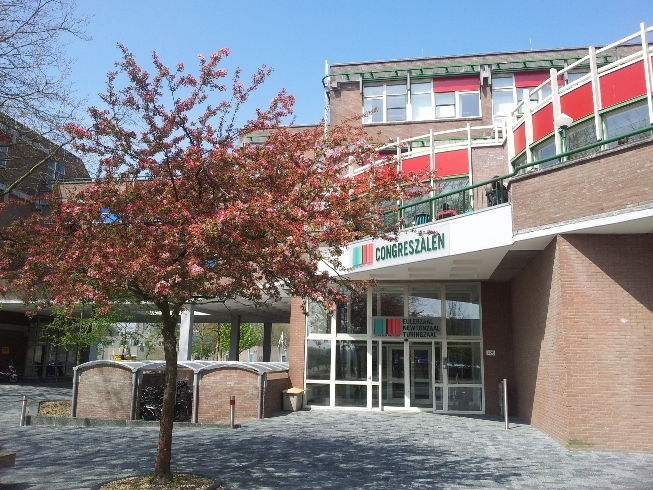
With 55 permanent research staff, 40 postdocs and 70 PhD students, CWI is a compact institute that lies at the heart of European research in mathematics and computer science. Much of its research is conducted as part of national and international programmes. CWI maintains close contacts with the industry and academic world, both in the Netherlands and abroad. More than half of its permanent research staff is also associated with universities as part-time professors. This research network strengthens CWI's reputation, acting as a magnet in attracting academic talent. The postdocs and PhD students originate from more than 25 different countries.
More information about CWI: www.cwi.nl
Keynote Speakers
 François Bancilhon is currently the CEO and co-founder of Data Publica, a start up of the open data and big data space in Paris, France. He has been CEO of Mandriva, one of the top world Linux publishers; CIO of SomaLogic, a bio-tech company in Boulder, Colorado; CEO of Arioso, an Internet startup in Denver, Colorado, and CTO of Ardent Software, a Data Warehousing company in the Boston area. In the 90's he co-founded and directed O2 Technology, an object database software vendor, in Versailles, France. He is also a co-founder of several startups (including Xylème) and chairman of the board of Ucopia, a Paris wifi start up.
Before becoming an entrepreneur François was a researcher at INRIA, France, at MCC in Austin, USA and a Professor at the University of Paris. He holds an engineering degree from the École des Mines de Paris, a PhD from the University of Michigan and a Thèse d'État from the University of Paris XI.
ECSS 2013 Keynote Speech:
The gap between the academic research world and the start up innovation scene.
I have been watching the academic research scene and the start up space in Europe over the last 10 years and actively participated in at least one of these worlds. I remain impressed by the remarkable quality of most of the academic research in Europe. I am also impressed by the energy and enthusiasm of the young startupers in many European capitals. In my current and past experiences, I have tried, in all the startups I have worked for, to benefit from the existing R&D produced by academic labs, i.e. to transfer technology from the academic to the industrial world. I still feel, that (i) there could be more transfer than there is today and (ii) that the gap is growing rather than closing. I will try to illustrate my point and suggest some ideas which we could use to improve the situation.
 Carl-Christian Buhr is an Economist and Computer Scientist; since 2010 member of the cabinet of Digital Agenda Commissioner and EU Commission Vice-President Neelie Kroes; advising Commissioner Kroes on ICT research and innovation policy, including access to scientific information, research infrastructures including e-infrastructures as well as standardisation, interoperability and industrial topics such as the European Cloud Computing Strategy and the European Electronics strategy."
ECSS 2013 Keynote Speech:
Innovation in Informatics: The Horizon 2020 Perspective
With the next EU framework programme for research and innovation support, Horizon 2020, just finalised, this is a good opportunity to present what is planned for the computer science/ICT area for the period 2014 to 2020. The talk will in particular make the link between research support and policy priorities and give first indications of ICT priorities for the years 2014 and 2015.

Frank van Harmelen is a professor in Knowledge Representation and Reasoning at the VU University in Amsterdam, with a PhD in Artificial Intelligence from the University of Edinburgh. He is one of the designers of OWL, the W3C standard Web Ontology Language, which is now widely deployed across the world. He has published over 200 papers, many of them in leading journals and conferences, and many of them highly cited, in areas such as automated theorem proving ('80s), knowledge-based systems ('90s) and Semantic Web (since 2000). One of his five books is the first textbook on Semantic Web technology (now deployed in university courses across the world, with translations in Spanish, Greek, Japanese, Chinese and Korean). He has chaired several major conferences, and was the scientific director of the Large Knowledge Collider project that developed technology for very large scale semantic web processing. He is currently Director of the Network Institute (http://www.networkinstitute.org), a large interdisciplinary collaboration between researchers in Computer Science, Social Sciences and the Humanities.
ECSS 2013 Keynote Speech:
Innovative Informatics by bridging the "Two Cultures": experiences from the Network Institute
C.P. Snow's 1959 "Two Cultures" lecture is still remembered for its thesis that "the intellectual life of the whole of western society" was split into the titular two cultures — namely the sciences and the humanities. What is often forgotten is that Snow argued that this split was a major hindrance to solving the world's problems. This is as much true today (if not more so) than it was in 1959.
The mission of the Network Institute at the VU University Amsterdamis is exactly to bridge the gap between Informatics on the one hand, and the humanities and social sciences on the other. I will try to show in this presentation that not only does this collaboration help to solve real problems in the world, but it also simply leads to good Informatics research, all the way down to fundamental theoretical problems.
I will discuss the mission of the Network, and how we have tried to organise and engage researchers from both "cultures". I will describe some example results of our interdisciplinary research, with an emphasis on the Informatics innovation, and I will discuss lessons learned.

Heleen Kist is a strategy consultant, interim manager and commercial mediator. Working independently for over 10 years, Heleen has advised a range of private and public sector organisations, while focusing on areas of growth strategy, innovation, access to finance and public-private partnerships. She has been a start-up CEO and (interim) manager for SMEs and VCs. She was previously an engagement manager at McKinsey & Company with particular interest in the healthcare sector, and a technical brand manager at Procter & Gamble.
Heleen is considered an expert in access to finance, having led the set-up of the innovative Scottish Co-Investment Fund and of the North East JEREMIE fund, the first one in England. She is currently a non-Executive Director for Capital for Enterprise, the UK government's centre for expertise and delivery of public sector access to finance interventions, and she sits on the Access to Finance Expert Group at the UK government's department of BIS. She is also Chair of Scottish Health Innovations Ltd, an organisation aiming to commercialise innovation from the Scottish national health service.
Heleen has a MSc in Chemistry from Leiden University and a MSc in Engineering- Economic Systems and Operations Research from Stanford University.
ECSS 2013 Keynote Speech:
The role of the state in financing innovation
The public sector has always had a role to play in financing innovation within universities and research institutes - in fact, many of today's key technologies stem from publicly funded research and have enabled commercial opportunities and growth. Increasingly, governments are now taking a role in stimulating and funding innovation in the private sector directly: through support of start-ups, SMEs and established companies. Heleen Kist will examine what's behind this philosophy, and showcase a range of interventions.
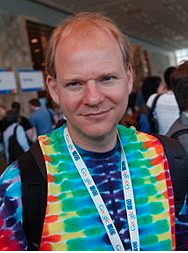 Erik Meijer is a Dutch computer scientist and entrepreneur. From 2000 to early 2013 he was a software architect for Microsoft where he headed the Cloud Programmability Team. He then founded Applied Duality Inc. in 2013. Before that, he was an associate professor at Utrecht University. He received his Ph.D from Nijmegen University in 1992.
Meijer's research has included the areas of functional programming (particularly Haskell compiler implementation, parsing, programming language design, XML, and foreign function interfaces).
His work at Microsoft included C#, Visual Basic, LINQ, Volta, and the Reactive programming framework (Reactive Extensions) for .NET. He has been involved in over 300 software patent applications of which 101 have been granted. In 2009, he was the recipient of the Microsoft Outstanding Technical Leadership Award and in 2007 the Outstanding Technical Achievement Award as a member of the C# team.
In 2011 Erik Meijer was appointed part-time professor of Cloud Programming within the Software Engineering Research Group at Delft University of Technology. He is also member of the ACM Queue Editorial Board.
ECSS 2013 Keynote Speech:
Patents or Open Source, Start up or Enterprise: A Silicon Valley Perspective
The renowned computer scientist Donald Knuth has said that "If you find that you're spending almost all your time on theory, start turning some attention to practical things; it will improve your theories. If you find that you're spending almost all your time on practice, start turning some attention to theoretical things; it will improve your practice." In other words, the best results surface at the fault lines between opposing (dual) forces. Theory and practice; patents and open source; startups and enterprises.
I have been bridging academic research and large enterprise product development for the past decade, but I found that I was spending all my time on dealing with process and legacy, so it was time to start turning my attention to innovate in the Silicon Valley startup space, to search for new customer problems and novel ways to cure their pain. What has not chanced is the deep connection with academic research. In this talk I will share my real-world experience in transferring ideas between theory and practice in both directions, and argue that academia should focus much more on theoretical and fundamental long term research rather than trying to have short term practical impact. While theory and practice are mutually enforcing, they are very different disciplines that require very different skills. It is our duty as a society to ensure that theory remains vibrant to maintain a healthy balance and ensure future growth of practice.
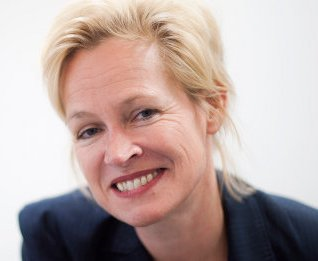 Anka Mulder studied History at the University of Groningen, where she later lectured in International Relations. After having worked in Brussels and Vienna for a number of years, in 1996 she took up a post as head of department at the ROI, an institute for education, coaching and consultancy for public administration.
From November 2004 to April 2013 she fulfilled the position of Director of Education and Student Affairs (E&SA) at TU Delft. In 2008 she became a member of the board of the international OpenCourseWare Consortium and from 2011 to 2013 she was the OpenCourseWare Consortium president. The Consortium is the largest international organisation in the field of free online provision of education in the form of complete courses. From July 2011 to April 2013 she combined the post of director with that of Secretary General of the university.
Since April 2013, she has been Vice-President at TU Delft responsible for Education and Operations. Furthermore she is a member of the edX Consortium, a network of twelve universities including Harvard, MIT and Berkeley, that produce Massive Open Online Courses (MOOCs) and promote innovation in education worldwide.
ECSS 2013 Keynote Speech:
Open and Online Education: the end of education as we know it?
ICT and the Internet have a major impact on our lives and have change entire economic sectors, such as the travel industry or the music industry. For a long time Higher Education did not seem to be affected, but in the last few years it has become clear that developments in Open Ed will cause a revolution.
● There are more than 20.000 OpenCourseWare (OCW) courses online
● MOOC:s are attracting millions of learners
● Top universities are investing millions
Delft University of Technology is at the forefront of this movement. It is an active member of the OCW Consortium and edX, produces OCW, will run a series of MOOCs and will start accredited online education in three fields from September.
During her presentation, Anka Mulder will discuss why the digital revolution in education is such a strong movement and how it will change the face of Higher Education. She will also address the choices Delft University has made in its strategy on open and online education.
 Pamela Zave received an A.B. degree in English from Cornell University, and a Ph.D. degree in computer sciences from the University of Wisconsin-Madison. She began her career as an assistant professor of computer science at the University of Maryland-College Park. Since 1981 she has worked for the research organization of AT&T, which was part of Bell Laboratories before 1996 and part of AT&T Laboratories afterward.
Her research interests include requirements engineering, telecommunication services, Internet architecture, and modeling languages.
She has received Ten-Year Most Influential Paper Awards at RE (2003, 2007) and ICSE (2005). She is an ACM and AT&T Fellow, and receieived the AT&T Strategic Patent Award in 2004.
ECSS 2013 Keynote Speech:
The Power of Abstraction
From program analysis to data mining, informatics has yielded an abundance of tools and techniques for superficial understanding of our world and our computations. To go deeper, it is necessary to have domain-specific abstractions that capture the semantics of a domain in a useful and enlightening way. Drawing examples from the area of networking, this talk illustrates the power of abstraction in producing commercial products, improving communication among researchers and practitioners, and stimulating invention. It also covers the challenges of abstraction, which result from the inter-disciplinary nature of this work.
ECSS 2025 is organised by
 |
 |
Sponsored by
 |
 |
 |
 |
|
 |
  |
 |
Support ECSS
What's New
ECSS 2025, 27-29 Oct, Rennes. France
Save the dates for ECSS 2026:
26-28 Oct in Porto, Portugal



 Netlogica