Interaction and Representation Challenges of Sustainability Related Information – The Quest for Usable Sustainability
Abstract
The IT security research community took decades to fully embrace the fact that technical solutions are of little use if the intended users are unable or unwilling to apply them. That is why Usable Security was
only widely established as an academic field after a long delay. With respect to sustainability, there is also a danger of underestimating an important aspect that lies beyond the recognized central challenges,
i.e., beyond developing sustainable solutions and implementing them politically and socially. The talk assumes that the aspect of human-centered information dissemination is such an underestimated area.
Indeed, it is easy to see that the appropriate preparation and provision of relevant information and, in particular, human-centered presentation and interaction support are of paramount importance for the development and acceptance of sustainable solutions. Pretty much all stakeholders in sustainability are affected by this, because their contribution depends on versatile trustworthy information from a large number of sources. The list of stakeholders includes, among others:
-
Those responsible for creating sustainable value chains (for food, products, energy, etc.) that lead from initial resources to final recycling or disposal, under highly complex interrelations and while optimizing multiple "footprints"
-
Business people whose support for sustainable value chains depends on a wealth of aspects.
-
Policymakers responsible for complex and often highly influential regulatory policies
-
The end users and general public, who, while showing a growing interest in sustainability, are far too often overwhelmed by misleading or difficult-to-understand information.
The above calls for a new academic field that we shall coin as Usable Sustainability. The presentation will first substantiate the previous argumentation further. Afterwards, current research in the fields of
usability and human computer interaction (HCI) will be highlighted whose furthering and tailoring towards Usable Sustainability seems promising. Some important research challenges in this potential
discipline will also be elaborated. Special attention will be given to ongoing HCI efforts towards merging the "digital world" with the physical world and its (mobile) population. As mentioned, assessing the trustworthiness of information is also of particular importance in the context of sustainability. Therefore, a brief insight into approaches and challenges in this additional area will also be provided in conclusion.
Short Bio
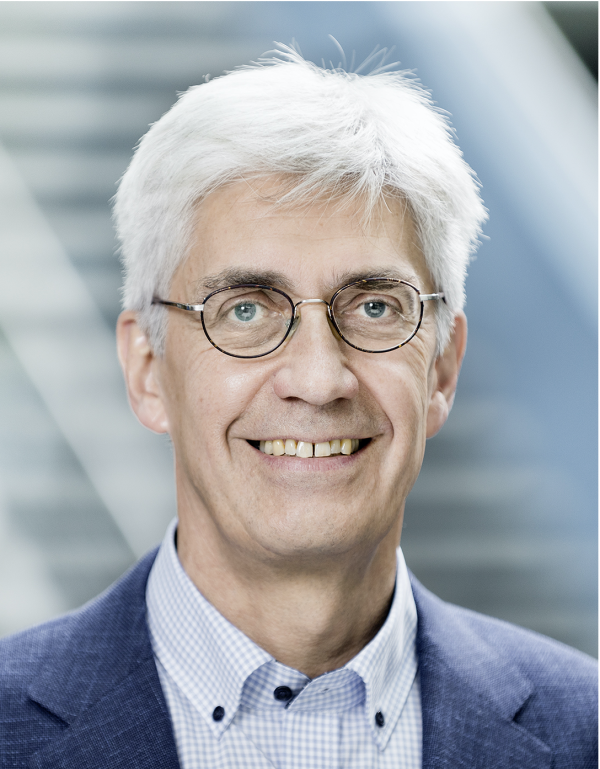
Max Mühlhäuser is a full Professor at Technical University of Darmstadt and Head of Telecooperation Lab. He holds key positions in several large collaborative research centers and is leading the Doctoral School on Privacy and Trust for Mobile Users.
He and his lab members conduct research on Human Computer Interaction, the Future Internet, Intelligent Systems, and on Cybersecurity&Privacy.
Prof. Mühlhäuser founded and managed industrial research centers, and worked as either professor or visiting professor at universities in Germany, the US, Canada, Australia, France, and Austria. He is a member of acatech, the German Academy of the Technical Sciences. He was and is active in numerous conference program committees, as organizer of several annual conferences, and as a member of editorial boards or a Guest Editor for journals such as ACM IMWUT, ACM ToIT, Pervasive Computing, ACM Multimedia, and Pervasive and Mobile Computing.









 Netlogica