
General Terms and Conditions
These General Terms and Conditions are valid for each attendee registered for ECSS 2025. The summit is co-hosted by Informatics Europe (hereafter referred to as “IE”) and the University of Rennes and organized as an in-person Summit in Rennes (France) between 27-29 October 2025. Any registered person is considered an attendee.
Registration
The registration deadlines, fees and registration link for ECSS 2025 are as presented on the Summit website. The registration will only be confirmed upon receipt of payment in full.
Data Protection and Sharing of Contact Details
- The collection and processing of personal data will comply with the current EU regulation “GDPR”. When entering your data into the online registration form, we collect this data from you to process your registration to ECSS 2025. The data is secured from unauthorized access. Since the GDPR is based on an agreement, you can request to delete your data at any time.
- When you register for ECSS 2025, you agree that we handle your registered data in the informatics-europe.org server. IE will use this data for the preparation and execution of ECSS 2025, including communicating with attendees and obtaining feedback in regards to ECSS 2025. In doing so, we may share contact details of attendees with employees of IE, the University of Rennes, the ECSS 2025 Committees and, when consent has been provided during registration, with other participants. IE will not sell or disclose your personal information to other third parties without your consent.
In case of data protection inquiries, please contact us by
Registration Fees and Payment
- ECSS 2025 registration fees, which include VAT, are as advertised on the website and can be paid by credit card or bank transfer in Euro (EUR).
- For credit/debit card payments, once the full payment is completed, a payment confirmation will be sent to the attendee’s registered email address in due course. An official invoice marked as paid will be provided by University of Rennes, the ECSS co-host, within the next few days via email:
This email address is being protected from spambots. You need JavaScript enabled to view it. - For bank transfer payments, within three working days of the registration request submitted via the ECSS webpage, the University of Rennes will send the attendee an official quotation for the paying institution to issue a purchase order. The attendee will receive registration confirmation per email once the University of Rennes issues the related invoice.
- Registration fees must be paid within the period communicated in the registration system/invoice. Any bank charges incurred during the payment process are the responsibility of the attendee. Payment must be made in full for the registration to be confirmed. Otherwise, IE reserves the right to cancel the registration.
Letter of Invitation
- Attendees requiring an official Letter of Invitation can request one during the registration or later by contacting
This email address is being protected from spambots. You need JavaScript enabled to view it. mentioning “ECSS” in the subject line. The Letter of Invitation does not financially obligate IE or the University of Rennes in any way. All expenses incurred in relation to the ECSS 2025 attendance are the sole responsibility of the attendee.
Visa Requirements
- It is the sole responsibility of the attendee to take care of their visa requirements. Attendees who require an entry visa must allow sufficient time for the application procedure. Attendees should contact the nearest embassy or consulate to determine the appropriate timing of their visa applications.
- The ECSS General Organizing Committee can provide a letter of invitation to registered attendees for visa application purposes (see the above procedure). The ECSS General Organizing Committee will not directly contact embassies and consulates on behalf of visa applicants.
Certificate of Attendance
- A Certificate of Participation will be issued by IE to all attendees who participated in ECSS 2025.
- Each attendee will receive a soft copy of the Certificate via email around 10 working days after ECSS 2025. Only soft copies will be issued.
Cancellation by the Participant
- The paid ECSS registration fee minus an administration fee of EUR 30 will be refunded if cancellations are notified to the
This email address is being protected from spambots. You need JavaScript enabled to view it. before the end of the early bird registration period. The refund will be issued by the original method of payment. - No refund request will be considered after the end of the early bird registration period. However, a request can be made to transfer a registration to another participant, who will take over the booked arrangements in full. Please send your request to the
This email address is being protected from spambots. You need JavaScript enabled to view it. using the email address provided for your ECSS 2025 registration, including the full name and email address of the nominated substitute. A EUR 30 administration fee will be charged for any name change request. - Refunds will not be given for unattended events or early termination of attendance. In cases of cancellations due to personal matters after the cancellation deadline, please consult your personal insurance.
Modification of ECSS 2025 Programme
IE and the University of Rennes reserve the right to modify the programme, which is published as an indication only. No refunds will be granted in case the programme changes (including change of speakers).
Cancellation by Informatics Europe
- IE and the University of Rennes reserve the right to cancel or postpone ECSS 2025 due to events beyond the control of ECSS 2025 Committees. The cancellation will be communicated to participants on the website and by email without delay.
- In that case, IE and the University of Rennes reserve the right to reimburse the attendees after deducting costs already incurred for the organisation of ECSS 2025 which could not be recovered from third parties. The refund will be made to the attendees by the original method of payment.
Insurance and Other Costs
- Attendees of ECSS 2025 are responsible for purchasing the appropriate insurances (including but not limited to civil liability, accident and health insurance) for the entire ECSS 2025 period.
- Attendees shall assume all the costs associated with their participation in ECSS 2025 (including but not limited to accommodation, travel, and living expenses).
ECSS 2025 General Organizing Committee strongly recommends all attendees get full travel insurance coverage. - IE or the University of Rennes cannot be held liable by attendees for any damages, costs or financial losses incurred, such as transportation costs, accommodation costs and so on. Attendees are recommended to book refundable or changeable options to mitigate potential issues.
Intellectual Property Rights
IE, the University of Rennes, the ECSS 2025 speakers and/or presenters retain the copyright and intellectual property rights on their information, documents, files, presentations, and other content shared during ECSS 2025 and on the ECSS 2025 website.
Liability
- To the extent permitted by applicable law, IE, its Board of Directors, Executive Committee Members and employees shall not be liable for any direct, indirect or consequential damages of any kind, loss of profits and/or loss of data arising from and in connection with the participation in ECSS 2025. The liability of ECSS 2025 co-host (the University of Rennes) shall remain unaffected by this. Participation in ECSS 2025 is voluntary and at attendees’ own risk.
- Oral agreements shall not be binding if these have not been confirmed in writing by IE.
- IE or the University of Rennes do not warrant the adequacy, accuracy and/or completeness of the information presented during ECSS 2025 and published thereafter on the ECSS 2025 website.
- Attendees are responsible for their own safety and belongings during ECSS 2025. By registering for ECSS 2025, you waive any claims against the organisers arising from participation.
Acceptance of the General Terms and Conditions
- These General Terms and Conditions shall manage your attendance to ECSS 2025 and will be applied fully and affect your ECSS 2025 attendance.
- IE and the University of Rennes reserve the right to amend these General Terms and Conditions at any time. Registered attendees will be notified of such amendments. Attendees which do not accept these General Terms and Conditions shall inform the ECSS 2025 General Organizing Committee by
This email address is being protected from spambots. You need JavaScript enabled to view it. within 14 days after the notification of the amended General Terms and Conditions. IE and the University of Rennes may exclude attendees, who do not accept the amended General Terms and Conditions of ECSS 2025. - These regulations have been entered into force on 7 July 2025.
IE Community Highlights '25 Submission Requirements
As an exclusive benefit to our members, we offer the possibility to distribute printouts about your institution free-of-charge at the ECSS reception desk. We also offer members the possibility to publish these materials virtually on a special section of our ECSS 2025 website, called IE Community Highlights.
Examples of materials include:
- flyers describing academic programs
- announcements of conferences, seminar series, summer schools...
- calls for papers
- announcements of new books or other publications
- calls for joint proposals
- generally anything that fits within the mission and goals of Informatics Europe and can be of interest to ECSS participants.
In order to take advantage of this benefit, we accept submission via
(for virtual materials, by Oct 15th)
- a PDF document, for publishing and be downloaded on our IE Community Highlights webpage, AND
- a JPG/PNG image of the cover, as the front image of your document on the gallery; it must have the following dimensions: 500 (horizontal) x 625 (vertical) pixels.
Important note: these two files must have a concise self-referring name consisting of maximum 7 words (e.g.UZH-Informatics-Department-Flyer; UCLouvain-CS-Master-Program-Flyer, etc.)
(for physical materials to be distributed at the ECSS 2025 venue in Rennes)
- By Oct 2nd: an electronic copy (PDF/JPG) of the material you’d like to include. The materials should be a single sheet, A4 or smaller unless otherwise agreed.
- By mid October: no more than 100 printed copies of the document delivered to Rennes by post, with exact amount required and delivery address confirmed by email.
Seize the opportunity to promote your activities to the ECSS 2025 participants now!
IE Community Highlights
The IE Community Highlights offers an overview of activities, programs, and news from both our Informatics Europe members and the association itself to the broader Informatics Community. Want to be featured? Follow the instructions provided here.
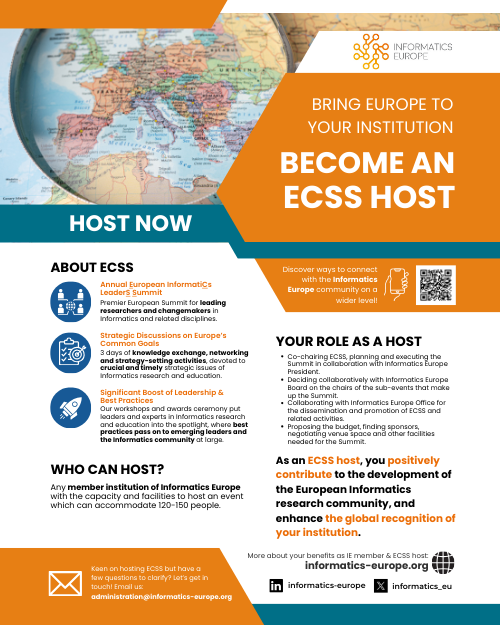
Become an ECSS Host
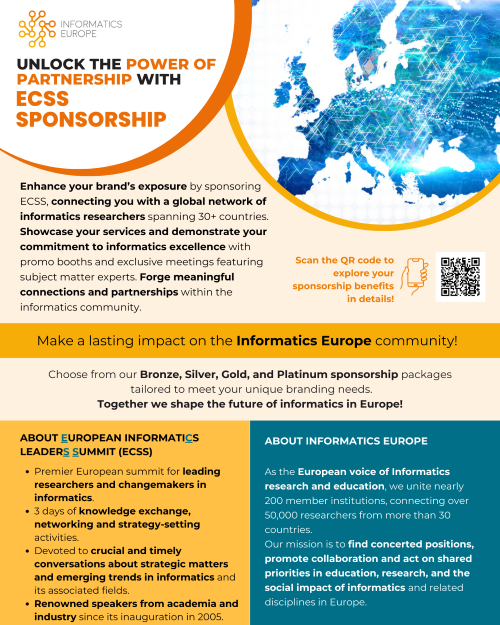
Become a Sponsor of ECSS
Informatics Europe Flyer
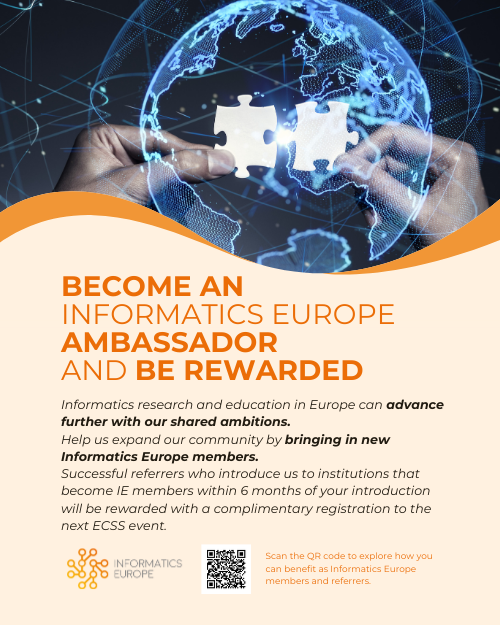
Informatics Europe Ambassador - We Want YOU!
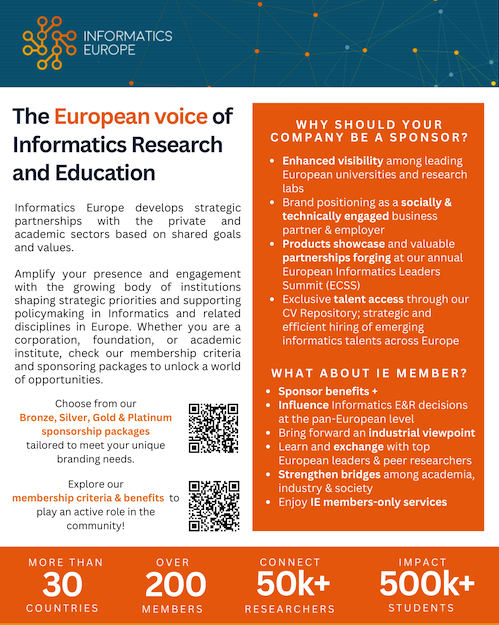
Your Engagement Overview with Informatics Europe
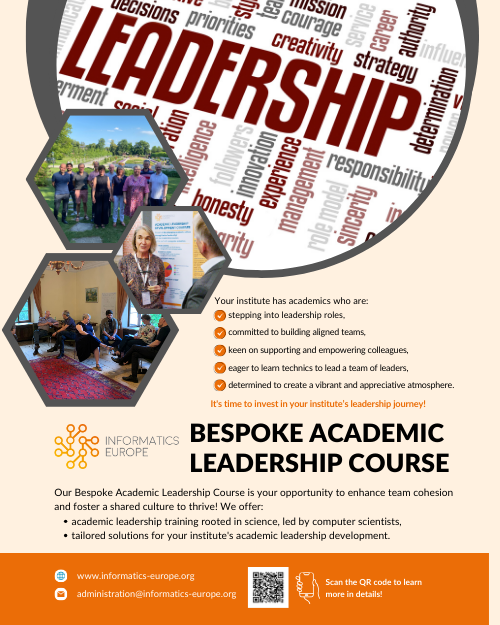
Bespoke Academic Leadership Course
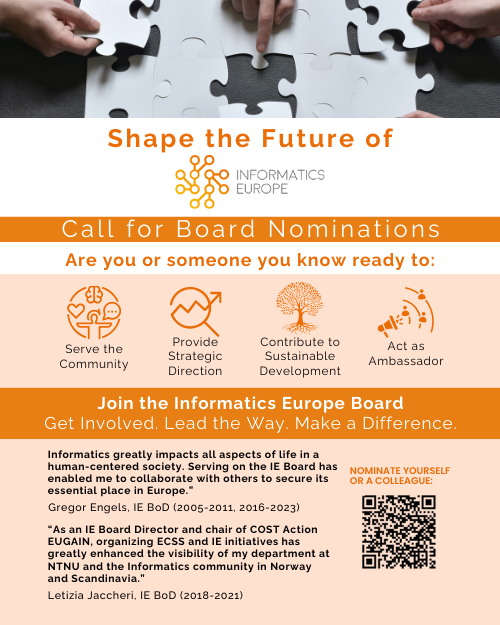
Call for IE Board Nominations
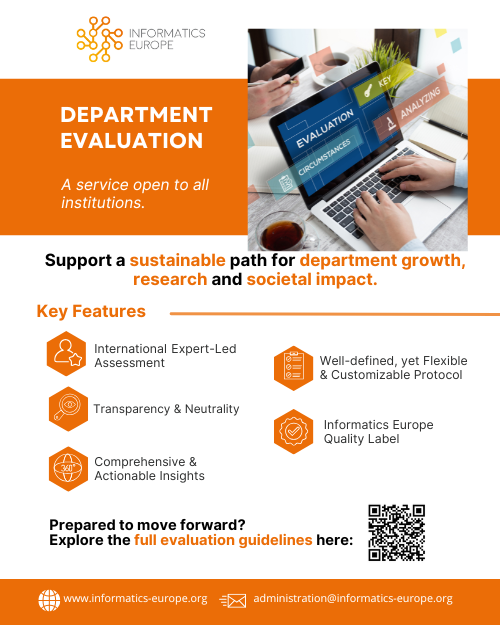
Department Evaluation Service
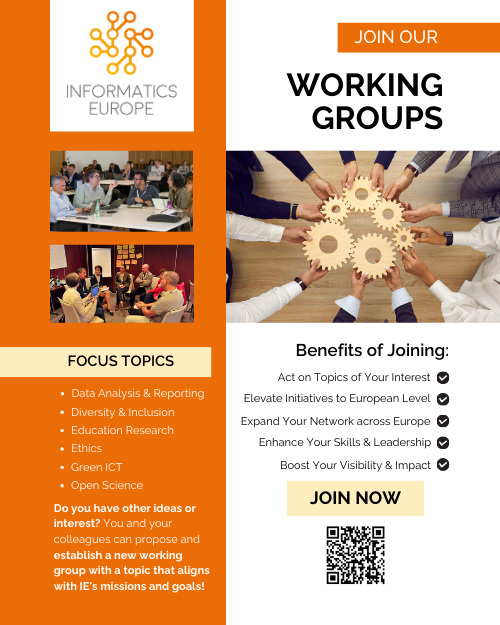
Join IE Working Groups
EUGAIN - Policy Recommendations for Gender Balance in Informatics
EUGAIN - Best Practices from School to University
EUGAIN - Reasons to Become an Informatics Student
EUGAIN - Best Practices from Bachelor/Master Studies to Ph.D.
EUGAIN - Best Practices from PhD to Professor
EUGAIN - Career Planning and Mentoring
Informatics Europe - Open Access: Status and Recommendations
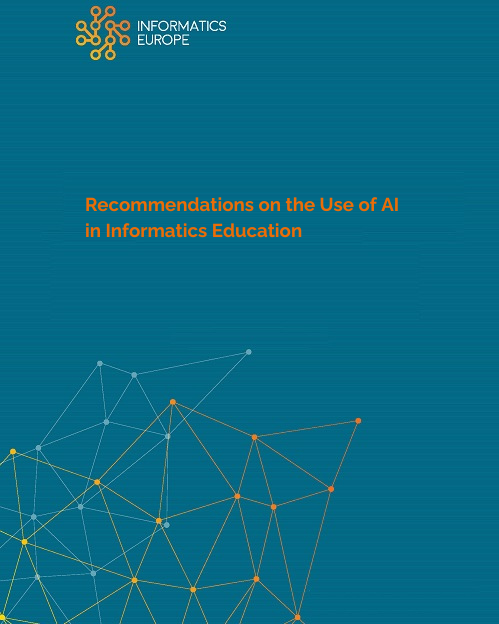
Informatics Europe - Recommendations on the Use of AI in Informatics Education
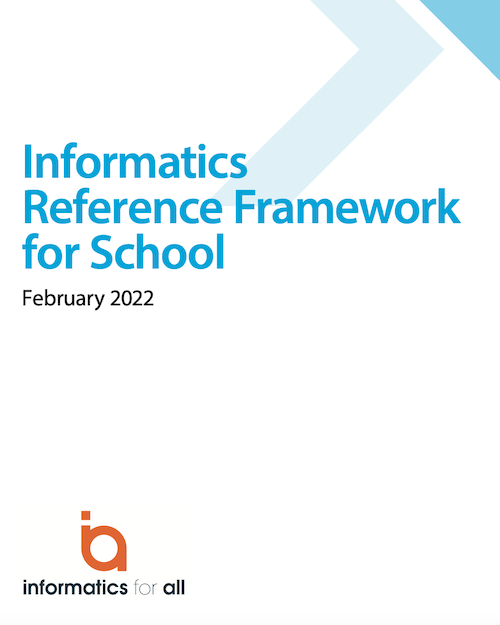
Informatics for All Coalition - Informatics Reference Framework for School


Keynote Session
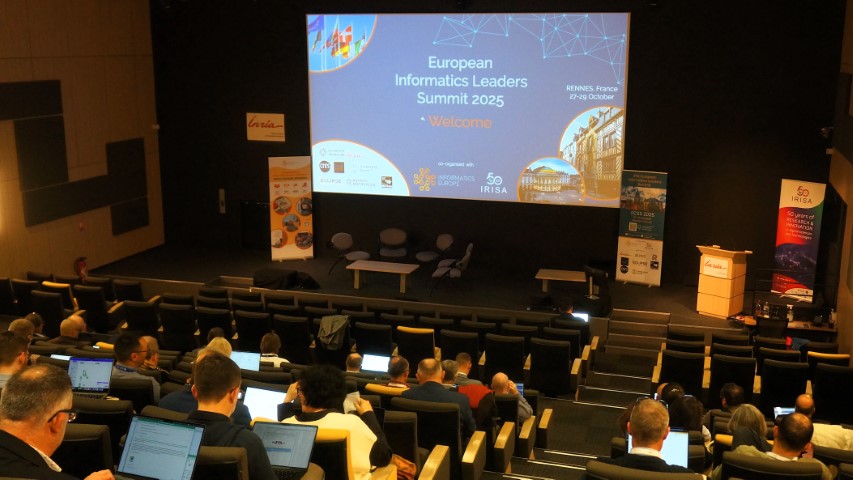
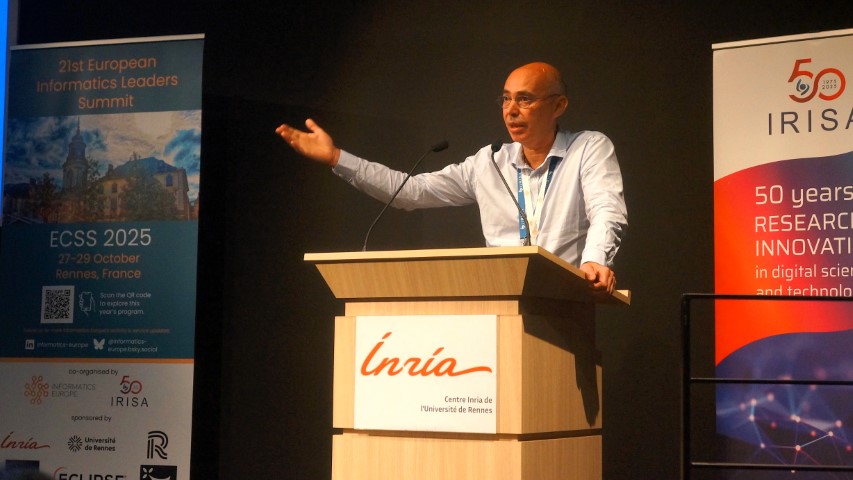
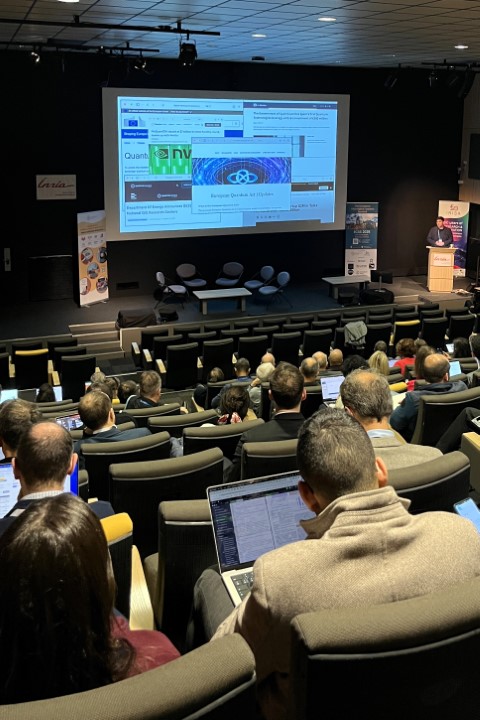
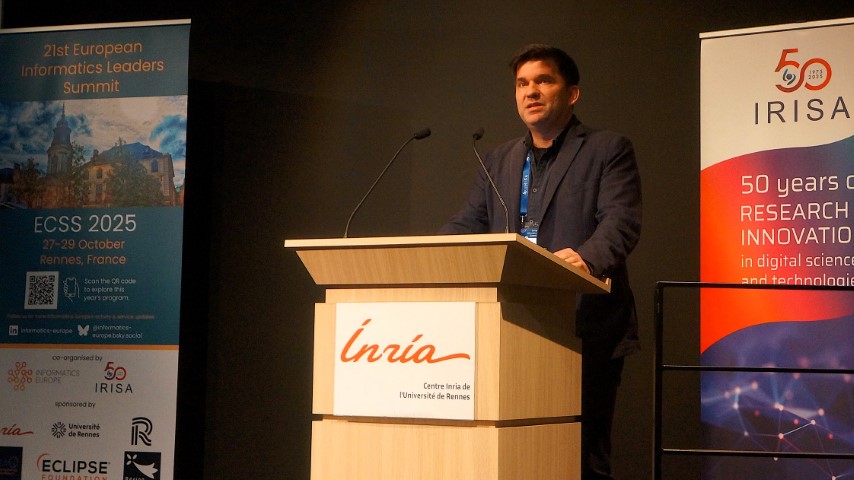
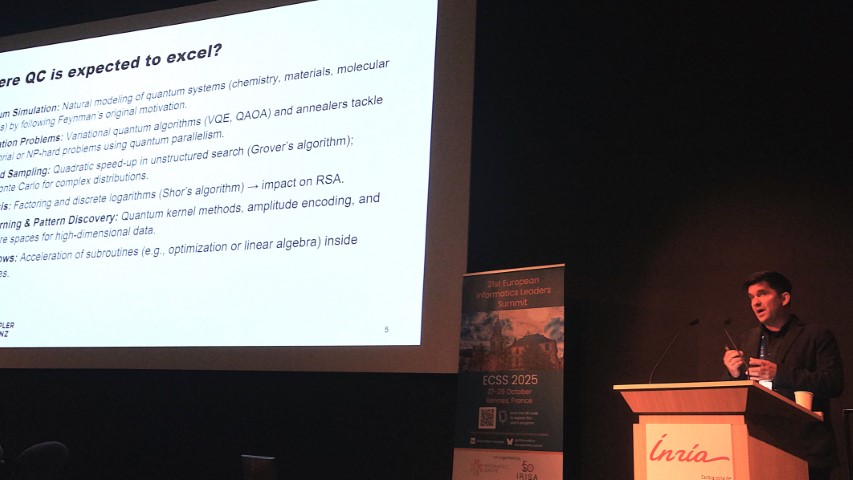
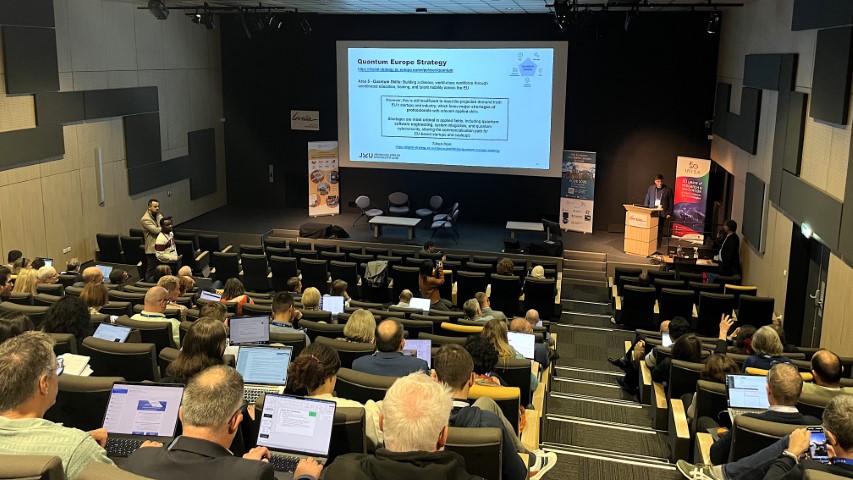
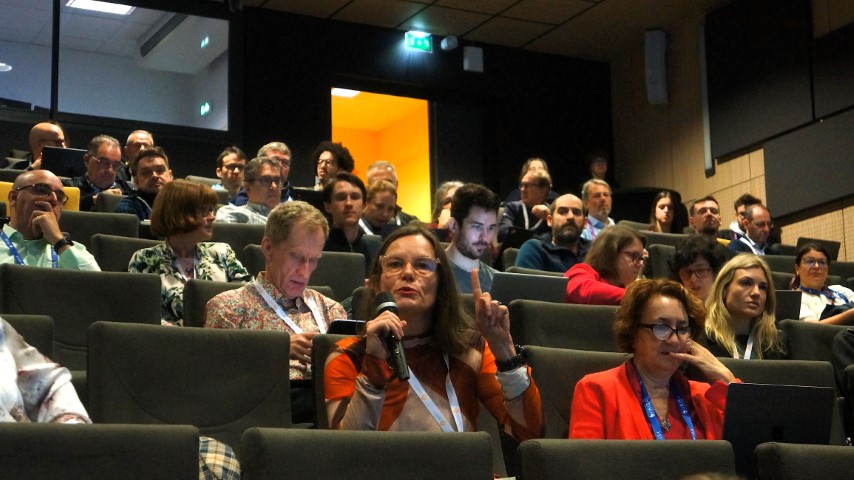
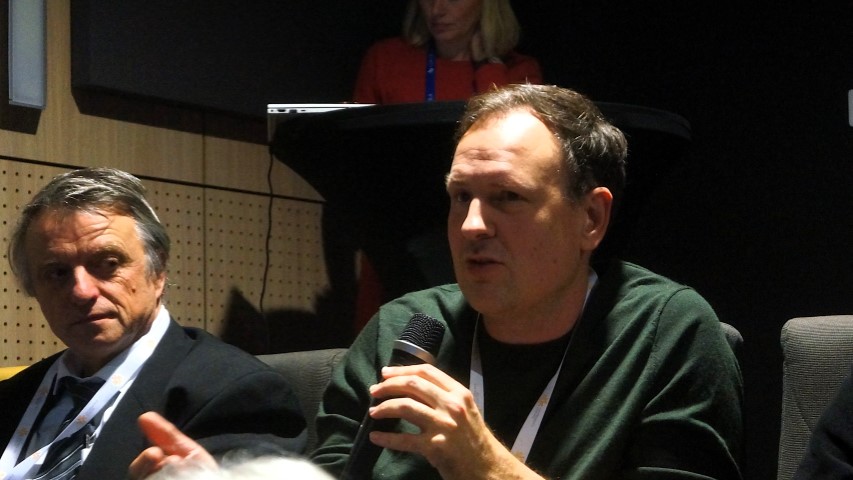
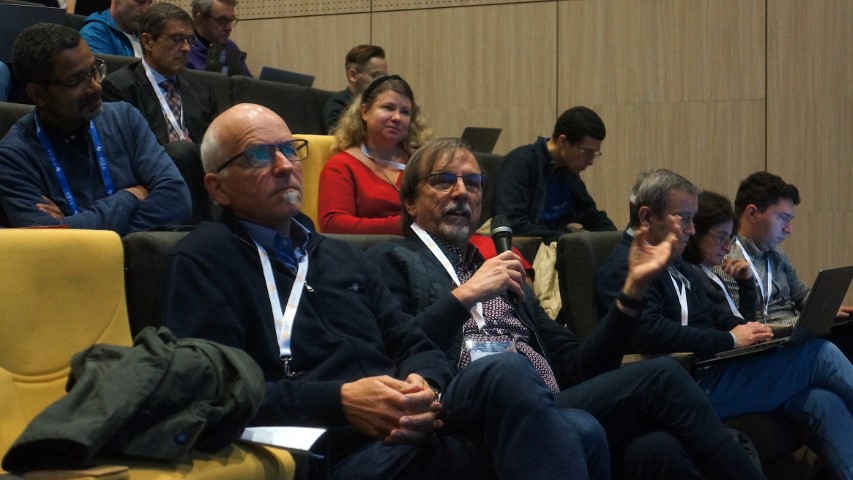
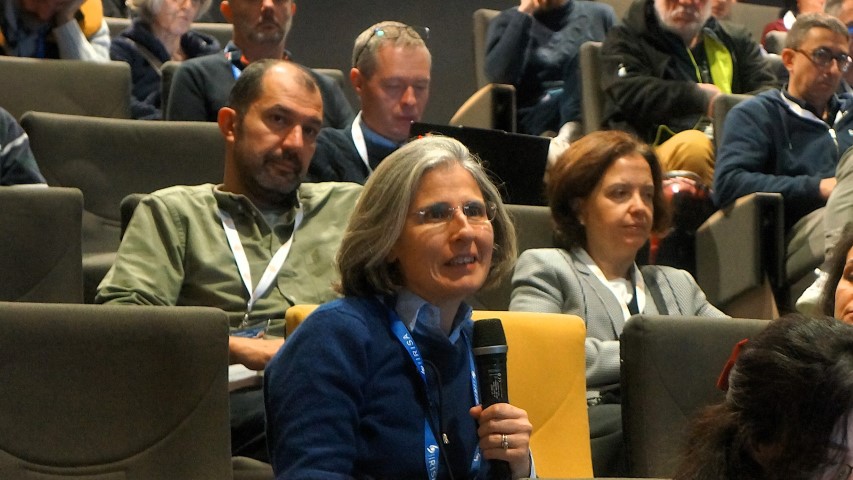
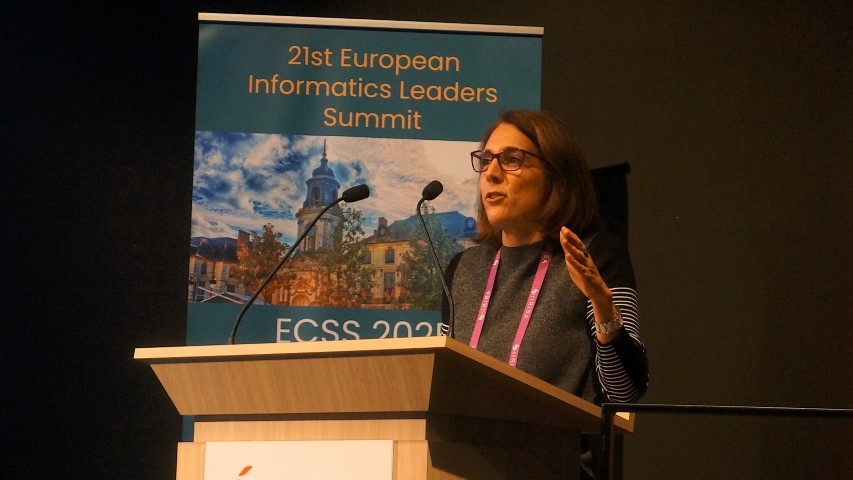
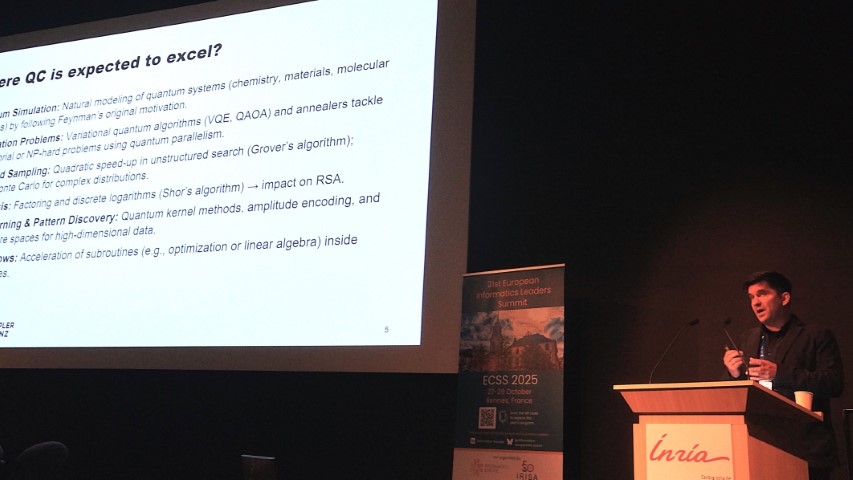
Prof. Manuel Wimmer (JKU Linz, Austria) headlined the ECSS 2025 Keynote Session on Tuesday, 28 October, with a talk on Integrating Quantum Technologies into European Informatics Departments. [Slides] [Video] [Highlights]
As quantum computing emerges as a transformative force, integrating it into Informatics education and research is essential to equip students for future demands and strengthen Europe’s leadership in advanced technologies.
Prof. Wimmer brings deep expertise in model-driven engineering, formal methods, and automated software engineering tools—foundational elements for quantum software development. His active role in European research projects and academic leadership makes him an ideal voice to address both the technical and strategic dimensions of this fast-growing field.
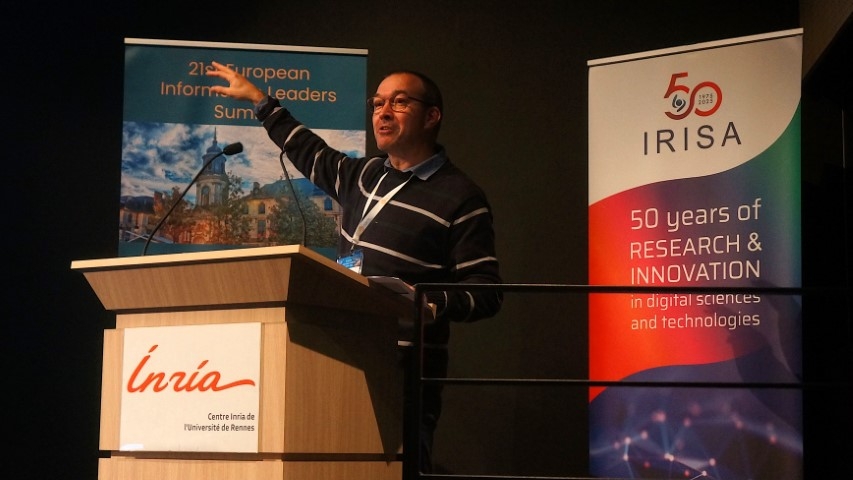
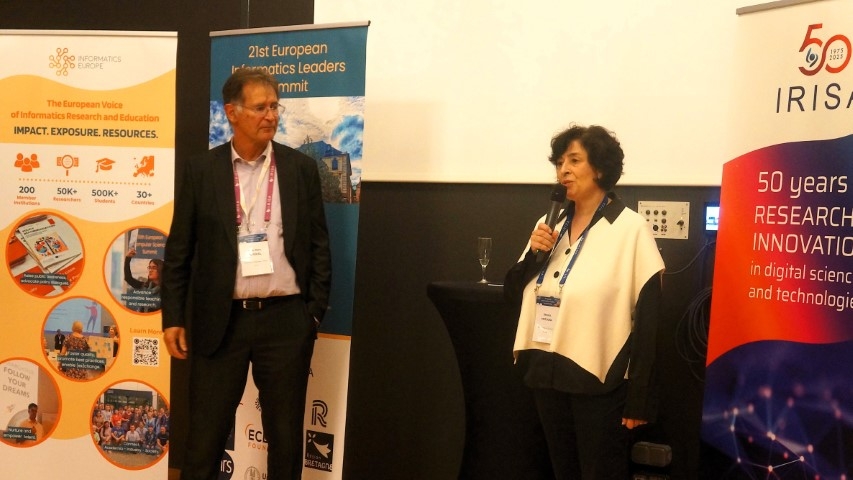
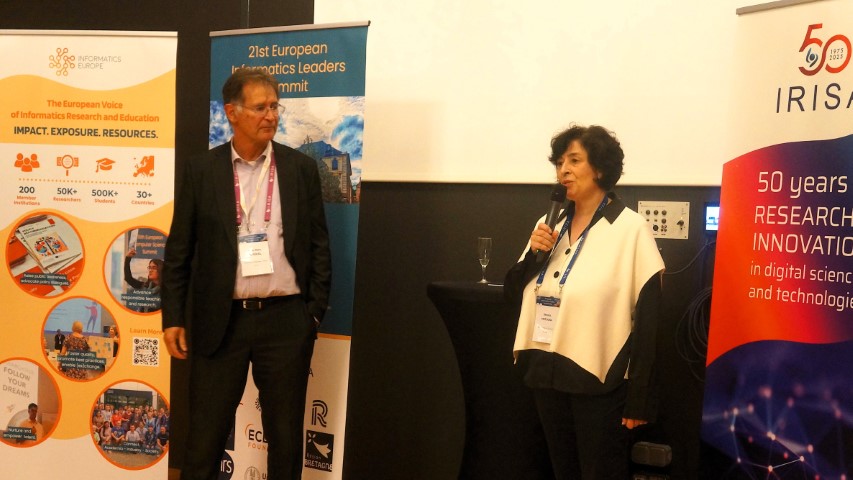
The session, chaired by IE President Jean-Marc Jézéquel from IRISA / University of Rennes, also marked IRISA’s 50th anniversary, honouring its legacy of multidisciplinary innovation in informatics.
*Please note that you may need to zoom out for the best photo viewing experience.
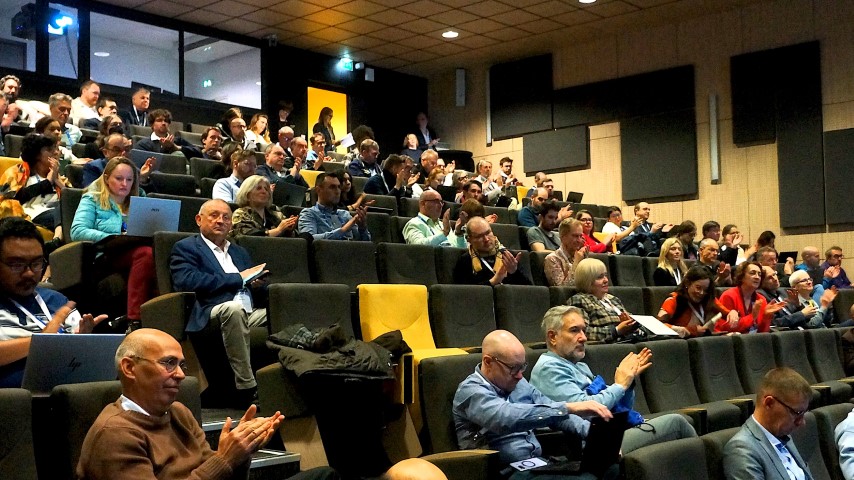
Informatics Europe Session
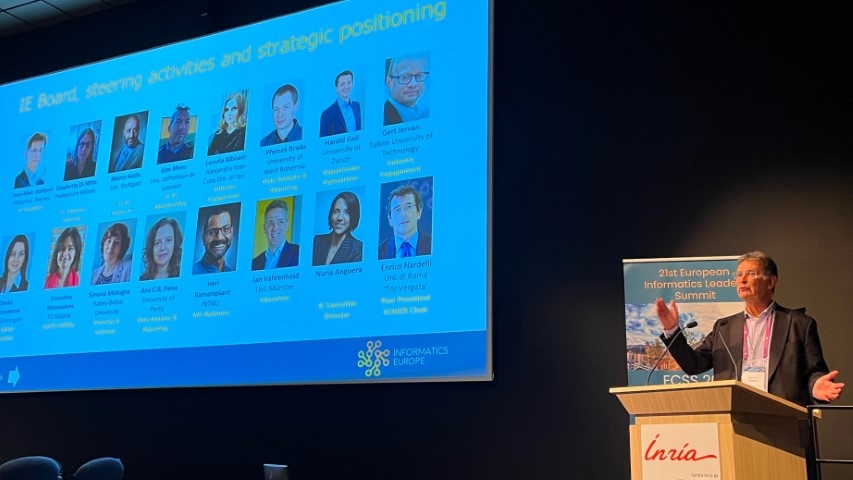
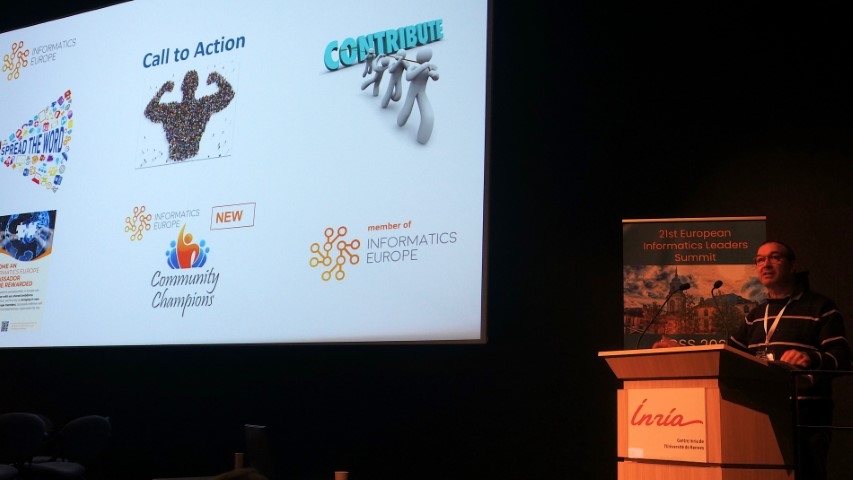
This session offered both members and non-members a valuable opportunity to engage with Informatics Europe (IE) and better understand our mission, activities, and collective impact.
The 2025 edition featured an overview of ongoing initiatives and strategic priorities for the year, reflecting the shared vision and collaborative efforts of the IE community. The session also included IE Annual General Assembly (AGA). While voting during the AGA is reserved for representatives of member institutions, the session was open to all ECSS participants.
It is an ideal occasion to connect with peers, explore ways to contribute, and take part in shaping a common voice and collective action for advancing Informatics research and education across Europe through Informatics Europe.
*Please note that you may need to zoom out for the best photo viewing experience.




ECSS 2025 - Highlights
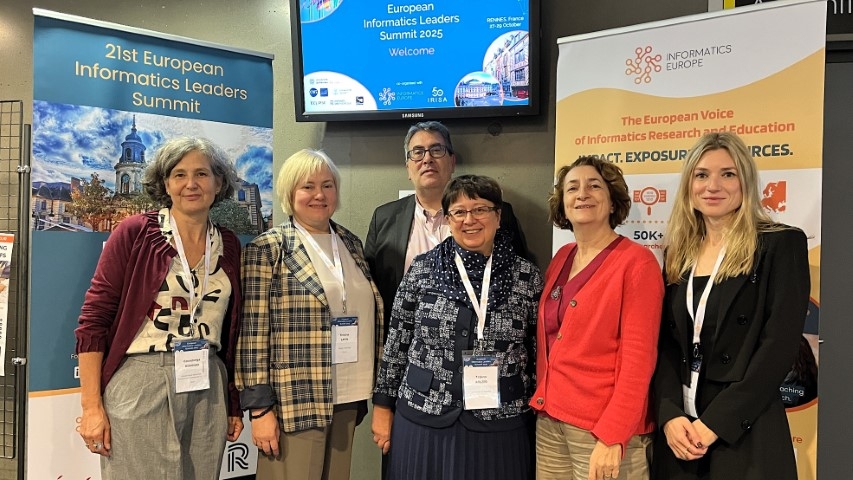
The 21st European Informatics Leaders Summit (ECSS 2025) was held in Rennes (France) from 27-30 October, co-hosted with member institute IRISA, as part of IRISA’s 50th anniversary celebrations.
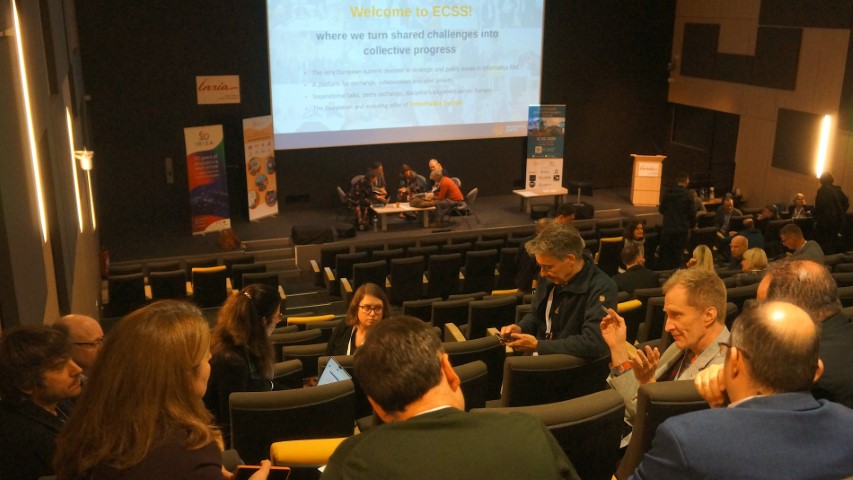
This year's Conference Chair, Informatics Europe President Jean-Marc Jézéquel (IRISA/University of Rennes, France), officially inaugurated ECSS 2025, launching a three-day engaging program attended by 130 participants, representing over 90 institutions across 26 European countries.
Explore the session Highlights below and download/view Photos and Presentation Materials. in the individual session webpages; the latter are also available in the summit schedule.
Leaders Workshop
Leaders Workshop opened ECSS again this year with a joint morning session held together with the Professional Development Workshop for Early Career Researchers. Both Workshops share a common goal: strengthening leadership and professionalism in Informatics. By bringing senior academic leaders together with the next generation of researchers and leaders, the joint session created a space for cross-generational exchange, shared reflection, and fresh perspectives on the challenges shaping the discipline.
The year's Leaders Workshop, titled “How to Cope with Changes in Informatics Departments?”, addressed the complex and accelerating transformations redefining higher education today. Chaired by Ana C.R. Paiva (University of Porto, Portugal) and Jean-Marc Jézéquel (IRISA/University of Rennes, France), the Workshop welcomed leaders from across Europe to reflect on institutional adaptation, technological disruption, and the evolving role of Informatics in society.
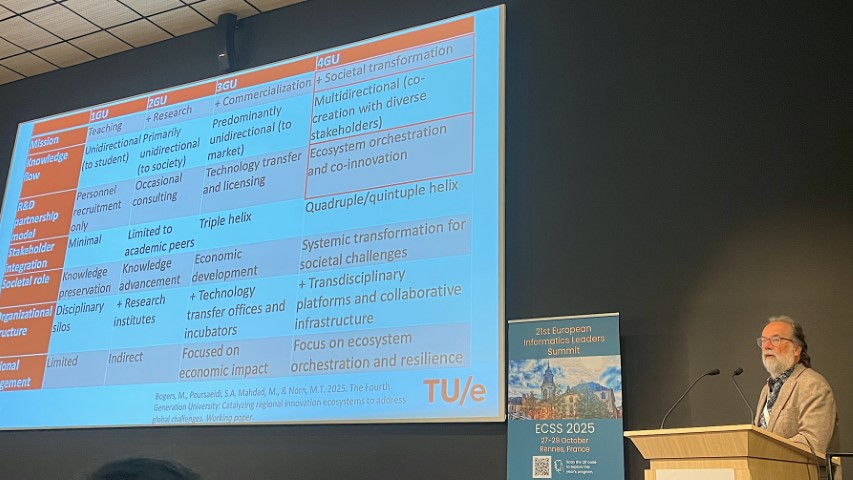
The joint morning session featured a keynote by Maarten Steinbuch (Eindhoven University of Technology, the Netherlands) on “Moore’s Law Calls for the Next-Generation University". His talk provided valuable insights into the importance of interdisciplinary collaboration with industry and the value of research in driving industrial innovation. Early-career voices, Andrea Cini (PhD Graduate from Università della Svizzera italiana, Switzerland) and Drishti Yadav (PhD Graduate from TU Wien, Austria), complemented these perspectives by reflecting on how doctoral and postdoctoral pathways can cultivate future leadership in Informatics.
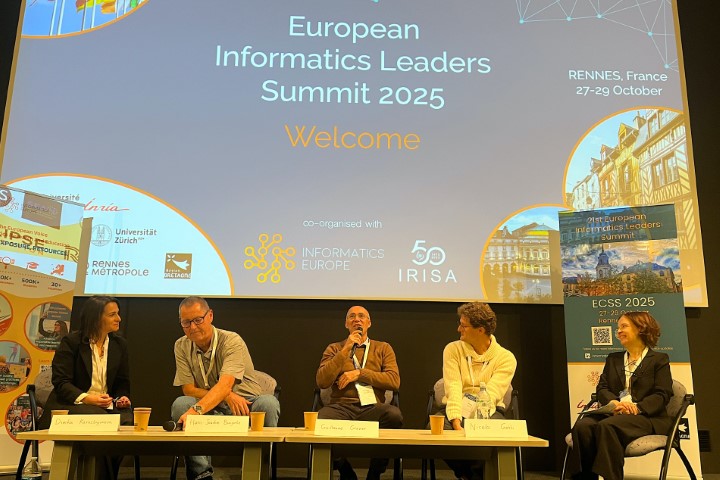
A dynamic panel session followed, where Hans-Joachim Bungartz (Technical University of Munich, Germany), Nicola Gatti (Politecnico di Milano, Italy), Guillaume Gravier (IRISA, France), and Dimka Karastoyanova (University of Groningen, Netherlands) continued the discussion sparked by the keynote, including the concept of the fourth-generation universities. The panel shared best practices and debated key challenges facing the Informatics department, from adapting to digital transformation and curriculum renewal to balancing research excellence with inclusivity and societal impact.
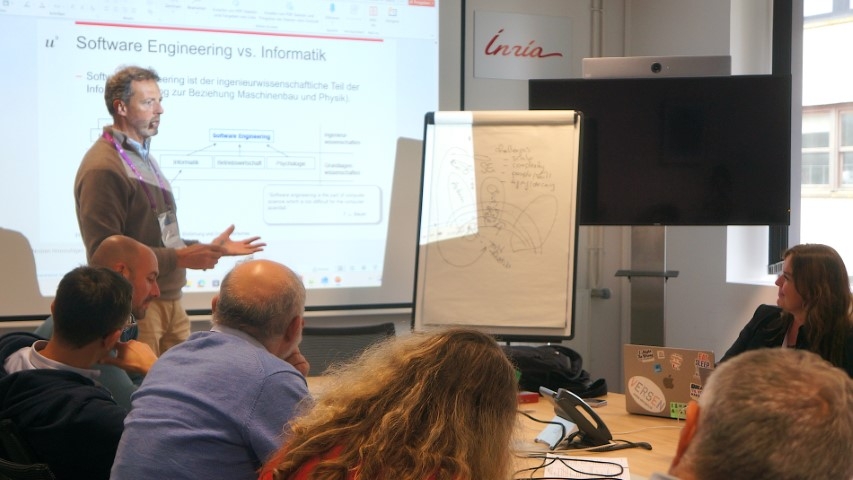
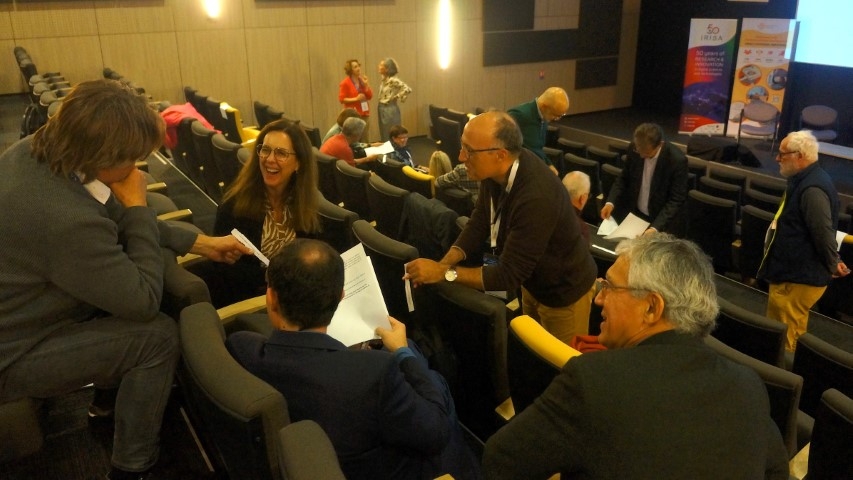
In the afternoon, participants engaged in collaborative group work to identify and discuss their institutions’ most pressing challenges. These sessions fostered open dialogue, practical idea exchange, and peer learning on issues such as faculty development, interdisciplinary collaboration, the impact of AI, and managing structural change.
The Workshop concluded with a synthesis of insights and recommendations, reinforcing the importance of agility, communication, and community in leadership. Participants left with renewed commitment to guiding their departments through times of transformation, not just by coping with change, but by actively shaping it.
Professional Development Workshop for Early Career Researchers
This year’s Early Career Researcher Workshop centred on supporting the professional growth of early-career researchers while strengthening their engagement with senior colleagues in the Informatics community. The morning session was held jointly with the Leaders Workshop, creating a rare opportunity for cross-generational exchange and shared reflections on leadership development in Informatics. The joint session featured keynotes by Maarten Steinbuch (Eindhoven University of Technology, the Netherlands) on “Moore’s Law Calls for the Next-Generation University", and short contributions from Andrea Cini (PhD Graduate from Università della Svizzera italiana, Switzerland) and Drishti Yadav (PhD Graduate from TU Wien, Austria) - winner, respectively finalist, of the Informatics Europe Best Dissertation Award (BDA) - who highlighted the key elements that shaped the success of their PhD work.
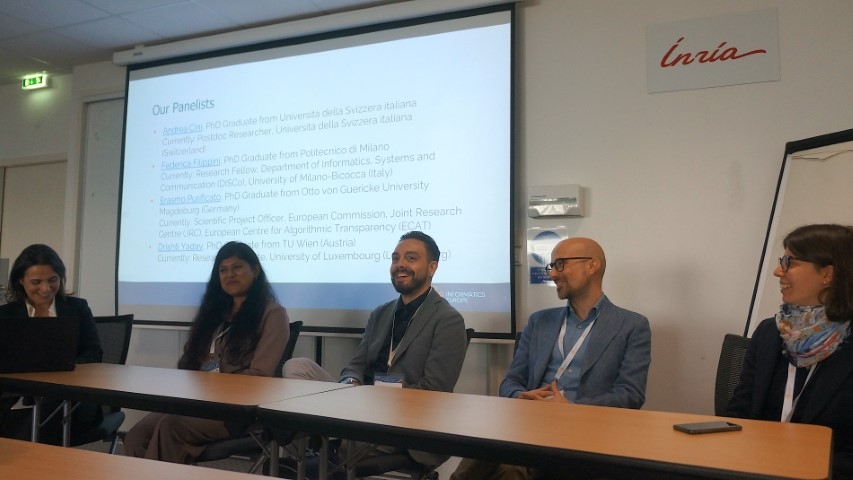
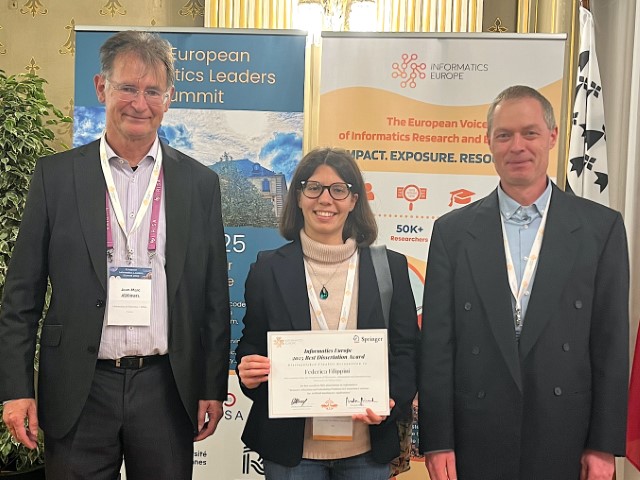
A major focus of the Workshop was mentorship. In a dedicated afternoon panel session with the four BDA 2025 finalists — Andrea Cini, Federica Filippini, Erasmo Purificato and Drishti Yadav — and chaired by Dimka Karastoyanova (University of Groningen, the Netherlands), participants emphasised the importance of having a mentor beyond the primary supervisor. Such figures play a crucial role in offering emotional support, helping to refine ideas and strengthening communication skills — aspects often vital for navigating the demands of a PhD.
The discussion also brought forward the soft skills considered most valuable for long-term academic development. Clear communication with diverse audiences, the ability to manage risks and adjust when plans change, effective time management and delegation when supervising MSc and PhD students, thoughtful prioritisation, and awareness of how workload and communication affect mental health were all highlighted as essential complements to technical expertise.
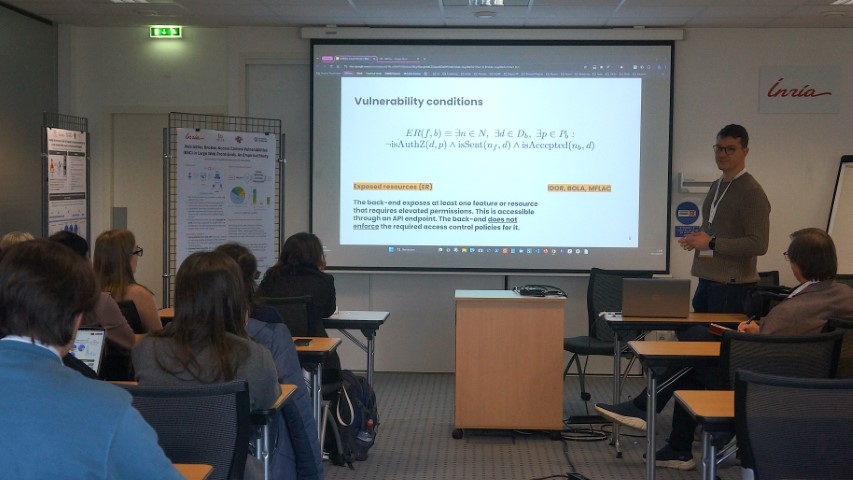
The Workshop concluded with a PhD Symposium chaired by Gregor Engels (University of Paderborn, Germany) and supported by a panel of experienced researchers led by Elisabetta Di Nitto (Politecnico di Milano, Italy). The presentations prompted a constructive conversation on how to frame strong research questions, ensure they are achievable within the timeframe of a PhD programme, and adapt objectives when initial ambitions prove too broad.
Taken together, the Workshop provided a focused and insightful platform for reflection, reinforcing the importance of mentorship, soft-skill development and strategic planning in building a successful research career.
Keynote Session – “Integrating Quantum Technologies into European Informatics Departments”
This year's Keynote Session featured an inspiring talk by Prof. Manuel Wimmer, Full Professor and Head of the Department of Business Informatics – Software Engineering at JKU Linz, Austria, titled “Quantum Software ante portas”. In his presentation, Wimmer explored the emerging field of quantum software engineering, emphasising its pivotal role as quantum computing transitions from theoretical promise to practical reality.
Quantum computing, he noted, has attracted tremendous attention for its potential to solve problems beyond the reach of classical machines. While initial research efforts largely concentrated on realising the hardware foundations of quantum computers, the current challenge lies in how to effectively program and utilise these novel systems. Unlike traditional computers, quantum machines operate under entirely different principles, rendering many established software engineering practices inapplicable.
Wimmer outlined the pressing need for new abstractions, methods, and engineering tools tailored to the quantum paradigm. Drawing on his extensive experience in model-based and search-based software engineering, he presented his team’s research into developing systematic approaches for designing and managing quantum software. These methods aim to bring structure and scalability to a domain that currently lacks the abstraction layers long familiar in classical computing.
The keynote also provided a broader view of the global research landscape in quantum software engineering, highlighting ongoing international collaborations and emerging initiatives to establish standards and best practices. Wimmer stressed that addressing these challenges requires not only technological innovation but also a new generation of “quantum-native” software engineers, equipped with hybrid skills in computing, physics, and engineering.
Concluding his talk, he underscored the importance of education and cross-disciplinary collaboration in preparing academia and industry for the quantum era. His vision resonated strongly with the ECSS audience, offering both a roadmap and a call to action for the Informatics community to take an active role in shaping the foundations of quantum software engineering — a field that, as the title suggested, now truly stands *ante portas*, at the gates of a new computational frontier.
Upskilling & Societal Engagement Workshop
Building on previous conversations about the impact of generative AI and other emerging technologies on education, the 2025 Workshop, chaired by Heri Ramampiaro (NTNU, Norway) and co-organised by IE member National Informatics Associations (NIAs), shifted the focus from “diagnosis” to action, presenting practical initiatives and strategies from across Europe.
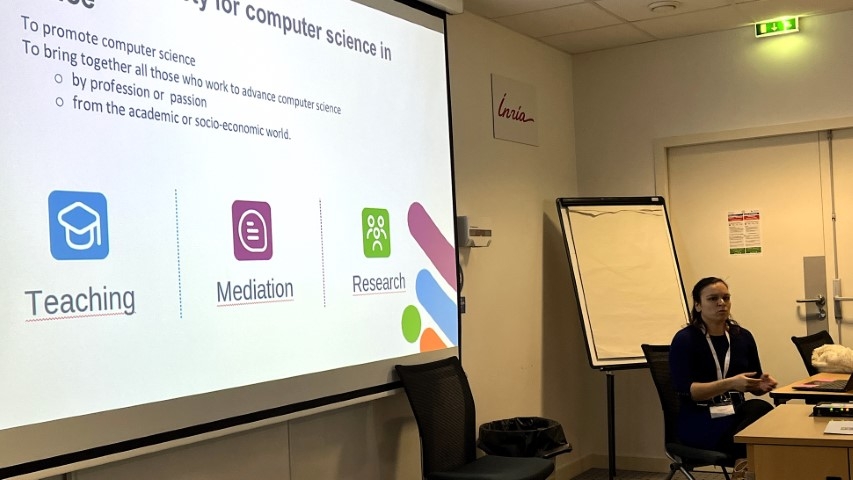
The discussion opened with insights on early engagement and inclusion. Enrico Nardelli (University of Rome "Tor Vergata", Italy) presented national initiatives to integrate Informatics into schools, emphasising computational thinking as a core skill for all students. Constance Thierry (SIF - Societé Informatique de France/IRISA, France) complemented this perspective by highlighting inclusive approaches, including outreach programs and teacher-training activities, to raise awareness of Informatics among diverse communities.
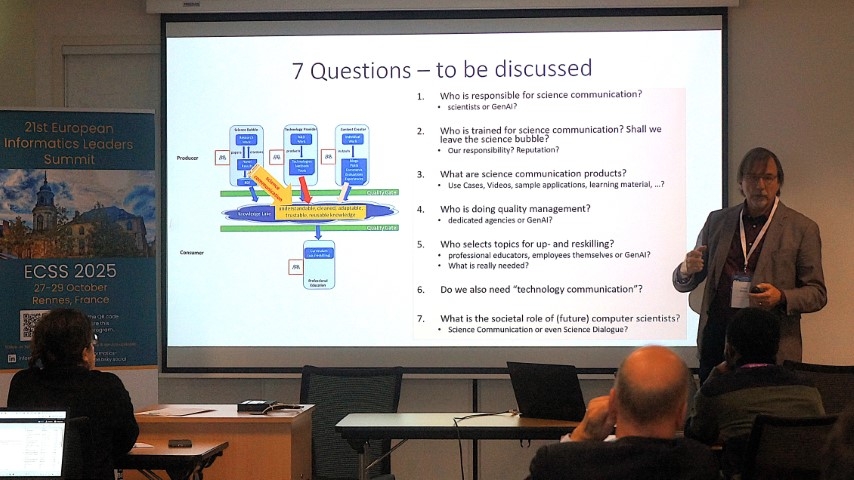
Attention then turned to upskilling and capacity building. Gregor Engels (Paderborn University, Germany) emphasised the importance of science communication as a basis for effective upskilling and reskilling, presenting the idea of a “Knowledge Lake” to connect stakeholders. Martin Hitz (Informatik Austria/University of Klagenfurt, Austria) argued for the continued relevance of programming in an AI-driven world, noting its value for problem-solving and system understanding. Jean-Marc Vincent (Université Grenoble Alpes, France) discussed scalable strategies for upskilling large groups of teachers, stressing collaborative learning and resource sharing.
Across these contributions, several common outcomes emerged:
- Shared best practices for engaging youth and diverse communities in Informatics education.
- Actionable models for large-scale teacher upskilling and continuous professional development.
- Consensus on core competencies: Programming and computational thinking remain essential despite AI advancements.
- Consensus on community-wide engagement and collaboration to strengthen societal engagement and resilience in Informatics education.
Dynamic panel discussions encouraged participants to exchange experiences and propose solutions, reinforcing the momentum toward coordinated action to boost visibility, relevance and adaptability in Informatics. Building on the presentations and inspired discussions, a small task force will be established to collect best practices and formulate actionable recommendations.
Green ICT and ICT for Green Workshop
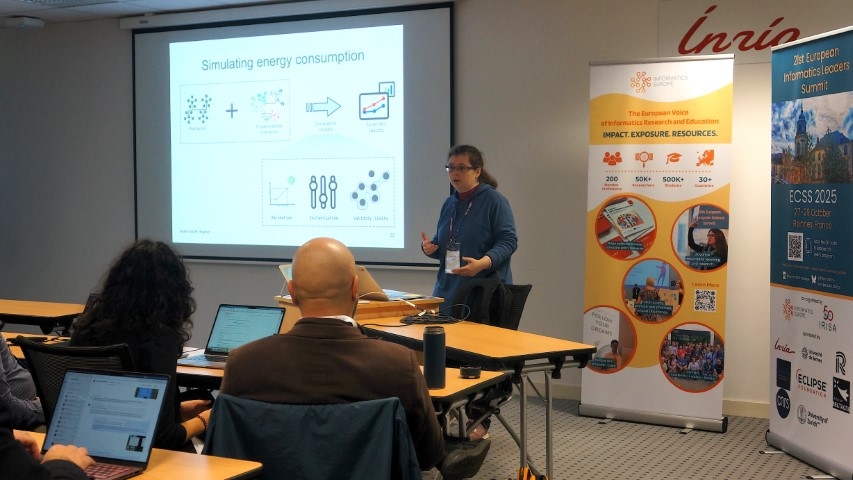
The Green ICT Workshop brought together leading researchers and practitioners to discuss sustainable approaches to information and communication technologies. The event offered a rich programme that combined expert presentations with collaborative discussions on how to advance greener computing practices in Europe and beyond.
The morning opened with an informative keynote by Anne-Cécile Orgerie (CNRS, IRISA, France), who provided a compelling overview of “Greening ICT: challenges and research directions in the field of distributed systems towards sustainability.” She outlined the growing energy footprint of digital infrastructures and highlighted research priorities such as energy-efficient cloud computing, lifecycle analysis of ICT systems, and metrics for measuring environmental impact. Her talk set the tone for a day dedicated to actionable research and collaboration.
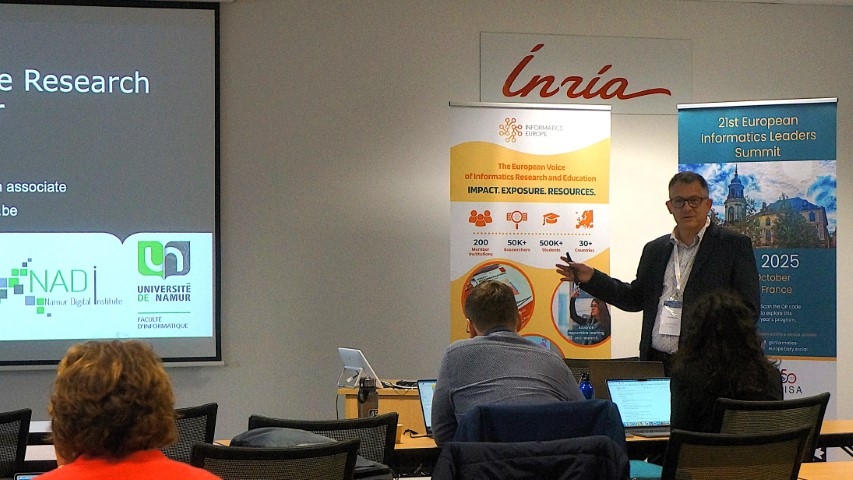
Following the keynote, members of the Green ICT Working Group shared their latest research insights. Gabriele Gianini (University of Milano-Bicocca, Italy) presented “From Solvers to Surrogates: Physics-Informed Learning for Sustainable Fluid Workflows,” demonstrating how machine learning can reduce computational costs in scientific simulations of fluid dynamics. Gilles Perrouin (Namur Digital Institute, Belgium) showcased “Sustainable Software Research @ UNamur,” introducing relevant and timely research efforts in his institution.
Then, Rafael Capilla (Rey Juan Carlos University, Spain) introduced the recently submitted COST Action “Green ICT for the Future". Sebastian Werner (TU Berlin, Germany) followed with initial findings from “The Future of Sustainable Digital Infrastructures – A European Study,” and illustrated the planned next steps.
The final session, “Towards a Framework for Greener Computing,” moderated by the chairs Marco Aiello (University of Stuttgart, Germany) and Monica Vitali (Politecnico di Milano, Italy), engaged all participants in a lively and interactive discussion about a framework for Green ICT.
Open Science & Open Source Workshop
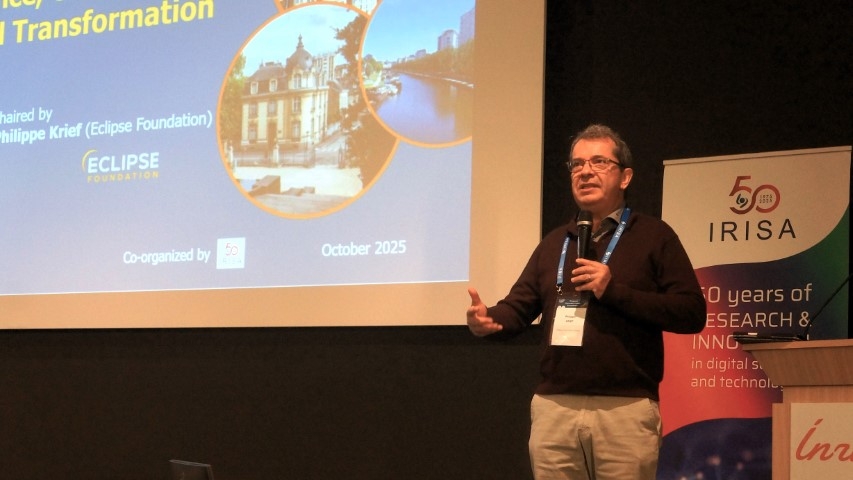
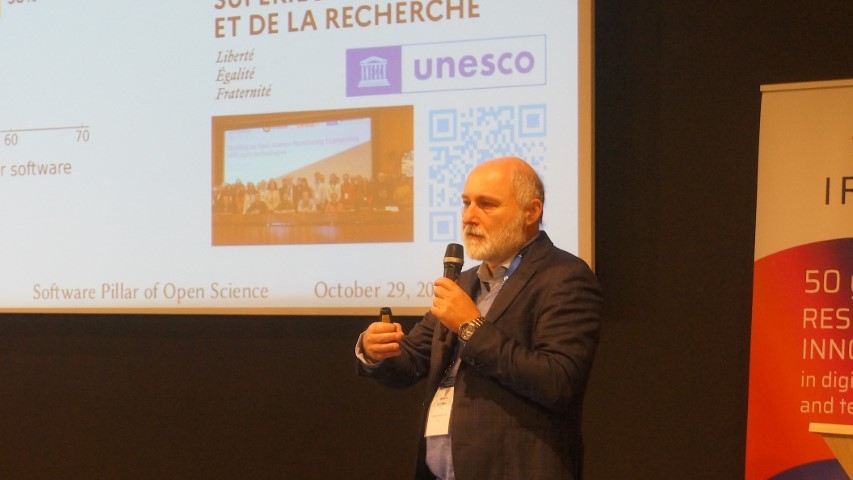
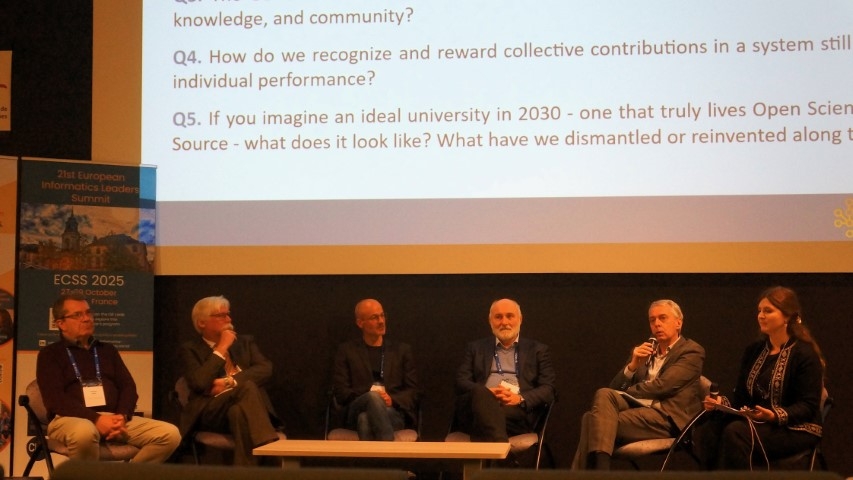
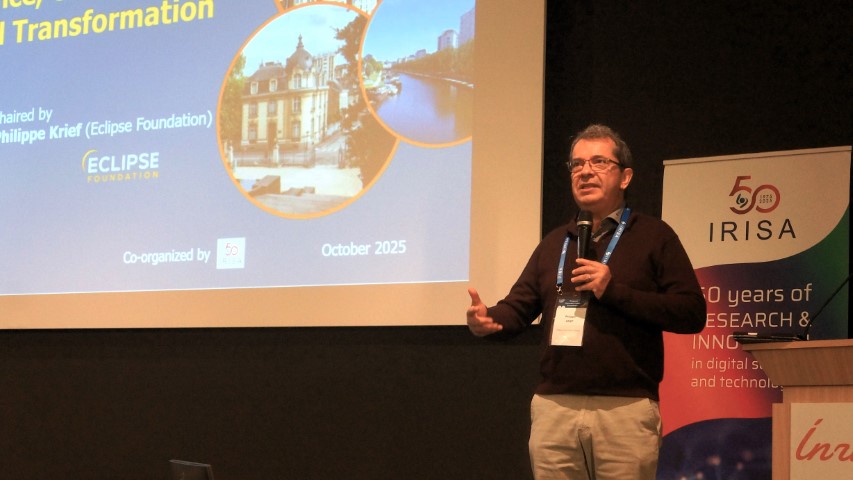
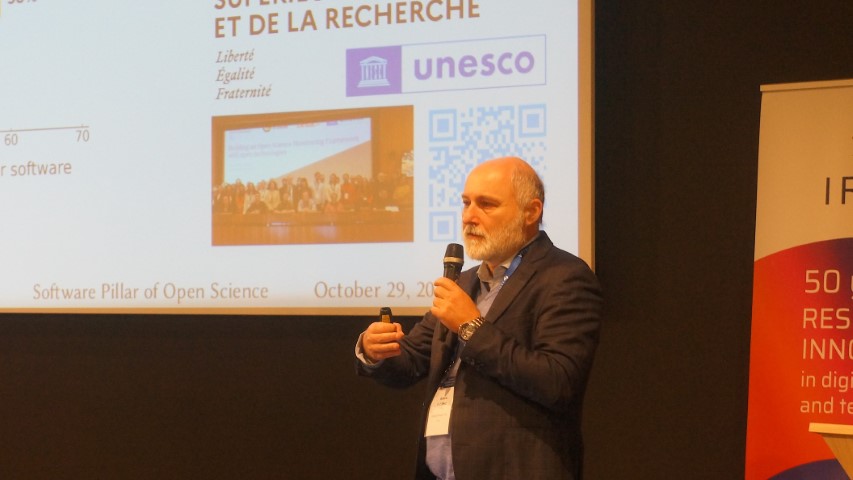
The Open Science & Open Source Workshop, chaired by Lenuta Alboaie (Alexandru Ioan Cuza University of Iași, Romania) and Philippe Krief (Eclipse Foundation), offered a comprehensive and coherent reflection on the way openness is reshaping research in Europe. Discussions combined conceptual, technical and organisational perspectives, creating a shared understanding of how transparent and verifiable research practices can be supported across disciplines.
The Workshop opened with an interactive exercise that brought to the surface the institutional and technical pressures encountered when implementing open practices. The issues raised by participants, such as difficulties in ensuring long-term access to research software, uncertainties around licensing and fragmentation of internal policies, served as a useful reference for the expert analyses that followed.
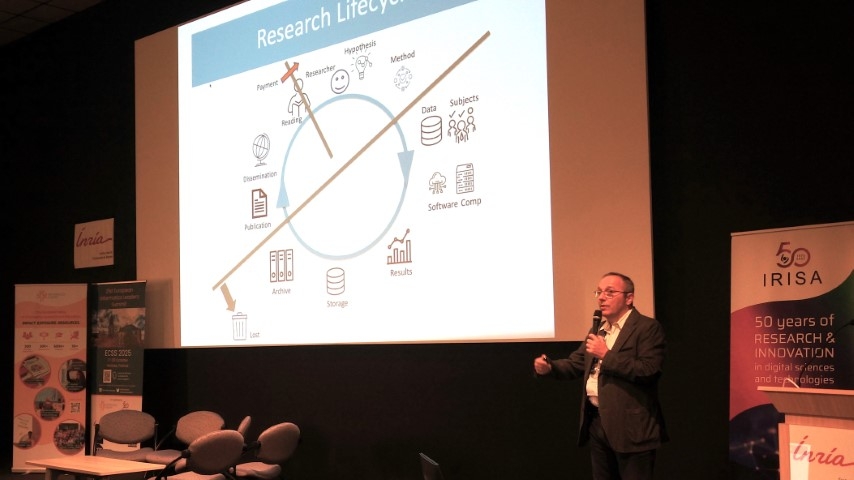
The presentations traced the evolution of Open Science from a publishing-oriented initiative to a complete rethinking of the research lifecycle. It was emphasised that openness in hypotheses, data, methods, software and evaluation strengthens reproducibility and public trust. One of the major structural developments discussed was the upcoming transition to full open access within ACM’s digital library, which will make publications and related research artefacts freely available worldwide beginning in 2026.
A substantial part of the Workshop focused on research software. Speakers described software as an essential scholarly output whose preservation, traceability and citability are crucial for scientific verification. In this context, Software Heritage was highlighted as a key global infrastructure dedicated to archiving and referencing source code, ensuring that software used in scientific workflows remains accessible and attributable over time.
Institutional perspectives illustrated how universities are beginning to organise internal processes to support openness, including structures similar to Open Source Program Offices that align legal, administrative and technical workflows. These developments were discussed in parallel with national coordination efforts intended to create consistent and sustainable frameworks for Open Science across research organisations.
The European dimension was addressed through an examination of the continent’s software ecosystems. It was noted that Europe possesses strong competence and vibrant research communities, yet lacks continuous and agile funding mechanisms for the software that underpins modern scientific activity. This gap was presented as a challenge not only for research but also for Europe’s broader digital sovereignty.
Throughout the Workshop, the importance of public infrastructures such as EOSC and OpenAIRE was repeatedly acknowledged. These platforms provide the technical foundation for integrating data, publications, software, metadata and workflows within FAIR-aligned environments that support discovery, interoperability and long-term preservation.
The Workshop concluded with a shared view that advancing Open Science requires coordinated progress across policy, governance, infrastructure and software sustainability. Participants agreed that meaningful openness depends on the ability to preserve and connect all components of the research process, and that Europe’s future scientific capacity will rely on sustained support for the digital commons that make reproducible and trustworthy research possible.
Our sincere gratitude to all speakers and colleagues contributing to this year's Workshop: Boris Baldassari (OSPO Alliance, Eclipse Foundation); Isabelle Blanc (Ministry of Higher Education and Research, France); John Crowley (PHGD Group); Roberto Di Cosmo (Software Heritage/Inria/University Paris Cité, France); Yannis Ioannidis (Association for Computing Machinery (ACM)/National and Kapodistrian University of Athens, Greece); Bjorn Levin (RISE Research Institutes of Sweden, Sweden); Violaine Louvet (Université Grenoble Alpes, France).
Diversity & Inclusion Workshop
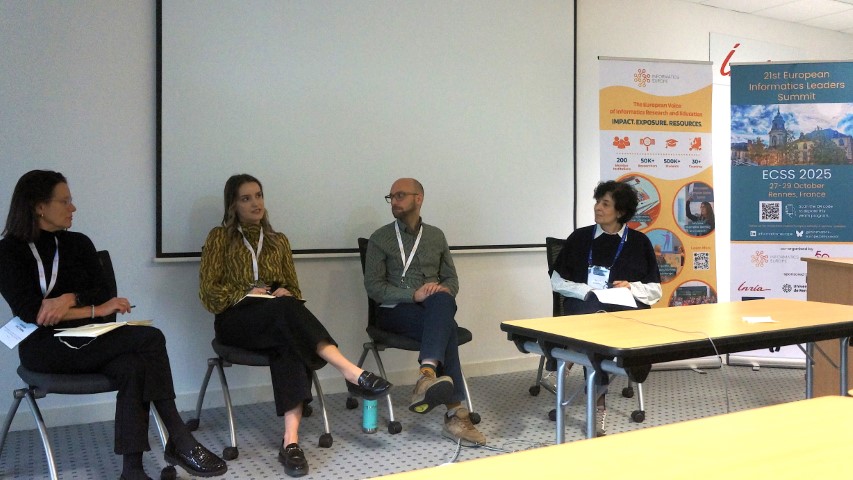
This year's session focused on inclusion departments, in which the co-organisers Simona Motogna (Babeş-Bolyai University, Romania), Chair of the Diversity & Inclusion Working Group, Oana Andrei (University of Glasgow, UK) and Lola Burgueño (University of Malaga, Spain), proposed a diverse agenda.
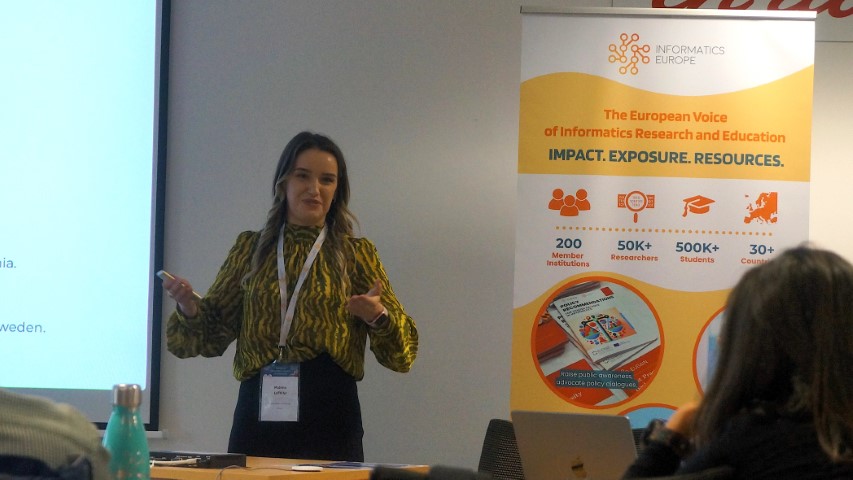
It started with short presentations by three invited guests: Letizia Jacheri (NTNU, Norway), Matthew Grech-Sollars (University College London, UK) and Malvina Latifaj (Mälardalen University, Sweden), showcasing initiatives from their institutions, their paths, and the challenges of adapting to diverse working environments. The three presentations were diverse, but shared a common goal, namely, long-term, comprehensive, and measurable commitment to achieving gender and cultural diversity across the entire academic and professional pipeline in Informatics. The success behind their achievements lies in:
- Prioritising and Actively Promoting Gender Equality and Women in STEM
- Broadening Outreach to Promote International and Cultural Diversity
- Comprehensive Scope: encompassing, encouraging, supporting and advancing diversity at every stage from young students to full professors, correlated with measurable impact.
While UCL focus on supporting well-being and psychological safety of its current staff and students, NTNU and MDU concentrate on building international capacity and networking.
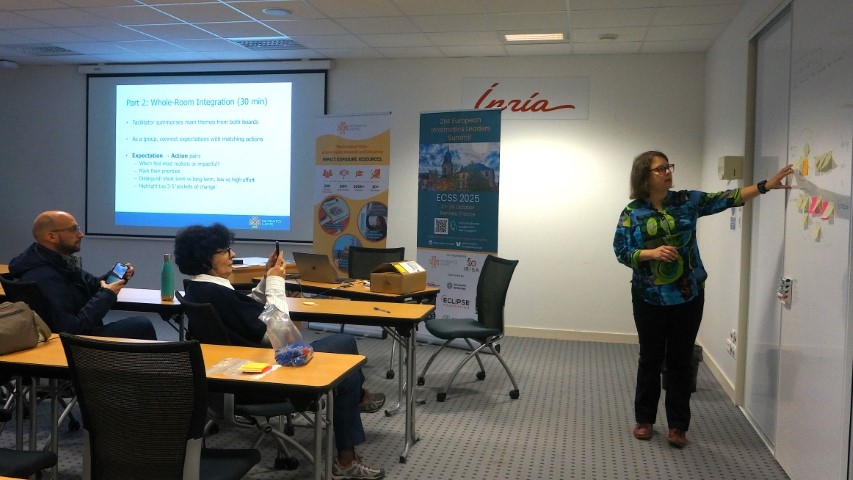
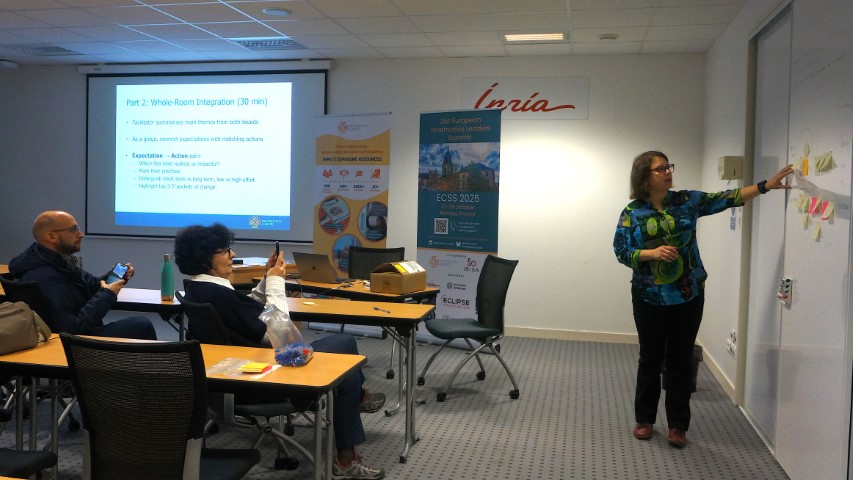
The presentations were followed by a lively panel discussion, in which participants had the opportunity to interact with the panellists, and experiences and suggestions were warmly appreciated by the audience. The second part of the session consisted of an interactive collaborative action, in which the participants split into two groups. One group identified expectations - What would you expect to feel welcomed in a department -, and the other group suggested actions - What would you do to make a new colleague feel welcomed? The activity was followed by a fruitful discussion that helped participants align expectations with actions, identify good practices, and surface new inclusion challenges to address.
The expectations centred on the experience of being new: hoping for a friendly atmosphere, support, and opportunities to grow both professionally and as a team member. The proposed actions ranged from informal welcoming gestures to addressing specific needs or implementing broader institutional policies
Ethics Workshop
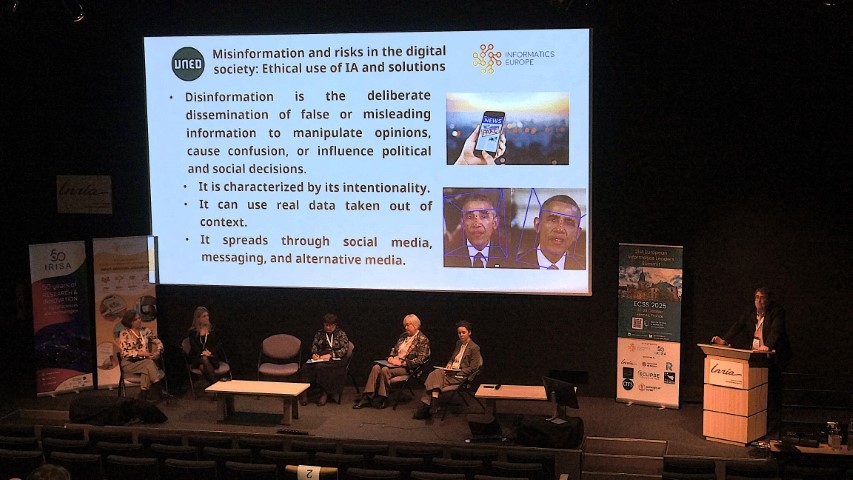
This year's Ethics Workshop constituted an important starting point for the recently renewed Ethics working group. The session, chaired by Covadonga Rodrigo (UNED, Spain), focused on the social impact of the use of information and technology, as well as their interaction with people, offering a critical view to identify challenges related to responsibility, accountability, misinformation, and the promotion of good practices in the field of technology. The Workshop included an interactive activity, updates from the working group, and a round table and panel discussion with specialists from various European institutions.
The interactive activity, co-chaired by Monica Landoni (Università della Svizzera italiana, Switzerland), deepened knowledge and detection of Dark Patterns. It was an engaging and hectic activity based on learning resources developed previously in the Erasmus+ Ethics4EU: Ethical Computer Science Education for Europe project (2019-2022), where Informatics Europe was a member.
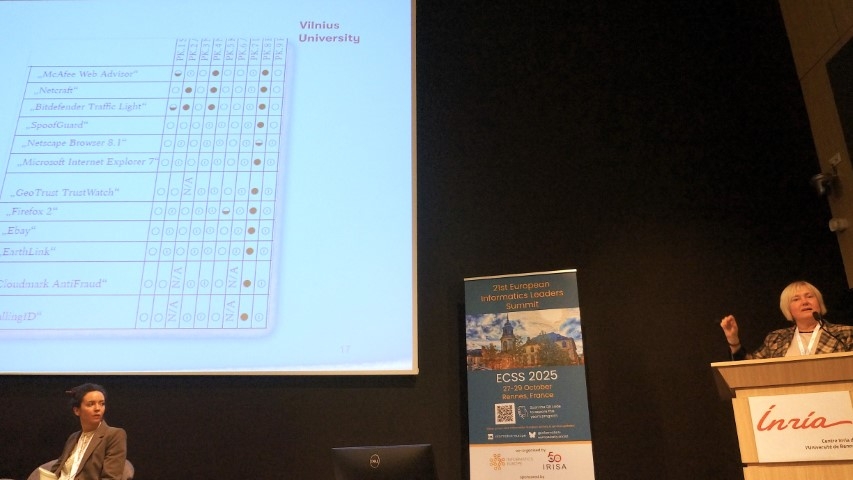
The round table and panel discussion was a participatory session focused on analysing ethical challenges related to security in the digital society, integrating perspectives from WG members as well as leaders from the Informatics Europe and ERCIM communities. It was co-chaired by Emma Beauxis Aussalet (ERCIM & Vrije Universiteit, Netherlands) and aimed to highlight the work done by active members focusing on the risks for society. Five topics were projected in short presentations:
- Petra Saskia Bayerl (CENTRIC, UK): From Lab to Law: Compliance Journeys of High-Risk AI Development and AP4AI self-assessments
- Kristina Lapin (Vilnius University, Lituania): Raising Ethical Awareness to Combat Dark Patterns
- Rafael Pastor (UNED, España): Misinformation and risks in the digital society: Ethical use of IA and solutions
- Mirela Riveni (University of Groningen, Países Bajos): Ethical issues in decision-making with AI
- Tatjana Welzer (University of Maribor, Eslovenia): Ethics and Accountability
The presentations led to a dynamic discussion with the workshop audience.
The Ethics WG has recently begun work on a report on Ethics in Informatics Higher Education Studies. The report will outline the current state of ethics teaching across subject areas, highlight best practices from Informatics Europe members, and provide recommendations for departments looking to integrate these concepts into new or revised curricula.
Best Dissertation Award & Minerva Informatics Equality Award 2025
During each ECSS, we celebrate institutions, teams and individuals who have outstanding contributions and performances in the field of Informatics.
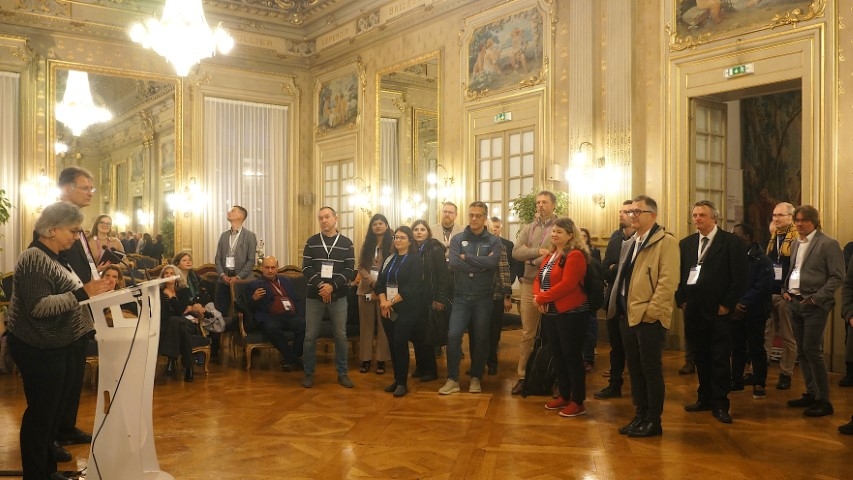
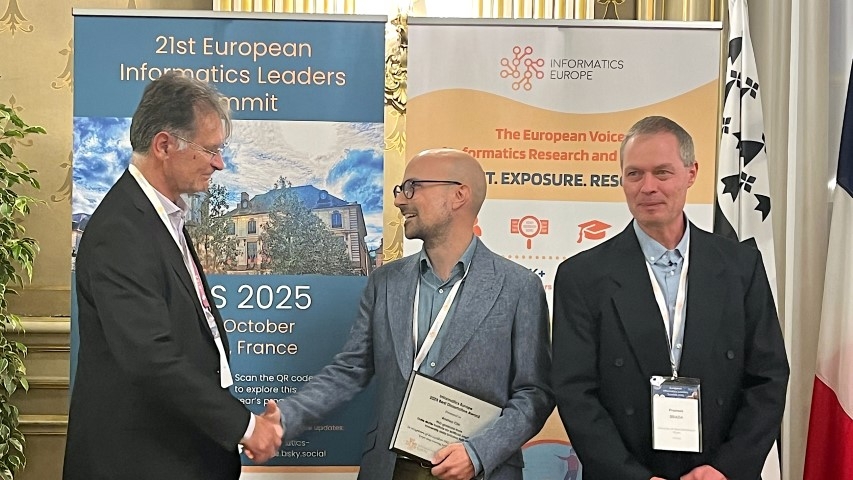
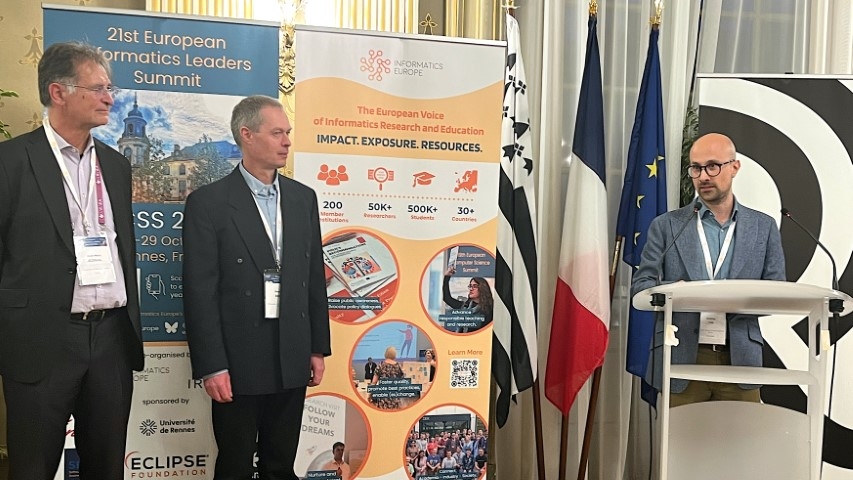
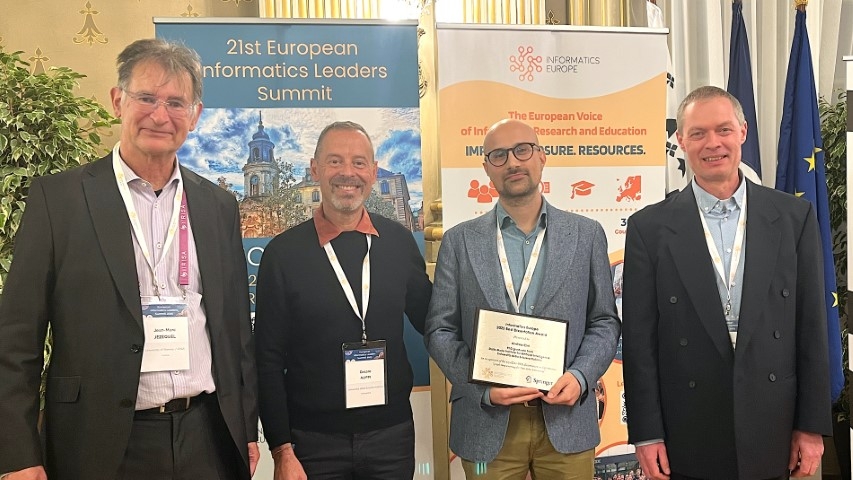
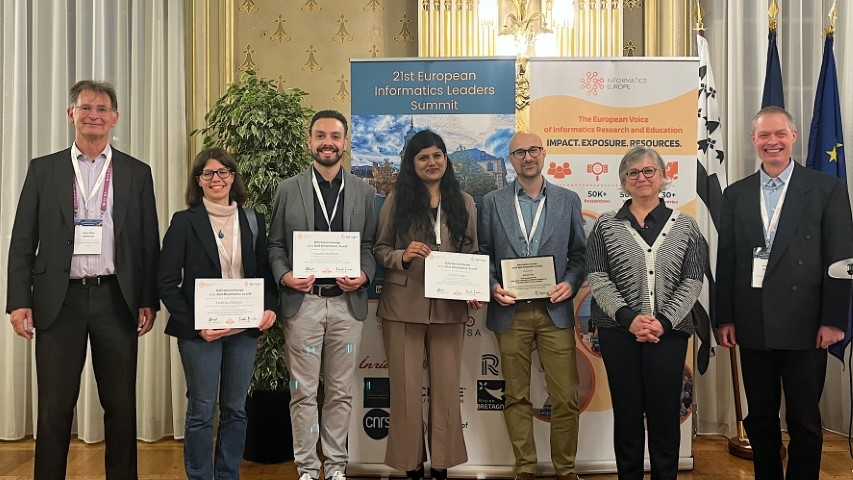
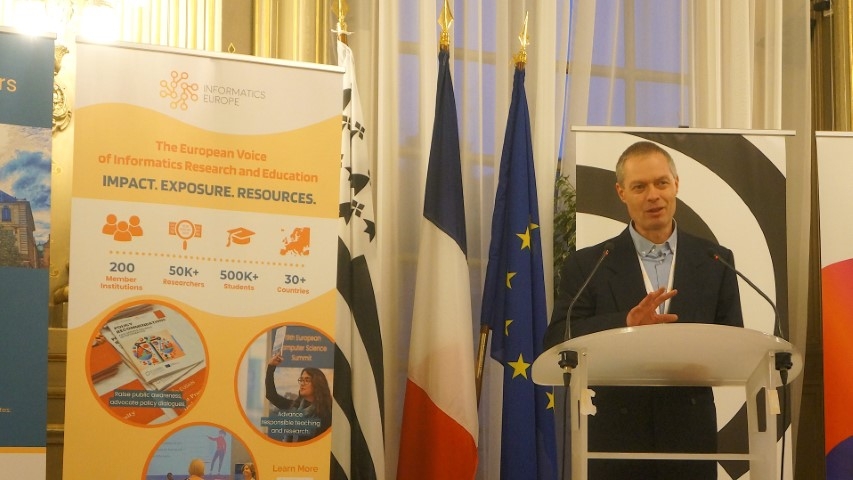
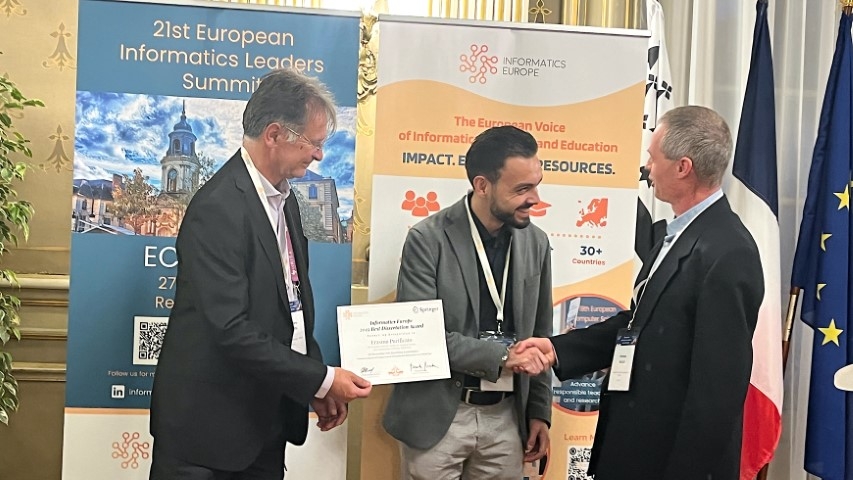
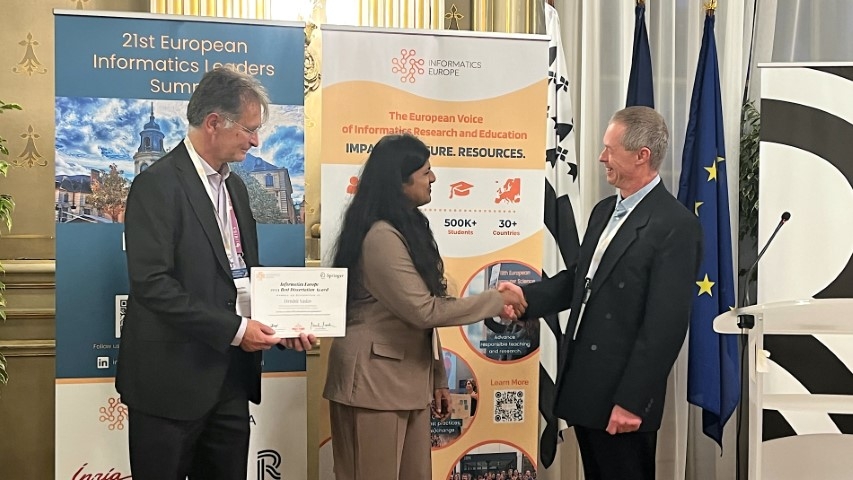
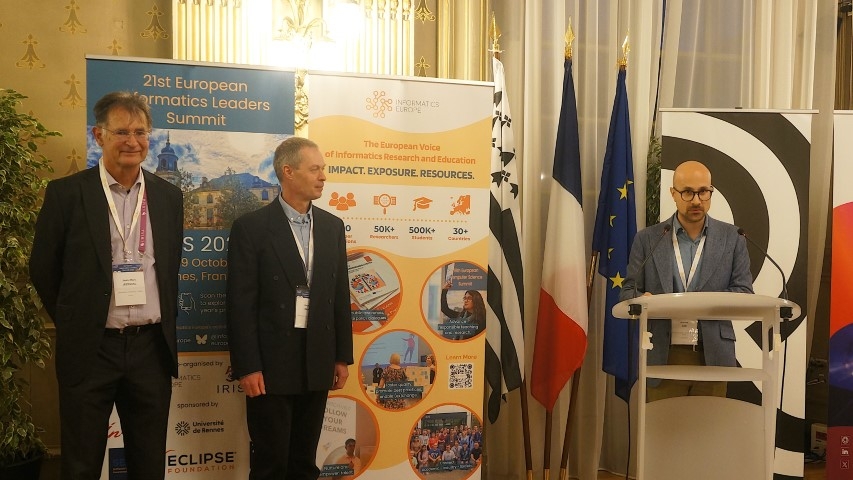
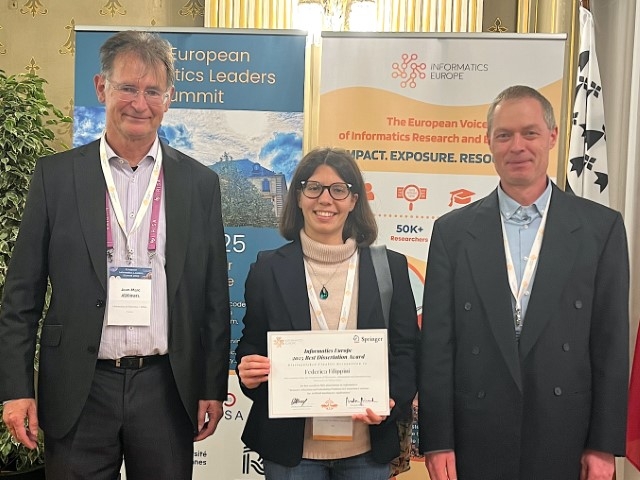
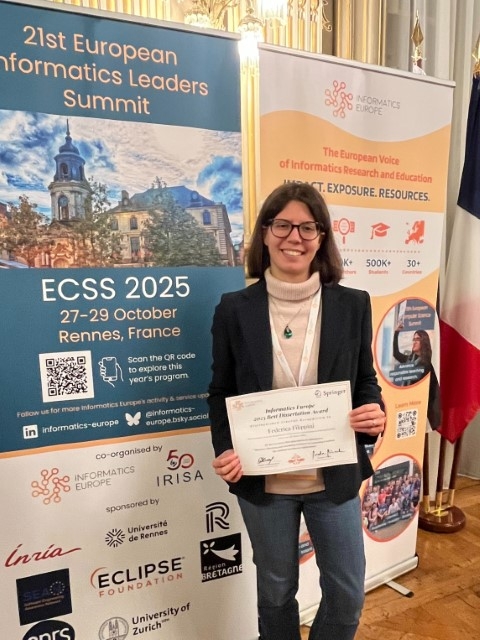
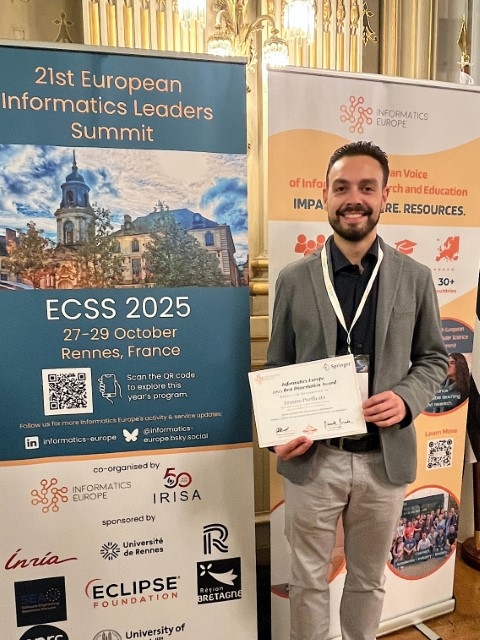
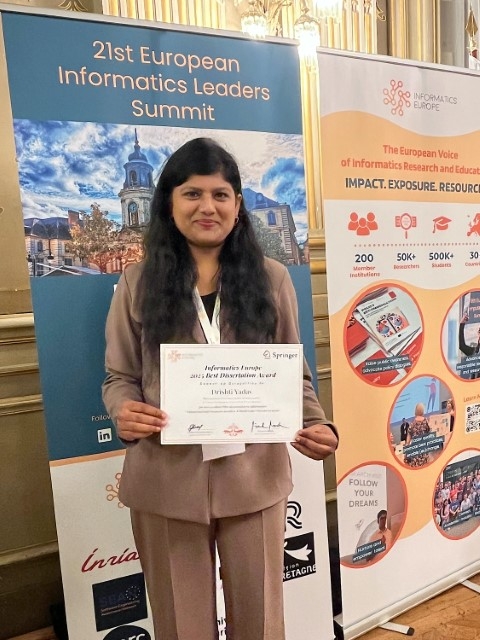
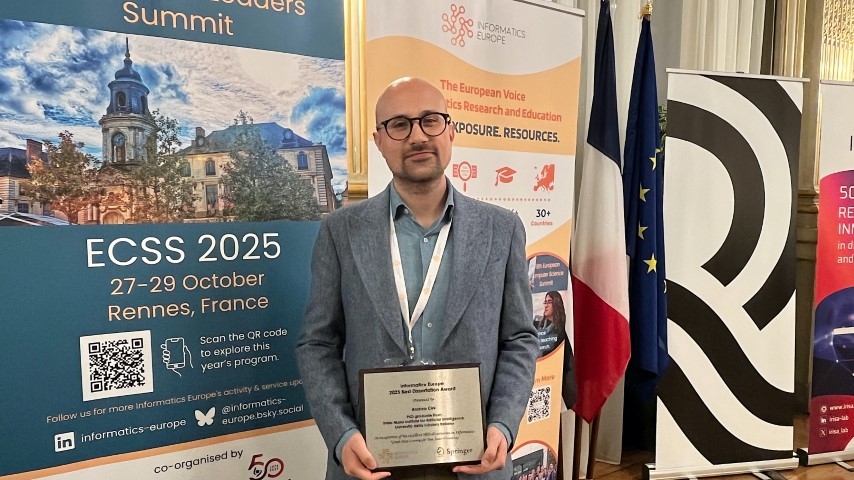
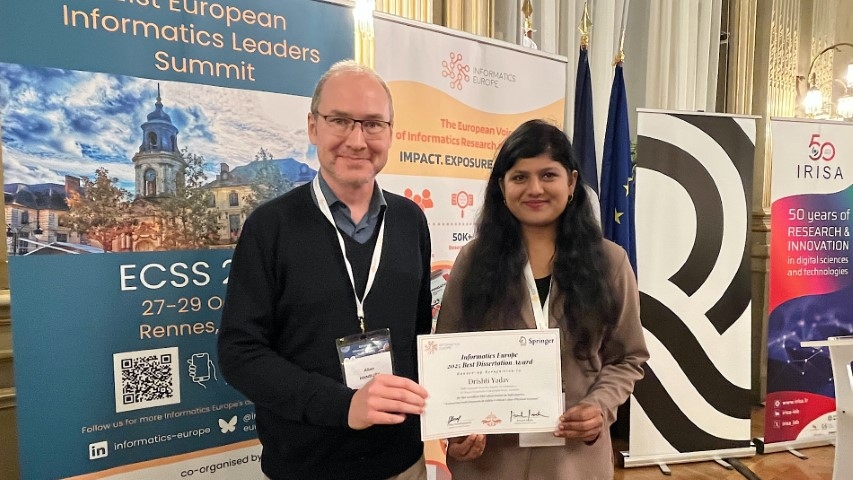
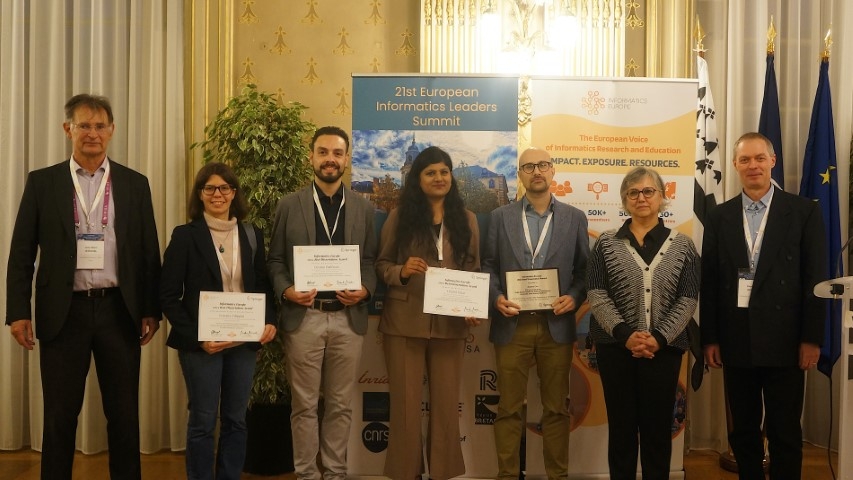
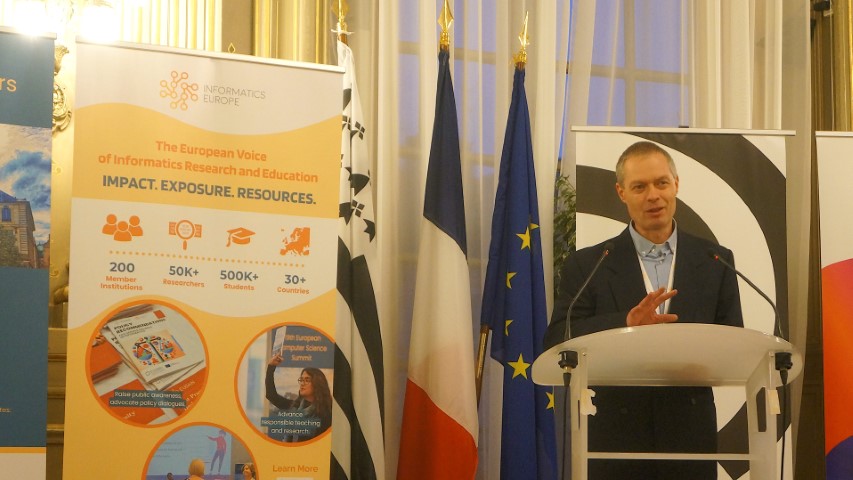
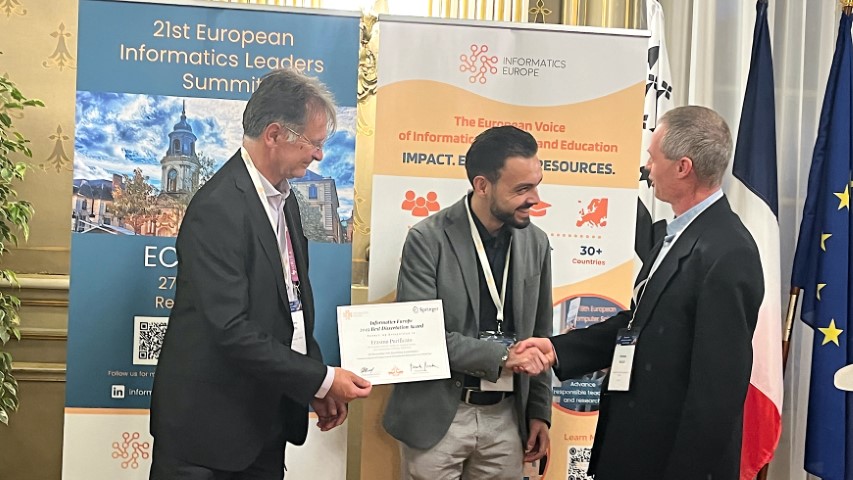
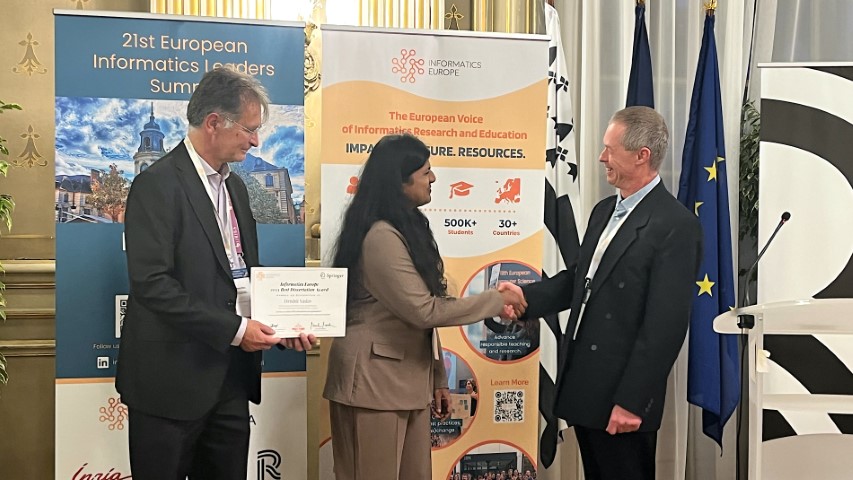
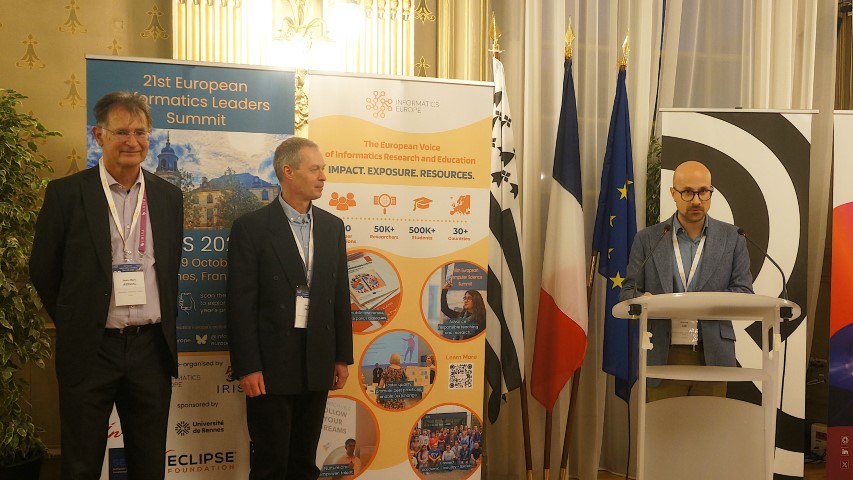
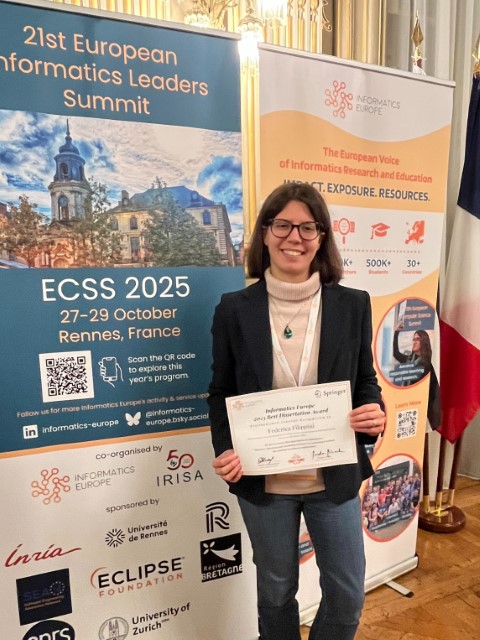
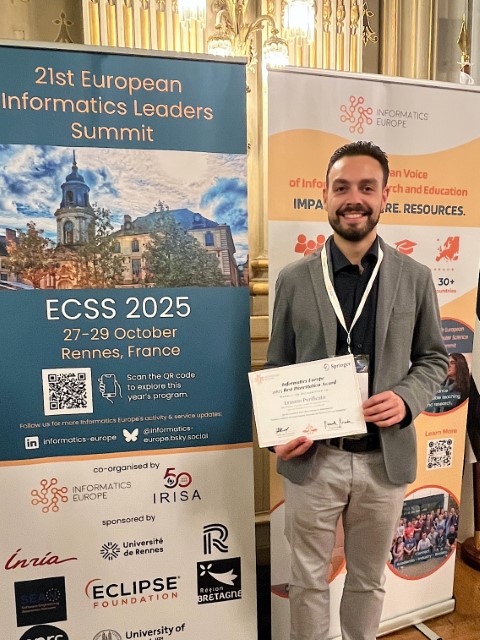
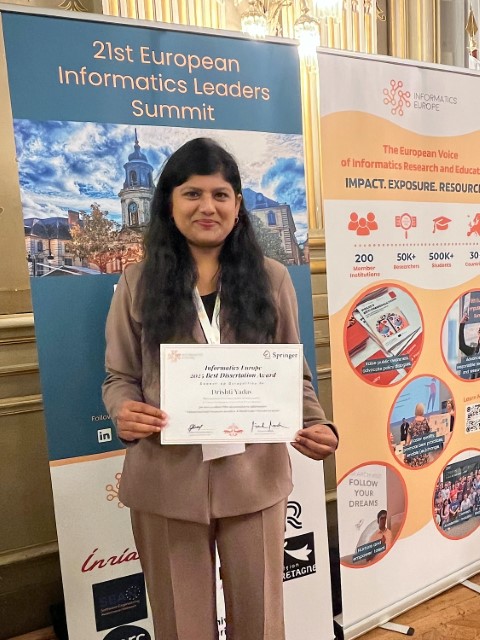
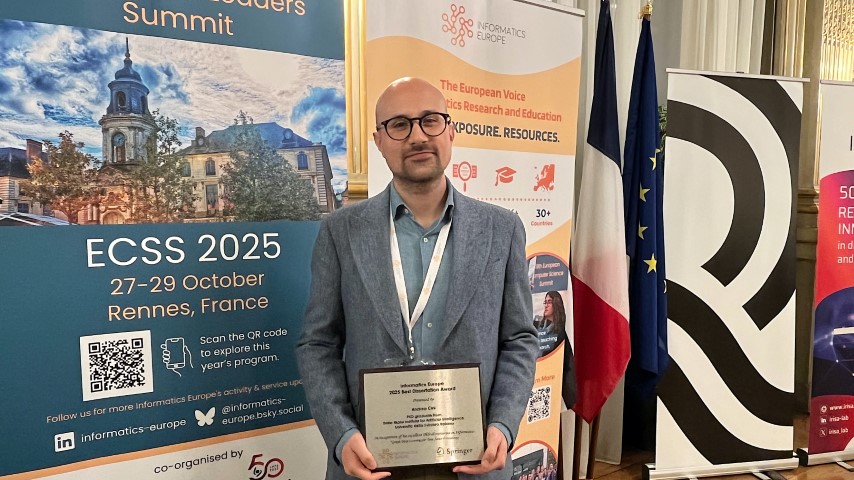
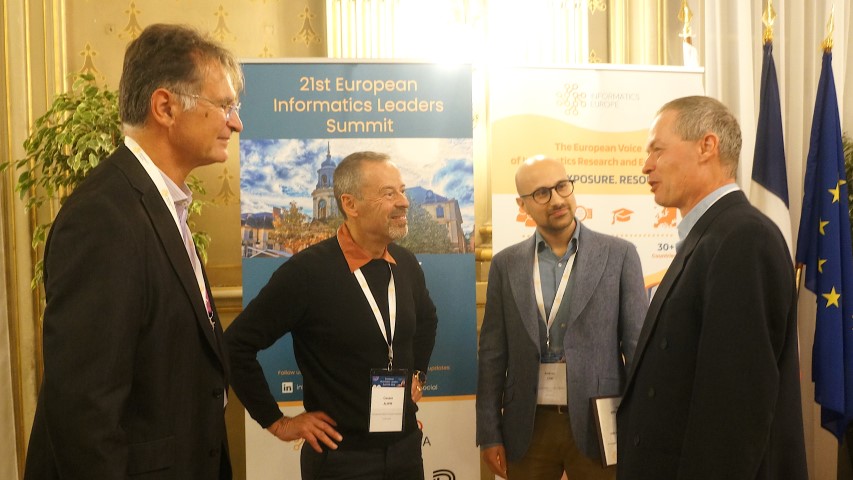
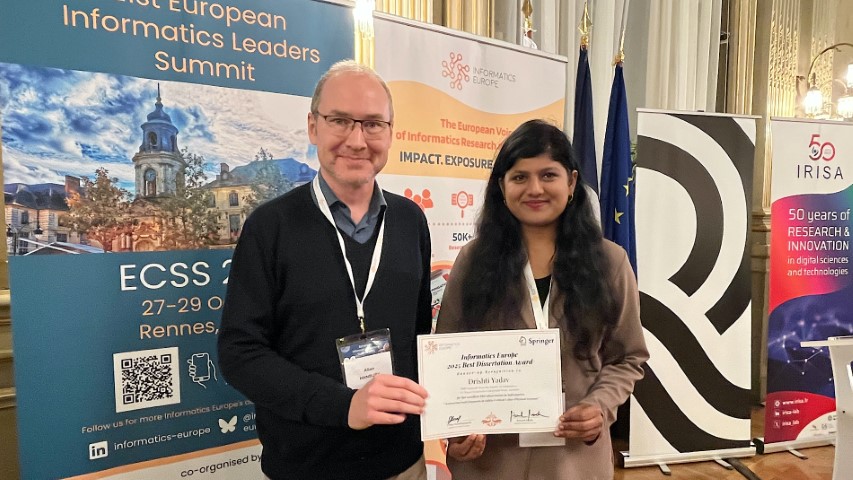
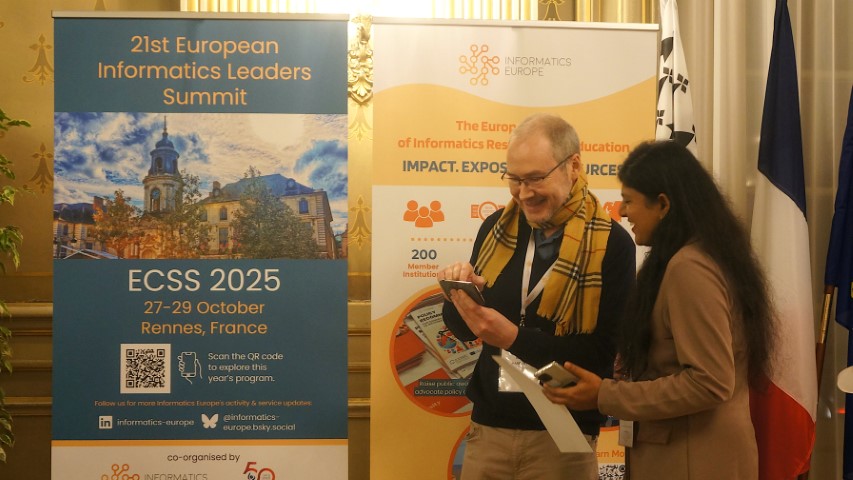
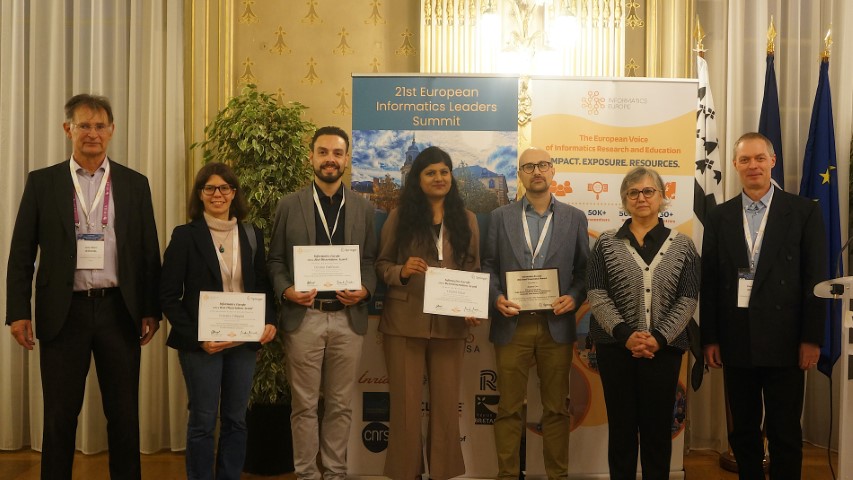
This year, we were delighted to announce at our Award Ceremony during ECSS's Monday Welcome Reception that Andrea Cini, a PhD graduate from the Faculty of Informatics, Università della Svizzera italiana (Switzerland) won the 2025 IE Best Dissertation Award (BDA), with three runners-up Nathan Cassee, PhD graduate from TU Eindhoven (Netherlands), Erasmo Purificato, PhD graduate from Otto von Guericke University Magdeburg (Germany) and Drishti Yadav, PhD graduate from TU Wien (Austria). This year saw a record 34 nominations for the Award. Alongside the winner and the three runners-up, two distinguished finalists, Federica Filippini, PhD graduate from Politecnico di Milano (Italy) and Shuzhe Wang, Aalto University (Finland) were honoured.
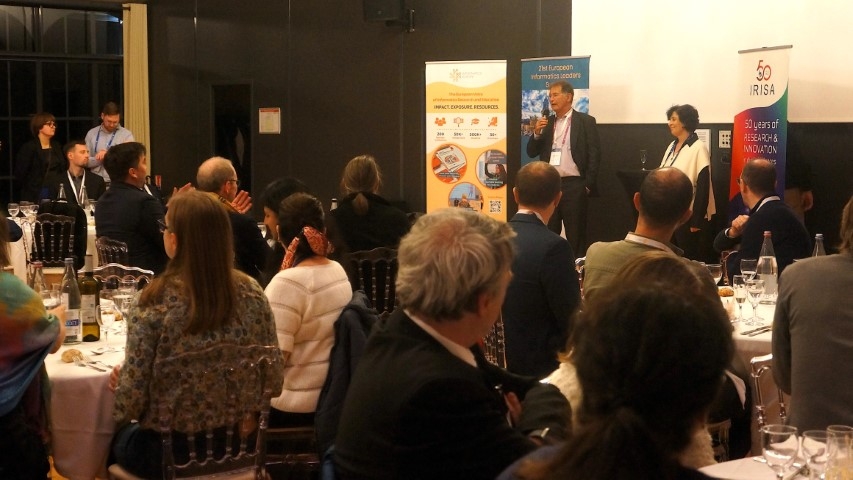
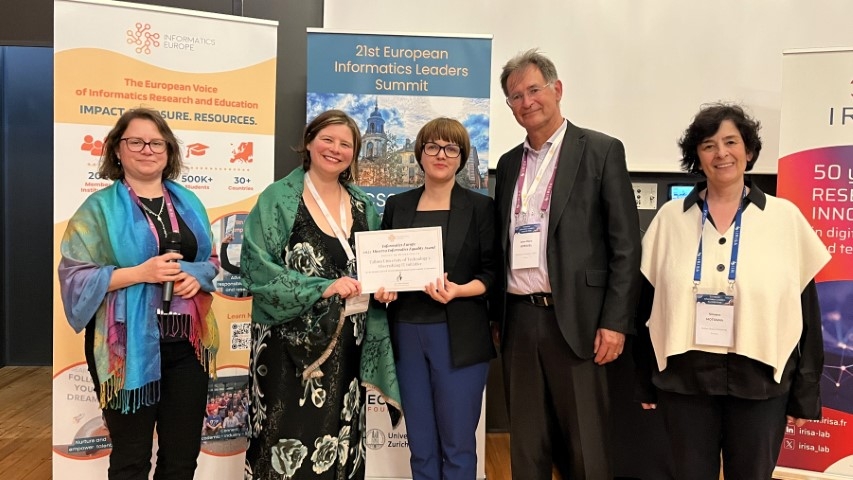
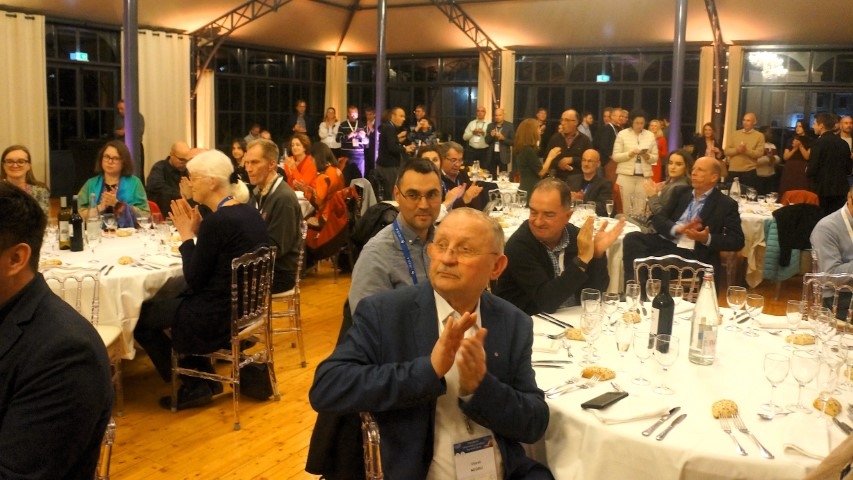
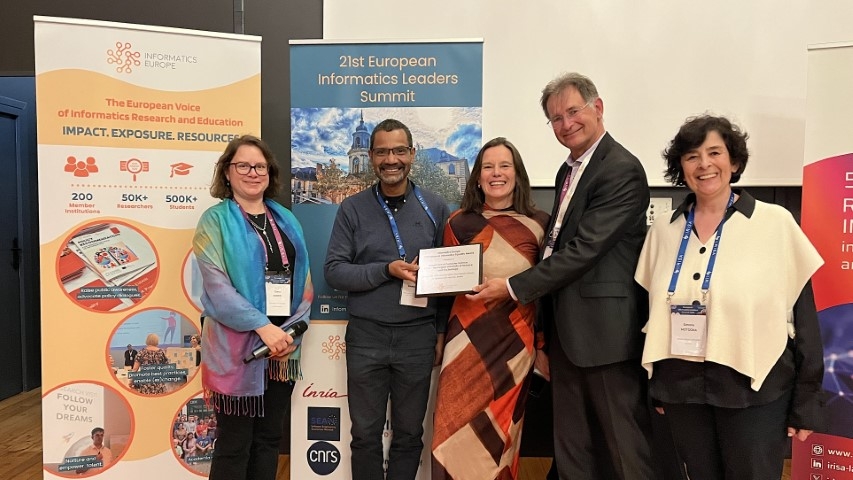
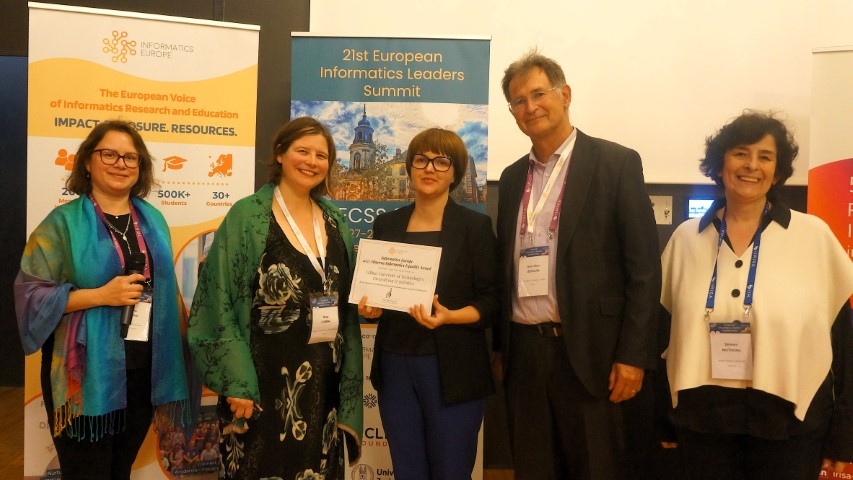
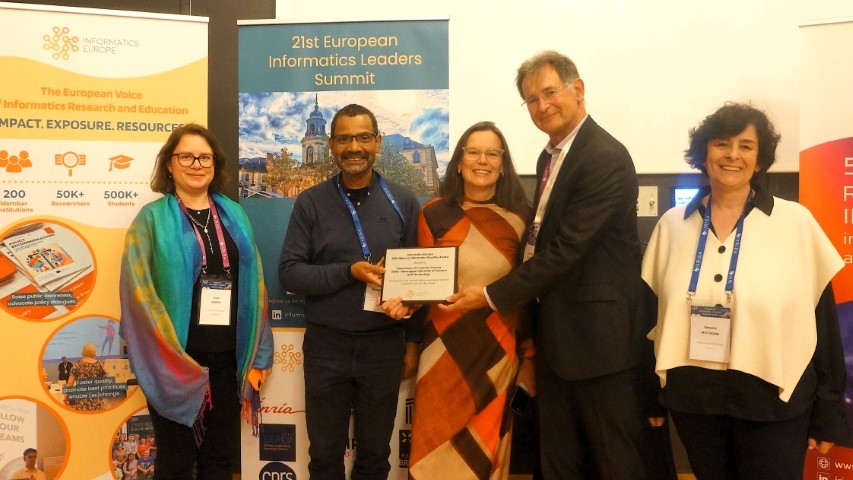
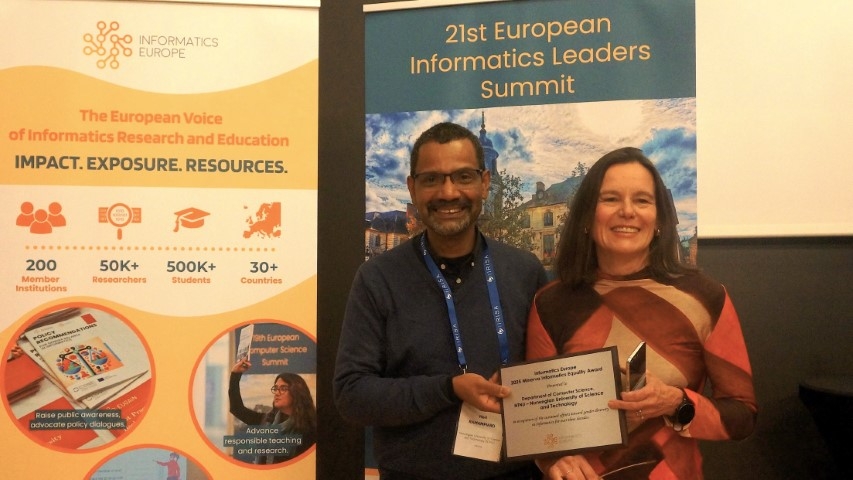
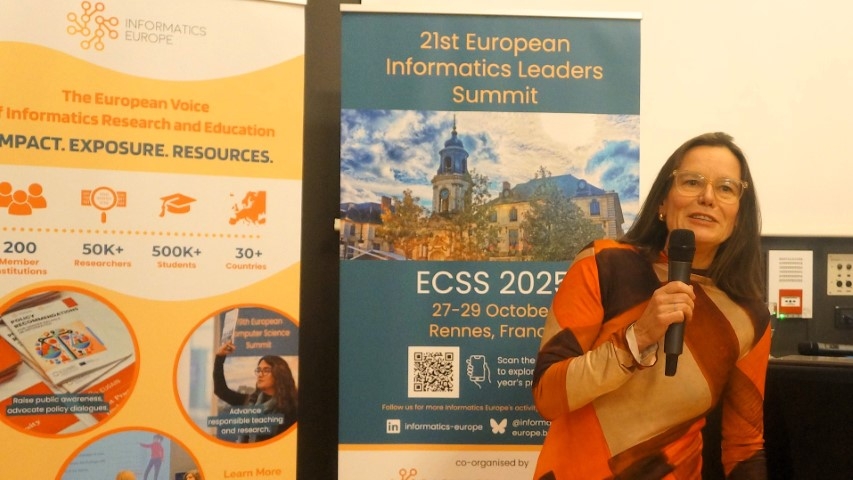
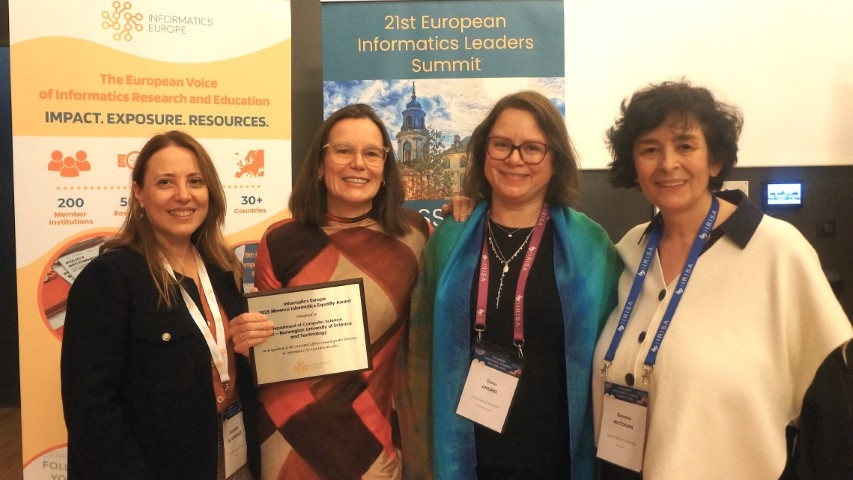
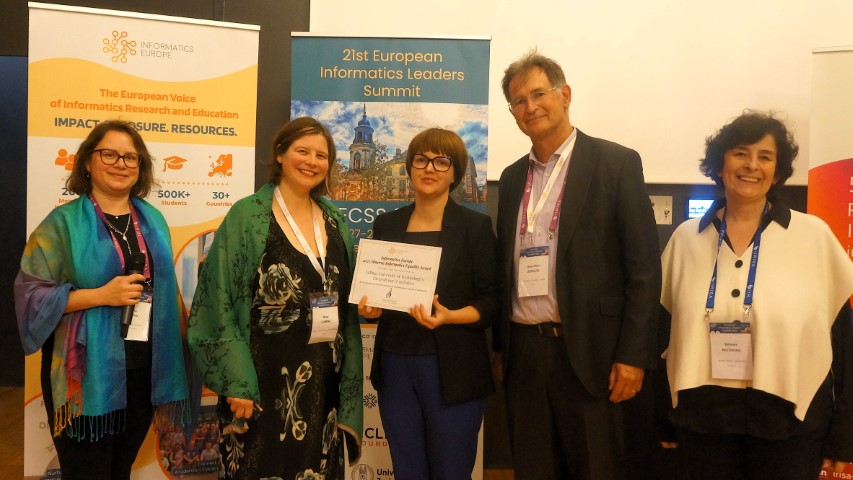
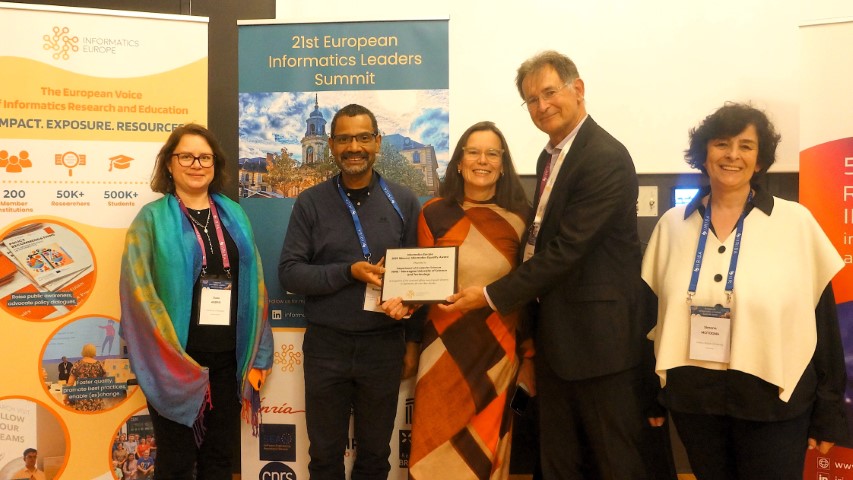
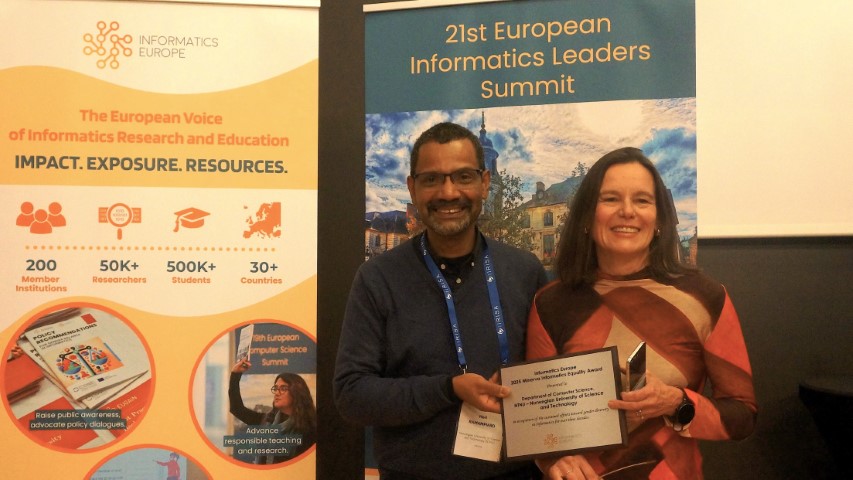
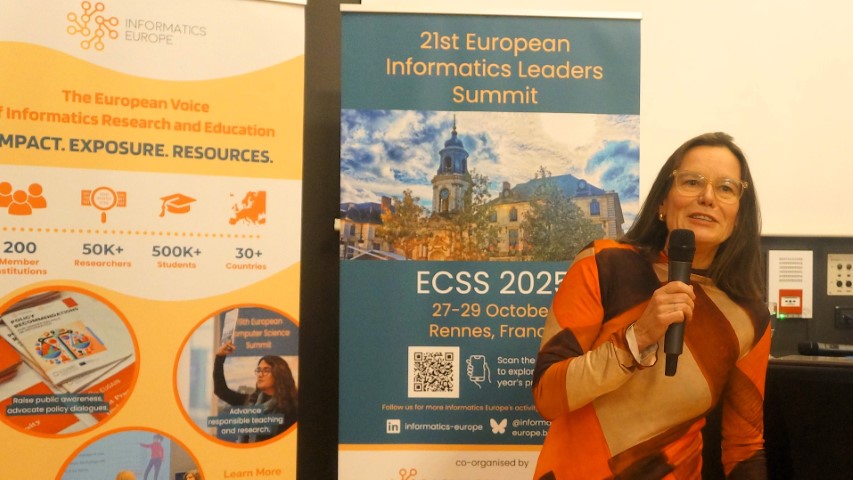
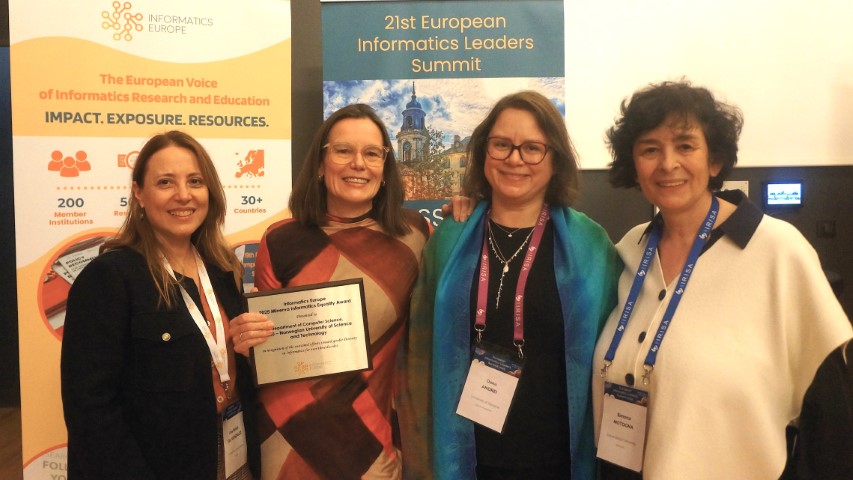
We also celebrated the 10th anniversary of the IE Minerva Informatics Equality Award (MIEA) this year during the ECSS Official Dinner on Tuesday. The Award acknowledges efforts and dedication from initiatives that support women in Informatics education and research. The Department of Computer Science at the Norwegian University of Science and Technology (NTNU) wins the 2025 MIEA for its long-standing and transformative commitment to empowering women in Informatics. The honorary runner-up, Tallinn University of Technology’s Diversifying IT initiative, was also recognised for its innovative and tech-driven efforts to encourage women’s participation and advancement in Informatics.
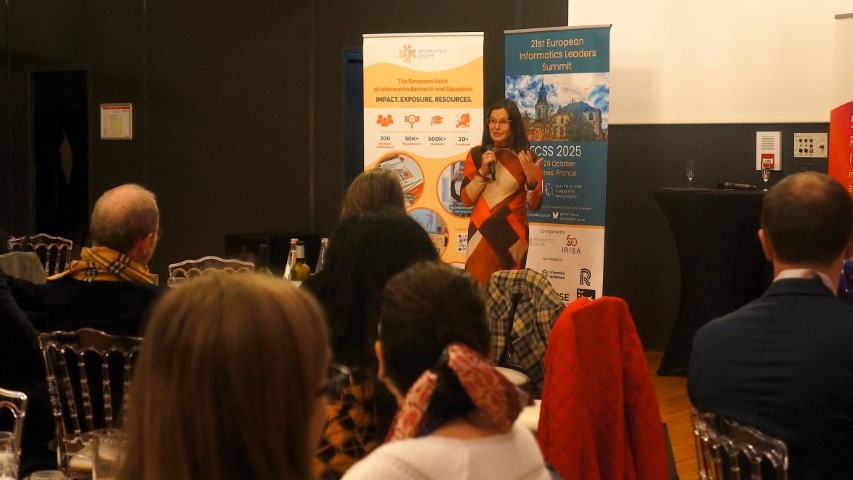
During the MIEA Award Ceremony, the launch of Informatics Europe’s latest publication: “Minerva Informatics Equality Award Catalogue — Celebrating a Decade of Gender Equality in Informatics Research and Education: Best Practices in Europe” was presented by Simona Motogna (Babeş-Bolyai University, Romania), Chair of IE’s Diversity and Inclusion Working Group. The Catalogue compiles a decade of best practices submitted to the Minerva Award, classifying and analysing actions that support women in Informatics at all career stages. It offers searchable examples, tags, and impact indicators to inspire institutions and individuals committed to fostering diversity, inclusion, and sustainable change in academia and the field.
For further details on the work of this year’s winners or previous years’, please explore our BDA & MIEA webpages.
ECSS 2026 in Porto, Portugal
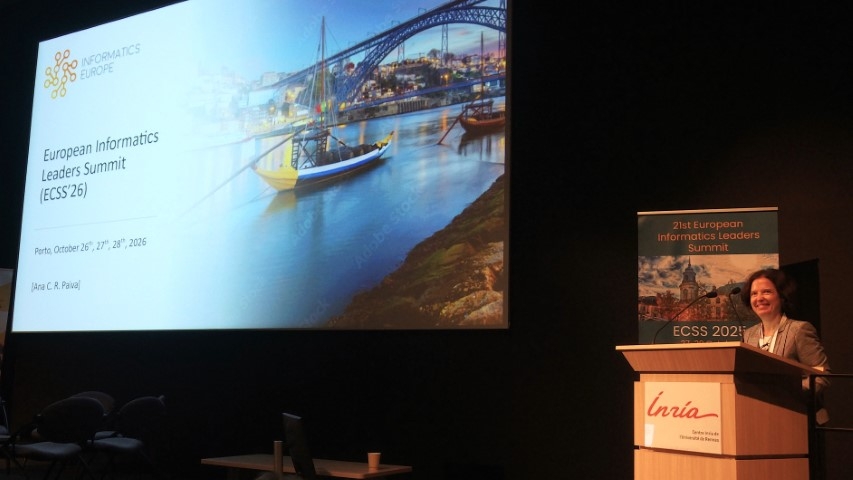
The next Summit, ECSS 2026, will take place in Porto (Portugal), co-hosted with IE member institute Department of Informatics Engineering, University of Porto. With ECSS 2026 heading to Porto, you will again have an exceptional chance to connect with peers from across Europe, discuss the next steps for our discipline, and do so in one of Europe's most captivating cities.
Join us as an ambassador and help broaden our community, fostering deeper collaboration across Informatics and related disciplines. To recognise your support, we will offer you complimentary ECSS registration for every successful new IE member referral within six months of your introduction.
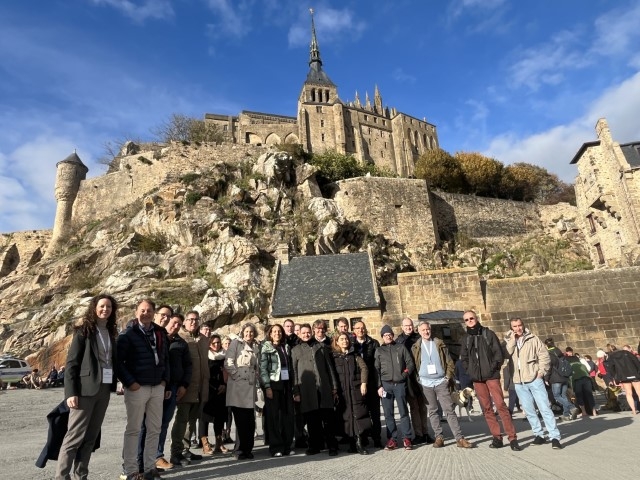
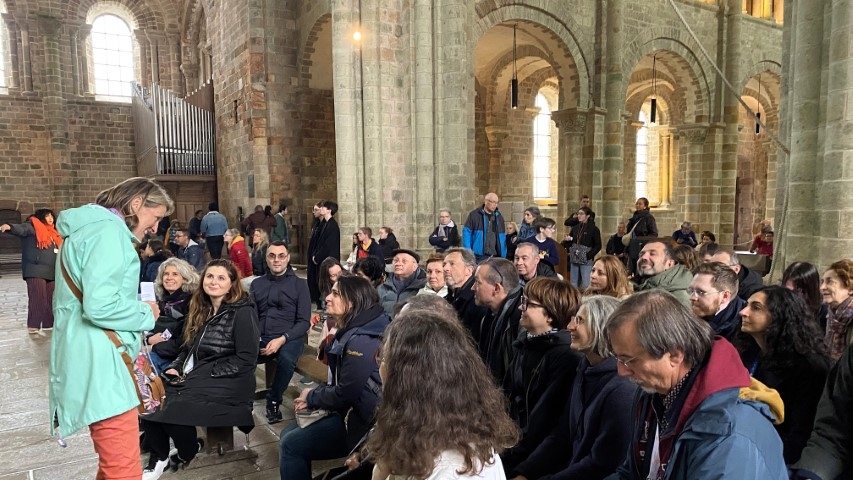
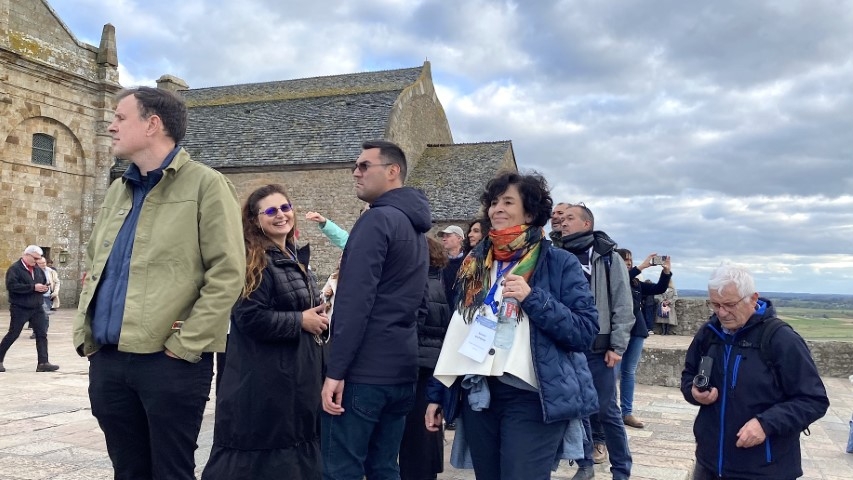
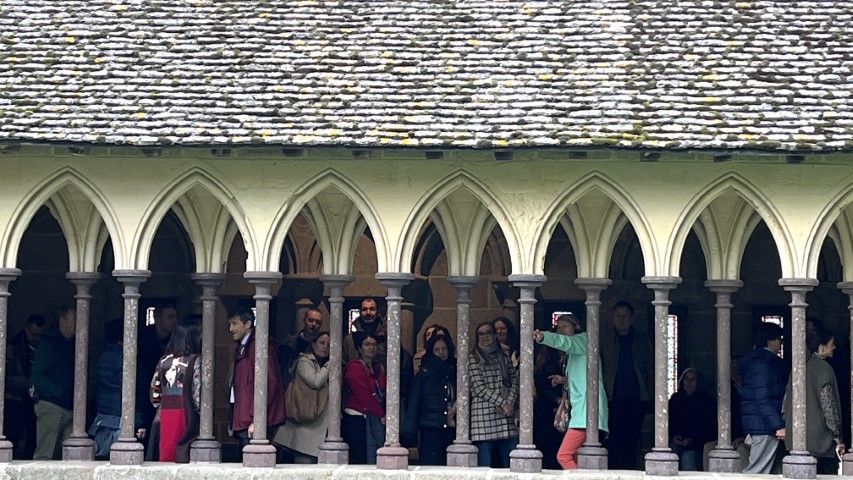
Just as we climbed the many steps of Mont-Saint-Michel together at ECSS 2025, we continue moving forward as a community—step by step, shaping the future of Informatics. Keep the momentum going by joining Informatics Europe activities, including our Working Groups, where colleagues from across Europe come together to bridge research and policy, developing statements and initiatives that strengthen our community and support Informatics research and education in Europe.
Save the dates on your calendar: ECSS 2026, 26-28 October 2026. We look forward to welcoming you and your colleagues again to our annual flagship summit next year!
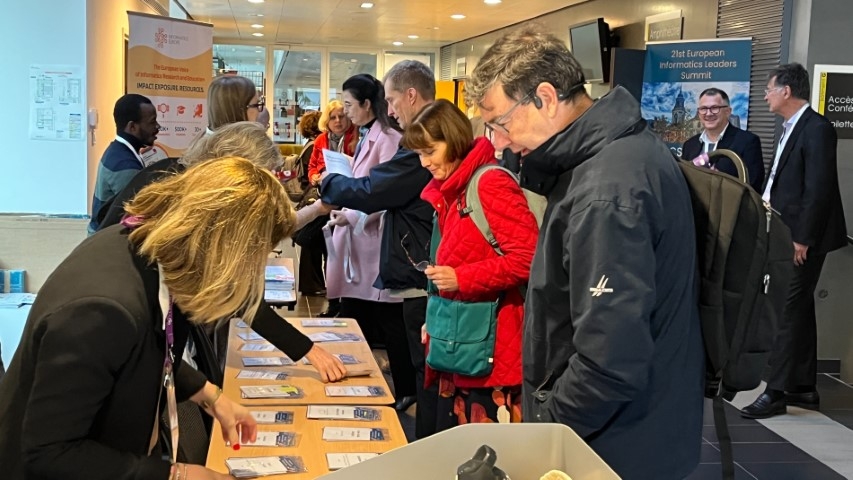
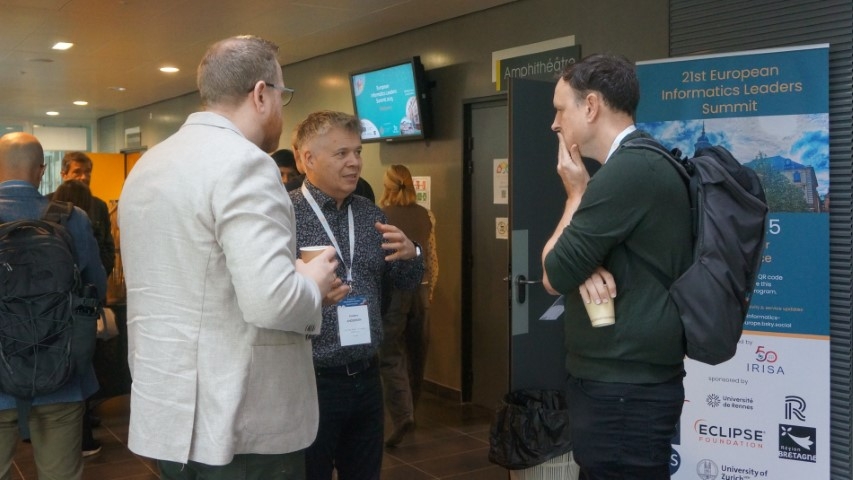
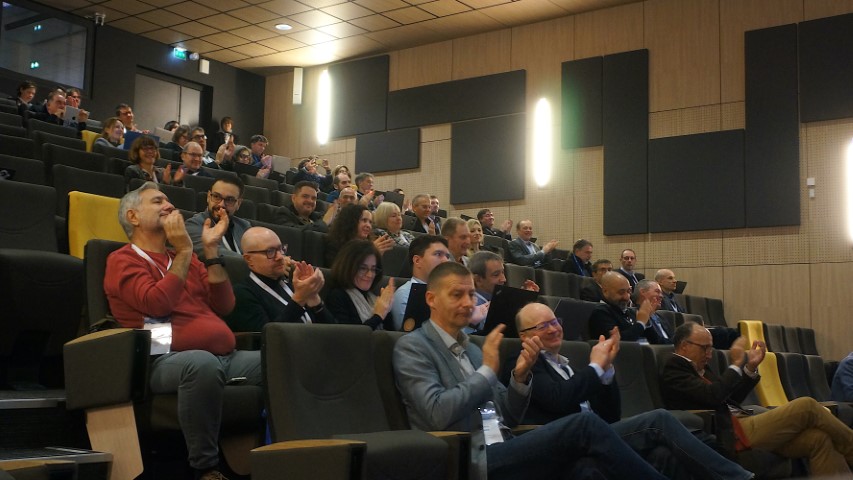
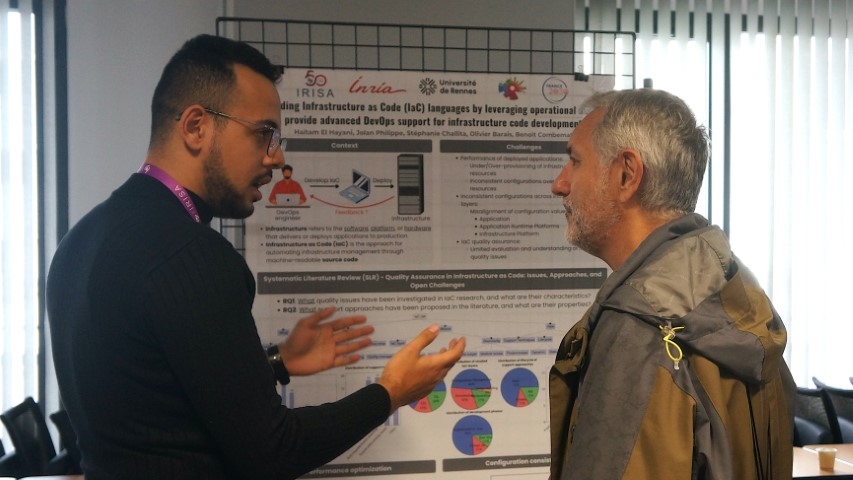
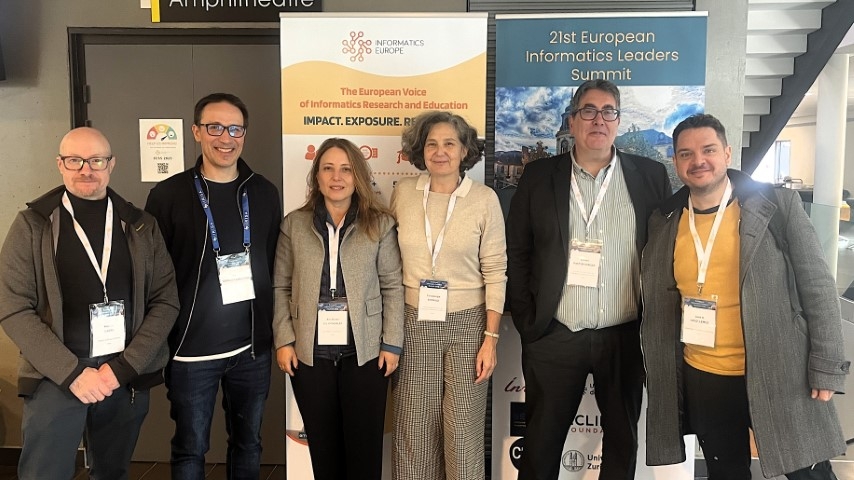
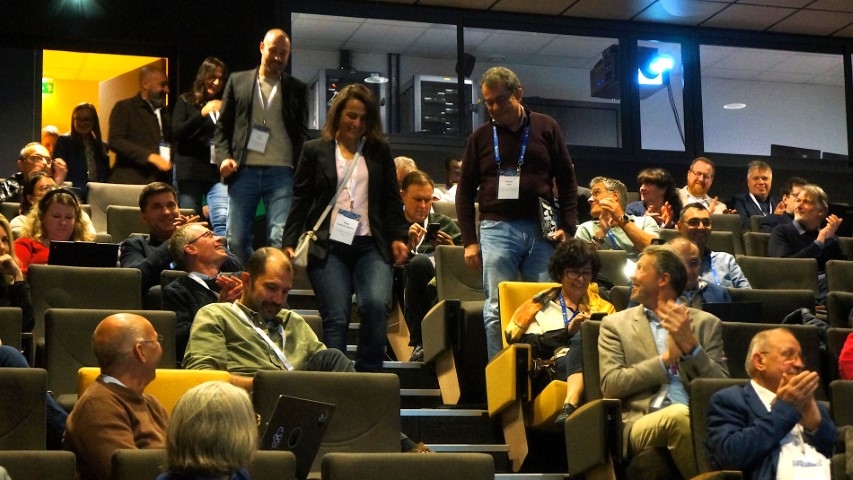
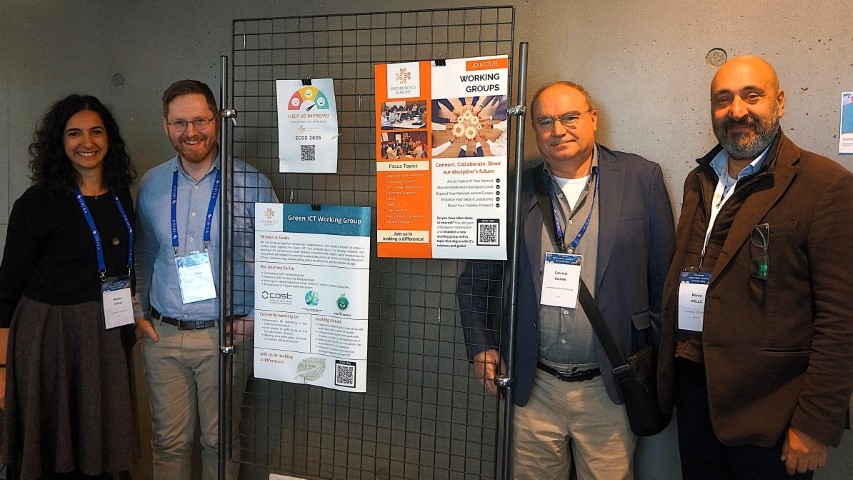
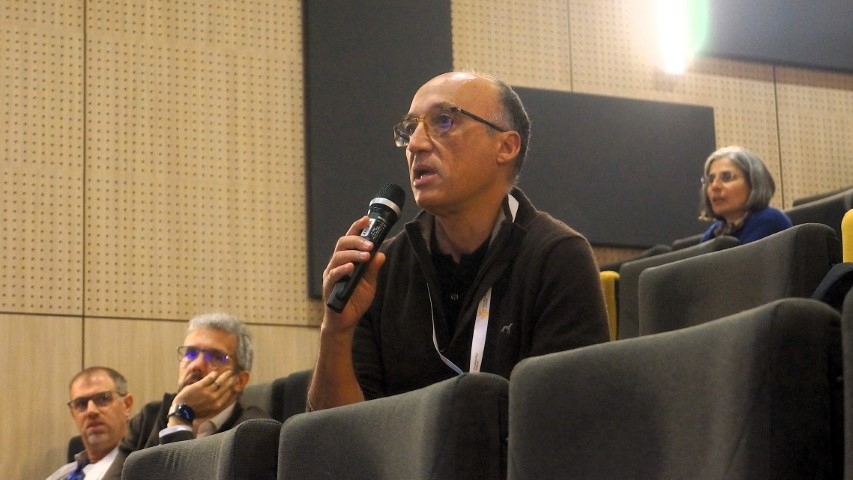
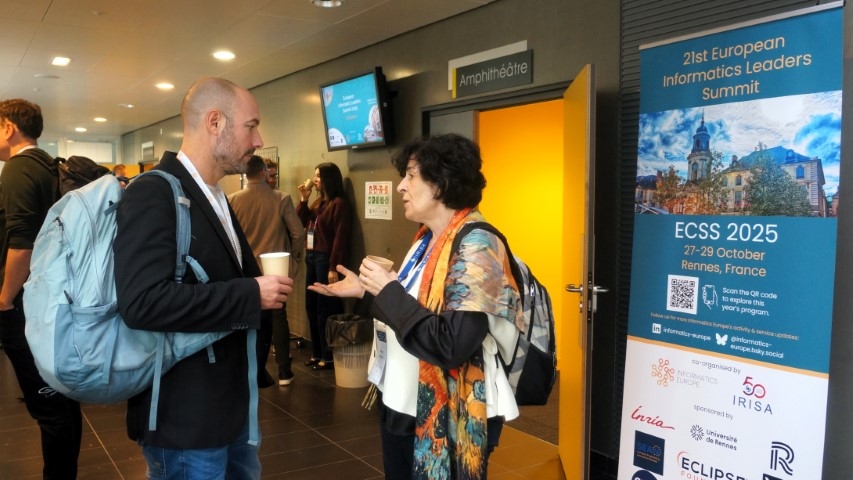
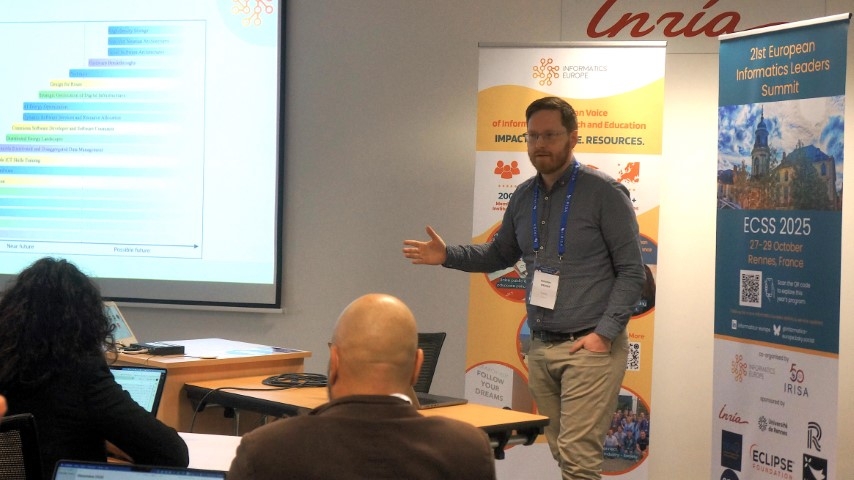
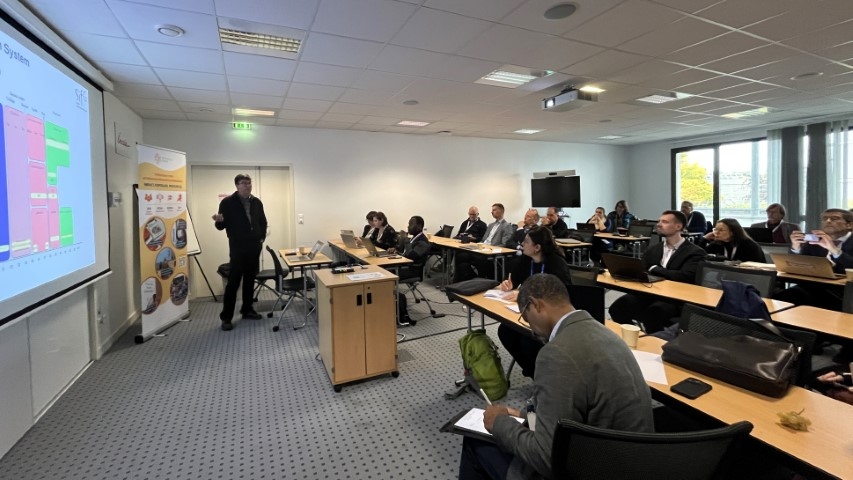
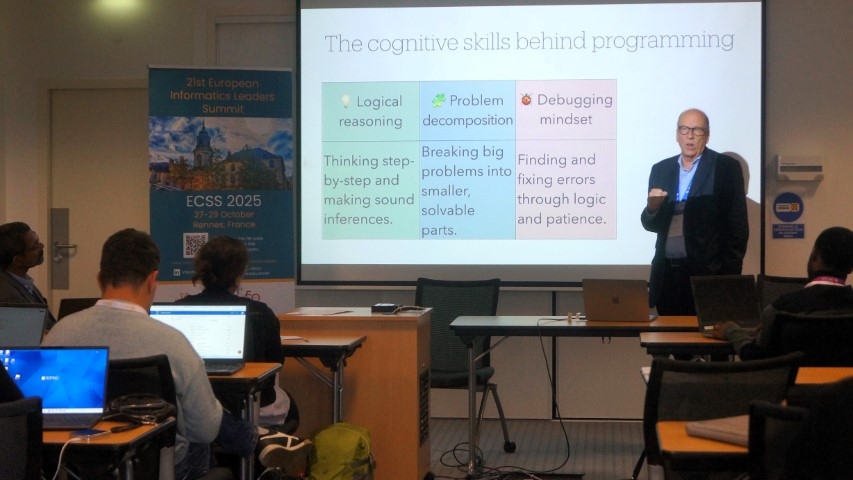
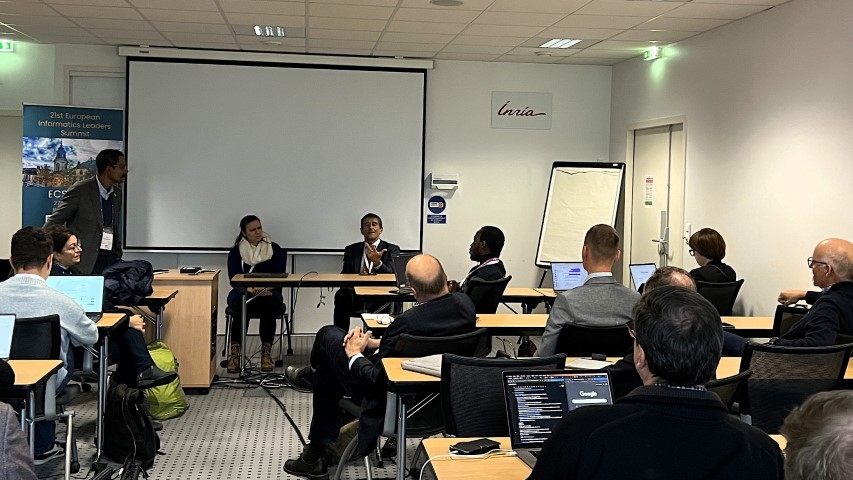
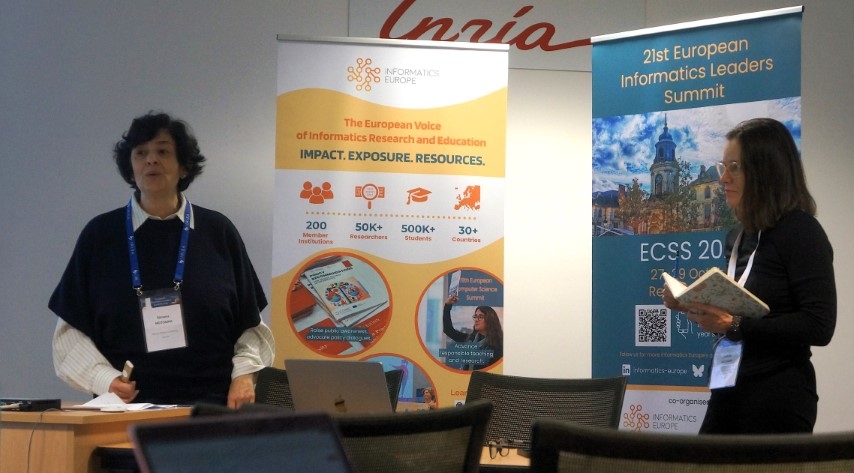
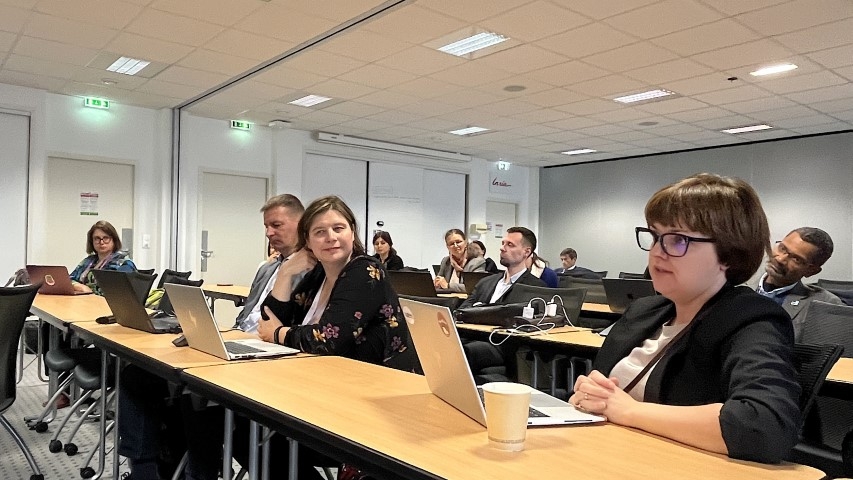
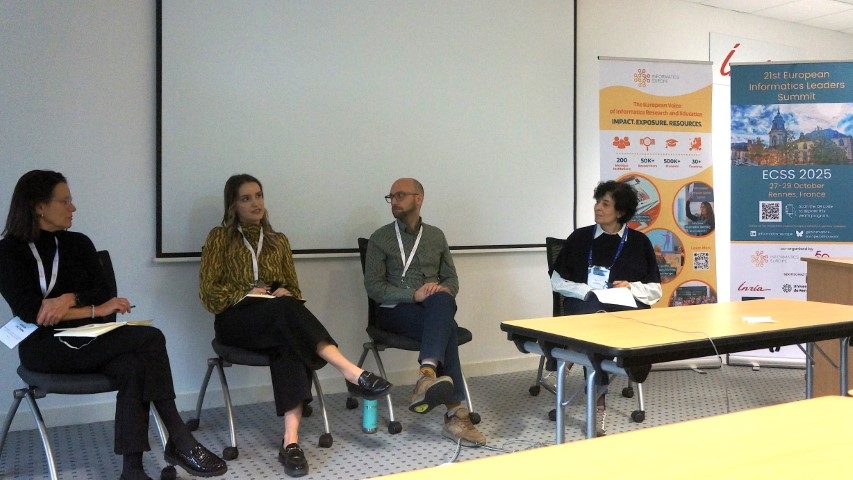
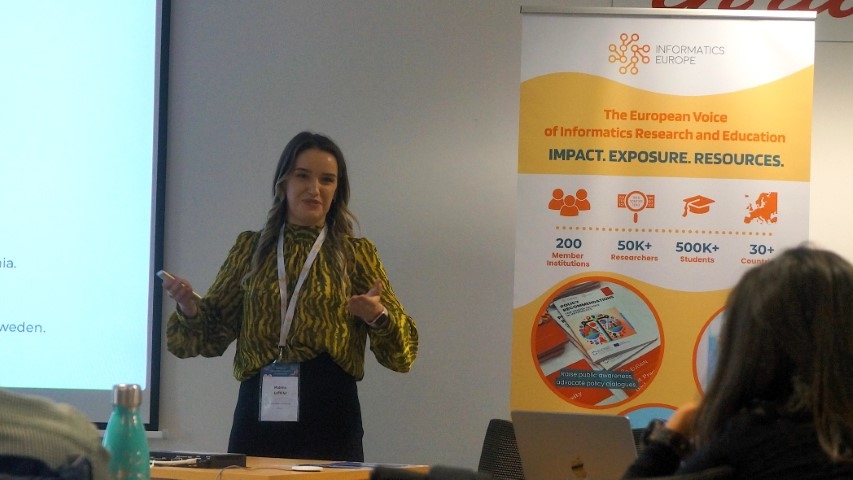
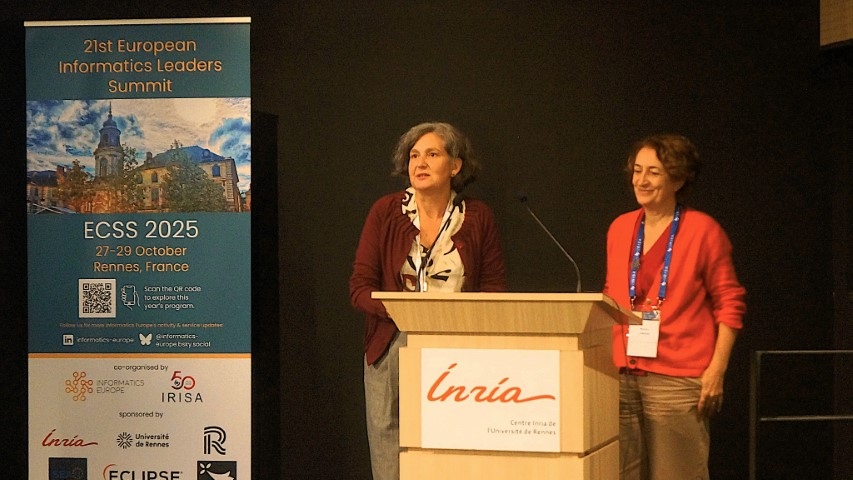
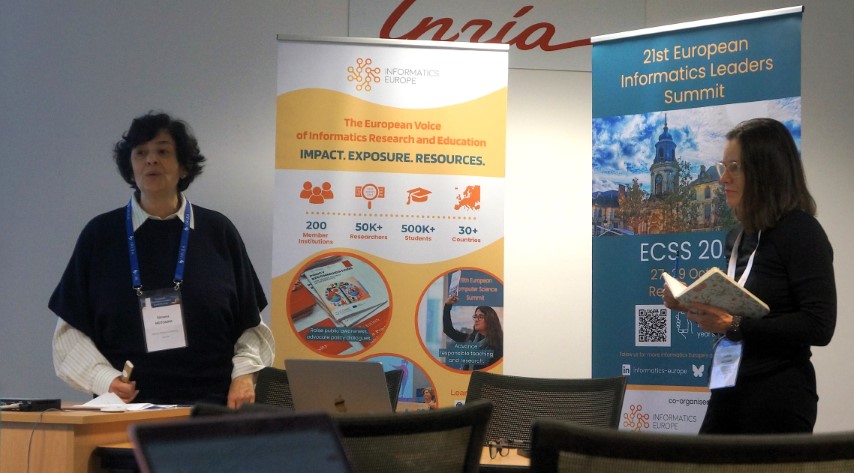
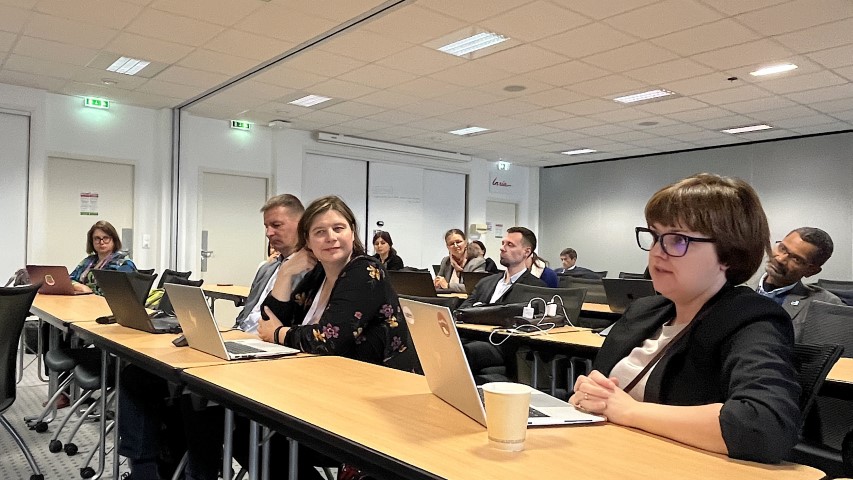
*Please note that the photos below are better viewed when zooming out. Additional photos, per session, are available in the individual session webpages.










Accommodation
We recommend you to book your accommodation as early as possible. Indeed, while Rennes is a university and business city, several conventions can happen at the same period than ECSS 2025.
Participants are invited to do their booking individually at one of the many downtown hotels of Rennes. For your accommodation, you may book a hotel in the southern or northern city center, as you will never be far from a metro stop or a bus stop. Here are some suggestions of hotels:
4-star hotels
- Mercure Rennes Centre Parlement: In the heart of the city of Rennes, close to the historic center and its shops, the hotel offers easy transport access thanks to nearby bus stops and metro lines A and B.
- Novotel Rennes Centre Gare: In the very centre of Rennes, only 50 metres from the railway station, Novotel Rennes Centre Gare is a modern hotel with 102 rooms, spa, relaxation centre with pool, jacuzzi, fitness room, restaurant and free WiFi.
3-star hotels
- Garden Hotel: The hotel is in the very heart of Rennes, with its own car park and close to the station, bus services and metro.
- Kyriad Rennes Centre Gare: situated in central Rennes, opposite the SNCF train station, it is conveniently located for the historic city centre, Parlement of Brittany building and Thabor park.
2-star hotels
- Hotel Lanjuinais: right in the city center, in the heart of the old city. Just 10 minutes’ walk from the TGV station, 200m from the metro, and just steps from the majestic Place de la République.
- Hôtel Atlantic: located in the immediate vicinity of the SNCF train station and the bus station. The privileged localisation of the Atlantic is its direct access to the metro and bus.
A list of accommodation options is also available at the Tourist Office website of Rennes.
Award Ceremonies
Every year, as part of the ECSS program, Informatics Europe hosts the Award ceremony to honour the winners of its annual awards:
- Best Dissertation Award (BDA) – launched in 2023, this Award celebrates outstanding doctoral research and aims to encourage early-career researchers while promoting excellent research within the Informatics Europe community and beyond.
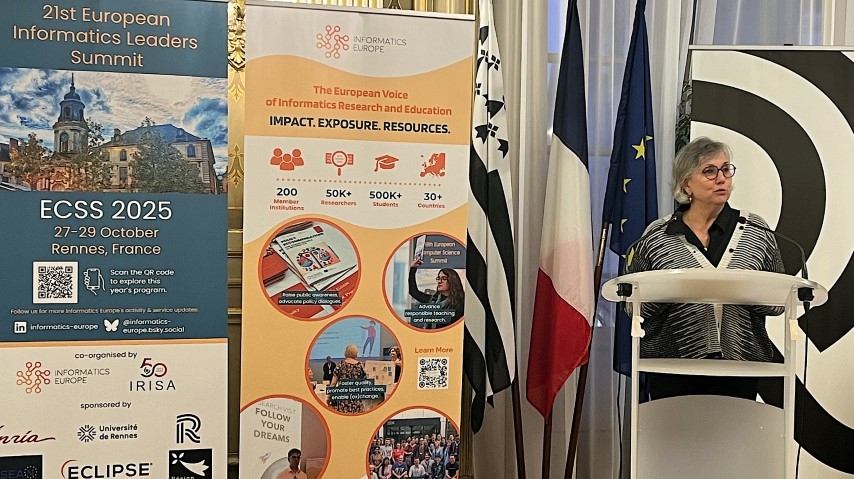
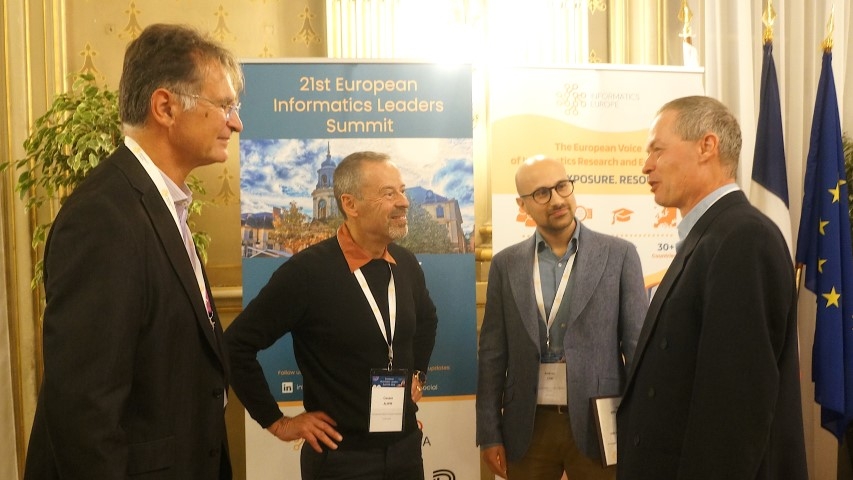
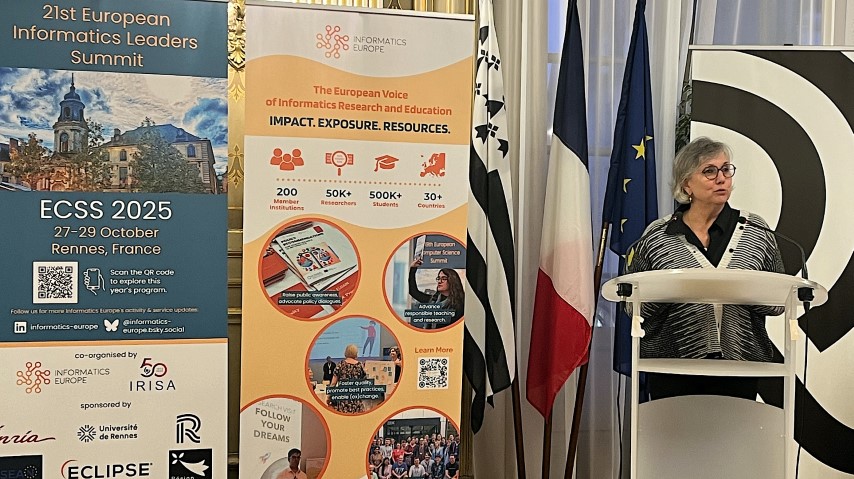
BDA 2025 was presented during the Welcome Reception at the Rennes City Hall on the first day of the Summit (Monday, 27 October). - Minerva Informatics Equality Award (MIEA) – recognising best practices by departments or faculties of European universities and research labs that actively encourage and support the careers of women in Informatics research and education.
MIEA 2025 was presented during the ECSS Gala Dinner on the second day of the Summit (Tuesday, 28 October).
*Please note that you may need to zoom out for the best photo viewing experience.


Call for Participation
Join Us at ECSS 2025
27-29 October 2025 | Rennes, France | Conference Schedule
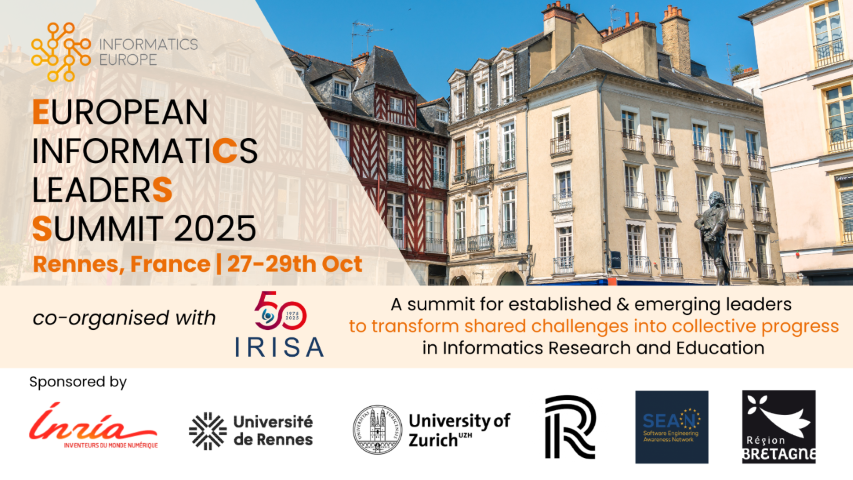
We are delighted to invite you to ECSS 2025, co-hosted by Informatics Europe (IE) and member institute IRISA, as part of IRISA’s 50th anniversary celebrations. Being one of France’s oldest and largest Informatics labs, IRISA has been at the forefront of scientific and societal contributions for decades.
Why Attend?
ECSS is Europe’s only summit dedicated to the strategic and managerial aspects of Informatics research and education. It brings together academic and research leaders across Europe to transform shared challenges into collective progress.
Over three days of high-level dialogue, inspiring talks and hands-on workshops, you’ll connect with peers to tackle leadership challenges, exchange policy perspectives, and develop strategies that advance both your institution and the wider community.
Let our regular and past participants tell you why ECSS is the place to be:
Programme highlights:
- Keynote: Integrating Quantum Technologies into European Informatics Departments – in line with the UN’s International Year of Quantum Science 2025
Prof. Manuel Wimmer, JKU Linz (Austria) - Leaders Workshop Opening Talk: Moore’s Law Calls for the Next-Generation University
Prof. Maarten Steinbuch, Eindhoven University of Technology (Netherlands) - Leaders Workshop Panel Discussion: Adapting to Change – Best Practices from Informatics Leaders
Prof. Hans-Joachim Bungartz, Technical University of Munich (Germany)
Prof. Nicola Gatti, Politecnico di Milano (Italy)
Prof. Guillaume Gravier, IRISA (France)
Prof. Dimka Karastoyanova, University of Groningen (Netherlands) - Early Career Researchers Workshop: practical guidance on nurturing next-generation talent, for emerging and established leaders. Learn more here.
- Working Group Sessions on ICT for Green, Open Source Software, Diversity & Inclusion, and Ethics, led by IE Working Groups, with invited panellists.
- National Association contributions to the Engaging Society and Youth with Informatics and the Upskilling for a Rapidly Evolving Future sessions.
- Poster Session for community exchange and visibility. Poster submission, including that for PhD Symposium, remains open until 17 October. Full details here.
- Annual General Assembly: shape the direction of Informatics Europe and ensure your institution’s voice is heard and represented.
Explore the full programme and social events, including a guided visit to Mont Saint Michel, a renowned UNESCO World Heritage site, and a gala dinner at a historic Breton château.
Help us spread the word about ECSS 2025: a must-go event for Informatics leaders and elites shaping the future of Informatics in Europe.
We look forward to welcoming you to another impactful edition of ECSS this October!
ECSS 2025 is sponsored by Inria, University of Rennes, University of Zurich, Eclipse Foundation, Rennes Métropole, Région Bretagne and Software Engineering Awareness Network.
Stay tuned for updates via our website or follow us on LinkedIn and Bluesky.
Committees
ECSS 2025 Conference Chair
- Jean-Marc Jézéquel, Informatics Europe / IRISA / University of Rennes (France)
Keynotes Session Chair
- Jean-Marc Jézéquel, Informatics Europe / IRISA / University of Rennes (France)
Chairs of the Leaders Workshop
- Ana C.R. Paiva, University of Porto (Portugal)
- Jean-Marc Jézéquel, Informatics Europe / IRISA / University of Rennes (France)
Chairs of the Professional Development Workshop for Early Career Researchers
- Dimka Karastoyanova, University of Groningen (the Netherlands)
- Elisabetta Di Nitto, Politecnico di Milano (Italy)
- Gregor Engels, University of Paderborn (Germany)
Chairs of Informatics Europe Session
- Jean-Marc Jézéquel, Informatics Europe / IRISA / University of Rennes (France)
- Nuria Anguera, Informatics Europe
Chair of the Workshop organised with National Informatics Associations
- Heri Ramampiaro, NTNU (Norway)
Chairs of the Green ICT & ICT for Green Workshop
- Marco Aiello, University of Stuttgart (Germany)
- Monica Vitali, Politecnico di Milano (Italy)
Chairs of the Open Science & Open Source Workshop
- Lenuta Alboaie, Alexandru Ioan Cuza University of Iași (Romania)
- Philippe Krief, Eclipse Foundation
Chairs of the Diversity & Inclusion Workshop
- Simona Motogna, Babeş-Bolyai University (Romania)
- Oana Andrei, University of Glasgow (UK)
- Lola Burgueño, University of Malaga (Spain)
Chair of the Ethics Workshop
- Covadonga Rodrigo, Universidad Nacional de Educación a Distancia (UNED) (Spain)
General Organizing Committee
- Nuria Anguera, Informatics Europe
- Kit Wan Chui, Informatics Europe
- Maria Eddison, Informatics Europe
- Nguessan Hermann Kouadio, IRISA
- Romain Lefeuvre, IRISA
- Sophie Maupilé, IRISA
- Catherine Jacques Orban, IRISA
- Aurelie Patier, IRISA
- Svetlana Tikhonenko, Informatics Europe
ECSS 2025 is organised by
 |
 |
Sponsored by
 |
 |
 |
 |
|
 |
  |
 |
Support ECSS
What's New
ECSS 2025, 27-29 Oct, Rennes. France
Save the dates for ECSS 2026:
26-28 Oct in Porto, Portugal



 Netlogica