
ECSS 2021 - Highlights
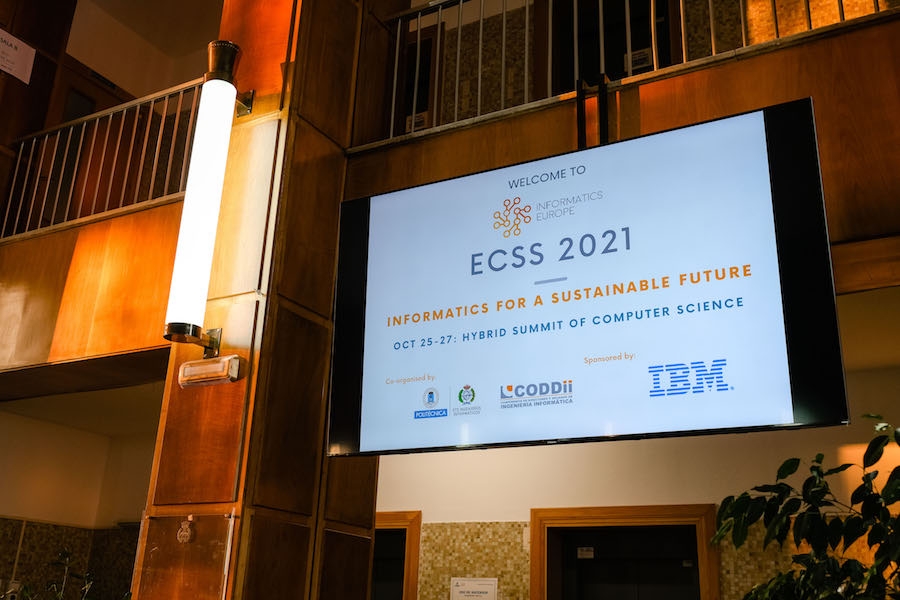
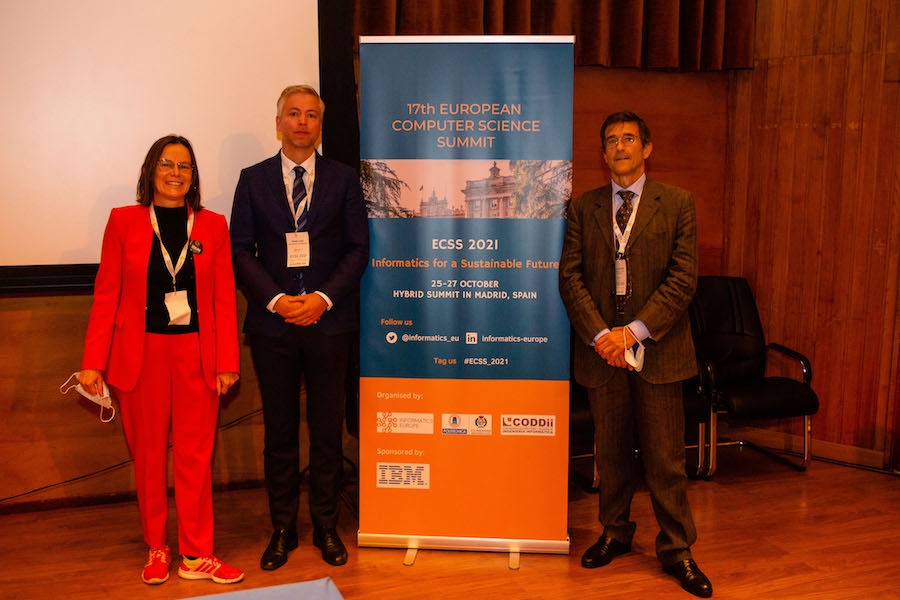
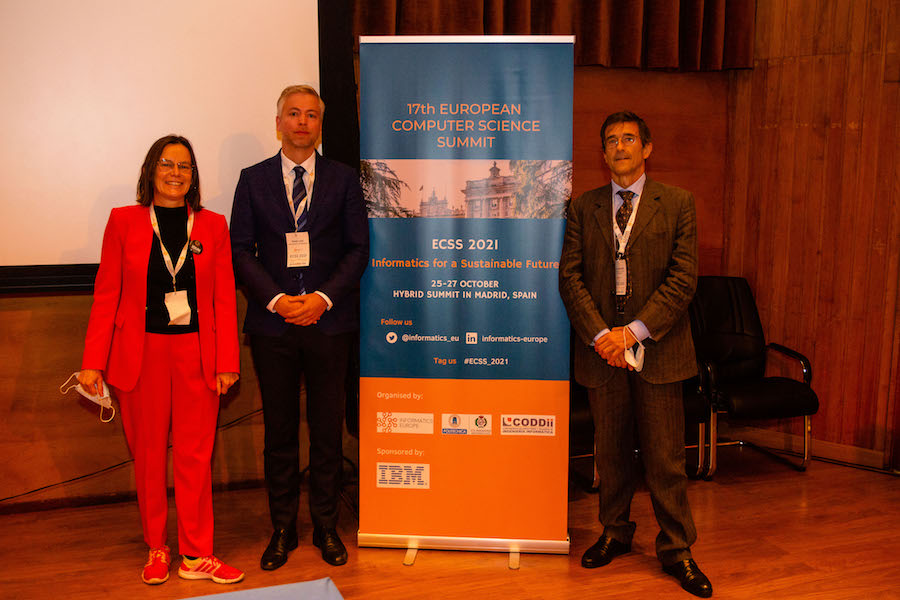
On 25-27 October, the 17th edition of the European Computer Science Summit (ECSS 2021) took place in Madrid, co-organised by Escuela Técnica Superior de Ingenieros Informáticos, Universidad Politécnica de Madrid, supported by CODDII – Spanish Council of Deans of Informatics and sponsored by IBM.
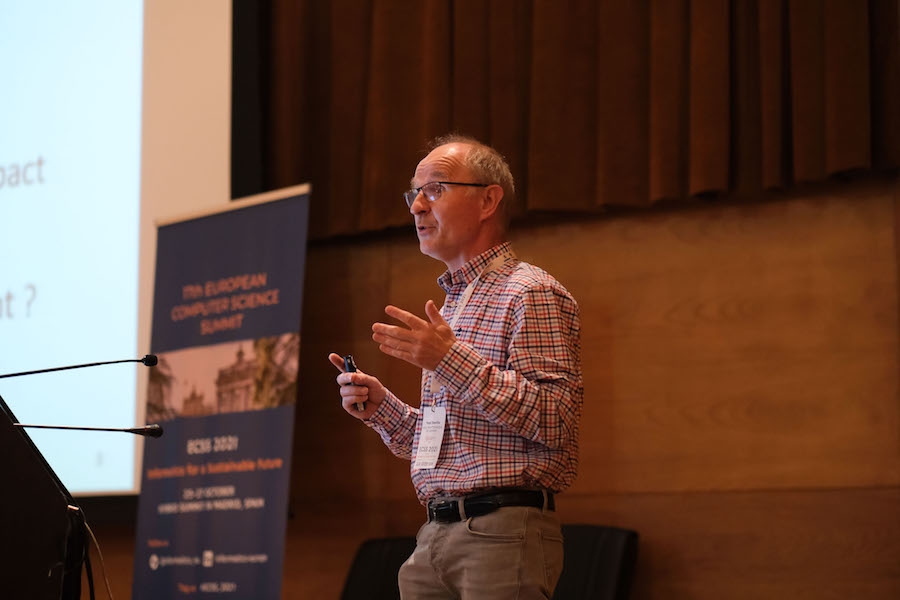
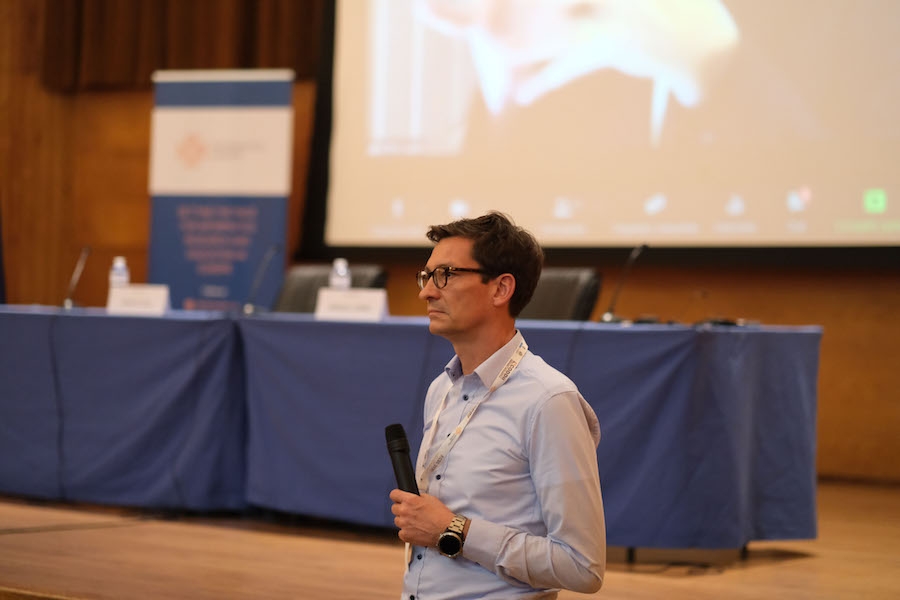
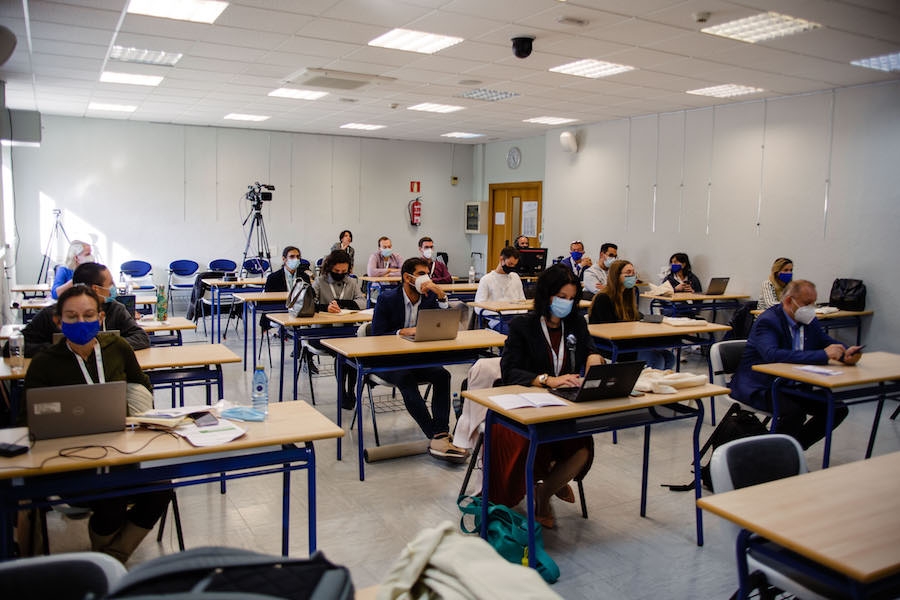
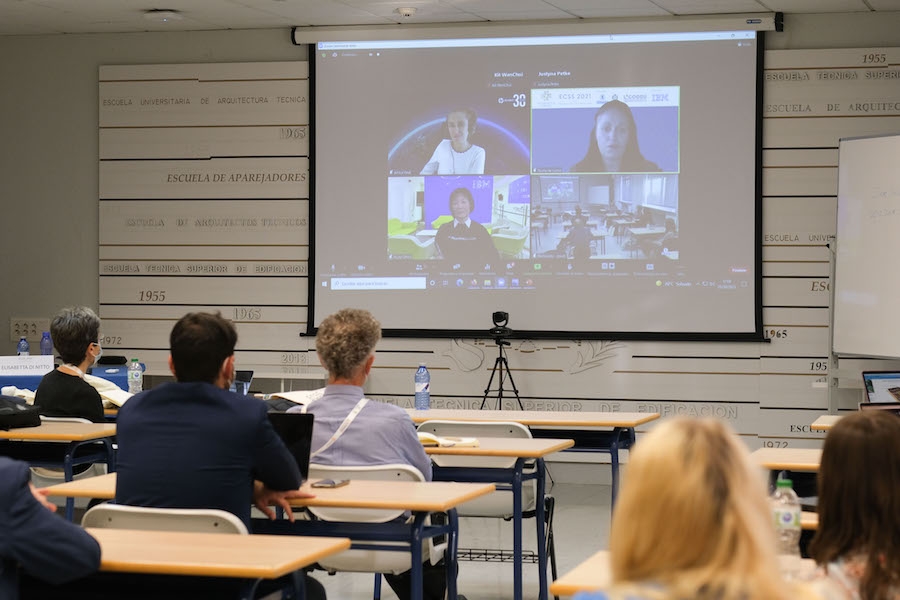
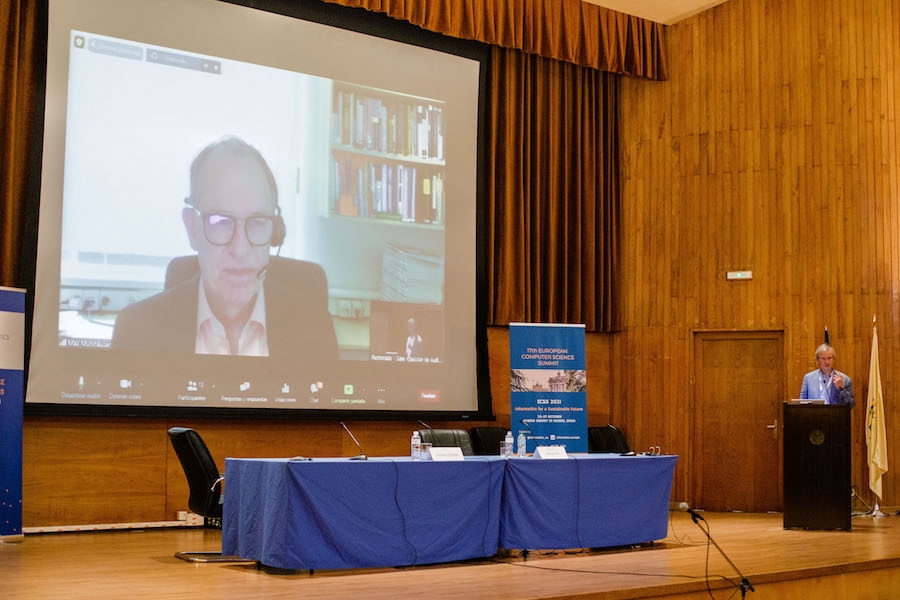
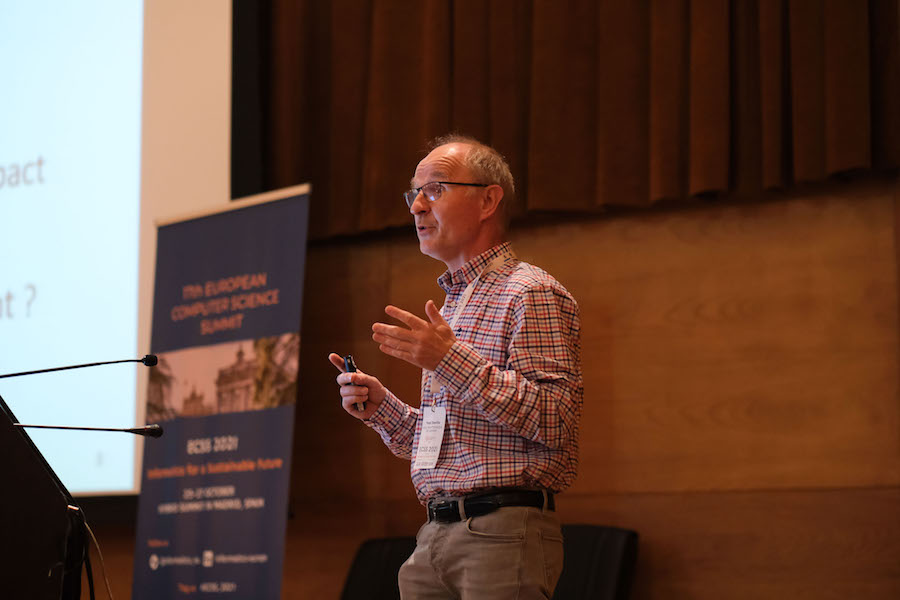
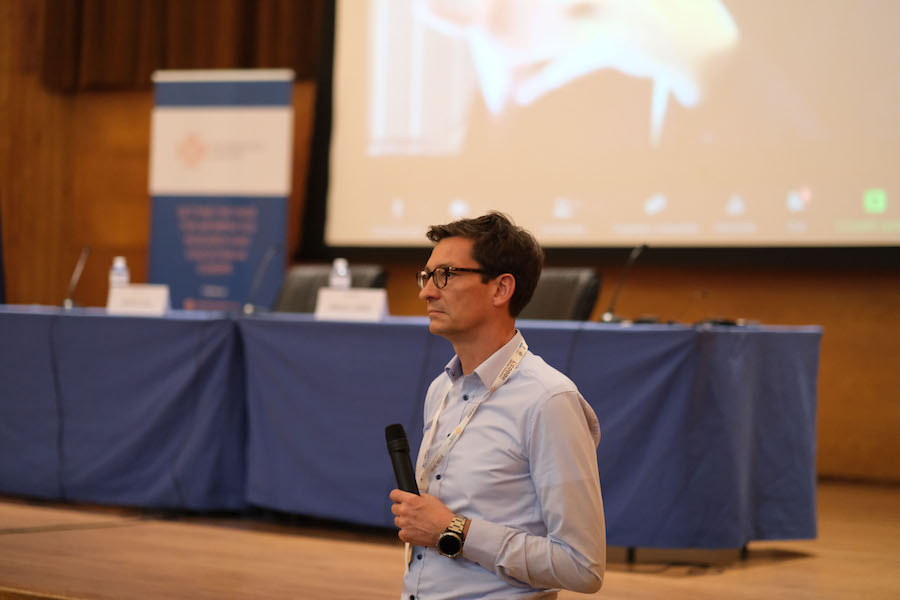
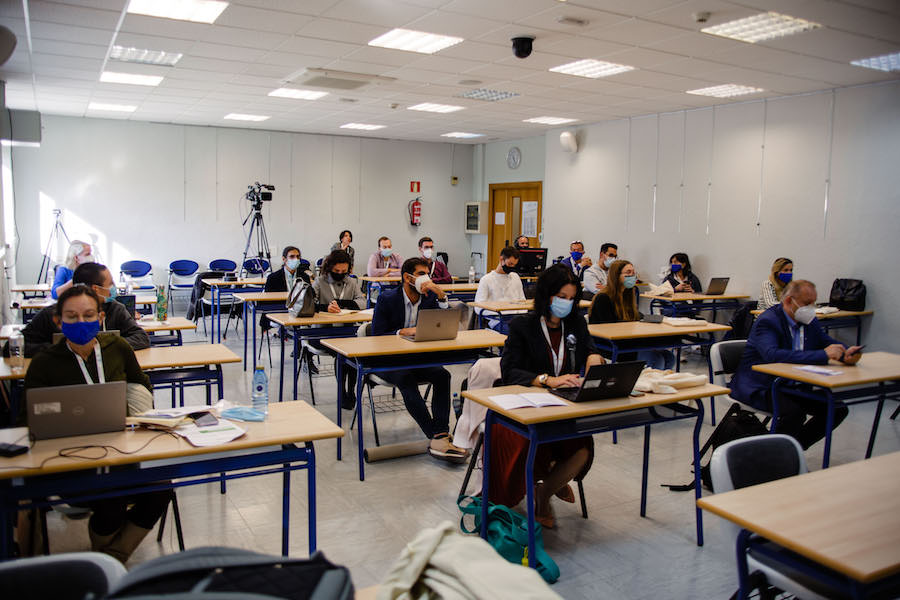
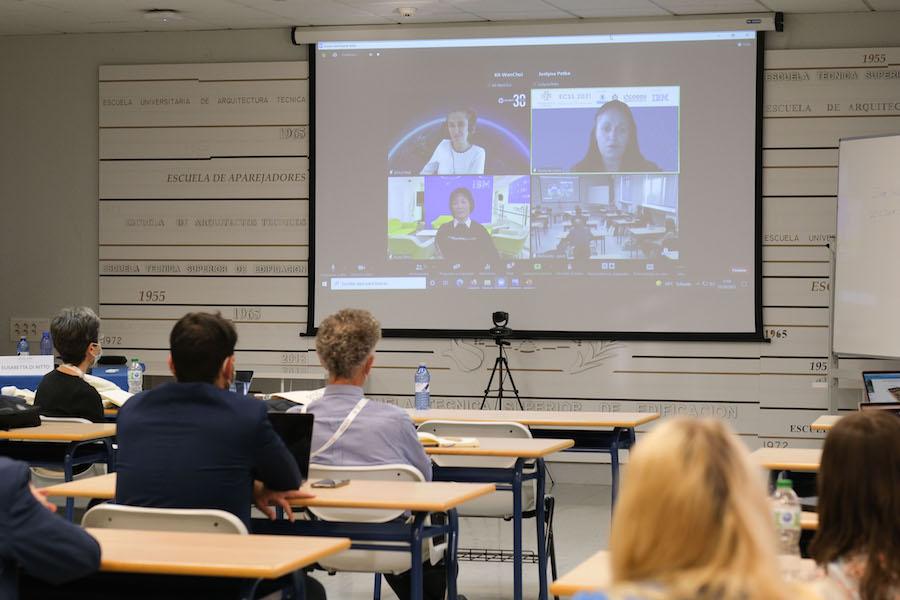
For the first time in its history, this year’s ECSS was held as a hybrid event, allowing deans, academic leaders, all levels of researchers, public policymakers, and industry representatives across and beyond Europe to gather in person in Madrid and virtually via Zoom to discuss the main theme of this year’s summit: “Informatics for a Sustainable Future”.
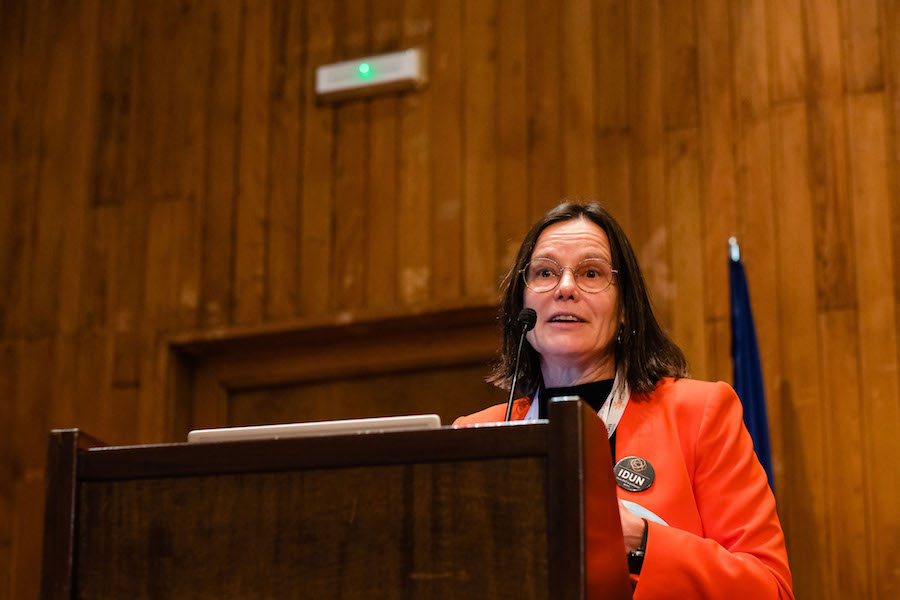
A special session for new Informatics Europe (IE) members in 2021 was held before the official opening of ECSS 2021 on 25 October. New IE members were welcomed by Prof. Enrico Nardelli, IE President, Ms. Nuria Anguera, IE Executive Director, and Prof. Kim Mens, IE Board Member who is in charge of IE member recruitment and relations. A detailed overview of IE activities and member benefits was presented during this special session. New members also got the chance to express their expectations and ideas of collaborations and contributions with IE.
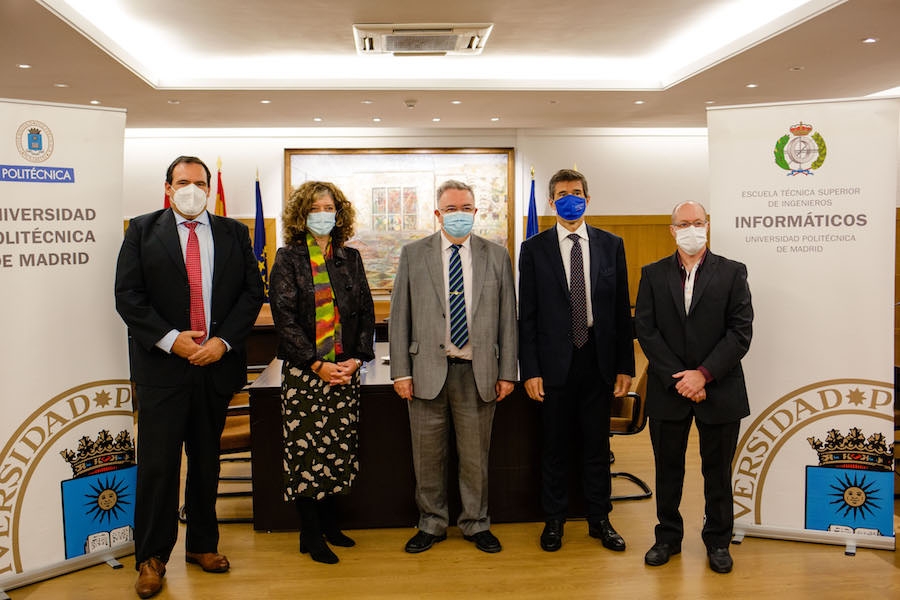
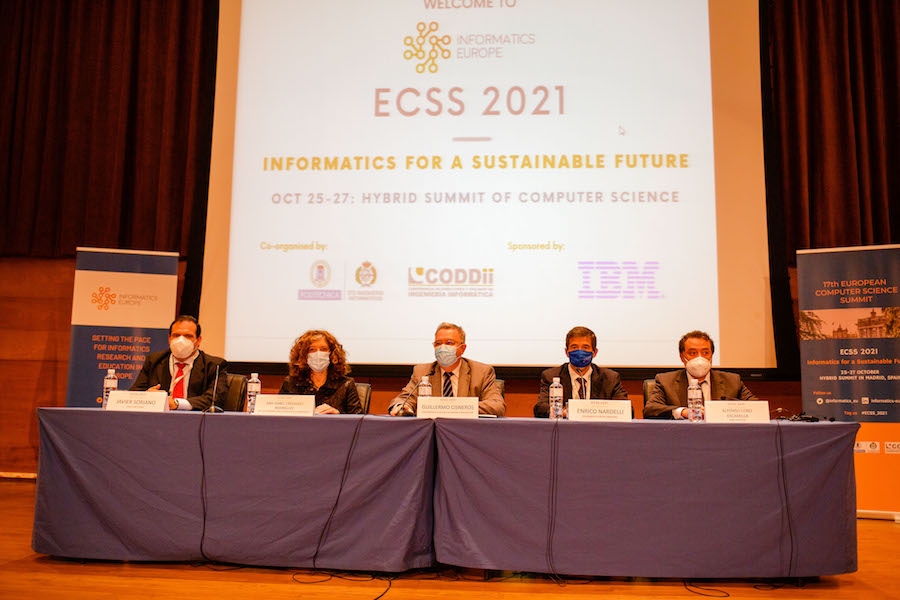
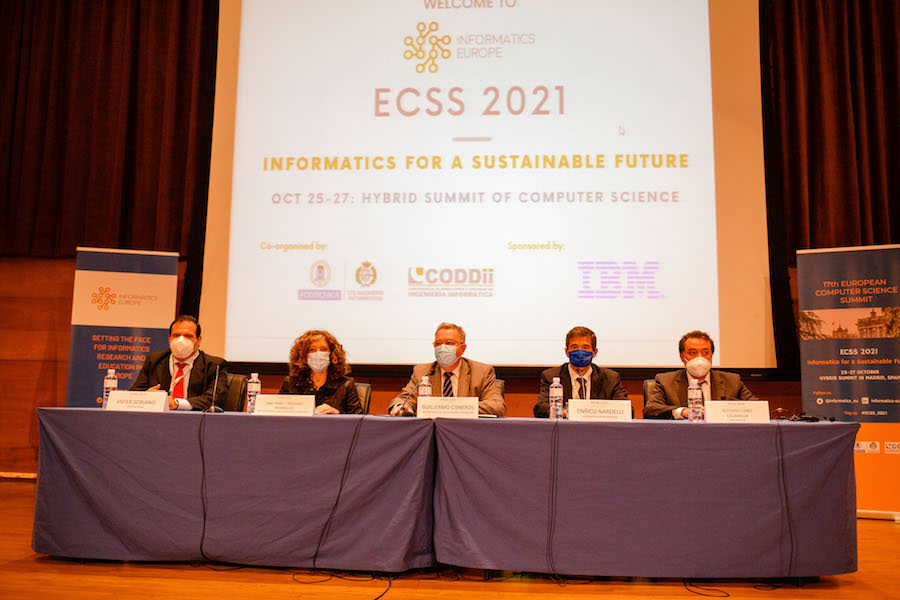
Following the special session, ECSS 2021 was officially opened by Prof. Guillermo Cisneros, Rector of Universidad Politécnica de Madrid (UPM), Prof. Enrico Nardelli, IE President, and Prof. Ana Isabel Cremades Rodriguez, General Director for Research and Technological Innovation (Regional Madrid Government). After the ceremony, ECSS 2021 kickstarted with two workshops, Leaders Workshop and Early Career Researchers Workshop, running in parallel.
Leaders Workshop
As one of the inaugural workshops at ECSS 2021, this year’s Leaders Workshop was chaired by Prof. Harald Gall from the University of Zurich, and Prof. Manuel Carro from ETSIINF (UPM) and IMDEA Software Institute. The theme of this year’s workshop was “Open Science and its Impact on Research and Career Development”.
The workshop was divided into three sessions featuring Open Science experts such as Prof. Roberto di Cosmo from INRIA and Prof. Arthur Lupia, Assistant Director from the US National Science Foundation (NSF), who shared their knowledge and experiences through interactive presentations and discussions with the audience.
Prof. Roberto Di Cosmo shared his view of access to source code as one of the pillars of open science, given the pervasive role that code has nowadays not only in computer science but also in other disciplines. He gave details of Software Heritage, one of the infrastructures that make this possible, and which is being supported by both public institutions and private companies.
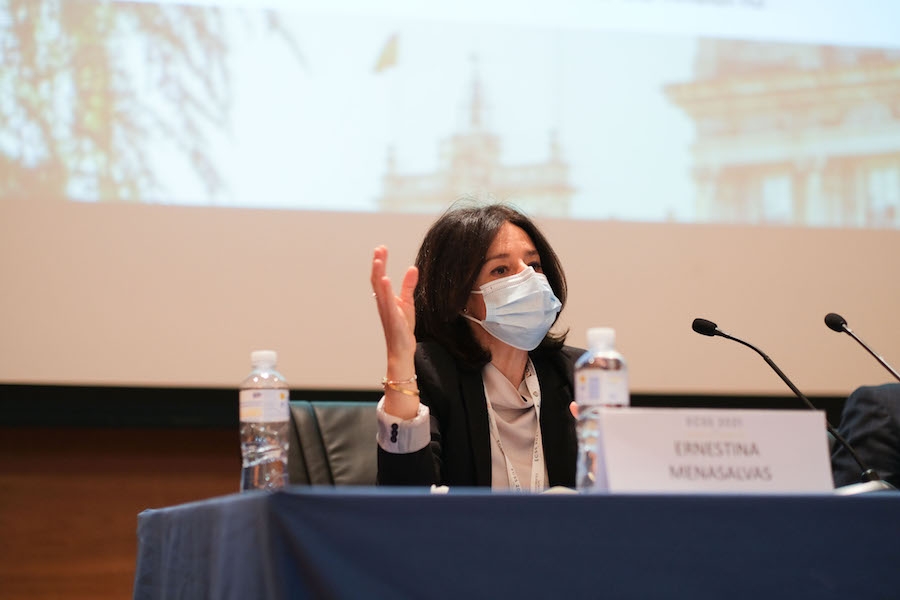
The second session, shared with the Early Career Researchers Workshop, was a lively panel focused on the role that Open Science can have in the evaluation of careers in the future. It was especially interesting the exercise led by Prof. Yves Deville from UC Louvain where the audience was divided into a “Dystopia” and a “Utopia” group who tried to identify problems in Open Science and come up with solutions for them or measures to prevent them in the first place.
To conclude the workshop, Prof. Arthur Lupia gave very valuable insights on how Open Science is handled by the NSF, a US government agency. He explained why it is necessary, in view of the current scientific development, and what measures are enforced at the NSF to make sure that publicly funded science is available for everyone to access.
Early Career Researchers Workshop
As the other inaugural workshop of ECSS 2021, this year’s Early Career Researchers Workshop was chaired by Prof. Elisabetta Di Nitto from Politecnico di Milano, and Prof. Standa Živný from the University of Oxford.
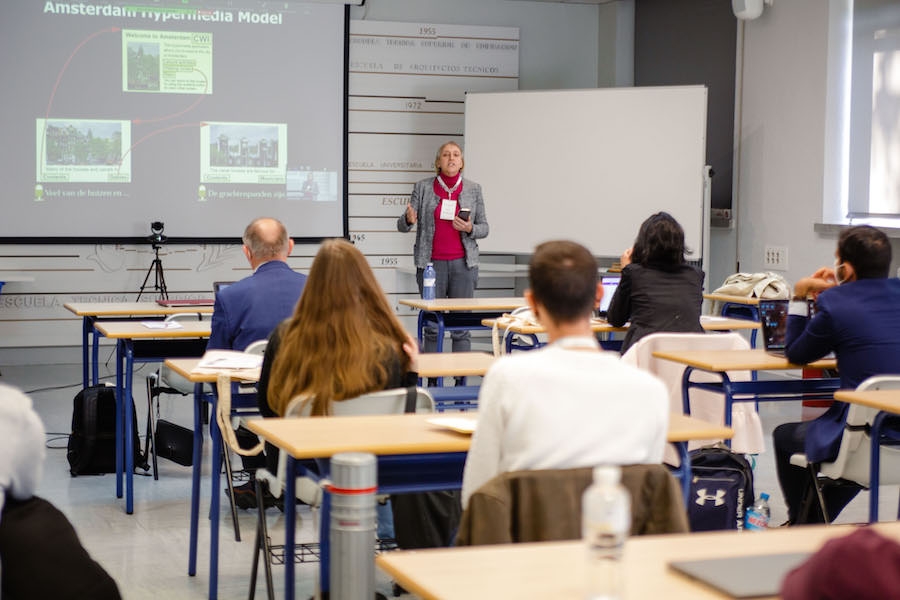
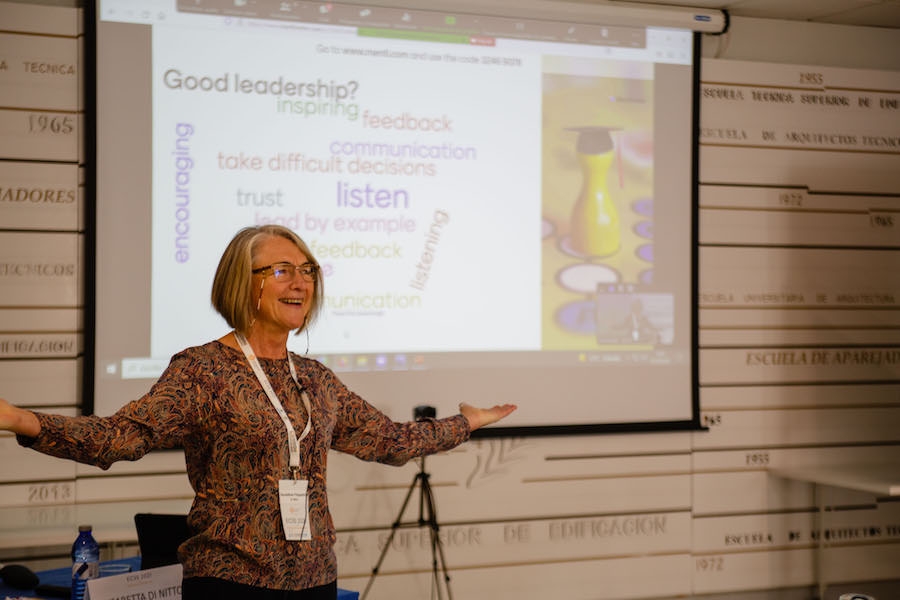
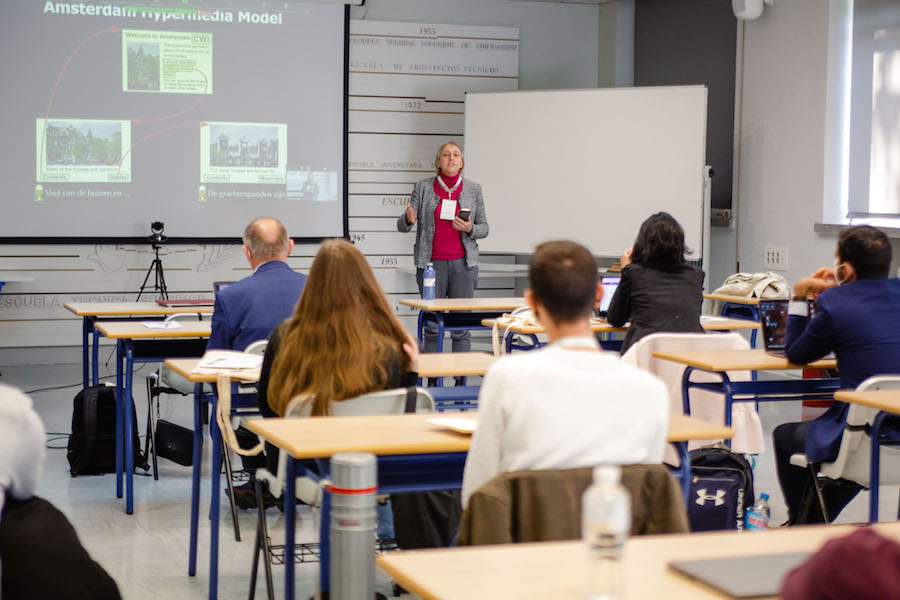
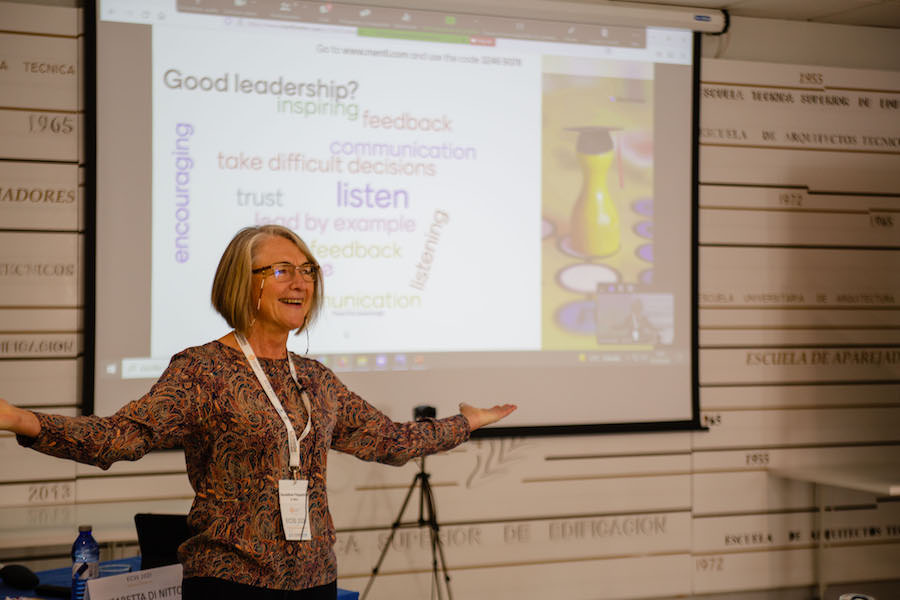
To support early career researchers (Ph.D. students and Postdocs) in the development of their soft skills, this year’s workshop started with a session of keynote speeches where Prof. Geraldine Fitzpatrick from TU Wien drew out some key lessons towards more skillful and careful leadership in research, Prof. Lynda Hardman from CWI and Dr. Justyna Petke from University College London shared with participants their experiences and tips of becoming successful scholars to date, while Prof. Wolfgang Emmerich from University College London & Zuhlke Group presented theirCovid-19 app, built for the NHS in England and Wales, as an example of moving the research into industry.
The workshop continued with a shared session with Leaders Workshop, to learn about Open Science and its impact on career development (see above), followed by a session featuring open discussions with industrial guests Ruoyi Zhou from IBM Research Europe – Dublin, Nuria de Lama from Atos and Big Data Value Association, and Africa Real from HP Digital Platforms & Design Lab R&D. Participants got a brief general introduction to the companies as well as answers to questions such as what it means to do research in industry or in which positions is a PhDs most valuable within industry.
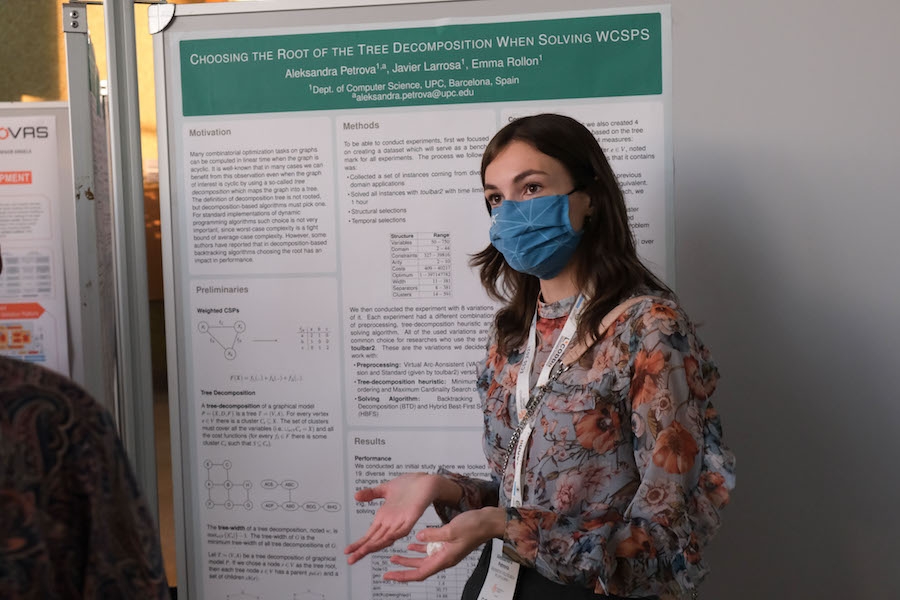
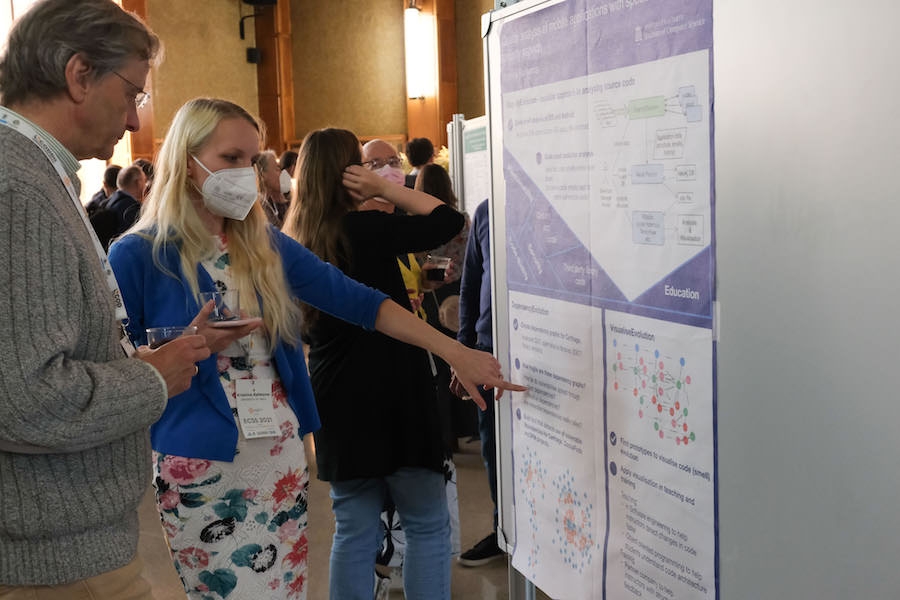
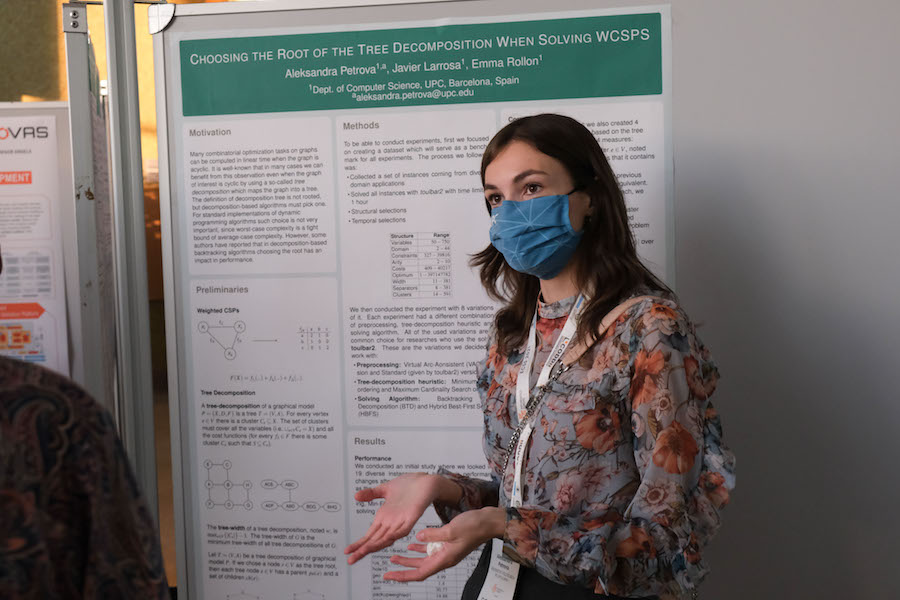
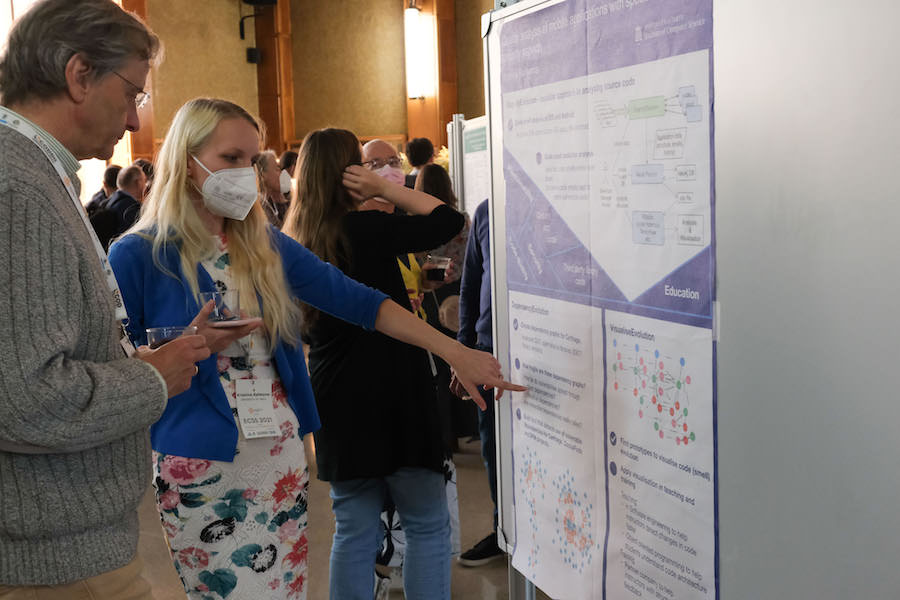
Through all workshop activities, participants got the opportunity to share their thoughts and expectations concerning their career whereas the speakers offered their insider tips, shared their rich experience and valuable advice in return. The workshop was followed by a poster session during the welcome cocktail, where PhDs and Postdocs had the opportunity to present their research and got constructive feedback from the broader ECSS audience.
The papers submitted by workshop participants have also been collected and published as proceedings here.
The presence of PhDs and Postdocs has introduced an important change in the typical ECSS audience composed of senior researchers and professors and has been a step toward the creation of new Informatics Europe services and fora, specifically devoted to the younger academic generations. We are sure that, on the one side, PhDs and Postdocs will benefit from being in touch with more experienced colleagues and, on the other side, their presence at the conference will bring new energy and ideas into Informatics Europe association, thus enabling new development opportunities.
Scientific Main Theme – “Informatics for a Sustainable Future”
The second day of ECSS 2021 started with the Scientific Main Theme session, chaired by Prof. Dick Bulterman from CWI/VU Amsterdam and Prof. Michèle Weiland from EPCC – University of Edinburgh.
This year’s topic is “Informatics for a Sustainable Future”. Sustainability is a broad topic that encompasses many concerns. In the session, a broad-brush approach was taken, highlighting four areas of concern.
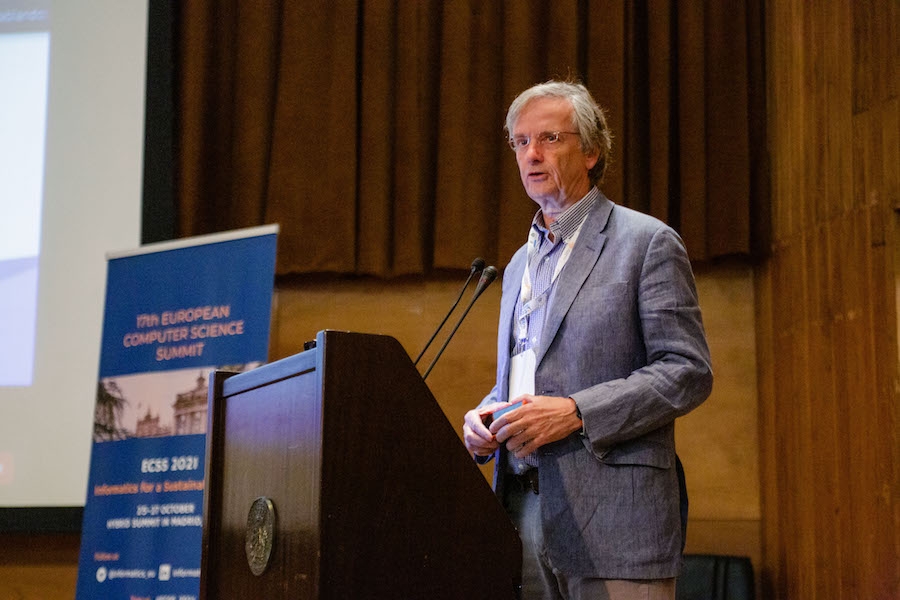
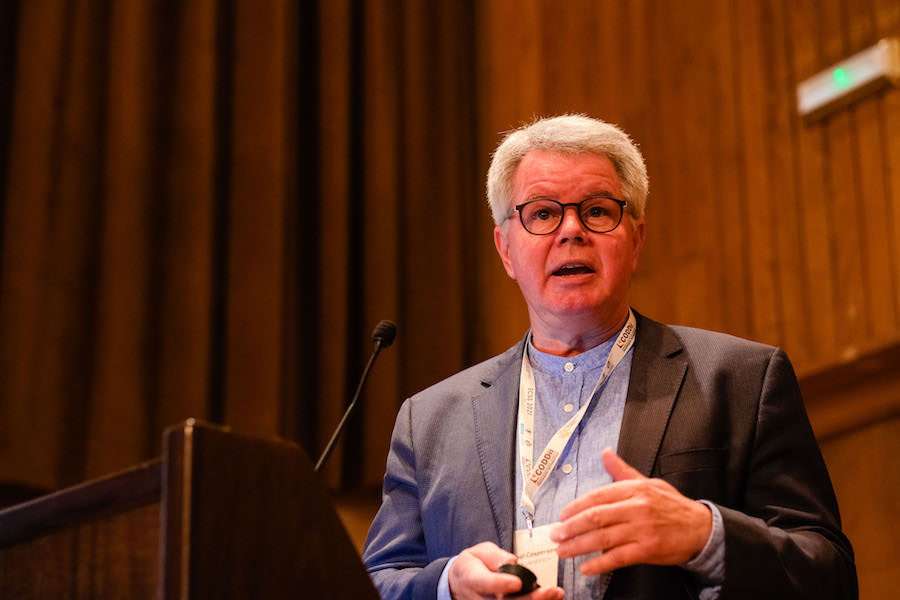
Prof. Lorenz Hilty from the University of Zurich started the session with an excellent overview of the environment and technical issues of sustainability. We heard about power consumption, resource use, and the expectations and limits for growth. While there are no silver bullets, there is every reason to think that change is possible if we also want to change.
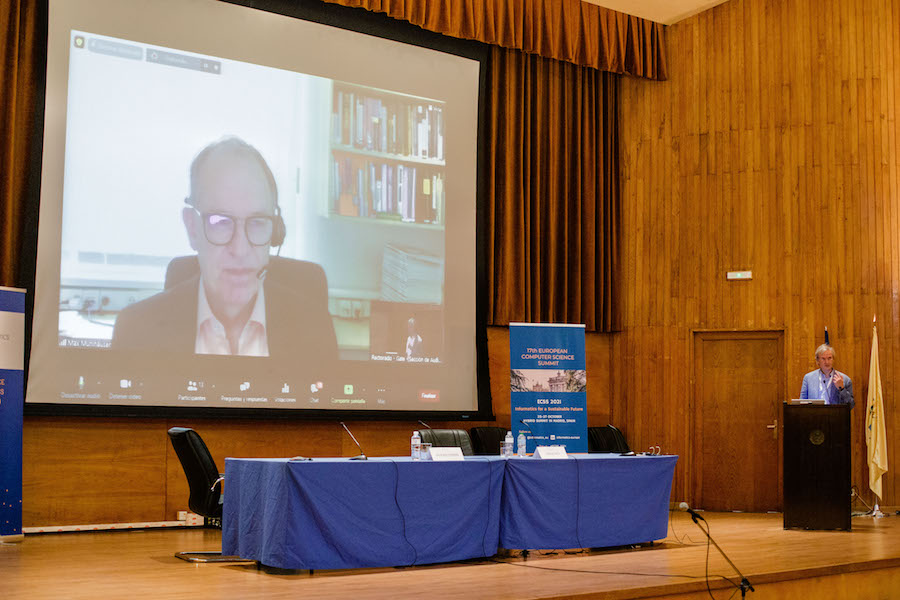
Next, Prof. Max Mühlhäuser from the Technical University of Darmstadt considered the sustainable management of the massive amounts of data that is being presented to the user (and through which a user is expected to navigate, now and in the future). The central theme was that if you don't want to be a slave of data, then you have to be able to interact with it - in many dimensions, with many devices, and especially free from the glass wall that has separated users from information for more than five decades.
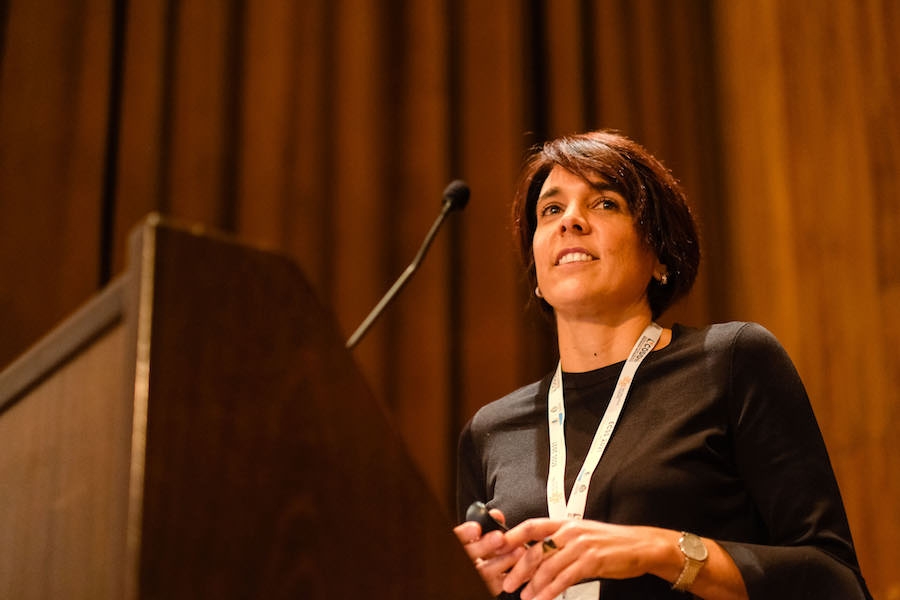
After a short break, Prof. Marina Jirotka from the University of Oxford explained the issues of linking long-term sustainability with the process of performing responsible research. Using methods and tools developed by partners in the UK and the EU, the audience was led through a process-oriented tour of how responsible research initiatives can transcend 'research marketing' and help build long-term trust relationships that are essential to keeping research relevant, understood, and accepted.
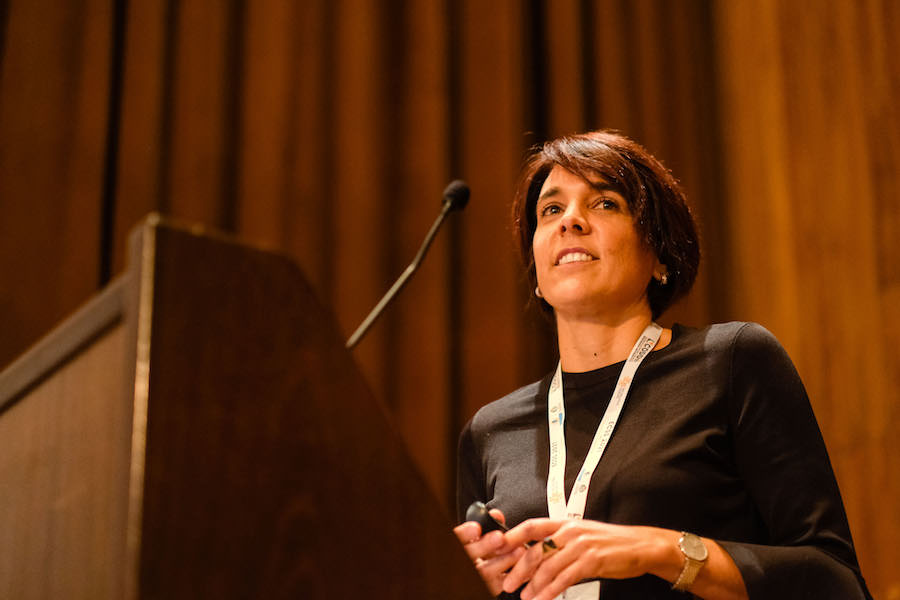
The final talk of the session came from Prof. Frank van Harmelen from VU Amsterdam. Using AI as an example application area, he described not only the problems of trust that new algorithmic systems bring with them, but also considered how this trust could be restored. The key takeaway was the need to integrate human and machine intelligence, to make results understandable, and not to place disciplines against each other, but to work as partners in approaching tangible real-world problems.
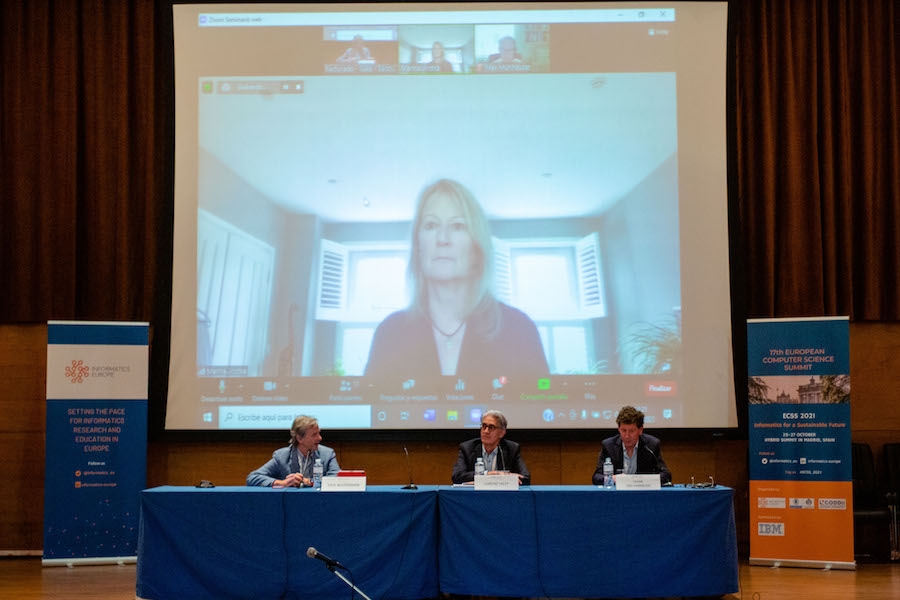
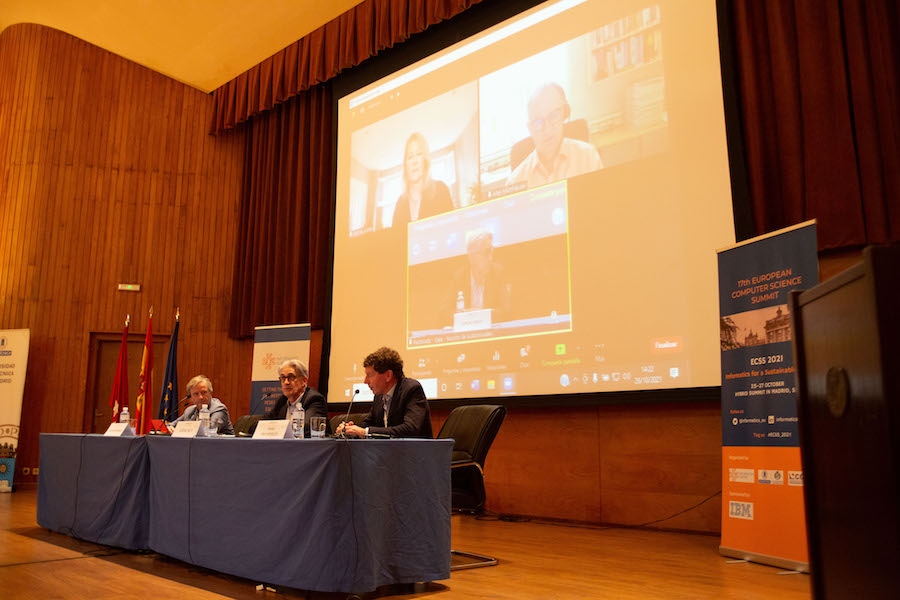
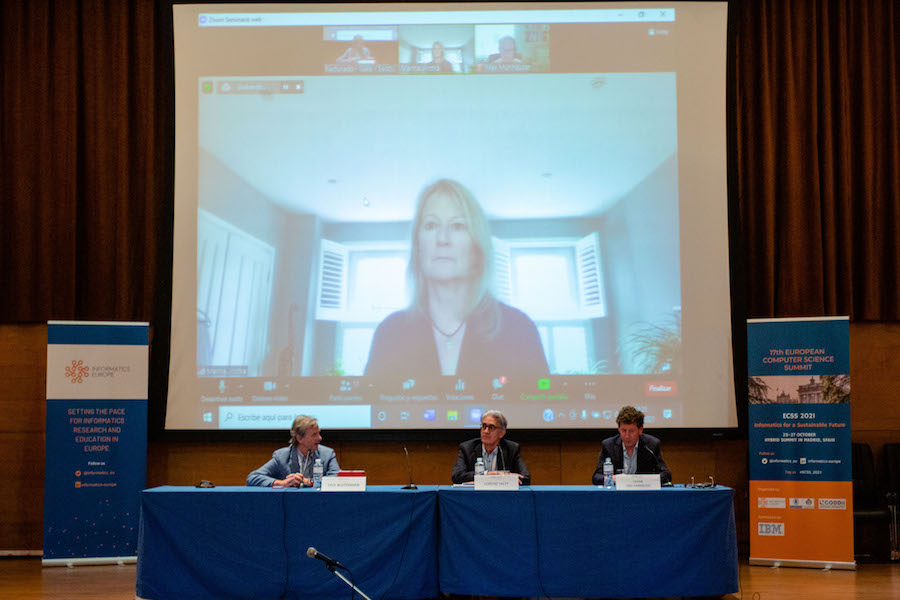
Many of these themes were revisited during an interactive discussion with the two speakers in the room (Hilty and Van Harmelen) and the two who joined us remotely (Mühlhäuser and Jirotka). We reflected on the values developed in each talk and considered the application of sustainability to a wide range of fundamental problems in Europe and elsewhere.
Awards Session
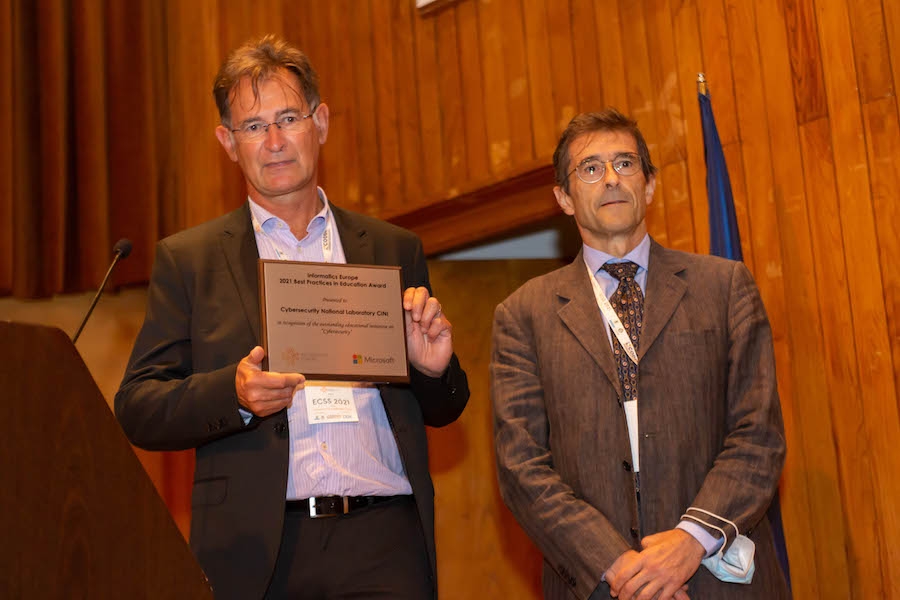
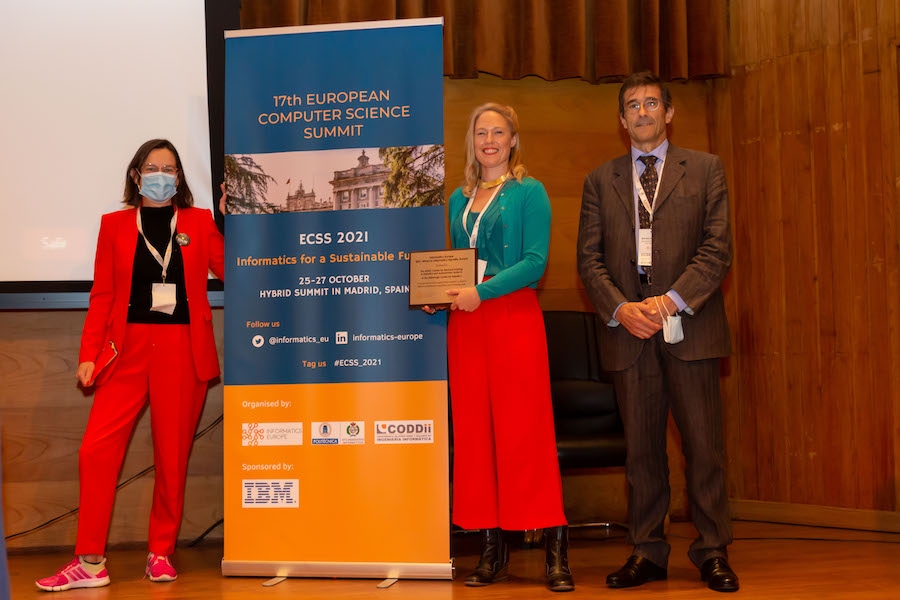
Each year at ECSS we celebrate institutions and teams who have outstanding contributions to Informatics in the aspects of education and gender balance. This year we were pleased to announce at our special award ceremony that CINI Cybersecurity National Laboratory from Italy won the IE 2021 Best Practices in Education Award, and the EPSRC Centre for Doctoral Training (CDT) in Robotics and Autonomous Systems won the IE 2021 Minerva Informatics Equality Award.
Prof. Paolo Prinetto, Director of CINI Cybersecurity National Laboratory, joined us at the award ceremony virtually to present their winning program “CyberChallenge.IT”, whereas Ms. Claire Ordoyno, Business Development Executive of the EPSRC Centre for Doctoral Training in Robotics and Autonomous Systems, joined us in person to receive the award on behalf of their Centre and presented the scope and impact of their winning actions. A special shout-out was also given to Hochschule Bremen for their submission to this year’s Minerva Informatics Equality Award – their innovative single-sex bachelor’s program was given a runner-up recognition of this year’s Award.
Dialogue with Members - Informatics Europe Activities and Outcomes
Every year a special session is held during ECSS, where we offer networking opportunities for IE members, keep them informed of our main activities and outcomes as well as remind them about the possibility to propose and contribute to future IE missions and projects. This year we had this special “Dialogue with Members” session on Tuesday, 26 October, afternoon.
We began the session with the latest update of our membership base. As of October 2021, our IE Community consists of 160 member institutions across 34 countries, joining forces to raise the voice of the European Computer Science community in promoting concerted positions and acting on shared priorities in the areas of education, research, knowledge transfer, and social impact of informatics. Also joining us new are two IE office staff members: Ms. Nuria Anguera as the new IE Executive Director from March and Ms. Kit Wan Chui as the new Communication and Administration Specialist from July. The session was then followed by presentations of our main working groups, namely Education, Social Impact, Diversity, Data Analysis & Reporting, Policy Recommendations, and Other Services. The Board member working on each of the areas presented an overview of the latest achievements as well as main targets for 2022 while encouraging and appreciating all IE members for their proactive participation in our different working groups, their help in disseminating our messages, and activity announcements among their networks as well as their contribution in bringing more peer institutions on board.
To close the afternoon, the Informatics Europe Annual General Assembly was held, where members voted for Board in effective for a two-year term from January 2022 to December 2023, approved the financial audited report 2020, the IE membership fees review, and the provisional budget 2022.
WIRE-EUGAIN Workshop
WIRE-EUGAIN Workshop was held as one of the parallel workshops on the final day of ECSS 2021. Despite all the uncertainties connected to COVID-19 pandemic, the workshop attracted close to 100 participants and 20 speakers from the whole world. This year’s workshop theme was “Sustainability and Gender Balance – How to Retain Girls and Women in Computer Science” and consisted of five sessions.
In the first session chaired by Prof. Letizia Jaccheri, Action Chair of EUGAIN and professor of Norwegian University of Science and Technology, Ms. Mina Stareva from the European Commission presented a talk on “EU Support for Sustainable Gender Equality in Research and Innovation in Informatics” and gave the status of work at the commission and of related projects.
In the second session “From School to University” chaired by Dr. Monica Landoni from Università della Svizzera italiana, scholars from Bangladesh, Slovakia, Turkey, and the U.S. shared their experiences and strategies in empowering and retaining girls in informatics education through different stages of school life.
In the third session “From Bachelor and Master to Ph.D. chaired by Prof. Erika Abraham from Aachen University, speakers from Portugal and Germany presented common challenges women face in academia as well as the influence of different problem-solving styles in gender inclusion in computer science education.
In the fourth session “From Ph.D. to Professor” chaired by Prof. Steve Kremer from LORIA, Prof. Geraldine Fitzpatrick from TU Wien shared with us her experience paving her path towards a sustainable and rewarding career in informatics research and education.
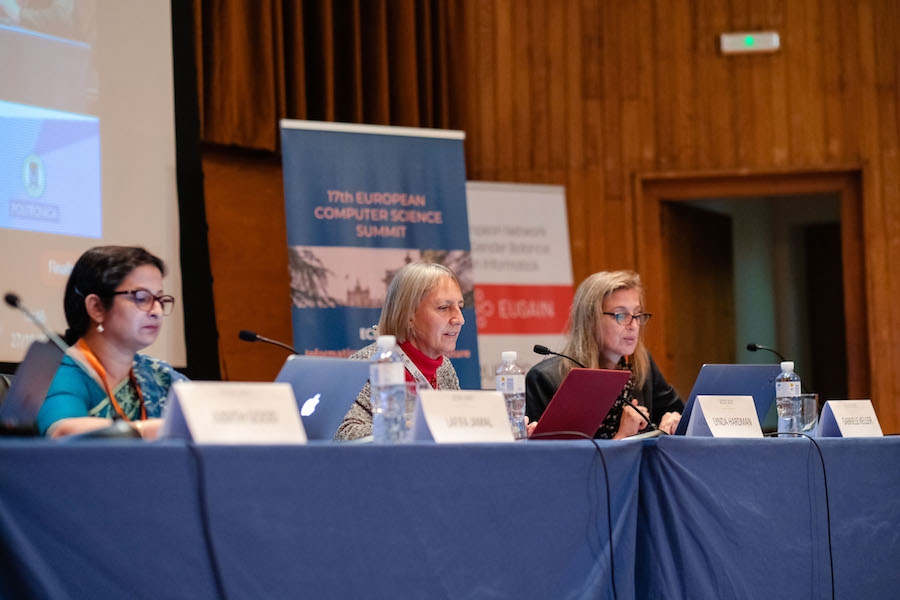
The workshop was concluded by the final session “Diversity and Sustainability in Computer Science” chaired by Prof. Lynda Hardman from CWI and Utrecht University. She was joined by panelists from five different universities in four different countries who shared their stories and ideas of supporting women in computing.
The workshop was closed by Patricia Lago, STSM Coordinator, Maria Roussou, Science Communication Manager, and Barbora Buhnova, Vice-Chair and ITC Conference Coordinator who inspired the audience to the next wave of work to build on the fundaments of EUGAIN and WIRE.
National Informatics Associations Workshop
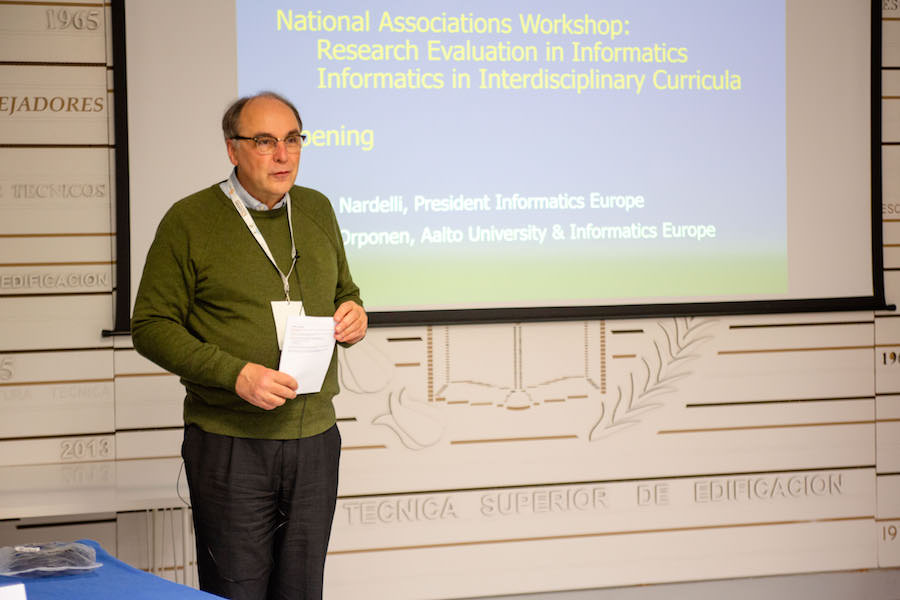
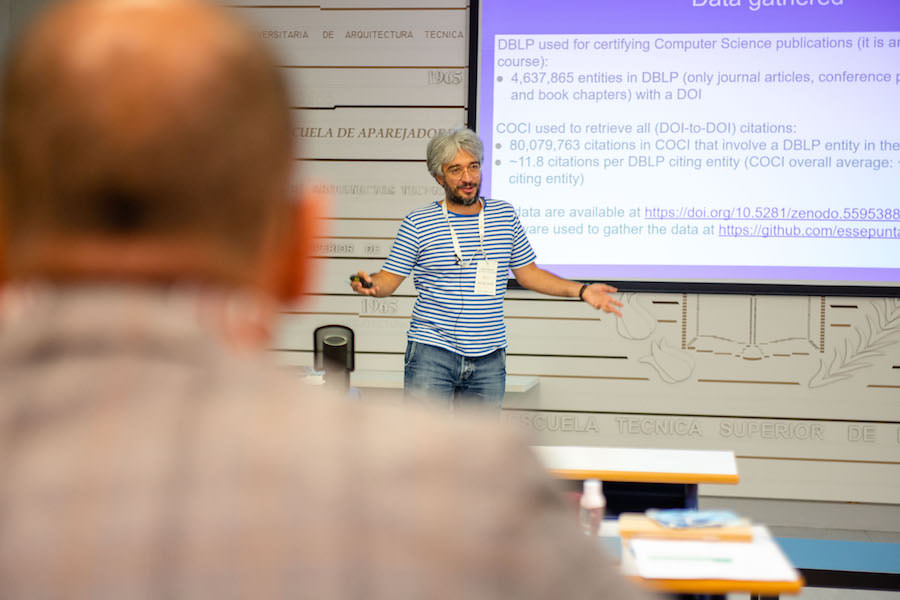
Also held on the final day of ECSS 2021 was the annual National Informatics Associations Workshop, chaired by Prof. Pekka Orponen from Aalto University. The half-day morning session was dedicated to the theme of ‘Research Evaluation in Informatics’. The session followed up on an initiative launched at the NIA meeting in Zurich in 2019 that aims to combine bibliographic data from the DBLP database and citation data provided by the Initiative for Open Citations (I4OC) to create a high-quality citation index addressing specifically the Informatics literature. The discussions at the session were informed by presentations from DBLP, I4OC, and the EOSC association, with commentaries from the publishers Elsevier and Springer Nature. A draft of an open letter to invite all publishers to join the effort was introduced and presented for feedback to the participants. The revised letter will be sent to all National Informatics Associations with a request for consent and signatures, and will then be published to the community at large for further expressions of support.
The afternoon session of the workshop returned to the theme of ‘Informatics in Interdisciplinary Curricula’ that was opened up at the ECSS 2020 NIA meeting. A summary of a recent data collection effort on the role of Informatics in interdisciplinary curricula across Europe was presented, and the National Informatics Associations representatives at the workshop provided comments and suggestions for further work on the initiative. A next meeting in Zurich in March 2022 was agreed upon, to discuss further topics of common interest, including possible curricular recommendations for interdisciplinary contexts.
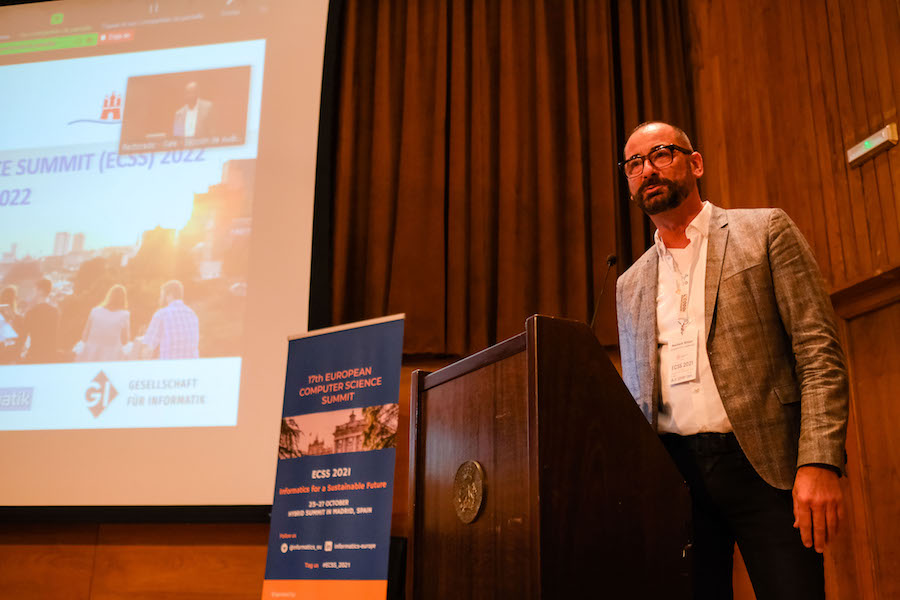
ECSS 2022 in Hamburg, Germany
The next Summit, ECSS 2022, will be held in Hamburg, Germany, 24-26 October, co-hosted by the University of Hamburg. It will be again a unique opportunity to join your international peers to debate the future of Informatics and contribute to a stronger European Informatics community.
Save the dates on your calendar: ECSS 2022, 24-26 October 2022 – we look forward to welcoming you again at the annual European Computer Science Summit next year!
To revisit the ECSS presentations, please check out the slides now available on our conference schedule webpage. We are working on the editing of the session videos, which will also be available at a later stage.
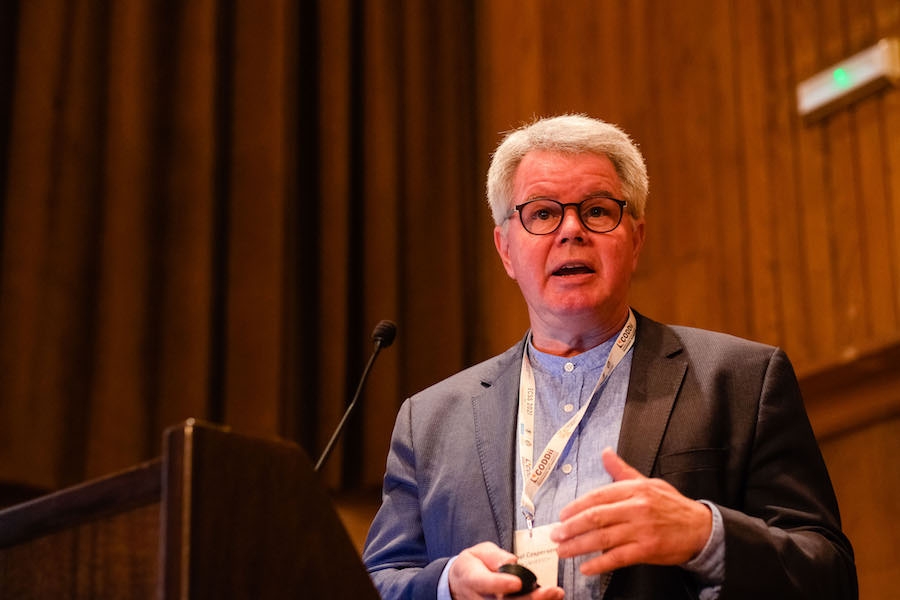
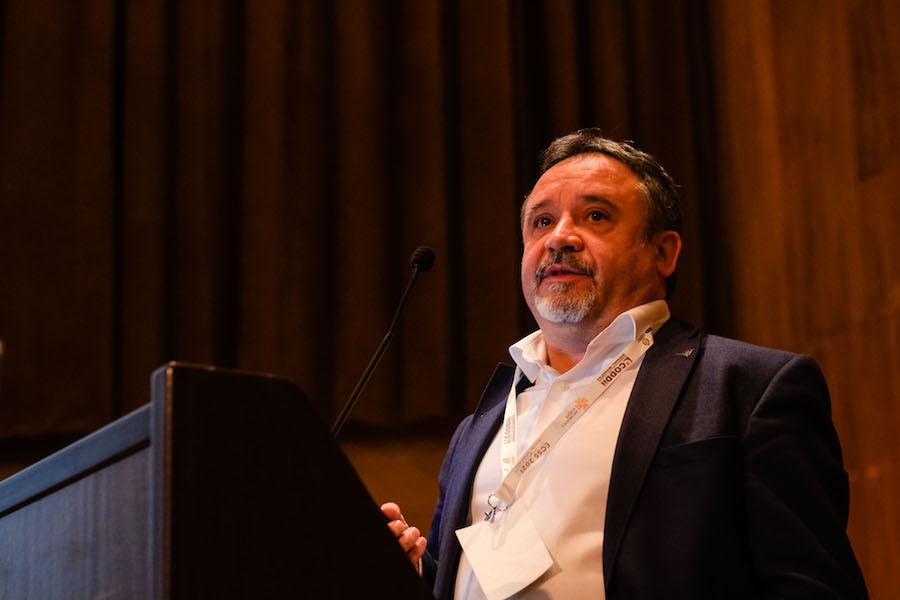
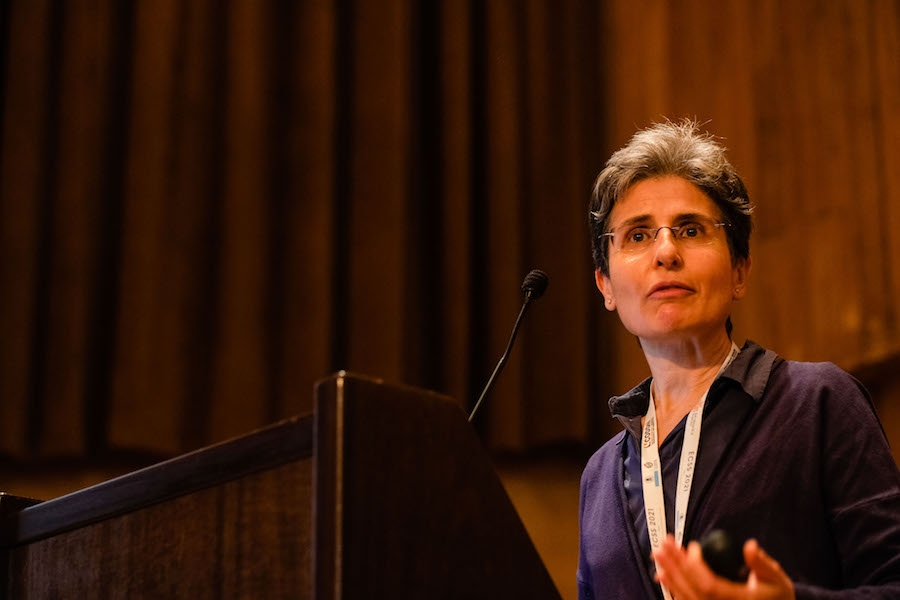
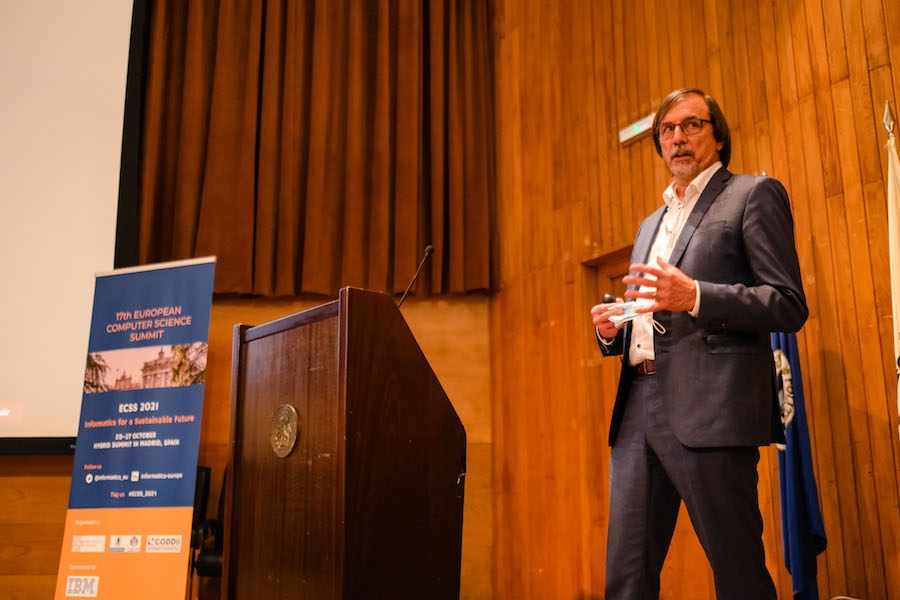
-
ECSS 2021 Hybrid Event
ECSS 2021 Hybrid Event
-
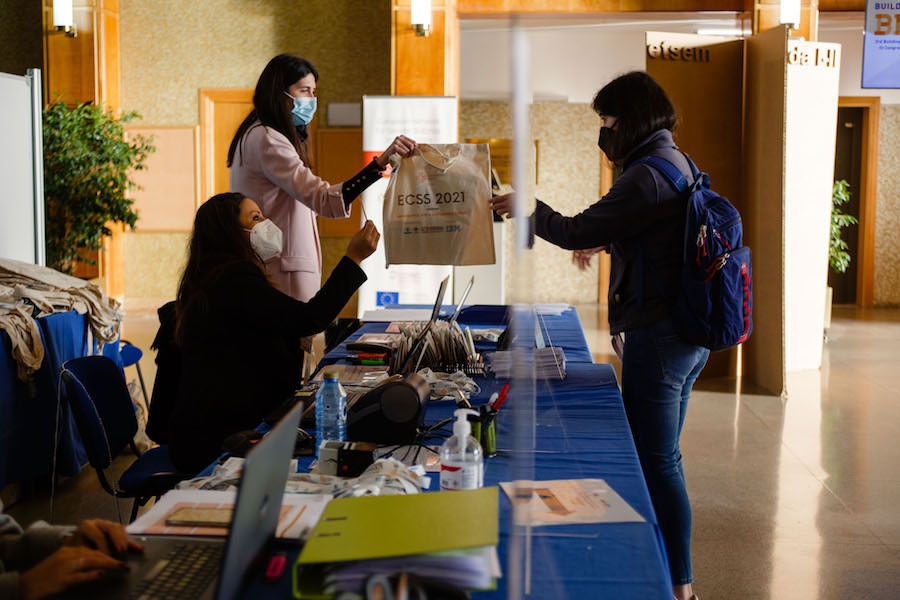
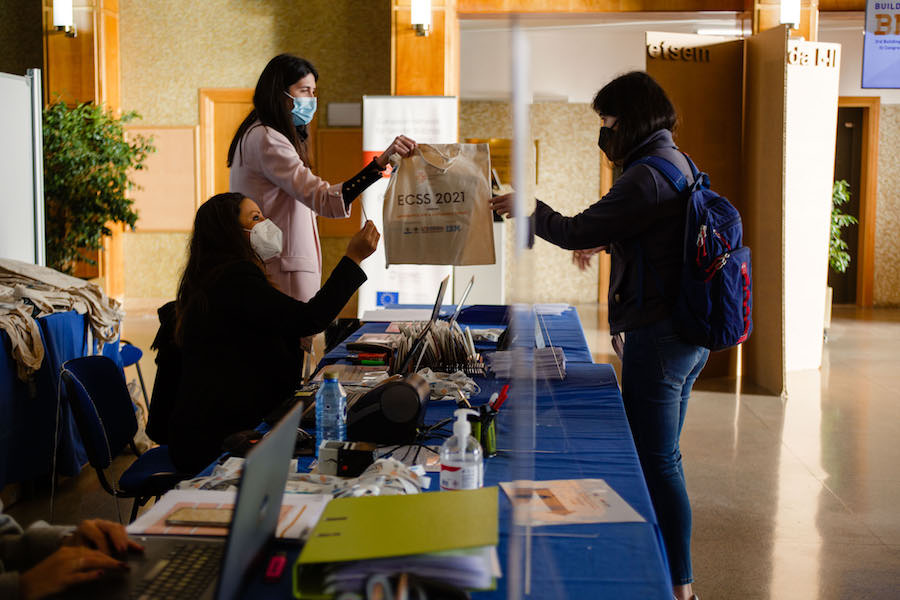
At the registration desk
-
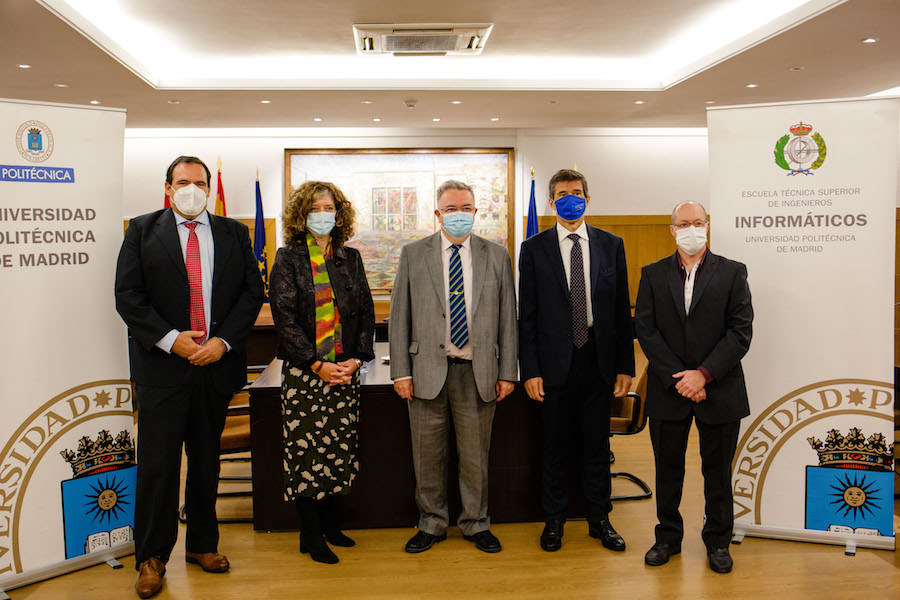
Javier Soriano, Ana Isabel Cremades Rodríguez, Guillermo Cisneros, Enrico Nardelli, Manuel Carro
-
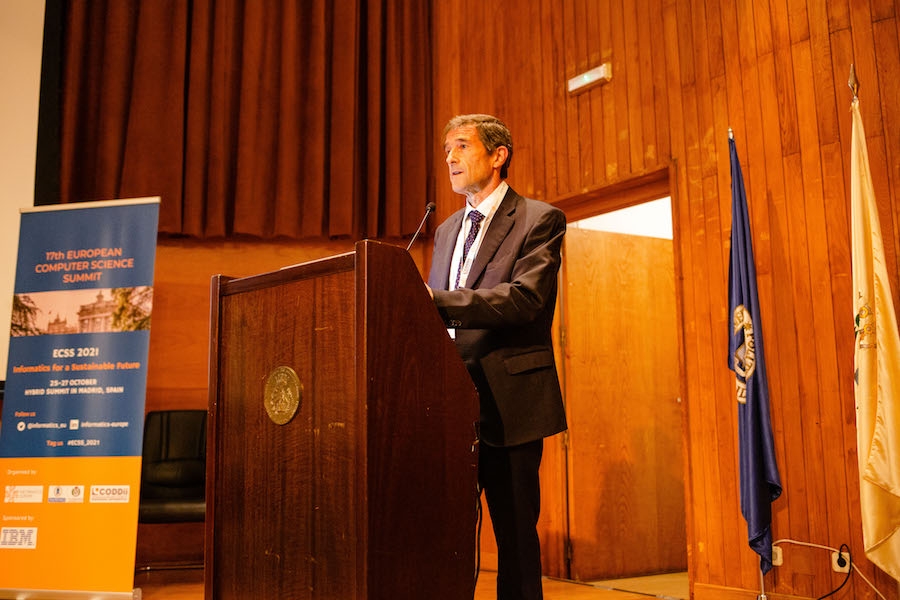
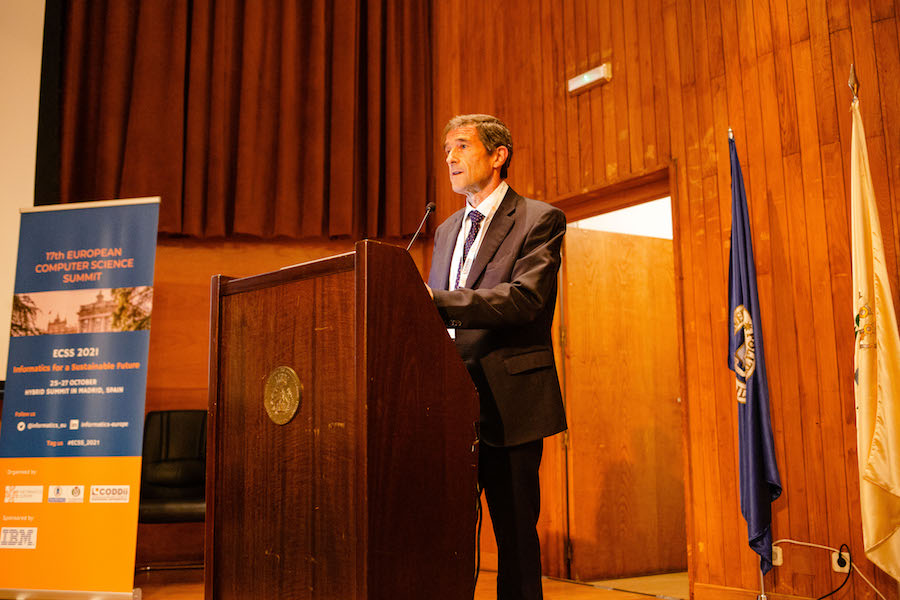
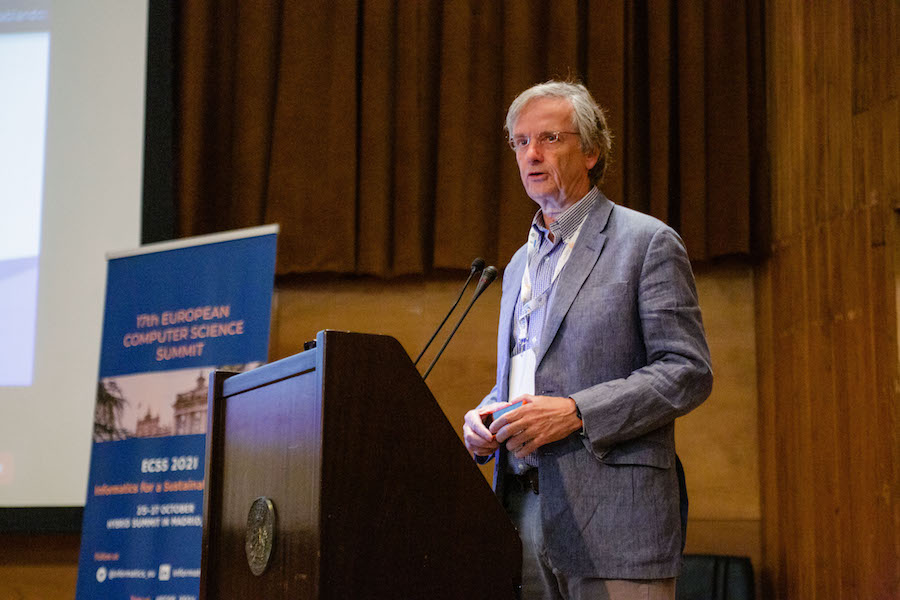
Enrico Nardelli, Informatics Europe President
-
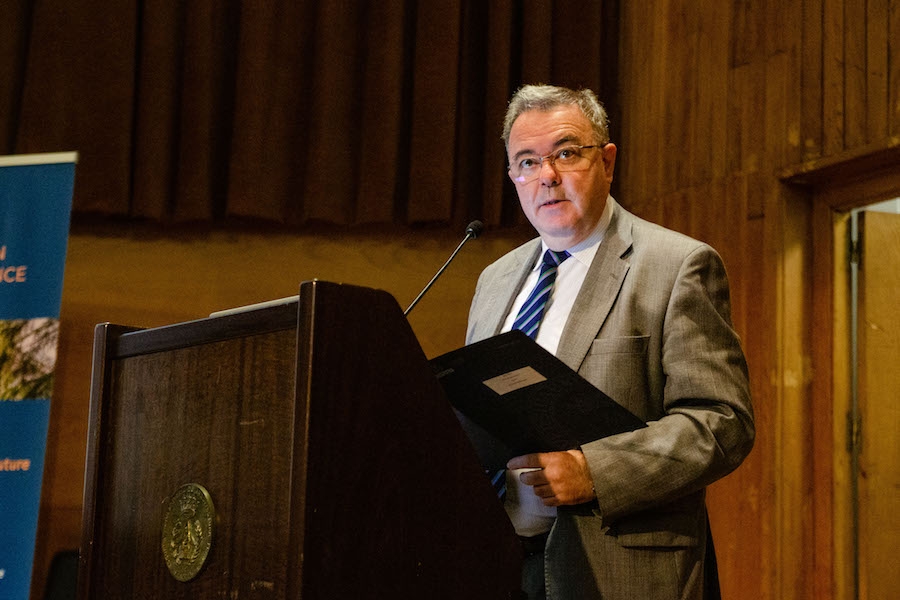
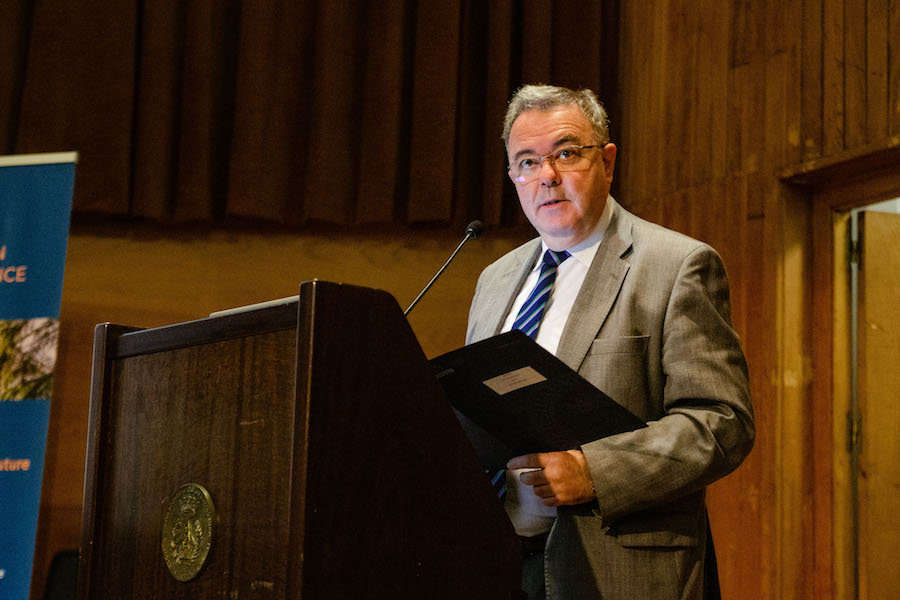
Guillermo Cisneros, Rector of Universidad Politécnica de Madrid (UPM)
-
ECSS 2021 Official Opening
-
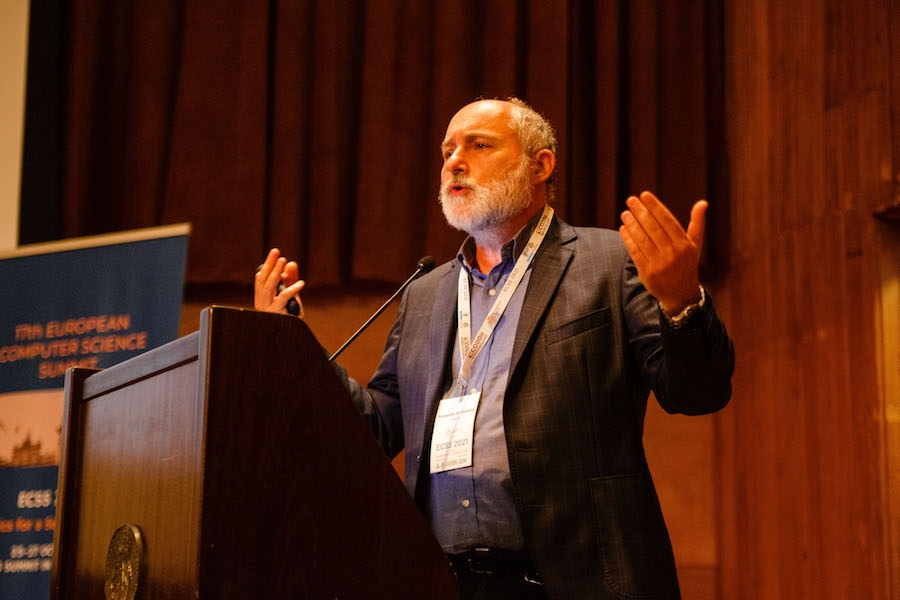
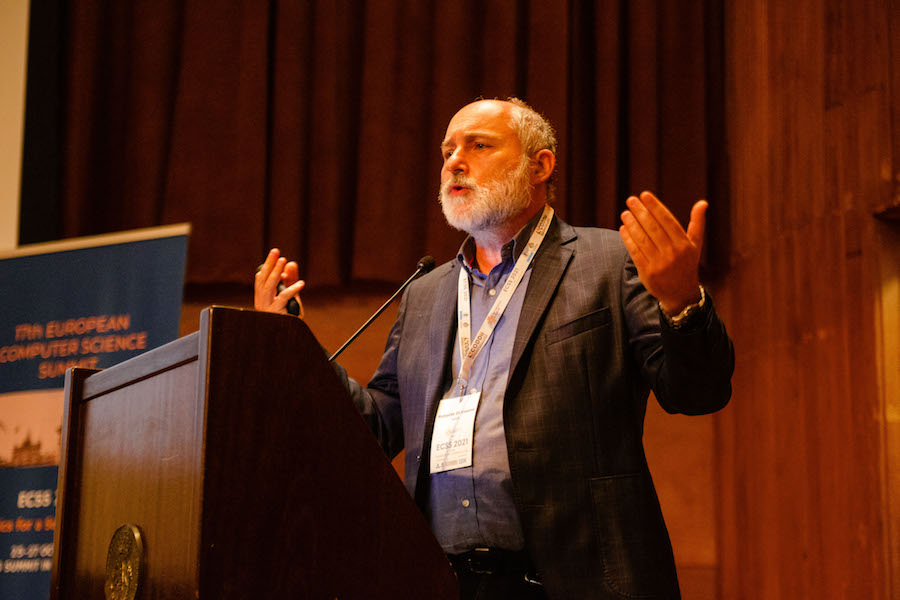
Roberto di Cosmo, INRIA
-
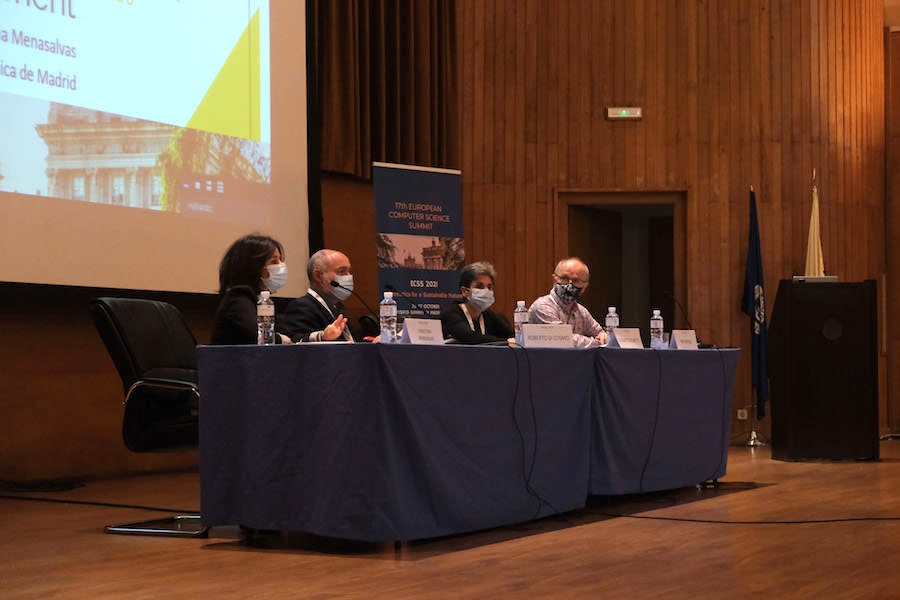
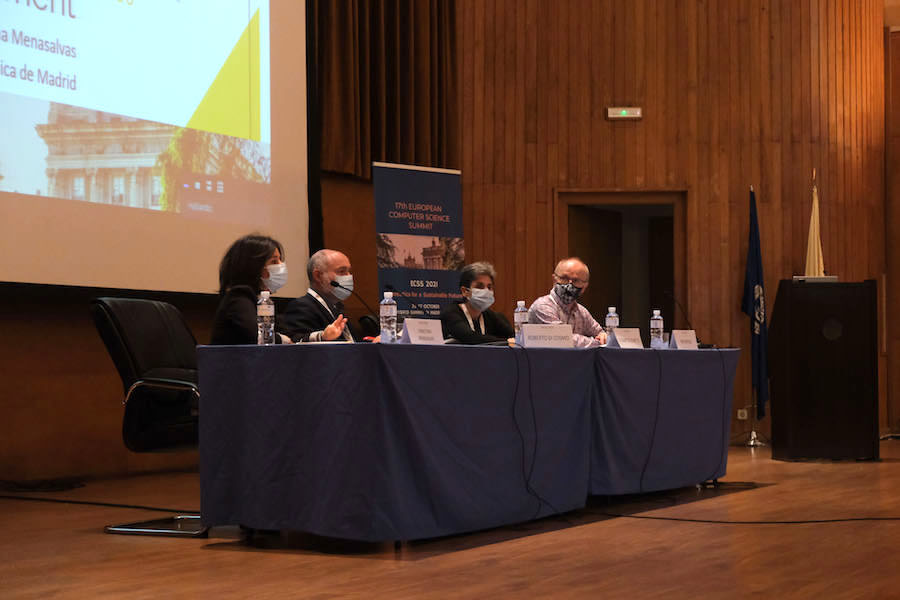
Discussion Panel on Open Science and its Impact on Career Development
-
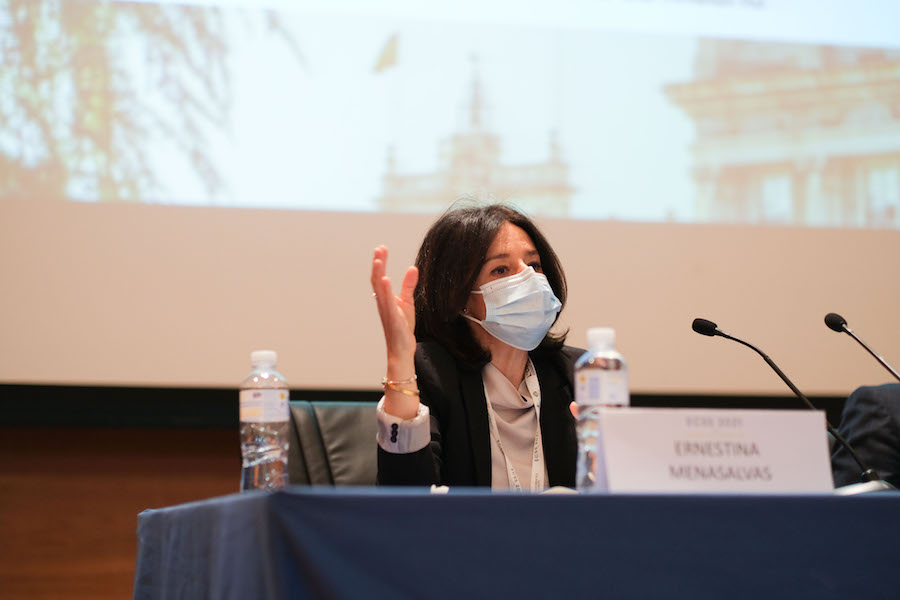
Ernestina Menasalvas, Technical University of Madrid
-
Yves Deville, UC Louvain
-
Harald Gall, University of Zurich
-
Professional Development Workshop for Early Career Researchers
-
Virtual Speakers of the Professional Development Workshop for Early Career Researchers
-
At the Professional Development Workshop for Early Career Researchers
-
Gerardine Fitzpatrick, TU Wien
-
Early Career Researchers Posters Session
-
Early Career Researchers Posters Session
-
Lorenz Hilty, University of Zurich
-
Frank van Harmelen, Vrije Universiteit Amsterdam
-
Max Mühlhäuser, Technical University of Darmstadt
-
Marina Jirotka, University of Oxford
-
Dick Bulterman, CWI / Vrije Universiteit Amsterdam
-
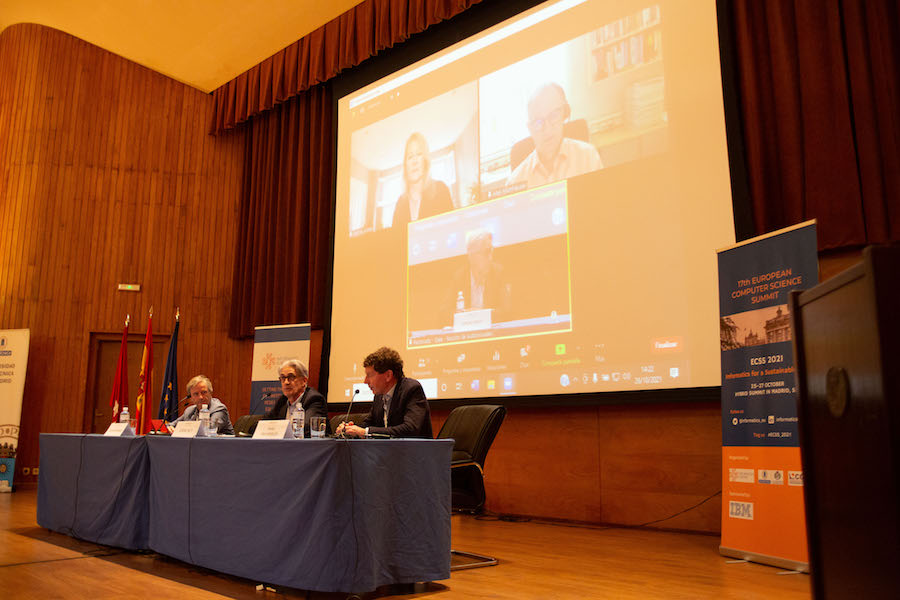
Discussion with chairs and speakers of the Scientific Main Theme 'Informatics for a Sustainable Future'
-
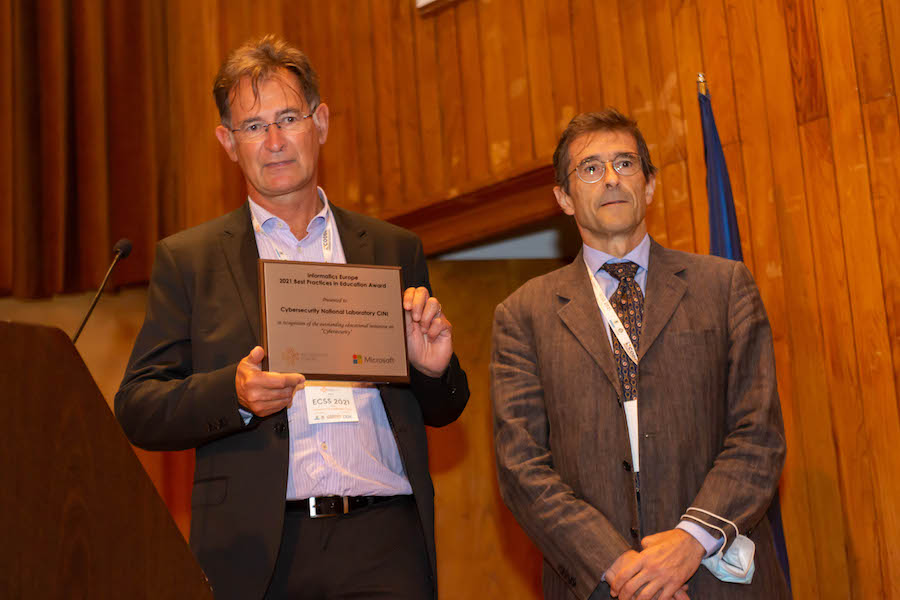
Jean-Marc Jézéquel, IRISA/University of Rennes, and Enrico Nardelli, Informatics Europe, giving virtually the Best Practices in Education Award to CINI Cybersecurity National Laboratory
-
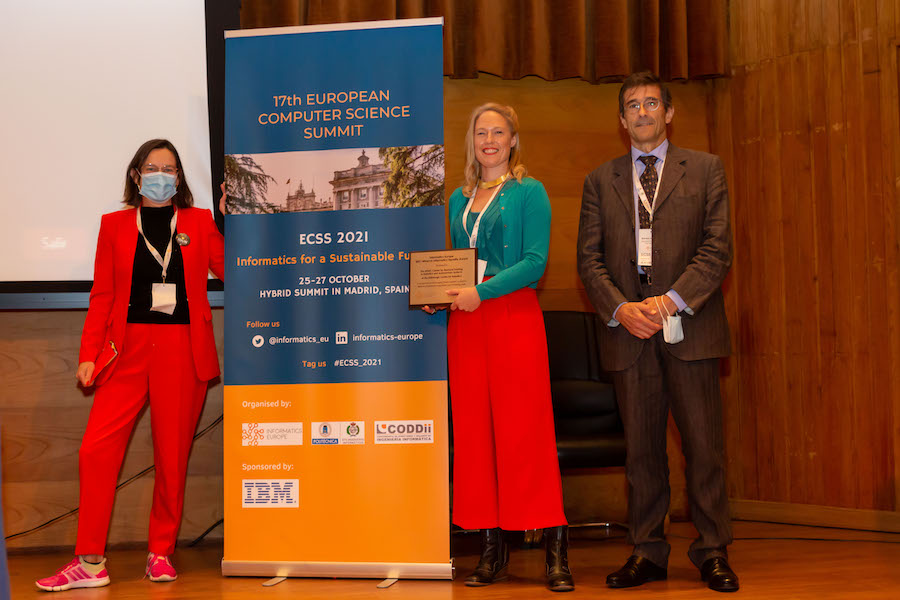
Minerva Award Winner from the EPSRC Centre for Doctoral Training (CDT) in Robotics and Autonomous Systems with Letizia Jaccheri, NTNU and Enrico Nardelli, Informatics Europe
-
Runner-up of the Minerva Award from Hochschule Bremen with Letizia Jaccheri, NTNU and Enrico Nardelli, Informatics Europe
-
Nuria Anguera, Executive Director of Informatics Europe
-
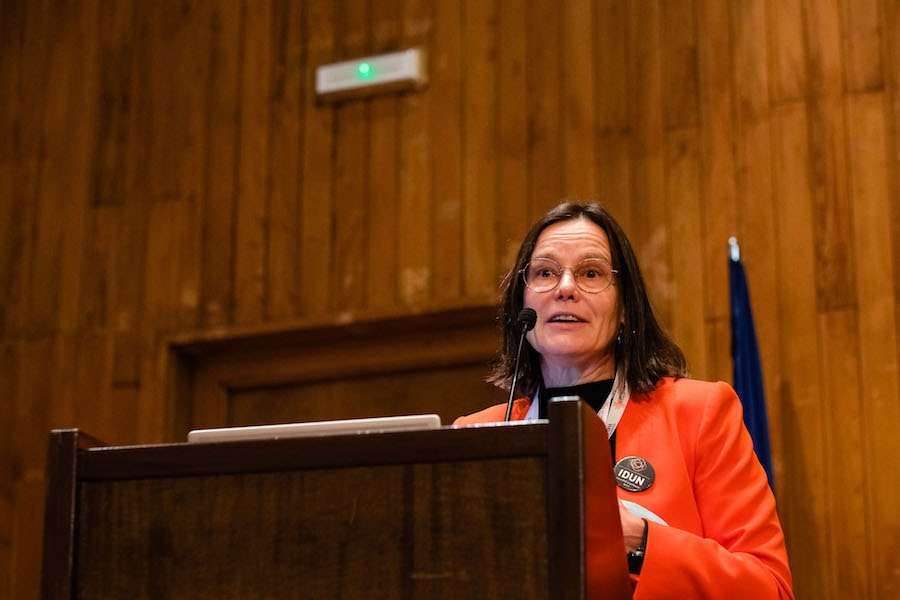
Letizia Jaccheri, Action Chair EUGAIN, NTNU
-
Michael Caspersen, It-vest
-
Ismael García-Varea, Universidad de Castilla - La Mancha
-
Elisabetta Di Nitto, Politecnico di Milano
-
Gregor Engles, Paderborn University
-
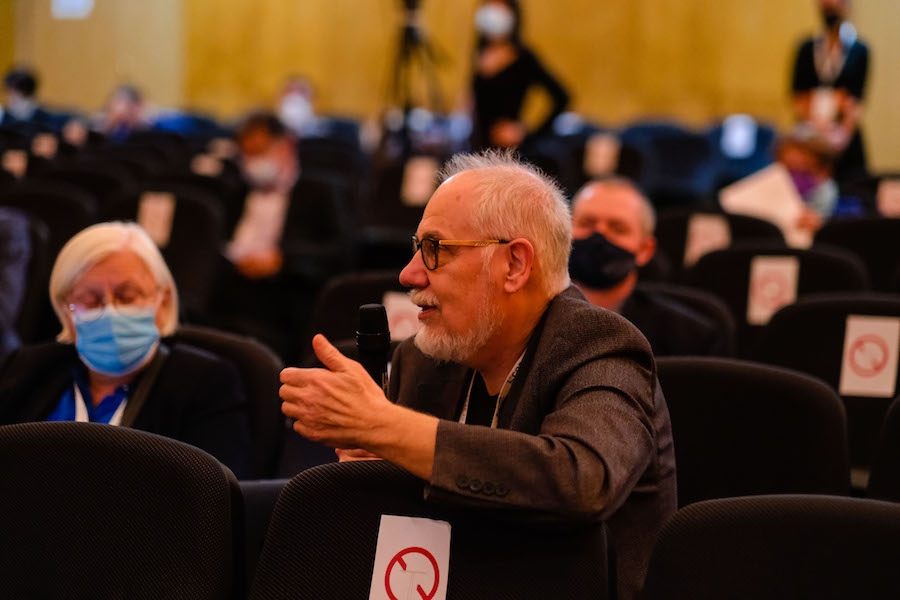
Questions from the audience
-
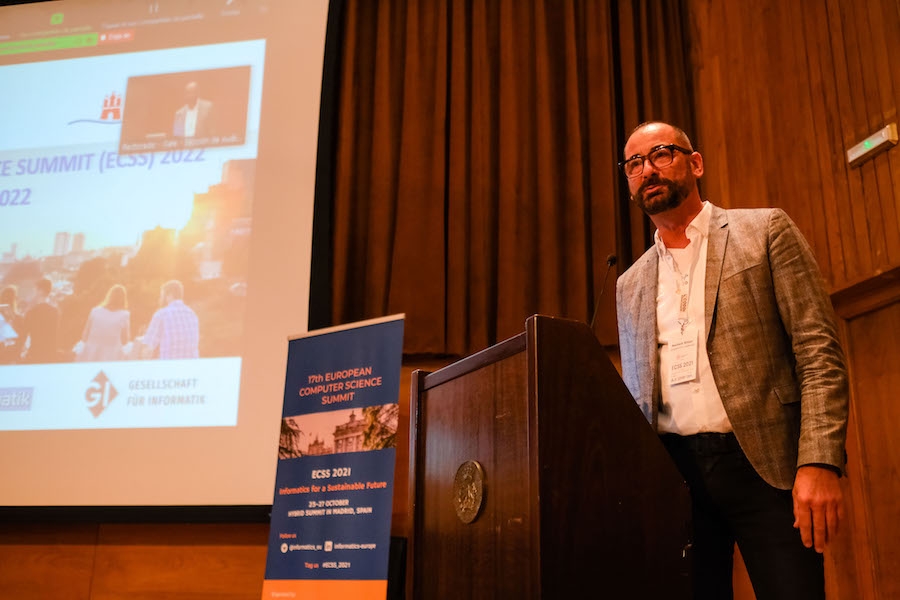
Norbert Ritter, University of Hamburg
-
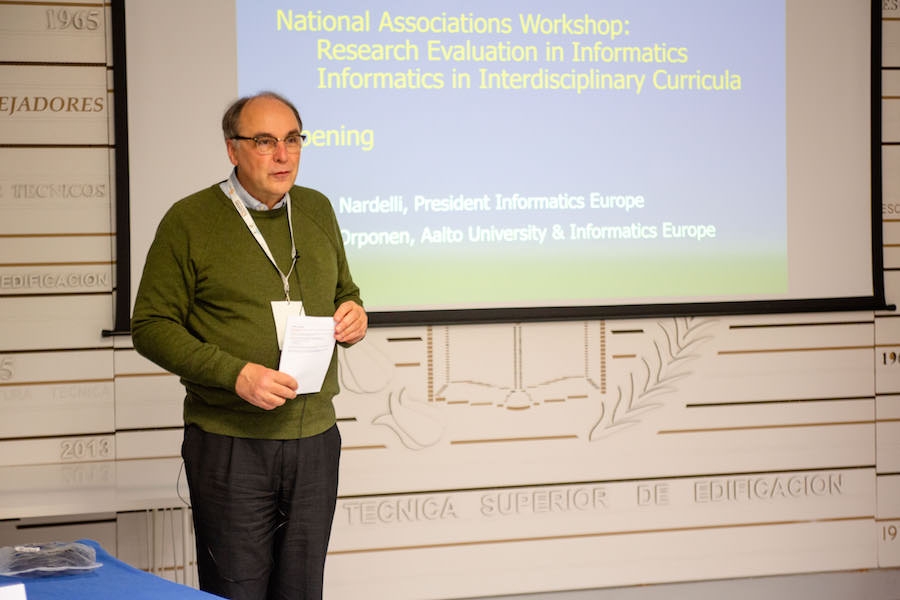
Pekka Orponen, Aalto University, at National Informatics Associations Workshop
-
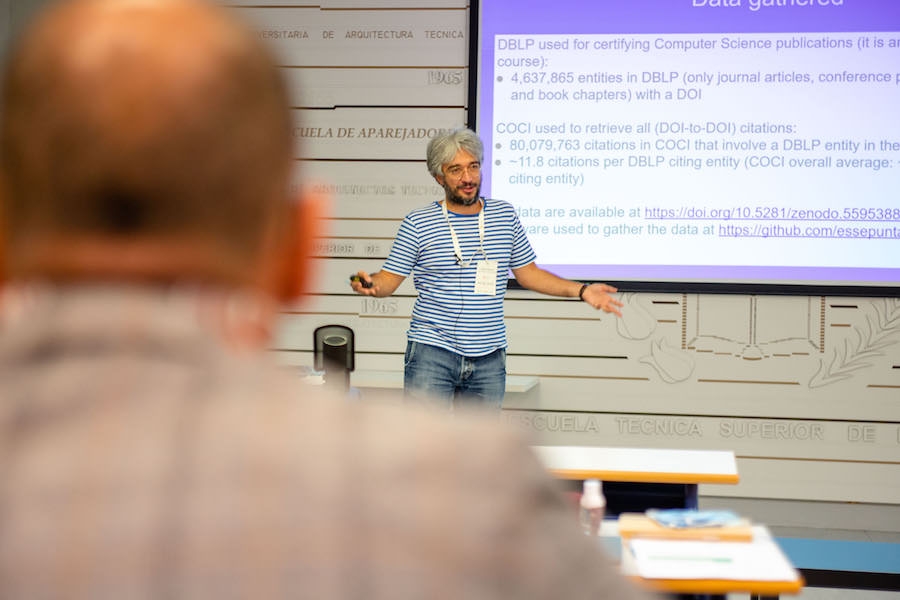
Silvio Peroni, University of Bologna
-
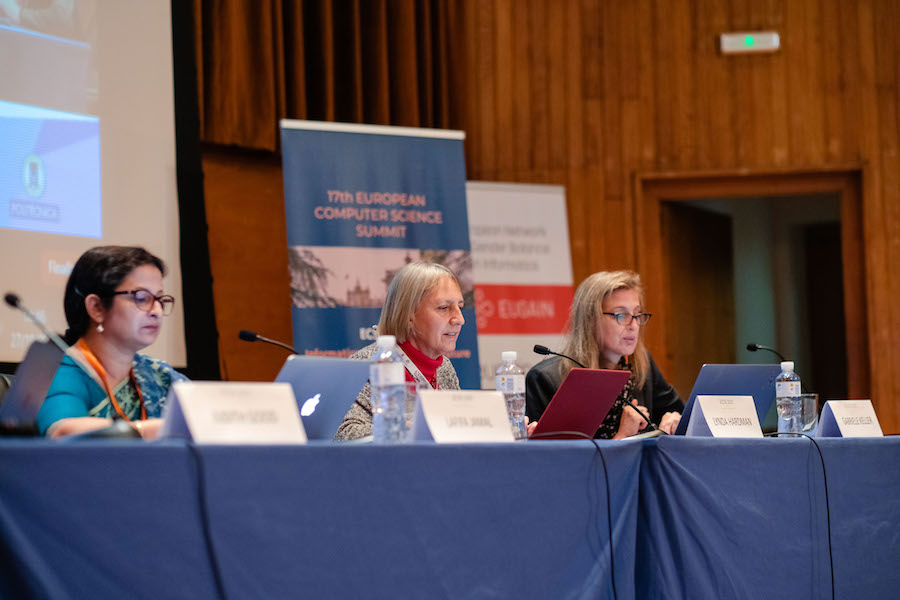
Discussion Panel at the WIRE-EUGAIN Workshop
-
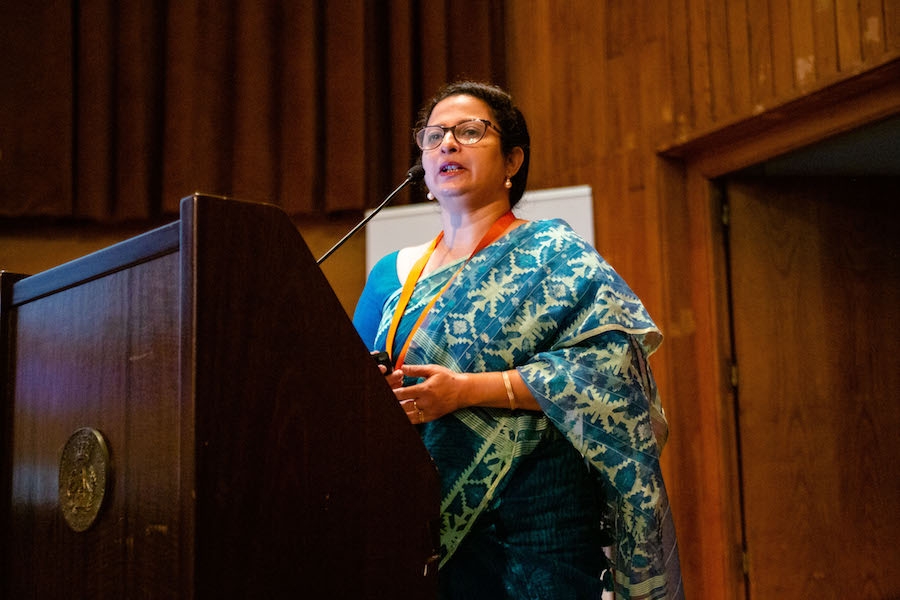
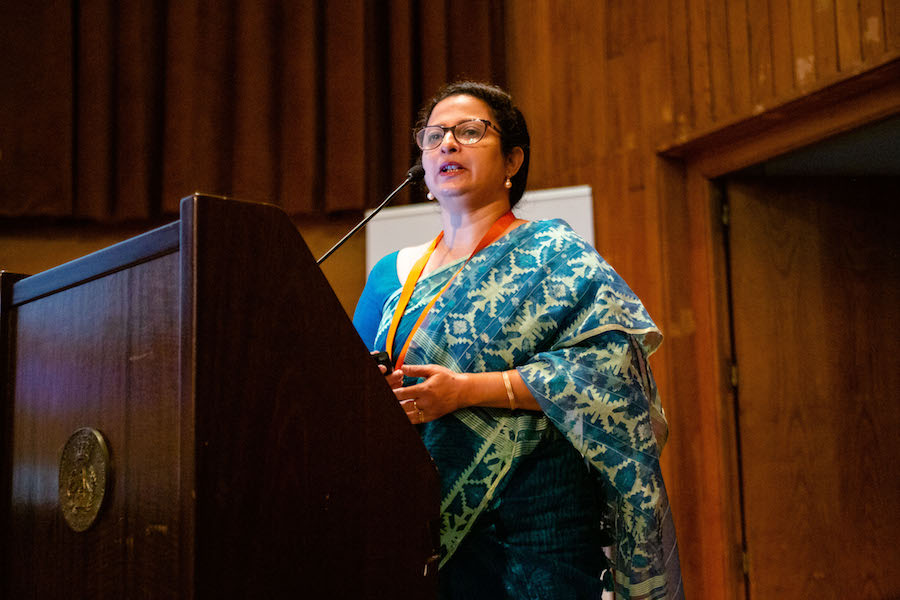
Lafifa Jamal, University of Dhaka, at WIRE-EUGAIN Workshop
-
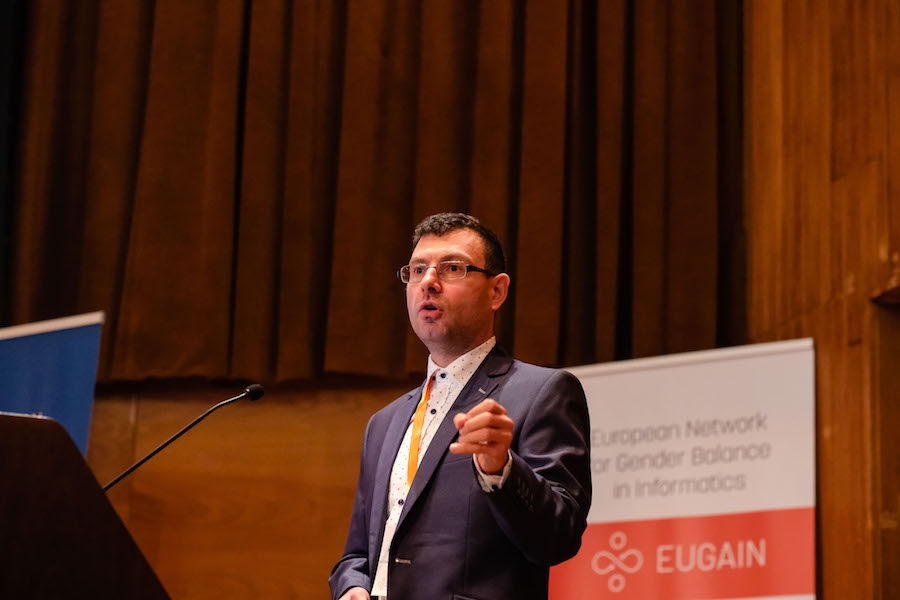
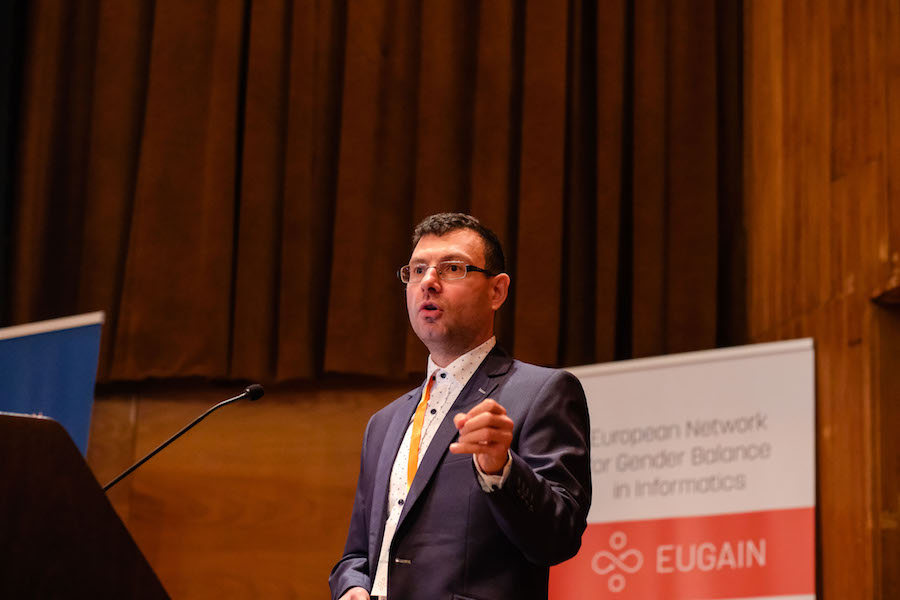
Robert Hanák, University of Economics in Bratislava
-
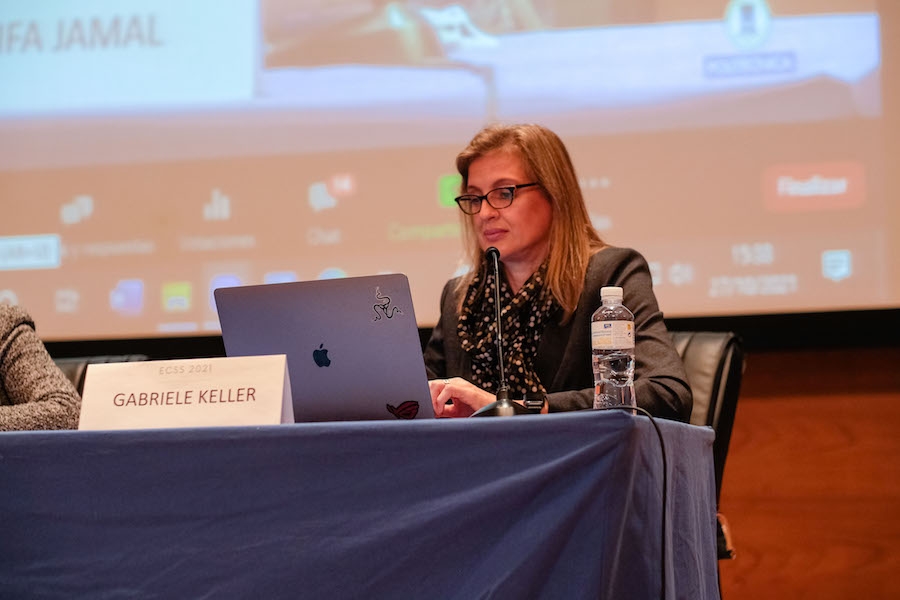
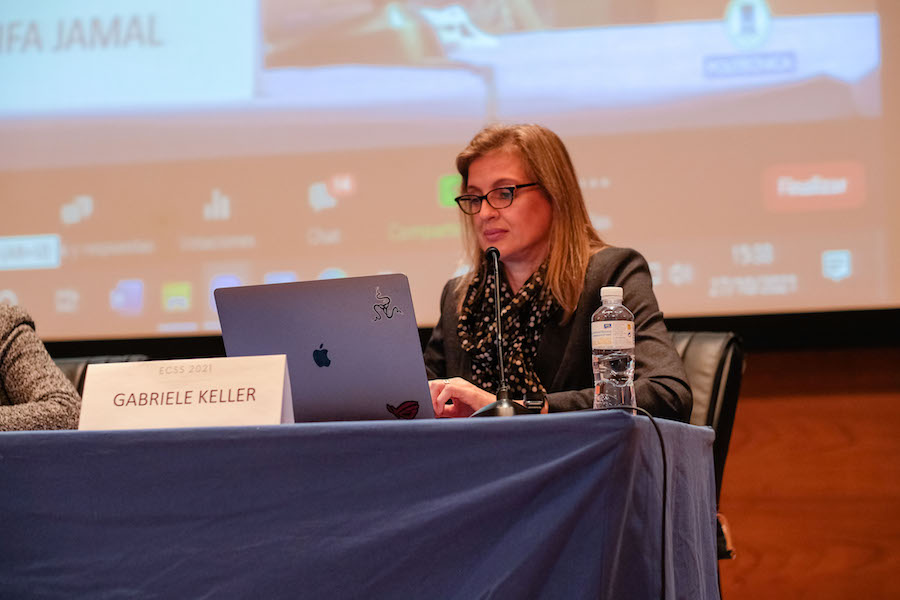
Gabrielle Keller, Utrecht University
-
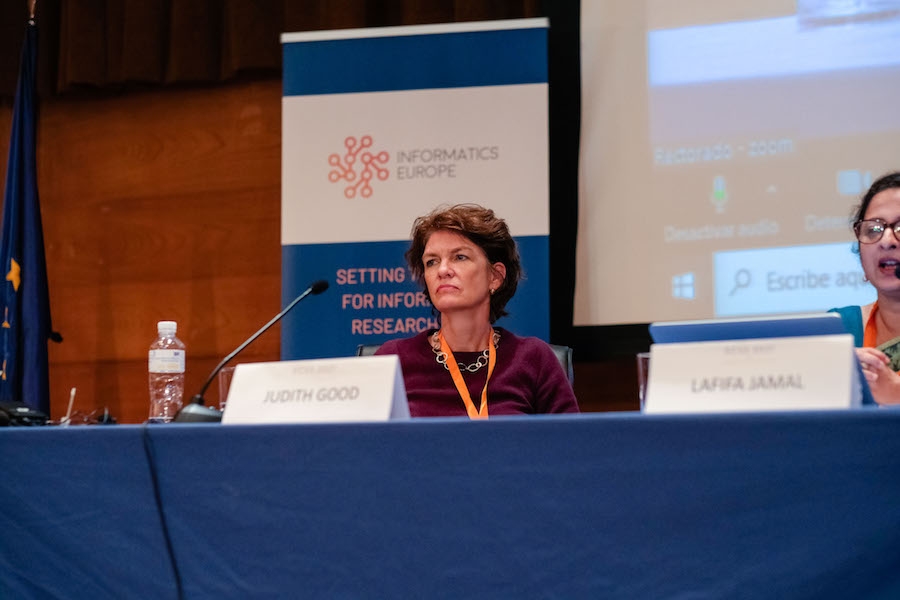
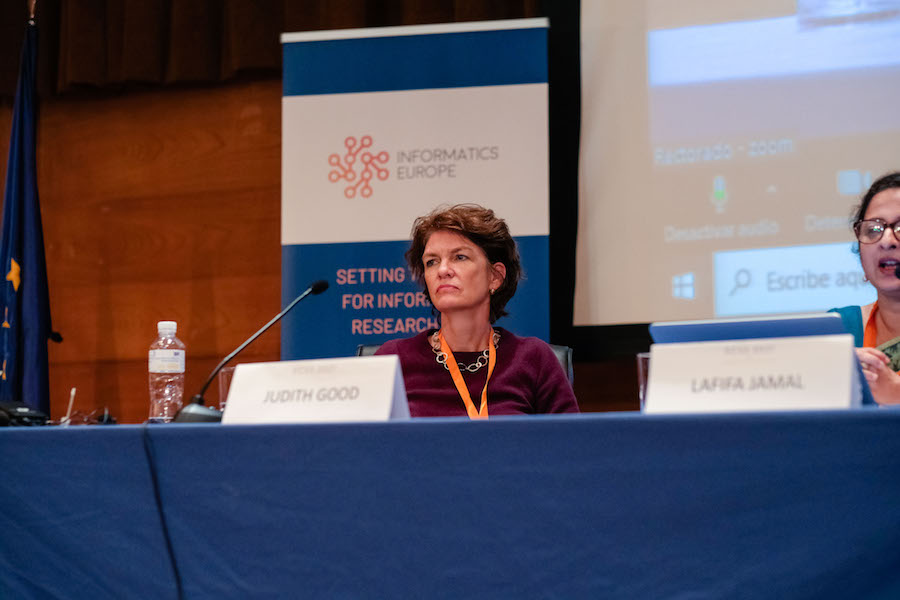
Judith Good, University of Amsterdam
-
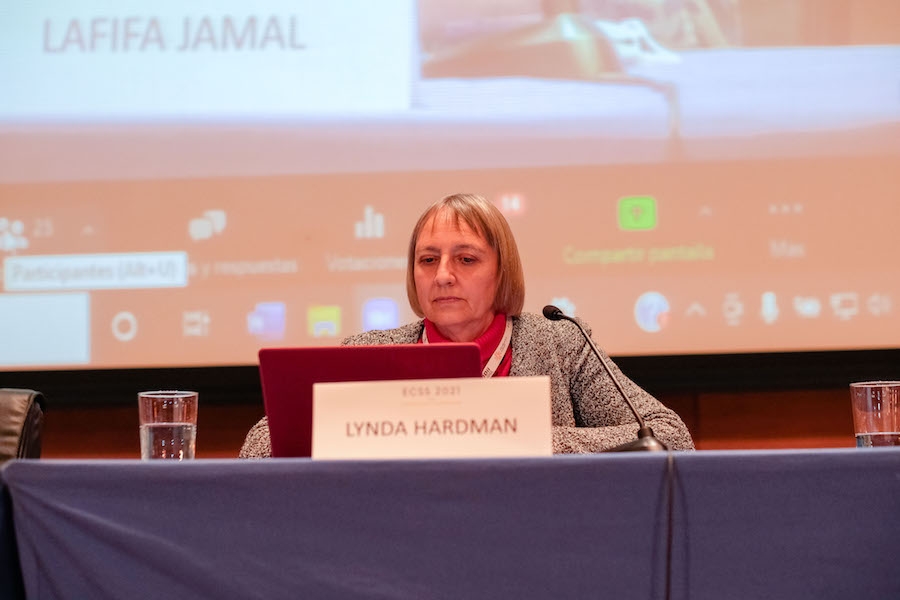
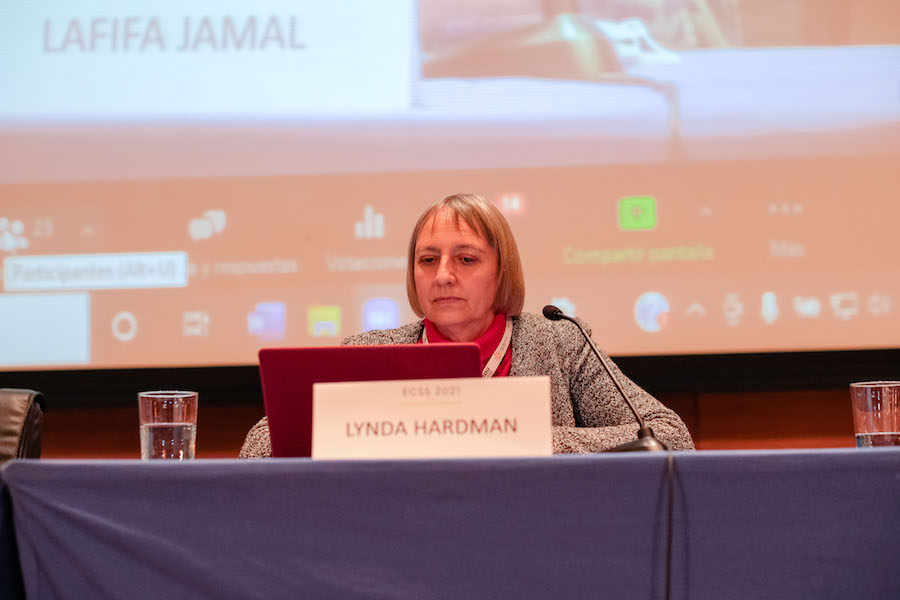
Lynda Hardman, CWI/Utrecht University
-
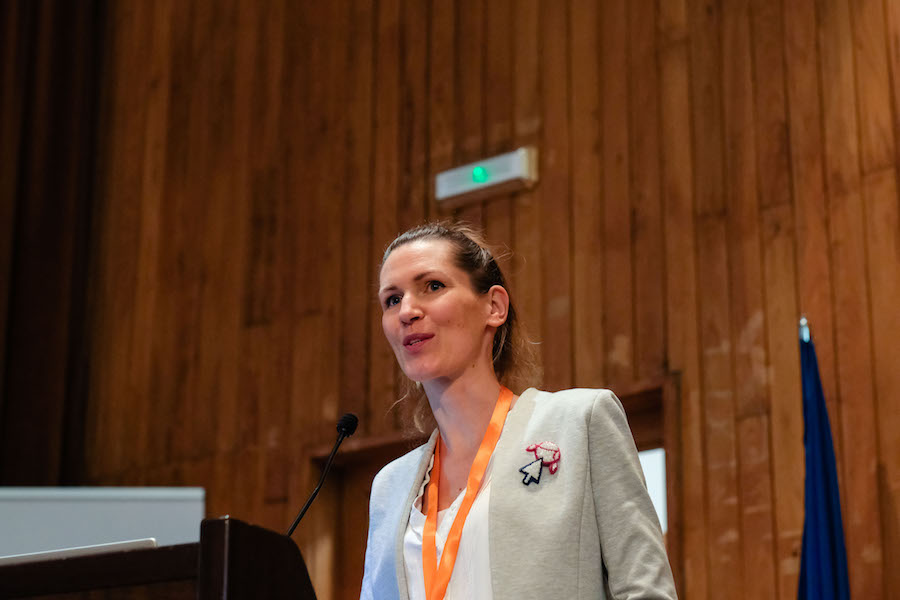
Barbora Buhnova, Vice-Chair and ITC Conference Coordinator EUGAIN, Masaryk University
-
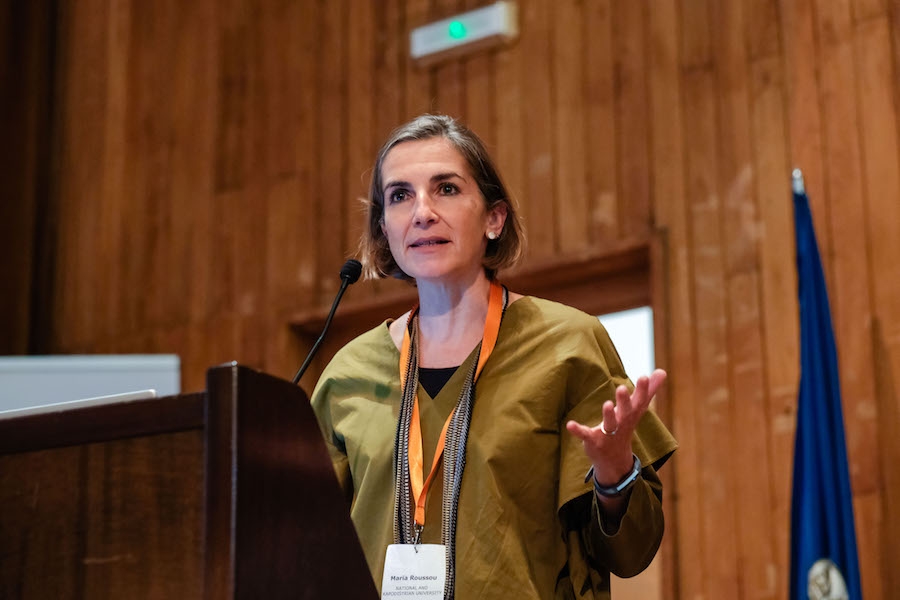
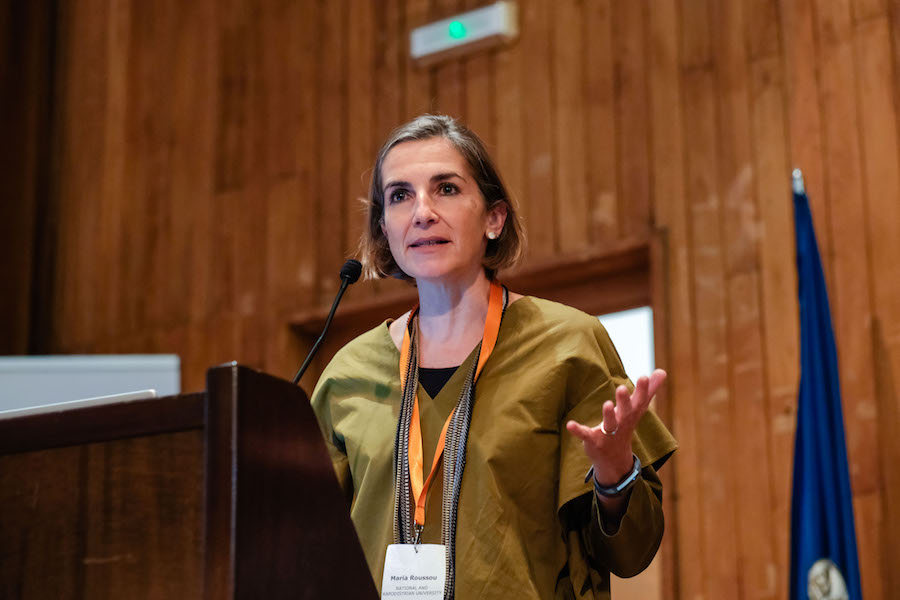
Maria Roussou, Science Communication Manager EUGAIN, National and Kapodistrian University of Athens
-
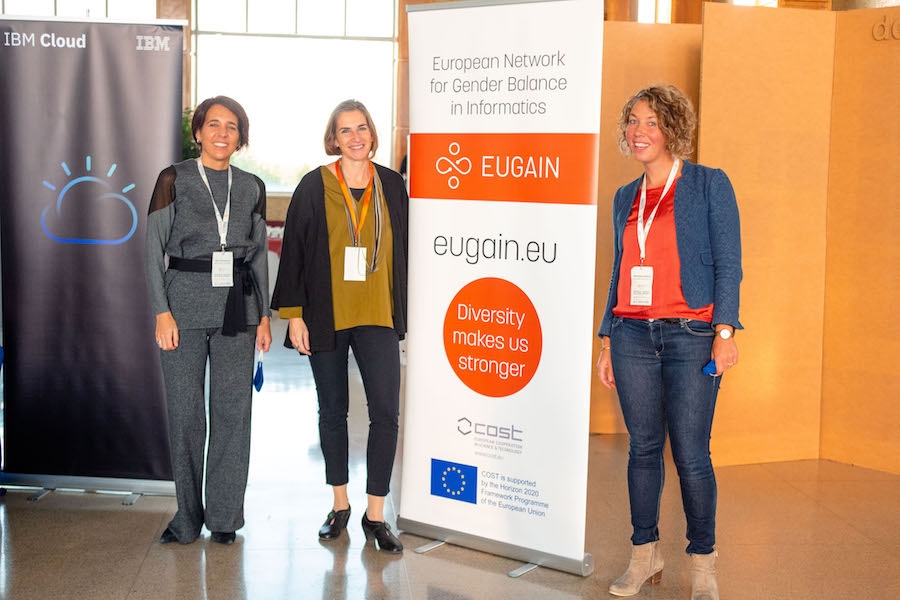
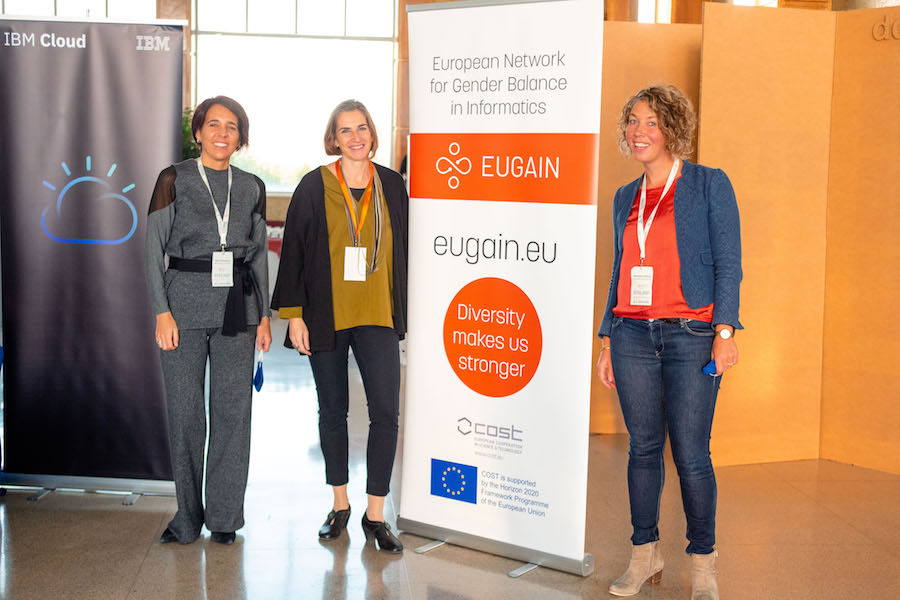
EUGAIN - European Network for Gender Balance in Informatics
-
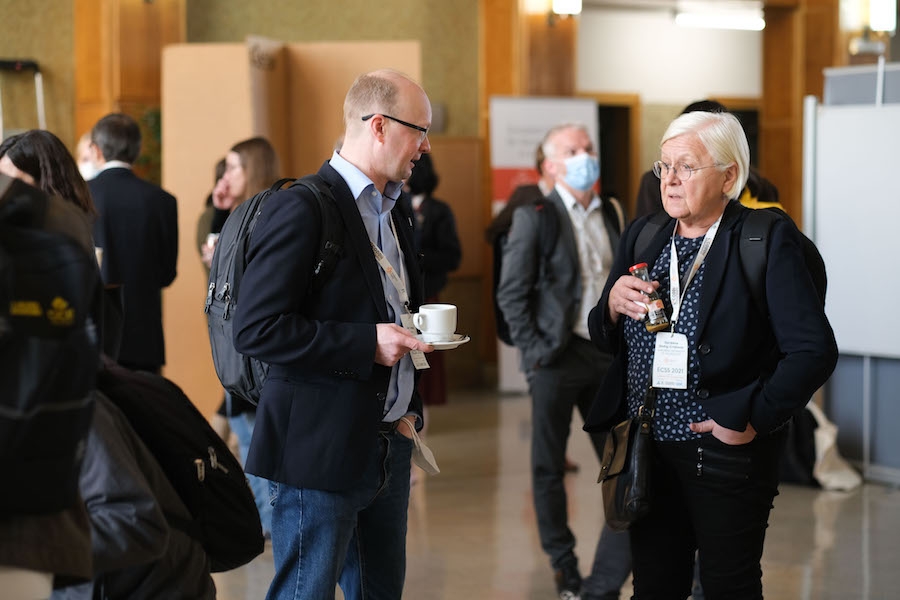
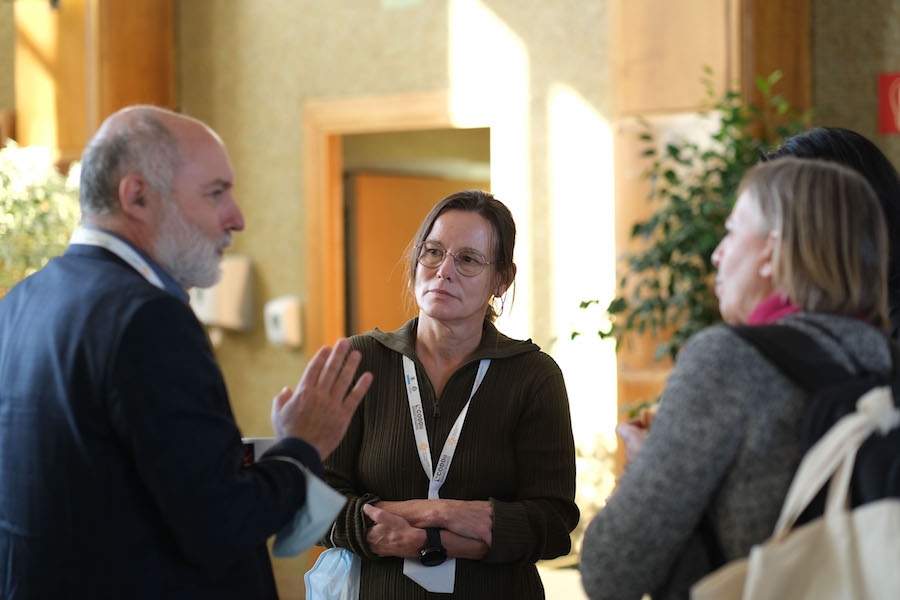
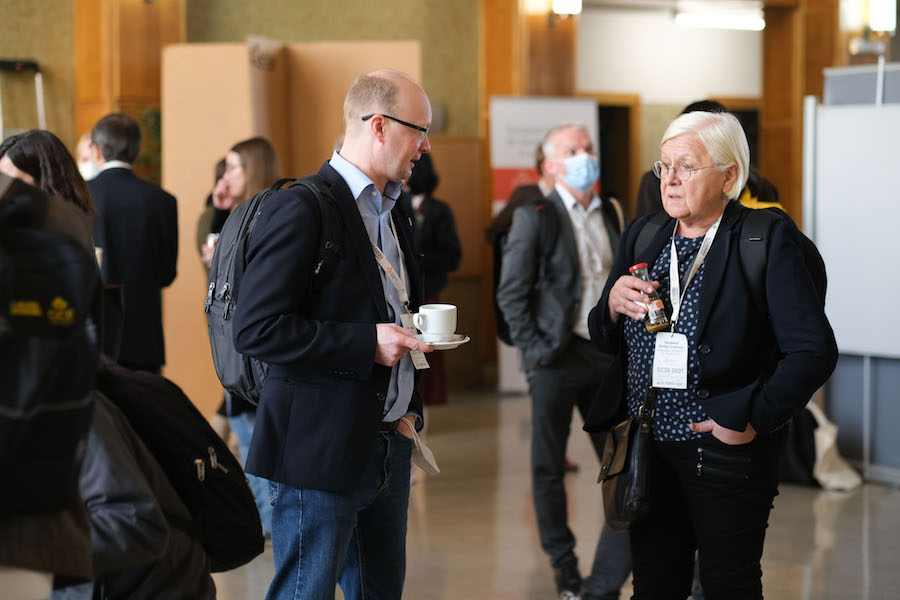
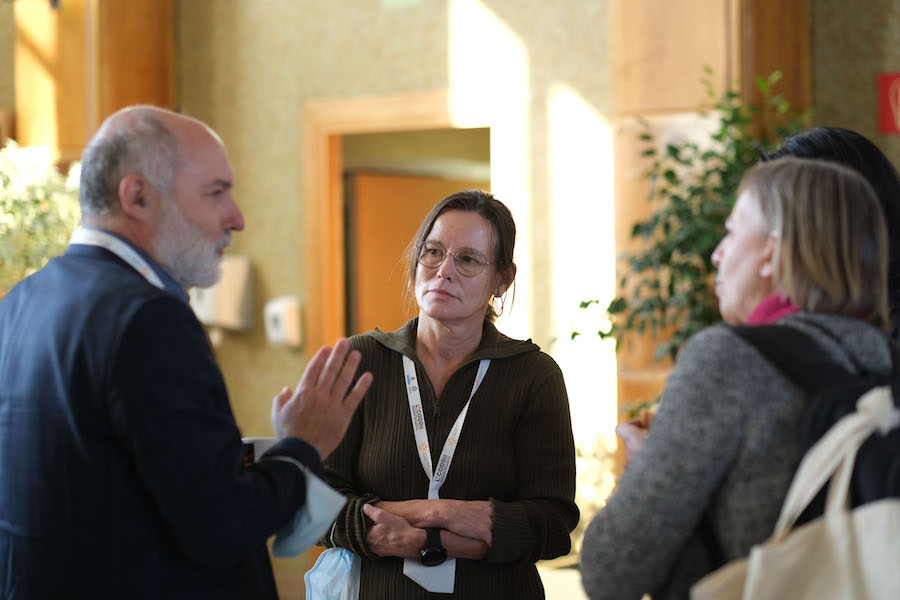
Discussions at coffee breaks
-
Discussions at coffee breaks


-
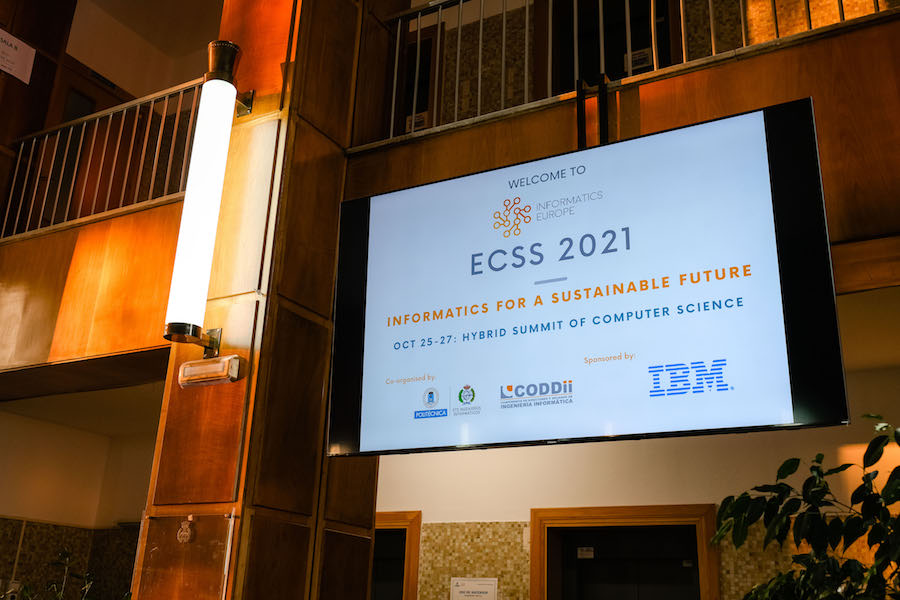
ECSS 2021 Hybrid Event
ECSS 2021 Hybrid Event -
At the registration desk
-
Javier Soriano, Ana Isabel Cremades Rodríguez, Guillermo Cisneros, Enrico Nardelli, Manuel Carro
-
Enrico Nardelli, Informatics Europe President
-
Guillermo Cisneros, Rector of Universidad Politécnica de Madrid (UPM)
-
ECSS 2021 Official Opening
-
Roberto di Cosmo, INRIA
-
Discussion Panel on Open Science and its Impact on Career Development
-
Ernestina Menasalvas, Technical University of Madrid
-
Yves Deville, UC Louvain
-
Harald Gall, University of Zurich
-
Professional Development Workshop for Early Career Researchers
-
Virtual Speakers of the Professional Development Workshop for Early Career Researchers
-
At the Professional Development Workshop for Early Career Researchers
-
Gerardine Fitzpatrick, TU Wien
-
Early Career Researchers Posters Session
-
Early Career Researchers Posters Session
-
Lorenz Hilty, University of Zurich
-
Frank van Harmelen, Vrije Universiteit Amsterdam
-
Max Mühlhäuser, Technical University of Darmstadt
-
Marina Jirotka, University of Oxford
-
Dick Bulterman, CWI / Vrije Universiteit Amsterdam
-
Discussion with chairs and speakers of the Scientific Main Theme 'Informatics for a Sustainable Future'
-
Jean-Marc Jézéquel, IRISA/University of Rennes, and Enrico Nardelli, Informatics Europe, giving virtually the Best Practices in Education Award to CINI Cybersecurity National Laboratory
-
Minerva Award Winner from the EPSRC Centre for Doctoral Training (CDT) in Robotics and Autonomous Systems with Letizia Jaccheri, NTNU and Enrico Nardelli, Informatics Europe
-
Runner-up of the Minerva Award from Hochschule Bremen with Letizia Jaccheri, NTNU and Enrico Nardelli, Informatics Europe
-
Nuria Anguera, Executive Director of Informatics Europe
-
Letizia Jaccheri, Action Chair EUGAIN, NTNU
-
Michael Caspersen, It-vest
-
Ismael García-Varea, Universidad de Castilla - La Mancha
-
Elisabetta Di Nitto, Politecnico di Milano
-
Gregor Engles, Paderborn University
-
Questions from the audience
-
Norbert Ritter, University of Hamburg
-
Pekka Orponen, Aalto University, at National Informatics Associations Workshop
-
Silvio Peroni, University of Bologna
-
Discussion Panel at the WIRE-EUGAIN Workshop
-
Lafifa Jamal, University of Dhaka, at WIRE-EUGAIN Workshop
-
Robert Hanák, University of Economics in Bratislava
-
Gabrielle Keller, Utrecht University
-
Judith Good, University of Amsterdam
-
Lynda Hardman, CWI/Utrecht University
-
Barbora Buhnova, Vice-Chair and ITC Conference Coordinator EUGAIN, Masaryk University
-
Maria Roussou, Science Communication Manager EUGAIN, National and Kapodistrian University of Athens
-
EUGAIN - European Network for Gender Balance in Informatics
-
Discussions at coffee breaks
-
Discussions at coffee breaks
Special Offer
Should your organisation consider becoming a member of Informatics Europe, this special offer in combination with ECSS 2021 may interest you:
When joining Informatics Europe from July to October, your institution receives complimentary registration to the ECSS for one individual.
Additionally, new members were welcome at the 2021 New Members Only get-together, on Monday 25, at 9:00, right before the official start of the ECSS 2021 in Madrid.
For details about membership, please visit our Membership page.
For further information about this offer, please contact
About Madrid
 Madrid is the capital and most populous city of Spain. The city lies practically at the geographic centre of Spain and is home to Spain's government and is a national centre of economic, cultural, and educational life. The capital is also regarded as a hub of artistic activity and is famous for its vibrant culture and nightlife. Madrileños (residents of Madrid) have a strong reputation for openness and hospitality.
Read more:
Awards Session
Every year, as part of the ECSS program, Informatics Europe organises an Award ceremony, where the winners of its annual awards are presented:
- The Best Practices in Education Award recognising educational initiatives across Europe that improve the quality of Informatics teaching and the attractiveness of the discipline.
- The Minerva Informatics Equality Award recognising best practices in departments or faculties of European universities and research labs that encourage and support the careers of women in Informatics research and education.
The award winners had the opportunity to present their achievements in a short talk during the Awards session.
Call for Participation
ECSS 2021 - 17th European Computer Science Summit
“Informatics for a Sustainable Future”
Hybrid event, with on-site sessions & networking activities in Madrid
25 – 27 October 2021
------------------------------------------------------------------------------------------------
The 17th European Computer Science Summit – ECSS 2021 – is calling for the participation of all who are interested in issues of research, education and policy in Informatics. The annual summit is a unique opportunity to meet prominent decision-makers, scientists and researchers to discuss critical issues for the discipline.
The ECSS 2021 will be held in Madrid, Spain, October 25-27, 2021. Hosted as a hybrid event by the Universidad Politécnica de Madrid (UPM), this year the conference offers a virtual alternative to accommodate those with travel restrictions.
The summit opens on Monday with the Workshop for Leaders of Informatics Research and Education featuring the topic "Open Science and its Impact on Research and Career Development". In parallel, the Professional Development Workshop for Early Career Researchers intends to support Informatics PhD students and PostDocs in the development of soft skills and career plans. A shared panel will allow participants of both workshops to discuss the topic of open science and its impact on career development.
The program continues on Tuesday with the central theme of the summit "Informatics for a Sustainable Future", addressing an array of topics including ways that our digital transformation can be aligned with the UN’s sustainable development goals, interaction and representation challenges of sustainability-related information, impact of responsible research initiatives on sustainable society, and responsible AI.
Rounding up Tuesday’s program, we will have the Informatics Europe Annual Awards Ceremony, the Dialogue with Members Session and the Informatics Europe Annual General Assembly, where key topics relevant to the community and the development of the organisation will be discussed.
The Summit concludes on Wednesday with the WIRE-EUGAIN Workshop, which will focus on a particular area of sustainability in our discipline, "How to retain women in Computer Science" at all career stages.
The National Informatics Associations Workshop on "Interdisciplinary Informatics Curricula and Research Evaluation in Informatics" will combine a follow-up on the theme "Interdisciplinarity and Informatics" explored at the NIA Workshop - ECSS 2020, with a discussion about how to recognise, assess and credit research contributions specific to Informatics.
All workshops will include a mix of keynote talks by a selection of distinguished speakers from all over Europe, with ample time for interaction, discussion and knowledge sharing. The welcome cocktail on Monday and gala dinner on Tuesday evening will allow for further exchange, in a summit designed to boost networking and top-level international dialogues on key topics of Informatics.
The summit is co-chaired by Javier Soriano, Escuela Técnica Superior de Ingenieros Informáticos (ETSIINF, UPM) and Enrico Nardelli, Informatics Europe President, Università di Roma "Tor Vergata", with organizational support by Edmundo Tovar, ETSIINF - UPM, and CODDII, the Spanish Council of Deans of Informatics. All information about Program Chairs can be found here.
A detailed conference schedule can be found on the ECSS 2021 website. For further information about the events and sessions, you can access directly the information concerning each specific session:
- Leaders Workshop
- Early Career Researchers Workshop
- Informatics for a Sustainable Future
- Awards Session
- Informatics Europe Session
- WIRE-EUGAIN Workshop
- National Informatics Associations Workshop
You may also find useful information such as our ECSS 2021 venue, accommodation, safety & health measures under the menu tab “Practical Information” at the top of our website.
Registration
Registration are now open and the early bird registration offer lasts until 30 September, 2021.
PhDs and PostDocs can opt to attend the complete summit or only the Monday’s workshop. No more CV or research statement are accepted; however, interested PhDs and PostDocs are welcome and encouraged to register and attend the workshop – a great opportunity of knowledge transfer and networking. A limited number of travel grants are still available to apply for those who registered to attend in person.
About ECSS
ECSS conferences are devoted to important and timely strategic issues and trends regarding all aspects of Informatics, including research, education, entrepreneurship, funding, career development, management and policies. The key audience includes:
- Heads (deans, chairs) of Academic Informatics /Computer Science /IT Departments (Schools, Faculties, Institutes);
- Research Directors and Managers of Research Centres, Institutes and Labs, both in public institutions and in industry;
- Faculty members and researchers from both academia and industry;
- Members of funding and governmental agencies at European, national regional and local level;
- Experts, advisors and thinkers of numerous key issues like ethics, the relation between Informatics and other sciences, the discipline’s future and its influence on the academic world and society;
- PhD students and Postdocs conducting research on Informatics /Computer Science /IT.
Follow our Twitter and LinkedIn with hashtag #ECSS_2021 for up-to-date information.
Committees
The following chairs were confirmed for ECSS 2021:
Conference Chairs
- Enrico Nardelli, Informatics Europe / University of Rome "Tor Vergata"
- Javier Soriano, ETSIINF - Universidad Politécnica de Madrid / CODDII
Local Chairs
- Edmundo Tovar, ETSIINF - Universidad Politécnica de Madrid
Main Theme Chairs
- Dick Bulterman, CWI / Vrije Universiteit Amsterdam
- Michèle Weiland, EPCC - University of Edinburgh
Chairs of the Leaders Workshop
- Harald Gall, University of Zurich
- Manuel Carro, ETSIINF - Universidad Politécnica de Madrid / IMDEA Software Institute
Chairs of the Professional Development Workshop for Early Career Researchers
- Elisabetta Di Nitto, Politecnico di Milano
- Standa Živný, University of Oxford
Chairs of the WIRE-EUGAIN Workshop
- Karima Boudaoud, Université Côte d’Azur
- Christopher Staff, Institute of Technology, Carlow
Chairs of the National Informatics Associations Workshop
- Pekka Orponen, Aalto University
Organizing Committee
- Nuria Anguera, Informatics Europe
- Wieneke Emans, Informatics Europe
- Kit Wan Chui, Informatics Europe
Registration
The ECSS Organising Team is looking forward to welcoming you to this year's summit. Come and join us in this exciting and remarkable event in the field of Informatics!
Please note that there is a limited number of travel grants for early-career researchers. ECSS2021 participants can apply for them by sending an email to
Registration Fees
In-person participation:
The registration fee of the ECSS 2021 (25-27 October) covers:
- Participation in all activities of the Summit
- Coffee breaks, lunches
- Conference Welcome Reception on Monday, 25 October*
- Conference Dinner on Tuesday, 26 October*
- Conference materials
The registration for the Professional Development Workshop for Early Career Researchers (ONLY), covers coffee break, lunch, and Welcome Reception on Monday, 25 October.
Virtual participation:
The registration fee of the ECSS 2021 (25-27 October) respectively the Early Career Researchers Workshop ONLY (25 October) covers: online access to all live sessions (social activities excluded), respectively selected workshop sessions ONLY, with the possibility to ask questions and virtually join break-out groups.
Prices, depending if in-person or virtual attendance**
ECSS 2021 Normal Registration :
- € 575,00 in-person / € 475,00 virtual participant (Member of Informatics Europe)
- € 675,00 in-person / € 575,00 virtual participant (Non-Member)
- € 350,00 in-person / € 250,00 virtual participant (PhDs and PostDocs
Early Career Researchers Workshop (ONLY)
- € 60 in-person / € 50 virtual participant
The online registration system will close on Friday, October 22. Last-minute registrations will be possible on-site, paid only by credit card and with an admin. charge of 25 EUR per registration.
Special considerations:
The ease of covid restrictions in Madrid as from early October, allow us to offer spouses the possibility to join the official dinner on Tuesday for a fee of 100EUR (incl. transport). Please book through
Spanish participants are granted a 50 EUR discount on the ECSS fee (all except PhDs & PostDocs). As co-organizers, CODDII representatives are granted the ECSS price for IE Spanish members.
Members of the EUGAIN Cost Action will see the ECSS fee reduced by the costs related to the WIRE-EUGAIN workshop (covered by the Action).
Participants from institutions that are not yet members of Informatics Europe can profit from a special offer. See more details here.
20 grants of 150 EUR each are made available to subsidize the travel costs of PhDs and PostDocs with budget restrictions.
Should official (COVID) restrictions band the physical part of ECSS 2021 in Madrid, all in-person tickets will automatically become virtual and participants be reimbursed 100 EUR. The same measure should apply to individual participants not able to travel to Madrid due to governmental restrictions in their country of origin and/or Spain. As of October 15, only NEW measures will be considered.
Converting virtual to in-person registration and vice-versa is possible until Oct 15. Thereafter online changes resulting from last-minute new official restriction measures will be considered (see above).
* Spouses welcome, but not included in the registration fee.
** Where applicable, VAT will be added when registering. Please note that the amount of the bank transfer will have to include any bank fee related to the transfer and/or processing.
Venue

The ECSS 2021 was held as a hybrid event with on-site sessions taking place at the Escuela Técnica Superior de Edificación, Universidad Politécnica de Madrid located at Avda. Juan de Herrera 6, 28040 Madrid.
All officially required COVID-related measures were being considered to guarantee a safe and fruitful summit. Concrete details about Safety and Heath measures can be found here. Please do not hesitate to contact
How to reach ECSS 2021 Venue
From the airport
- Taxi: 35 minutes ride for around 30 EUR
- Metro: take Line 8 to Nuevos Ministerios, change there to Line 6 (Circular) and get off at
Ciudad Universitaria. Walk 700 m, some 10 minutes.
From Atocha or Chamartín Rail Stations – Stop: Ciudad Universitaria
- Taxi: 26 minutes ride for around 15 EUR
- Metro: different combinations possible, please check Metromadrid website. Get off at
Ciudad Universitaria (Line 6) and walk 900 m, some 10 minutes.
By car - GPS coordinates: 40.438188, -3.732417
- M-30 South Exit 20A Avda. Valladolid - Paseo del Pintor Rosales.
- M-30 North Exit 20 Avda. Valladolid - Paseo del Pintor Rosales.
By bus – Stop: Ciudad Universitaria
- Bus stop nº 2415 Avda. Juan de Herrera - Martín Fierro, direct connection with city center with bus number 46 (direction Moncloa)
- Bus stop nº 2415 Avda. Juan de Herrera - Martín Fierro, direct connection with city center with bus number 46 (direction Sevilla) and connection with busses number 160, 161 (direction Arava)
The EMT Madrid website provides real-time information of waiting times on each stop, routes
and a planner to create a route.
Conference Schedule
- 09:00 Registration desk opening
- 09:00 - 10:00 Special session for New (2021) Informatics Europe Members
ECSS 2021 Official Opening [Video Recording]
- 10:45 - 11:00
- Prof. Guillermo Cisneros, Universidad Politécnica de Madrid (UPM) Rector
-
Prof. Enrico Nardelli, Informatics Europe president
- Ana Isabel Cremades Rodríguez, General Director for Research and Technological Innovation
Workshop Chairs: Harald Gall, University of Zurich and Manuel Carro, ETSIINF (UPM)/IMDEA Software Institute
-
11:00 – 13:00 Open Science in Europe: a Perspective (Keynote talk and Colloquium) [Video Recording]
Roberto di Cosmo, INRIA, Towards a software pillar for open science: challenges and opportunities [Slides]
-
13:00 – 14:30 Lunch Break
-
14:30 – 16:00 Open science and its impact on career development [Video Recording]
A Shared Session with the Professional Development Workshop for Early Career Researchers (Panel, Q&A, and Breakout Sessions)Moderator: Roberto di Cosmo, INRIA
Panelists: Ernestina Menasalvas, Technical University of Madrid [Slides]
Elisabetta Di Nitto, Politecnico di Milano
Yves Deville, UC Louvain [Slides] -
16:00 – 16:30 Coffee Break
-
16:30 – 18:00 Open science and funding agencies (Keynote Talk and Colloquium) [Video Recording]
Arthur Lupia, Assistant Director, National Science Foundation, How open science practices increase the public value and legitimacy of scientific research [Slides]
Professional Development Workshop for Early Career Researchers
Workshop Chairs: Elisabetta Di Nitto, Politecnico di Milano and Standa Živný, University of Oxford
- 11:00 - 11:05 Welcome and Introduction
- 11:05 – 13:05 Session 1: Keynote Speeches [Video Recording]
-
11:05 – 11:35 Justyna Petke, University College London, How to achieve high quality research [Slides]
-
11:35 – 12:05 Gerardine Fitzpatrick, TU Wien, Leading in research: creating environments for clever people to do great work [Slides]
-
12:05 – 12:35 Lynda Hardman, CWI/Utrecht University, A Career in the Informatics Community [Slides]
-
12:35 – 13:05 Wolfgang Emmerich, UCL/Zühlke Group, Medical devices become mobile apps - the tale of the NHS covid-19 app [Slides]
-
- 13:05 – 14:30 Lunch Break
-
14:30 – 16:00 Open science and its impact on career development - Shared with Leaders Workshop [Video Recording]
-
16:00 – 16:30 Coffee Break
-
16:30 – 18:00 Session 3: Open Discussion with Industrial Guests [Video Recording]
The goal of this session is to openly discuss the points highlighted by the speakers in the morning and to get the viewpoint of our industrial guests:- Ruoyi Zhou, Director, IBM Research Europe - Dublin
- Nuria de Lama, European Programs Manager, Atos & Board of Directors, Big Data Value Association
- Africa Real, HP Digital Platforms & Design Lab R&D
Welcome Cocktail
- 18:30 - 20:00 Welcome cocktail including the Early Career Researchers Posters Session [Proceedings]
- 08:00 Registration desk opening
Scientific Main Theme - 'Informatics for a Sustainable Future'
Chairs: Dick Bulterman, CWI / Vrije Universiteit Amsterdam and Michèle Weiland, EPCC - University of Edinburgh
- 09:00 – 10:30 Session 1 [Video Recording]
- 10:30 – 11:00 Coffee Break
-
11:00 – 12:30 Session 2 [Video Recording]
Marina Jirotka, University of Oxford, Reading the road: The challenges and opportunities of responsible research and innovation in helping develop sustainable societies [Slides]
Frank van Harmelen, Vrije Universiteit Amsterdam, Fighting fire with fire: responsible AI through regulation or innovation? [Slides]
- 12:30 – 14:15 Lunch Break
- 14:15 – 15:00 Session 3: Discussion with Speakers [Video Recording]
Informatics Europe Special Sessions
Session Chairs: Enrico Nardelli and Nuria Anguera, Informatics Europe
- 15:00 – 16:00 Informatics Europe Awards Ceremony [Video Recording]
- 16:00 – 16:30 Coffee Break
-
16:30 – 17:30 Dialogue with Members - Informatics Europe Activities and Outcomes [Video Recording]
- 17:30 – 18:30 Informatics Europe Annual General Assembly
Official Dinner
- 19:30 Transfer departs from the summit venue
- 20:00 - 23:30 Cocktail and dinner at the restaurant Masia de Jose Luis
- 08:30 Registration desk opening
"Sustainability and Gender Balance – How to Retain Girls and Women in Computer Science"
Workshop Chairs: Karima Boudaoud, Université Côte d’Azur and Christopher Staff, Institute of Technology, Carlow
- 09:30 – 09:40 Opening and Welcome from Workshop Chairs
- 09:40 – 10:10 Policy Makers’ Point of View
Chair: Letizia Jaccheri, Action Chair EUGAIN, NTNU
Speaker: Mina Stareva, European Commission, EU Support for Sustainable Gender Equality in Research and Innovation in Informatics [Slides] - 10:10 – 11:40 From School to University [Video Recording]
Chair: Monica Landoni, Leader Working Group 1 EUGAIN, Università della Svizzera italiana
Speakers:
Lafifa Jamal, University of Dhaka, Empowering girls through information and communication technology (ICT) education: where do we stand? [Slides]
Robert Hanák, University of Economics in Bratislava, Cross cultural social and psychological determinants of girls’ decisions to study information and communication technologies (ICT) at university [Slides]
Zeynep Şahin Timar, Karadeniz Technical University, Effective strategies for encouraging girls in computing: learning from existing initiatives [Slides]
Katarina Pantic, Weber State University, Sustaining women's participation in Computer Science (CS) majors: lessons learned from women who persevered - 11:40 – 12:00 Coffee Break
- 12:00 – 12:35 From Bachelor and Master to Ph.D. [Video Recording]
Chair: Erika Abraham, Leader Working Group 2 EUGAIN, Aachen University
Speakers:
Miguel Goulao & Catarina Gralha, Universidade NOVA de Lisboa, How do different problem-solving styles affect gender inclusion in Computer Science courses? [Slides]
Larissa Schmid, Karlsruhe Institute of Technology, Toward awareness creation of common challenges women are facing in academia: a case study from a German perspective [Slides] - 12:35 – 13:10 From Ph.D. to Professor [Video Recording]
Chair: Steve Kremer, Leader Working Group 3 EUGAIN, Loria
Speaker: Geraldine Fitzpatrick, TU Wien, From PhD to Professor: choices, supports, and structures [Slides] - 13:10 – 14:30 Lunch Break
- 14:30 – 16:15 Diversity and Sustainability in Computer Science - Part 1 [Video Recording]
Chair: Lynda Hardman, CWI/Utrecht University
Panelists: Reyyan Ayfer, Bilkent University
Lafifa Jamal, University of Dhaka
Gabrielle Keller, Utrecht University
Alexandra Silva, University College London
Judith Good, University of Amsterdam
Ivana Drobnjak, University College of London - 16:15 – 16:30 Coffee Break
- 16:30 – 17:30 Diversity and Sustainability in Computer Science - Part 2 [Video Recording]
- 17:30 – 17:45 Closing Remarks [Slides] [Video Recording]
Patricia Lago, STSM Coordinator EUGAIN, VU Amsterdam
Maria Roussou, Science Communication Manager EUGAIN, National and Kapodistrian University of Athens, Greece
Barbora Buhnova, Vice-Chair and ITC Conference Coordinator EUGAIN, Masaryk University, Czech Republic
--------------------------------------------------------------
National Informatics Associations Workshop
Workshop Chair: Pekka Orponen, Aalto University
- 09:00 - 10:30 Research Evaluation in Informatics [Video Recording]
Marcel R. Ackermann, Schloss Dagstuhl - Leibniz Center for Informatics, The DBLP Computer Science Bibliography: open, curated, and semantically meaningful metadata for the Informatics community [Slides]
Silvio Peroni, University of Bologna, Open citations in Informatics [Slides]
Klaus Tochtermann, ZBW - Leibniz Information Centre for Economics, EOSC - Ready for Open Research and Open Research Assessment? [Slides] - 10:30 - 11: 00 Coffee Break
- 11:00 - 12:30 Research Evaluation in Informatics (continued) [Video Recording]
Andrew Plume, Elsevier Publishing, ICSR Lab: Where research evaluation meets big data [Slides]
Aliaksandr Birukou, Springer Nature Publishing, Initiatives on open metadata and open references [Slides] - 12:30 - 14:00 Lunch Break
- 14:00 - 15:30 Informatics in Interdisciplinary Curricula [Slides] [Video Recording]
Report and recommendations based on the community survey - 15:30 - 16:00 Closing Remarks
Leaders Workshop
Every year Informatics Europe organises a special Workshop for Leaders of Informatics Research and Education, where deans and directors of Informatics universities, departments and research labs address specific challenges they encounter in their role. The workshop, held as part of the ECSS 2021 program on Monday, 25 October, was opened to all participants, and chaired by Harald Gall, University of Zurich and Manuel Carro, ETSIINF (UPM) and IMDEA Software Institute.
The theme of the 2021 Leaders' Workshop was:
"Open Science and its Impact on Research and Career Development"
Focus:
The growing relevance of Open Science and its many ramifications (open publication schemes, appearance of open research data, open source, reproducibility, public value, ...) poses a challenge, and may be a turning point, to current academic and research practices. Open Science proposals driven by researchers and academics are gathering considerable traction. At the same time, institutions at all levels (from single organizations to supra-national entities) are launching and actively supporting very ambitious plans to implement the very broad idea of Open Science, sometimes focusing on specific pillars.
This brings up a series of challenging questions, some of which directly impact the strategic decisions what department and research institution chairs have to face:
- What is behind Open Science? Why Open Science?
- How does Open Science impact existing standards for research and career evaluation? Are countries / institutions equally affected?
- How does Open Science impact dissemination of research results? What new dissemination mechanisms appear? Are existing dissemination paths rendered obsolete?
- How much should we commit to Open Science? What is the path forward?
- How to make sense of the separate, diverse proposals that are being made by different communities that are pushing Open Science-related proposals?
- What role can Informatics Europe play in the definition of Open Science policies that are satisfactory for the Computer Science domain?
The workshop was planned as a mix of talks, discussions, knowledge sharing, exchange in smaller groups, and a consolidation and presentation of the results to all participants, with ample time for interaction, discussion, and Q&A.
Due to the wide scope, the many facets, and the diverse approaches to Open Science, this workshop was only be able to touch some of the key points that are raised by Open Science. However, they were illustrative enough to provide workshop attendees with some initial knowledge that allows them to make informed strategic decisions and to better understand the current state and evolution of Open Science.
Check out the session rundown here.
ECSS 2025 is organised by
 |
 |
Sponsored by
 |
 |
 |
 |
|
 |
  |
 |
Support ECSS
What's New
ECSS 2025, 27-29 Oct, Rennes. France
Save the dates for ECSS 2026:
26-28 Oct in Porto, Portugal



 Netlogica