
Policy Recommendations: Charters
Here are our initiatives seeking community endorsement - sign and share among your communities!
-
"Open Citations Letter", an initiative started in January 2022, to convince all major publishers in the area of Informatics to freely share their bibliographic metadata and citation data.
- "Rome Declaration", established in March 2019, an appeal to national and international institutions to promote Informatics education in school and for all citizens.
Policy Recommendations: Outcomes
The outcomes below include contributions from the Policy Recommendations Working Group as well as IE Board-led statements and initiatives.
IE provides feedback on the European Commission's proposal to simplify the digital legislative framework and the Digital Omnibus Package on AI and data, outlining key recommendations to strengthen AI research, education, and literacy in Europe while supporting regulatory simplification, scientific sovereignty, and EU competitiveness.
IE raises serious concerns about the rising costs and inequities of Gold Open Access publishing models and calls for fairer pricing, stronger support for alternative publishing models such as Diamond and Green OA, and collective action to rebalance publishing toward transparency, equity, and academic integrity.
IE, alongside our member National Informatics Associations, calls for software recognition in the EIC Work Programme through dedicated funding and stronger public-private collaborations—essential for Europe’s competitiveness, digital autonomy, and tackling key challenges like cybersecurity and sustainability.
providing a set of policy recommendations directed to policymakers, at national and European level. It contains concise and practical measures that policymakers can adopt to support gender balance in Informatics.
Policy statement prepared by the Board of Directors of Informatics Europe regarding the Cyber Resilience Act (CRA), a European regulatory initiative, aiming at increasing the quality and security standards of IT products.
Ethical guidelines on the use of artificial intelligence and data in teaching and learning for educators prepared by the EU Commission Expert Group on AI and Data in Education and Training, where Prof. Viola Schiaffonati (Politecnico di Milano), represented Informatics Europe.
Feedback provided by Informatics Europe to the European Commission for public consultation on the formulation of a set of principles to promote and uphold EU values in the digital space.
Feedback provided by Informatics Europe on the Draft Report of the Computing Curricula 2020 (CC2020) task force. CC2020 is a joint project launched by professional computing societies to examine the current curricular guidelines for academic degree programs in Computing and provide a vision for the future of Computing.
Feeback provided by Informatics Europe to the European Commission Public Consultation Questionnaire regarding the White Paper on Artificial Intelligence - A European Approach.
Feedback provided by Informatics Europe to the European Commission Online Consultation Questionnaire regarding the European Strategy for Data.
Joint Statement issued by Informatics Europe and the undersigned National Informatics Associations.
Policy statement prepared by the Board of Directors of Informatics Europe regarding the use of tracking technology in the efforts to control COVID-19 infection spread.
Joint white paper of Informatics Europe Ethics Working Group and ACM Europe on automated decision making (ADM).
Policy Recommendations: Working Group
Current members:
- Heri Ramampiaro, NTNU, Norway (Chair)
- Roderick Bloem, Informatik Austria, Austria
- Maike Klein, GI - Gesellschaft für Informatik, Germany
- Eirini Ntoutsi, FTI - Fakultätentag Informatik, Germany
- Pierre Paradinas, SIF - Société Informatique de France, France
- Silvio Peroni, GRIN - Associazione Italiana dei Docenti Universitari di Informatica, Italy
- Francisco José Quiles Flor, SCIE - Sociedad Científica Informática de España, Spain
Past members:
- Hannes Werthner, TU Wien, Austria
- Elisabeth Schauermann, GI - Gesellschaft für Informatik, Germany
- Heike Trautmann, FTI - Fakultätentag Informatik, Germany
- Antonio Vallecillo, SCIE - Sociedad Científica Informática de España, Spain
Digital Humanism
Informatics Europe collaborates with TU Wien and other partners on the Digital Humanism initiative, which focuses on exploring the evolving relationship between humans, machines, and of Informatics and society. Through workshops, publications, and an ongoing online lecture series, the initiative promotes a global dialogue on how technology shapes, and is shaped by human values.
The roots of Digital Humanism (DIGHUM) trace back to April 2019, when TU Wien Informatics hosted the inaugural workshop dedicated to this concept. This pivotal event culminated in the creation of the Vienna Manifesto on Digital Humanism and the formation of a thriving international community. Since then, the initiative has gained momentum, offering regular online discussions on diverse aspects of Digital Humanism. Recordings of these enriching lectures are available on the DIGHUM YouTube Channel.
In 2021, the initiative marked a significant achievement with the publication of Perspectives on Digital Humanism. This collection of nearly 50 articles, written by experts from diverse disciplines and institutions, examines the complex interplay between humans and machines. Contributors include Enrico Nardelli, Michael E. Caspersen and Lynda Hardman—former Informatics Europe Board Directors—who offered their insights in this freely accessible publication here.
To nurture the next generation of thinkers, Informatics Europe offered two full-tuition scholarships in 2022 for students from IE member institutions to attend the Digital Humanism Summer School in Vienna. This interactive, interdisciplinary event is designed for PhD and advanced master’s students, as well as professionals from industry, institutions, and civil society. Bringing together participants from fields such as humanities, social sciences, and technical and engineering disciplines, the summer school fosters engagement with the challenges and opportunities of the digital era.
Informatics Europe recently endorsed DIGHUM's latest initiative, the Open Letter on the Urgent Need to Regulate Digital Technologies. The letter calls for immediate action to ensure digital technologies are developed and governed in alignment with humanistic and democratic values. Read our statement of support here.
For more information about Digital Humanism activities, please contact Hannes Werthner or visit the initiative's official website: https://informatics.tuwien.ac.at/digital-humanism/
Ethics4EU Event
Informatics Europe as partner in the Erasmus+ Project Ethics4 EU - Ethical Computer Science Education for Europe organized online an Ethics4EU Event on 22 April 2021, 09:00-12:00 CEST, with the main theme "Dealing with the Complexities of Teaching Ethics to Future Computing Professionals". The event was free of charge and held via Zoom. It included prominent speakers and a discussion panel including experts in Ethics, academics, and professionals working in areas, roles or projects where ethical or legal aspects take central stage.
The digital ethical landscape is changing at an astonishing rate, as technologies become more complex, and people choose to interact with them in new and distinct ways. It is vitally important that creators and developers of these technologies do not live in an ethical vacuum, that they think, instead, about the impact, uses and abuses of their creations, and take some measure to prevent others being harmed by their work. To equip them with the knowledge to rise to this challenge and create a positive future for the use of technology, it is important that Ethics becomes integral part of Computer Science higher education across Europe.
With regard to Ethics and Social Responsibility there is a very wide range of issues that can be explored including concerns about privacy and agency of personal information, digital literacy, big data including governance and accountability, the dominance of a small number of large network platforms, pervasive technology, the Internet of Things and surveillance applications, Artificial Intelligence and algorithmic decision and automating intelligence for robotics or autonomous vehicles. Crucially digital ethics, not only in terms of hardware and software, but how systems, people, organisations and society interact with technology, needs to be a part of the foundations and the work practices of current and future ICT professionals.
Informatics Europe, on 22 April 2021 (09:00-12:00 CEST), organized online an event with the main theme "Dealing with the Complexities of Teaching Ethics to Future Computing Professionals" within the Ethics4EU project. The main goals of the event were to disseminate and create awareness about the core issues addressed by the project, as well as to foster a networking of people working or interested in the topics mentioned above. The event included keynote speakers and a discussion panel including experts in Ethics, academics, and professionals working in areas, roles or projects where ethical or legal aspects are central or highly relevant.
The event was chaired by Professor Viola Schiaffonati from Politecnico di Milano, Italy and involved all partners of the project.
Program
9:00-09:05 - Welcome
09:05-09:40 - "The Ethics4EU Project: An Overview" - Dympna O'Sullivan, TU Dublin, Ireland - 20 min Talk followed by 15 min Q&A
09:40-10:20 -"Striving for Interdisciplinarity: On Evolving Roles and Finding Common Ground in Digital Health" - Julia Amann, Health Ethics and Policy Lab, ETH Zurich, Switzerland - 20 min Talk followed by 15 min Q&A
10:20 - 10:50 - Break
10:50 - 11:55 - Discussion Panel on "Dealing with the Complexities of Teaching Ethics to Future Computing Professionals"
Chair: Viola Schiaffonati, Politecnico di Milano, Italy
Panellists:
- Andrea Curley, TU Dublin, Ireland
- Gordana Dodig-Crnkovic, Mälardalen University & Chalmers University of Technology, Sweden
- J. Paul Gibson, Télécom SudParis, Institute Mines-Télécom, France
- Damian Gordon, TU Dublin, Ireland
11:55 - 12:00 - Conclusion
Speakers

Julia Amann
Health Ethics and Policy Lab, ETH Zurich

Dympna O'Sullivan
School of Computer Science, TU Dublin
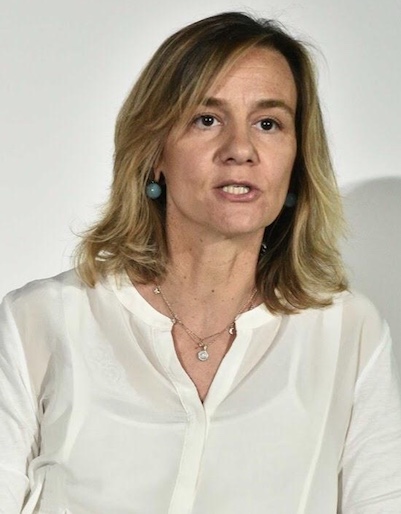
Viola Schiaffonati
Dipartimento di Elettronica, Informazione e Bioingegneria, Politecnico di Milano


About Ethics4EU Project
The Ethics4EU project aims at creating open source, widely used concrete resources for the teaching of Ethics in Computer Science higher education programmes across Europe. Digital Ethics deals with the impact of Digital Information and Communication Technologies on our societies and the environment at large. It encompasses a range of issues and concerns from privacy and agency around personal information, digital literacy, big data including governance and accountability, the dominance of a small number of large network platforms, pervasive technology, the Internet of Things and surveillance applications, Artificial Intelligence and algorithmic decision making including the fairness, accountability, and transparency of those automated decisions, and automating human intelligence for robotics or autonomous vehicles. Importantly, it is not only about hardware and software, but it also concerns systems and how people, organizations, society and technology interact.
For more information contact us at:
Higher Education Data
Before Informatics Europe started working on it, reliable sources of raw facts and figures about higher education in Informatics across Europe were essentially unavailable. Fundamental information - like which are the universities and departments offering education and doing research, what degrees and programs they offer, the number and gender distribution of students they enroll and graduate at the different levels, the statistics about the academic workforce and salaries - was not systematically collected and reported at the European level. Serious, comprehensive, and beneficial policy work for research and education in the field is only possible when the state of affairs of these activities is fully known. Informatics Europe, as the representative of the European Informatics academic and research community, decided to become a driving force to enable this fundamental information to be known and properly collected and reported.
To fill this gap and bring forward solid, accurate facts and figures about Informatics research and education in Europe, in 2013 we started a project aiming at issuing yearly a comprehensive publication reporting Key Data on Informatics Higher Education in Europe. Key Data reports published between 2013 and 2019 (with data from 2008 to 2018) are downloadable under the below tab Outcomes.
IE Higher Education Data Portal
As a further step, in 2019 Informatics Europe in collaboration with the Software Institute, Università della Swizzera Italiana (USI), launched the Informatics Europe Higher Education Data Portal, one of our most appreciated and used services. Data – covering 25 countries across 14 years - is the only one of its kind in Europe and is fully available to Informatics Europe members (a sample set of the first 5 years is publicly available). Prepared by members of the Informatics Europe Working Group on Data Analysis and Reporting, in 2023 the article “Informatics Higher Education in Europe: A Data Portal and Case Study” was published in the Communications of the ACM Journal, recognising our work on this area.
In 2024, we are delighted to have collaborated with the Stanford Institute for Human-Centered Artificial Intelligence (HAI) on the Artificial Intelligence Index Report 2024. Now in its 7th edition, this globally recognized report includes European data for the first time, with IE as the Analytics and Research Partner. Our IE Higher Education Data Portal provided the latest data on Informatics graduates in Europe, offering groundbreaking analysis of postsecondary informatics and AI education, as well as diversity trends. This collaboration underscores the value of the IE Higher Education Data Portal in enhancing understanding and informing policy decisions in Europe and beyond
We work with our members to identify reliable sources of correct data. Your help in this ongoing process is greatly appreciated. Please get in touch
The Data Portal in detail:
The portal presents a wealth of fundamental data such as:
- statistics of students enrolled and degrees awarded at Bachelor's, Master's, and PhD level, including gender distribution in absolute numbers and percentages, both at Research Universities and Universities of Applied Sciences;
- A range of qualitative data supplements and complements the statistics presented, including a list of subjects identifying Informatics programs, a list of universities and academic units offering Informatics higher education, and a description of the higher education system in each country;
- a comparative analysis of some key academic positions - PhD Candidate, Postdoctoral Researcher, and Professor – and corresponding employment details and estimations of academic salaries in selected countries.
The focus on Informatics, and the central role played by data curation make the data presented unique, reliable, and relevant. Data is collected from national sources across Europe and a considerable amount of time and effort is spent in carefully analysing and screening the raw data. Consulting with academics, active and knowledgeable in the field in their countries is an integral part of our data curation process. This quality control allows us to publish statistics that indeed represent what we, as a community, understand and recognize as Informatics higher education studies and programs in Europe.
The portal is one of the most widely used services Informatics Europe offers to its members, the community, industry, and policymakers interested in the future of Computer Science and Technology in Europe. It provides plenty of opportunities for more in-depth analyses of key trends, issues, and aspects that need or could be improved with a better understanding of the higher education system in the field.
If you are interested in contributing to our data collection, analysis, and reporting efforts please contact
IE Data Analysis and Reporting Working Group
Collecting and reporting Informatics Higher Education reliable data is already a significant step, but Informatics Europe aims to go beyond that. There are certainly other indicators to report on and other ways of presenting what is already available. The amount of data makes it possible to extract more high-level information and analytical outputs. Various stakeholders, within Informatics Europe and outside, may have various needs and questions that the data could help answer. Aiming to create a place to discuss these issues, establish priorities towards data portal functionalities, and drive the creation of analytical outputs and reports, the Data Analysis and Reporting Working Group was created in 2021. Its work should contribute both to the Informatics Europe community and to external decision-makers at various levels. Join the working group by filling out the form here.
Current members:
- Přemek Brada, University of West Bohemia, Czechia (Co-Chair)
- Ana Paiva, University of Porto, Portugal (Co-Chair)
- Maia Archuadze, Iv.Javakhishvili Tbilisi State University, Georgia
- Géraldine Brieven, University of Liège, Belgium
- Elena Casiraghi, Università degli Studi di Milano, Italy
- Ismael García-Varea, Universidad de Castilla-La Mancha, Spain
- James Doddy, TU Dublin, Ireland
- Manana Khachidze, Iv.Javakhishvili Tbilisi State University, Georgia
- Markus Lange-Hegermann, Technische Hochschule Ostwestfalen-Lippe, Germany
- Ernestina Menasalvas, Universidad Politecnica de Madrid, Spain
- Eva Millán, University of Málaga, Spain
- Christian Napoli, Sapienza University of Rome, Italy
- Axel Ngonga, Paderborn University, Germany
- Eirini Ntoutsi, Fakultätentag Informatik, Germany
- Gerardo Reyes Salgado, Universidad Rey Juan Carlos, Spain
- Areeg Samir, UiT- The Arctic University of Norway, Norway
- Ute Schmid, University of Bamberg, Germany
- Florence Sèdes, SIF / University Toulouse 3 Paul Sabatier
- Javier Segovia, Universidad Politecnica de Madrid, Spain
- Shiva Shadrooh, NTNU, Norway
- Damian Tamburri, Politecnico di Milano, Italy
- Brendan Tierney, TU Dublin, Ireland
- Svetlana Tikhonenko, Informatics Europe, Switzerland
- Magda Tsintsadze, Iv.Javakhishvili Tbilisi State University, Georgia
- Heike Trautmann, Paderborn University, Germany
- Juan Manuel Vara, Universidad Rey Juan Carlos, Spain
2025 - Bachelor-Level Informatics Education in Europe: Key Data & Trends, 2018/19 – 2022/23 (available through this link)
- Přemek Brada, University of West Bohemia, Czech Republic
- Ana Paiva, University of Porto, Portuga
- Svetlana Tikhonenko, Informatics Europe, Switzerland
2024 - 2025 - European Informatics Retention and Graduation Rate Report
(joint Informatics Europe and ACM Europe report)- Přemek Brada, University of West Bohemia, Czech Republic
- Michael E. Caspersen, It-vest – networking universities, Denmark
- Elisabetta di Nitto, Politecnico di Milano, Italy
- Judith Gal-Ezer, Open University of Israel, Israel
- Andrew McGettrick, University of Strathclyde, UK
- Enrico Nardelli, University of Rome “Tor Vergata”, Italy
- Ana Paiva, University of Porto, Portuga
- Svetlana Tikhonenko, Informatics Europe, Switzerland
2021-2022 - Informatics Higher Education in Europe: A Data Portal and Case-Study
(article featured in the November 2023 issue of the Communications of the ACM Journal available through this link).- Elisabetta di Nitto, Politecnico di Milano, Italy
- Ismael García-Varea, Universidad de Castilla-La Mancha, Spain
- Mehdi Jazayeri, Università della Svizzera italiana, Switzerland
- Damian Tamburri, Politecnico di Milano, Italy
- Svetlana Tikhonenko, Informatics Europe, Switzerland
2019 - present - Informatics Europe Higher Education Data Portal
National contacts contributing to obtaining and interpreting country-specific data and developing and revising the Data Portal are listed here.
2013-2019 - Informatics Education in Europe: Institutions, Degrees, Students, Positions, Salaries - Key Data Report Series
Authors collaborating in various editions of the Key Data Report Series:
- Mehdi Jazayeri, Università della Svizzera italiana, Switzerland
- Bertrand Meyer, ETH Zurich, Switzerland
- Enrico Nardelli, Università di Roma 'Tor Vergata', Italy
- Cristina Pereira, Informatics Europe, Switzerland
- Svetlana Tikhonenko, Informatics Europe, Switzerland
- Hannes Werthner, TU Wien, Austria
2018 - Pilot Study on “Industry Funding for Academic Research in Informatics in Europe”
- Susan Eisenbach, Imperial College, UK (Chair)
- Carlo Ghezzi, Politecnico di Milano
- Mehdi Jazayeri, Università della Svizzera italiana, Switzerland
- Enrico Nardelli, Università di Roma 'Tor Vergata', Italy
- Cristina Pereira, Informatics Europe, Switzerland
- Svetlana Tikhonenko, Informatics Europe, Switzerland
- Jaak Vilo, University of Tartu, Estonia
*Note that the affiliation indicated was the one at the time of their participation in the Informatics Europe activities. Some people have changed affiliation since then.
- Report "Bachelor-Level Informatics Education in Europe: Key Data & Trends, 2018/19–2022/23"
Download
Date: September 2025
Details: The report presents key data on Bachelor’s level Informatics education across 24 European countries from 2018/19 to 2022/23. It analyses enrolment (first-year and total), degrees awarded, gender distribution, and the role of different higher education institutions, with data based on official national statistics validated by experts and available in the Informatics Europe Higher Education (IEHE) Data Portal.
- European Informatics Retention and Graduation Rate Report
Download
Date: September 2025
Details: The report presents the first pan-European analysis of student retention and graduation rates in bachelor-level Informatics programmes. Conducted jointly by Informatics Europe and ACM Europe, it draws on the Informatics Europe Higher Education (IEHE) Data Portal and examines trends across thirteen European countries over the period 2010 to 2023.
- CACM Article "Informatics Higher Education in Europe: A Data Portal and Case-Study"
Download
Date: November 2023
Details: The article published in the "Communication of the ACM" journal presents the Informatics Europe Higher Education (IEHE) Data Portal and offers - by way of case-study research - a data-driven perspective over how Informatics education can be studied and improved in a data driven-fashion.
- ECSS 2023: Higher Education Data Workshop "Analysis of Data in European Informatics Higher Education Landscape"
Read More
Date: October 2023
Details: Workshop description and presentation slides from the ECSS 2023 workshop, held in Edinburgh on 24 October 2023.
- Report "Industry Funding for Academic Research in Informatics in Europe"
Download
Date: November 2018
Details: The report presents the results of a pilot study exploring the landscape of industry-funded Informatics research in academic institutions in Europe. The main goal is to understand the current level of industry funding going to different areas of Informatics research in Europe, similarities or differences in the way this money is invested in different countries.
- Annual series of "Informatics Education in Europe: Institutions, Degrees, Students, Positions, Salaries — Key Data Report"
Date: 2013 — 2018
Details: The annual report series on Informatics higher education in Europe provide comprehensive data on institutions, student enrolments, degrees awarded, gender distribution, academic positions, and salaries, covering 10 years (from 2008 to 2018) of statistics and offering unique insights into the current state of the field across Europe. Since 2019, statistics are available in the Informatics Europe Higher Education Data Portal.
- 2013-2018: Summary ¦¦ Full Report
- 2012-2017: Summary ¦¦ Full Report
- 2011-2016: Summary ¦¦ Full Report
- 2010-2015: Summary ¦¦ Full Report
- 2009-2014: Summary ¦¦ Full Report
- 2008-2013: Summary ¦¦ Full Report
- 2008-2012: Summary ¦¦ Full Report
- Report "Bachelor-Level Informatics Education in Europe: Key Data & Trends, 2018/19–2022/23"
Ethics
We are living in an exceptionally exciting time in history, witnessing and participating in radical changes in societies, closely connected to major advancements of emergent technologies. The drivers of the development are in the first place intelligent and cognitive technologies, but equally important: information technology, nanotechnology, biotechnology, automatic/autonomous transportation, robotics, radically new medical technologies, new educational technologies - the list goes on, and fields overlap and are mutually dependent.
All those emergent technologies are based on and closely related to information processing/computational advances and are thus part of the informatics field. They promise huge social benefits, but at the same time, they bring risks and challenges for individuals and societies.
As professionals within Informatics/Computing/Computer Sciences and related fields, we are best equipped to help create a deep understanding of emergent technologies, mechanisms of their functioning as well as their potential for impacting society with their ethical aspects. It is also our professional duty to help society and especially decision-makers to lead the process of social development based on the best professional expertise.
Some highlights of Informatics Europe's contribution to ethics include:
Permanent Working Group on Ethics in Informatics
In 2022, a permanent working group on ethics in informatics is launched to bring together experts affiliated with Informatics Europe members to discuss and work on a common Ethics agenda for Informatics Research and Education in Europe. Visit the working group website here to read their long and short term objectives, as well as the activities the group is currently working on.
If you are interested in contributing to this working group, please register here or contact us at
the Erasmus+ Project "Ethics4EU" - Ethical Computer Science Education for Europe
Led by TU Dublin, Ethics4EU’s project partners were Mälardalen University, Institut Mines-Telecom/Télécom SudParis, Informatics Europe, and DLEARN. Informatics Europe supported the project with general dissemination and communication activities, and a particular emphasis on building an online community of practice, initiated by a working group of Informatics Europe members.
To learn more about this project, visit the Ethics4EU website, the project's Twitter, Facebook, Instagram, and LinkedIn.
EU Commission Expert Group on AI and Data in Education and Training
“Ethical/Social Impact of Informatics as a Study Subject in Informatics University Degree Programs” Task Force
In 2019, a group of experts was convened with the goal of re-thinking the skills of the next generation of informatics professionals. During their training in university courses, students are provided with the basis for designing and developing modern computer systems. A question arises, if they should be trained also on ethical and societal topics, thus enabling them to conceive “good” and beneficial informatics systems for the society. The Task Force on “Ethical/Social Impact of Informatics as a Study Subject in Informatics University Degree Programs” analysed the current state of affairs to solicit a discussion on these topics, by answering questions such as, for example:
- Should ethical/social impact of Informatics be a study subject in informatics university degree programs, and why?
- What are the main ethical issues arising from the application of informatics in society?
- In which areas ethical/social impacts of informatics are more evident?
- Which topics of study at university programs should be taught to make students skilled in ethics-aware design?
The report on “Ethical/Social Impact of Informatics as a Study Subject in Informatics University Degree Programs” summarizing the feedback and comments from the working group members on these topics has been published in October 2019.
"When Computers Decide: European Recommendations on Machine-Learned Automated Decision Making" - Joint Initiative with the ACM Europe Council and the ACM Europe Policy Committee
Find the summarized lists of our outcomes and resources on informatics ethics at large below.
- ECSS 2025: Ethics Workshop
Read More
Date: October 2025
Details: Workshop description and presentation slides from the ECSS 2025 workshop, held in Rennes on 29 October 2025.
- ECSS 2024: "Cultivating Diversity: Integrating Inclusive Design into Informatics Education" Workshop
Read More
Date: October 2024
Details: Workshop description and presentation slides from the ECSS 2024 workshop, organized jointly with Diversity and Inclusion WG, held in Malta on 29 October 2024.
- ECSS 2022: Societal Impact on Digital Transformation Workshop
Read More
Date: October 2022
Details: Workshop description and presentation slides from the ECSS 2022 workshop, held in Hamburg on 26 October 2022.
- Ethical guidelines on the use of artificial intelligence and data in teaching and learning for educators
Download
Date: July 2021 - October 2022
Details: Prepared by the EU Commission Expert Group on AI and Data in Education and Training, where Prof. Viola Schiaffonati (Politecnico di Milano), represented Informatics Europe.
- Online Event "Dealing with the Complexities of Teaching Ethics to Future Computing Professionals"
Read More
Date: 22 April 2021
Details: Event description, presentation slides and video recordings from the online event organized as part of the Ethics4EU project.
- Report "European Values for Ethics in Digital Technology"
Download
Date: April 2021
Details: The first Intellectual Output of the Ethics4EU project, with Informatics Europe as a partner. The report deals with the impact of digital Information and Communication Technologies (ICT) on our societies and the environment at large.
- Report "Ethical/social Impact of Informatics as a Study Subject in Informatics University Degree Programs"
Download
Date: December 2020
Details: The report, an outcome of the Ethics4EU project, with Informatics Europe as a partner, presents the results of a survey conducted in 2020 on teaching practices for digital ethics across Europe.
- Report "Ethical/social Impact of Informatics as a Study Subject in Informatics University Degree Programs"
Download
Date: October 2019
Details: The report presents the work of the Working Group on Ethical/Social Impact of Informatics as a Study Subject in university degree programs. It outlines possible approaches, the state of the art, and provides suggestions and guidelines for including topics on ethics, responsibility, and social impact in Informatics curricula.
- Discussion panel on the white paper held in Brussels with members of the European Commission and ACM Europe Council
Read More
Date: March 2018
Details: Informatics Europe, the ACM Europe Council and the ACM Europe Policy Committee joined members from the European Commission in an event in Brussels to offer policy makers and industry specific recommendations addressing the challenges posed by the increasing presence of Machine Learning (ML) and Automated Decision Making (ADM) systems in almost every aspect of modern life.
- White paper "When Computers Decide: European Recommendations on Machine-Learned Automated Decision Making"
Download
Date: February 2018
Details: Joint white paper of Informatics Europe Ethics Working Group and ACM Europe on automated decision making (ADM). It examines the technical, ethical, legal, economic, societal, and educational implications of widespread machine-learned automated decision making and offers recommendations for policy makers.
- ECSS 2017: Discussion panel on Ethics
Read More
Date: October 2017
Details: Presentation slides from the ECSS 2017 discussion panel, held in Lisbon on 25 October 2017.
- ECSS 2025: Ethics Workshop
2018 - 2022 - Ethics4EU
- Viola Schiaffonati, Politecnico di Milano, Italy / Informatics Europe
- Gordana Dodig-Crnkovic, Chalmers University of Technology, Sweden
- Elisabetta Di Nitto, Politecnico di Milano, Italy / Informatics Europe
- Laurence Diver, VUB, Belgium
- Catherine Flick, De Montfort University, UK
- Gonzalo Génova, Universidad Carlos III di Madrid, Spain
- Michele Loi, University of Zurich, Switzerland
- Simone Martini, Università di Bologna, Italy
- Emma Murphy, TU Dublin, Ireland
- Nuria Anguera, Informatics Europe
- Svetlana Tikhonenko, Informatics Europe
- Kit Wan Chui, Informatics Europe
2019 - Report on “Ethical/social Impact of Informatics as a Study Subject in Informatics University Degree Programs”
- Viola Schiaffonati, Politecnico di Milano, Italy (Chair)
- Paola Mello, Università di Bologna, Italy (Chair)
- Vaishak Belle, University of Edinburgh, UK
- James Davenport, University of Bath, UK
- Gonzalo Génova, Universidad Carlos III de Madrid, Spain
- Jeroen van der Ham, Universiteit Twente, Netherlands
- Reinhard Kahle, Universität Tübingen, Germany
- Kaido Kikkas, Tallinna Tehnikaülikool, Estonia
- Krisztina Balázs, Eötvös Loránd University, Hungary
- James Larus, EPFL, Switzerland
- Gabriele Lenzini, Université du Luxembourg, Luxembourg
- Kevin Macnish, Universiteit Twente, Netherlands
- Donato Malerba, Università degli Studi di Bari Aldo Moro, Italy
- Andrew McGettrick, University of Strathclyde, UK
- Antoanela Luciana Naaji, Universitatea de Vest "Vasile Goldiş" din Arad, Romania
- Michael Nagenborg, Universiteit Twente, Netherlands
- Enrico Nardelli, Università di Roma "Tor Vergata", Italy
- Viorel Negru, Universitatea de Vest din Timișoara, Romania
- José Angel Olivas, Universidad de Castilla-La Mancha, Spain
- Barry O'Sullivan, University College Cork, Ireland
- Juan Pavón Mestras, Universidad Complutense de Madrid, Spain
- Christian Reuter, TU Darmstadt, Germany
- Sara Román Navarro, Universidad Complutense de Madrid, Spain
- David Rozas Domingo, Universidad Complutense de Madrid, Spain
- Olivier Pereira, Université catholique de Louvain, Belgium
- Idoia Ana Salazar García, Fundación Universitaria San Pablo CEU, Spain
- Kristina Sargsyan, Université Française en Arménie, Armenia
- Fermín Sánchez, Universitat Politècnica de Catalunya, Spain
- Marcos Sánchez-Elez Martín, Universidad Complutense de Madrid, Spain
- Giovanni Sartor, European University Institute
- Florence Sèdes, IRIT, France
- Henry S. Thompson, University of Edinburgh, UK
- Martina Zitterbart, Karlsruher Institut für Technologie, Germany
2017-2018 - When Computers Decide: European Recommendations on Machine-Learned Automated Decision Making
- James Larus, EPFL, Switzerland (Co-Chair)
- Chris Hankin, Imperial College London, UK (Co-Chair)
- Siri Granum Carson, Norwegian University of Science and Technology, Norway
- Markus Christen, University of Zurich, Switzerland
- Silvia Crafa, Università di Padova, Italy
- Oliver Grau, Intel
- Claude Kirchner, INRIA, France
- Bran Knowles, Lancaster University, UK
- Andrew McGettrick, University of Strathclyde, UK
- Damian Andrew Tamburri, Jeronimus Academy of Data Science, the Netherlands
- Hannes Werthner, TU Wien, Austria
*Note that the affiliation indicated was the one at the time of their participation in the Informatics Europe activities. Some people have changed affiliation since then.
- The Ethics Guidelines for Trustworthy Artificial Intelligence - Document prepared by the High-Level Expert Group on Artificial Intelligence, independent expert group set up by the European Commission in June 2018. More details and aditional information on the Ethics Guidelines for Trustworthy AI can be found on the European Commission's Futurium platform.
- Communication on Artificial Intelligence for Europe, strategy document from the Commission to the European Parliament, the European Council, the Council, the European Economic and Social Committee and the Committee of the Regions.
- European Group on Ethics in Science and New Technologies (EGE) - An independent, multi-disciplinary body which advises on all aspects of European Commission policies where ethical, societal and fundamental rights issues intersect with the development of science and new technologies.
- The European AI Alliance - a forum engaged in a broad and open discussion of all aspects of Artificial Intelligence development and its impacts.
Ethics: Resources
- The Ethics Guidelines for Trustworthy Artificial Intelligence - Document prepared by the High-Level Expert Group on Artificial Intelligence, independent expert group set up by the European Commission in June 2018. More details and aditional information on the Ethics Guidelines for Trustworthy AI can be found on the European Commission's Futurium platform.
- Communication on Artificial Intelligence for Europe, strategy document from the Commission to the European Parliament, the European Council, the Council, the European Economic and Social Committee and the Committee of the Regions.
- European Group on Ethics in Science and New Technologies (EGE) - An independent, multi-disciplinary body which advises on all aspects of European Commission policies where ethical, societal and fundamental rights issues intersect with the development of science and new technologies.
- The European AI Alliance - a forum engaged in a broad and open discussion of all aspects of Artificial Intelligence development and its impacts.
Higher Education Data: Outcomes
- Report "Bachelor-Level Informatics Education in Europe: Key Data & Trends, 2018/19–2022/23"
Download
Date: September 2025
Details: The report presents key data on Bachelor’s level Informatics education across 24 European countries from 2018/19 to 2022/23. It analyses enrolment (first-year and total), degrees awarded, gender distribution, and the role of different higher education institutions, with data based on official national statistics validated by experts and available in the Informatics Europe Higher Education (IEHE) Data Portal.
- European Informatics Retention and Graduation Rate Report
Download
Date: September 2025
Details: The report presents the first pan-European analysis of student retention and graduation rates in bachelor-level Informatics programmes. Conducted jointly by Informatics Europe and ACM Europe, it draws on the Informatics Europe Higher Education (IEHE) Data Portal and examines trends across thirteen European countries over the period 2010 to 2023.
- CACM Article "Informatics Higher Education in Europe: A Data Portal and Case-Study"
Download
Date: November 2023
Details: The article published in the "Communication of the ACM" journal presents the Informatics Europe Higher Education (IEHE) Data Portal and offers - by way of case-study research - a data-driven perspective over how Informatics education can be studied and improved in a data driven-fashion.
- ECSS 2023: Higher Education Data Workshop "Analysis of Data in European Informatics Higher Education Landscape"
Read More
Date: October 2023
Details: Workshop description and presentation slides from the ECSS 2023 workshop, held in Edinburgh on 24 October 2023.
- Report "Industry Funding for Academic Research in Informatics in Europe"
Download
Date: November 2018
Details: The report presents the results of a pilot study exploring the landscape of industry-funded Informatics research in academic institutions in Europe. The main goal is to understand the current level of industry funding going to different areas of Informatics research in Europe, similarities or differences in the way this money is invested in different countries.
- Annual series of "Informatics Education in Europe: Institutions, Degrees, Students, Positions, Salaries — Key Data Report"
Date: 2013 — 2018
Details: The annual report series on Informatics higher education in Europe provide comprehensive data on institutions, student enrolments, degrees awarded, gender distribution, academic positions, and salaries, covering 10 years (from 2008 to 2018) of statistics and offering unique insights into the current state of the field across Europe. Since 2019, statistics are available in the Informatics Europe Higher Education Data Portal.
- 2013-2018: Summary ¦¦ Full Report
- 2012-2017: Summary ¦¦ Full Report
- 2011-2016: Summary ¦¦ Full Report
- 2010-2015: Summary ¦¦ Full Report
- 2009-2014: Summary ¦¦ Full Report
- 2008-2013: Summary ¦¦ Full Report
- 2008-2012: Summary ¦¦ Full Report
Ethics: Outcomes
- ECSS 2025: Ethics Workshop
Read More
Date: October 2025
Details: Workshop description and presentation slides from the ECSS 2025 workshop, held in Rennes on 29 October 2025.
- ECSS 2024: "Cultivating Diversity: Integrating Inclusive Design into Informatics Education" Workshop
Read More
Date: October 2024
Details: Workshop description and presentation slides from the ECSS 2024 workshop, organized jointly with Diversity and Inclusion WG, held in Malta on 29 October 2024.
- ECSS 2022: Societal Impact on Digital Transformation Workshop
Read More
Date: October 2022
Details: Workshop description and presentation slides from the ECSS 2022 workshop, held in Hamburg on 26 October 2022.
- Ethical guidelines on the use of artificial intelligence and data in teaching and learning for educators
Download
Date: July 2021 - October 2022
Details: Prepared by the EU Commission Expert Group on AI and Data in Education and Training, where Prof. Viola Schiaffonati (Politecnico di Milano), represented Informatics Europe.
- Online Event "Dealing with the Complexities of Teaching Ethics to Future Computing Professionals"
Read More
Date: 22 April 2021
Details: Event description, presentation slides and video recordings from the online event organized as part of the Ethics4EU project.
- Report "European Values for Ethics in Digital Technology"
Download
Date: April 2021
Details: The first Intellectual Output of the Ethics4EU project, with Informatics Europe as a partner. The report deals with the impact of digital Information and Communication Technologies (ICT) on our societies and the environment at large.
- Report "Ethical/social Impact of Informatics as a Study Subject in Informatics University Degree Programs"
Download
Date: December 2020
Details: The report, an outcome of the Ethics4EU project, with Informatics Europe as a partner, presents the results of a survey conducted in 2020 on teaching practices for digital ethics across Europe.
- Report "Ethical/social Impact of Informatics as a Study Subject in Informatics University Degree Programs"
Download
Date: October 2019
Details: The report presents the work of the Working Group on Ethical/Social Impact of Informatics as a Study Subject in university degree programs. It outlines possible approaches, the state of the art, and provides suggestions and guidelines for including topics on ethics, responsibility, and social impact in Informatics curricula.
- Discussion panel on the white paper held in Brussels with members of the European Commission and ACM Europe Council
Read More
Date: March 2018
Details: Informatics Europe, the ACM Europe Council and the ACM Europe Policy Committee joined members from the European Commission in an event in Brussels to offer policy makers and industry specific recommendations addressing the challenges posed by the increasing presence of Machine Learning (ML) and Automated Decision Making (ADM) systems in almost every aspect of modern life.
- White paper "When Computers Decide: European Recommendations on Machine-Learned Automated Decision Making"
Download
Date: February 2018
Details: Joint white paper of Informatics Europe Ethics Working Group and ACM Europe on automated decision making (ADM). It examines the technical, ethical, legal, economic, societal, and educational implications of widespread machine-learned automated decision making and offers recommendations for policy makers.
- ECSS 2017: Discussion panel on Ethics
Read More
Date: October 2017
Details: Presentation slides from the ECSS 2017 discussion panel, held in Lisbon on 25 October 2017.
Join and Contribute
Network and exchange expertise with informatics scientists and jointly shape the European agenda on the topic of your interest.



 Netlogica