
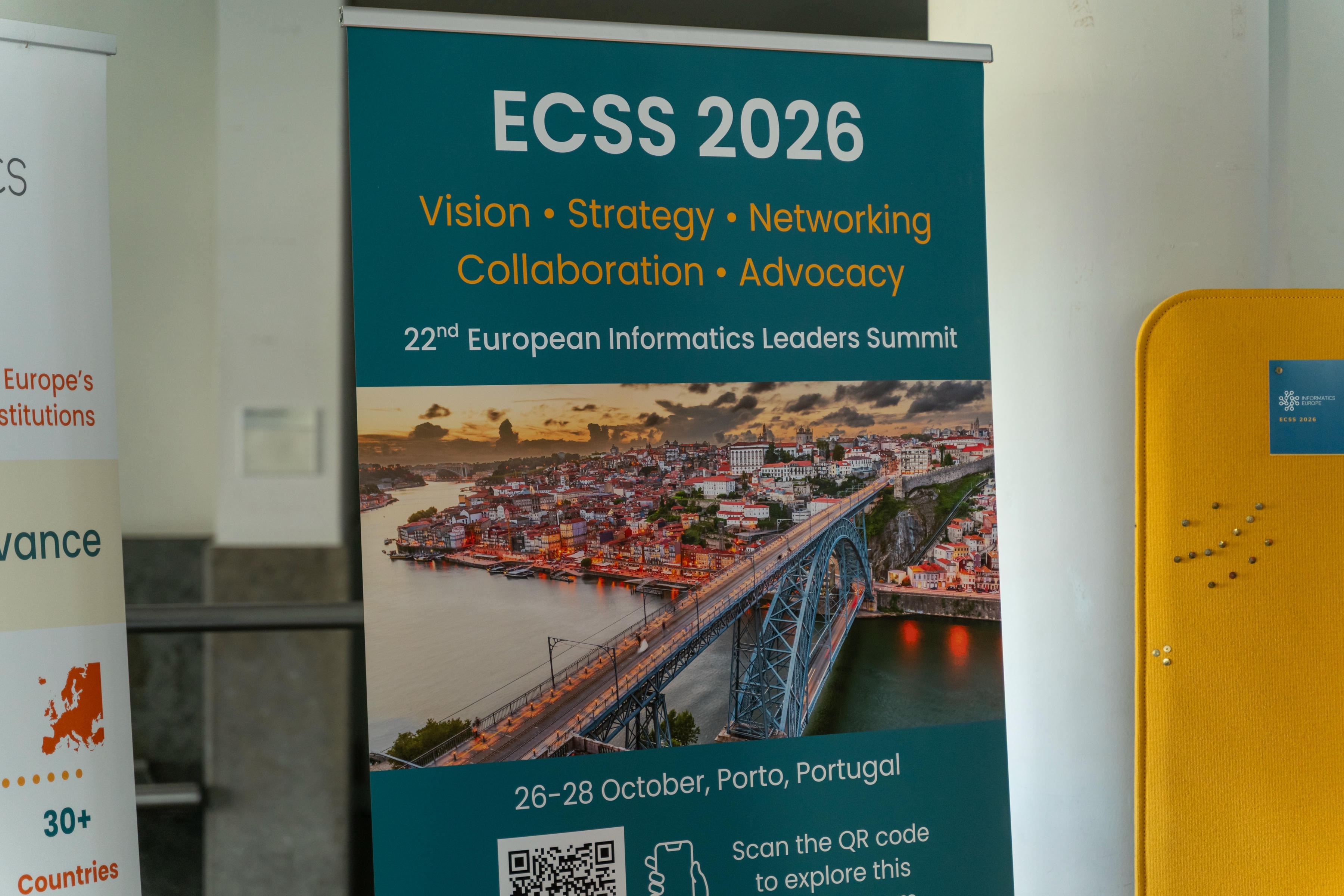
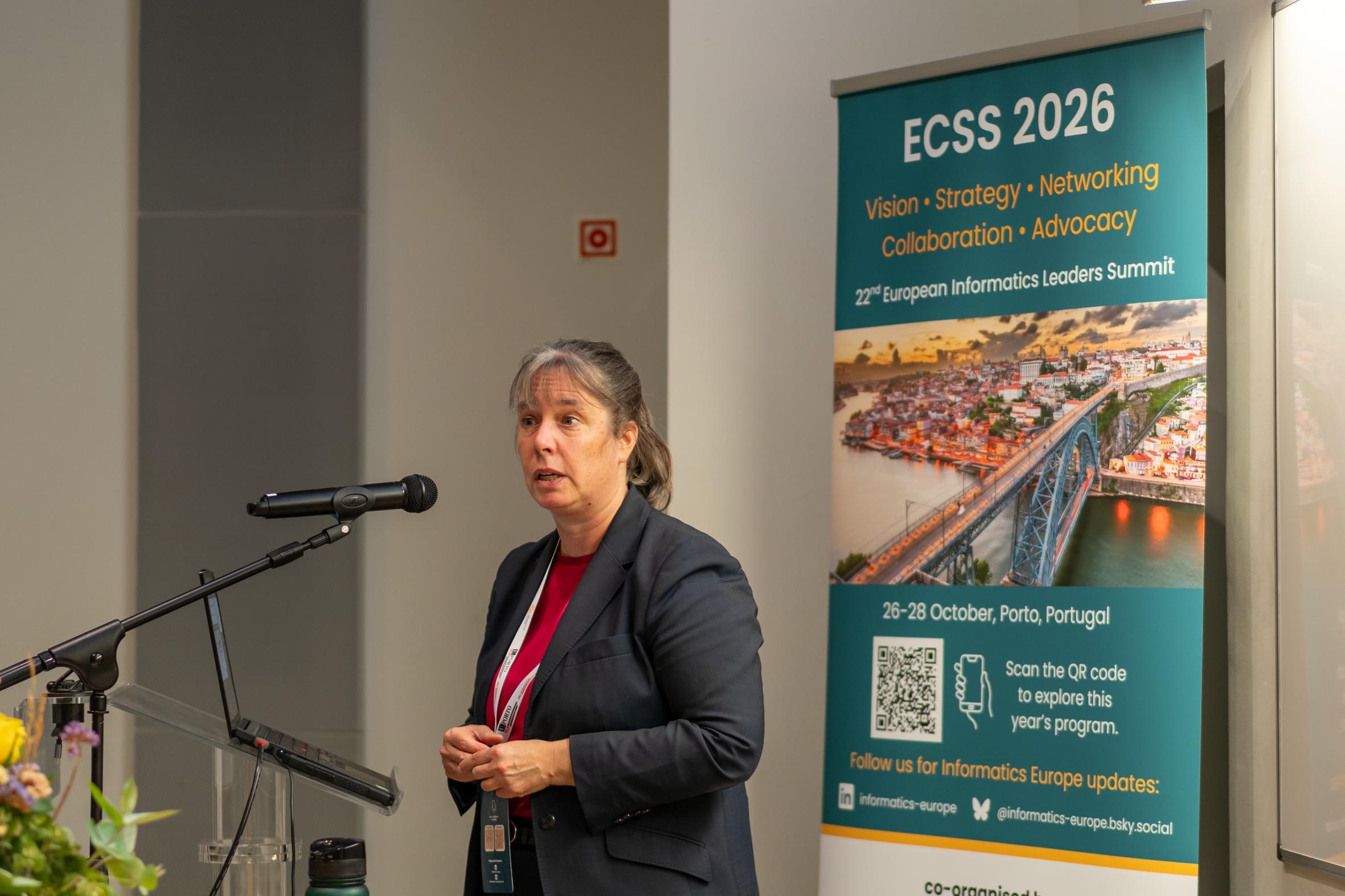
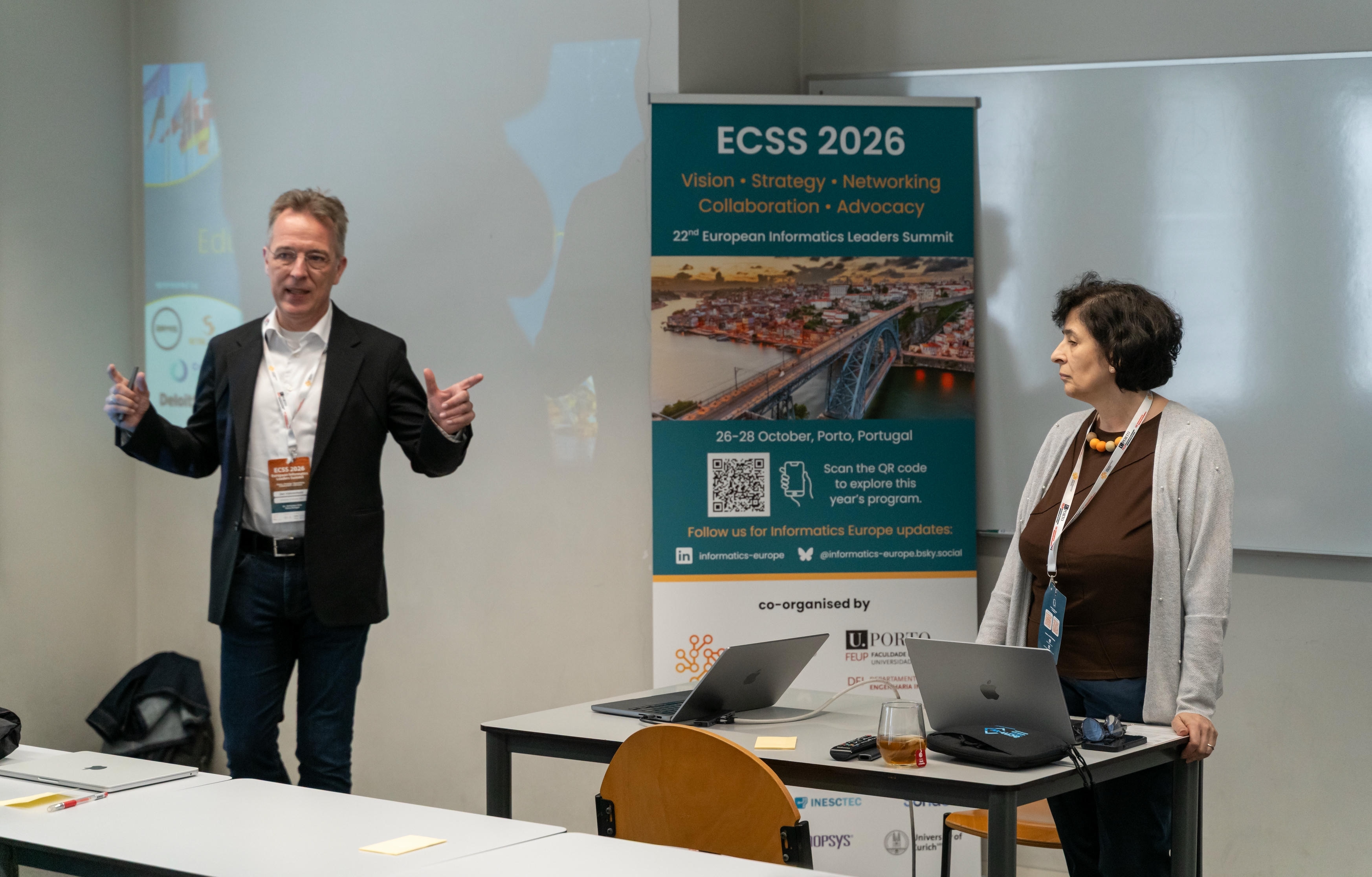
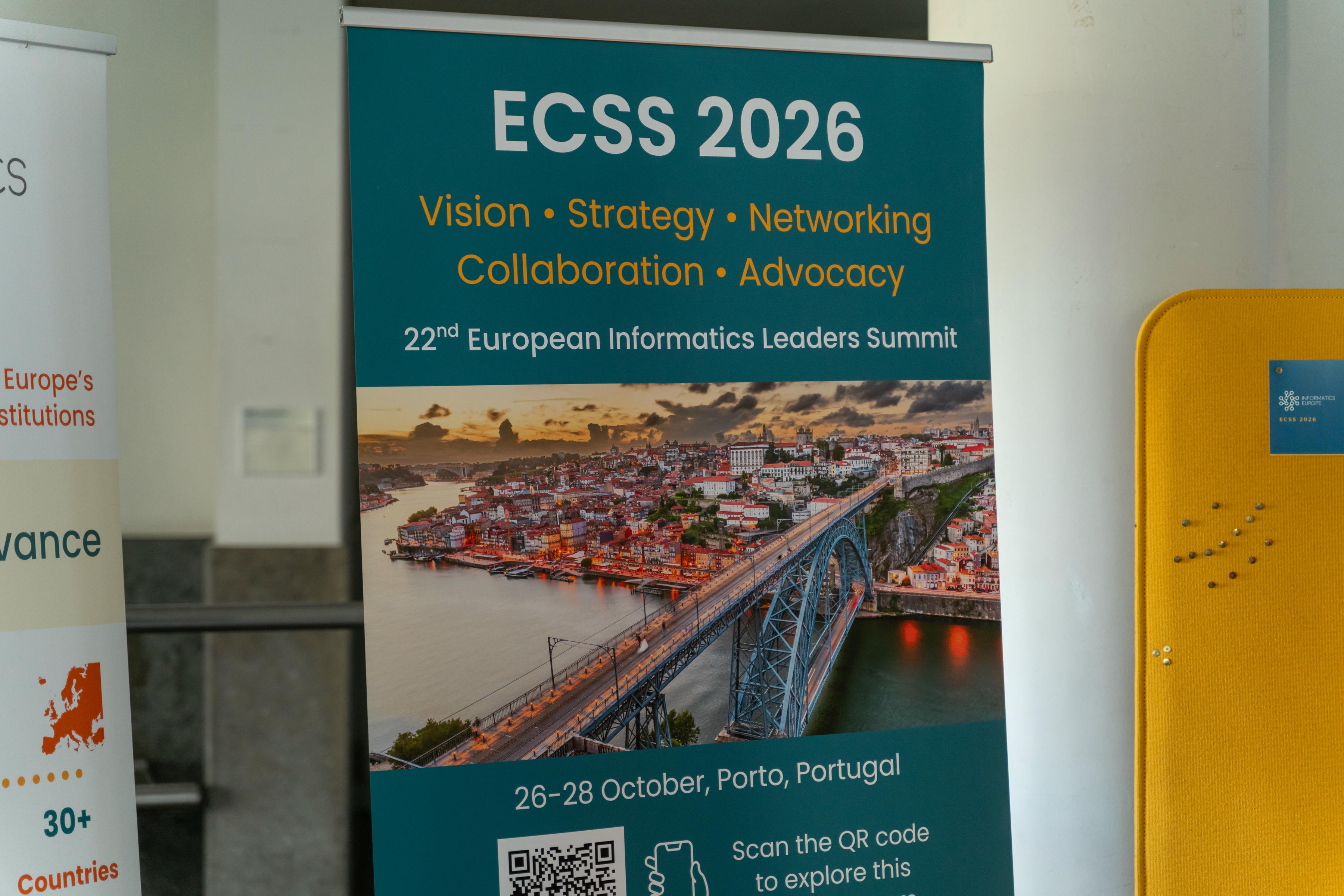
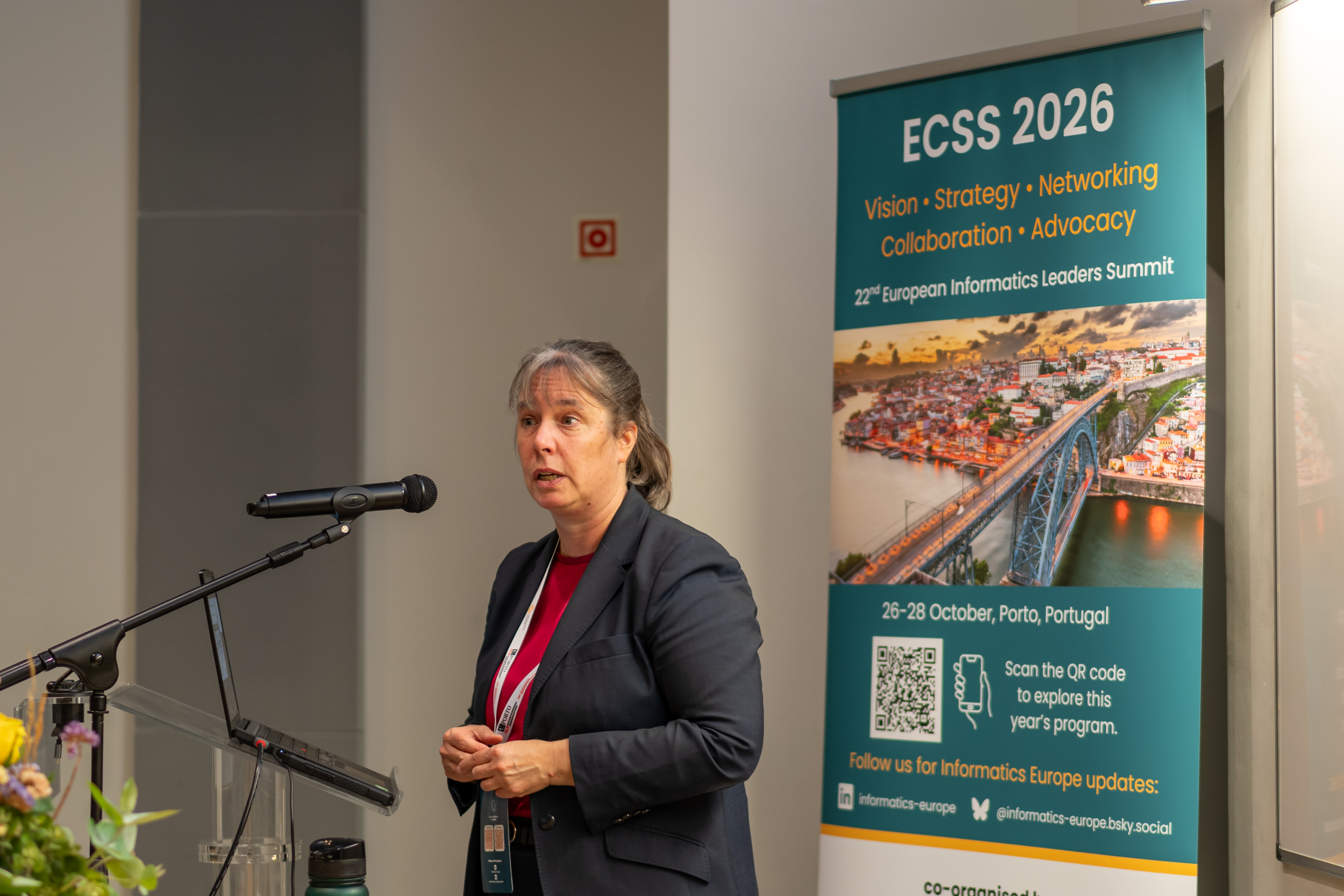
The 22nd European Informatics Leaders Summit (ECSS 2026) was held in Porto (Portugal) from 26-28 October, co-hosted by the IE member institute Department of Informatics Engineering, Faculty of Engineering, University of Porto.
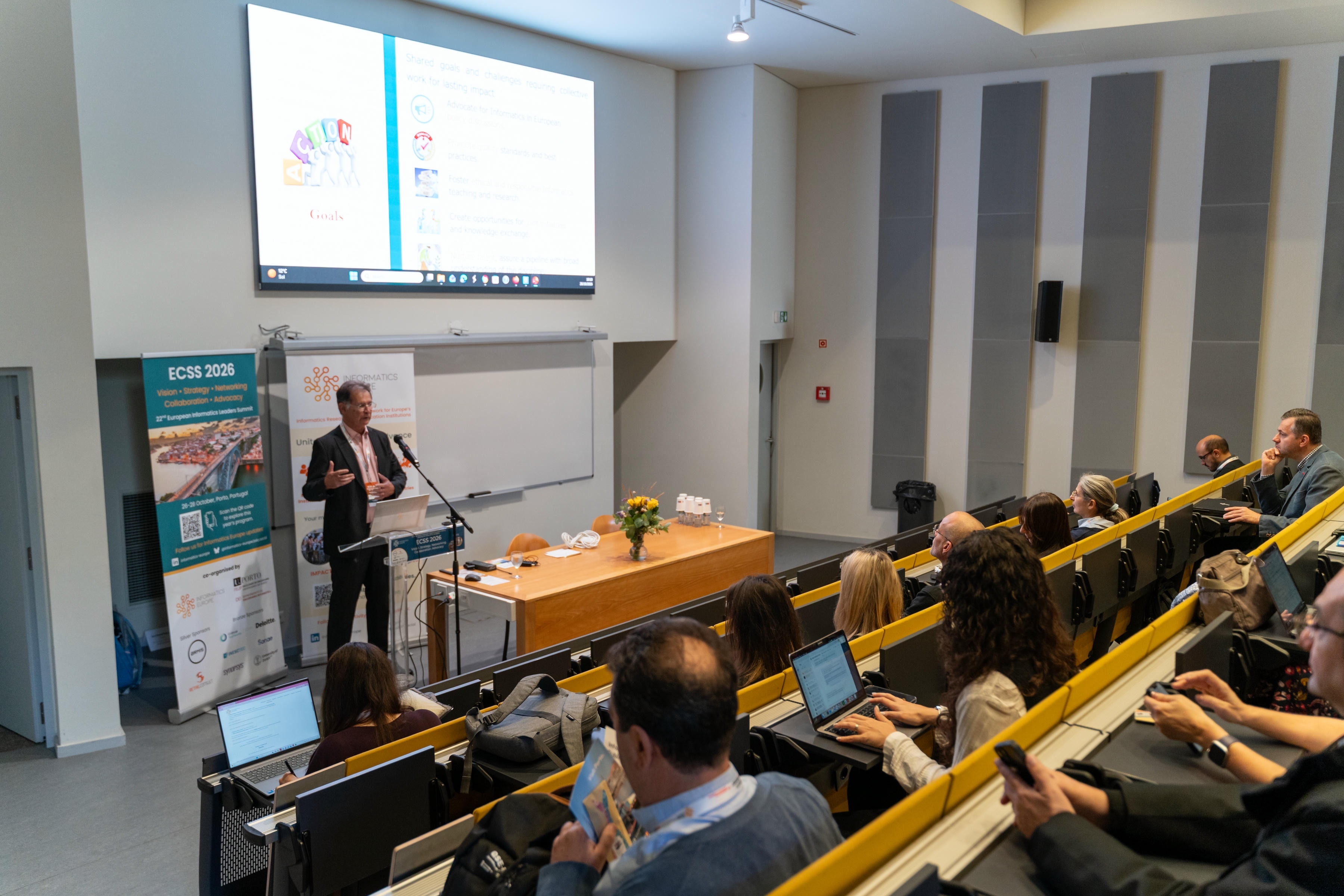
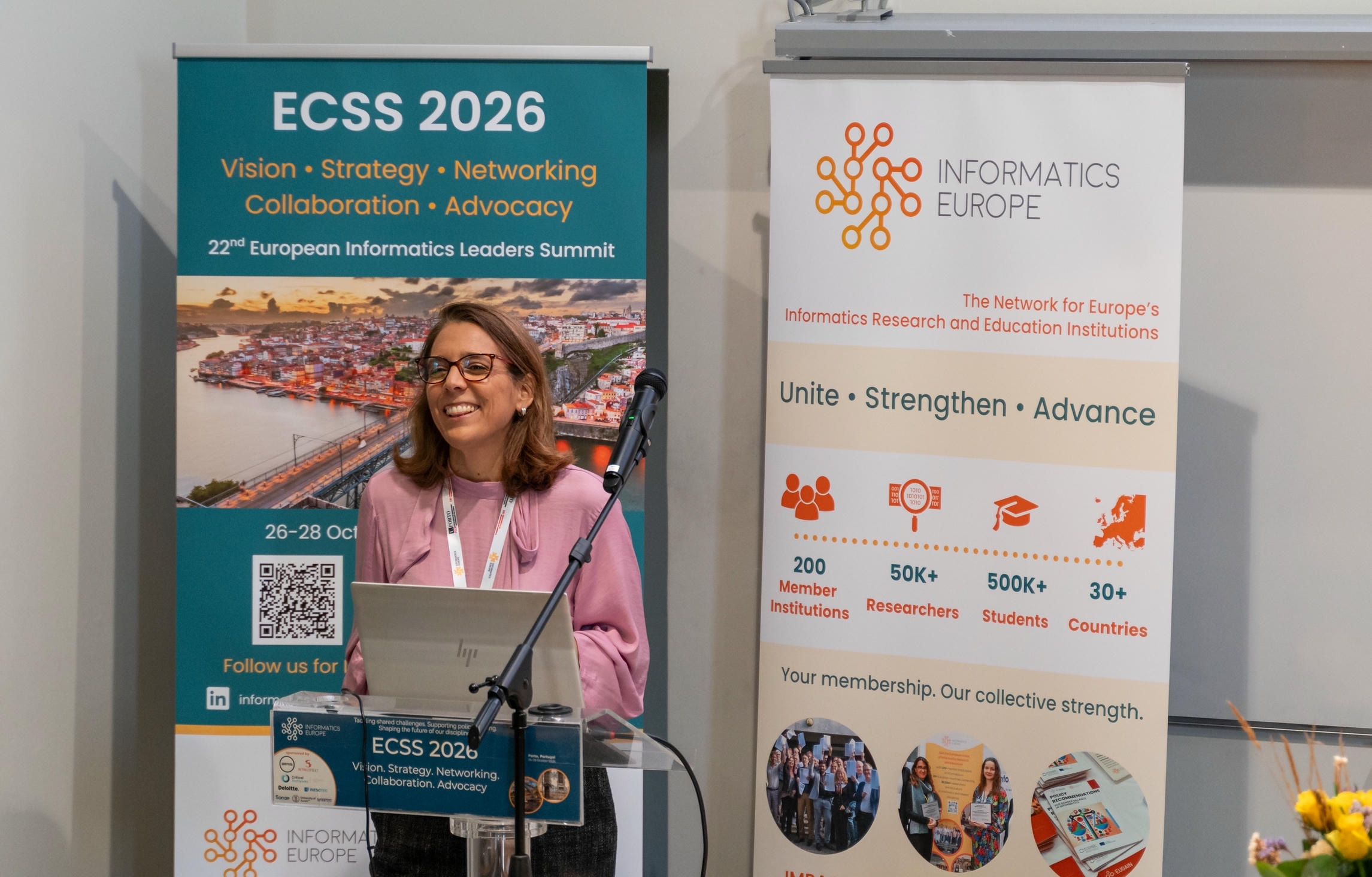
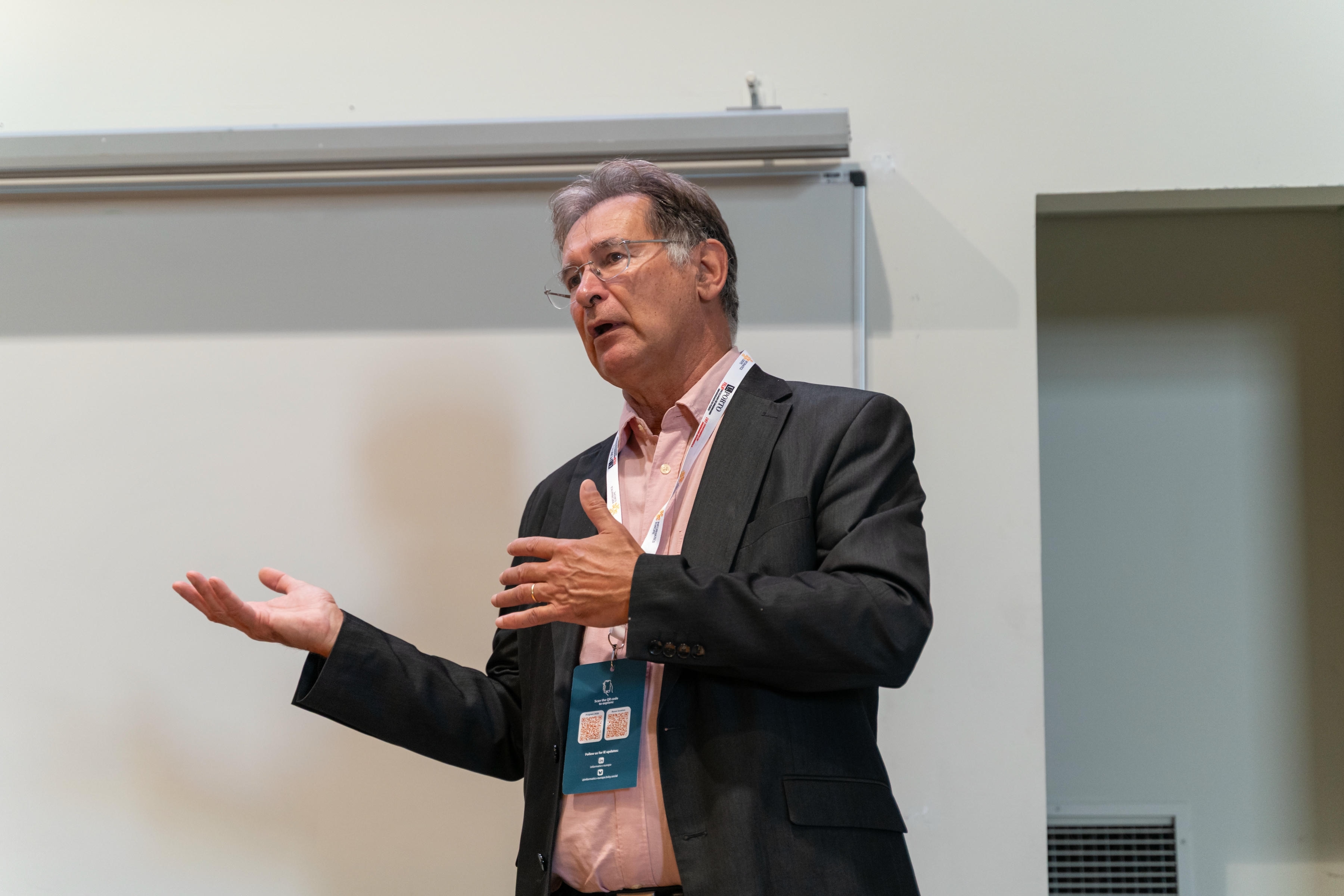
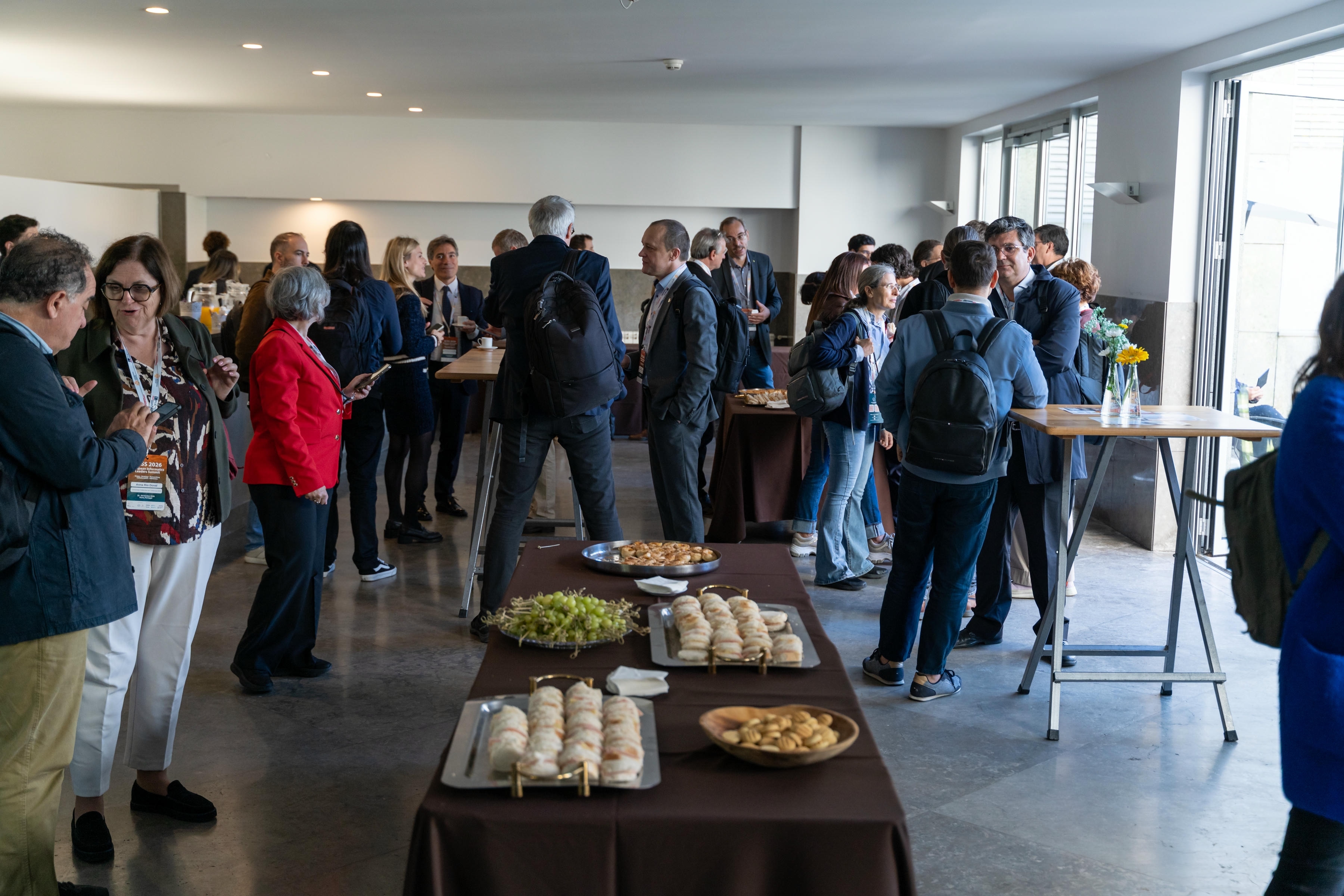
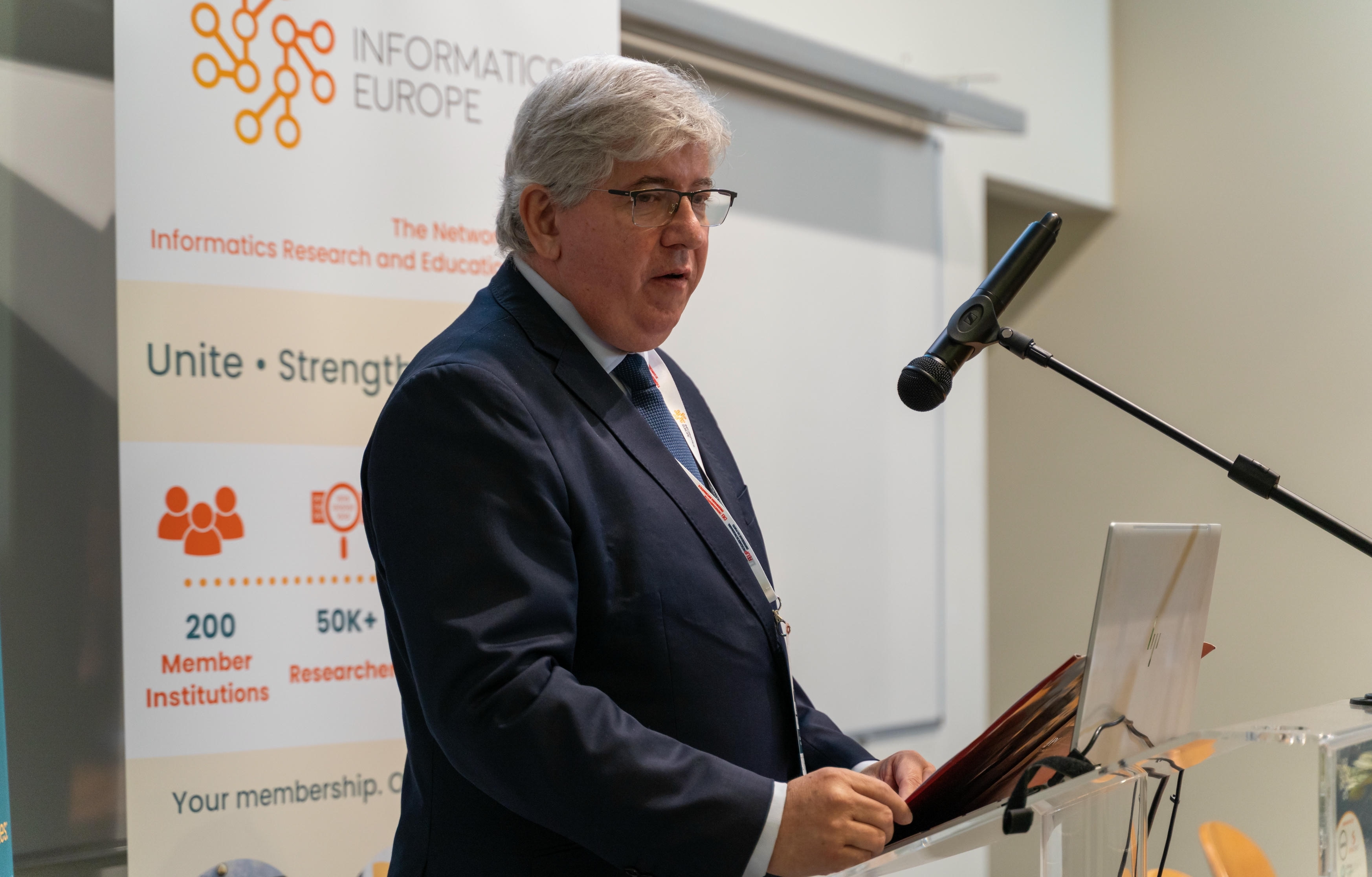
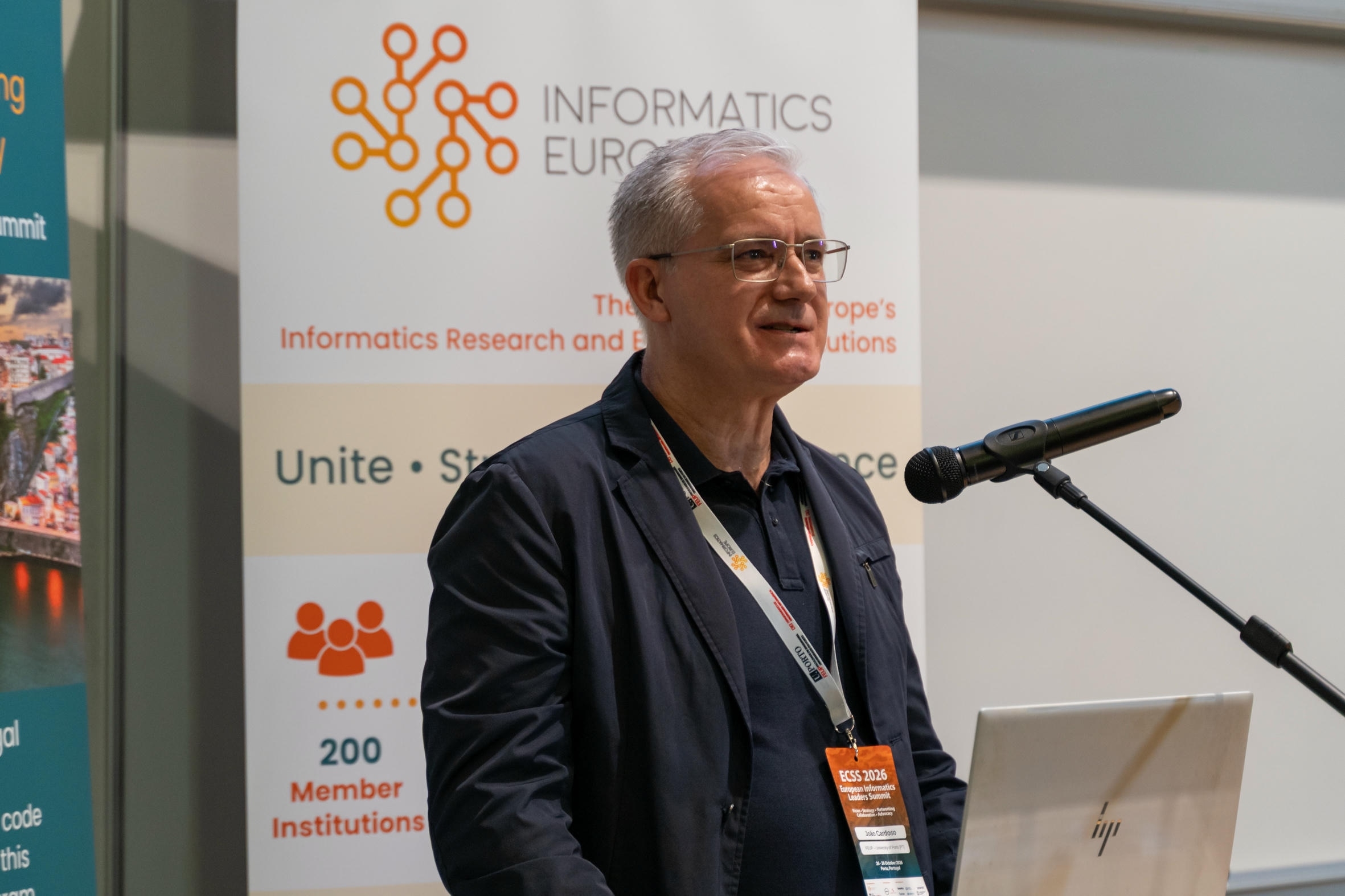
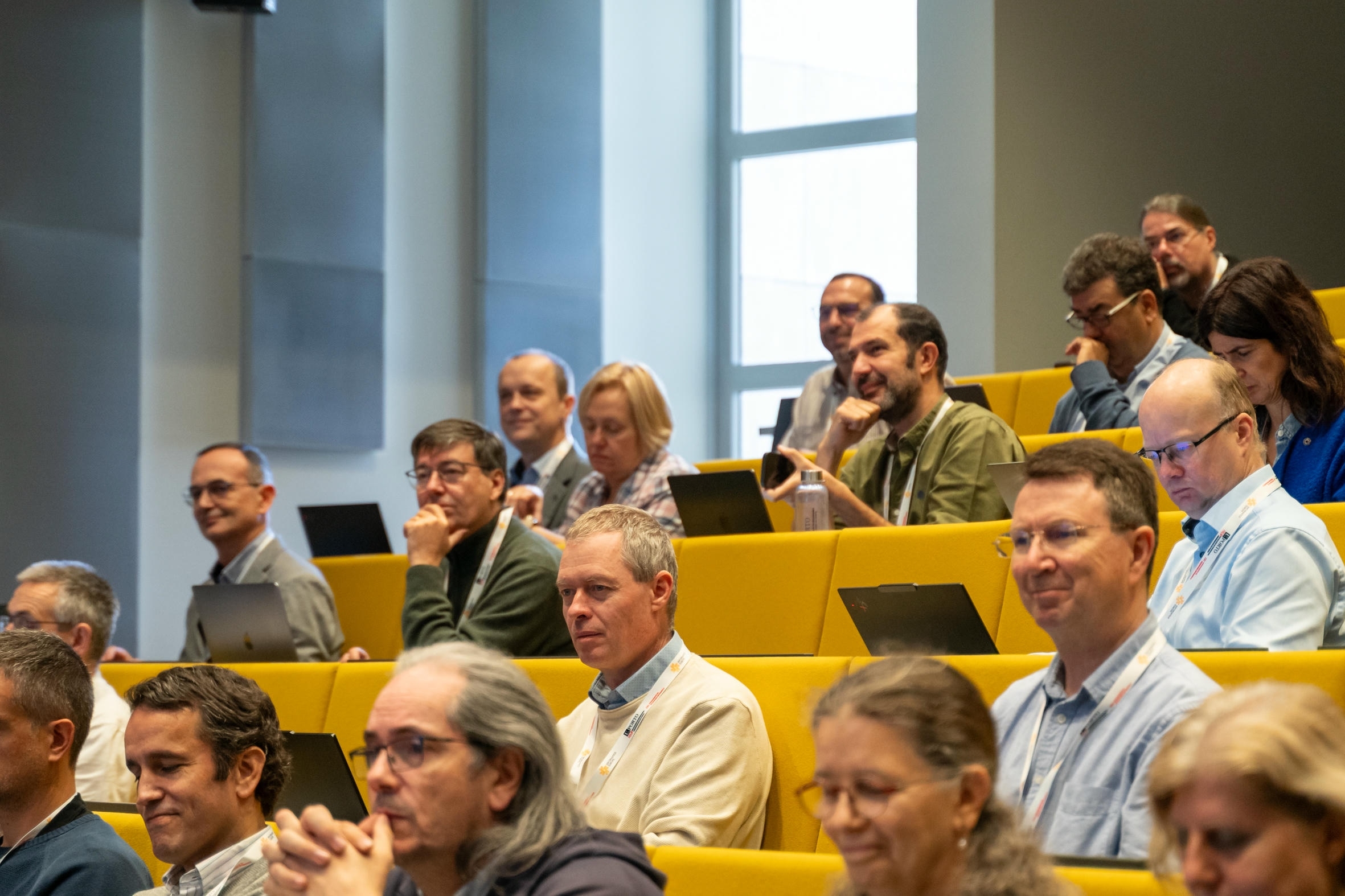
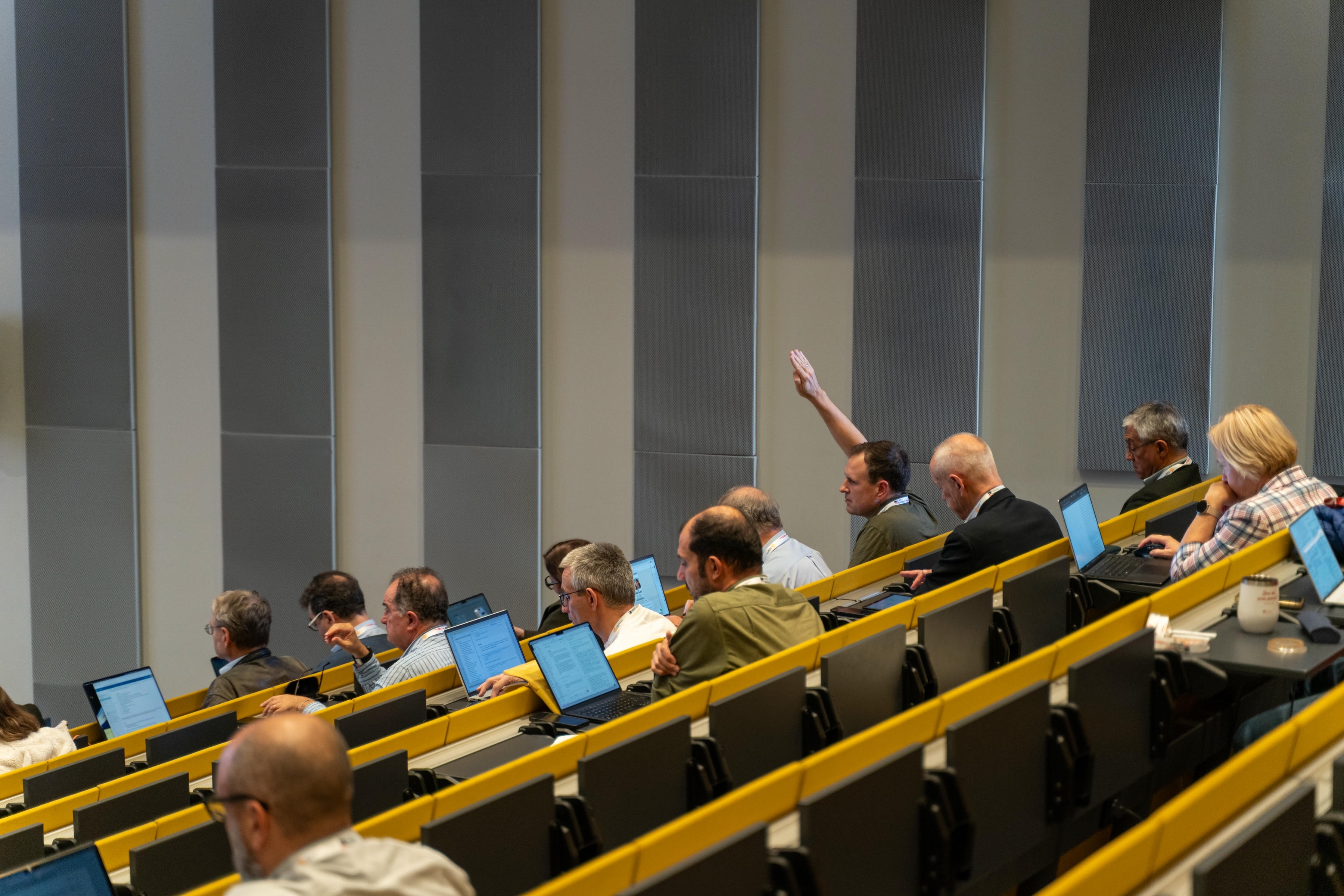
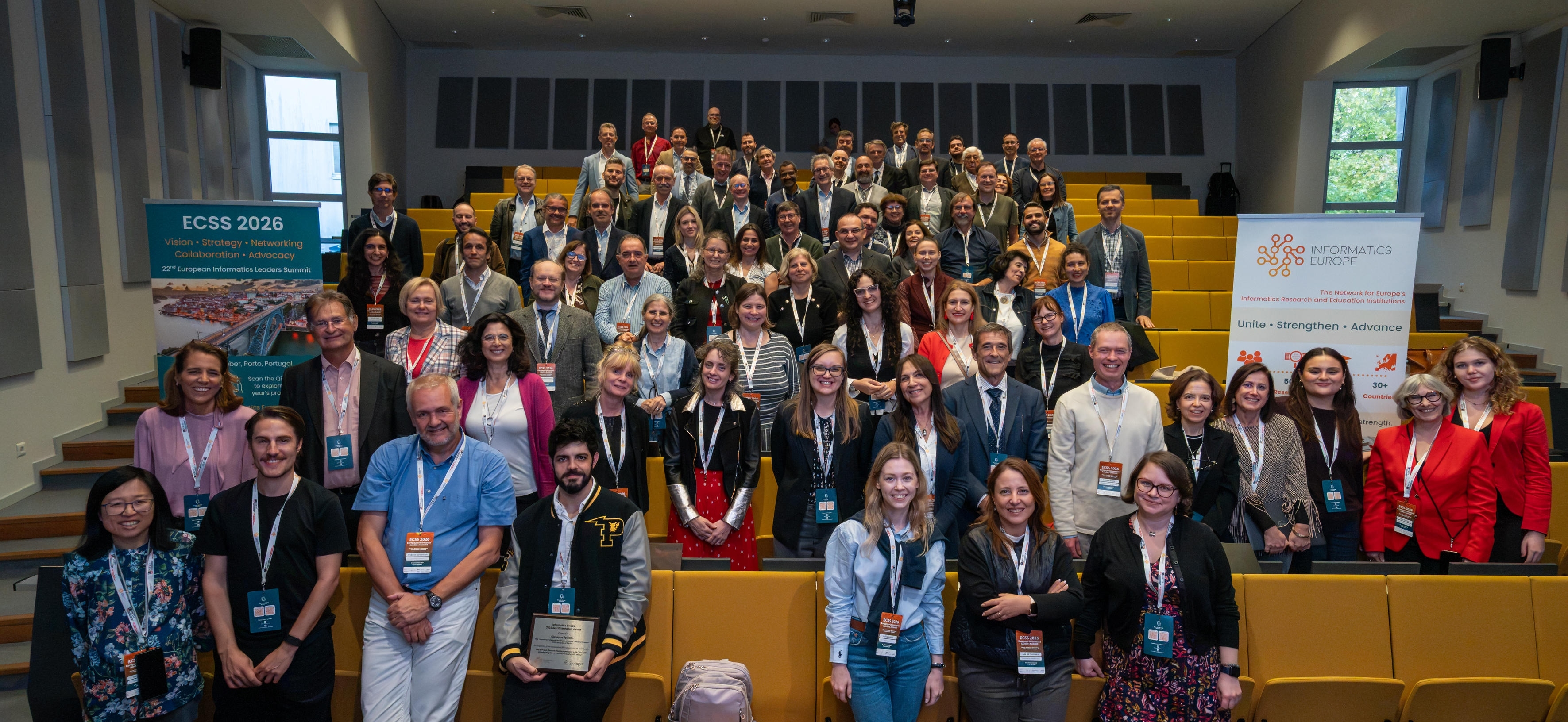
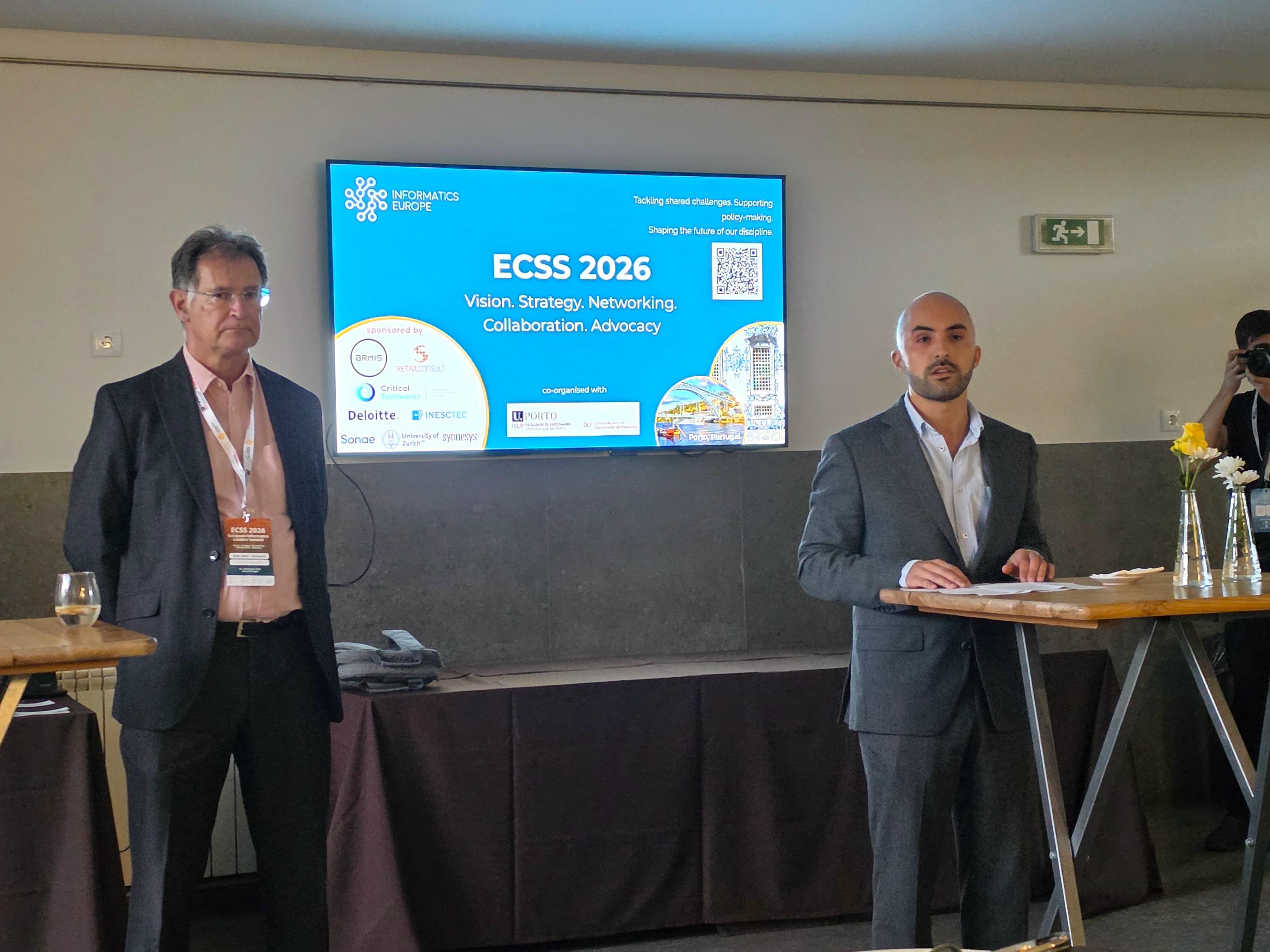
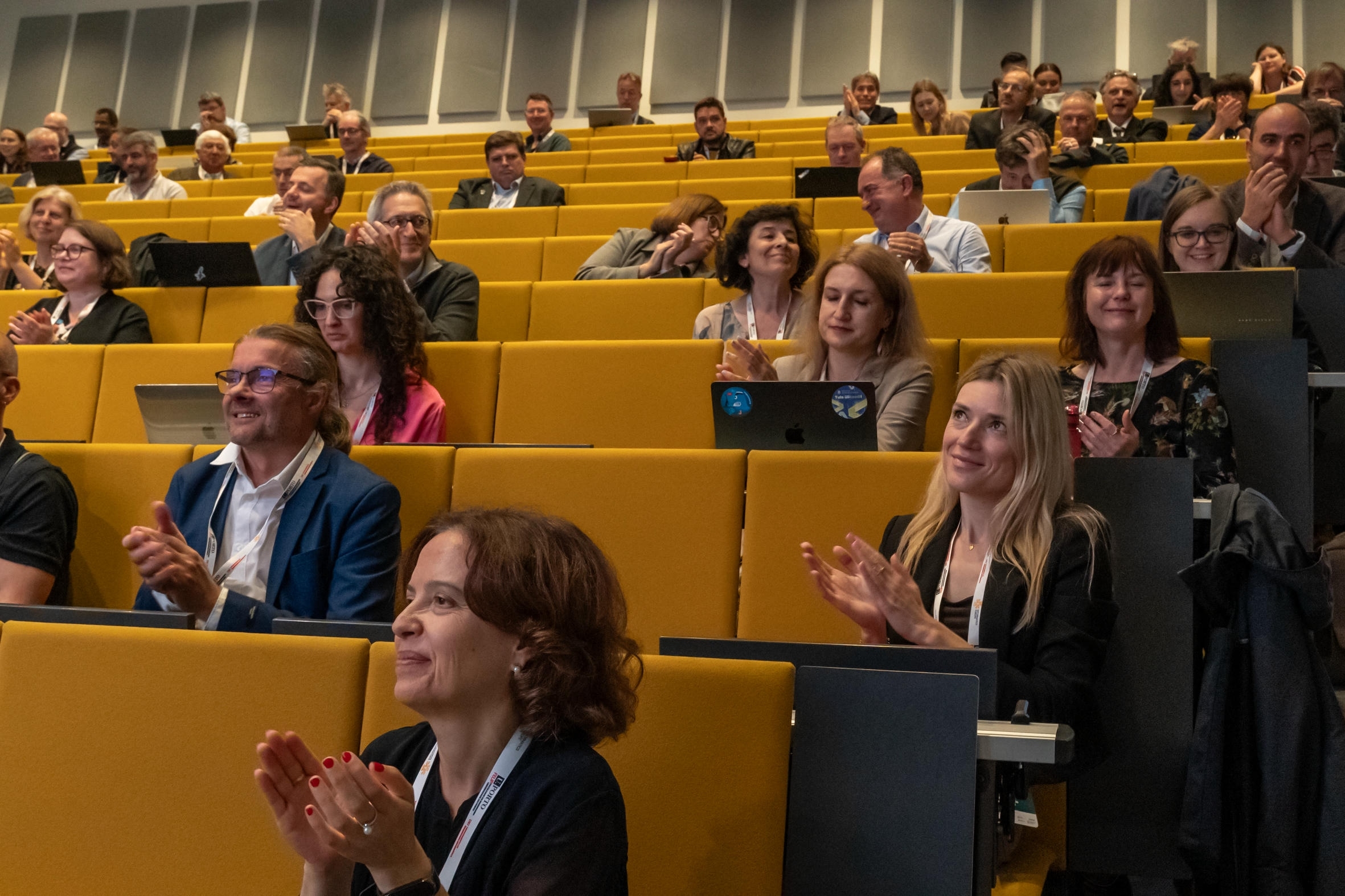
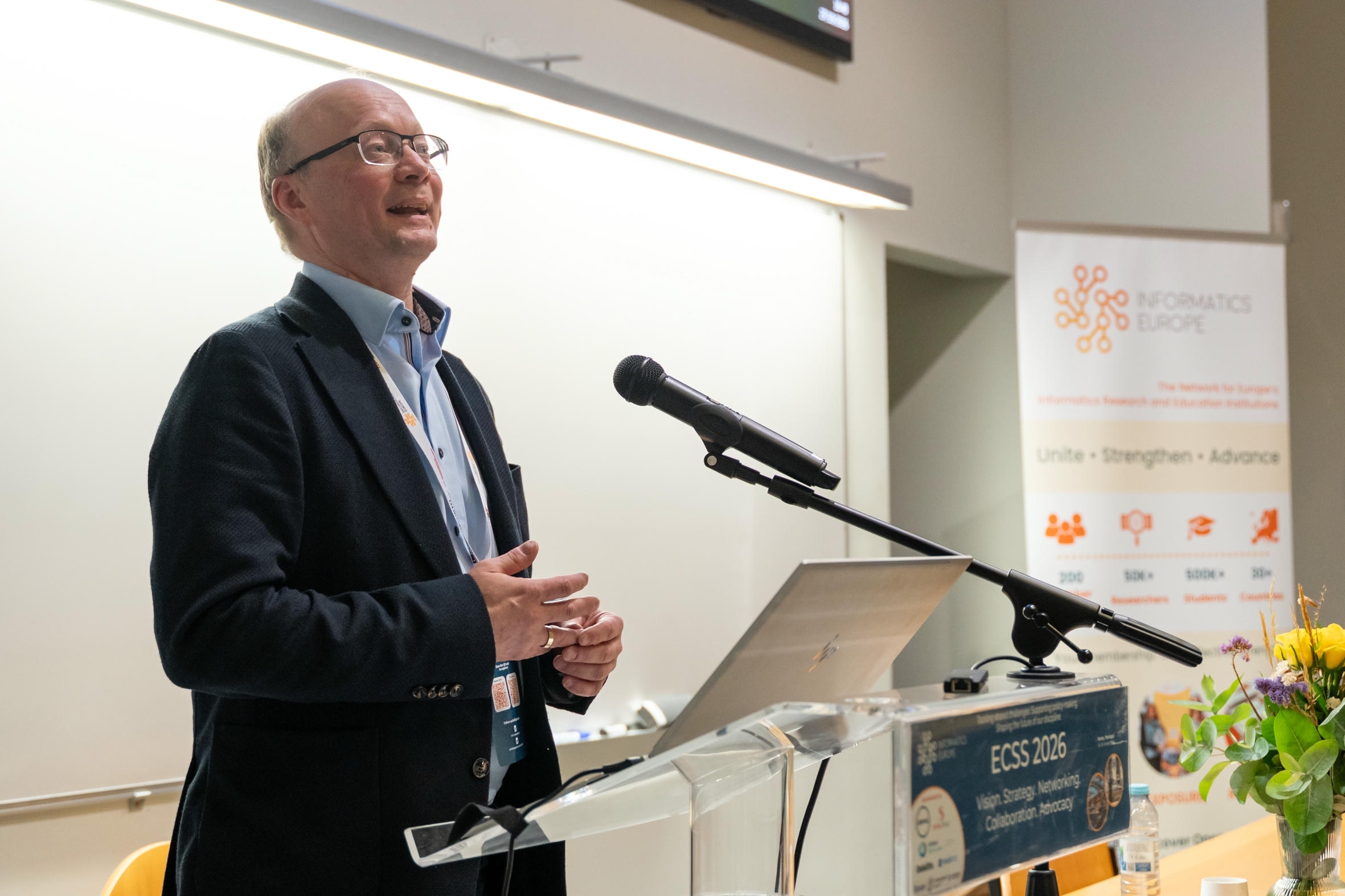
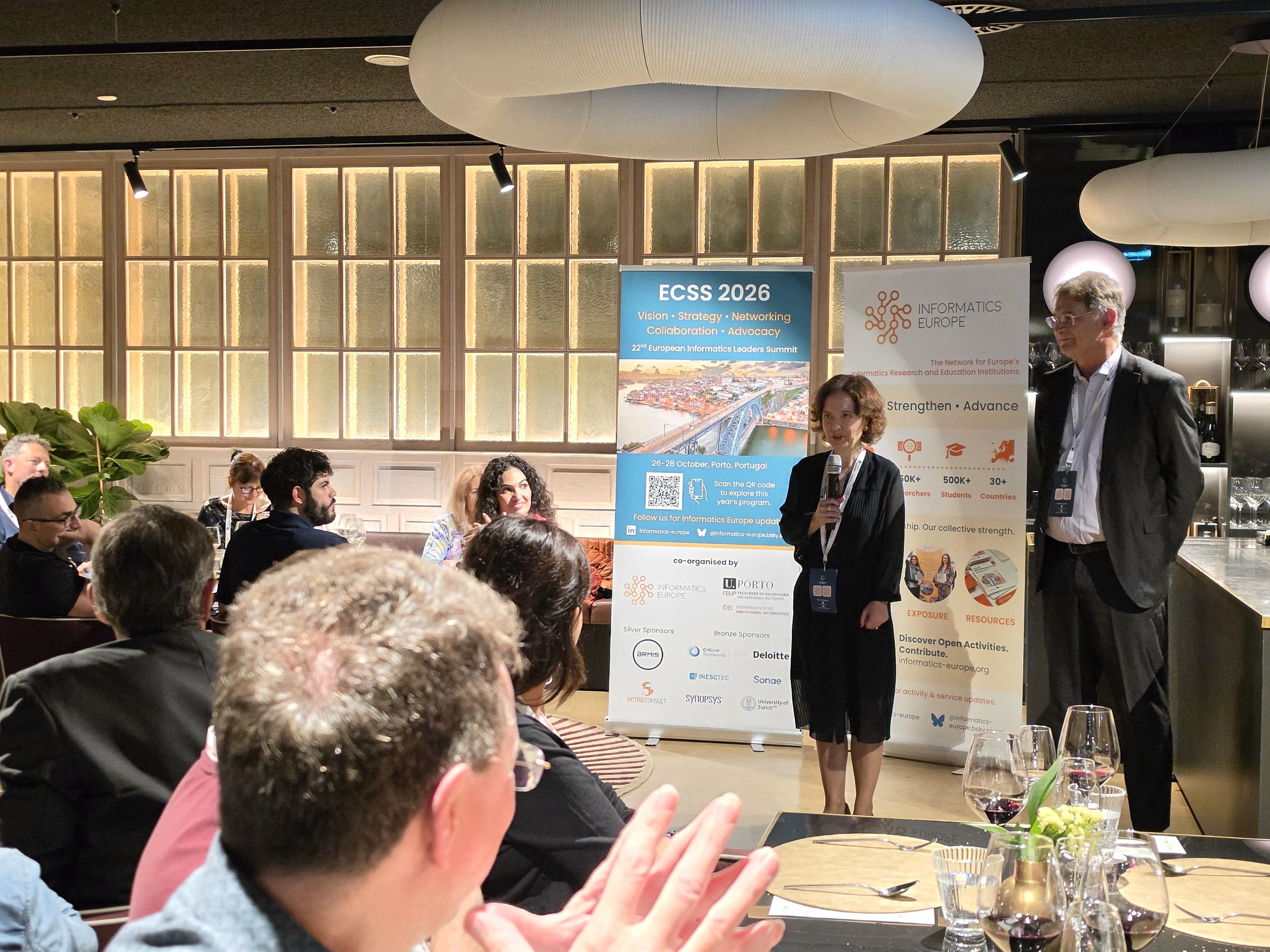
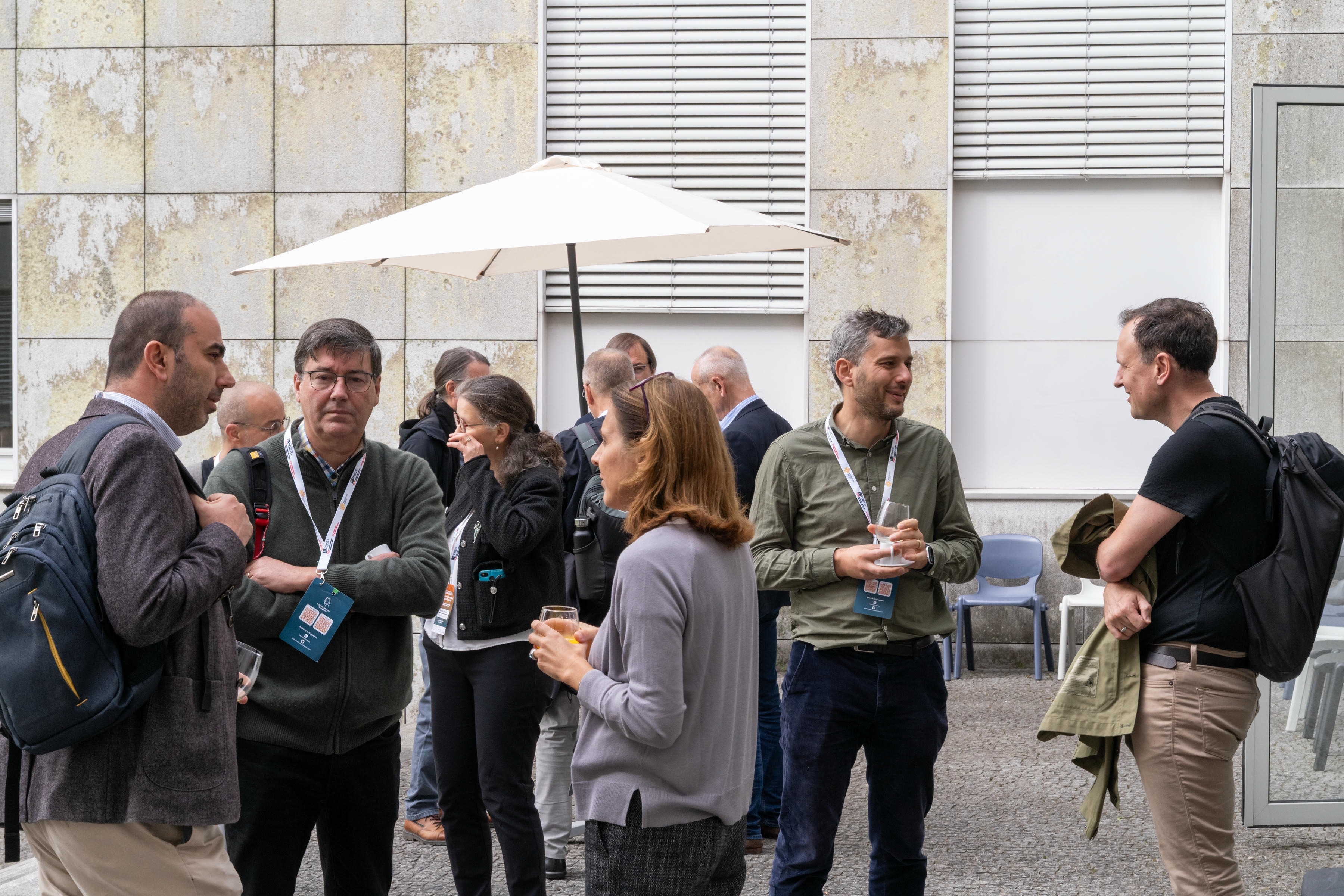
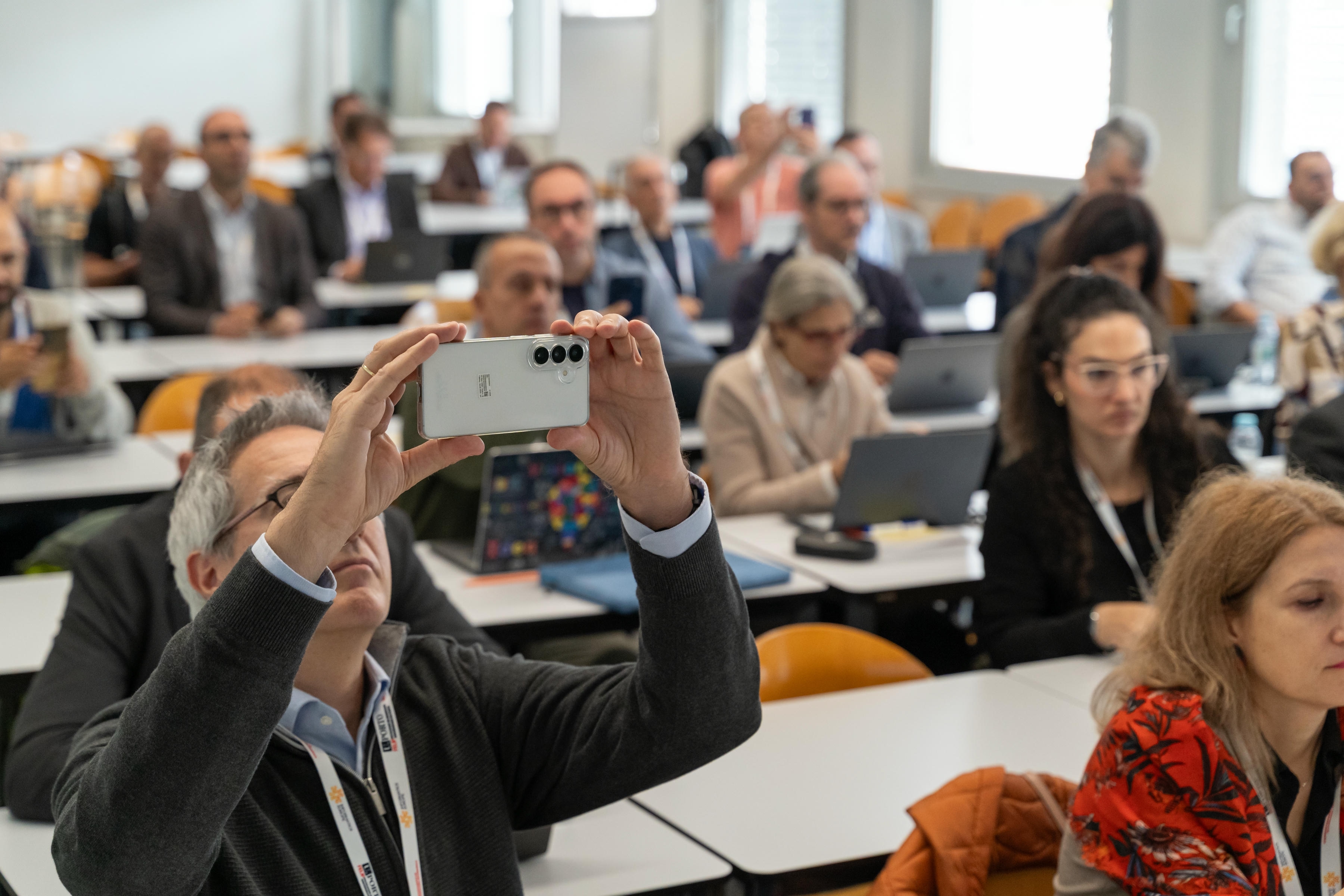
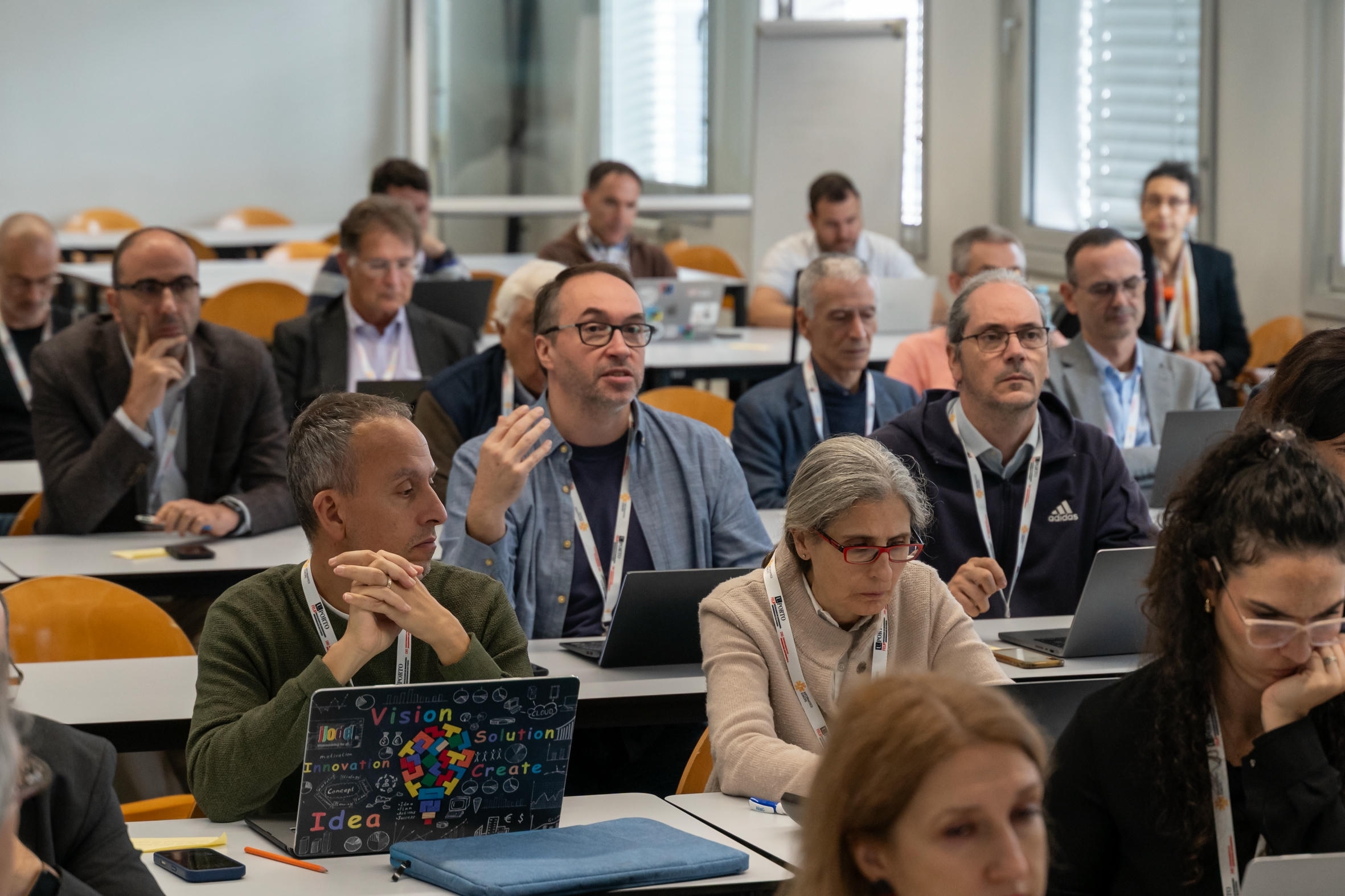
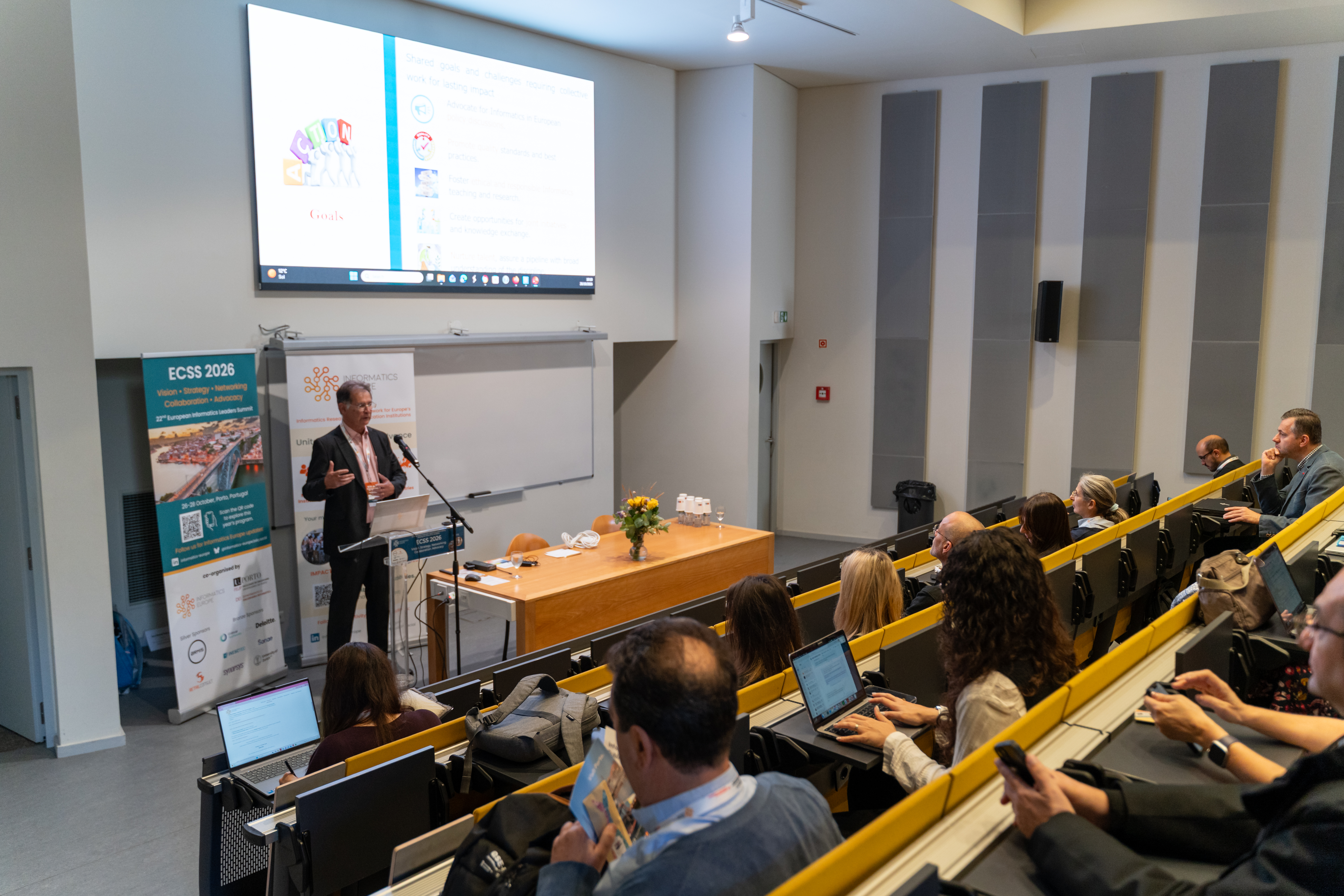
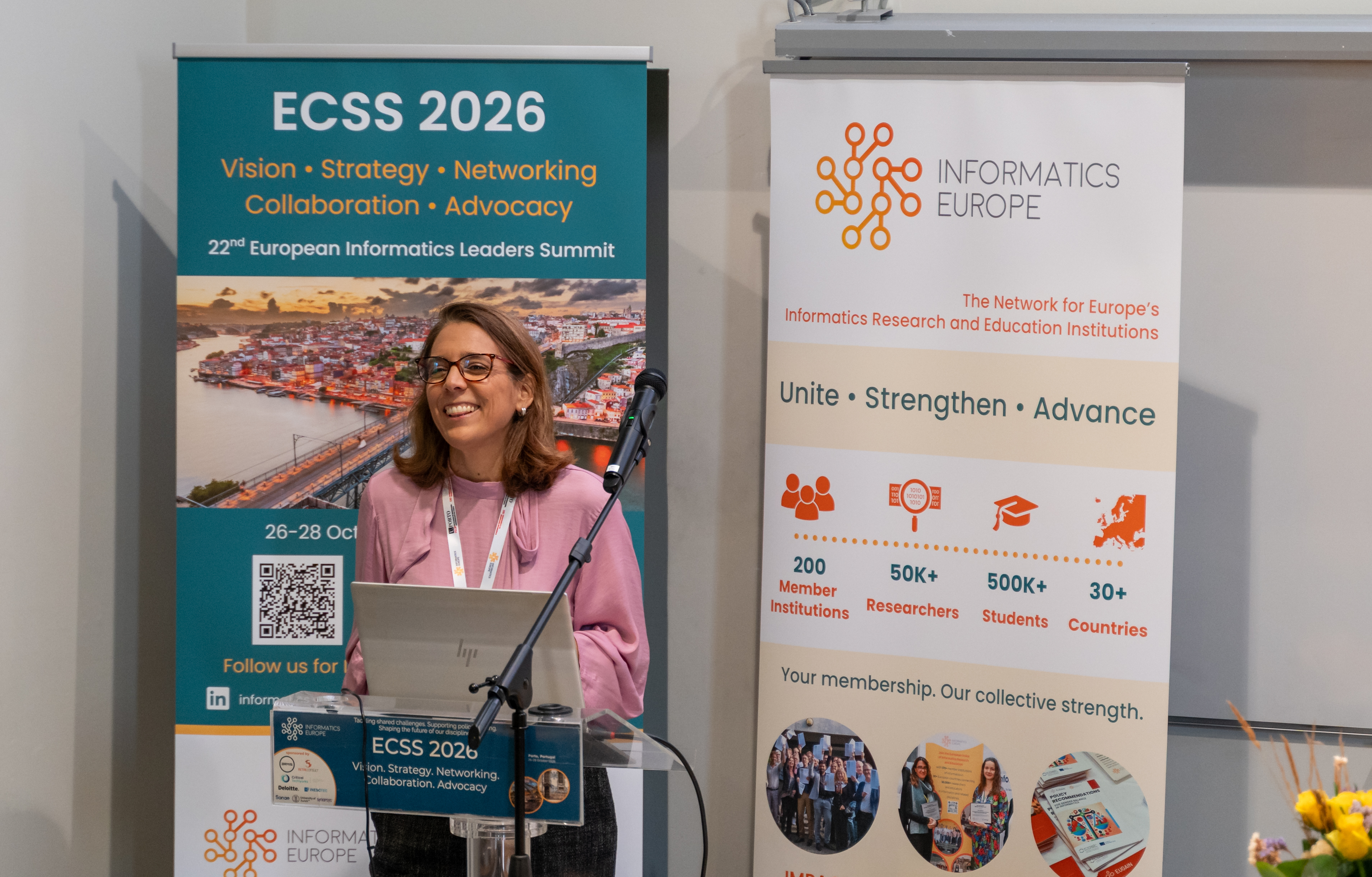
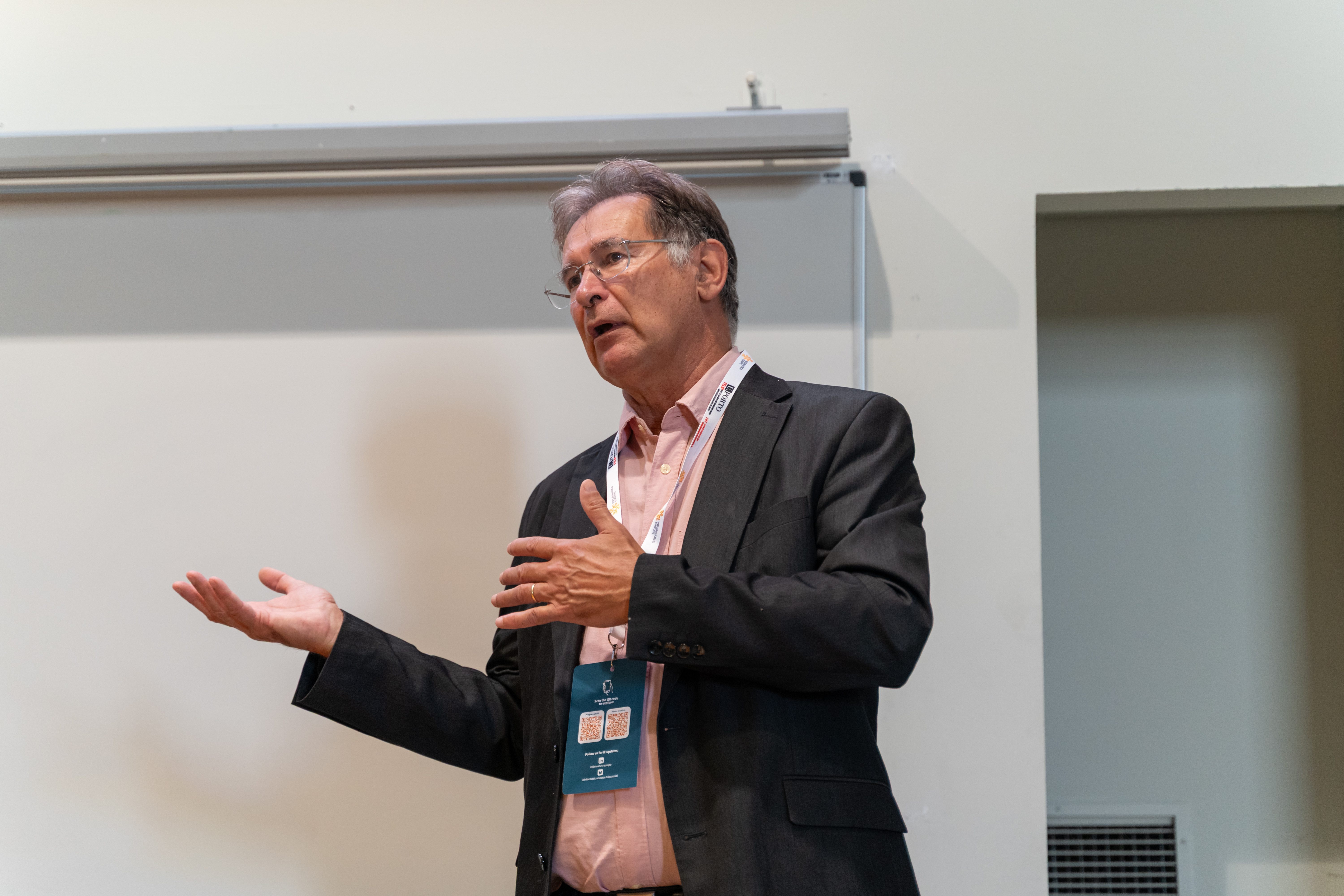
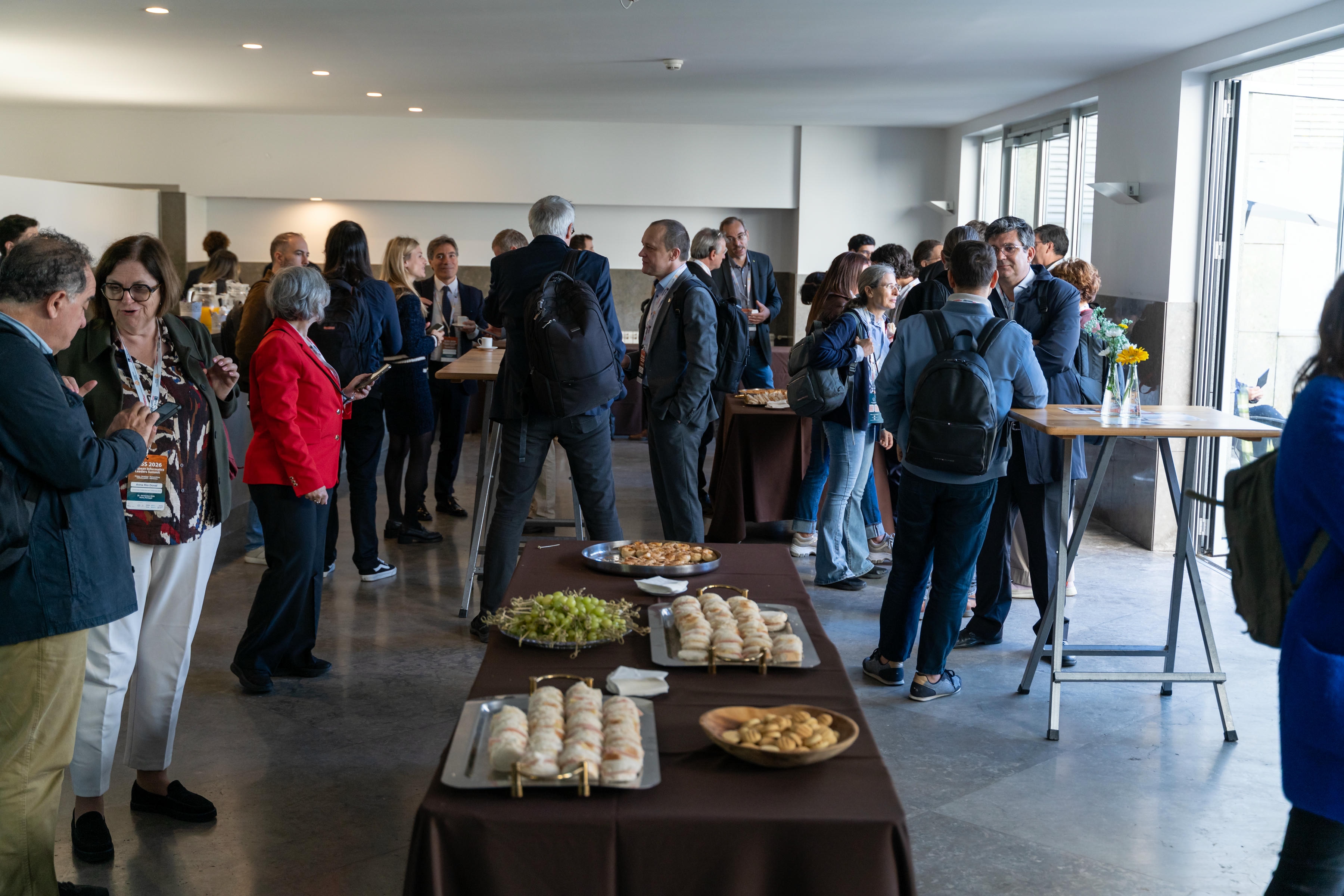
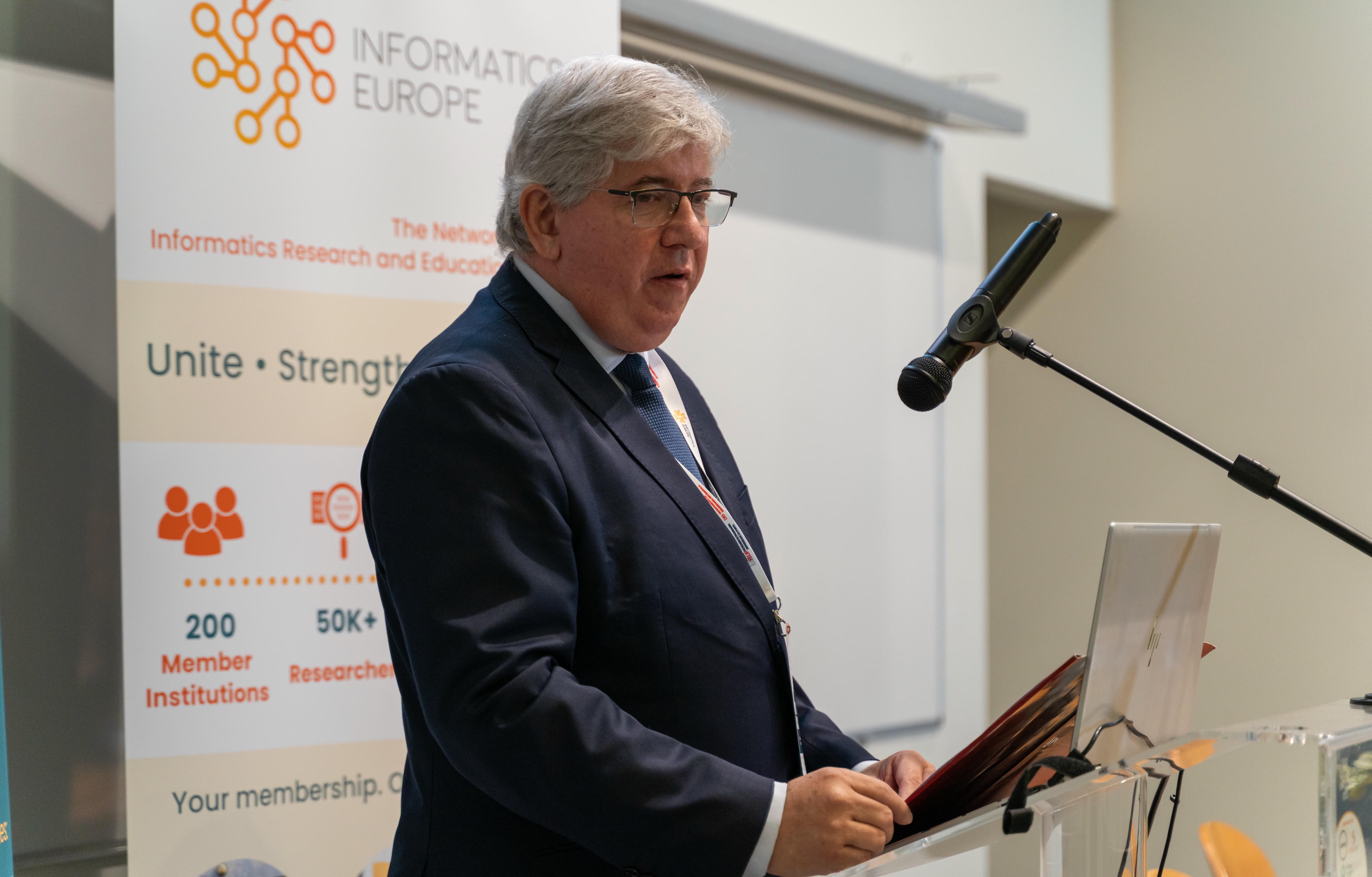
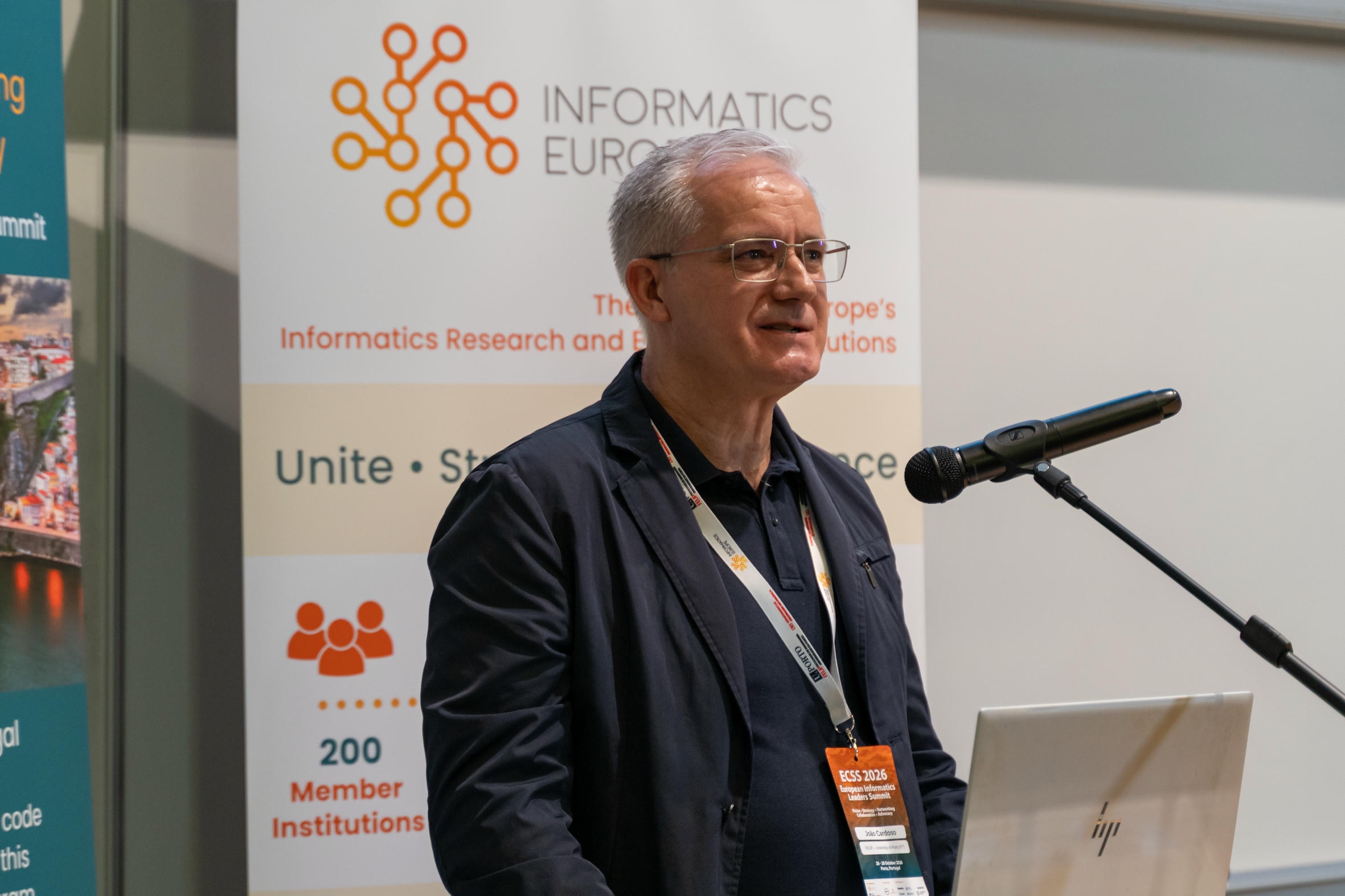
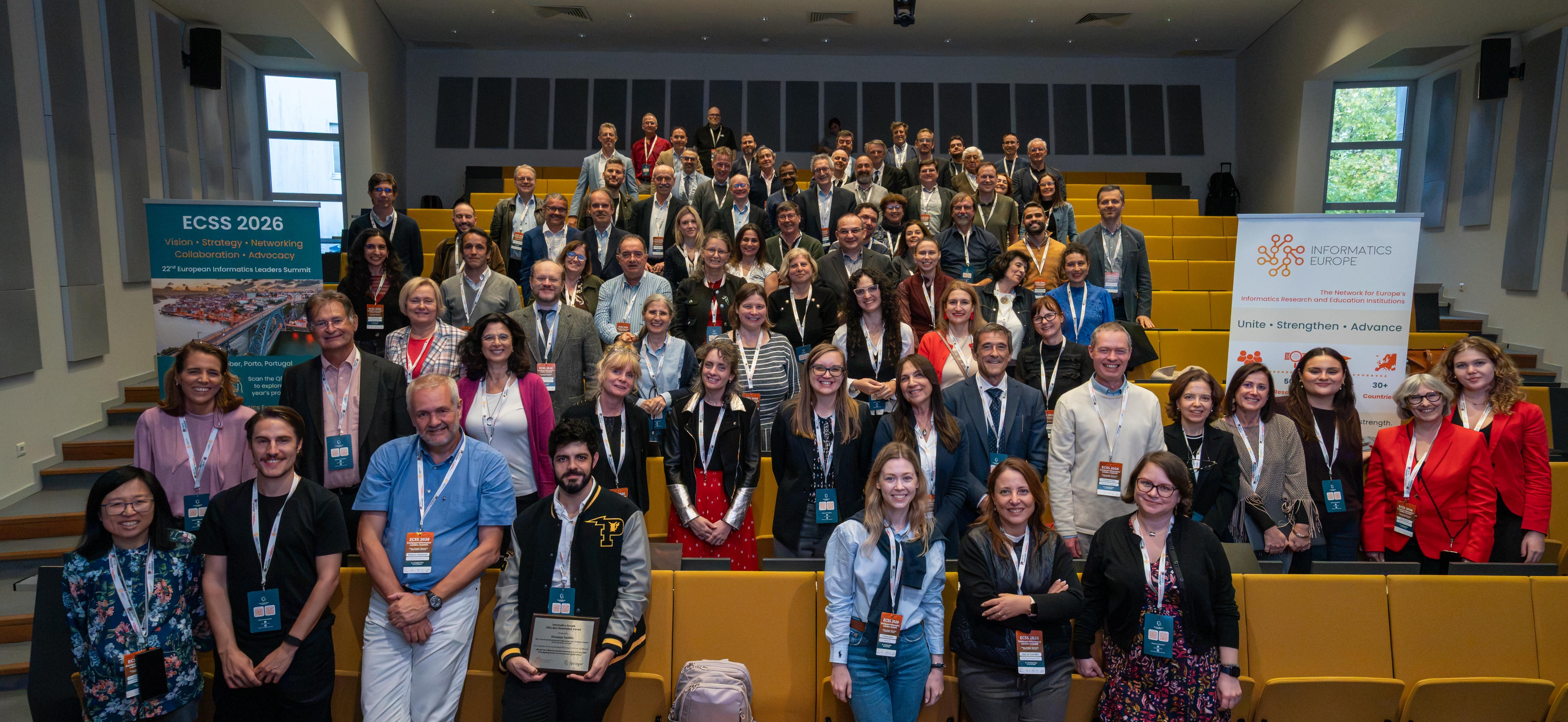
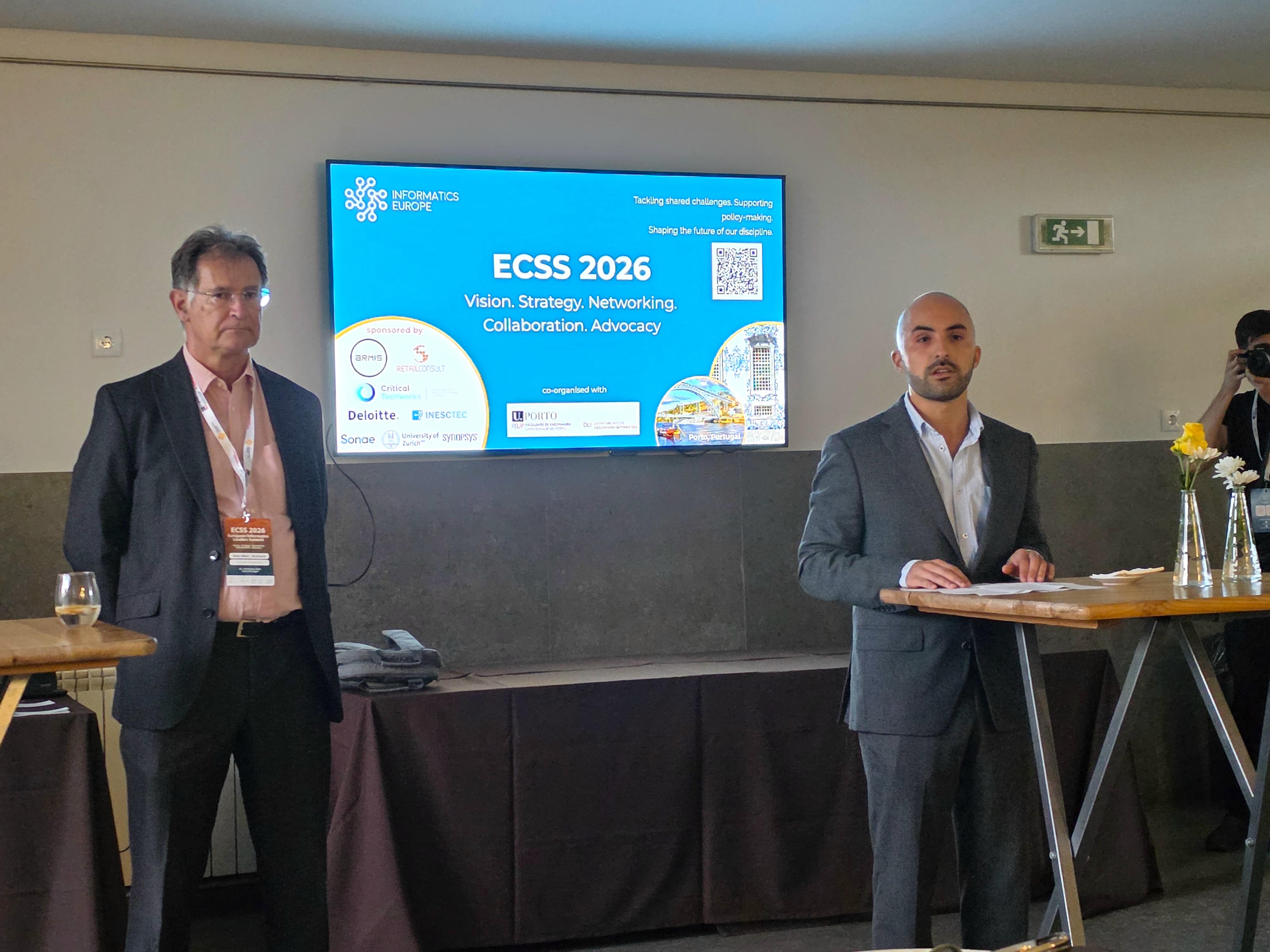
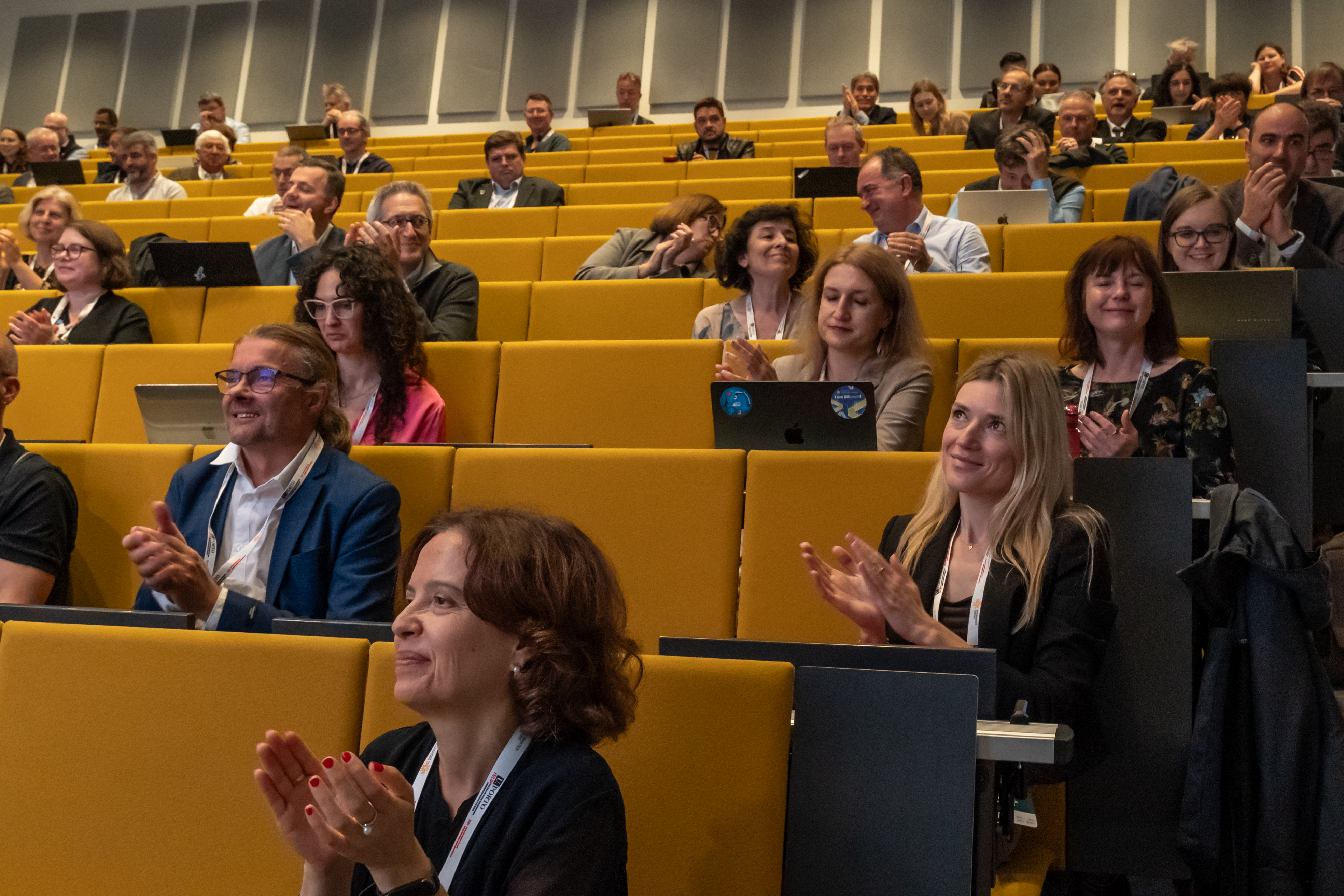
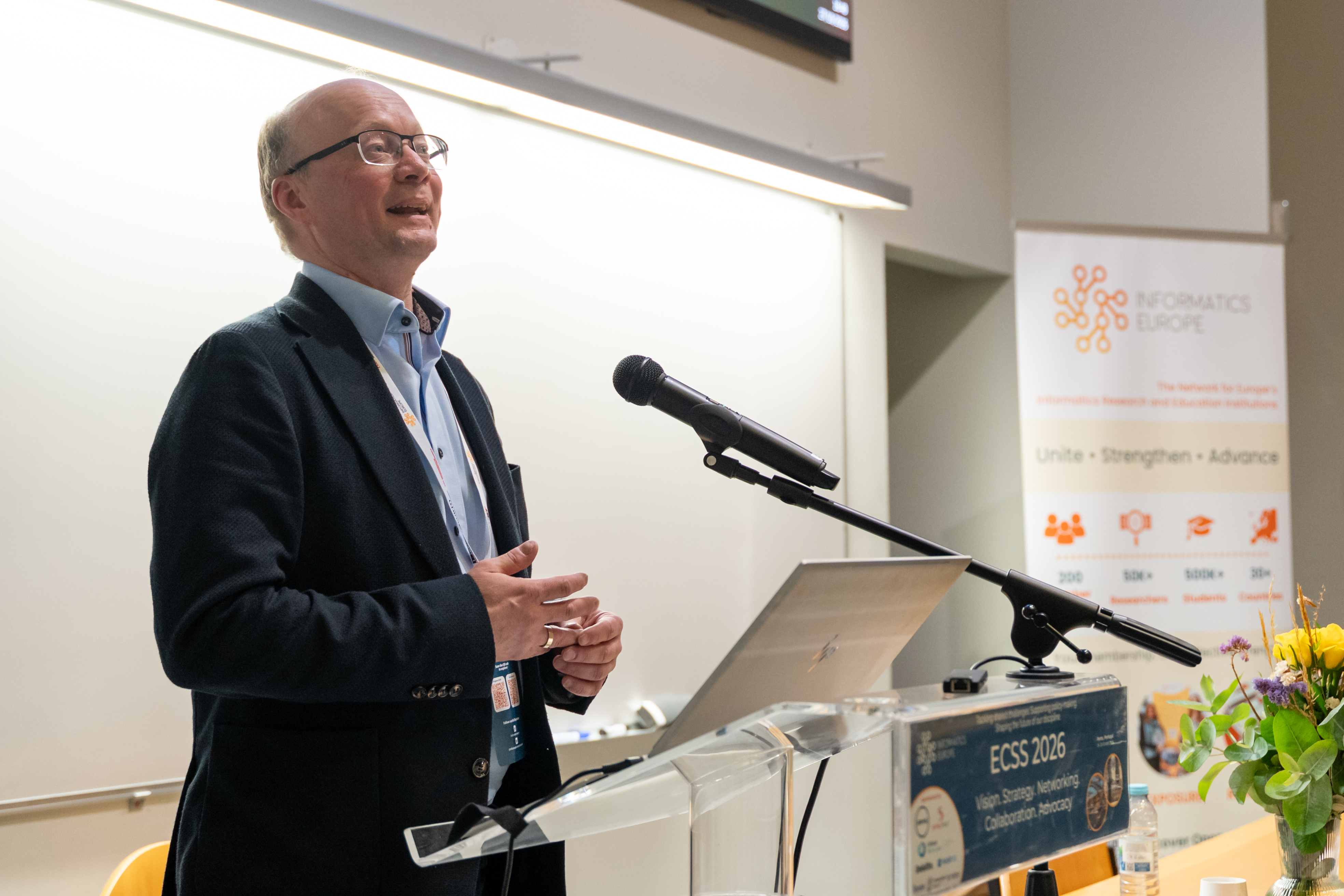
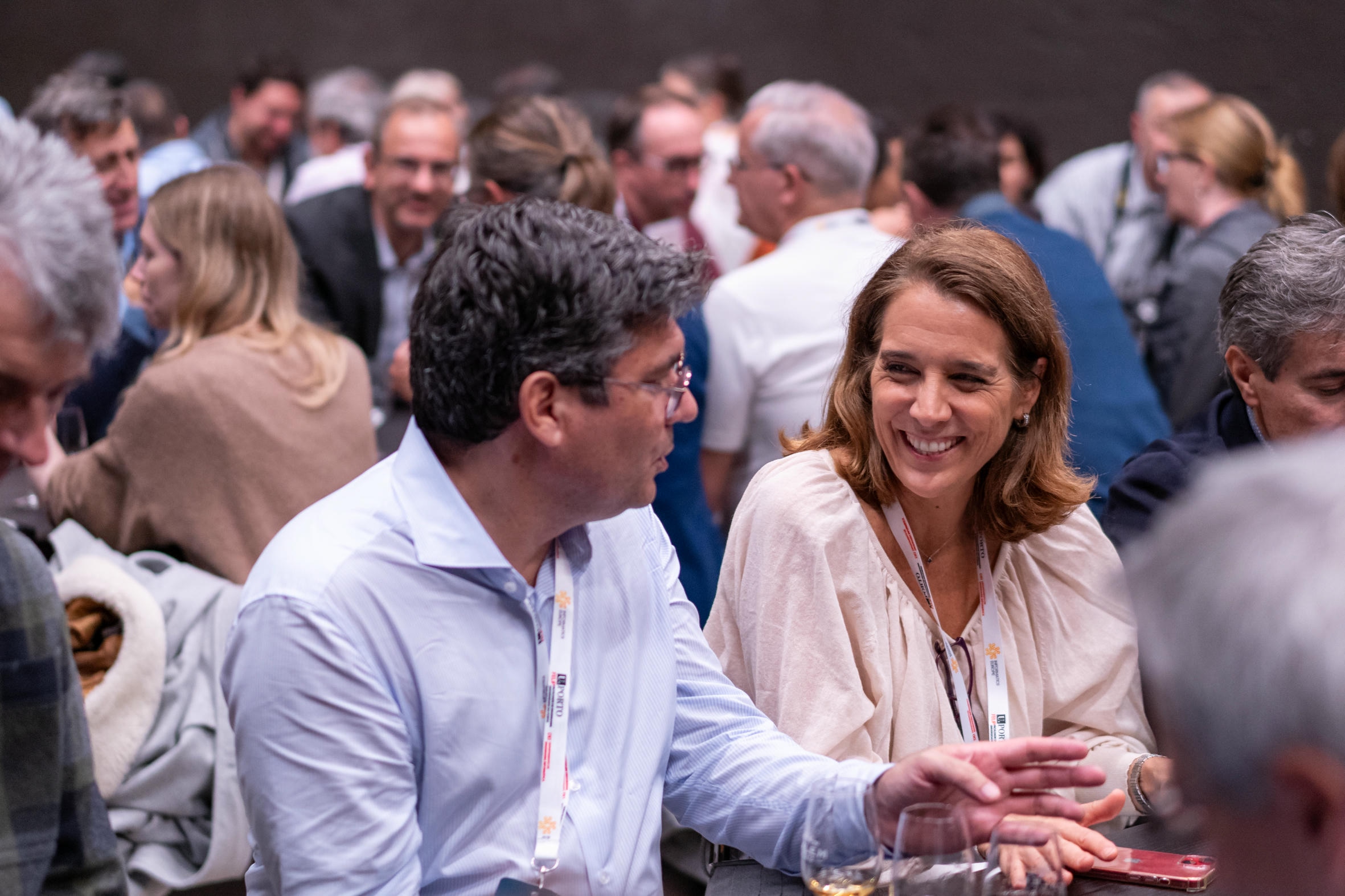
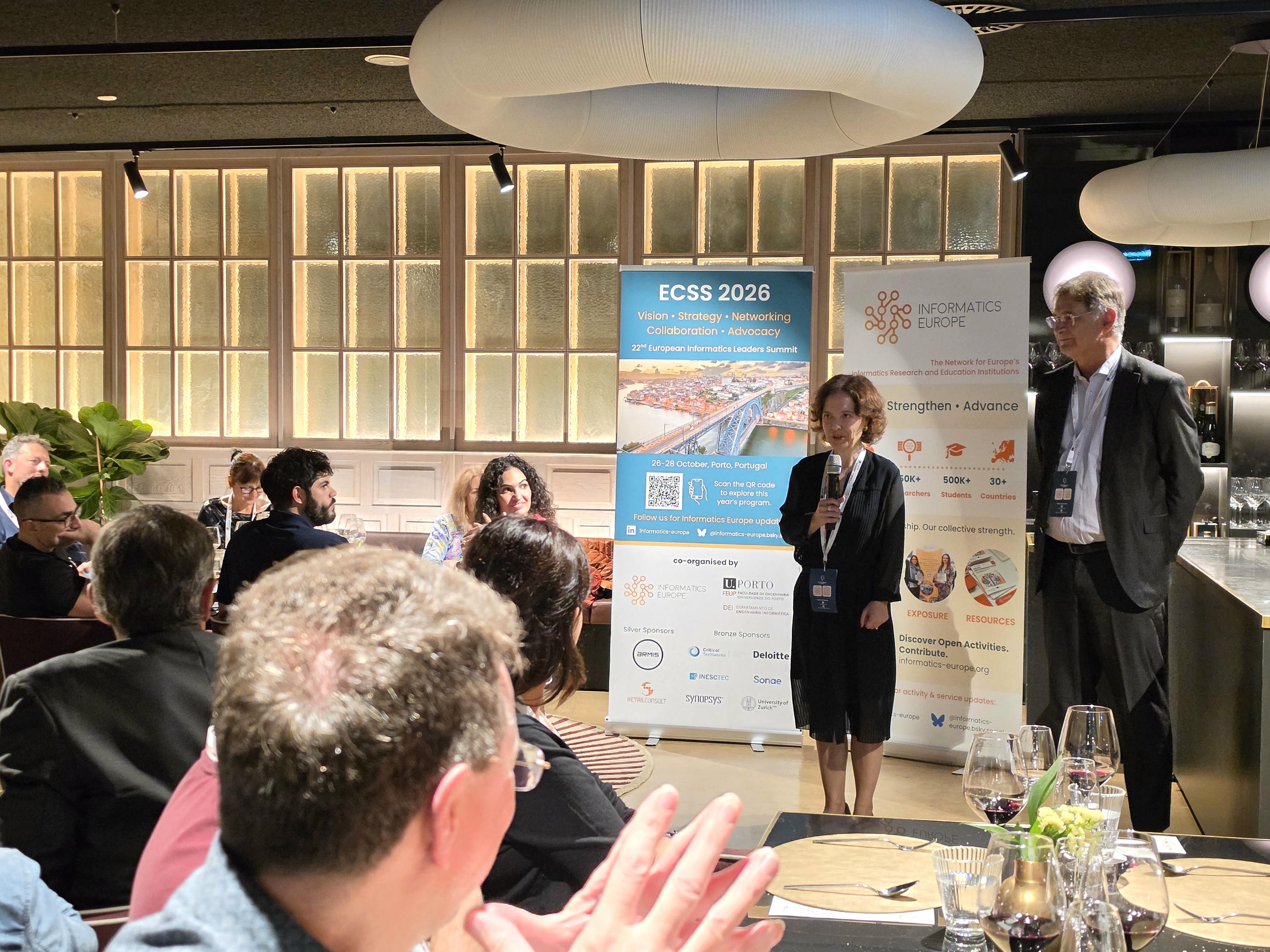
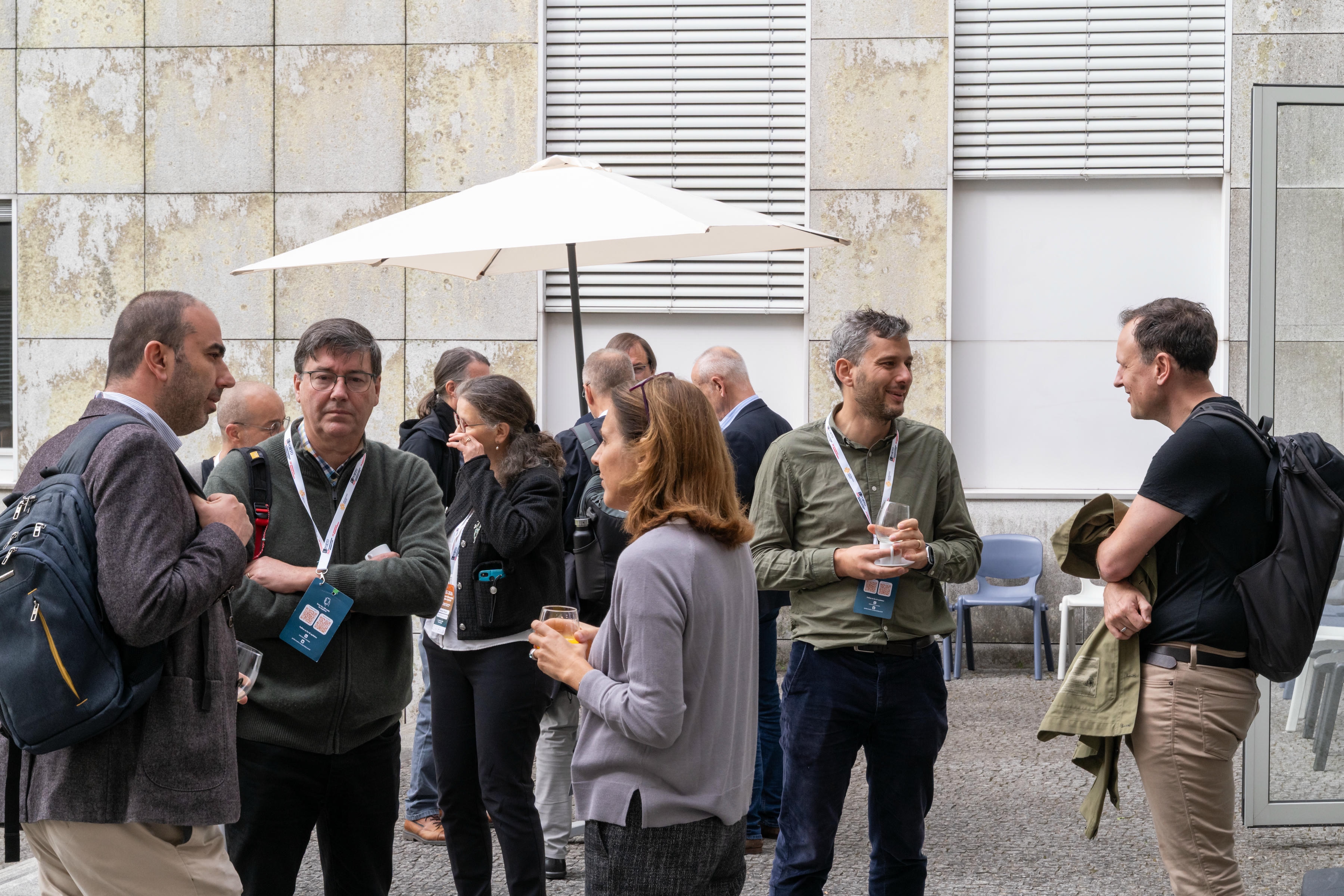
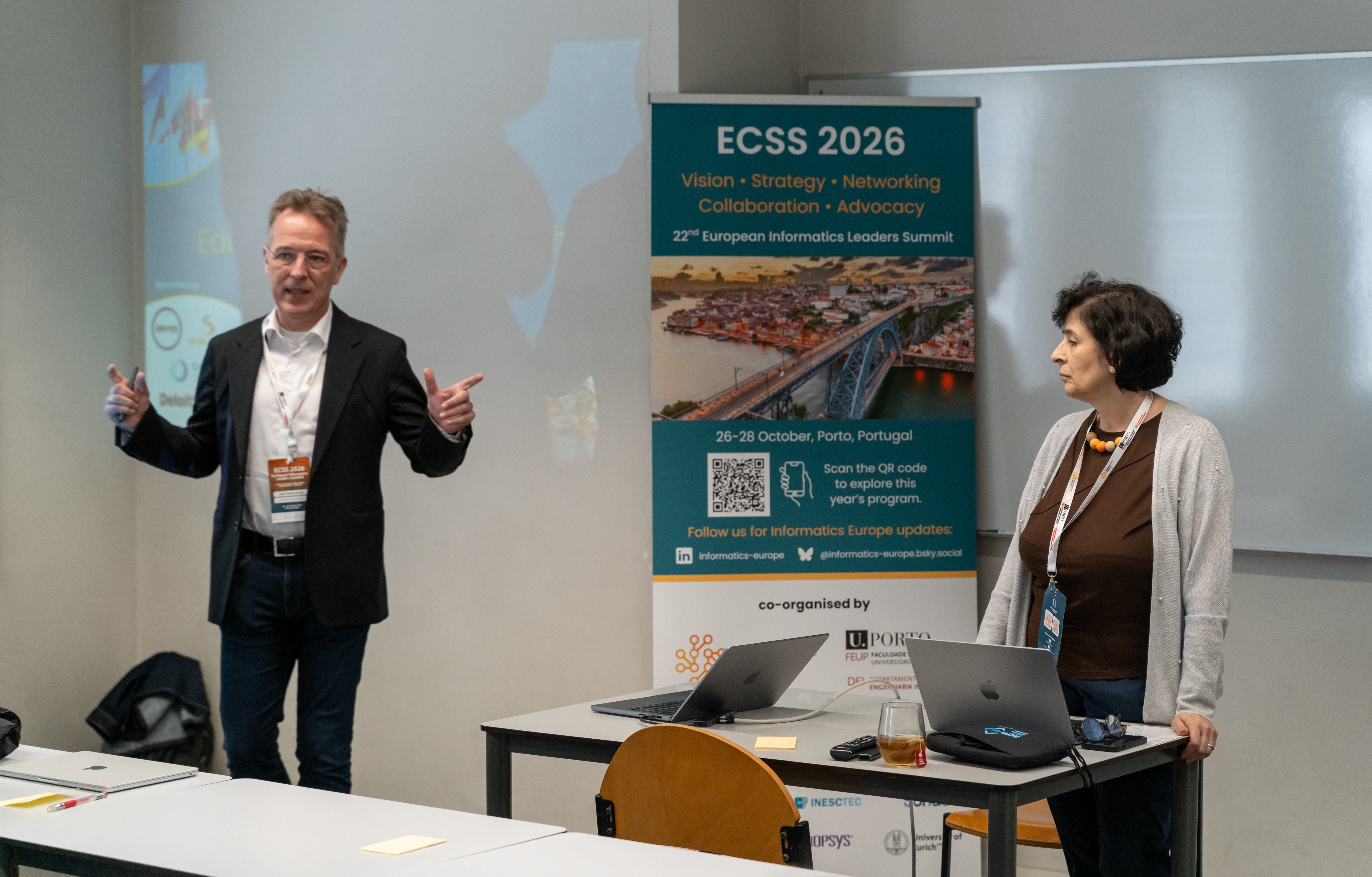
This year's Conference Chair, Ana C.R. Paiva (University of Porto, Portugal), and Informatics Europe President, Jean-Marc Jézéquel (IRISA/University of Rennes, France), officially inaugurated ECSS 2026. The opening was marked by welcoming addresses from Rui Calçada, Director of the Faculty of Engineering, and João Cardoso, Director of the Department of Informatics Engineering, both from the University of Porto. The IE flagship summit brought together over 130 participants, representing 98 institutions across 24 European countries.
Explore the session Highlights below and download/view Photos and Presentation Materials on the individual session webpages; the latter are also available on the summit schedule page.
Strategy Workshop I
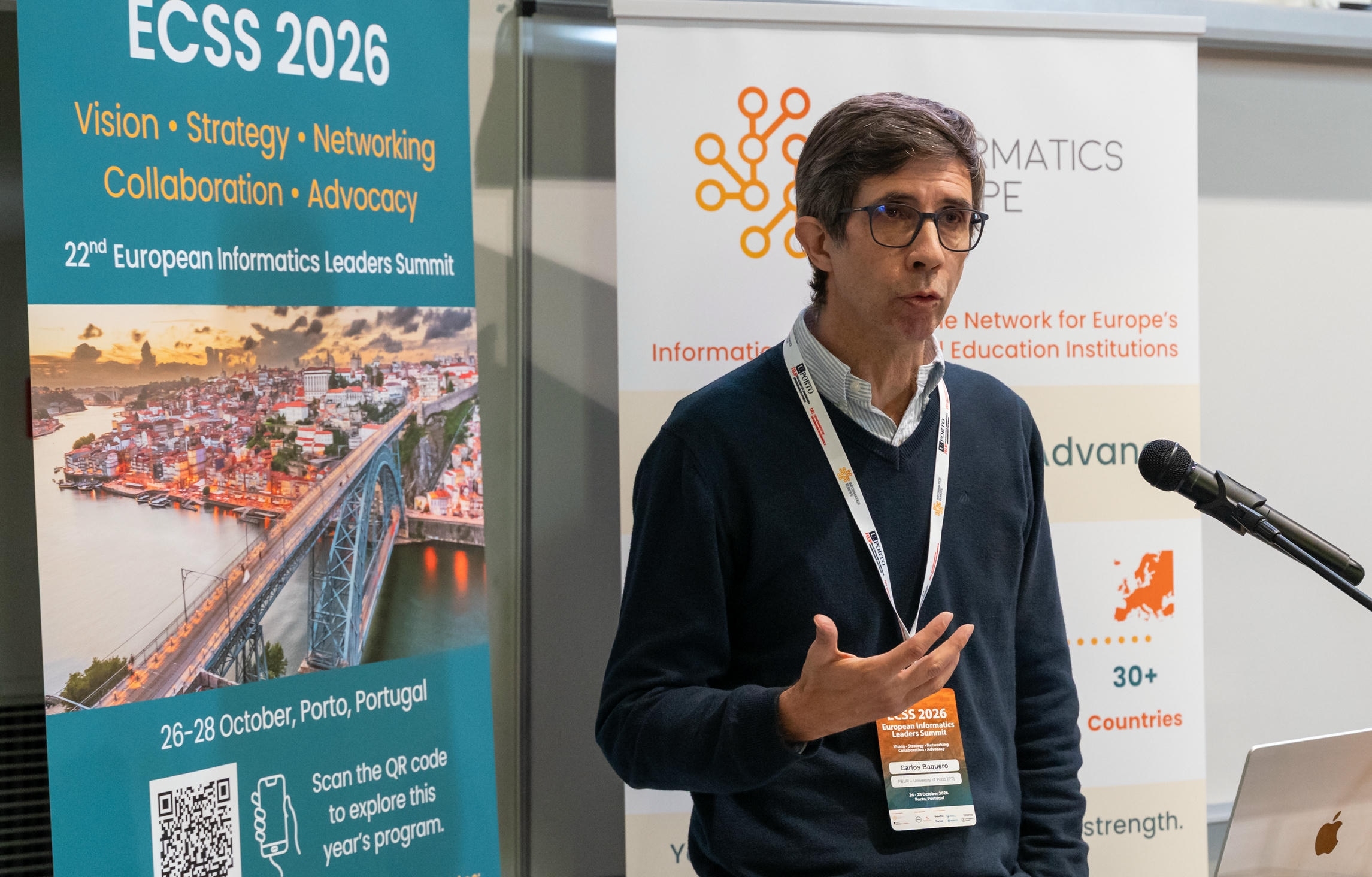
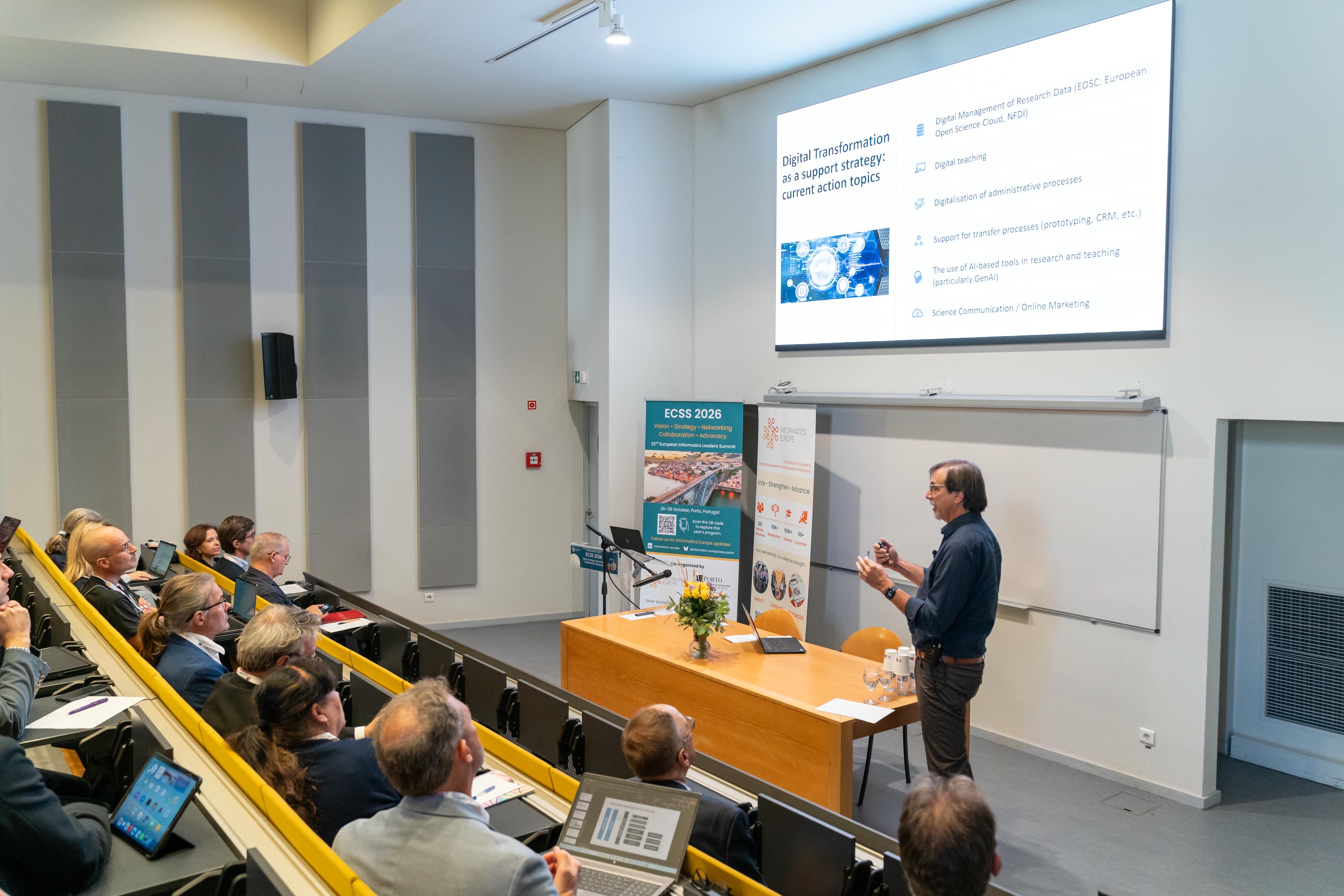
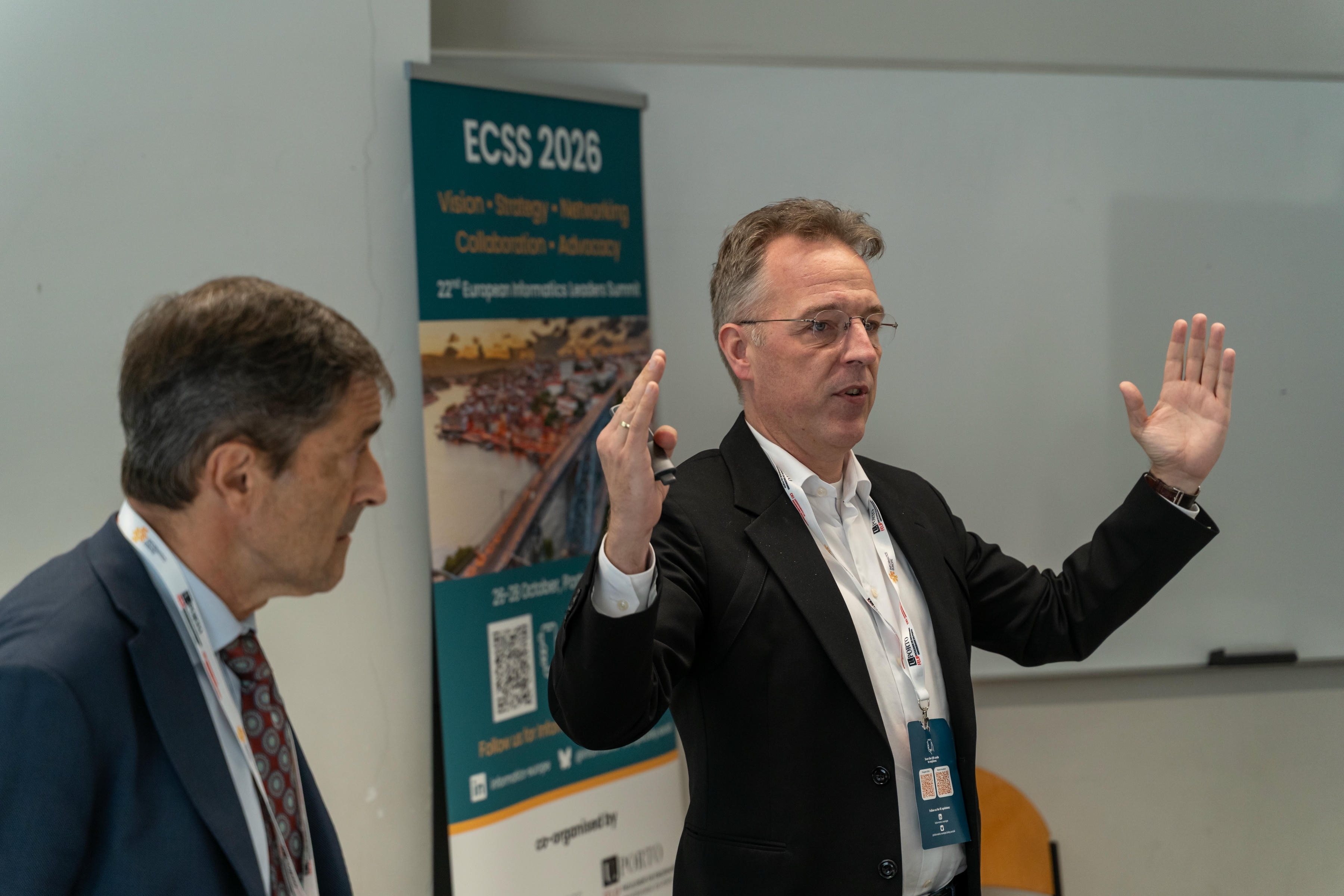
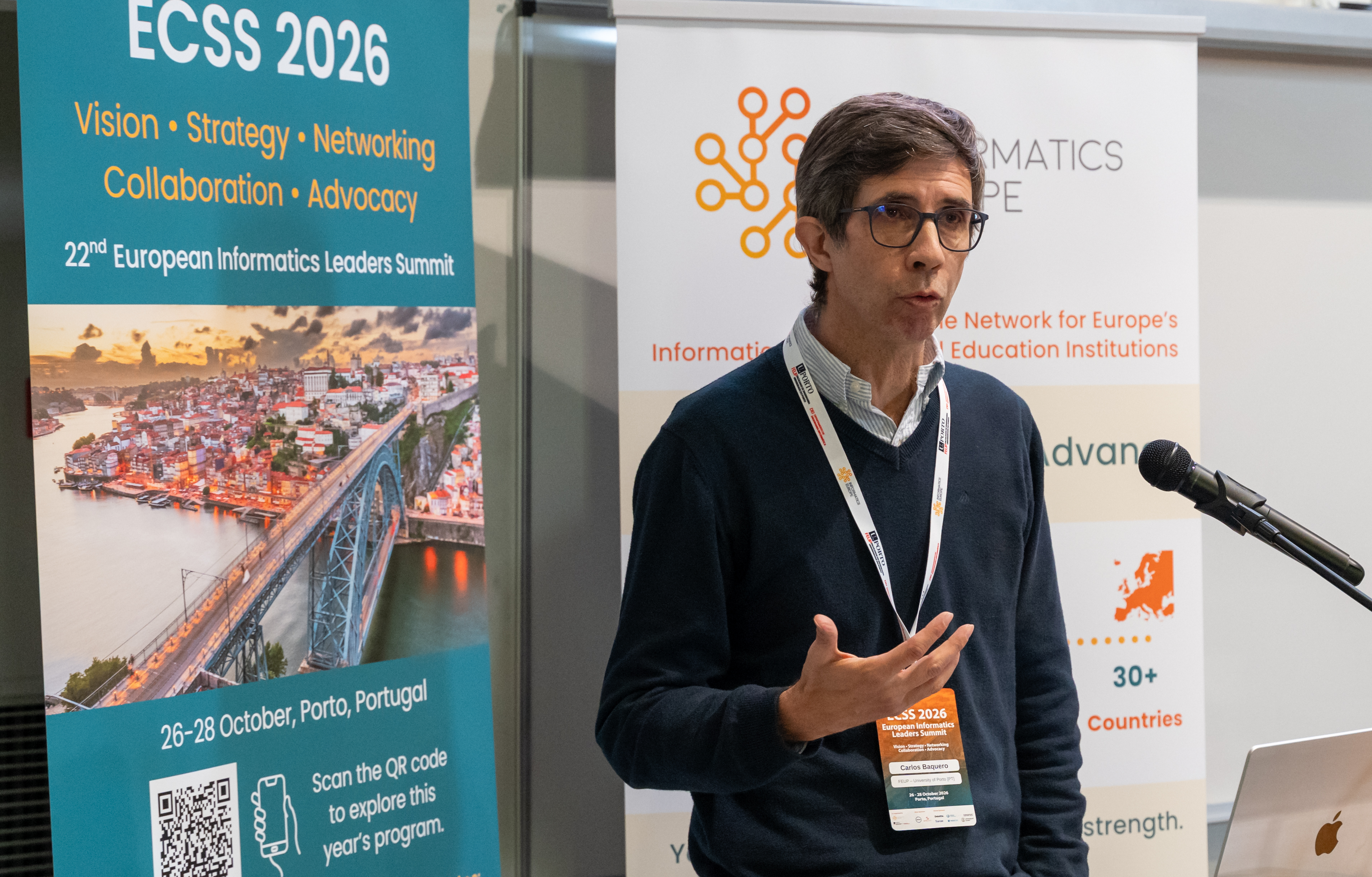
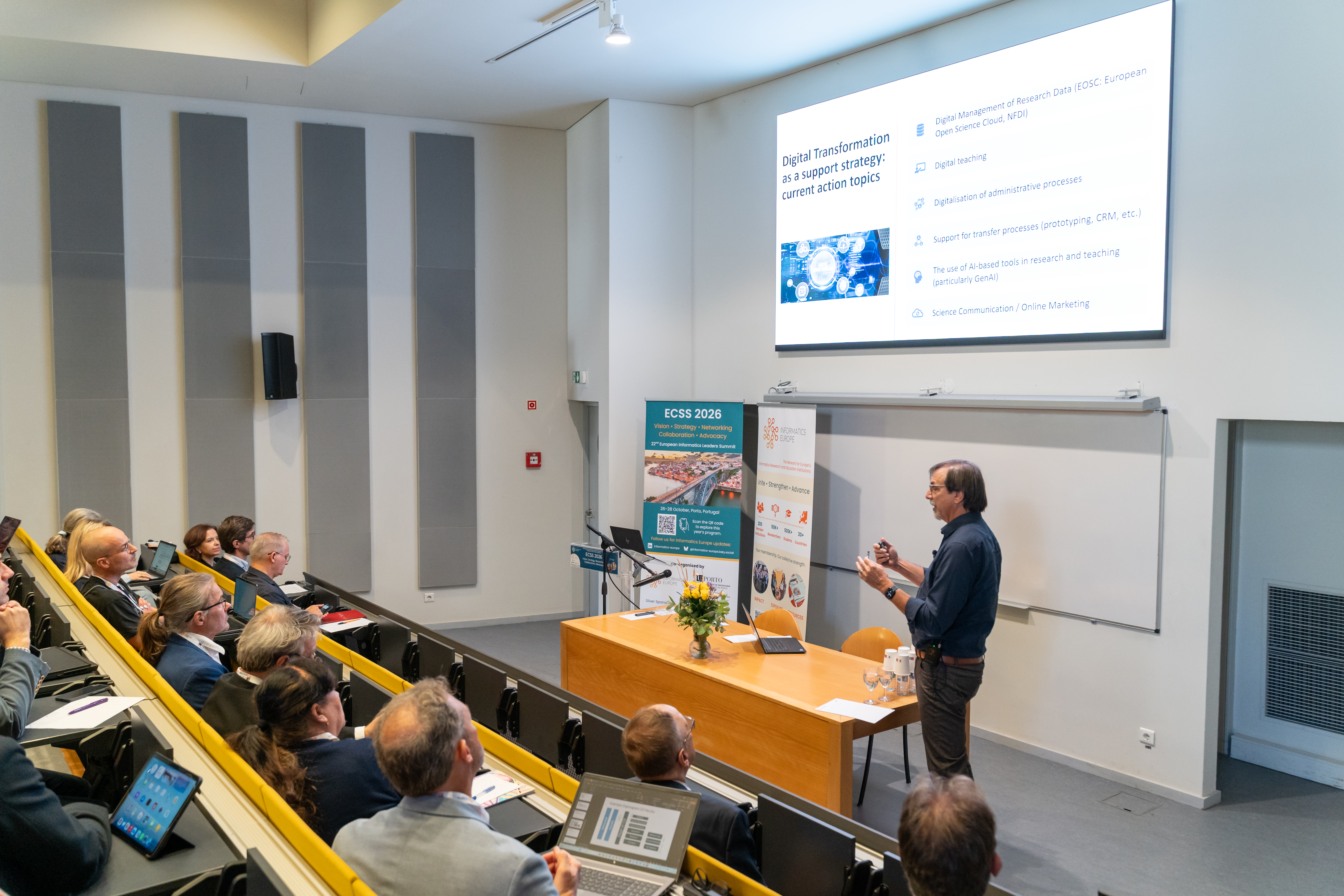
Co-chaired by Ana C.R. Paiva (University of Porto, Portugal) and Jean-Marc Jézéquel (IRISA / University of Rennes, France), Strategy Workshop I, themed “Beyond Plans: Strategy and Impact in Academia”, explored how academic institutions can respond to a rapidly evolving landscape and turn strategic ambitions into meaningful impact. The morning featured two presentations addressing key challenges facing universities. In “Beyond Traditional Peer Review: Disruptions and Opportunities in Scientific Publishing”, Carlos Baquero (University of Porto, Portugal) examined the growing pressures on scientific publishing, including increasing submission volumes, the limitations of traditional peer review and the impact of AI on research communication, reviewing and authorship. He highlighted the importance of maintaining human judgement, critical reading and responsibility as AI becomes more deeply embedded in scientific work. In “Digital Twin of Universities: A Human- and Data-centric Digital Transformation Approach for Future-oriented Universities”, Gregor Engels (Bielefeld University, Germany) presented a vision for university-wide digital transformation, emphasising the need to move beyond isolated digital initiatives towards an integrated, human- and data-centric approach supported by shared governance, clear responsibilities and a common institutional purpose.
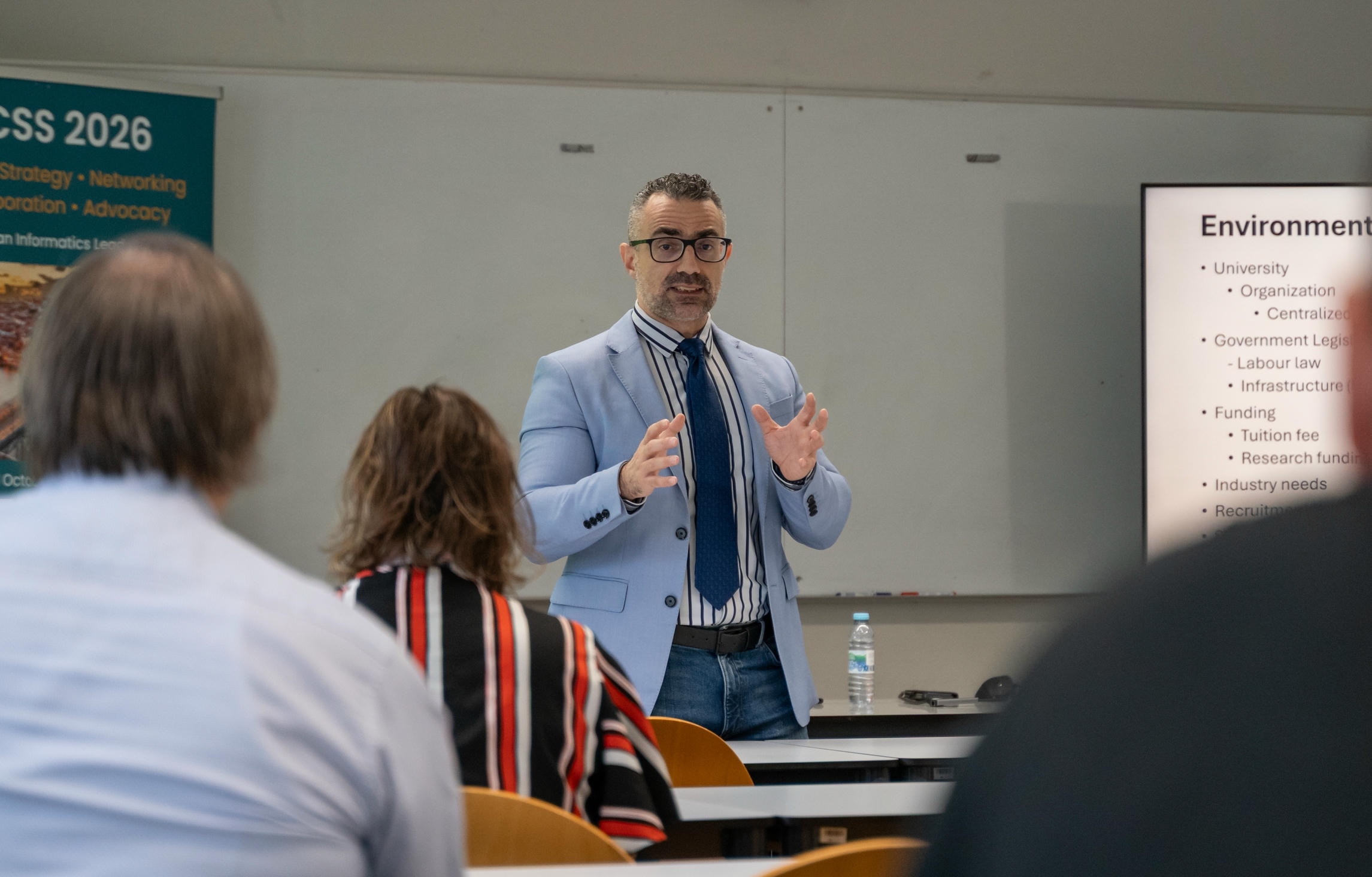
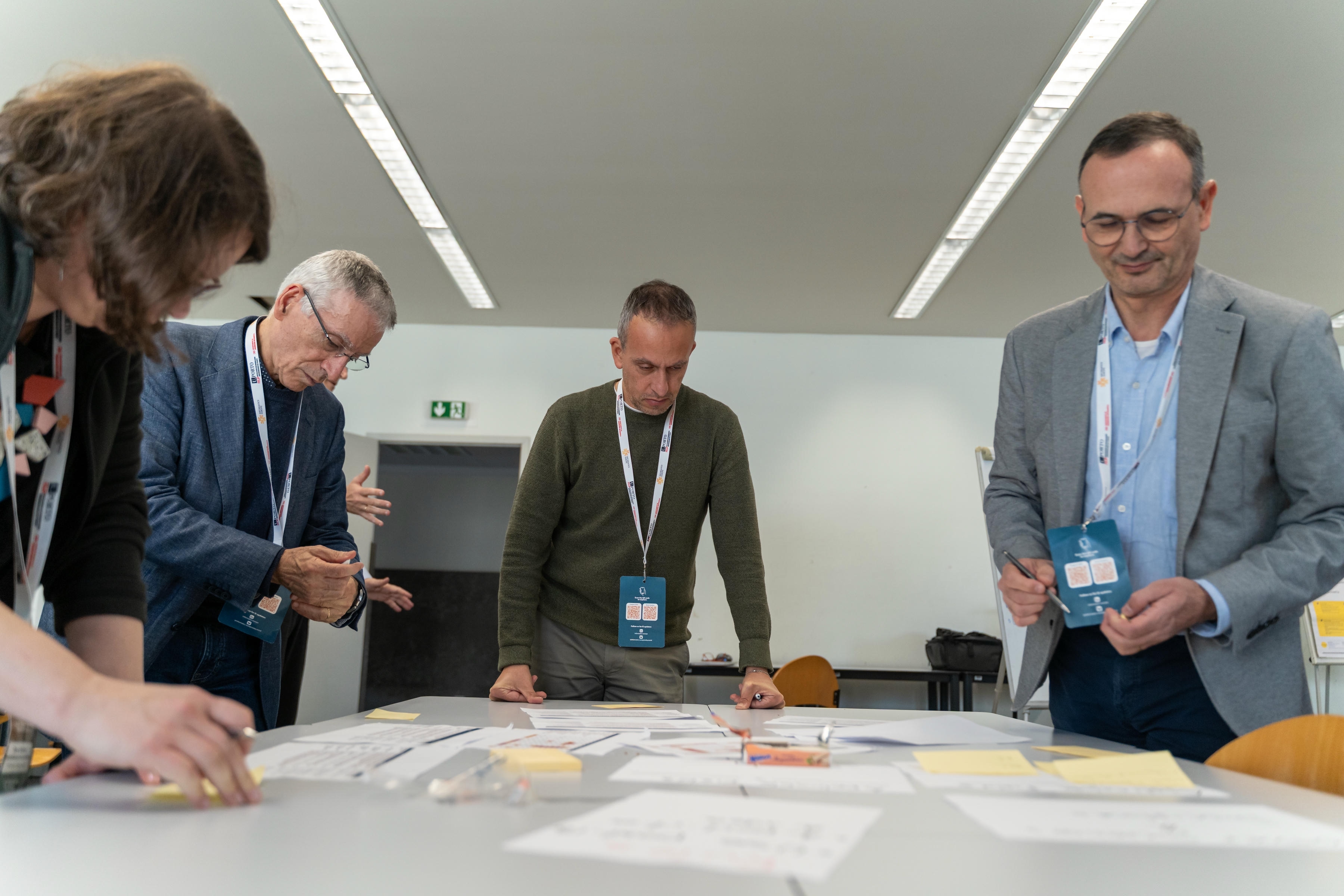
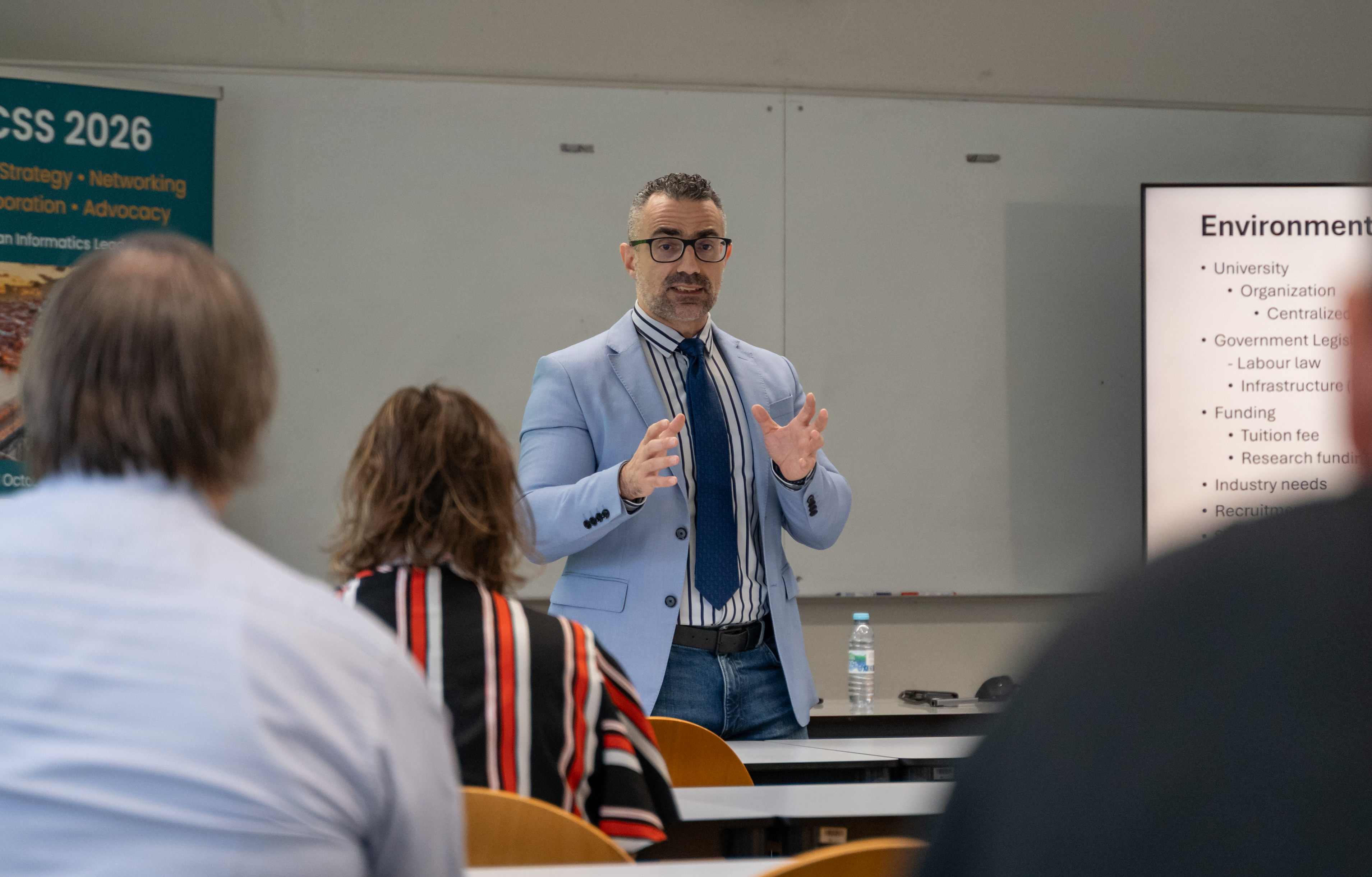
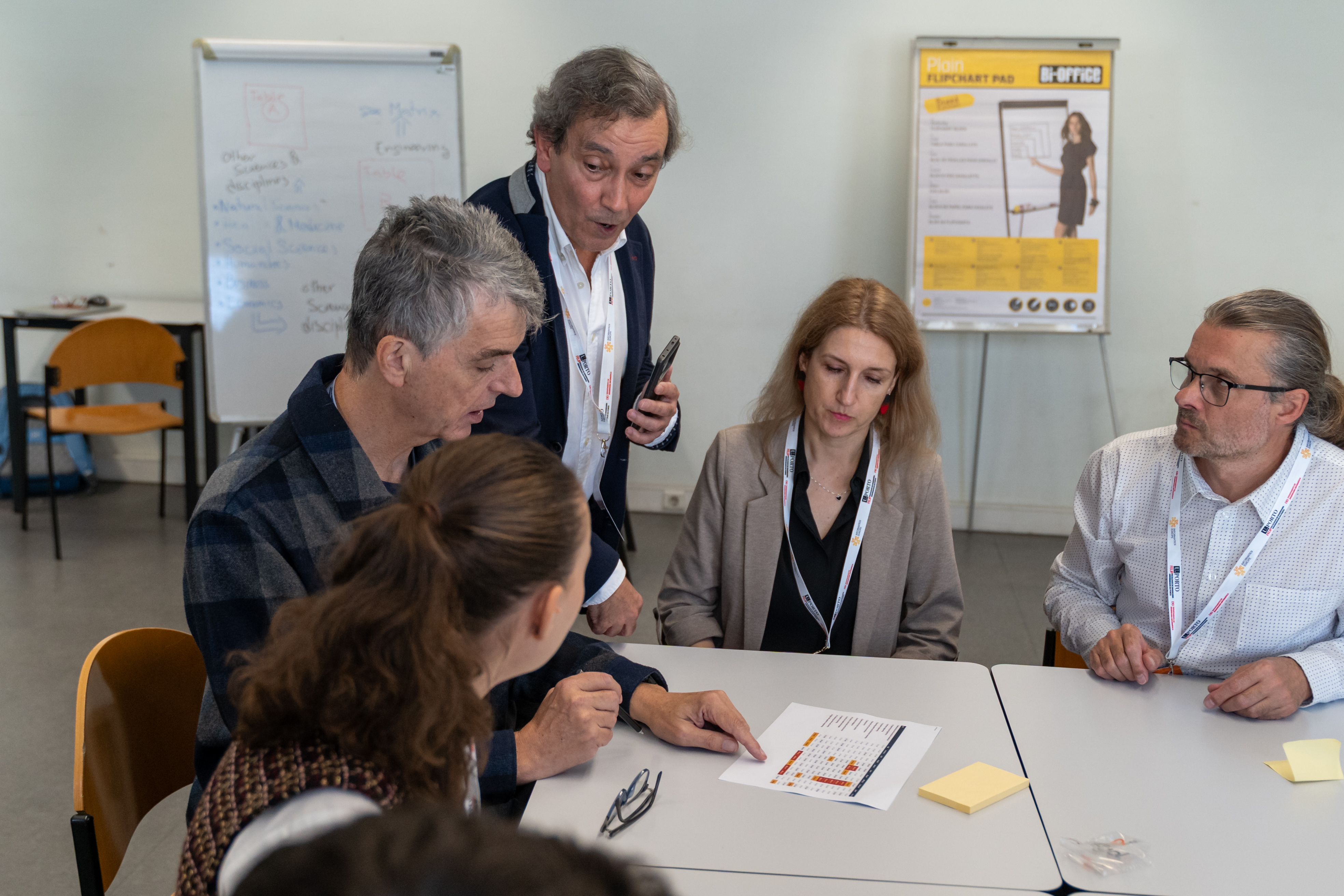
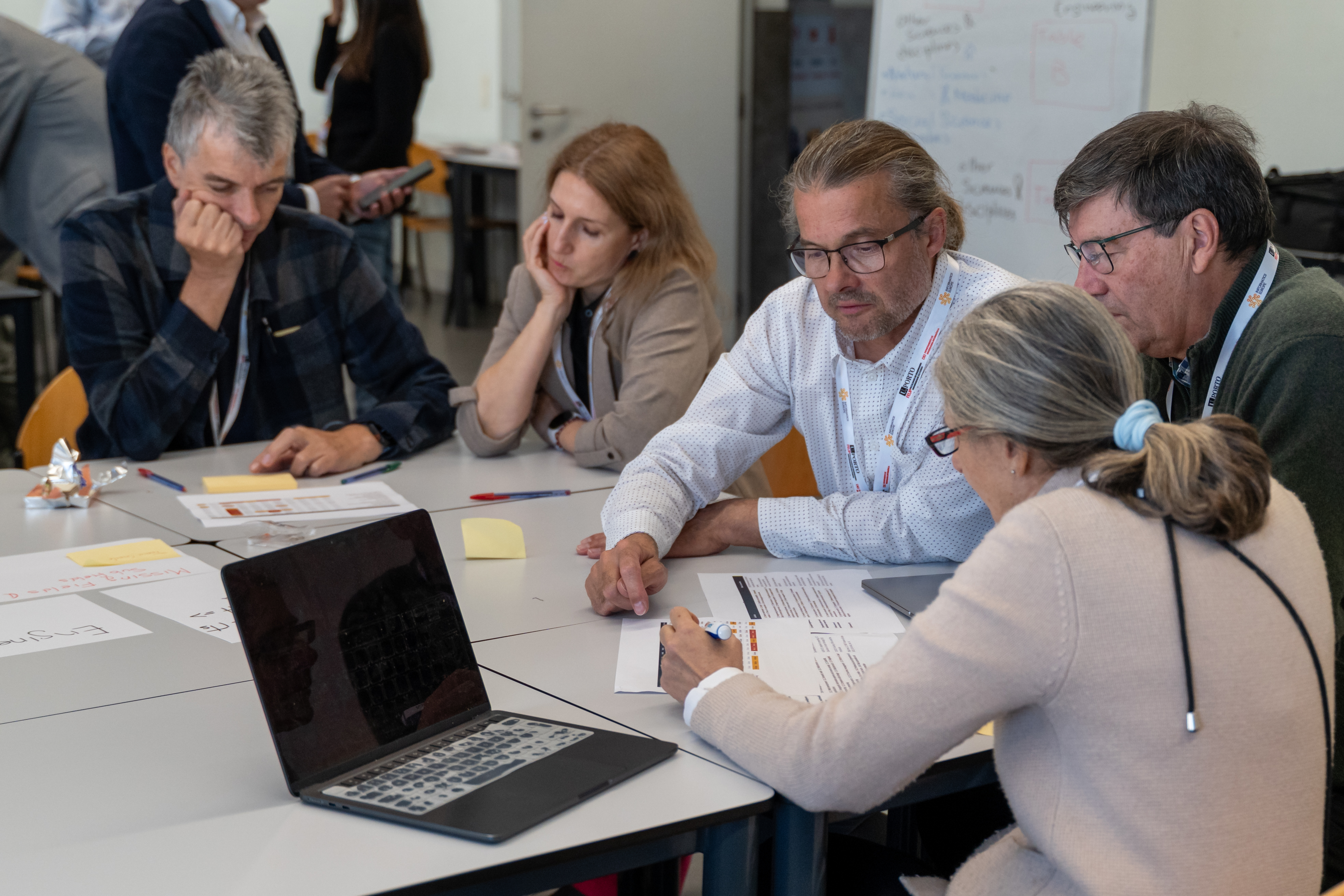
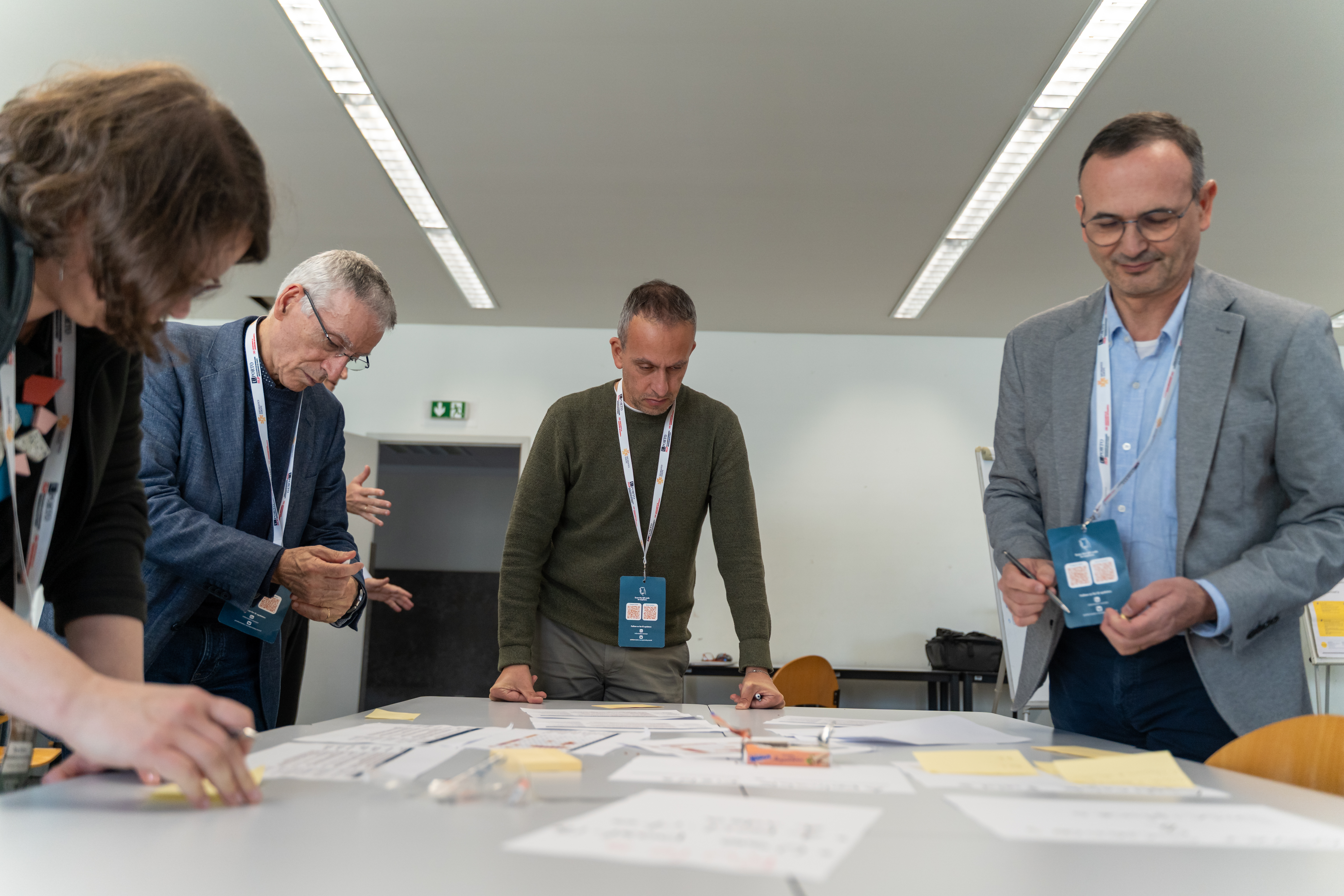
The afternoon session, Doing Strategy in Academia: From Plans to Impact, chaired by Michel Chaudron (Eindhoven University of Technology, the Netherlands) and Giovanni Russello (University of Auckland, New Zealand), explored what strategy means in an academic context and how it differs from operational planning. Discussions highlighted that departments are already making strategic choices through decisions on recruitment, research investments, educational programmes, infrastructure and partnerships. When made independently, these decisions create an implicit strategy that may not necessarily reflect a shared institutional ambition. Participants also reflected on the importance of developing a shared, evidence-based understanding of their department's current position and mapping its existing strengths and assets as a foundation for more deliberate strategic choices.
Professional Development Workshop for Early Career Researchers
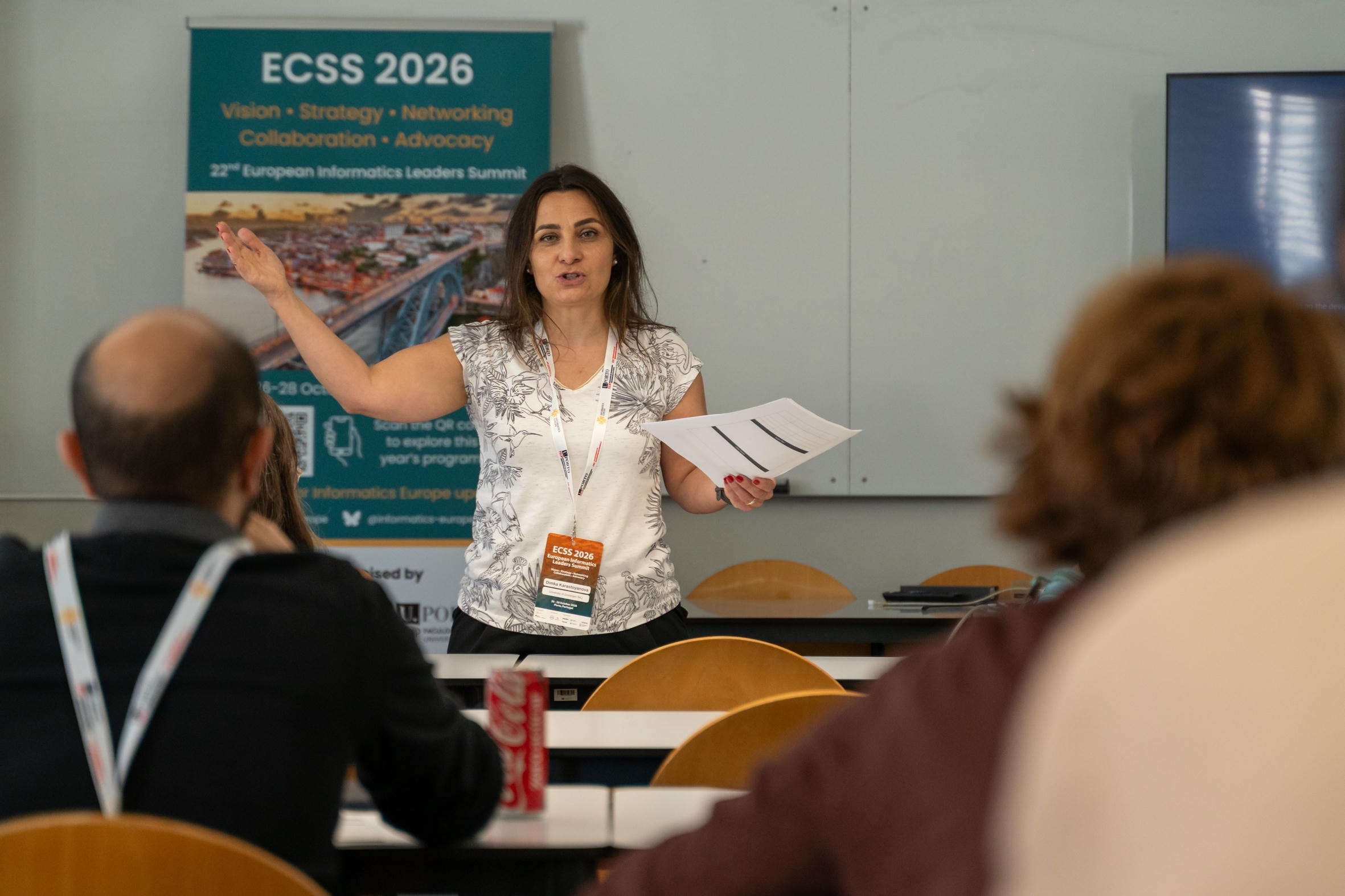
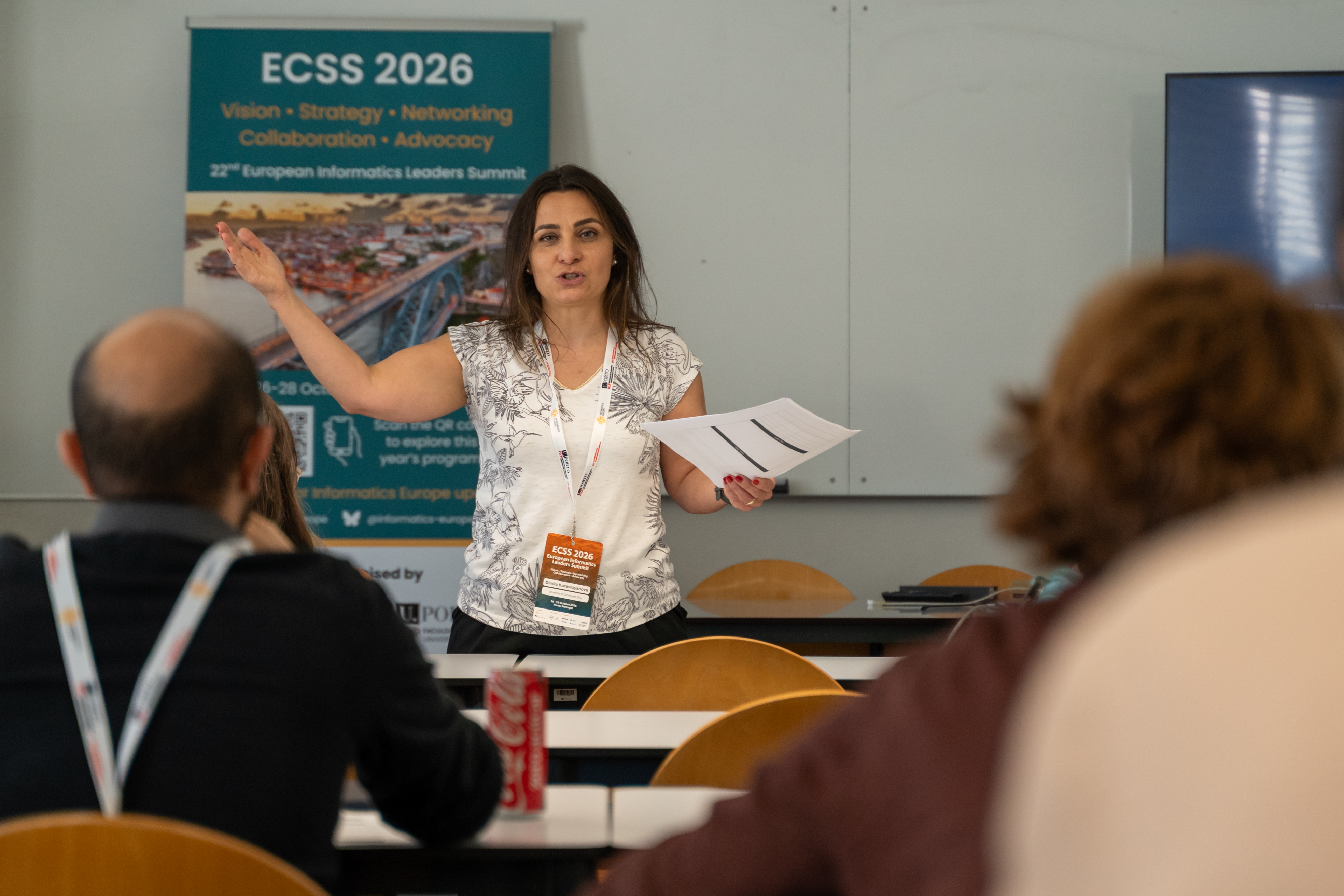
Chaired by Dimka Karastoyanova (University of Groningen, the Netherlands), the Professional Development Workshop for Early Career Researchers (ECRWS) brought together researchers to exchange experiences and explore strategies for building meaningful academic careers. In the session “Success Factors of a Research Career – Personal Experiences”, established academics Letizia Jaccheri (NTNU, Norway) and Gabriella Pasi (University of Milano-Bicocca, Italy), alongside early career researchers and 2026 IE Best Dissertation Award recipients Giuseppe Spallitta (PhD Graduate, University of Trento, Italy | Current Postdoctoral Associate at Rice University, USA) and Joachim Baumann (PhD Graduate, University of Zurich, Switzerland | Stanford University, USA), shared lessons from their own career journeys. Key messages included the importance of passion, persistence and meaningful research beyond publication metrics; learning constructively from rejection; prioritising impactful work, building professional networks and preparing proactively for the next career step.
The session “Moving to the Next Career Stage in Academia” combined individual career planning with peer discussions, highlighting the value of understanding career expectations early and learning from colleagues across different career stages. The workshop also addressed research integrity and responsible publishing, with Elisabetta Di Nitto (Politecnico di Milano, Italy) presenting the CLEAR Task Force (Community-Led Ethics for Accountability in Research) and its work towards a shared understanding of integrity challenges throughout the research and publishing lifecycle. The overarching takeaway was that a successful academic career requires more than a record of achievements: it calls for resilience, self-reflection, strategic planning, research integrity and a supportive academic community.
Cybersecurity Workshop
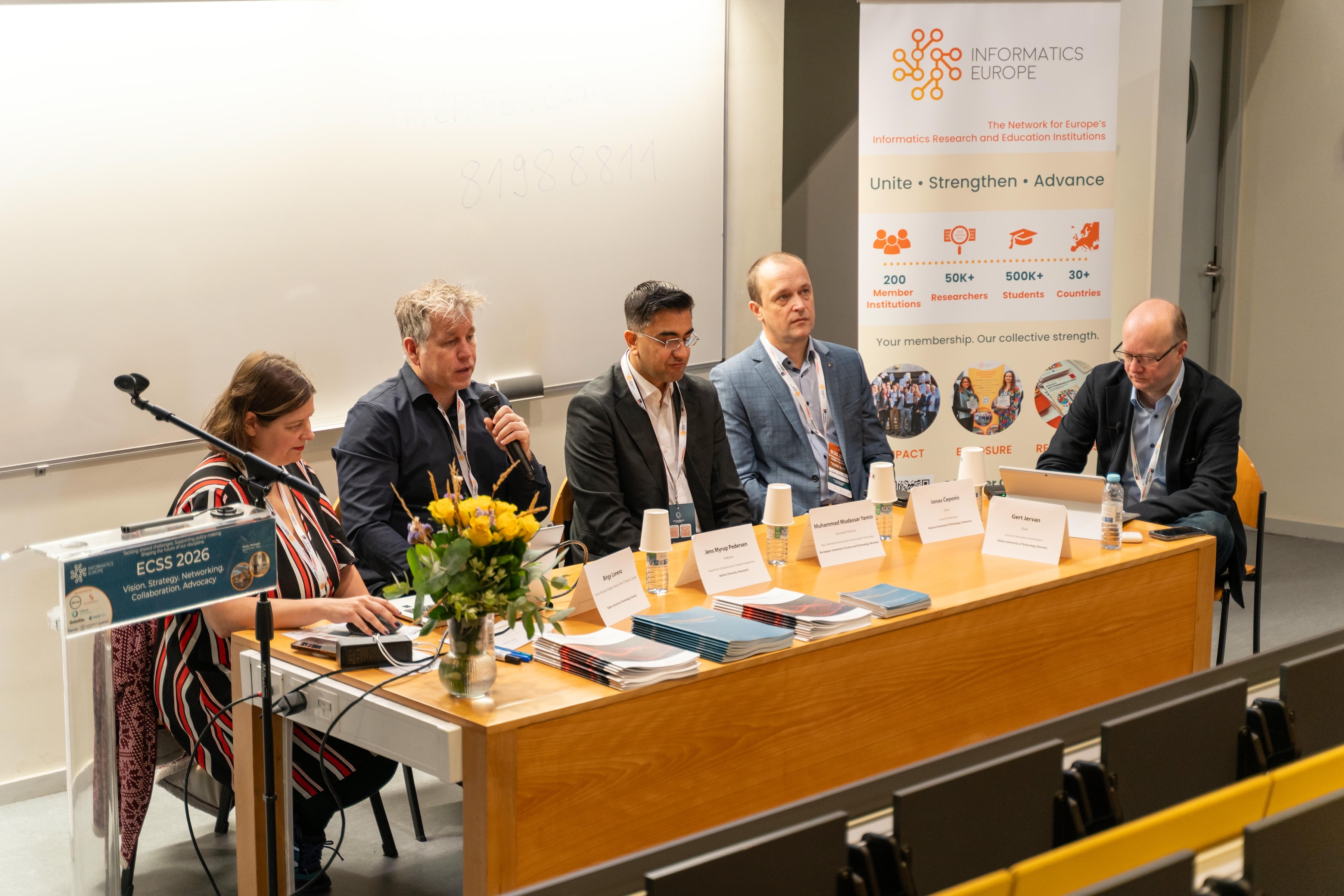
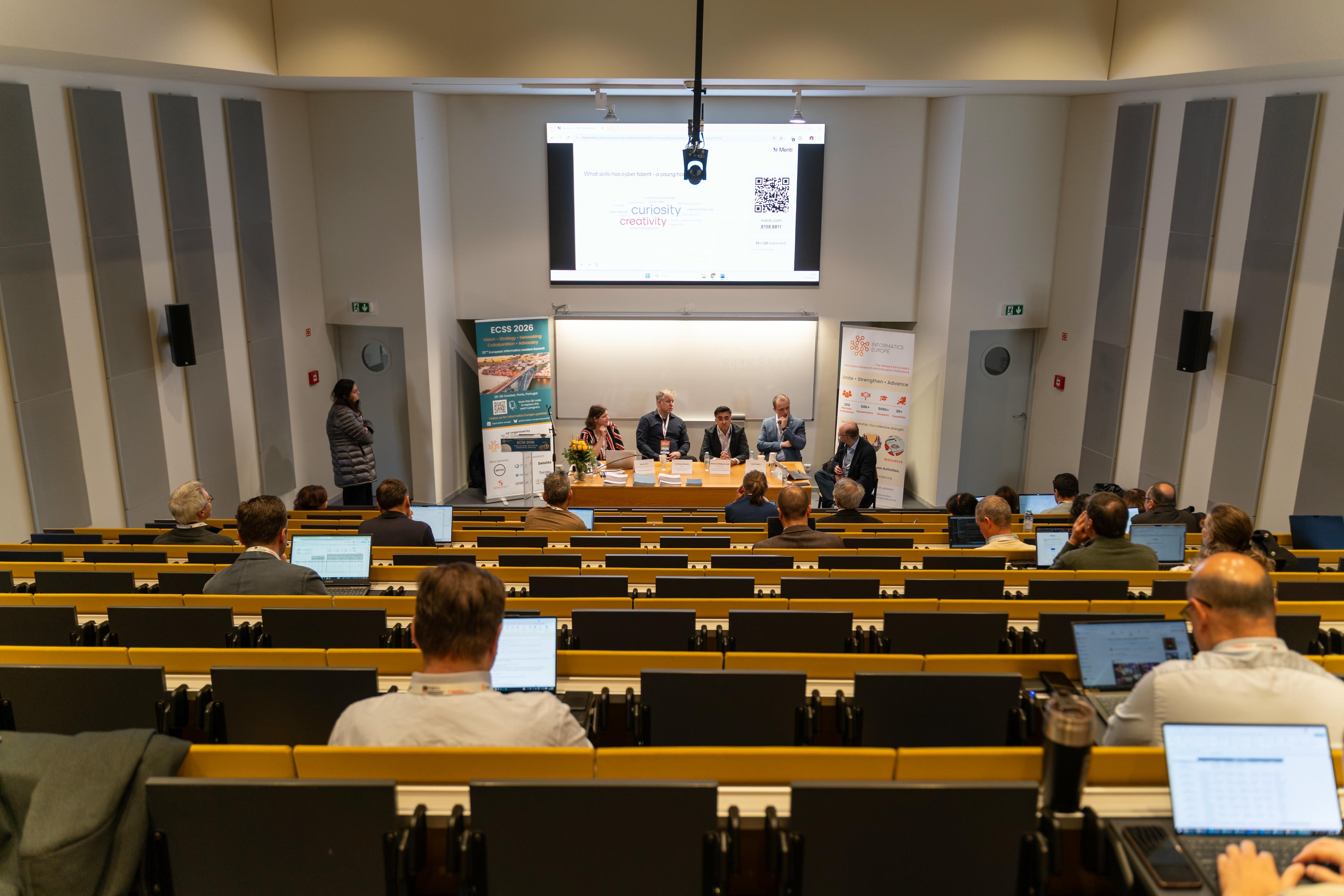
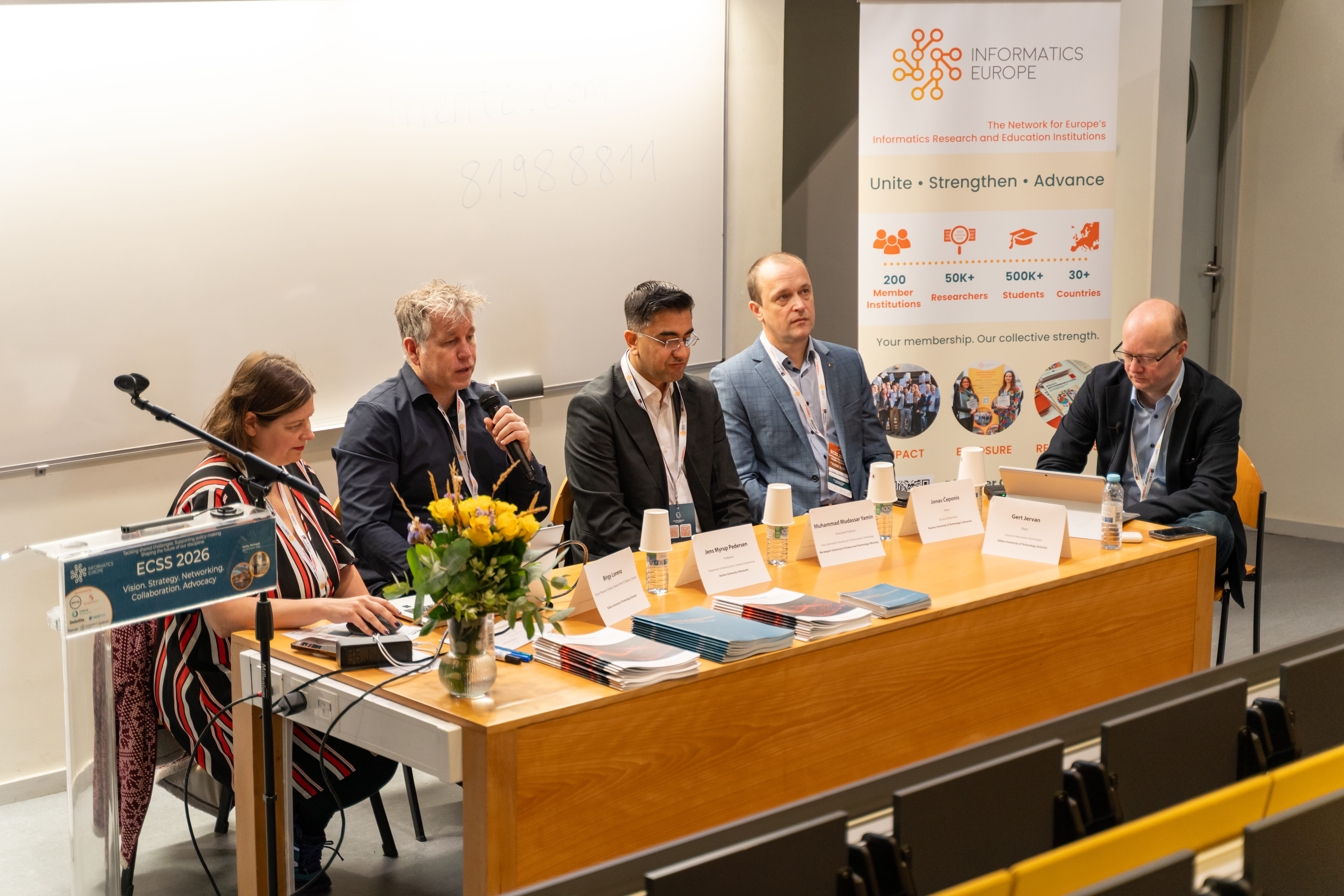
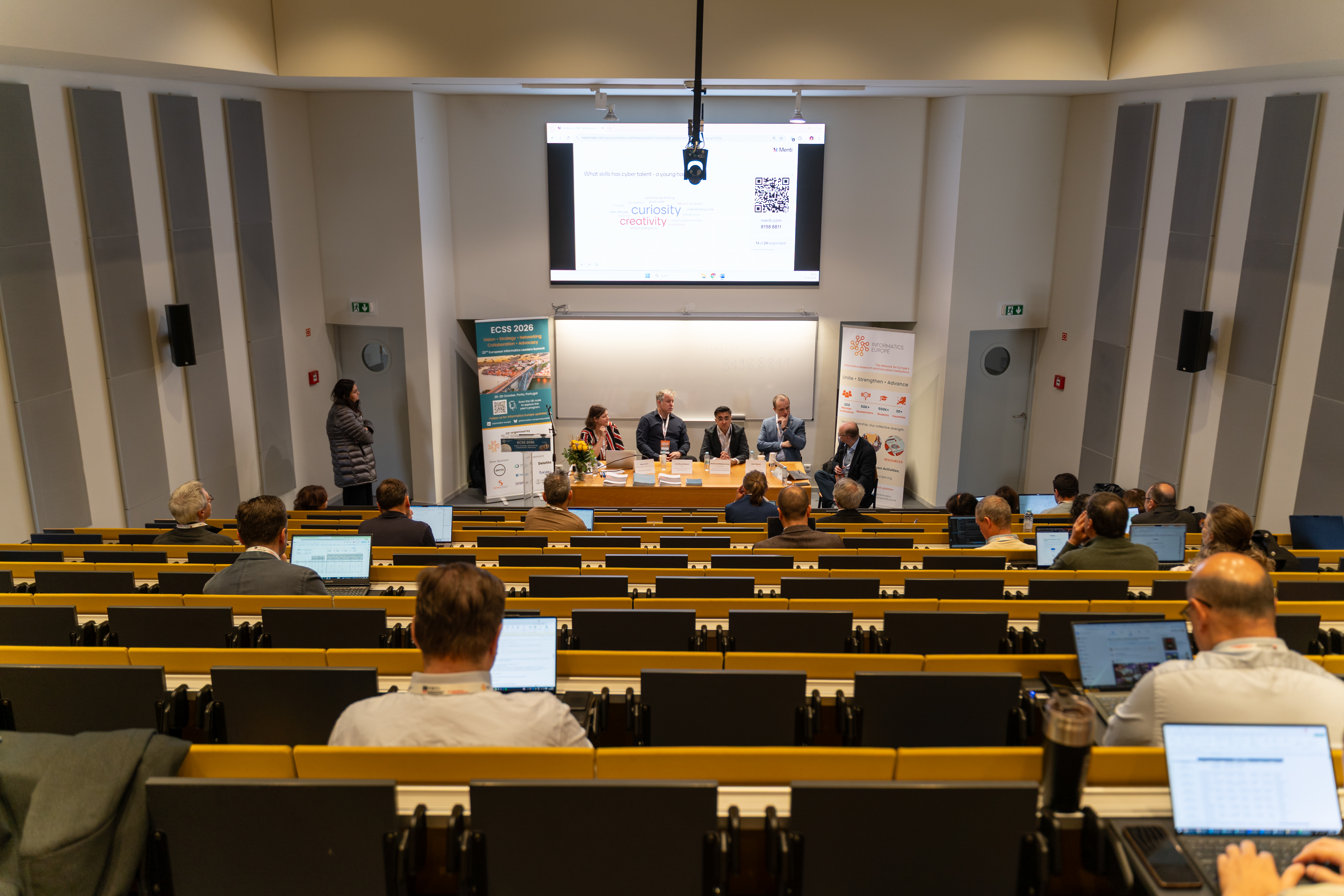
The Cybersecurity Workshop, chaired by Gert Jervan (Tallinn University of Technology, Estonia), featured an expert panel with Jonas Čeponis (Kaunas University of Technology, Lithuania), Birgy Lorenz (Tallinn University of Technology, Estonia), Muhammad Mudassar Yamin (NTNU, Norway) and Jens Myrup Pedersen (Aarhus University, Denmark). The Workshop brought together academic and cybersecurity experts to discuss how universities and informal learning environments can work together to develop cybersecurity talent. Audience responses pointed to several clear priorities: preserving strong theoretical foundations while updating curricula more frequently; combining university education with practical experience from cyber communities; and keeping pathways accessible to beginners. One particularly strong finding was the importance of AI literacy: respondents overwhelmingly agreed that universities should teach students to critically evaluate AI-generated cybersecurity advice (4.8/5) while ensuring they can demonstrate their skills independently of AI tools.
A concrete outcome of the workshop is the planned launch of an Informatics Europe Working Group on Cybersecurity. The group will foster closer collaboration among European universities, cyber communities, and industry, focusing on joint learning opportunities, stronger curricula and assessment practices, and sharing teaching resources and effective approaches to cybersecurity talent development.
Ethics Workshop
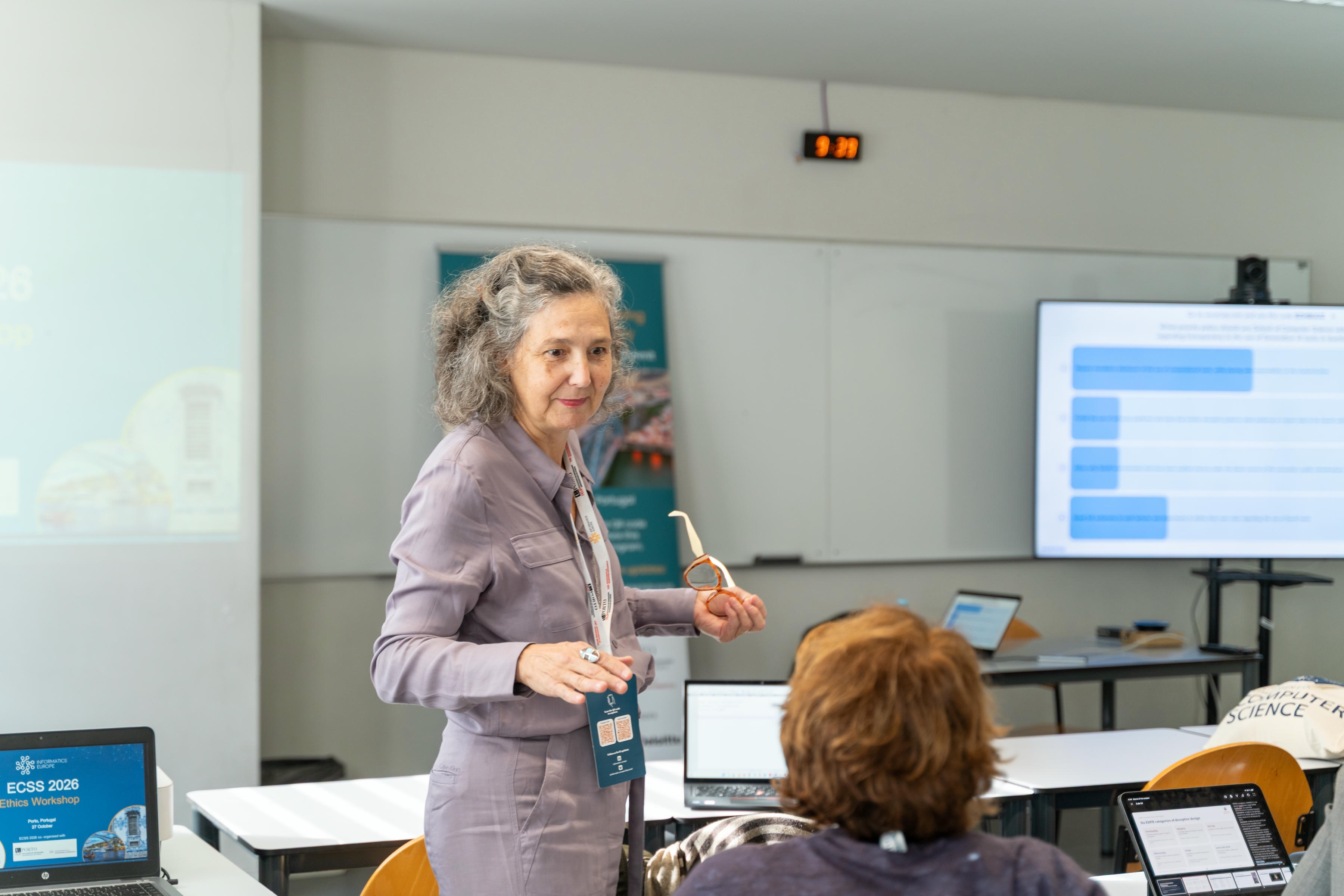
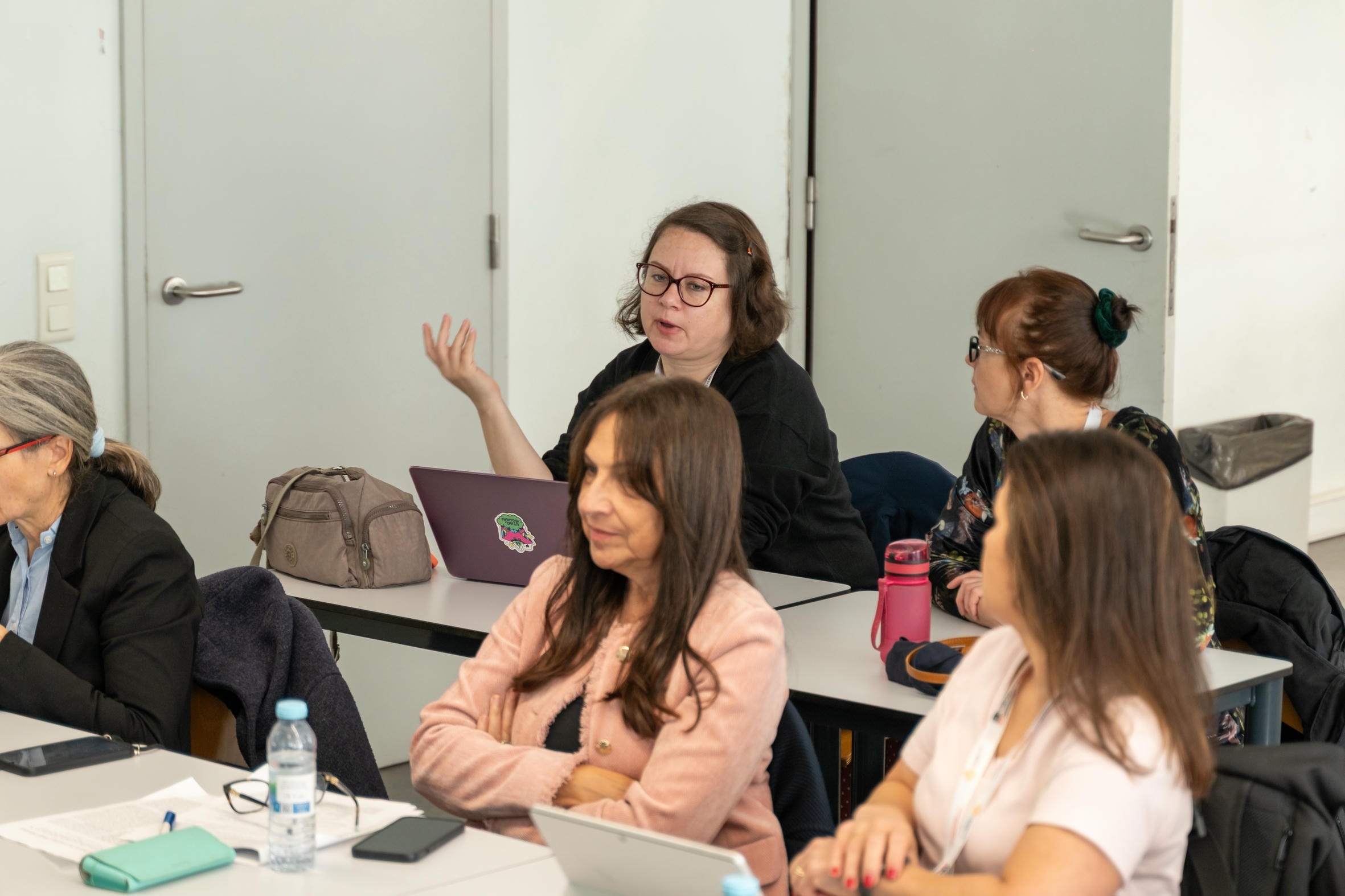
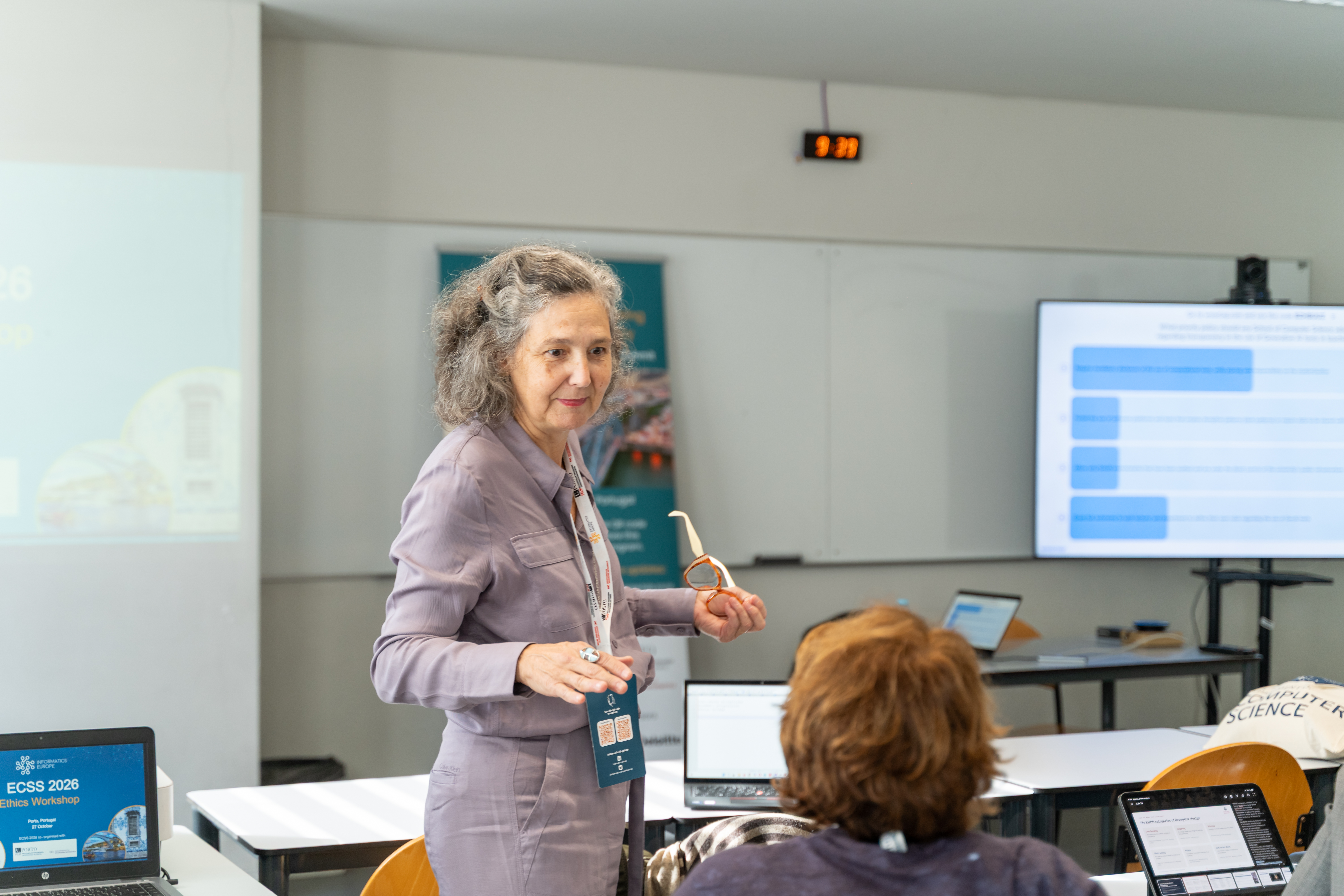
The Ethics Workshop, chaired by José A. Cruz-Lemus (University of Castilla-La Mancha, Spain) and supported by Informatics Europe Ethics Working Group, marked an important step in consolidating the Group’s existing work and future initiatives. The session opened with a presentation on approaches to the ethical use of generative AI, followed by a discussion that led to a preliminary proposal for a code of good practices. Participants received the proposal well and further enriched it with suggestions, providing a basis for the Working Group’s continued work on promoting responsible use of generative AI.
The second part featured a panel discussion exploring different forms of digital manipulation and their ethical implications. Contributions included Ana Belén Gil González (University of Salamanca, Spain), who presented a catalogue of 13 deceptive design patterns identified across TikTok, Instagram, LinkedIn and X; Monica Landoni (Università della Svizzera italiana, Switzerland), whose research examined dark patterns in cookie consent banners across 1,060 websites, highlighting how tracking can begin before users make a choice and how refusing consent is often made more difficult than accepting it; and Manuela Petrescu (Babeș-Bolyai University / Montran Europe, Romania), who explored how personal data collection and psychological profiling can create risks for privacy, autonomy and democratic integrity. The panel also included presentations by Covadonga Rodrigo (UNED, Spain) on deceptive designs in travel agency websites and Tatjana Welzer (University of Maribor, Slovenia) on disinformation, dark patterns and ethics. Looking ahead, the Ethics Working Group will continue developing proposals to strengthen the integration of ethical considerations into informatics curricula, and welcomes new members interested in contributing to its activities.
Keynote Session: "Towards Reliable and Sustainable AI: Foundations and the Future of Informatics"
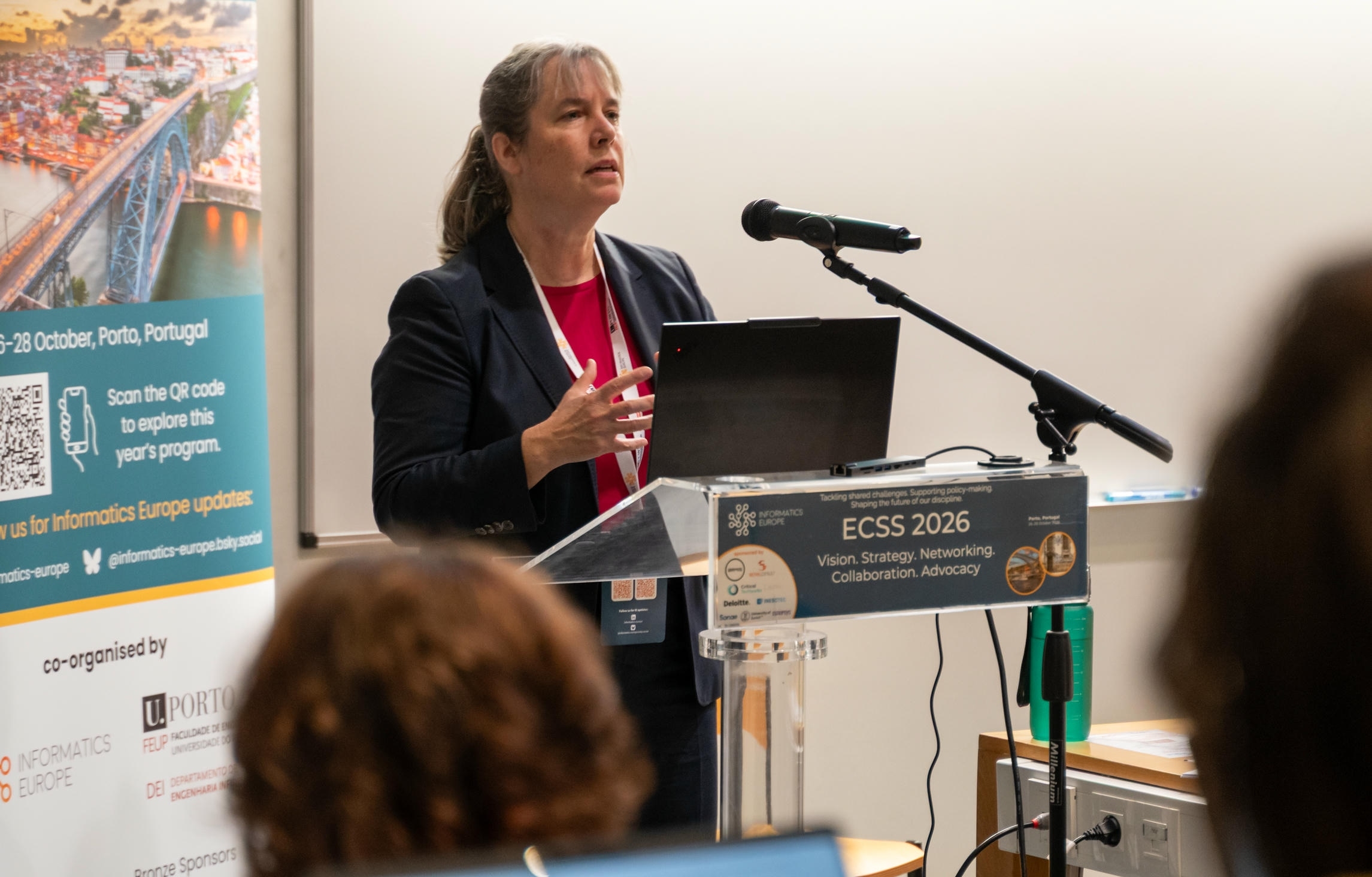
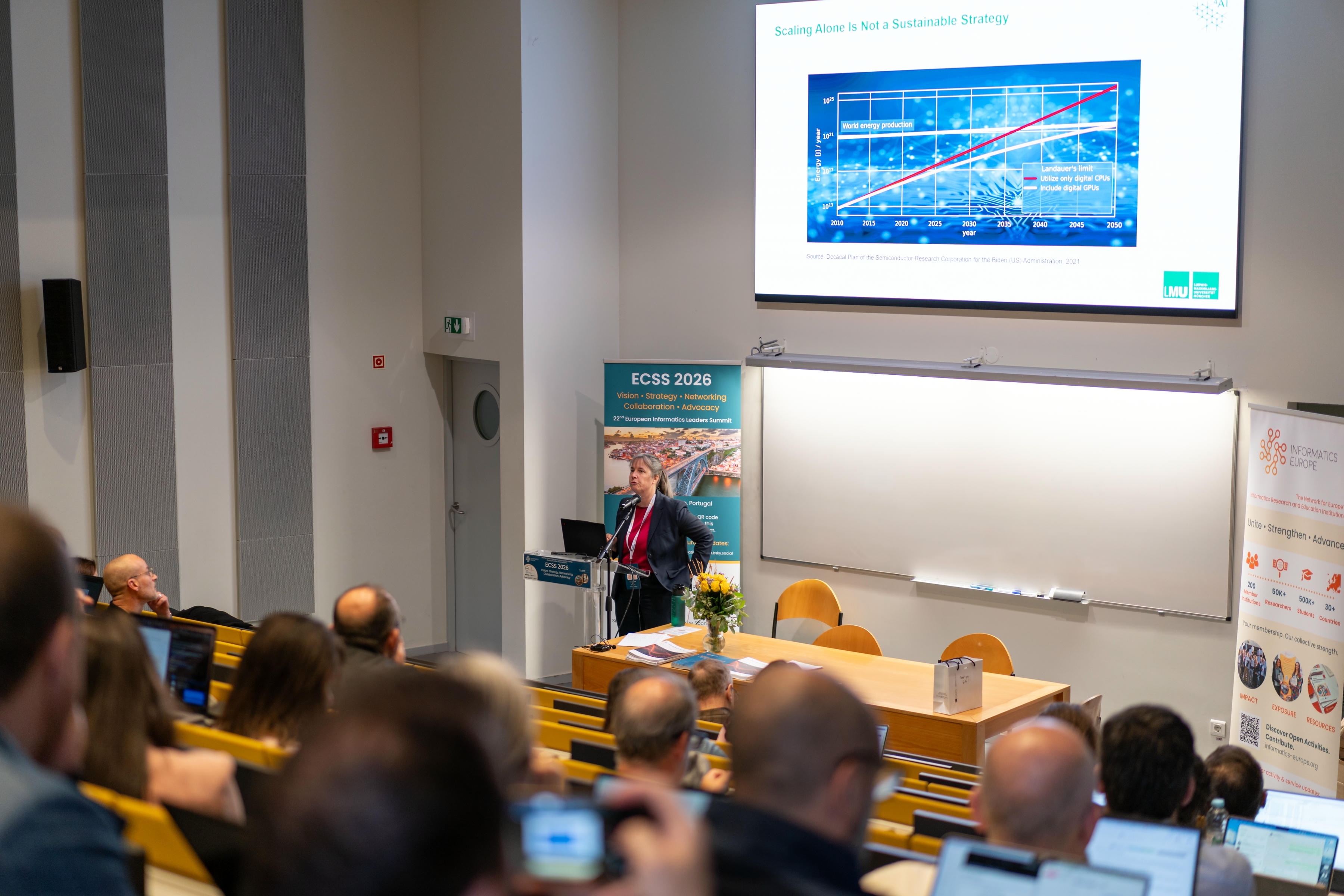
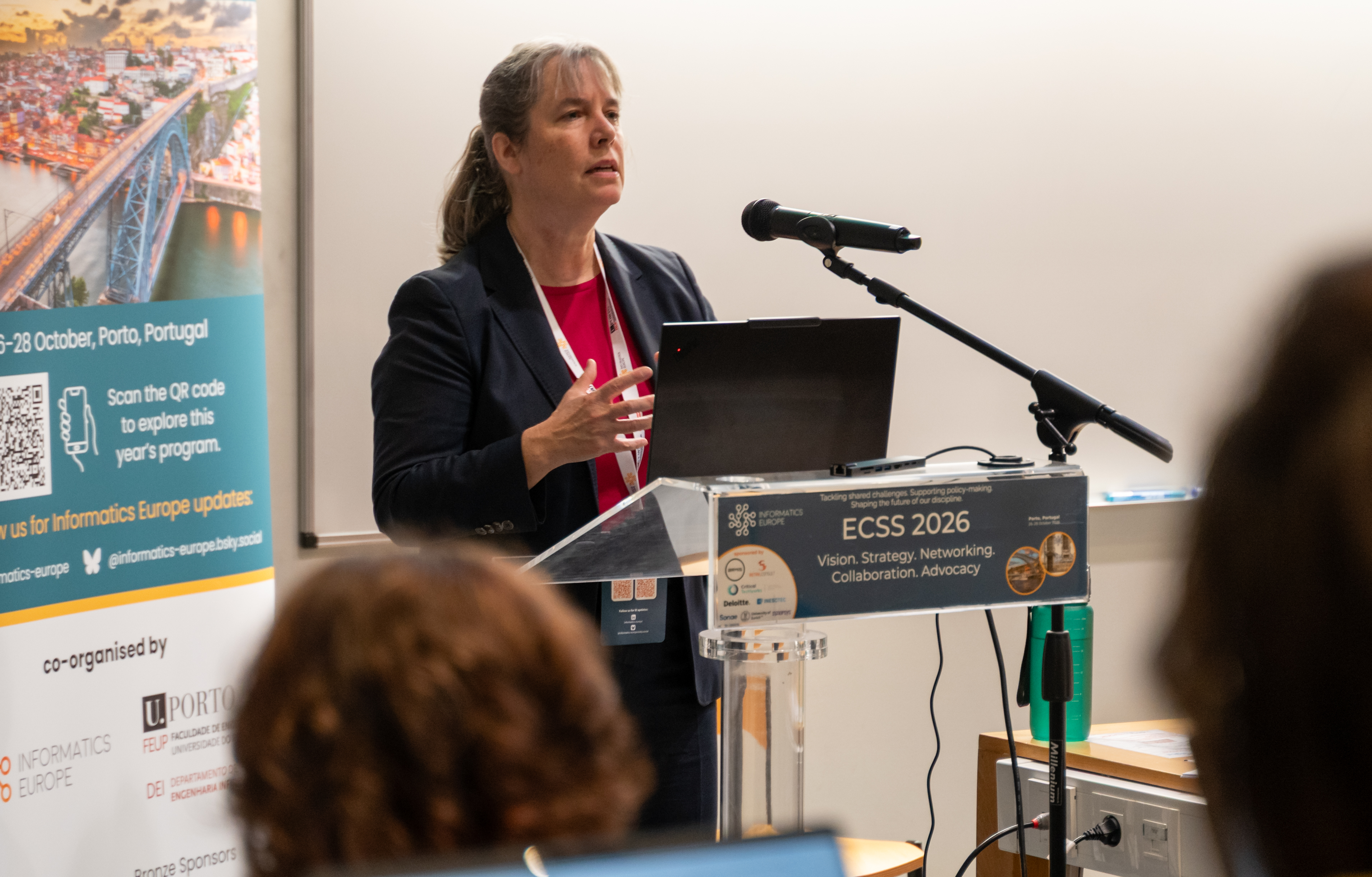
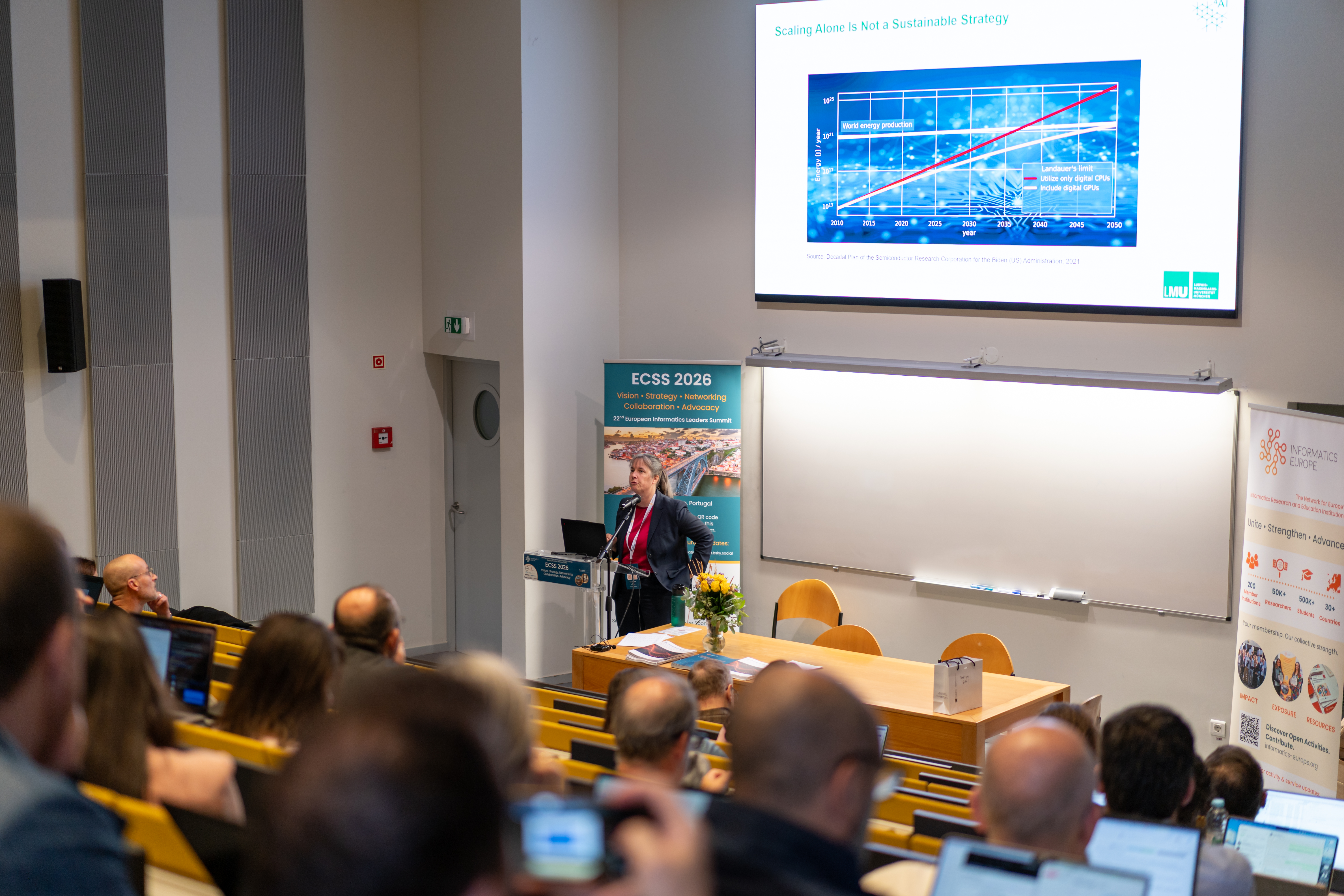
This year’s Keynote Session featured Prof. Gitta Kutyniok (Bavarian AI Chair for Mathematical Foundations of Artificial Intelligence, LMU), who delivered a talk entitled “Towards Reliable and Sustainable AI: Foundations and the Future of Informatics”. She explored three fundamental questions shaping the future of AI: can we trust it, can we compute it, and can we sustain it? Addressing the growing role of AI as critical infrastructure for science and society, she highlighted the importance of moving beyond plausible AI-generated results towards reliability that can be measured and guaranteed. Through examples involving AI-generated explanations and scientific discovery, she demonstrated how mathematical foundations can help detect hallucinations, quantify uncertainty and establish guarantees. She also emphasised that reliable individual AI components do not necessarily ensure a reliable end-to-end scientific workflow, and that fundamental limits of digital computation must be taken into account.
Prof. Gitta Kutyniok highlighted the need to rethink how AI is developed and powered, moving beyond simply scaling computing resources towards more energy-efficient approaches. The central message was that the future of AI requires a system-wide approach combining mathematical foundations, algorithms, software and hardware to achieve reliability and sustainability together. For European informatics, this also calls for strengthening foundational research, fostering interdisciplinary co-design and rethinking education: alongside core programming and algorithmic skills, graduates must be able to verify AI-generated code and reasoning, assess uncertainty and guarantees, and design reliable and efficient AI systems.
Colleagues interested in advancing this system-wide approach are encouraged to join Informatics Europe's Green ICT, Software Research and Ethics Working Groups, pooling expertise and working together towards more sustainable and responsible computing.
IE Community Session
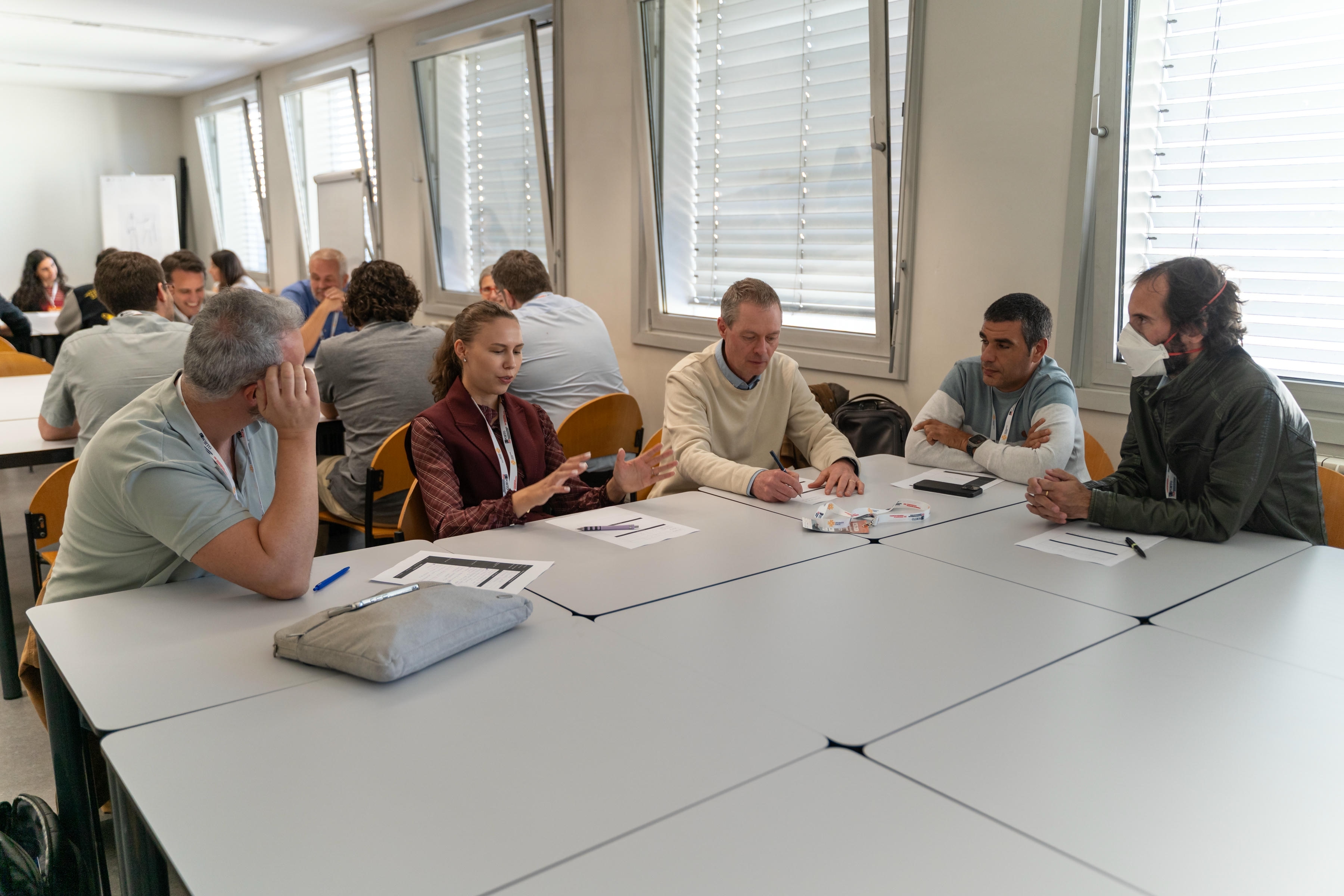
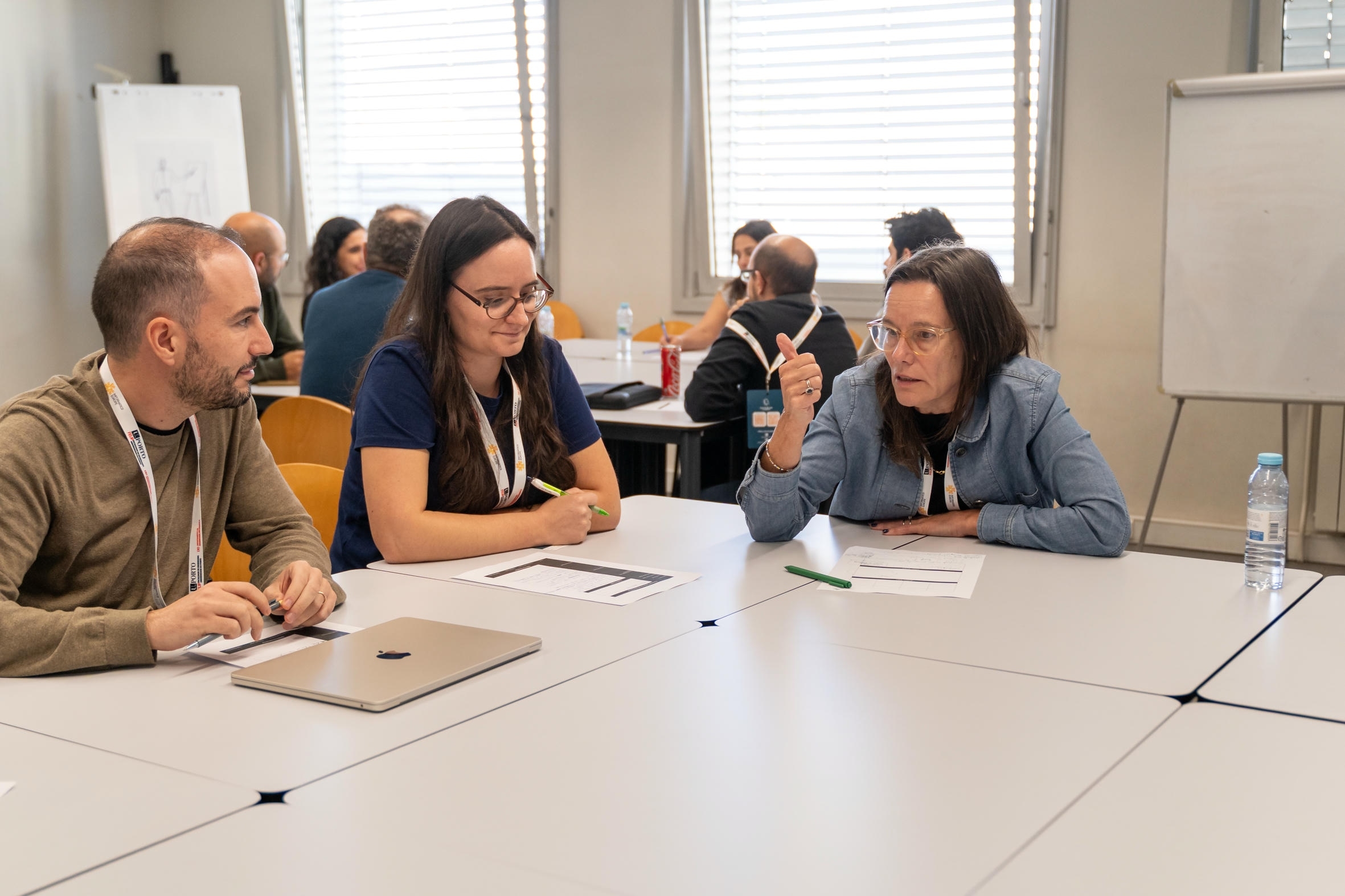
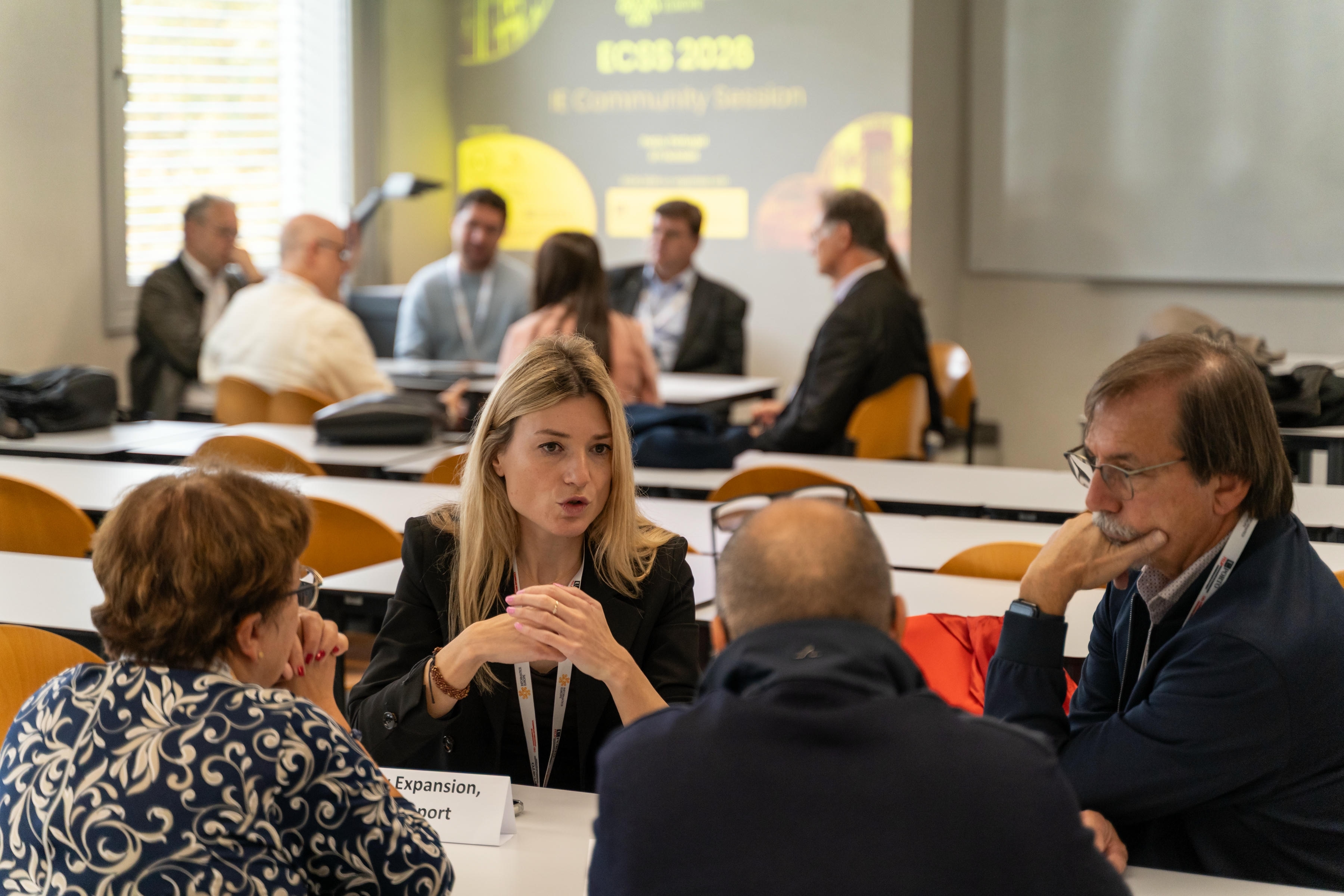
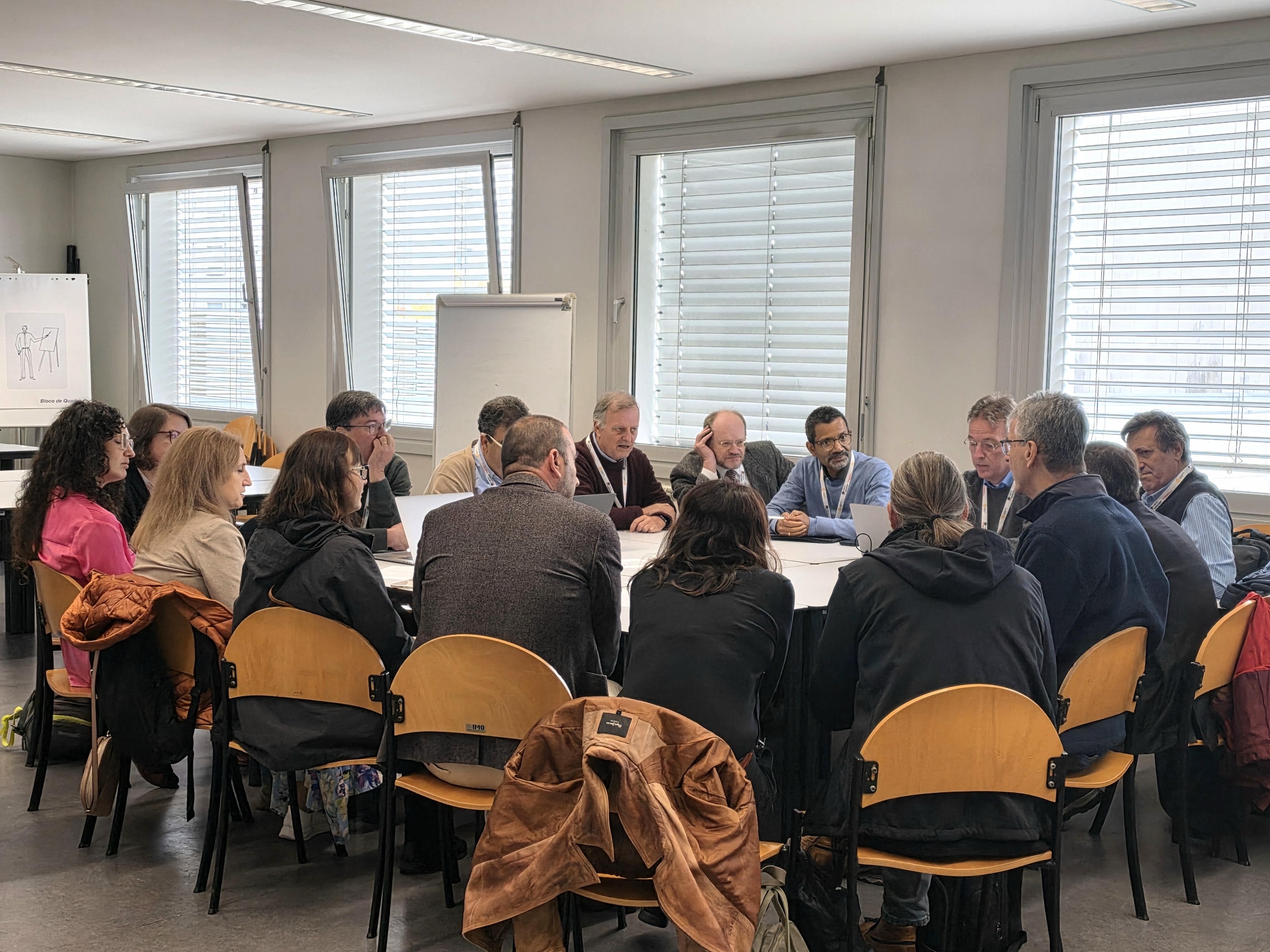
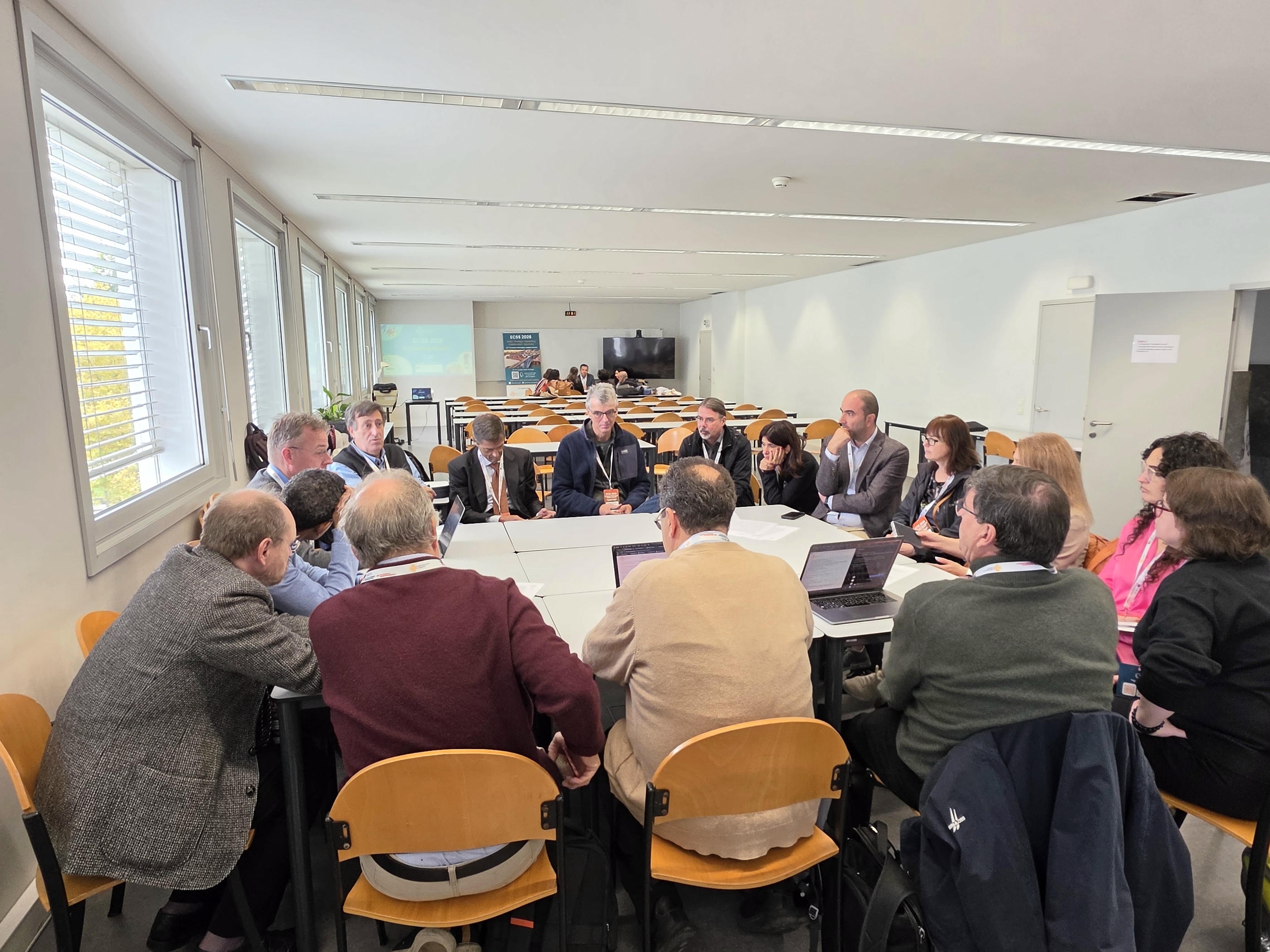
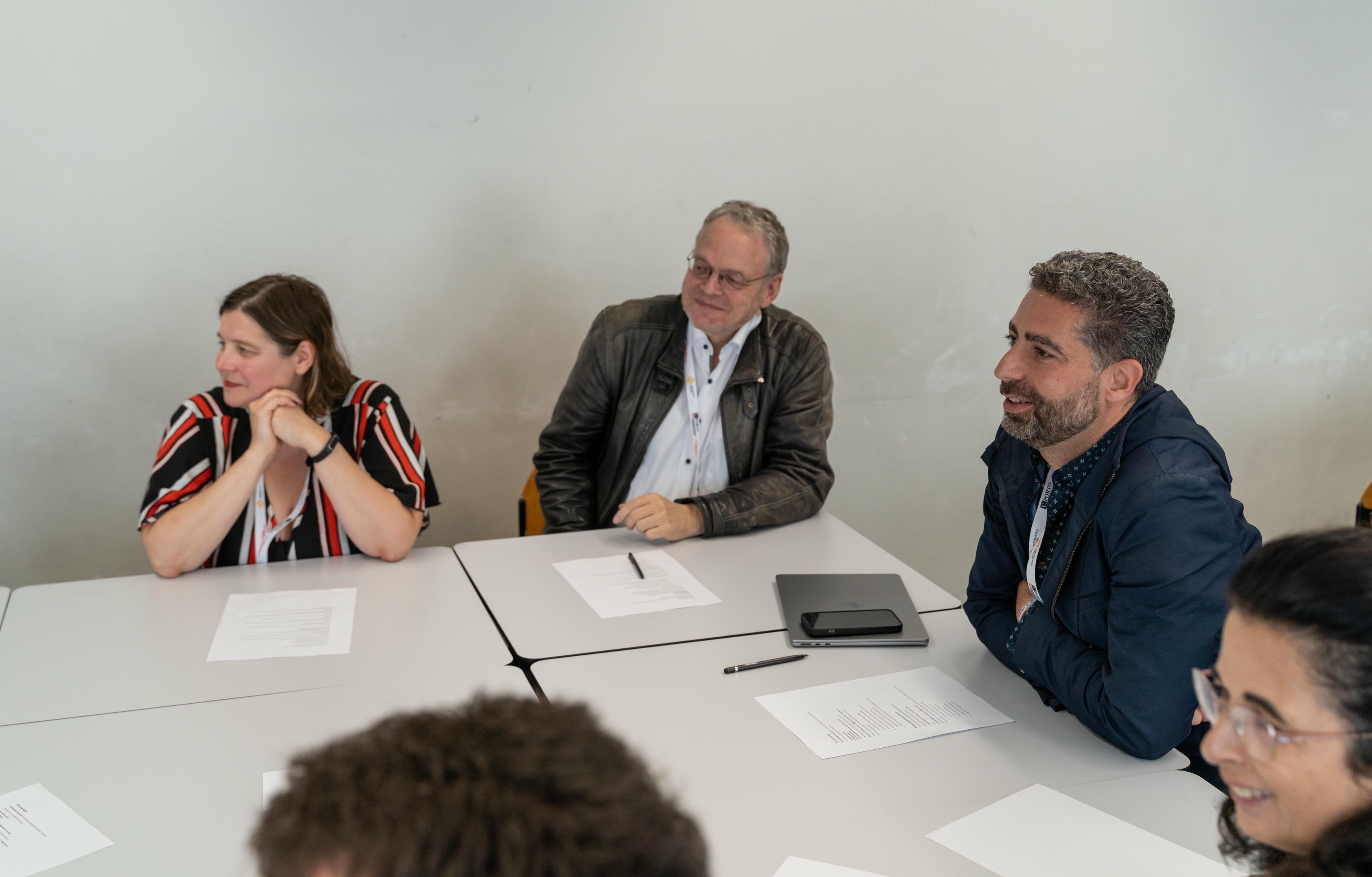
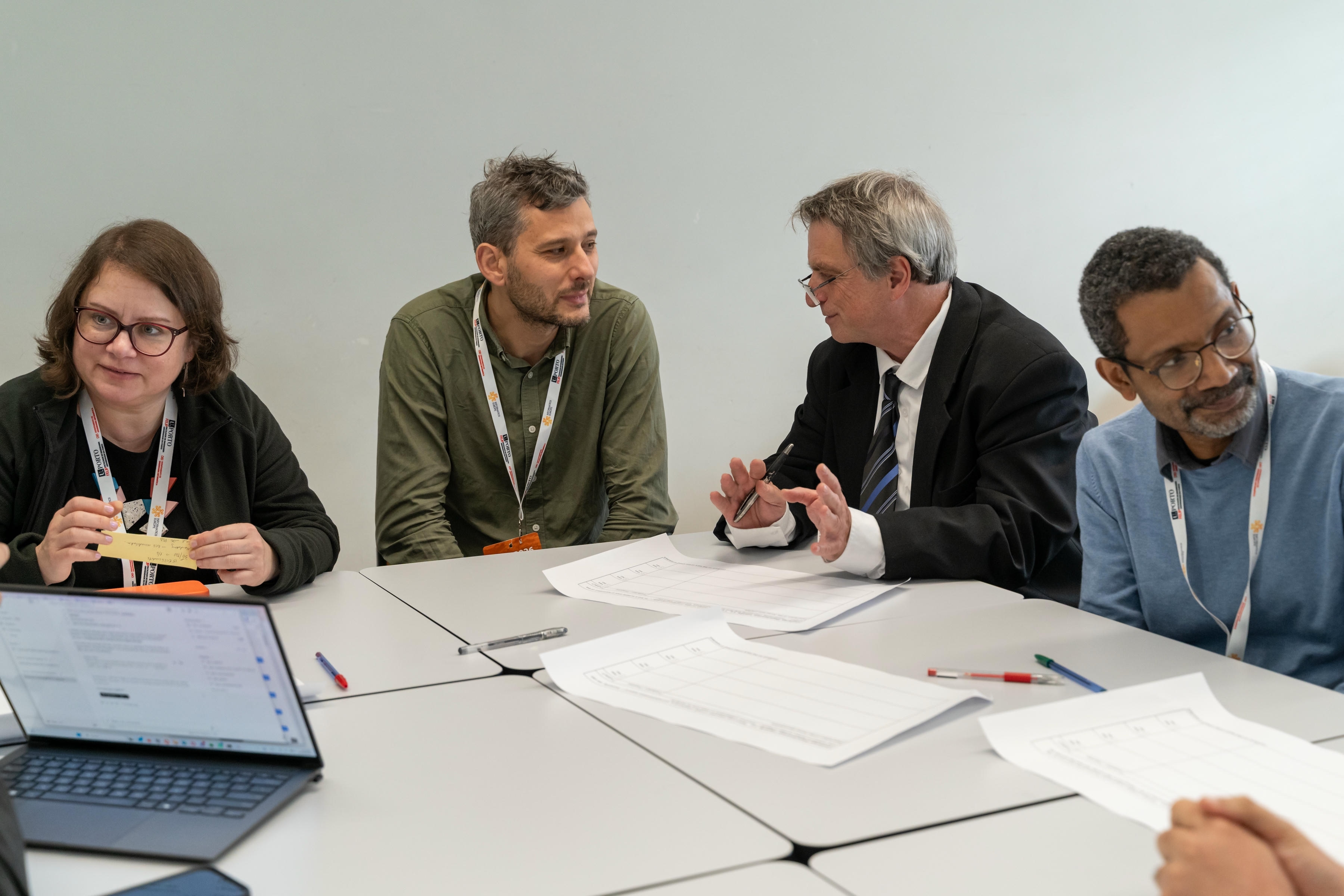
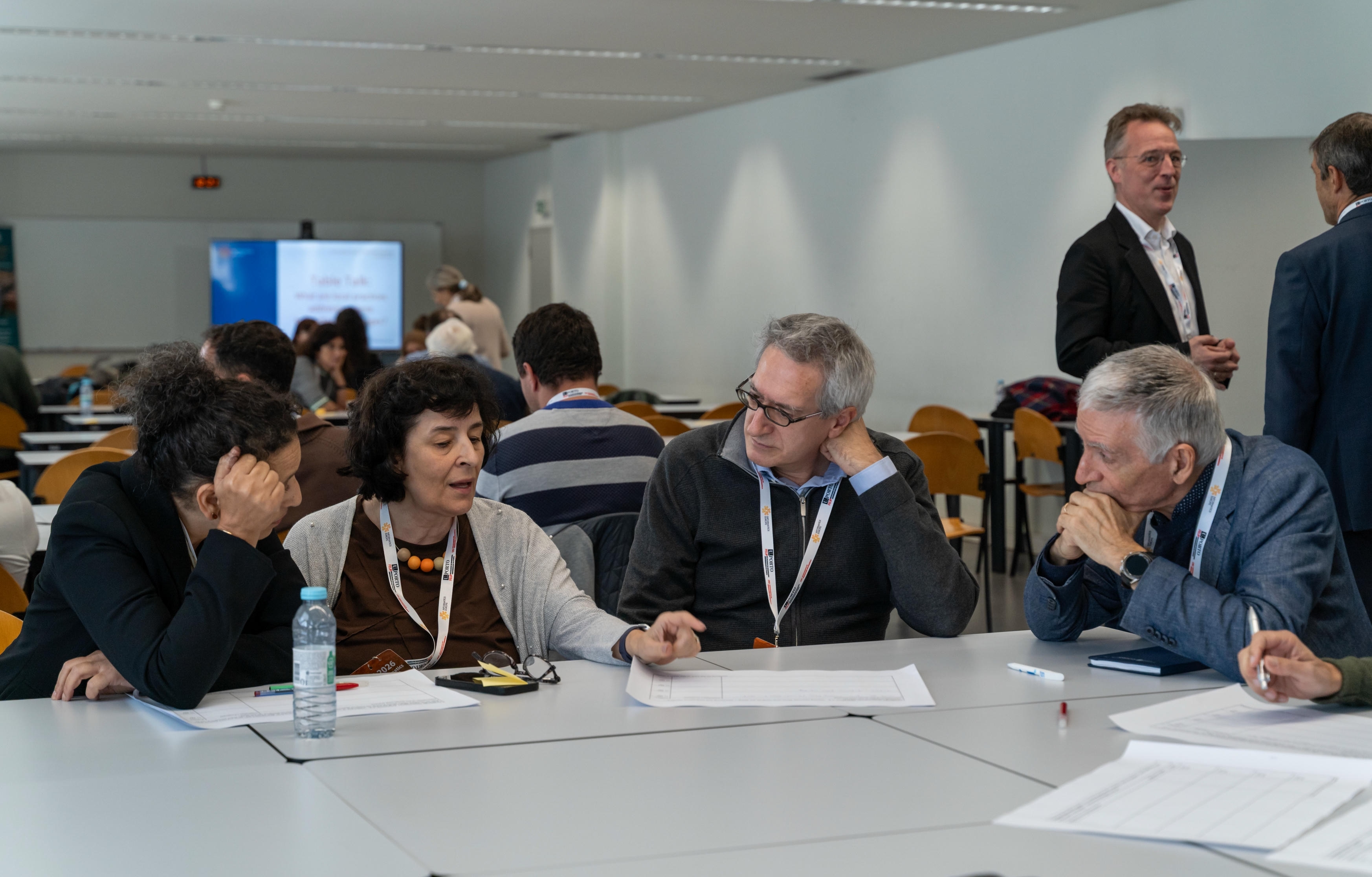
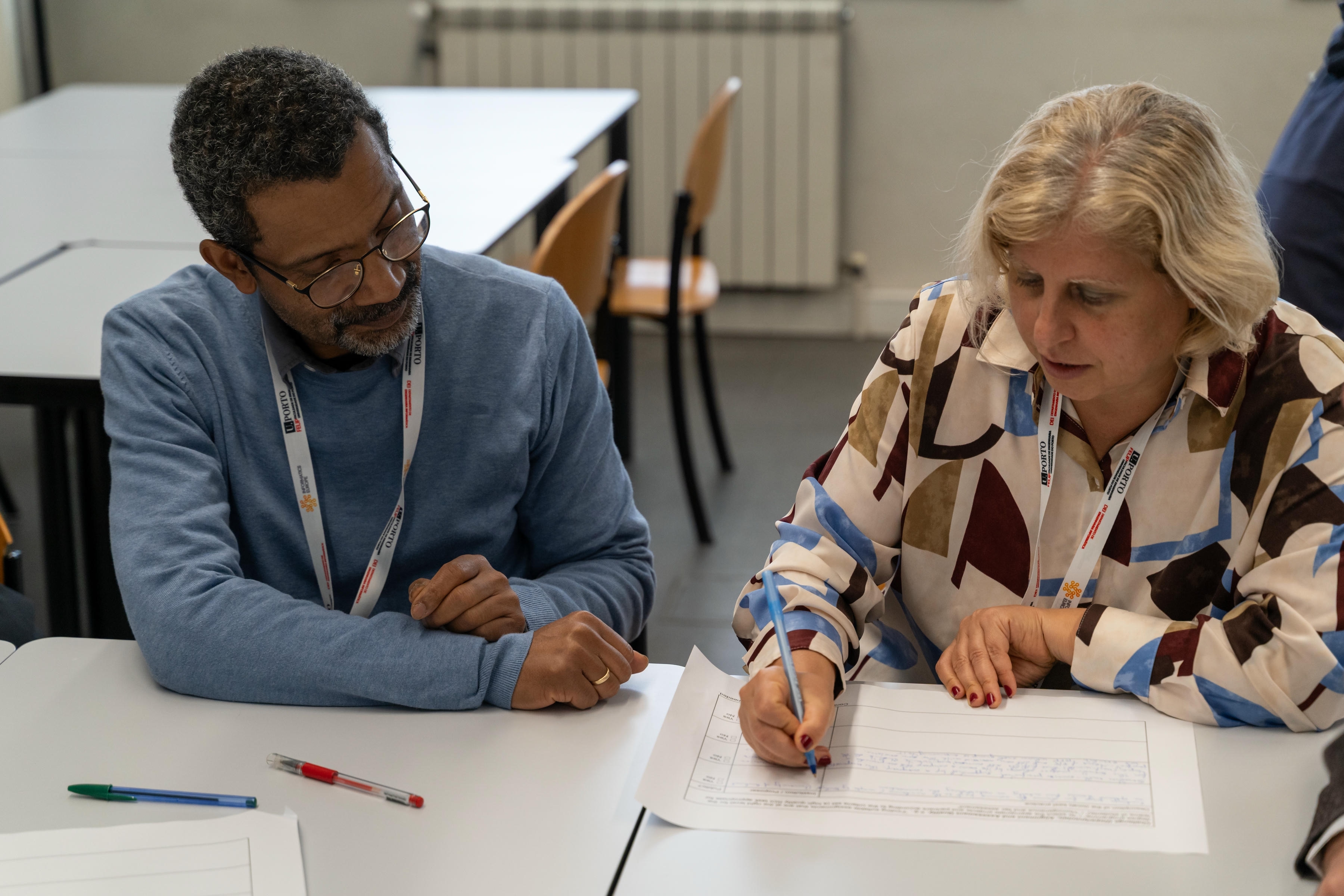
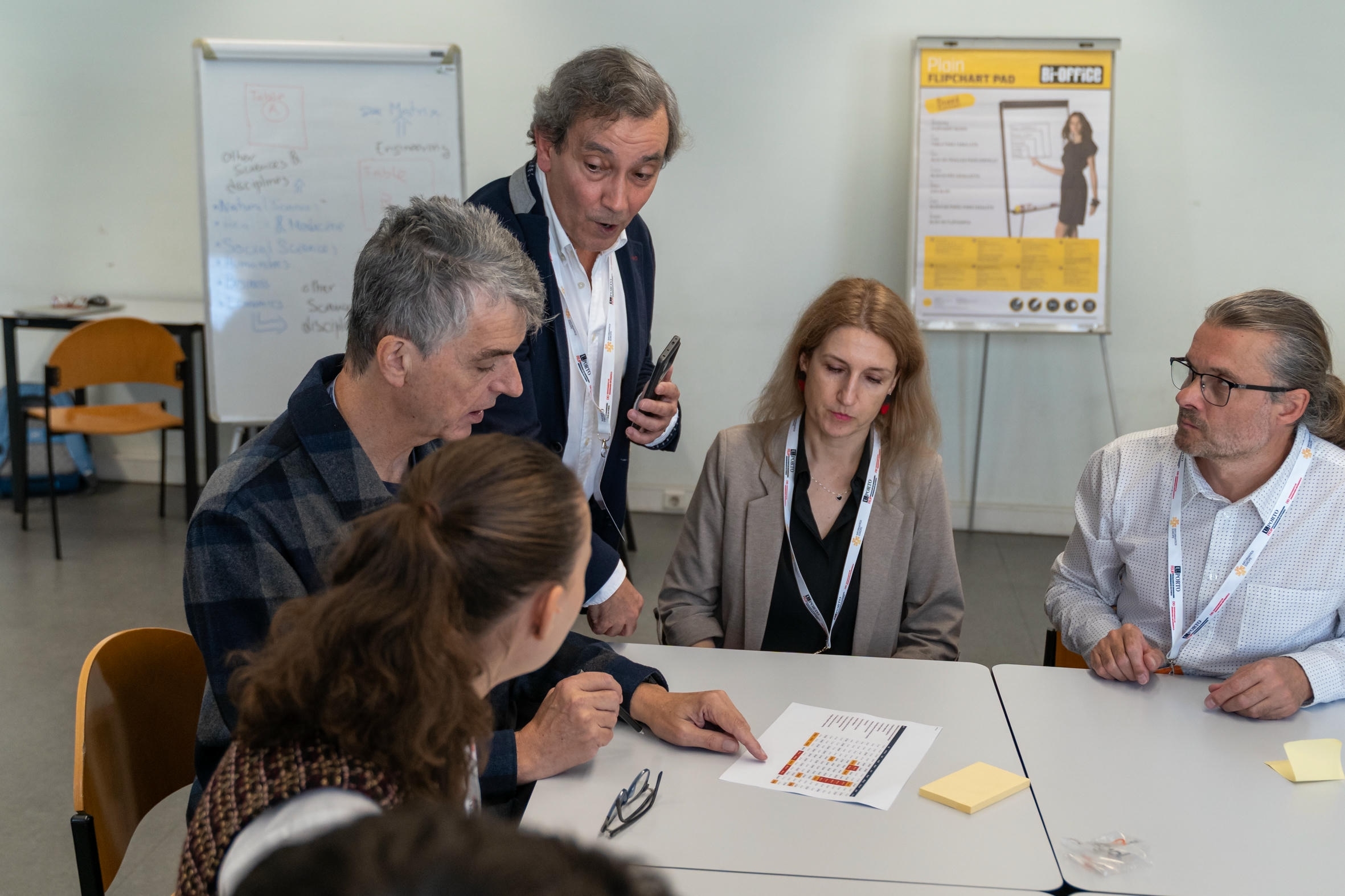
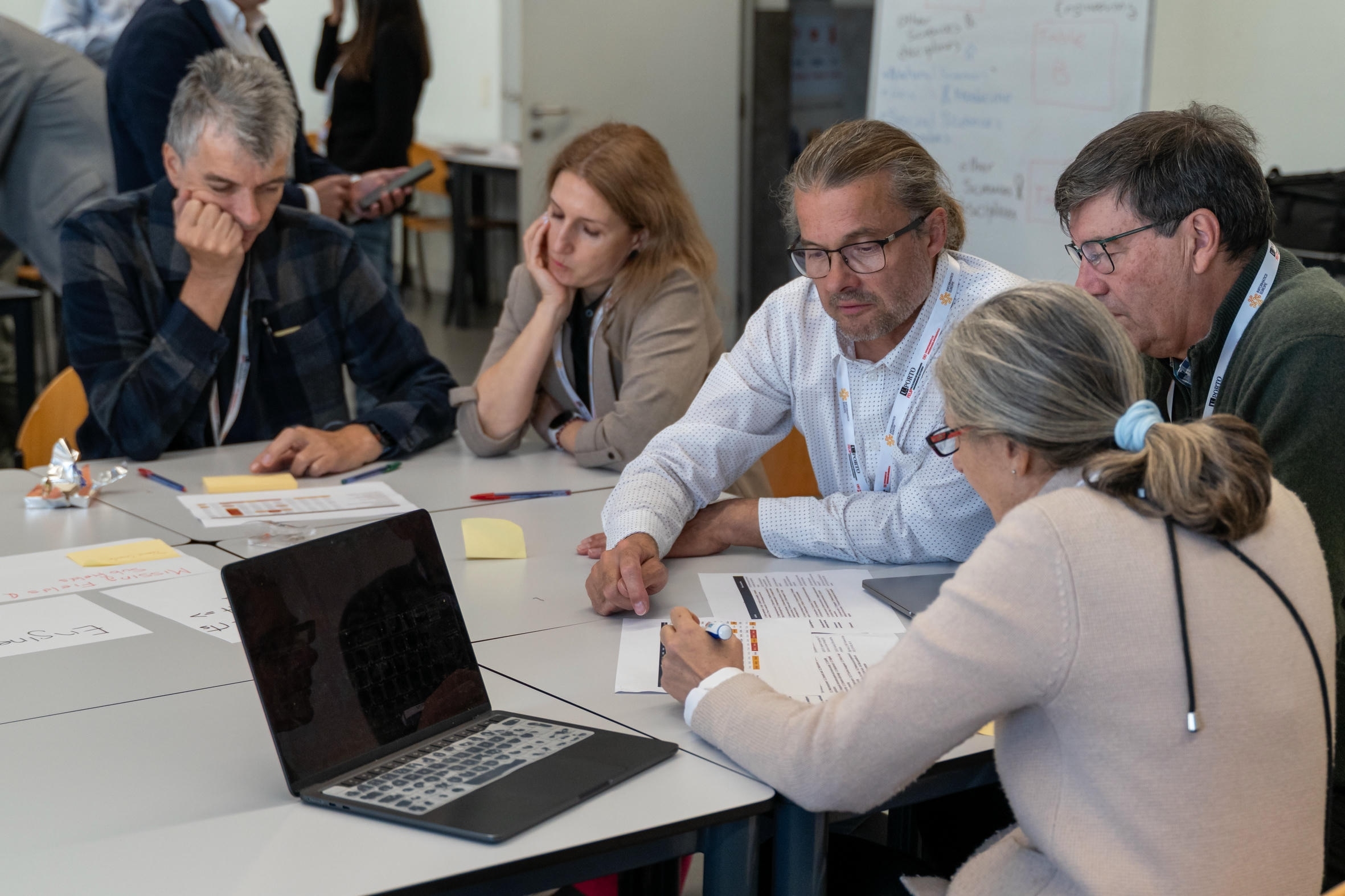
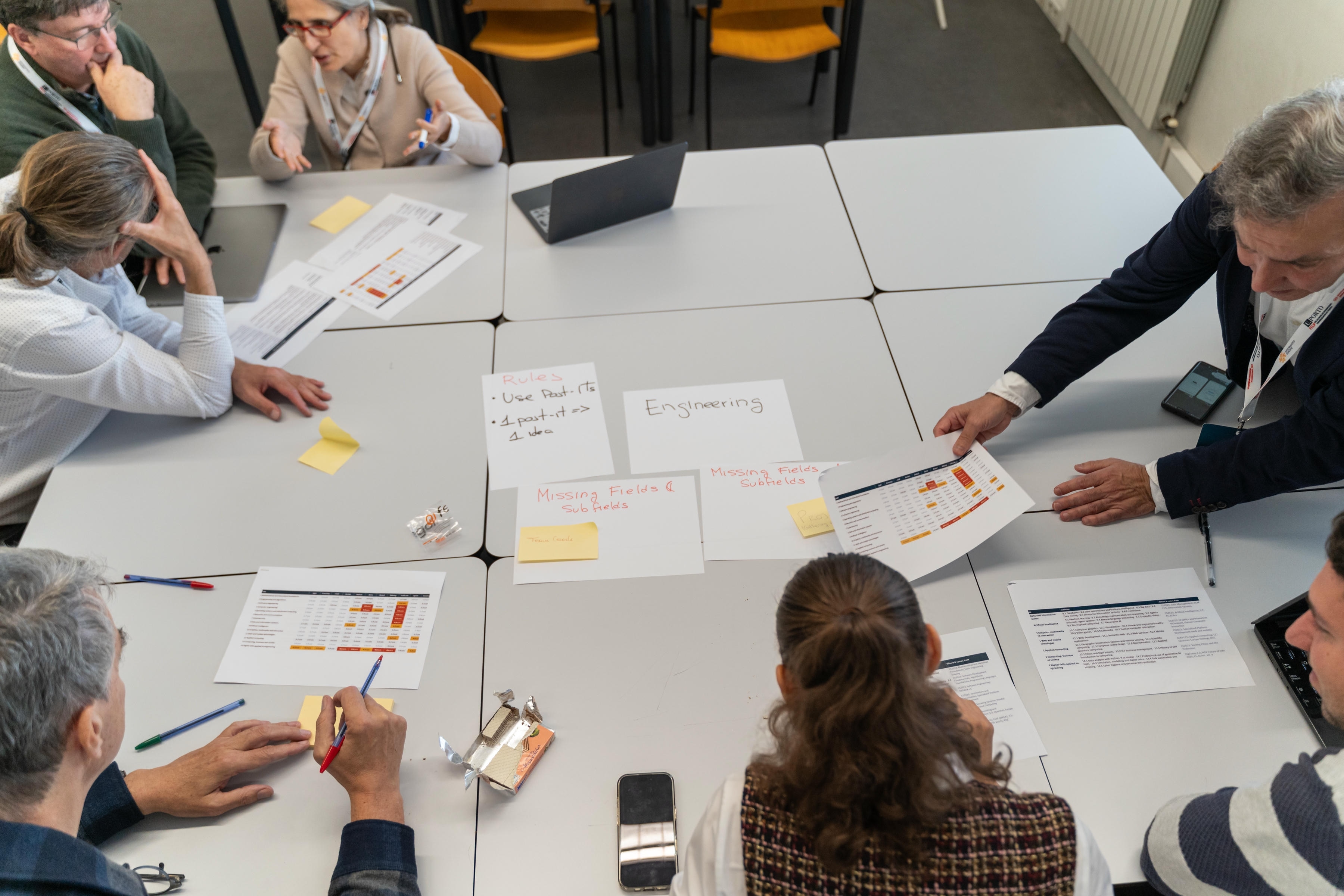
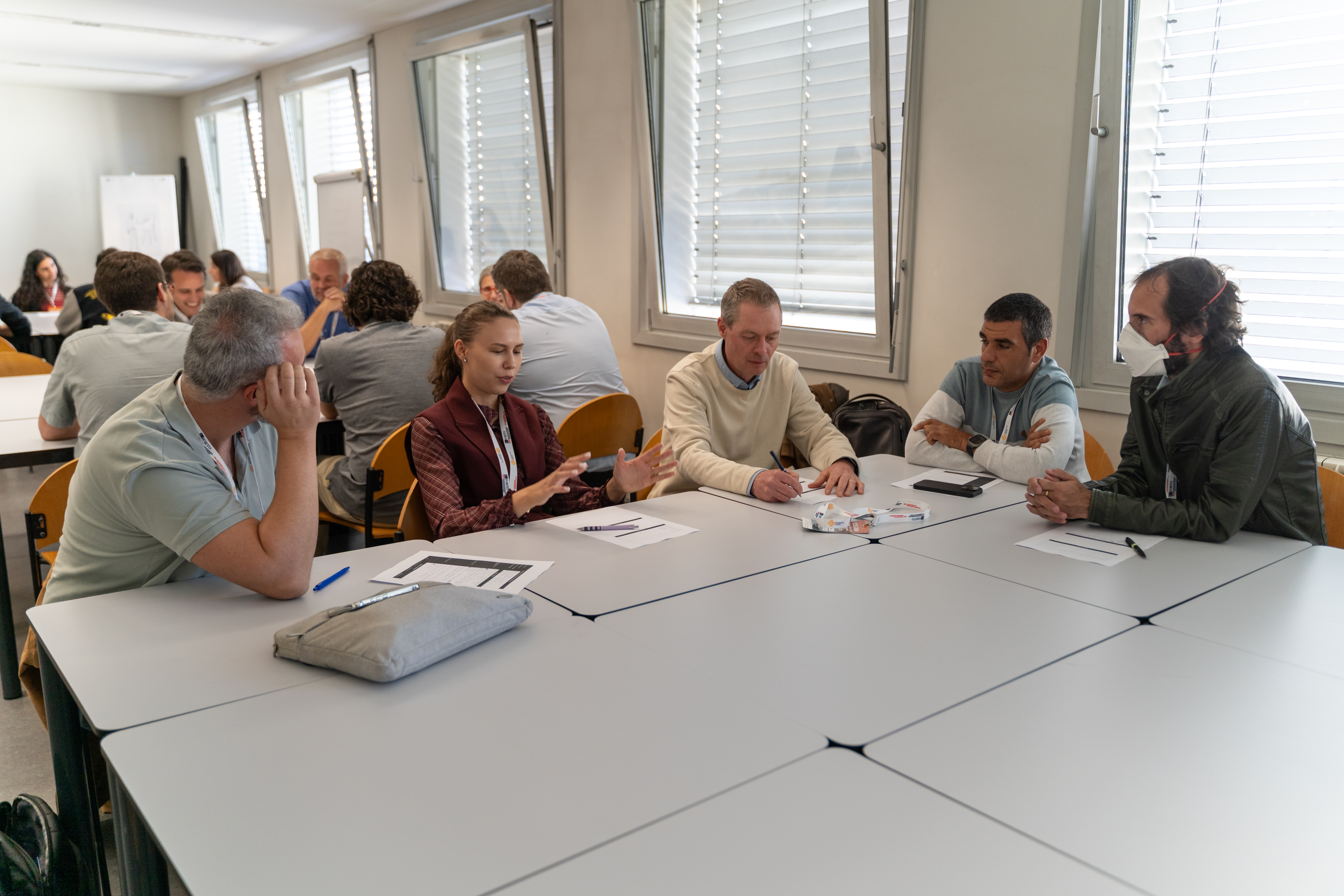
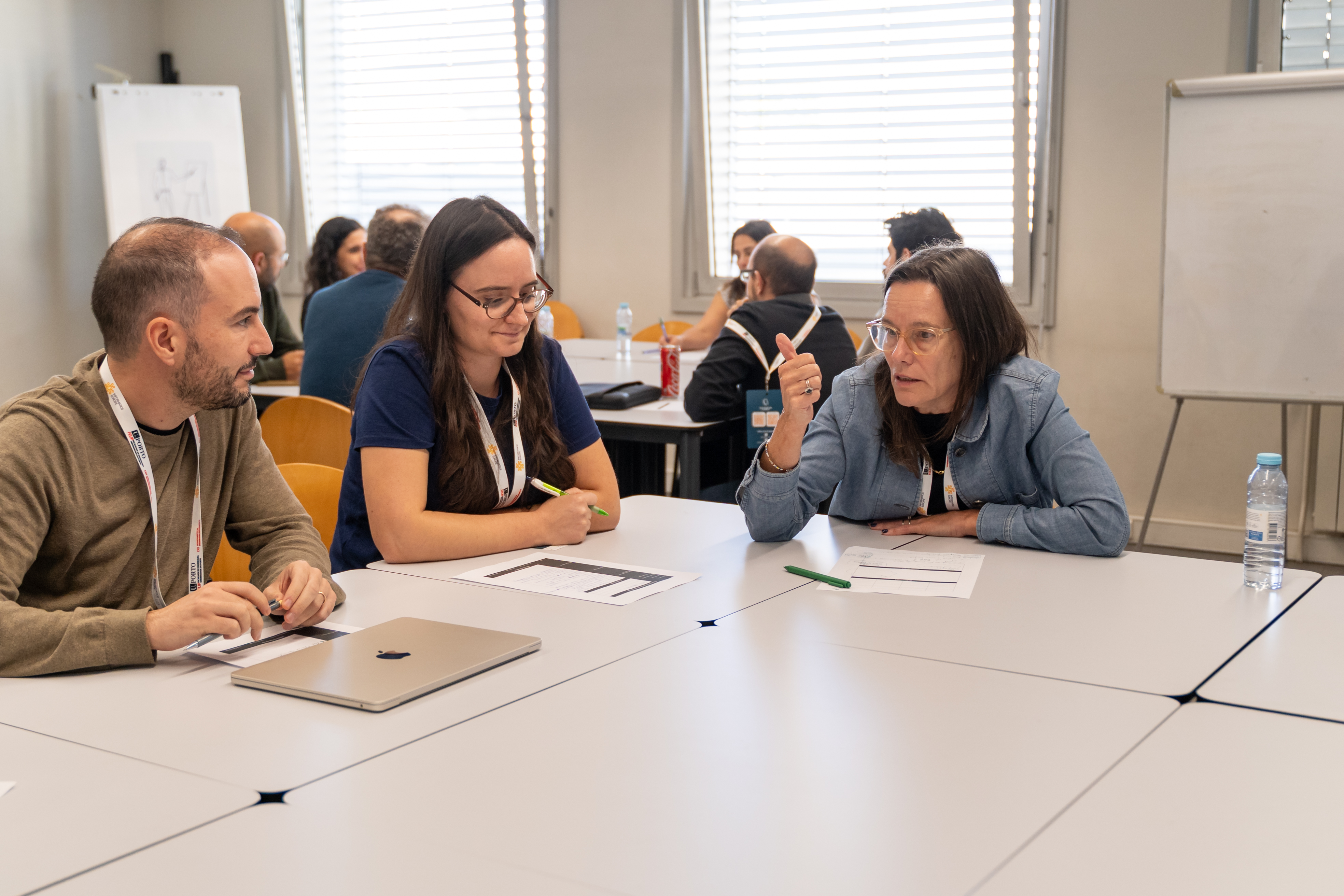
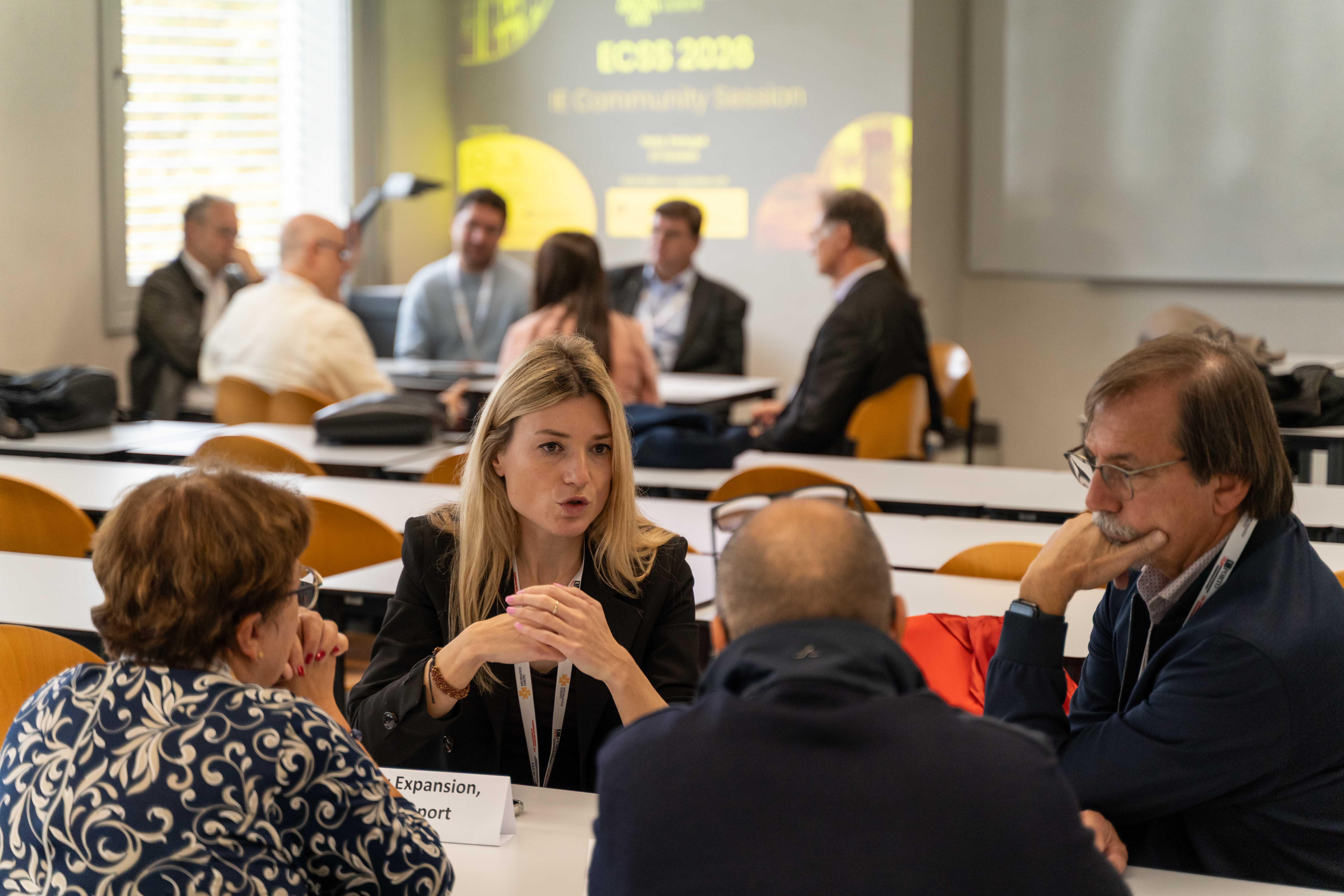
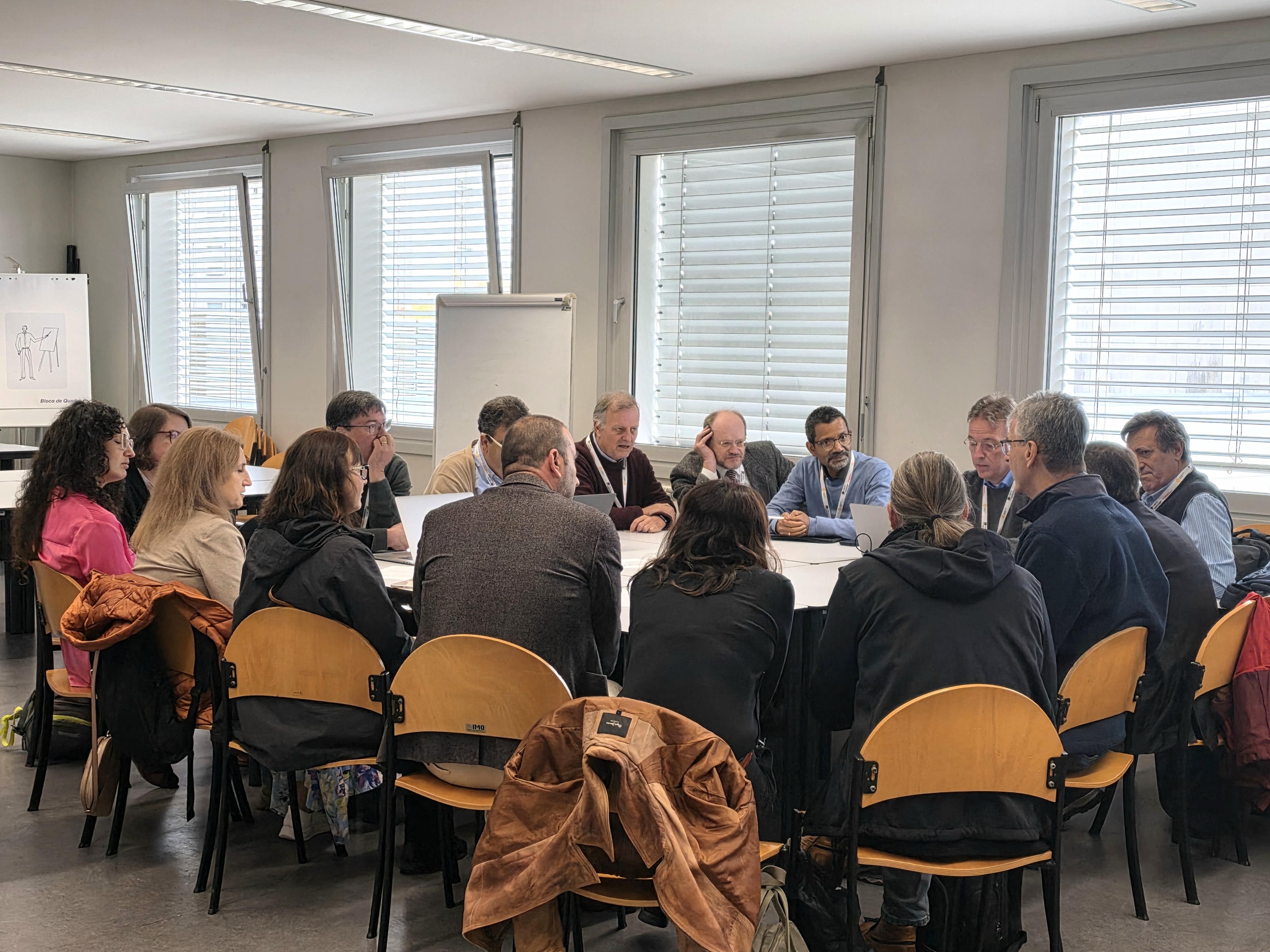
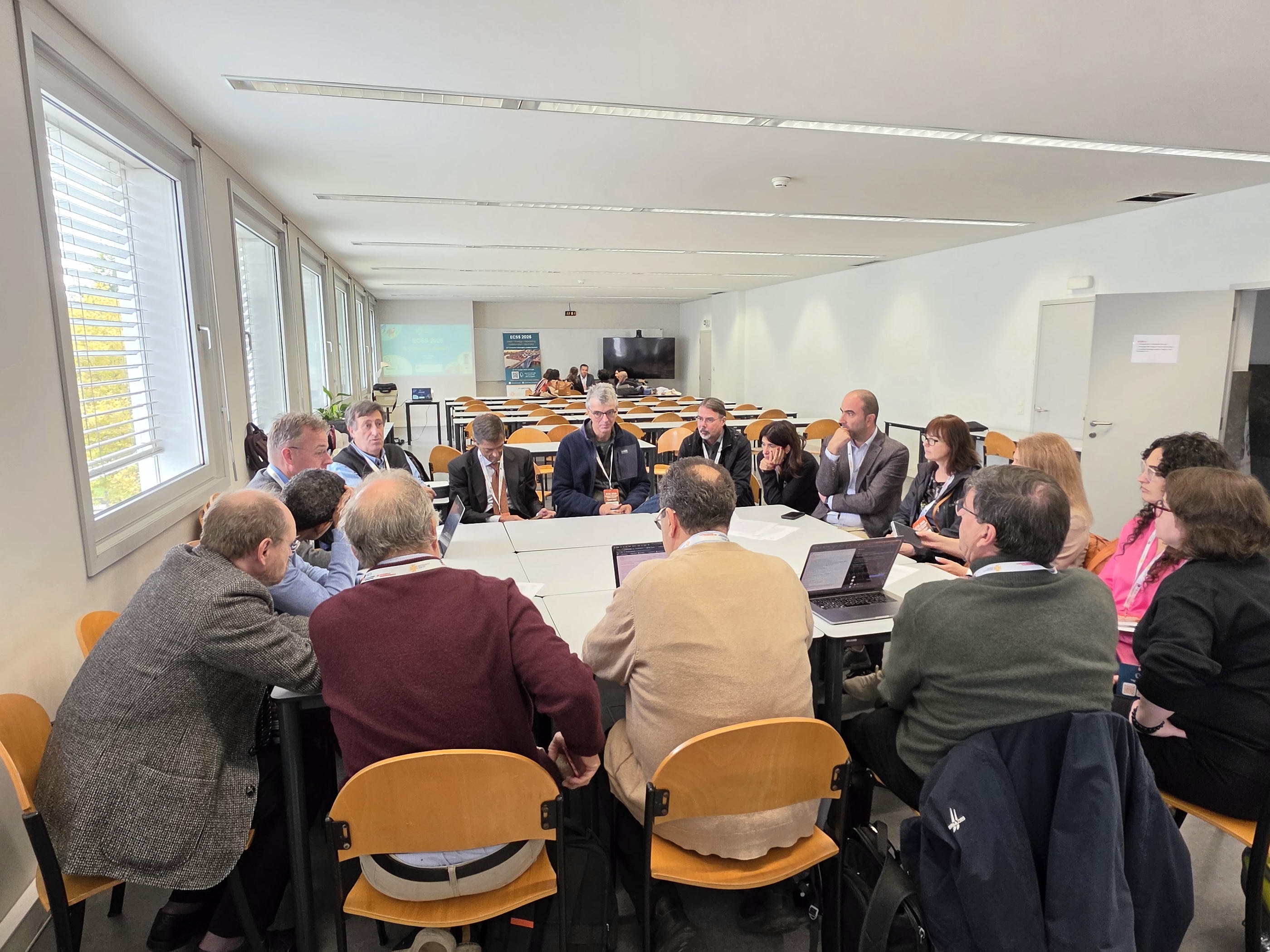
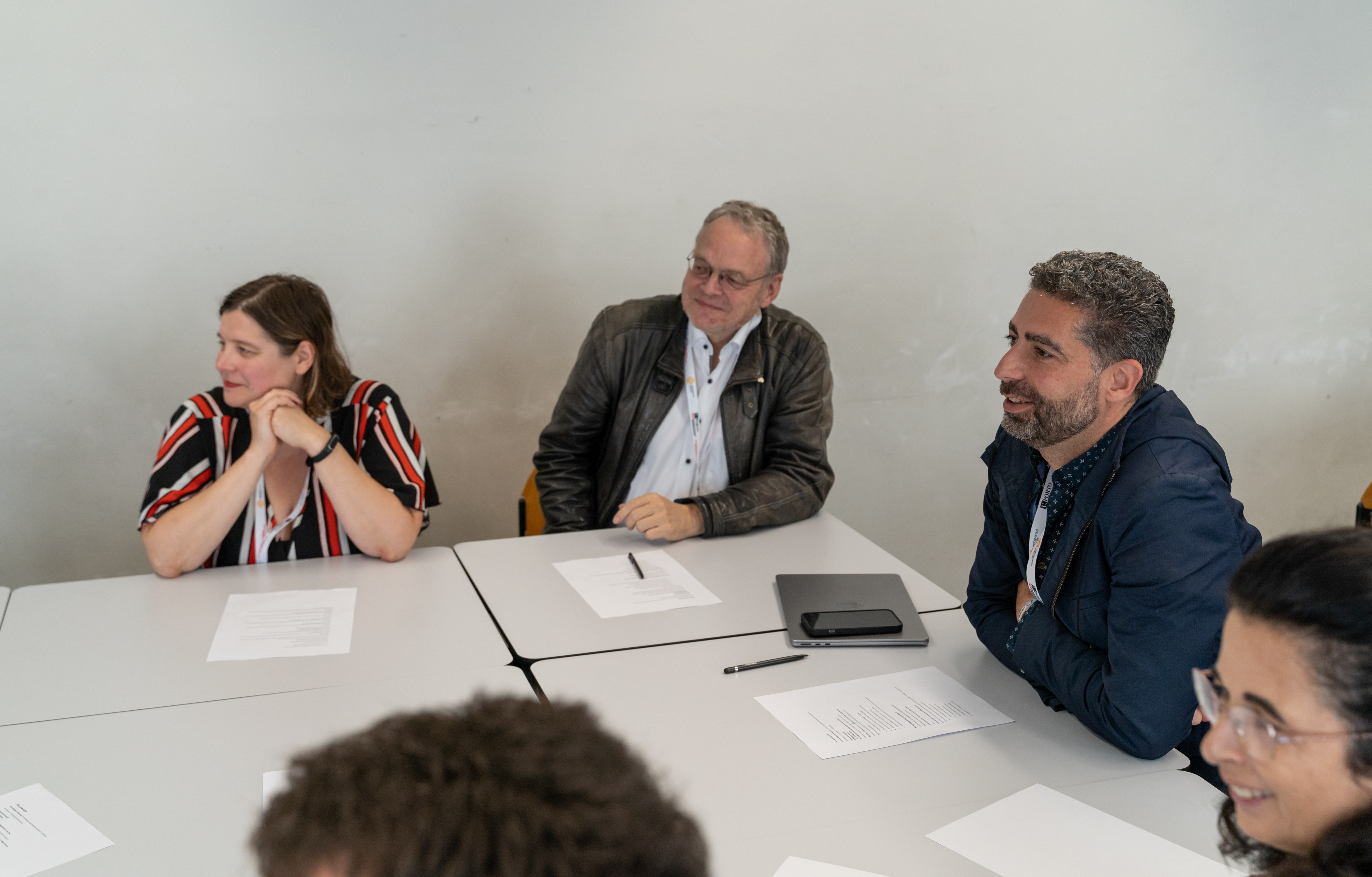
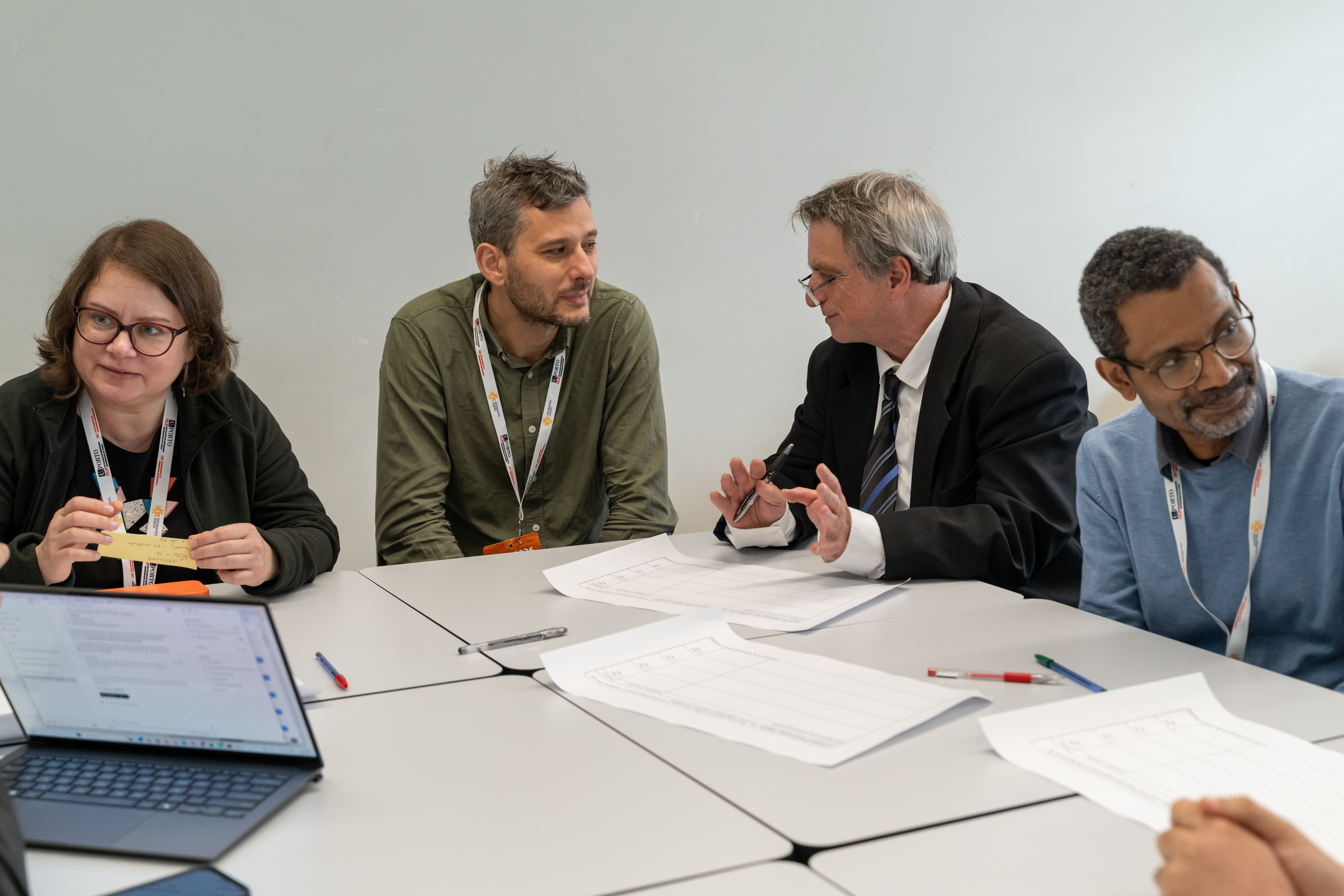
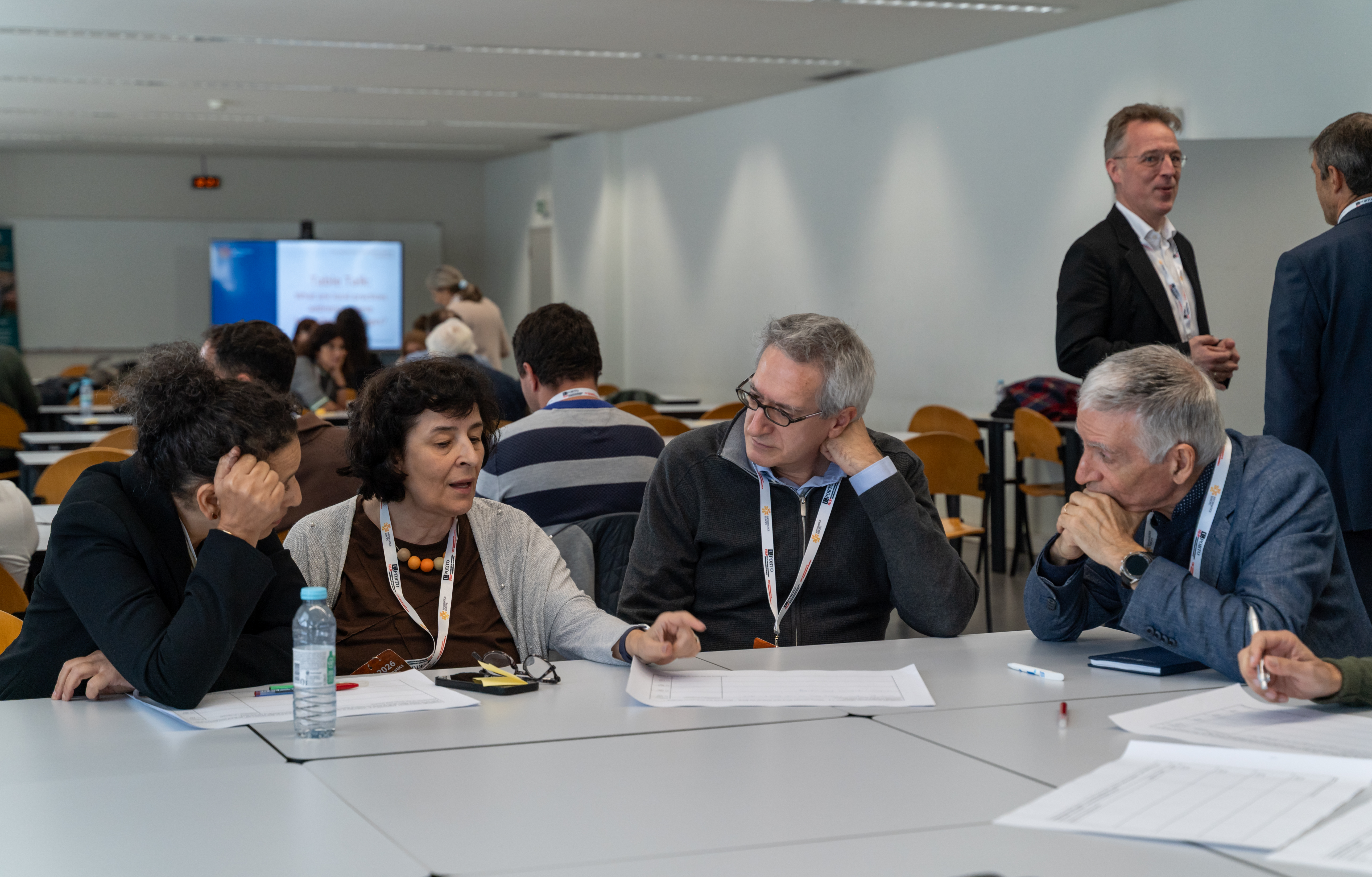
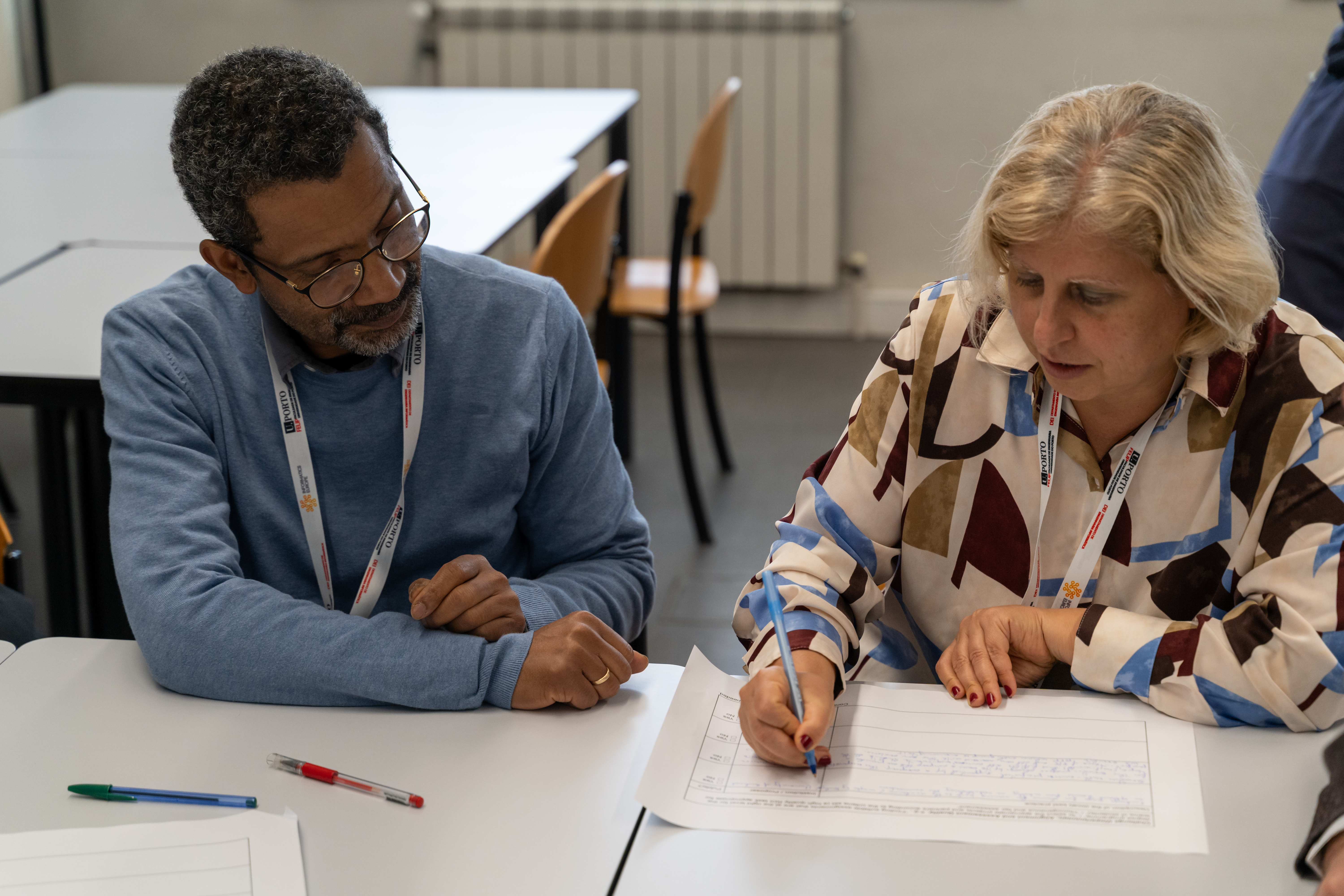
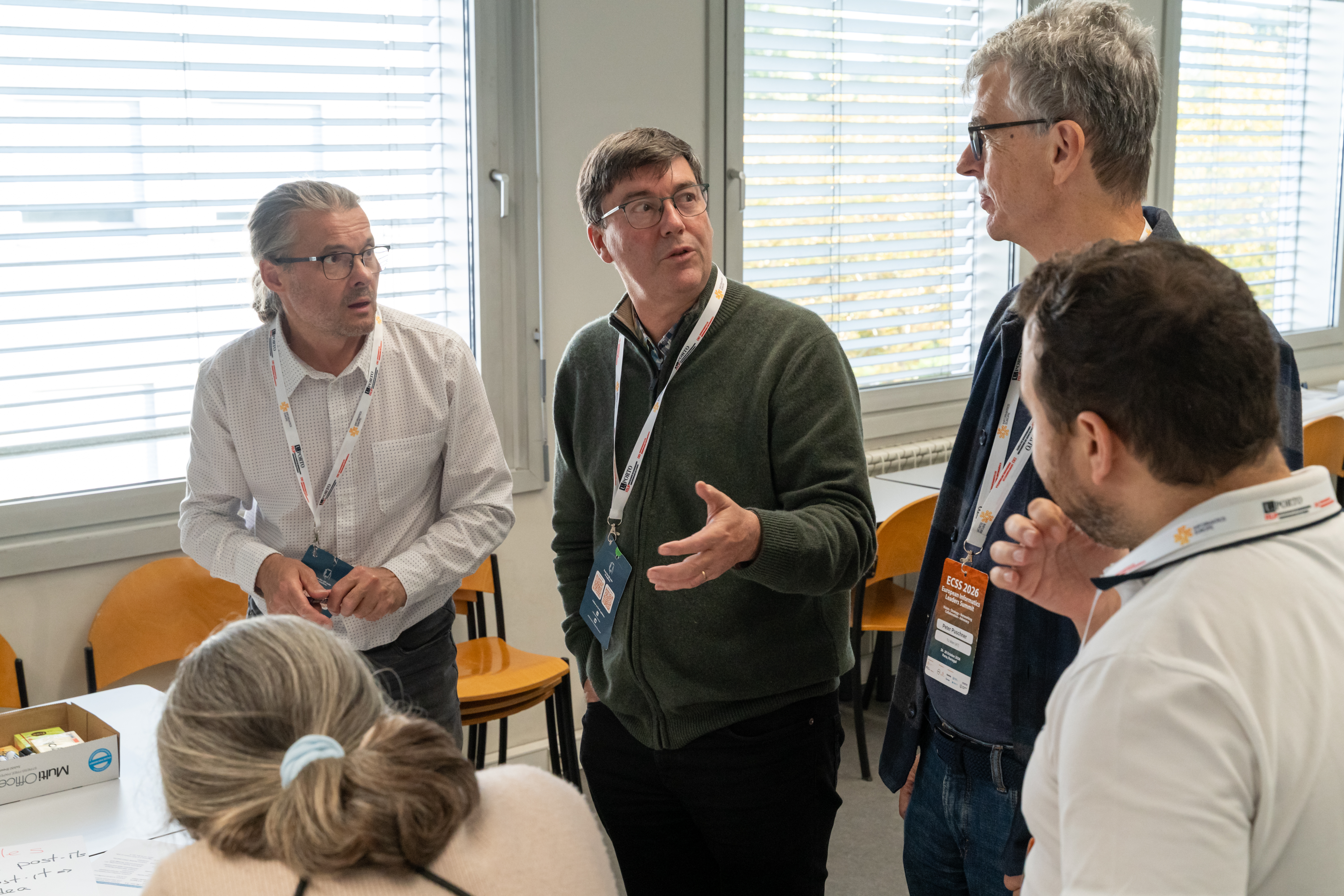
The Informatics Europe Community Session, themed “From Shared Challenges to Collective Action”, was chaired by Jean-Marc Jézéquel and Nuria Anguera, IE’s President and Executive Director, respectively. The session invited participants to reflect on the challenges facing Informatics institutions and how IE can better support its members and strengthen our collective impact. Topics proposed by participants on the first day of ECSS were explored in small groups the following day. Discussions covered AI integration in teaching and curricula, student recruitment and skills, emerging research priorities, scientific publishing and research integrity, as well as opportunities to strengthen institutional collaboration, community engagement and Europe's research competitiveness.
The discussions generated a range of proposals on specific areas for exchanging good practices, developing common guidelines, strengthening policy advocacy and institutional partnerships, and mobilising expertise across the IE network. The IE Board is reviewing all suggestions to establish priorities for 2027+, build on existing Working Groups and Task Forces, or launch new initiatives. The full list of proposals is available in the Community Session Outcomes Report.
IE Annual General Assembly
The 2026 Informatics Europe Annual General Assembly (AGA) provided an overview of the association’s membership development, achievements and ongoing activities, as well as its strategic priorities for the coming years. IE welcomed 19 new member institutions and expanded its presence to 35 countries, strengthening its representation of the European informatics community. The Assembly also reviewed recent publications, policy contributions and initiatives led by IE Working Groups and Task Forces, alongside plans for 2027 and beyond. Special appreciation was also extended to the IE Ambassadors for their contributions in 2026 to expanding the association's reach, strengthening connections and encouraging engagement across the European informatics community.
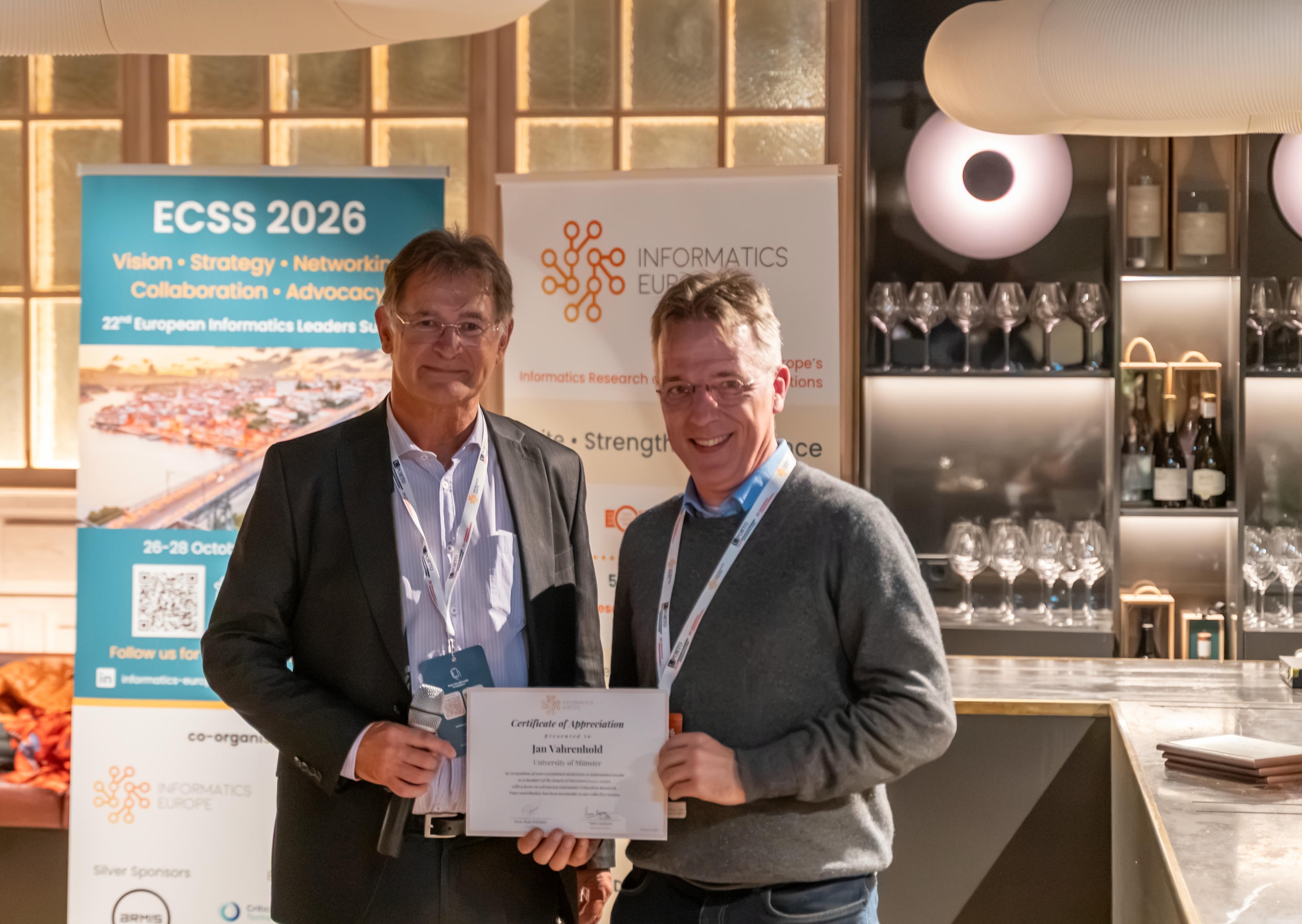
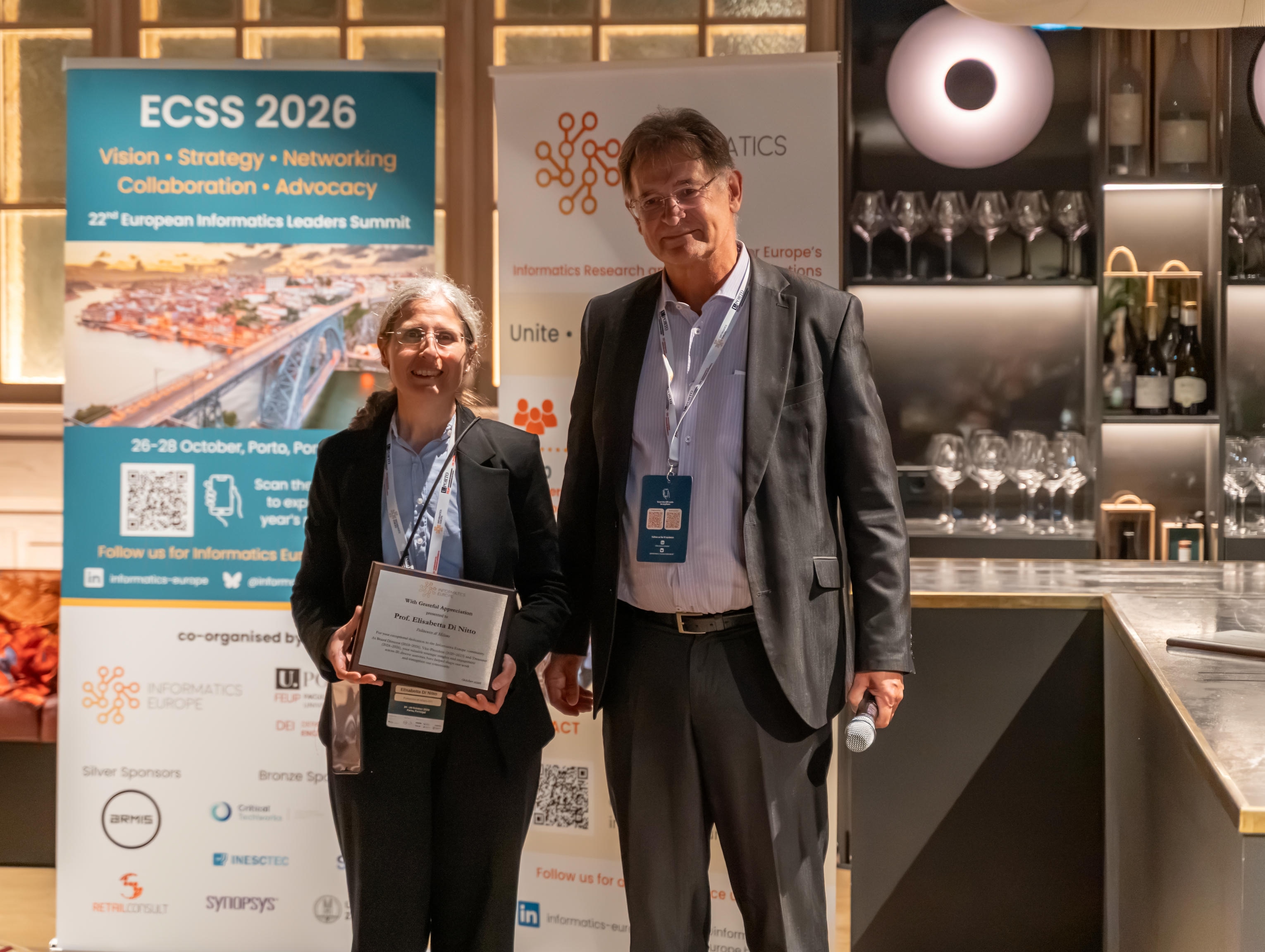
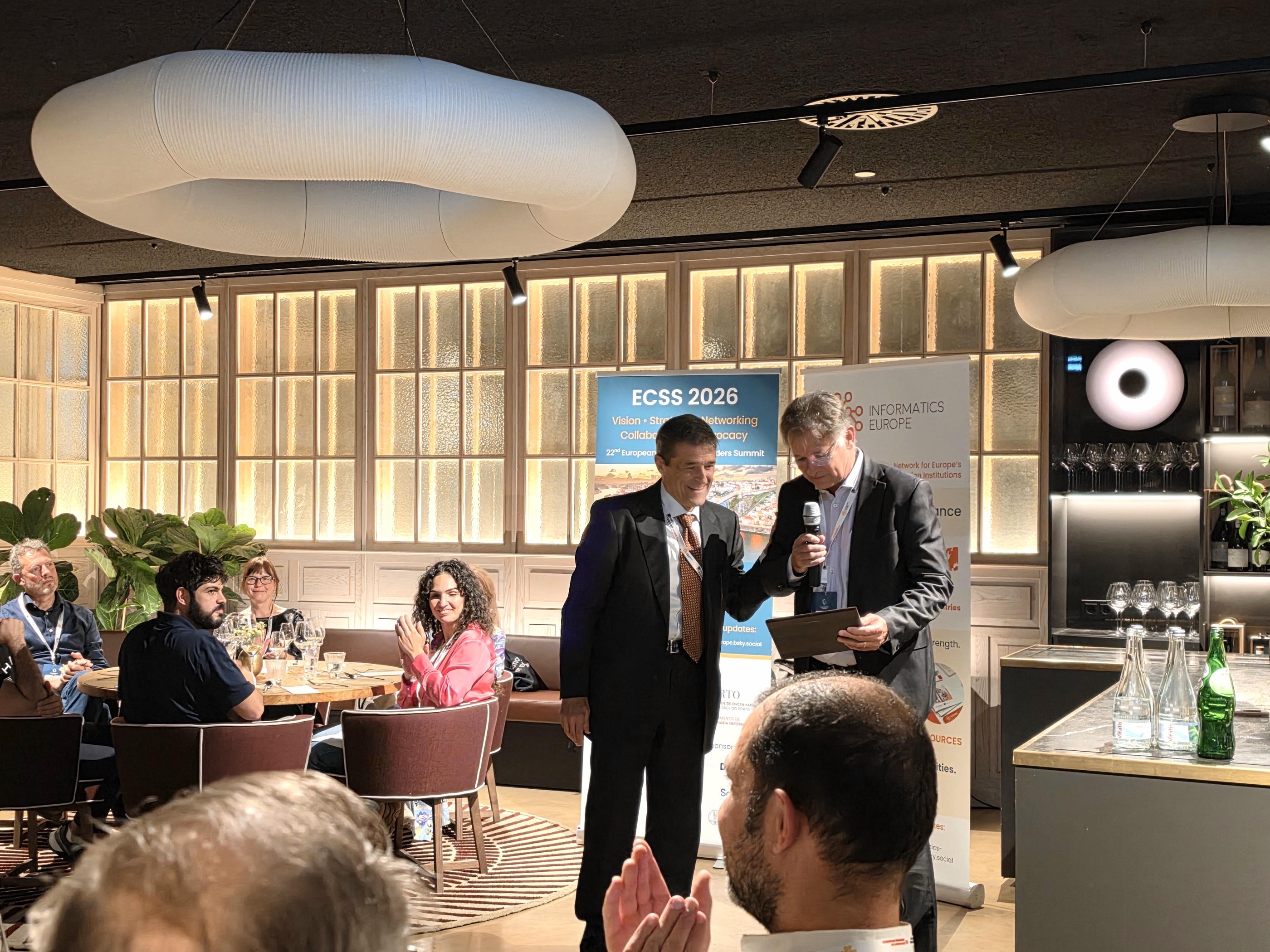
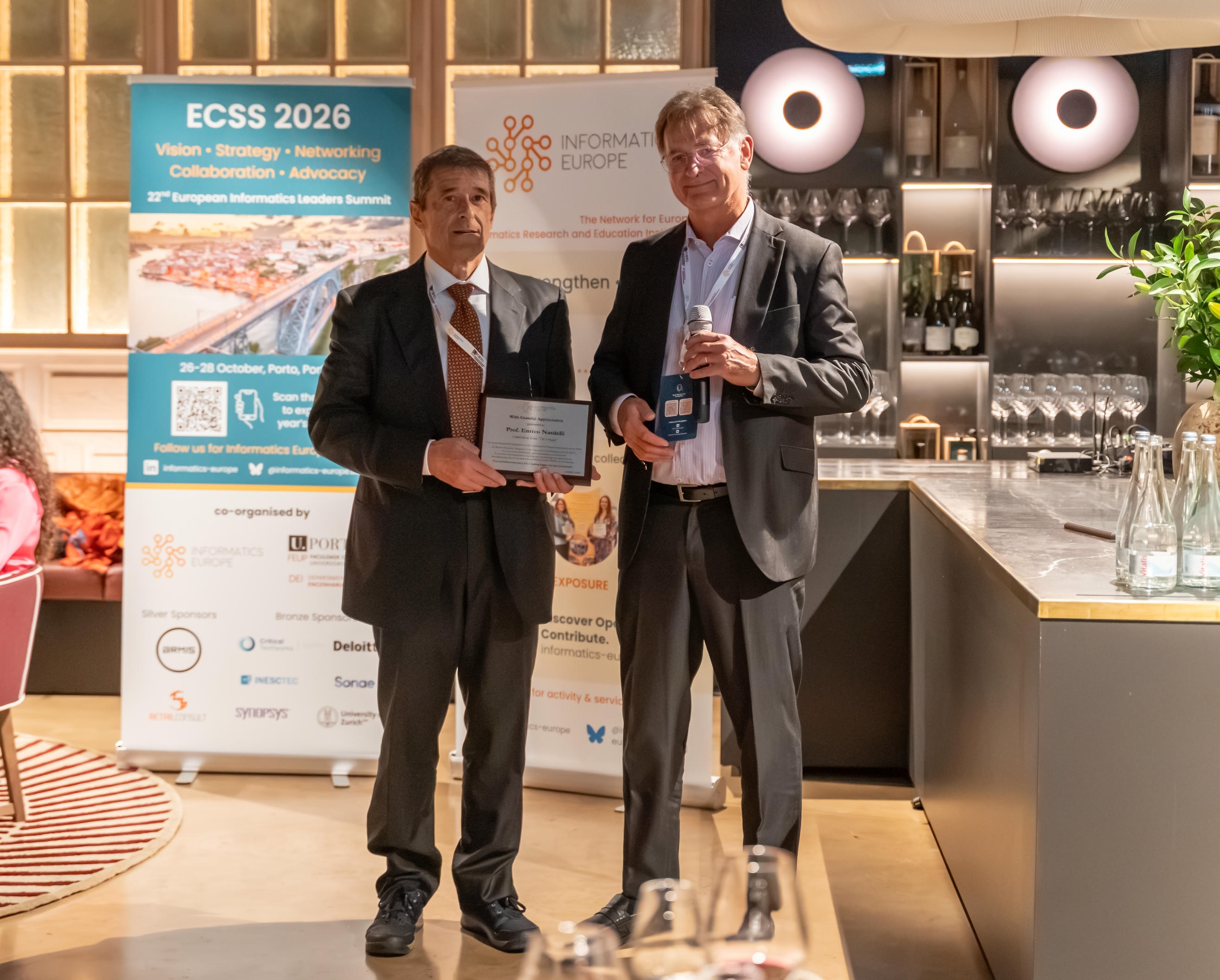
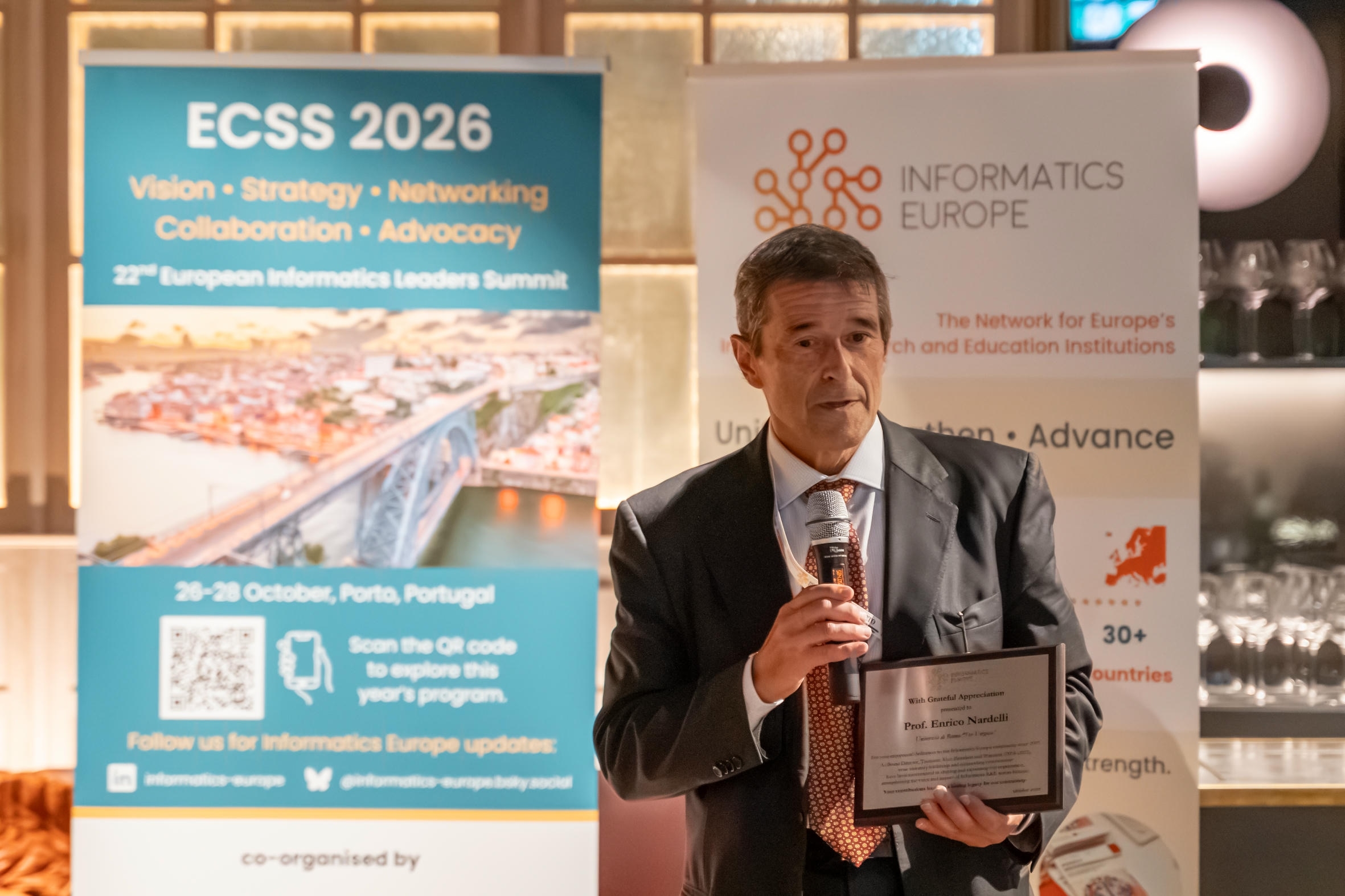
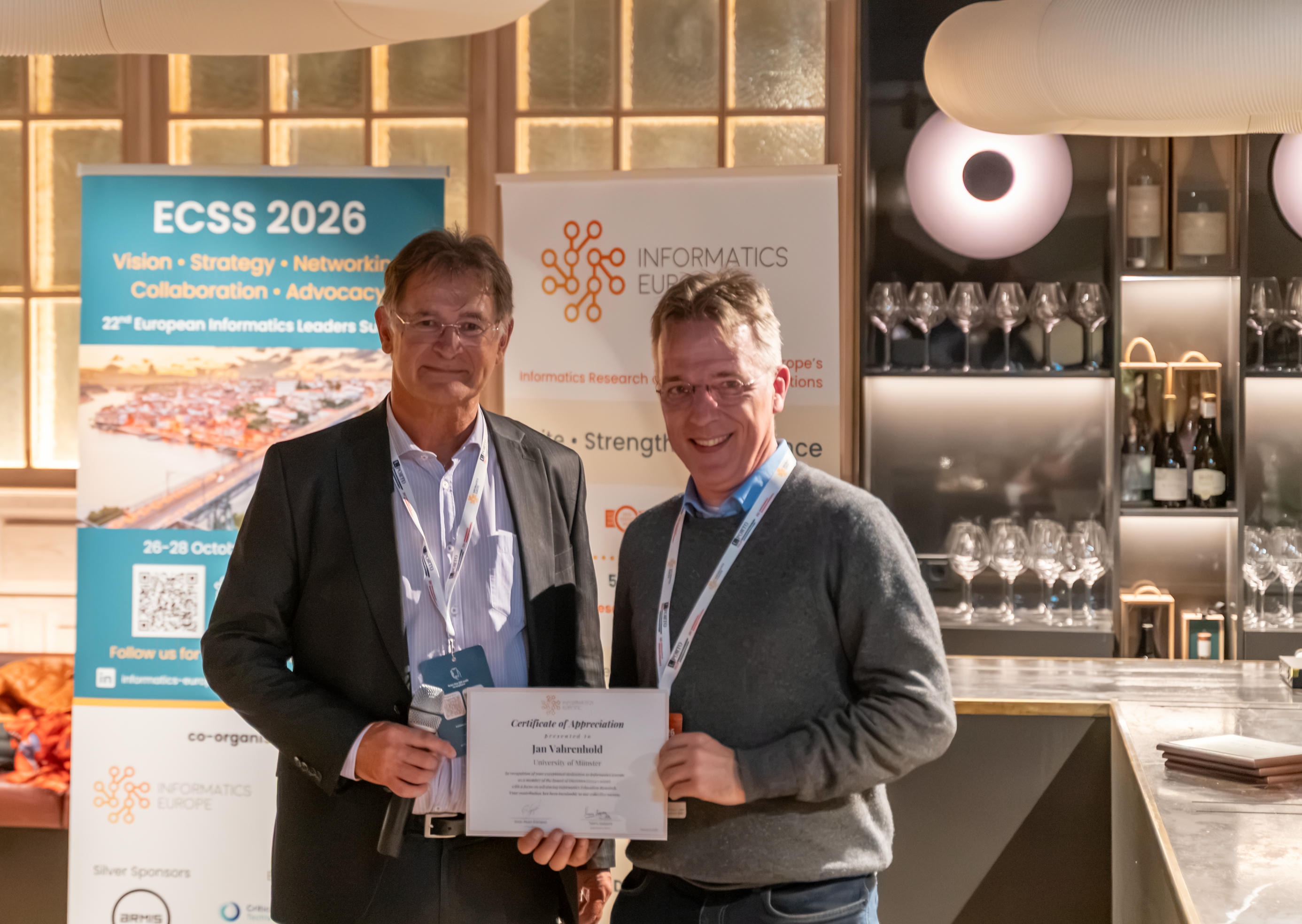
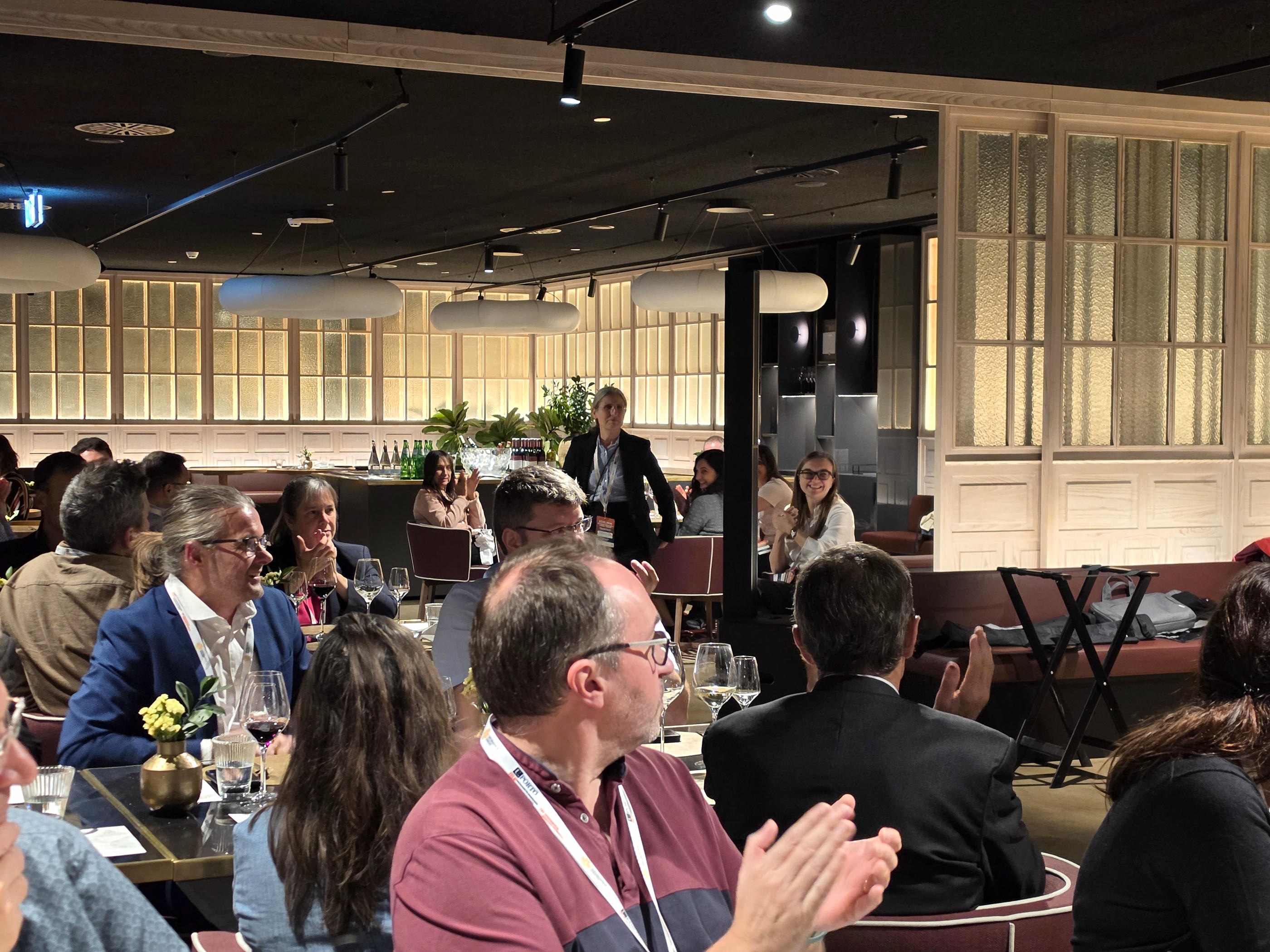
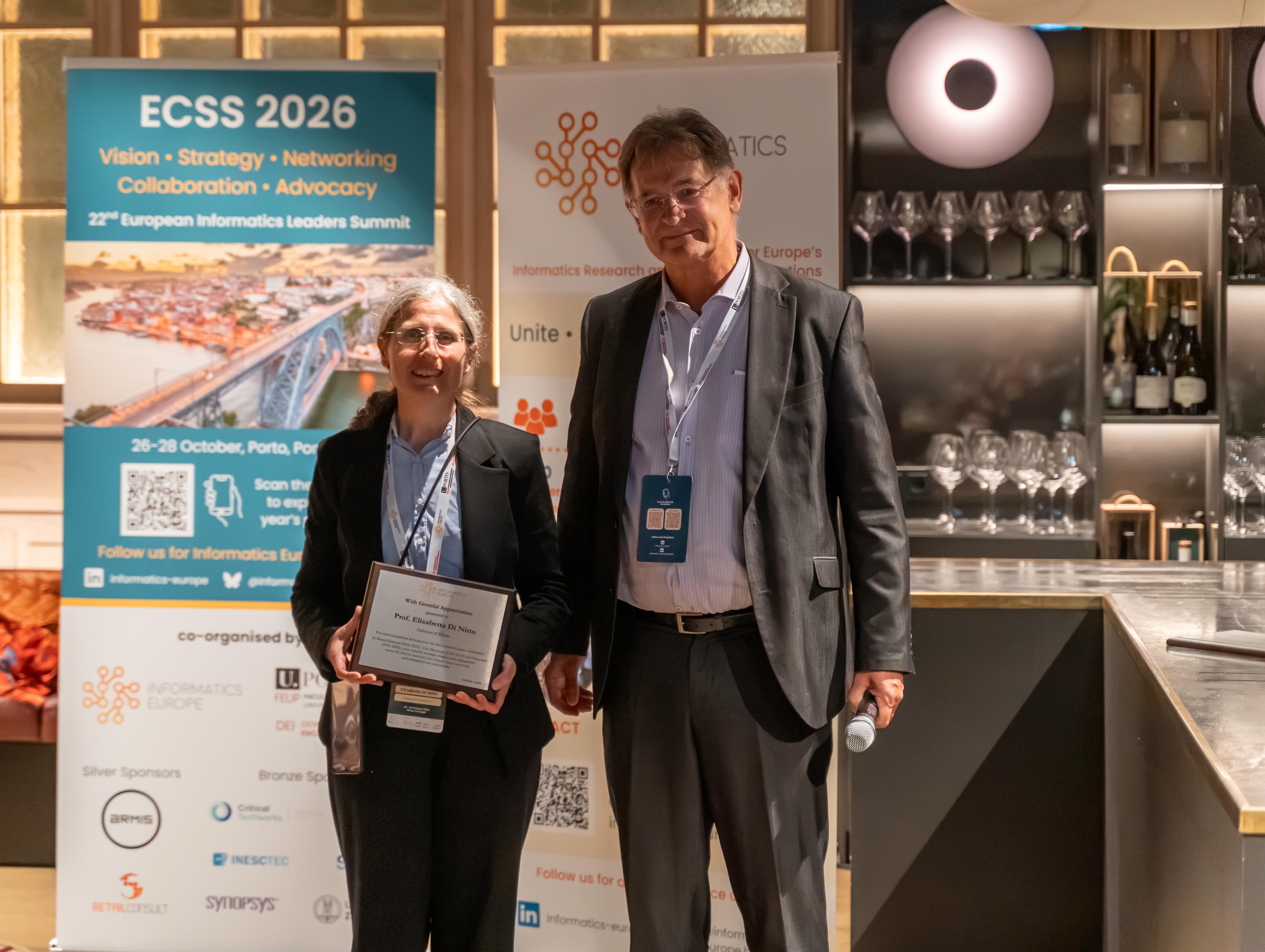
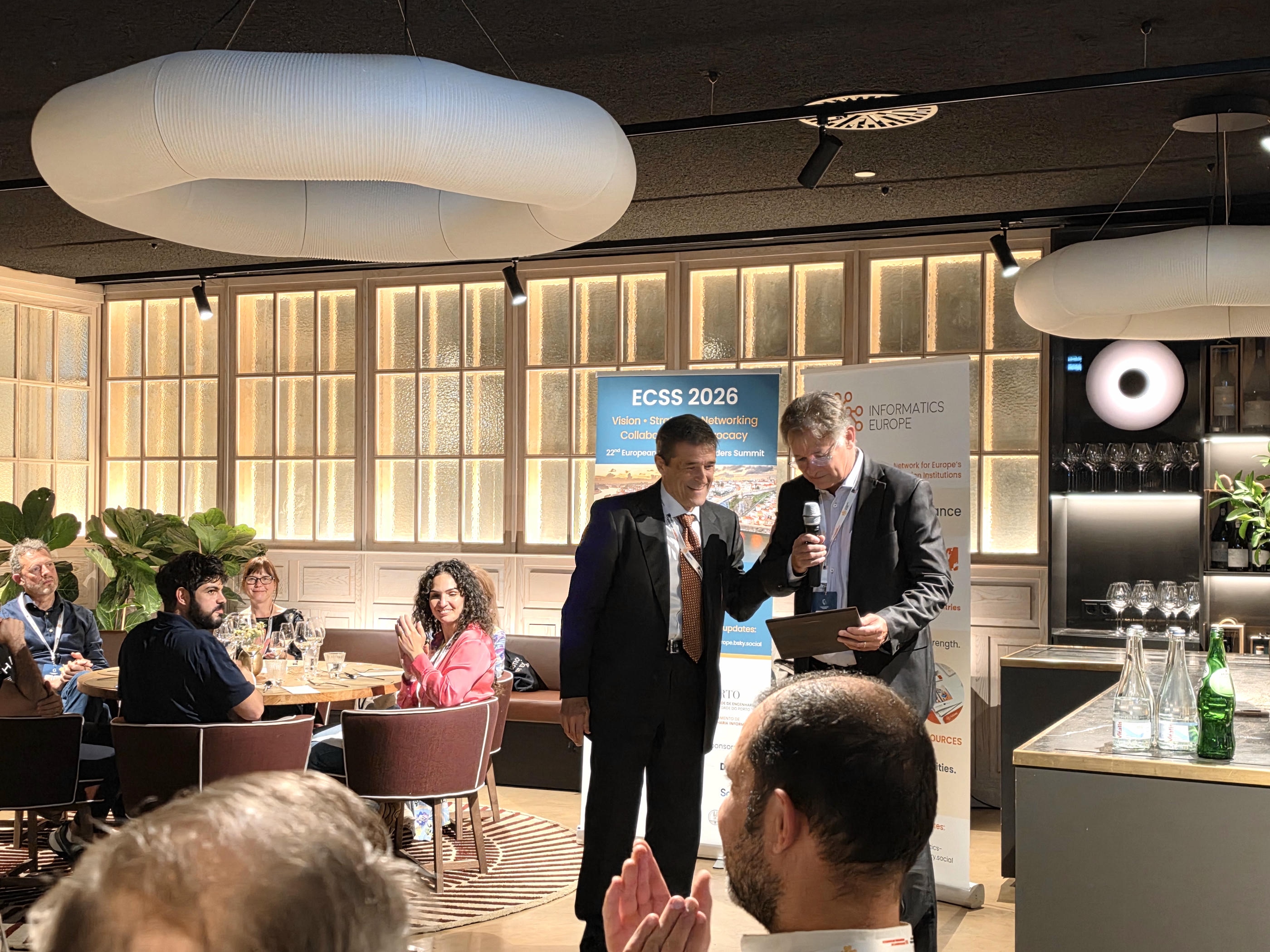
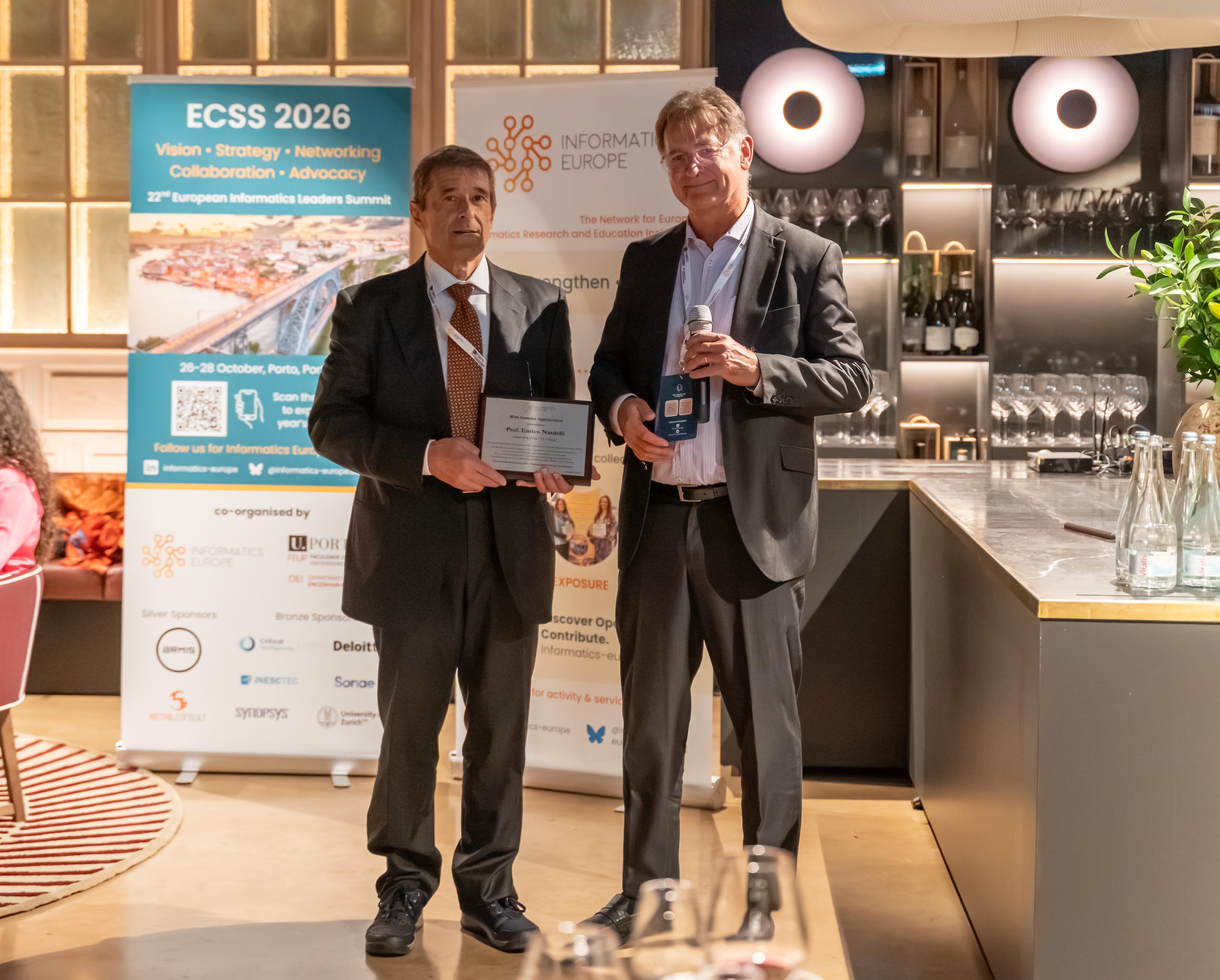
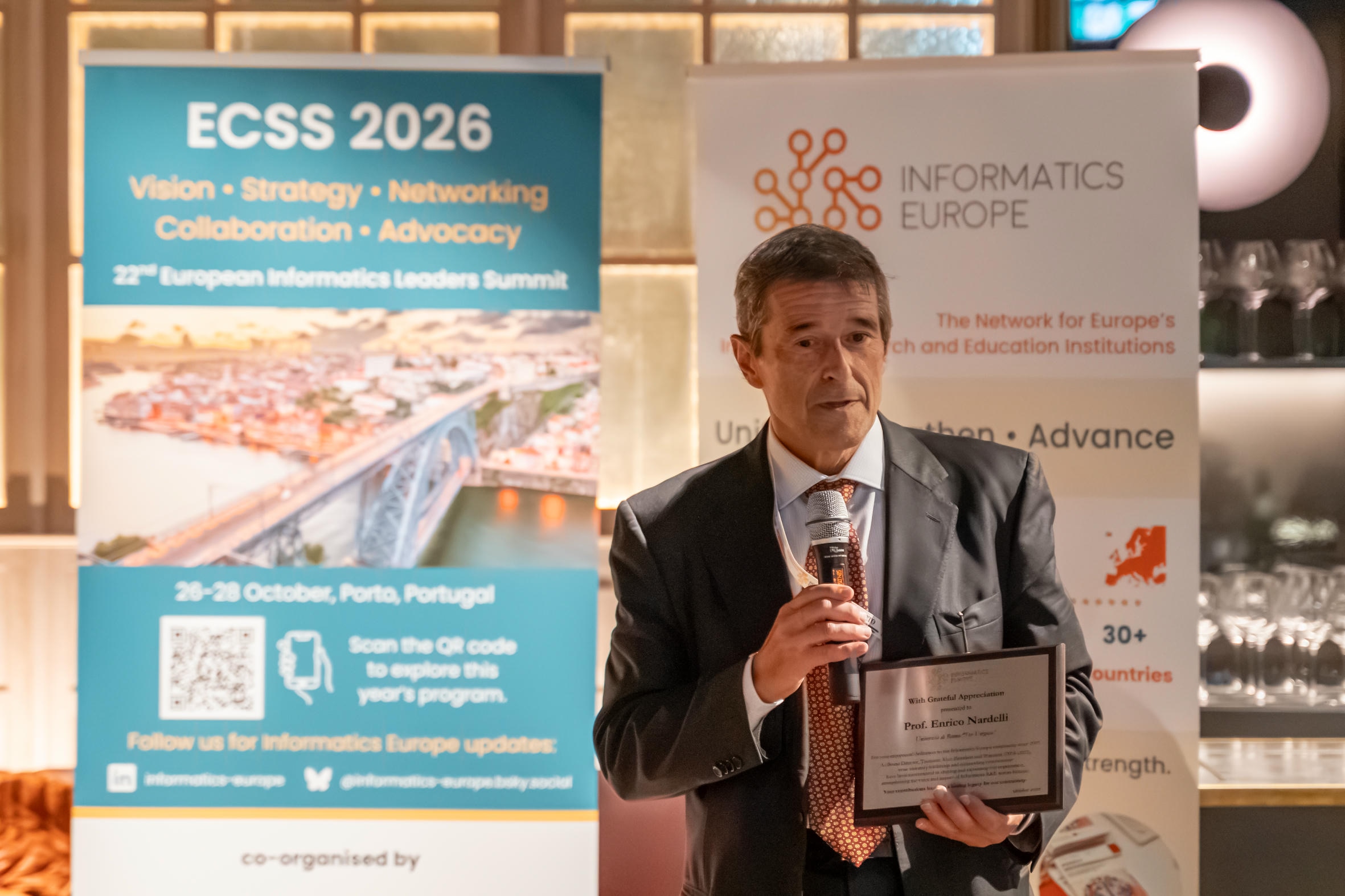
Turning to governance, the Assembly approved the 2025 financial report and the 2027 budget, with all votes in favour. Bart Preneel (KU Leuven, Belgium) and Marco Schaerf (Sapienza University of Rome, Italy) were elected as new Board members, while the renewed Executive Committee will comprise Jean-Marc Jézéquel as President, Simona Motogna and Ina Schieferdecker as Vice-Presidents, and Marco Aiello as Treasurer. The occasion also provided an opportunity to express warm appreciation to outgoing Board members Enrico Nardelli, Elisabetta Di Nitto, Kim Mens and Jan Vahrenhold for their longstanding commitment and valuable contributions to the association.
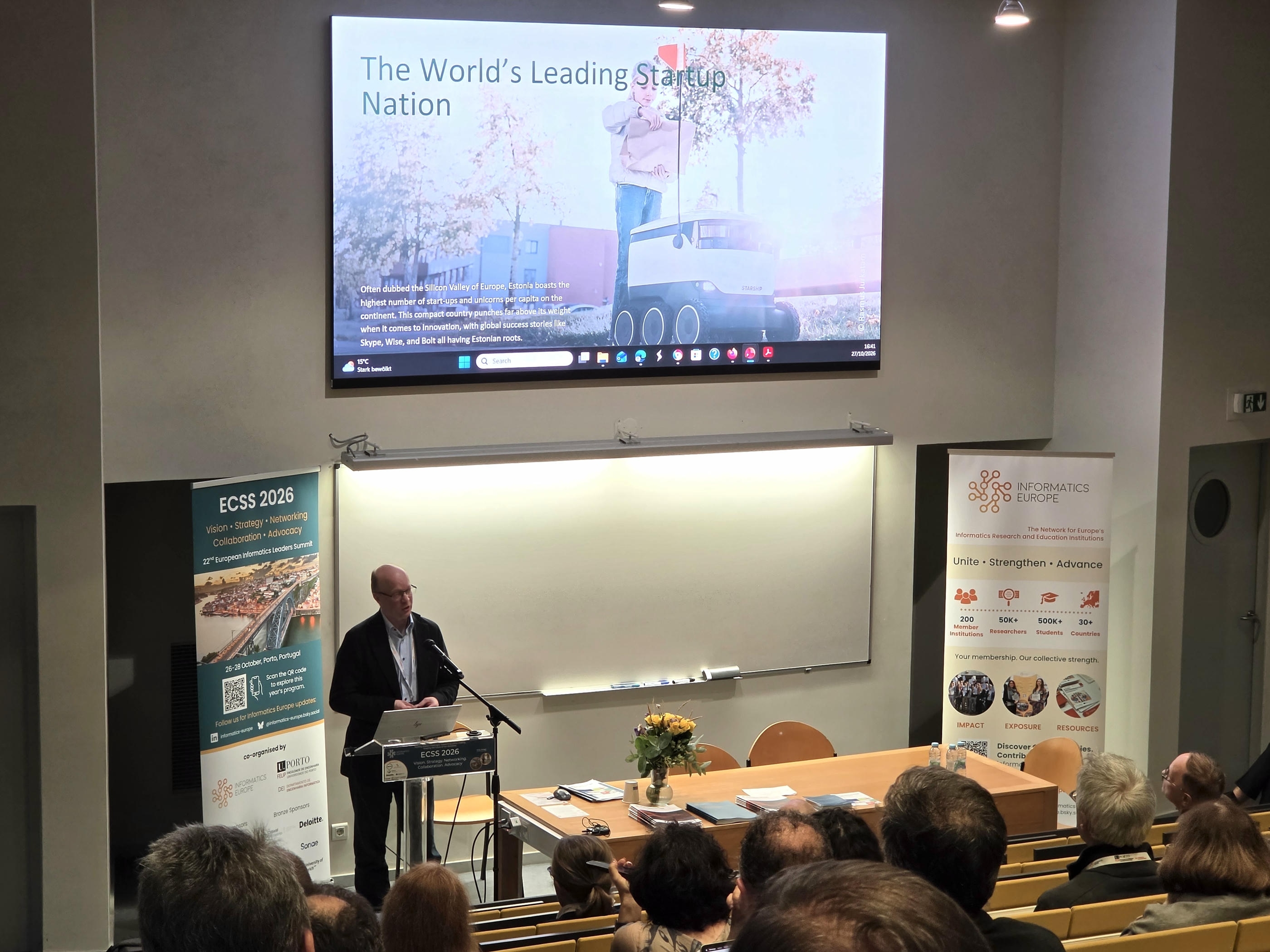
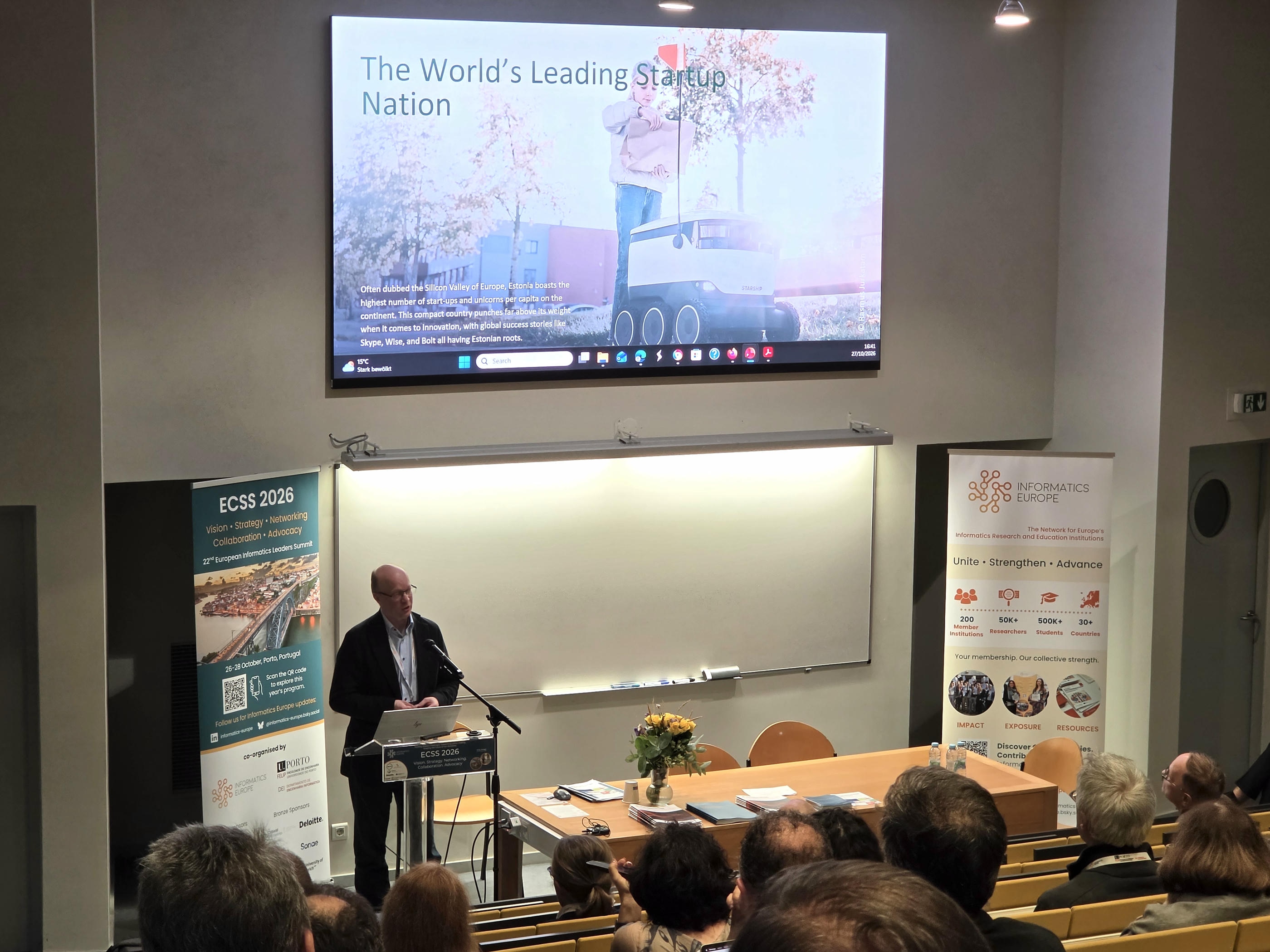
Looking ahead, the Assembly concluded with a presentation of ECSS 2027 in Tallinn, Estonia.
Education Research Workshop
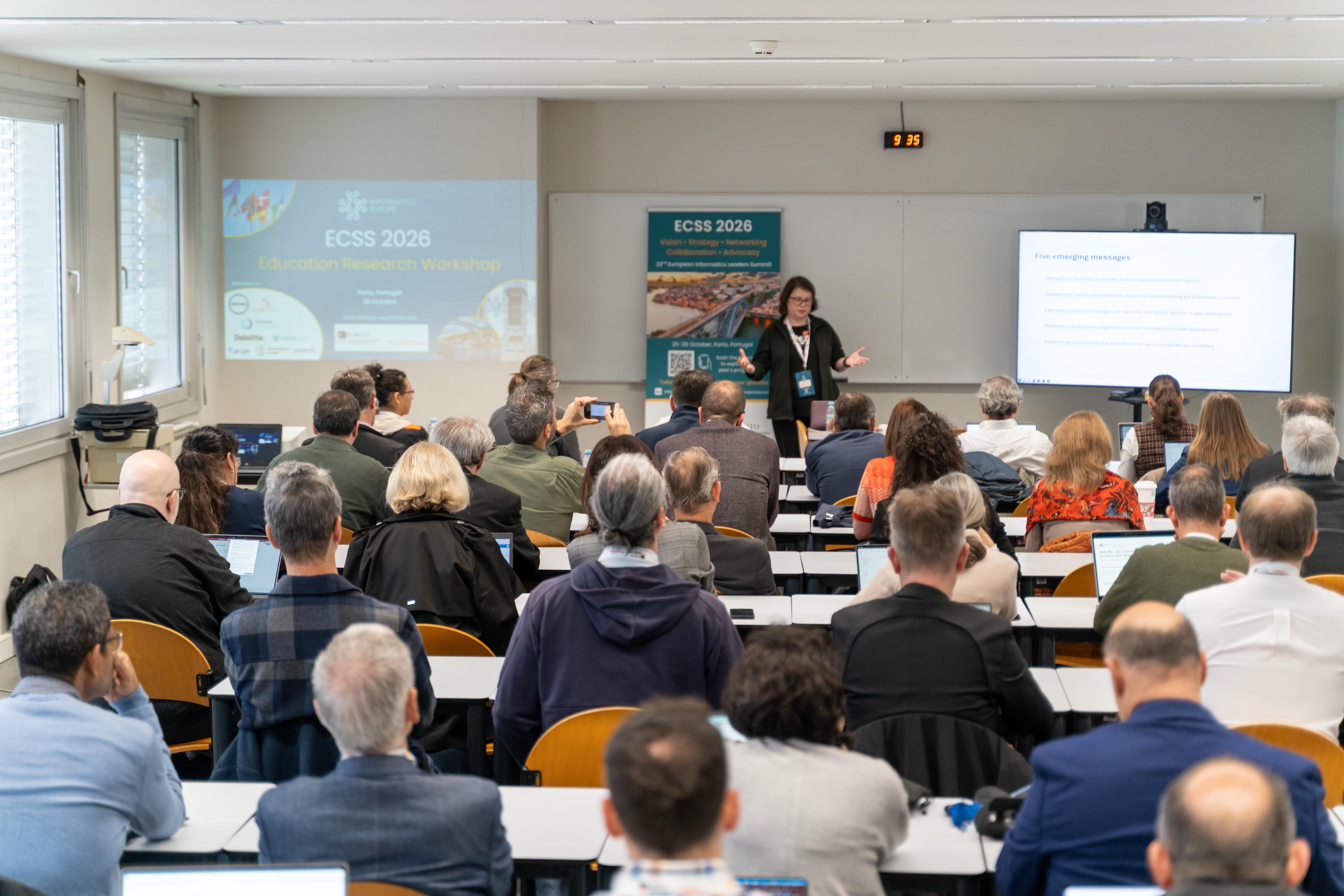
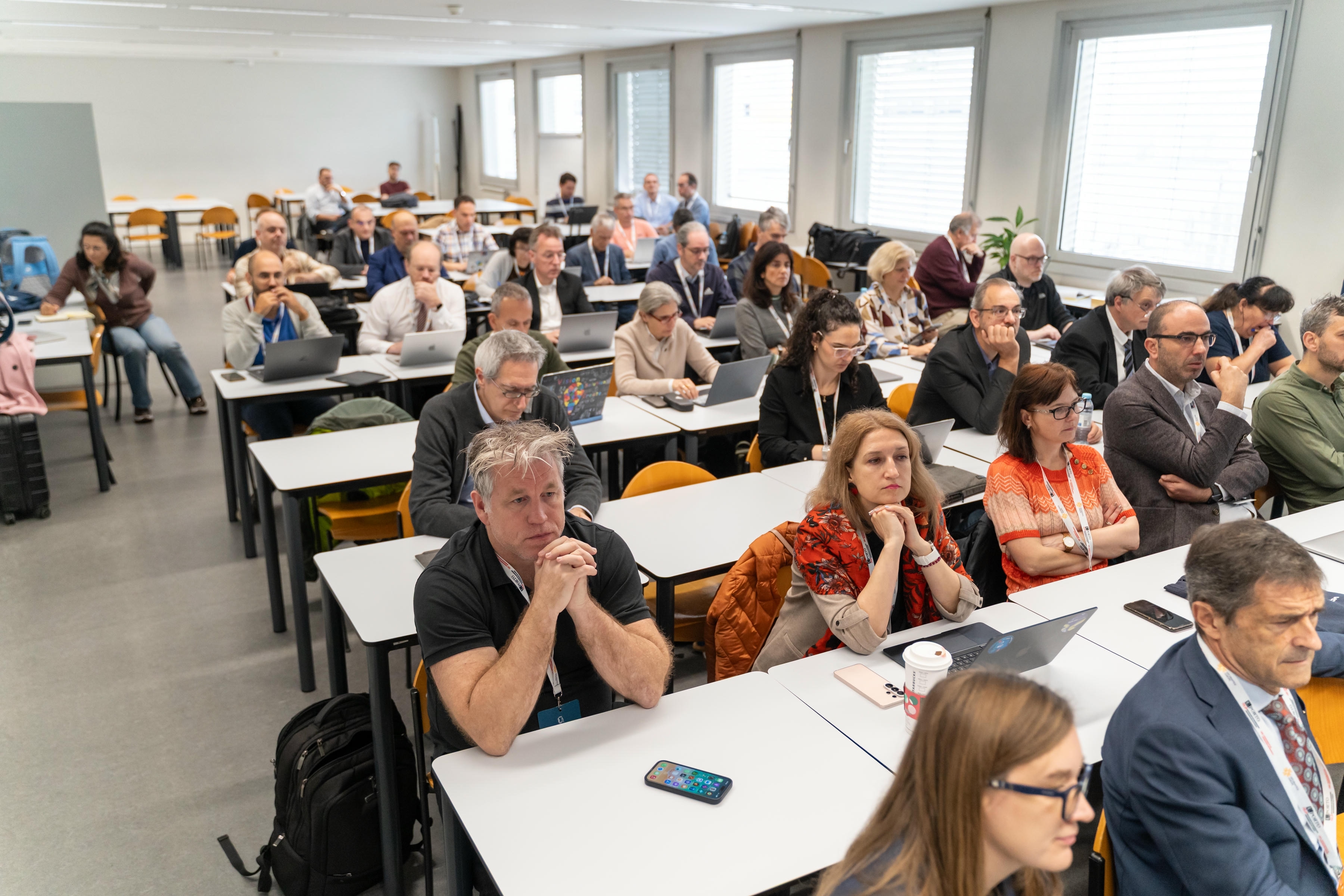
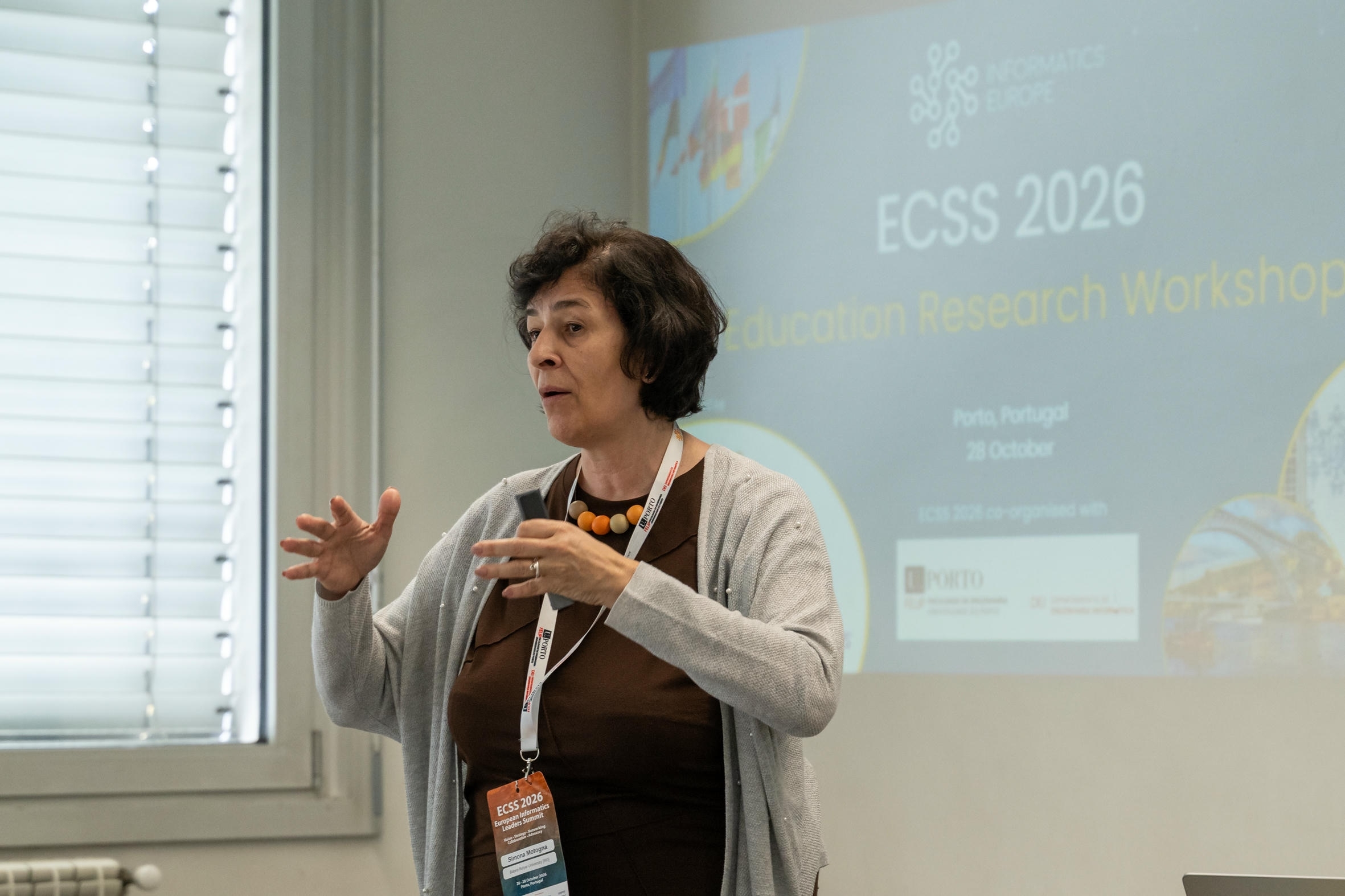
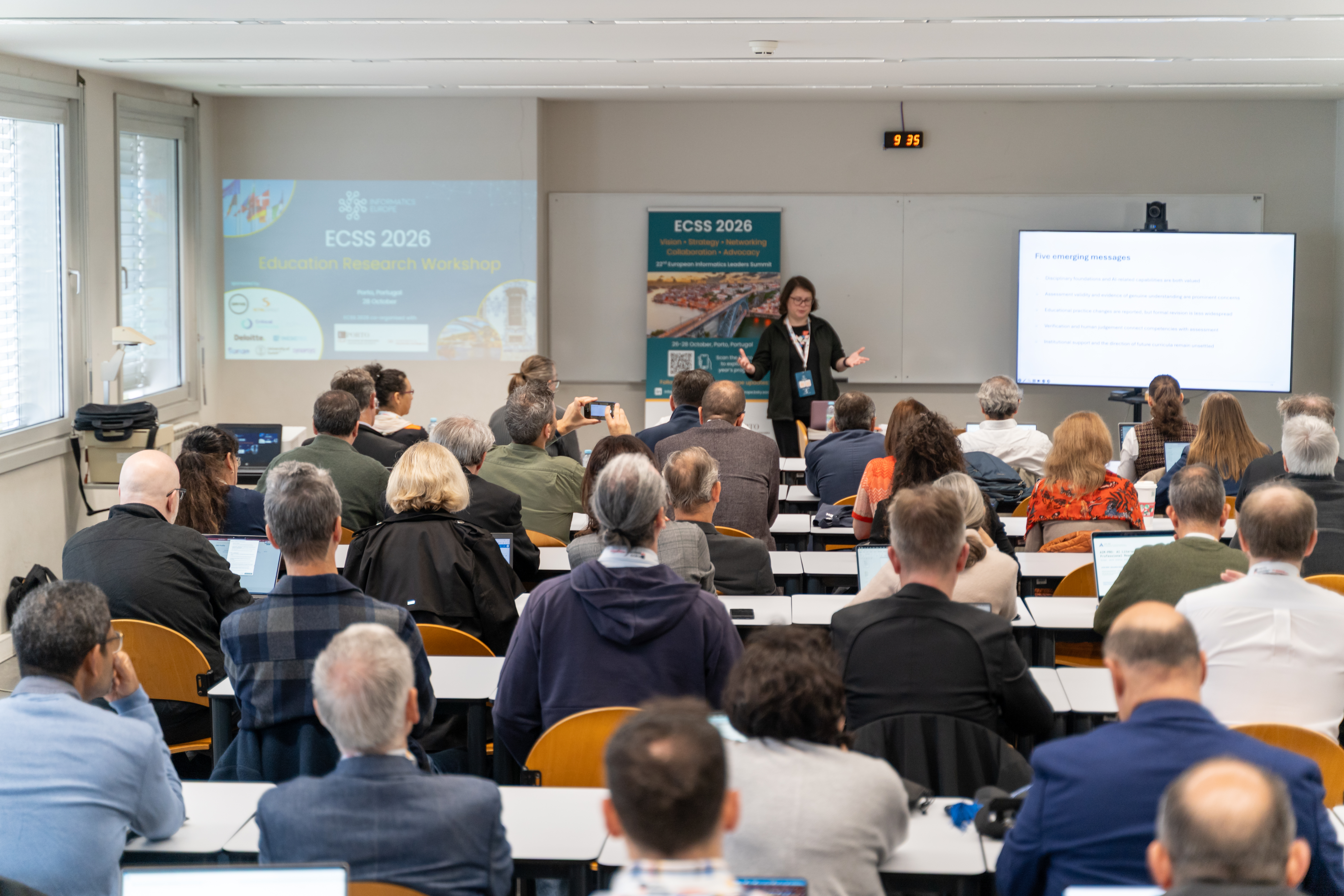
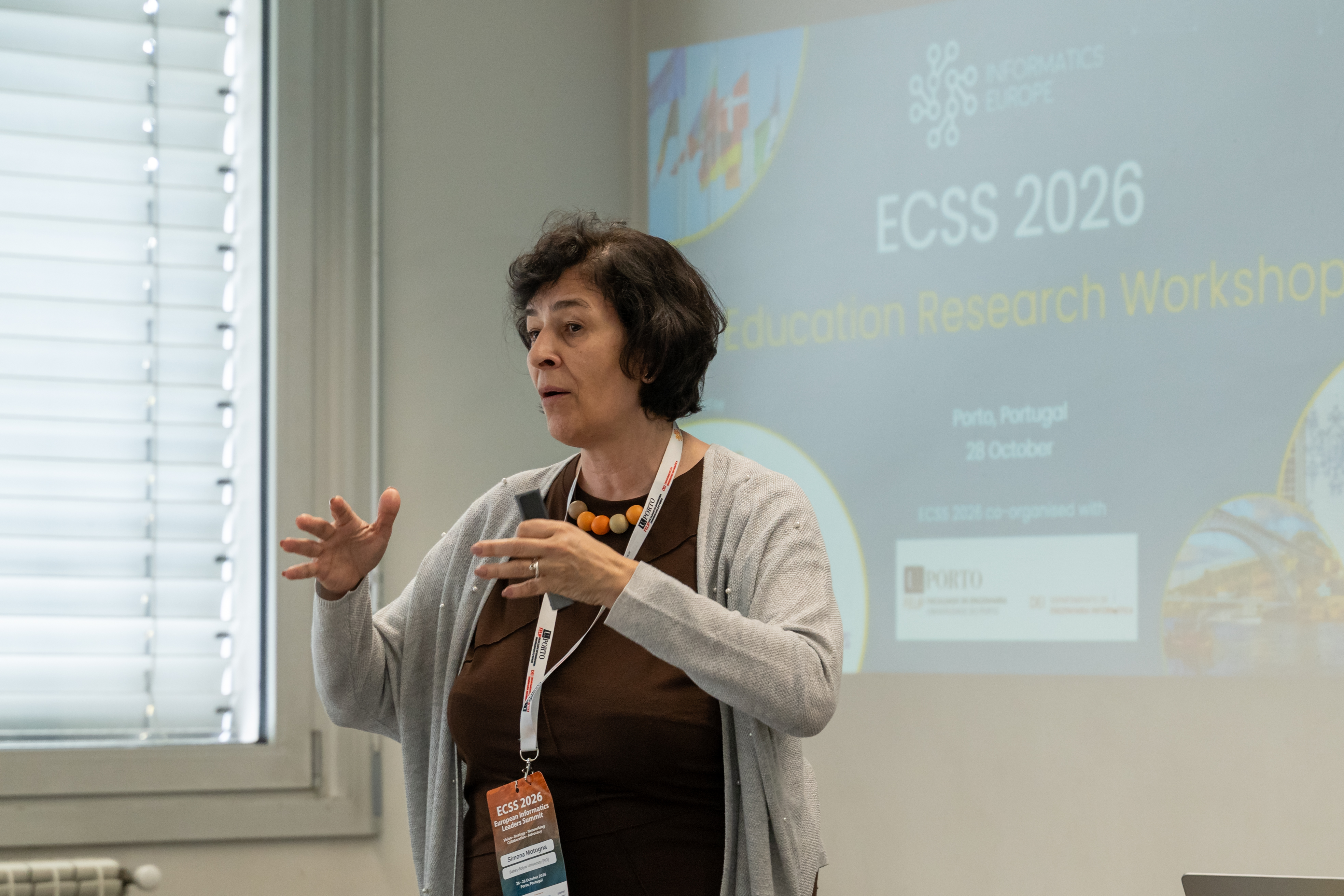
The Education Research Workshop brought together perspectives on some of the key challenges shaping Informatics Education across Europe, from the impact of generative AI and collaboration with industry to student readiness and the development of core competencies.
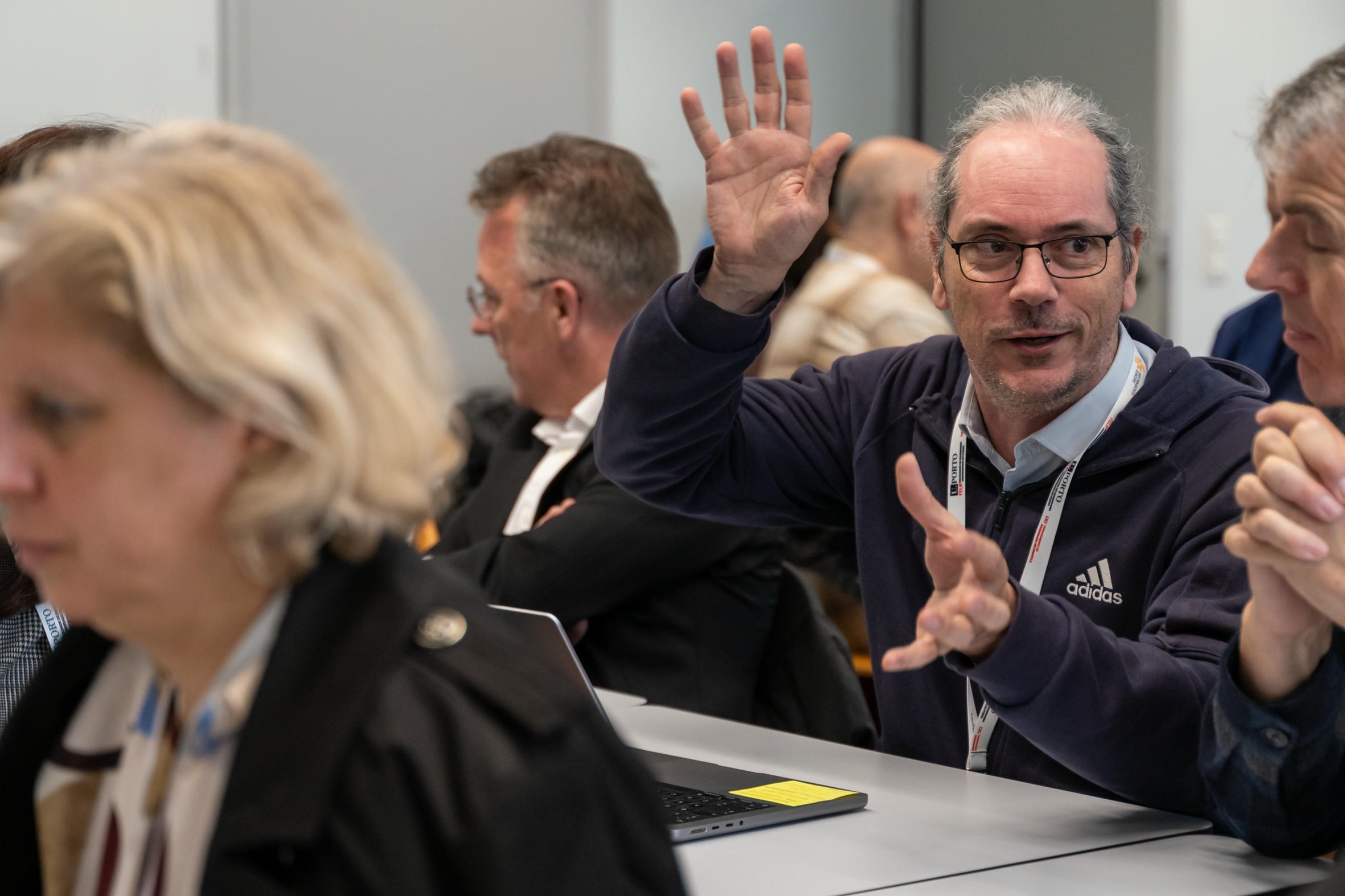
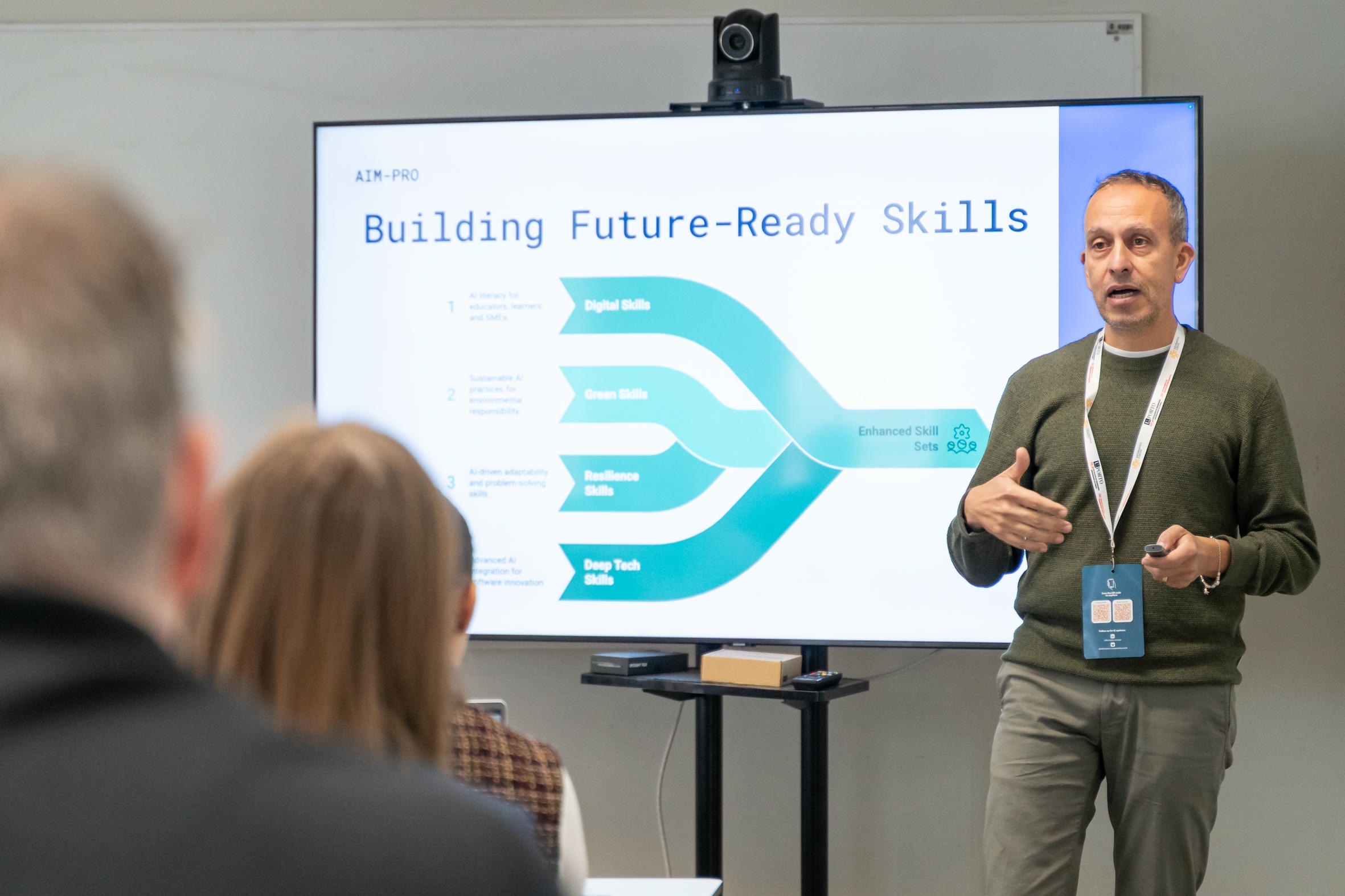
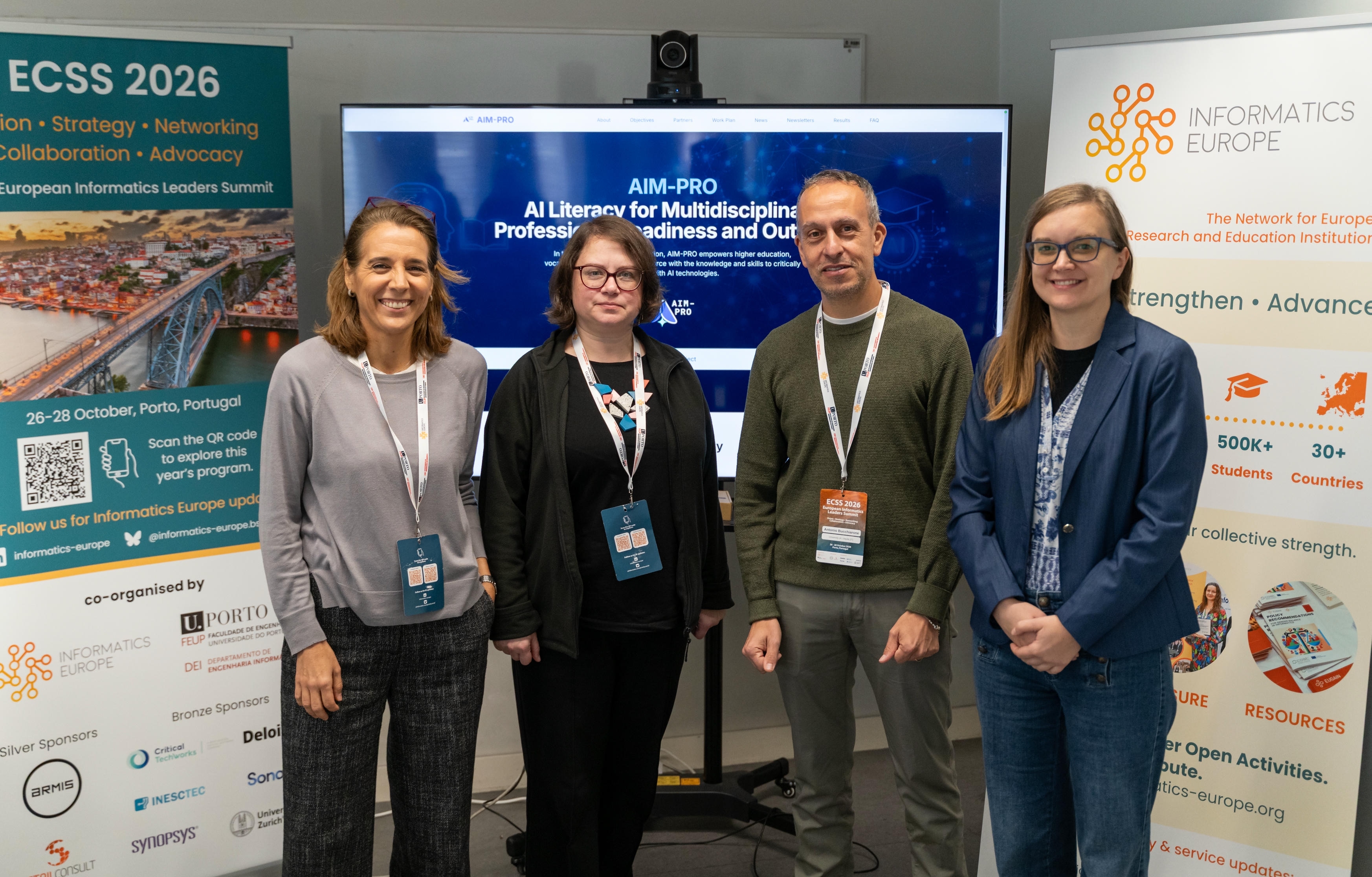
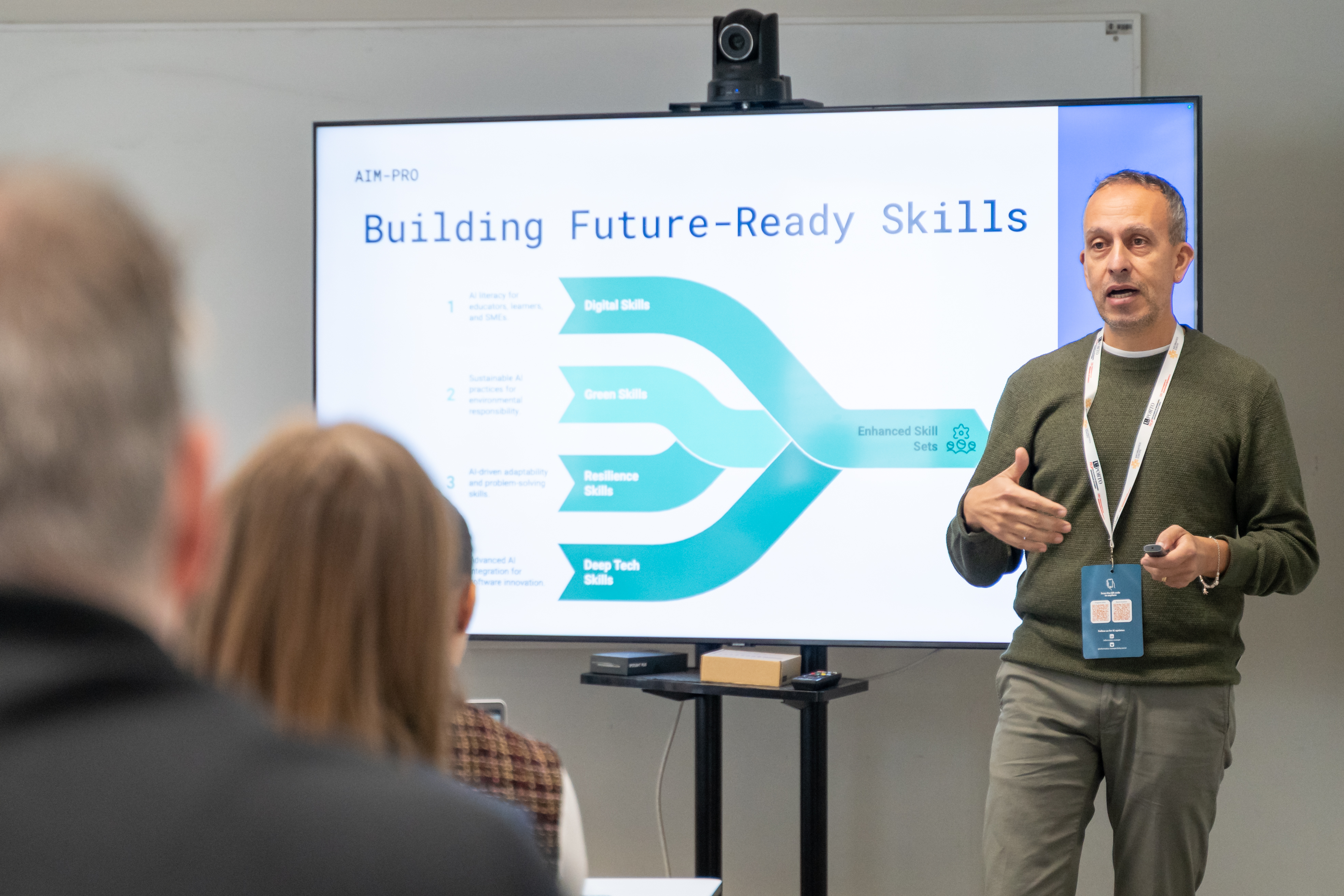
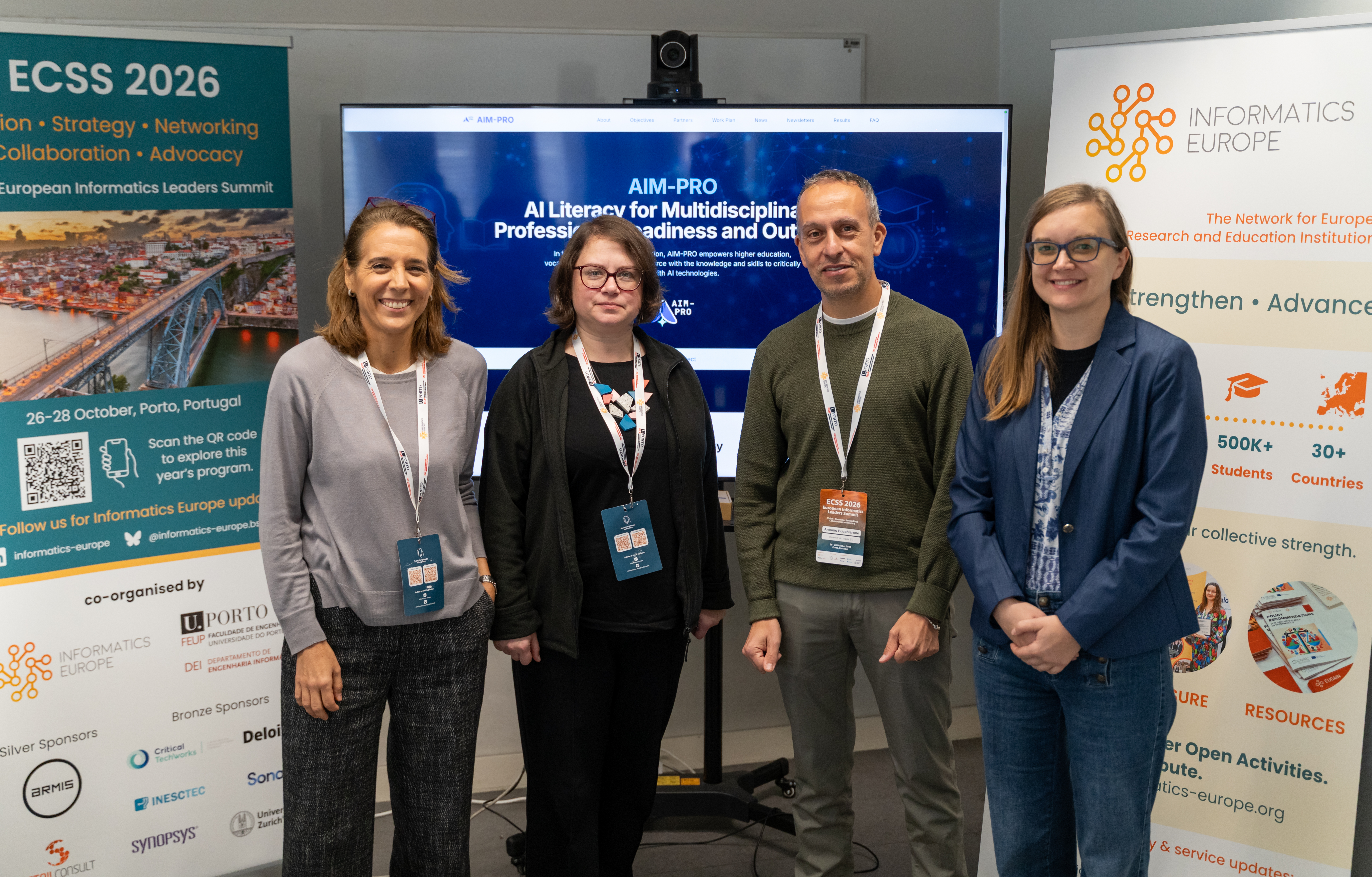
The first morning session, chaired by Oana Andrei (University of Glasgow, UK), introduced the ongoing work of Informatics Europe’s AI in Informatics Higher Education Task Force, including a survey of academics across Europe, and invited participants to join the Task Force to continue the discussion on how generative AI is changing teaching, learning, assessment, curricula and graduate competencies. Participants also heard about the Erasmus+ project AIM-PRO (AI Literacy for Multidisciplinary Professional Readiness and Outreach), presented by its Scientific Coordinator, Antonio Bucchiarone (University of L’Aquila and Fondazione Bruno Kessler, Italy). The project, in which Informatics Europe is a partner, aims to strengthen AI literacy across higher education, vocational training and industry through competency frameworks, open educational resources and innovative learning tools. The presentation highlighted ongoing work on AI literacy competencies and educational digital twins designed to support personalised learning while fostering critical thinking and keeping educators at the centre of the learning process. Participants were invited to contribute to the project's development through curriculum validation, pilot activities and the co-design of educational resources and tools..
The second morning session explored how universities and industry can work together through BSc/MSc theses and capstone projects. Presentations by Simona Motogna (Babeș-Bolyai University, Romania), Enrico Nardelli (University of Rome Tor Vergata, Italy) and Jan Vahrenhold (University of Münster, Germany) presented findings from a survey conducted by members of the Informatics Europe Education Research Working Group, with responses from IE member institutions. The findings highlighted benefits such as authentic student experience, stronger industry connections and opportunities for knowledge transfer, alongside challenges including aligning academic and industry expectations, securing resources and commitment, defining project scope, and ensuring fair assessment. Recommendations included establishing clear collaboration structures, maintaining regular communication and formalising arrangements early.
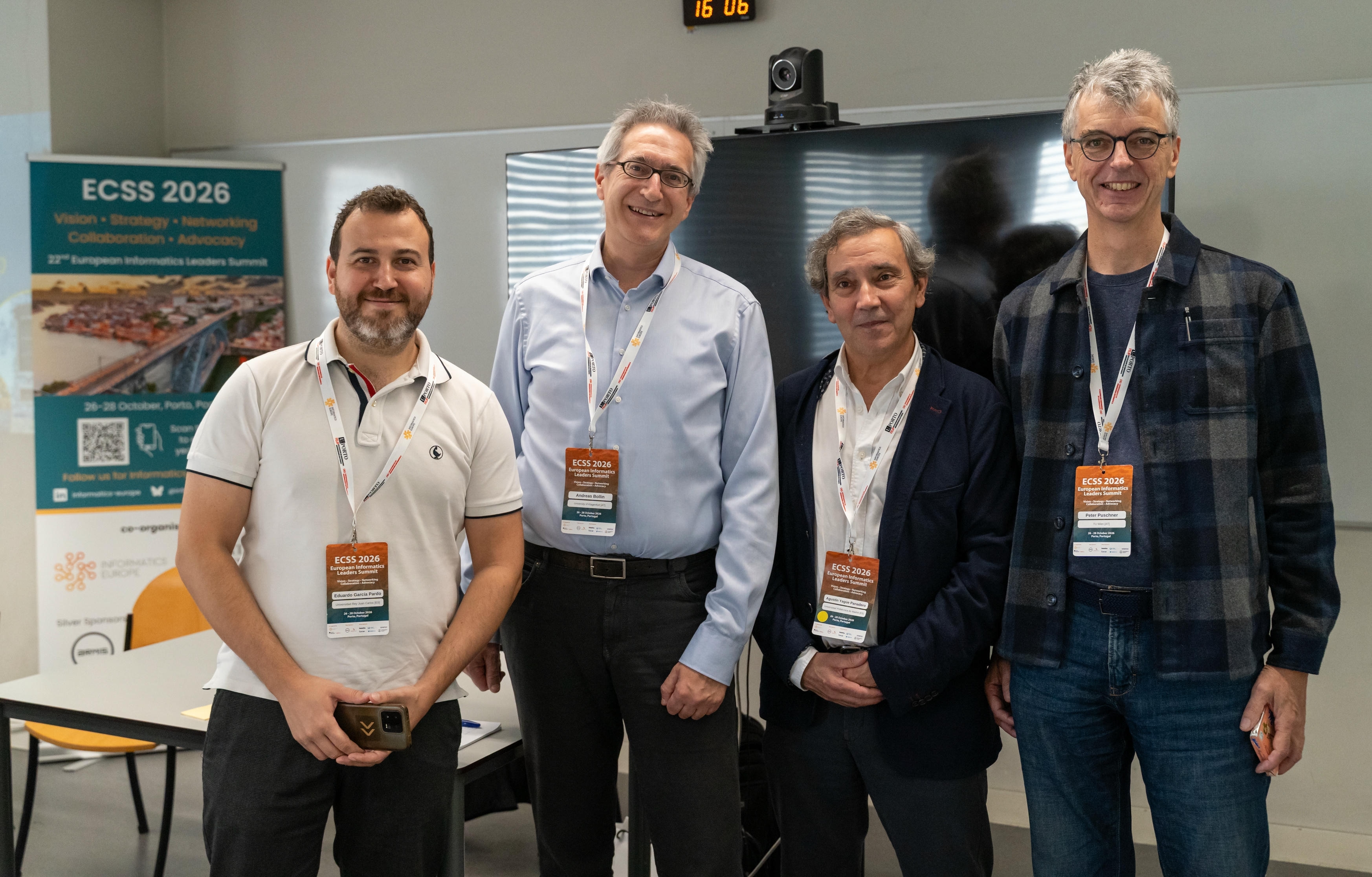
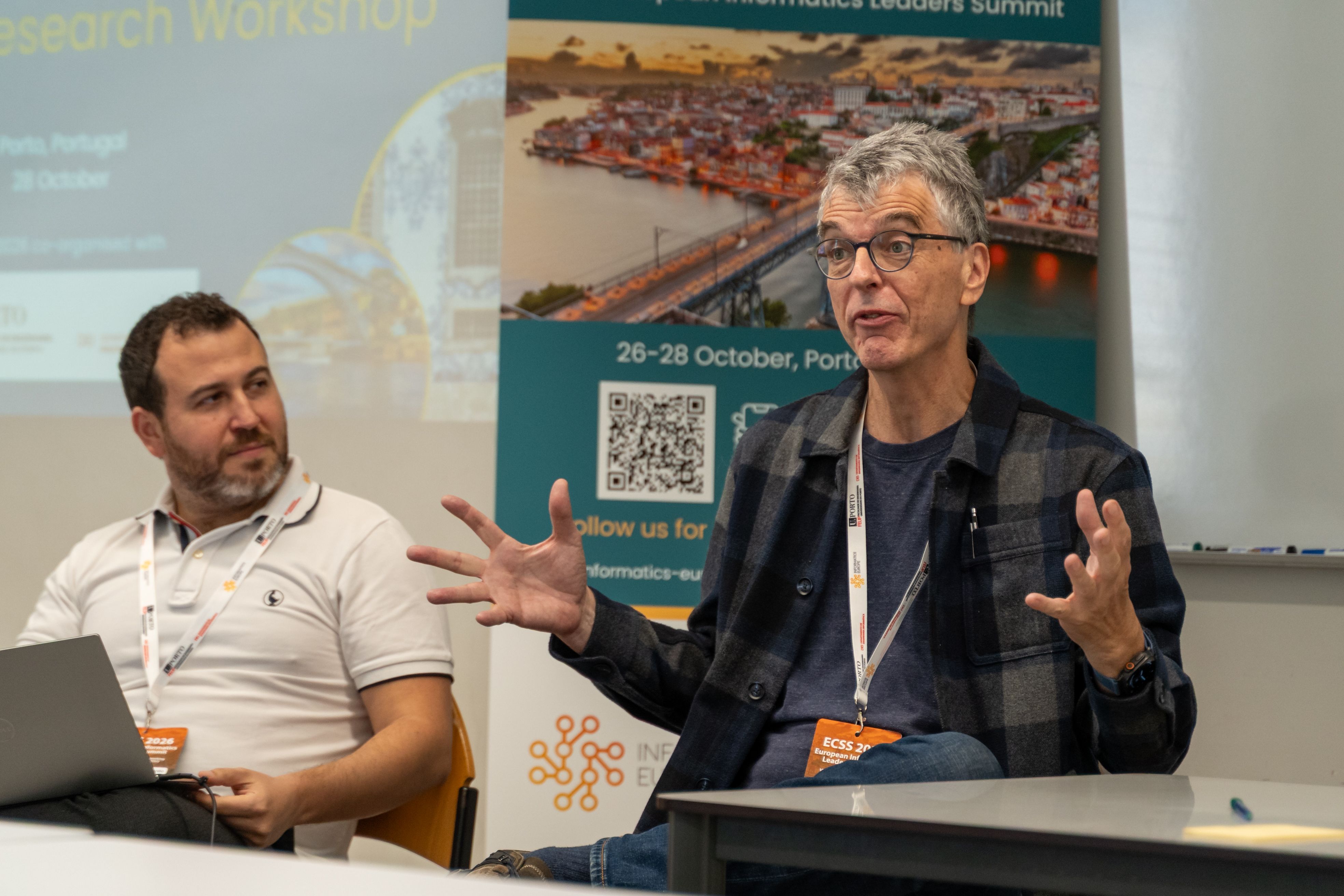
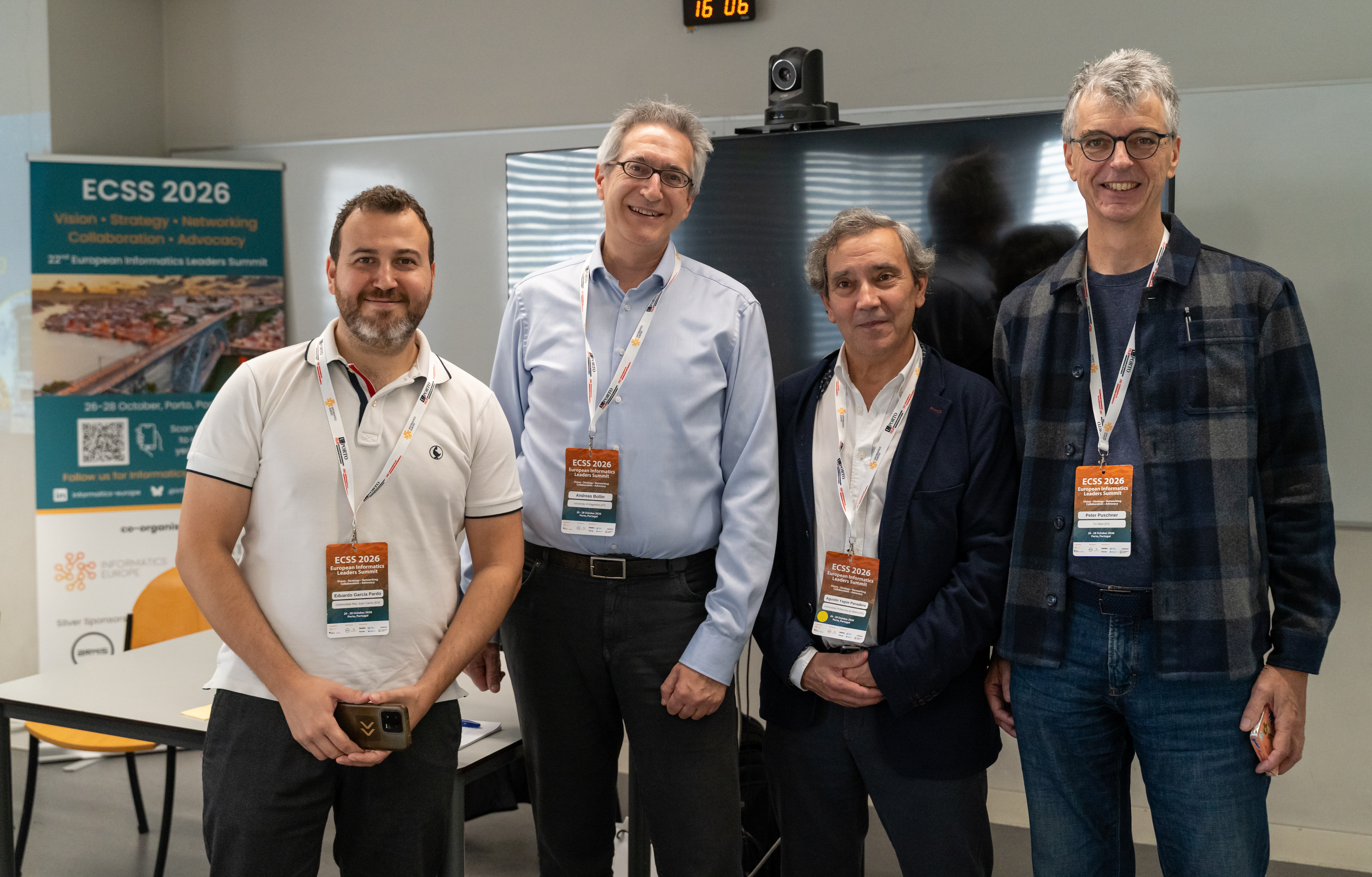
The workshop continued with an afternoon session examining Informatics Higher Education in Europe: Readiness and Core Skills, chaired by Andreas Bollin (University of Klagenfurt, Austria) and Agustín Yagüe (Universidad Politécnica de Madrid, Spain). Discussions highlighted concerns about students’ preparedness for higher education, particularly in self-directed learning, persistence, algorithmic thinking and mathematical reasoning. Presentations highlighted the ongoing work of an Informatics Europe Task Force, analysing competency gaps in higher education curricula and the integration of informatics skills across engineering disciplines. Participants also identified gaps in the professional use of generative AI and cyber hygiene, among others, and discussed the need for clearer entry expectations, stronger cooperation between schools and universities, shared competency frameworks and targeted first-year support. Across the sessions, a common message emerged: responding to the changing landscape of informatics education requires continued dialogue, collaboration and coordinated action across institutions, disciplines and industry. Colleagues interested in contributing to the Task Force’s ongoing work were invited to join the IE Education Research Working Group.
Strategy Workshop II
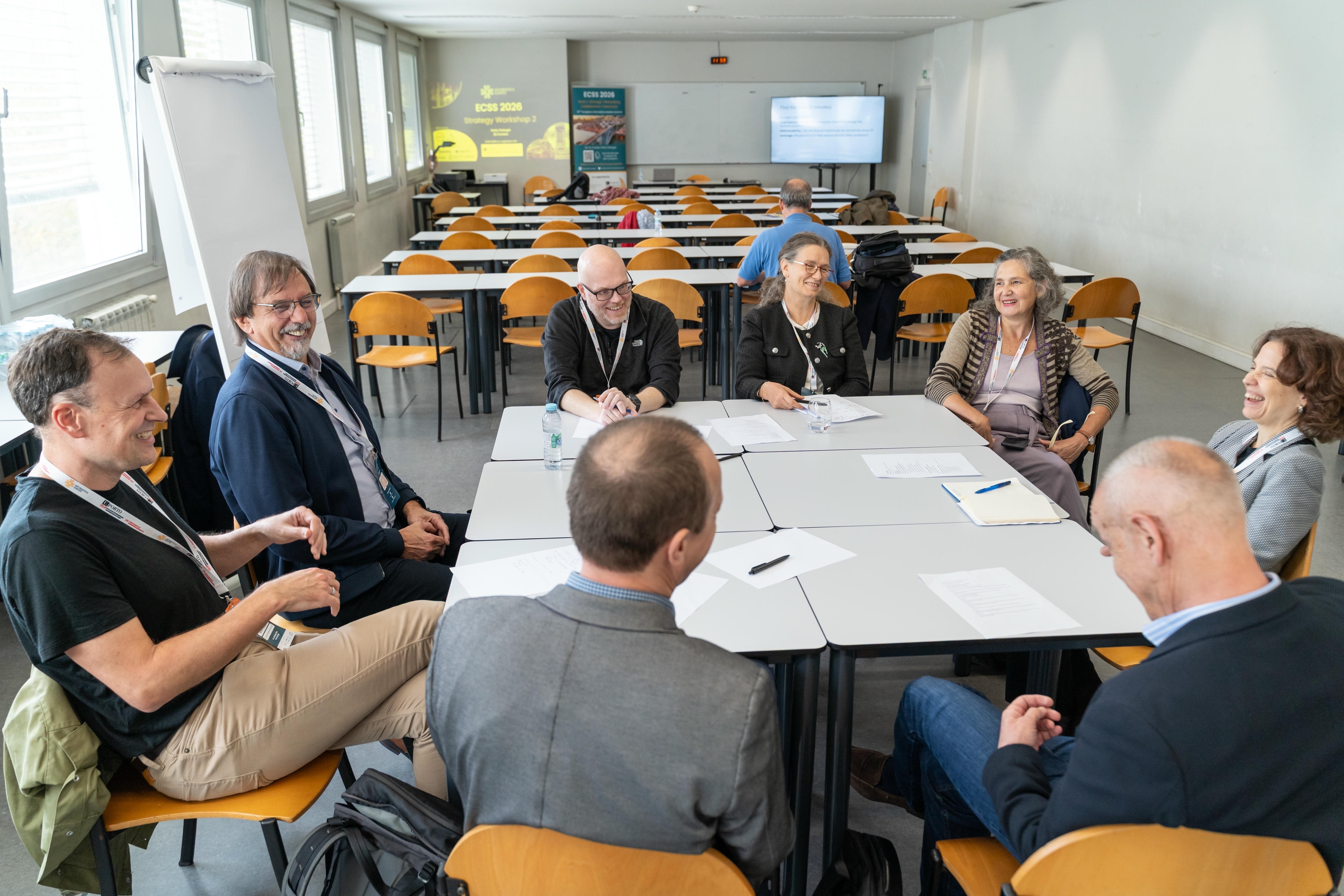
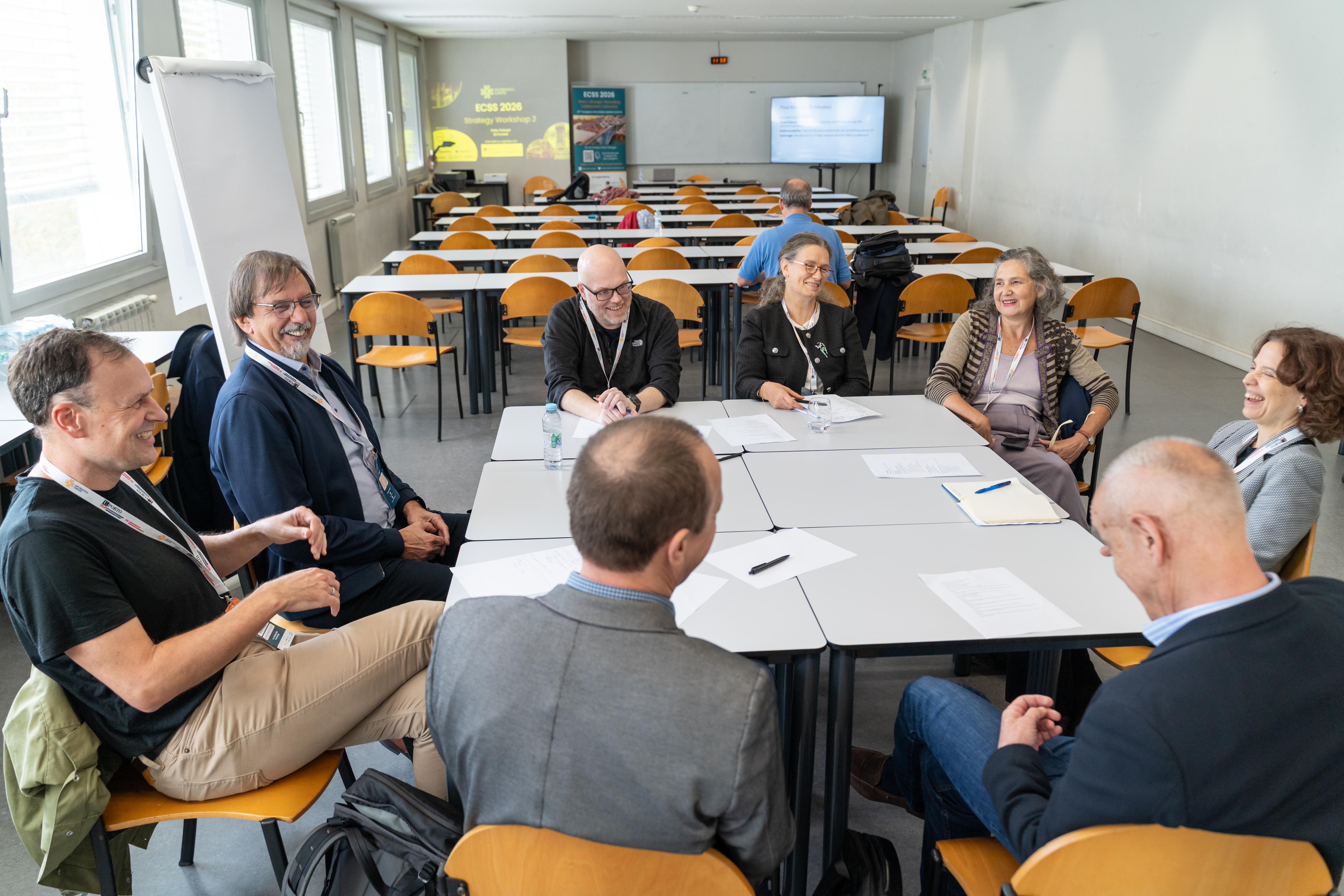
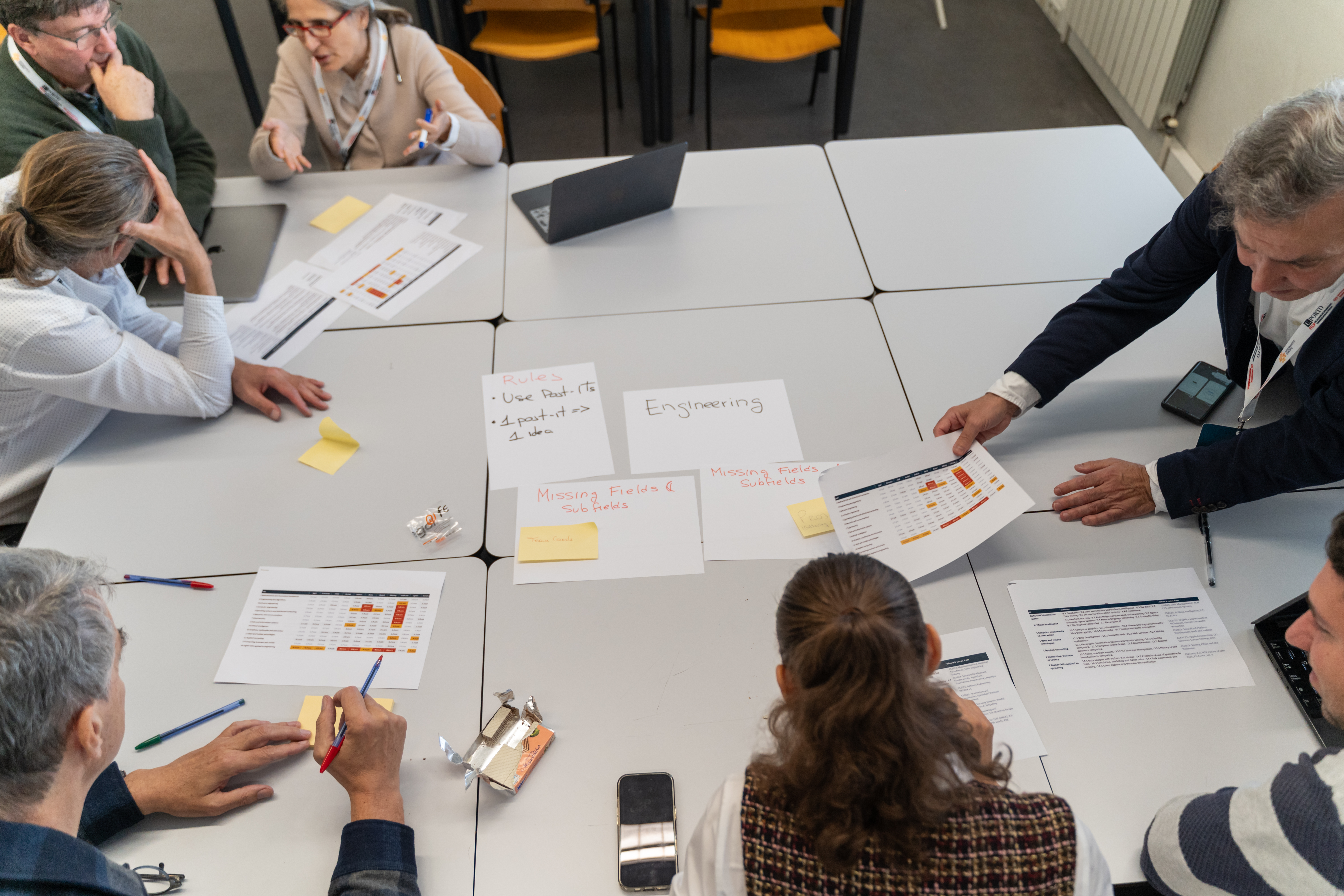
Building on the discussions of Strategy Workshop I, Strategy Workshop II took a more practical approach to translating strategic ambitions into concrete choices and effective action in academic Computer Science departments. Chaired by Michel Chaudron (Eindhoven University of Technology, the Netherlands) and Giovanni Russello (University of Auckland, New Zealand), the session explored the interdependencies between strategic priorities, shared resources and capabilities, and the trade-offs involved in pursuing different initiatives. Participants also identified key barriers to strategy execution, including limited resources and staff capacity, lack of strategic clarity, organisational culture and motivation, leadership, governance and autonomy, and the complexity of the university environment. A central takeaway was that strategy is an ongoing collective process rather than a static document, requiring committed leadership, clear priorities, resource mobilisation and continuous monitoring to turn institutional ambitions into sustained action and impact.
Open Science Workshop
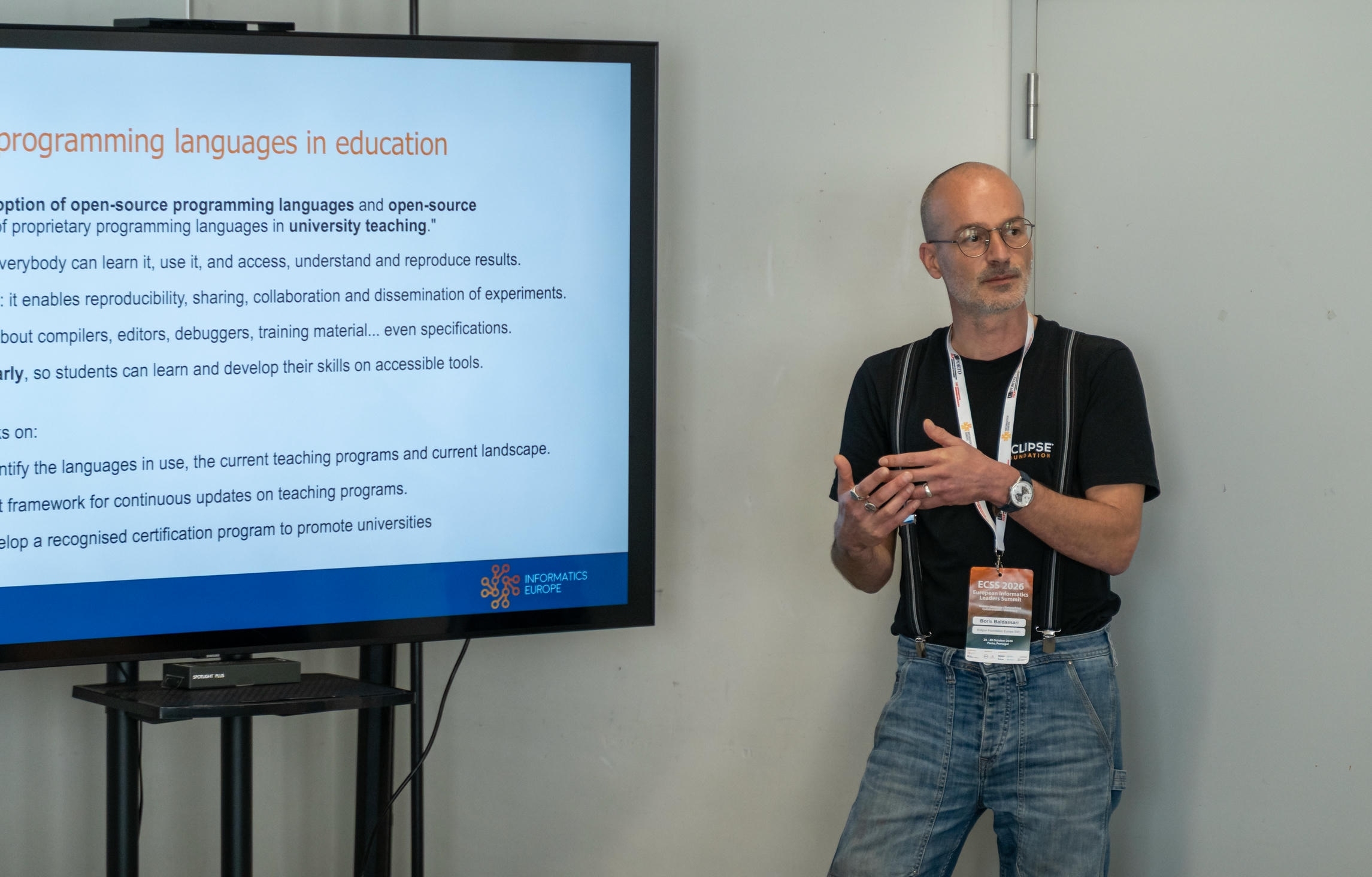
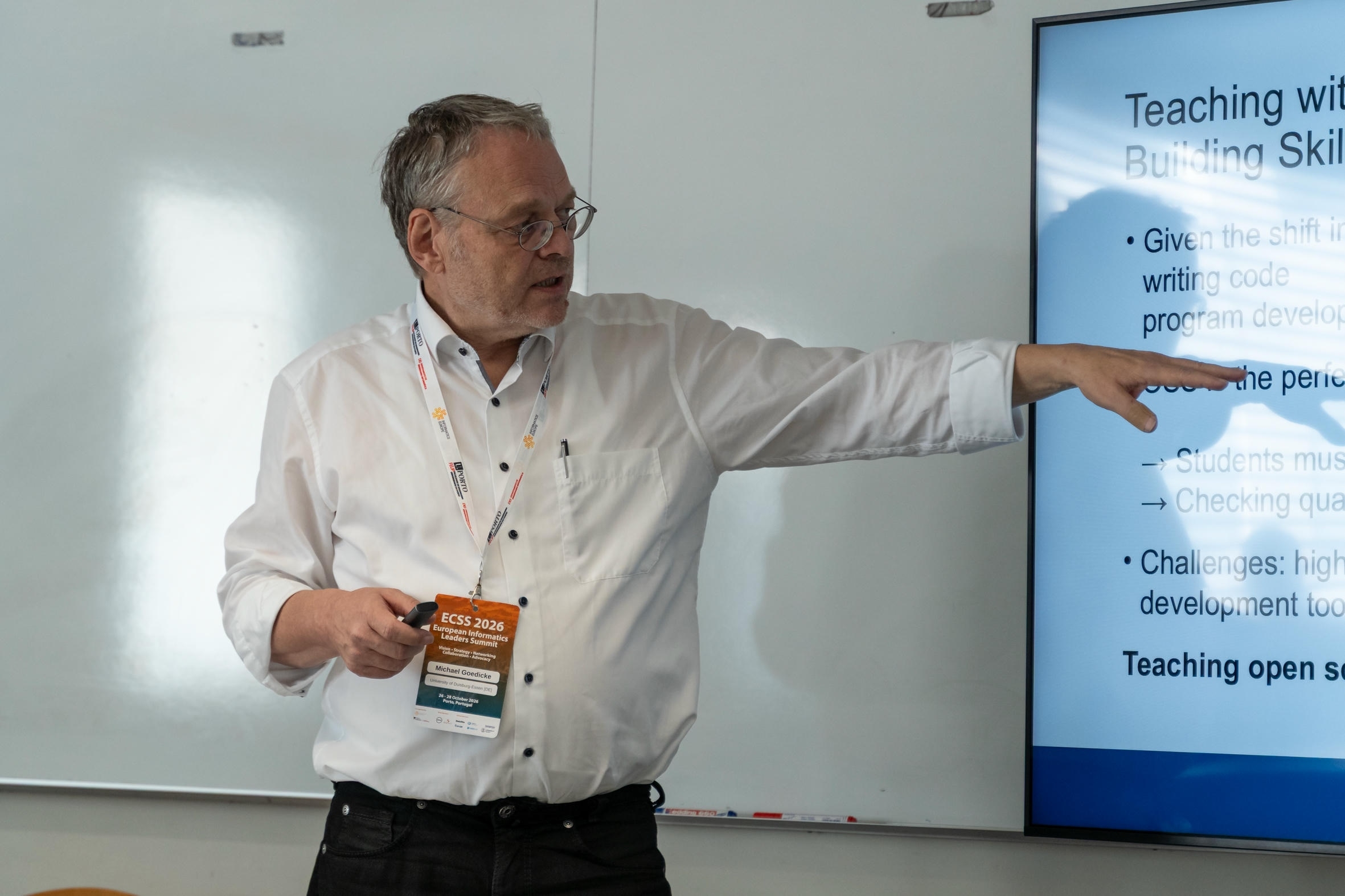
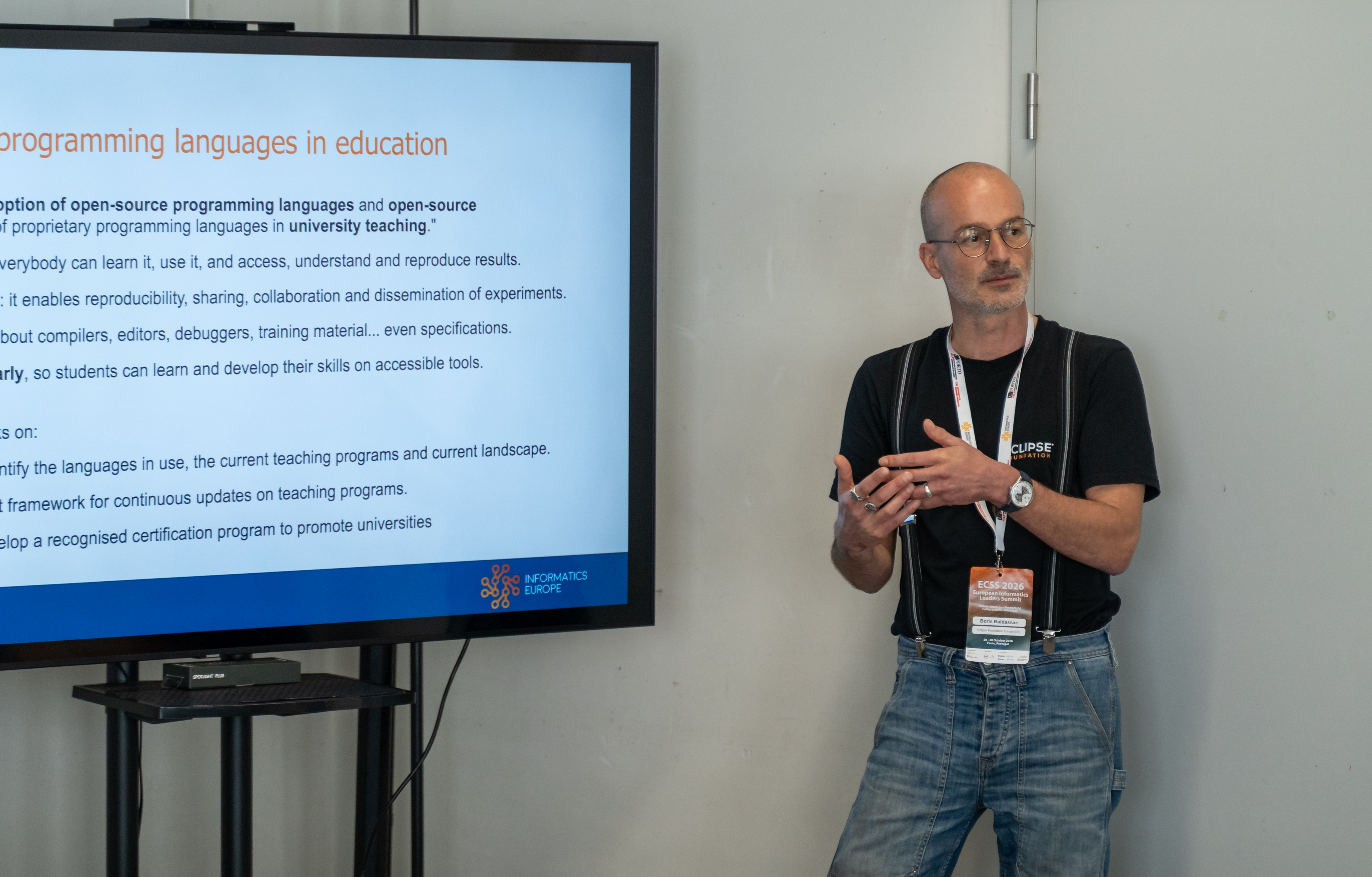
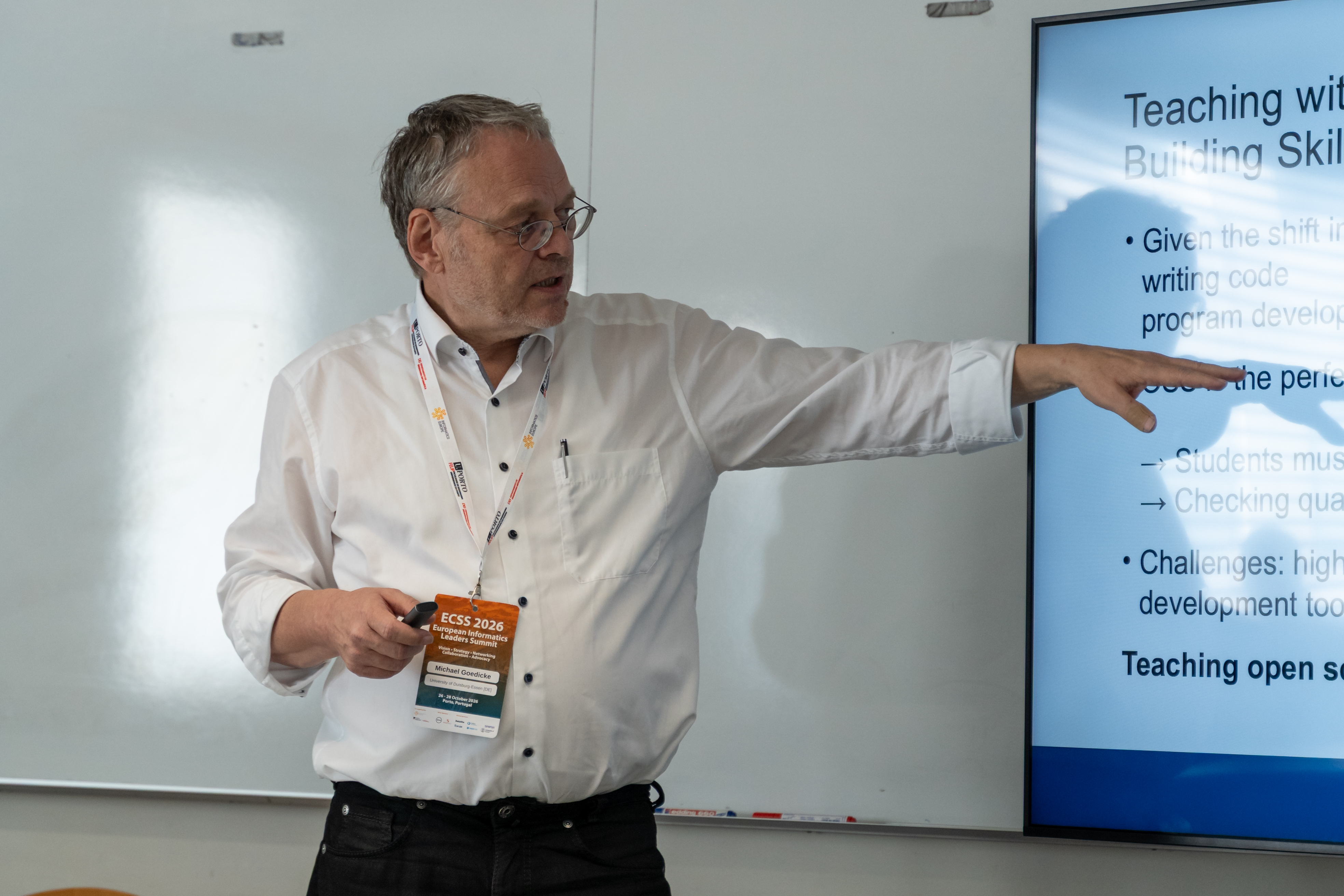
The Open Science Workshop, chaired by Michael Goedicke (University of Duisburg-Essen, Germany) and featuring speaker Boris Baldassari (Eclipse Foundation Europe, OSPO Alliance), brought participants together for short presentations and discussions around three key themes: open-source software as an engine of open science in informatics, using open source in education, and the infrastructure needed to sustain open-source ecosystems. Discussions highlighted the importance of recognising software as a scientific contribution through proper citation (e.g. SWHID), acknowledging software developers and data contributors in research publications, and developing more transparent ways to assess the quality and impact of research software. Participants also explored the benefits of using open-source software in teaching, including access to source code, development tools, and professional software engineering practices, which provide students with valuable hands-on learning opportunities without the licensing costs associated with proprietary solutions.
The discussions also highlighted the need for more sustainable and collaborative infrastructure for open-source development. While platforms such as GitHub provide important resources, relying on a single platform creates risks, underscoring the need for more distributed, federated repositories, shared standards for software development metadata, and unified authentication systems. A key aspiration was for Informatics Europe, with the support of the Open Science Working Group, to contribute to this development by recommending common standards for forge federation and supporting a more interconnected and sustainable open-source ecosystem for research and education. Colleagues interested in advancing this work were encouraged to join the Working Group and actively contribute to these efforts.
The workshop was made possible with the support of Ulrike Lucke (University of Potsdam, Germany), Ina Schieferdecker (TU Berlin, Germany), Gregor Engels (Bielefeld University, Germany) and Michel Chaudron (Eindhoven University of Technology, the Netherlands), whose contributions to its preparation and delivery are gratefully acknowledged.
Best Dissertation Award & Minerva Informatics Equality Award 2026
At each ECSS, we celebrate the institutions, teams and individuals making outstanding contributions to the field of Informatics.
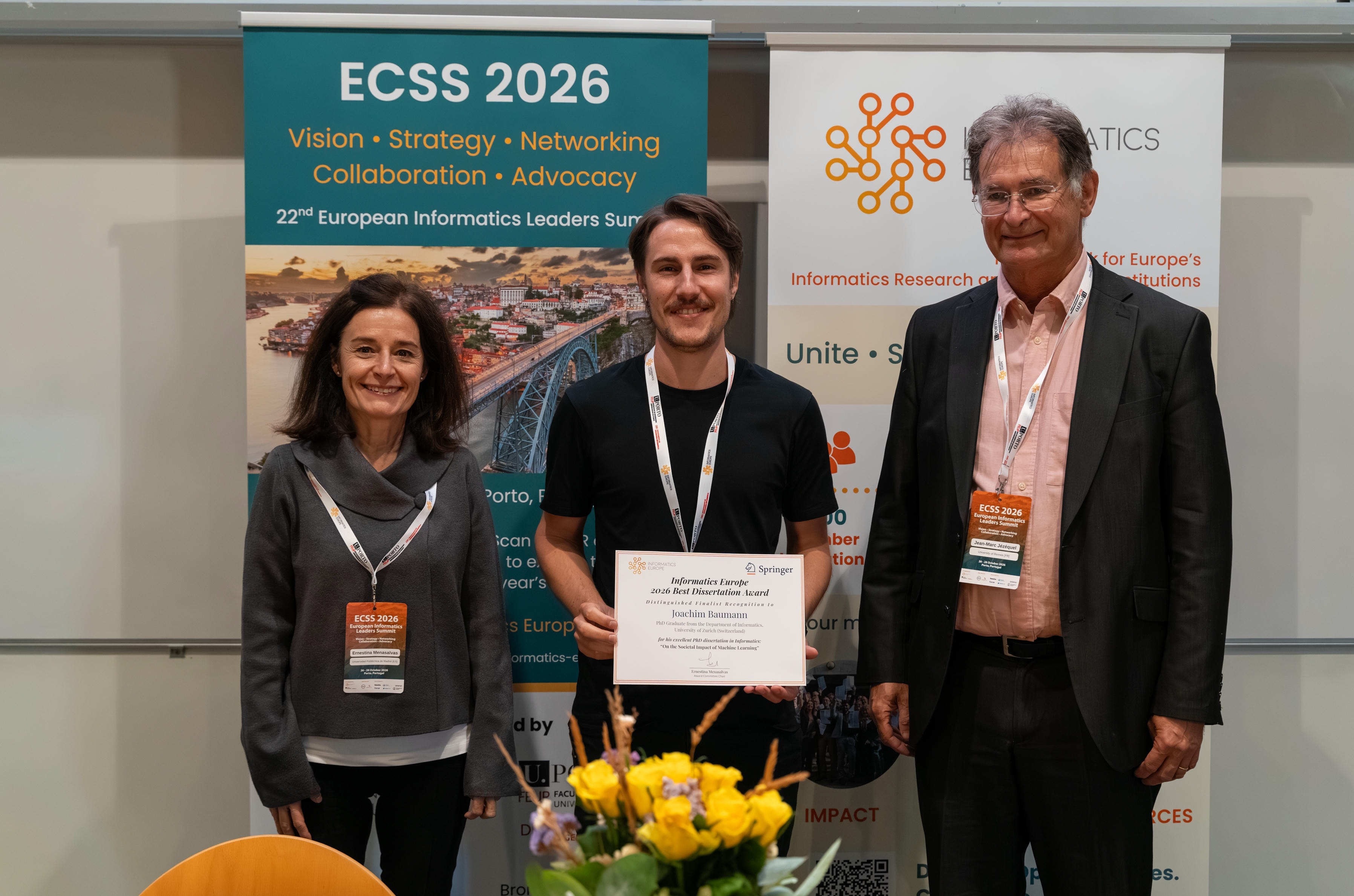
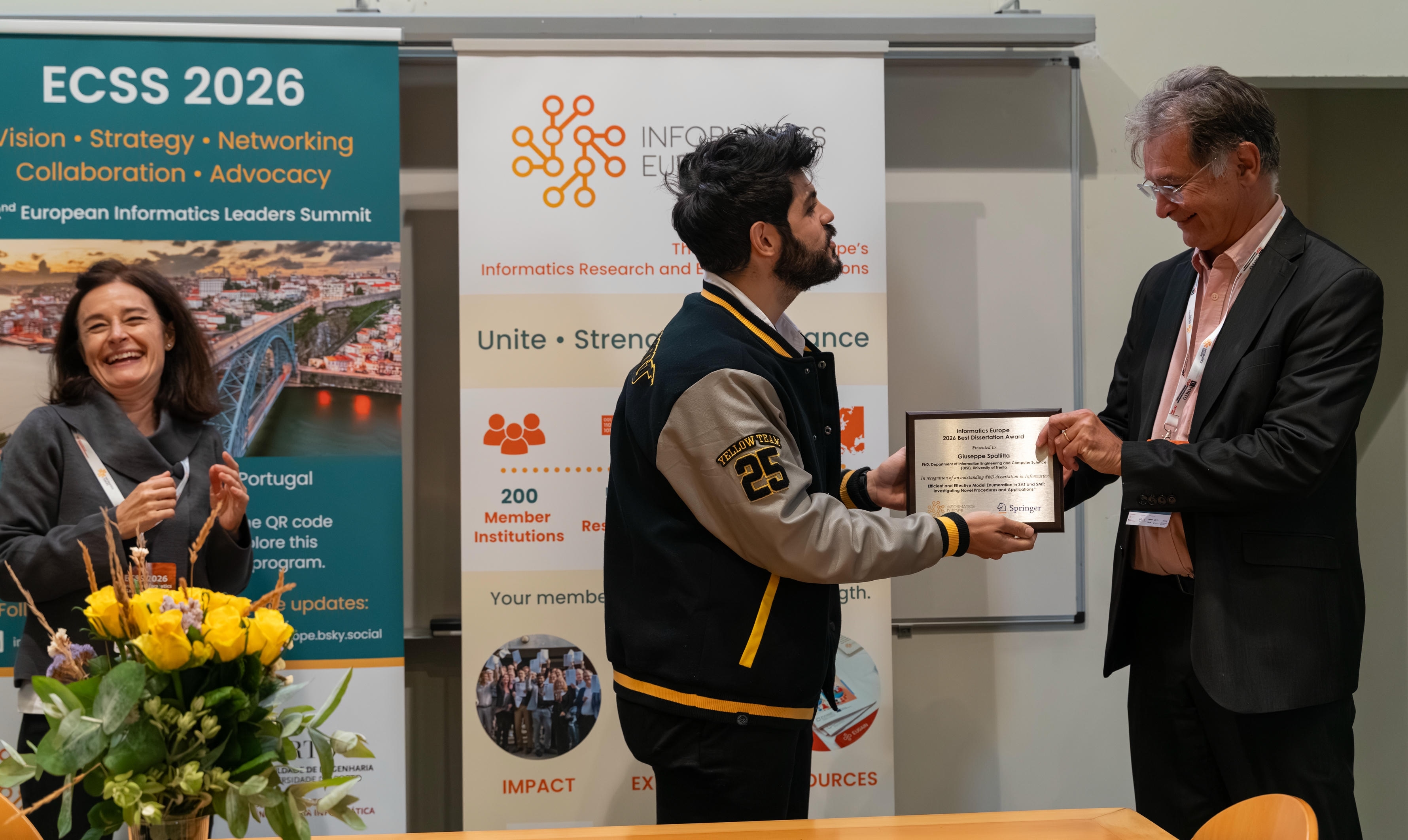
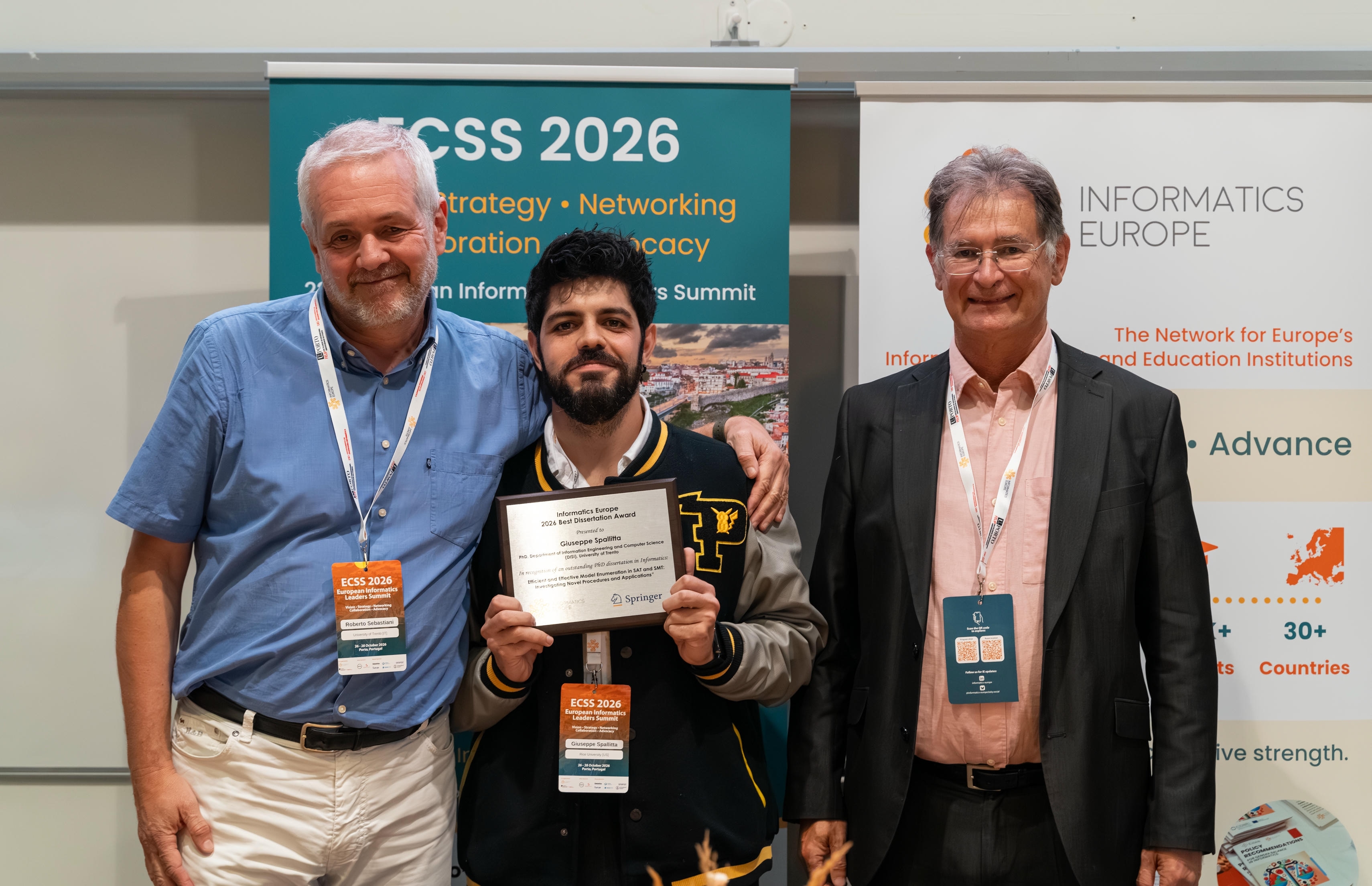
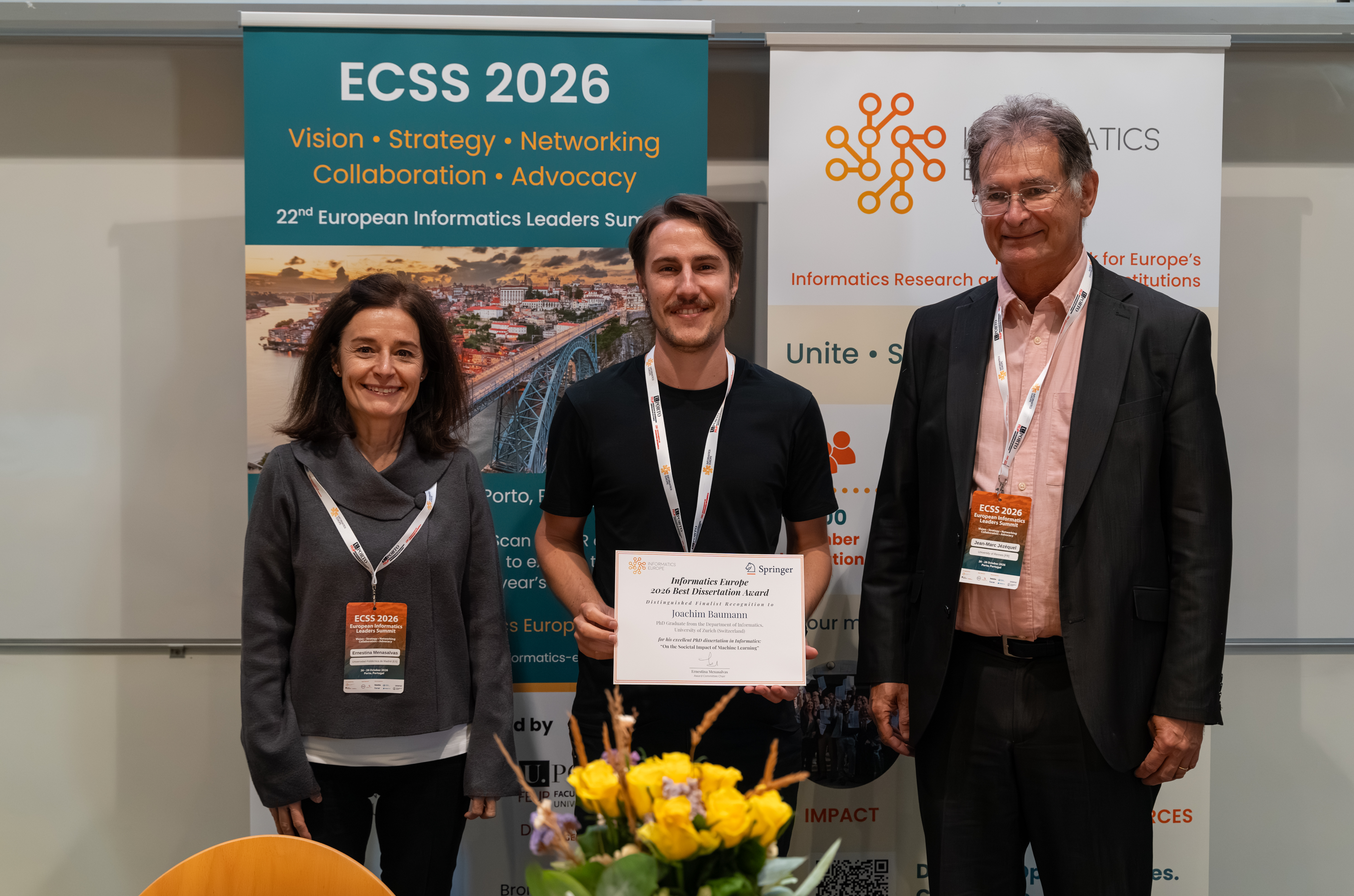
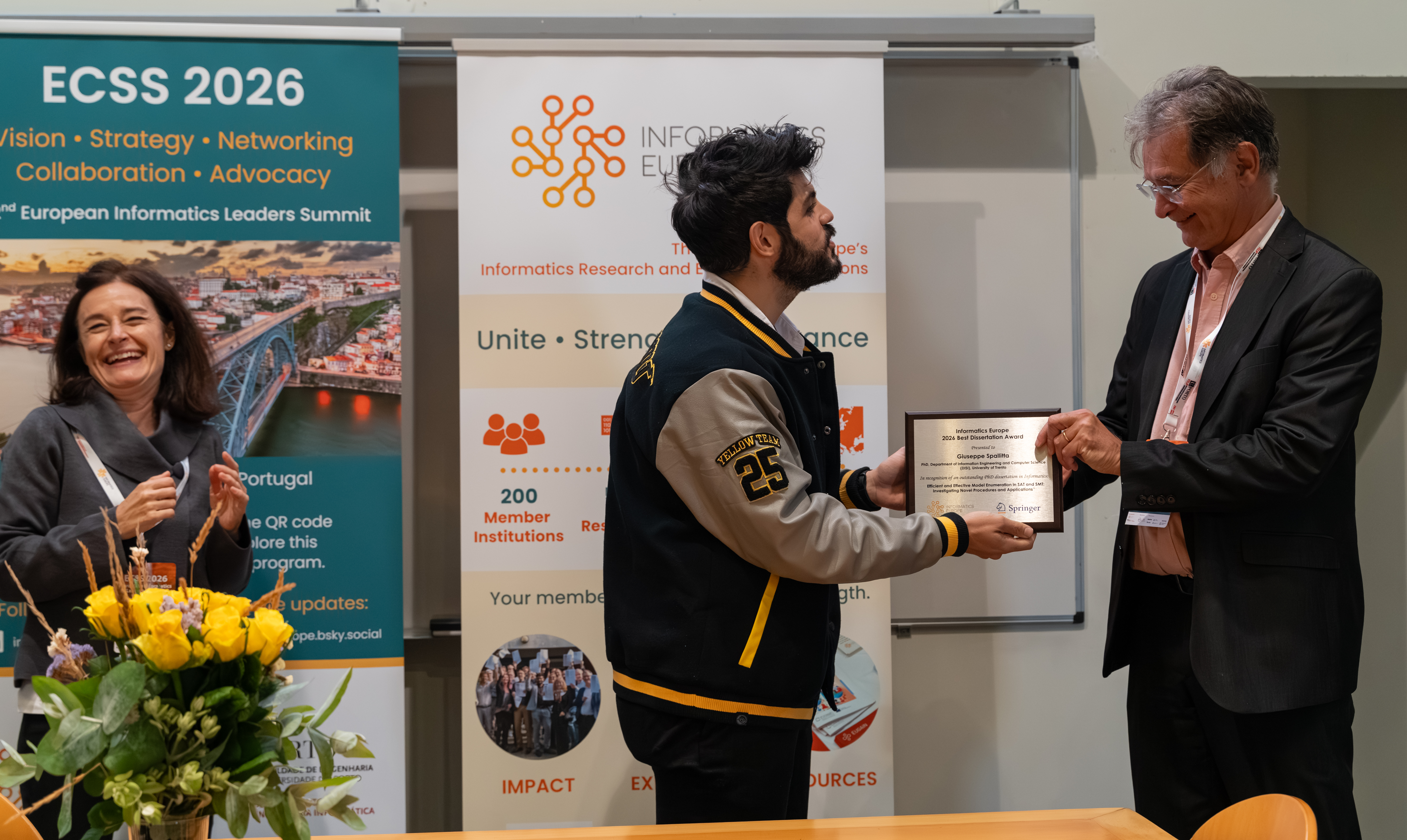
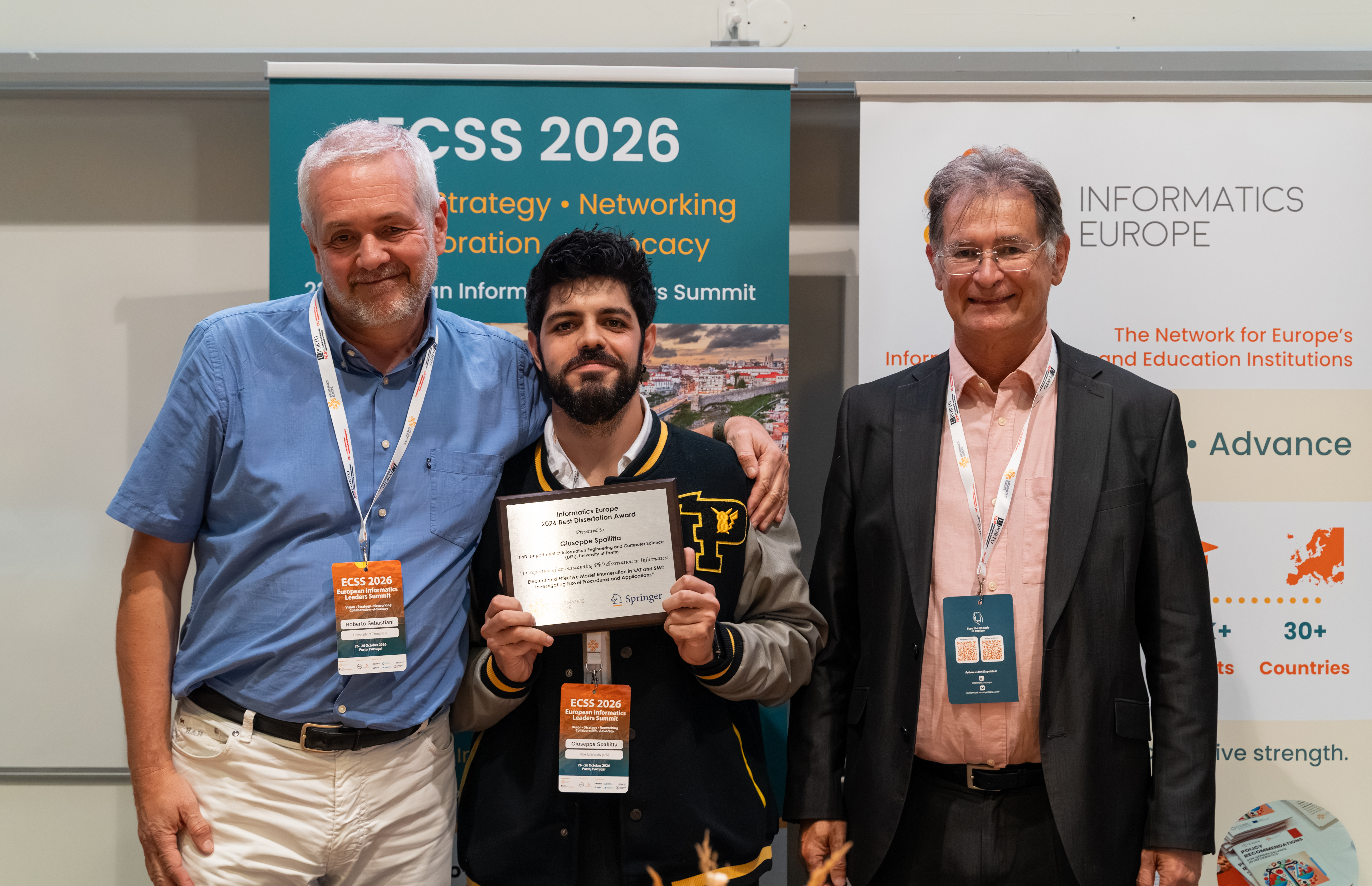
At this year’s Award Ceremony, we were delighted to announce Giuseppe Spallitta, PhD graduate from the Department of Information Engineering and Computer Science at the University of Trento (Italy), as the winner of the 2026 IE Best Dissertation Award (BDA). The Award received 29 nominations this year. Michal Štefánik (Faculty of Informatics, Masaryk University, Czechia) was named runner-up, while two distinguished finalists, Joachim Baumann (Department of Informatics, University of Zurich, Switzerland) and Thibault Dardinier (Department of Computer Science, ETH Zurich, Switzerland) were also honoured.
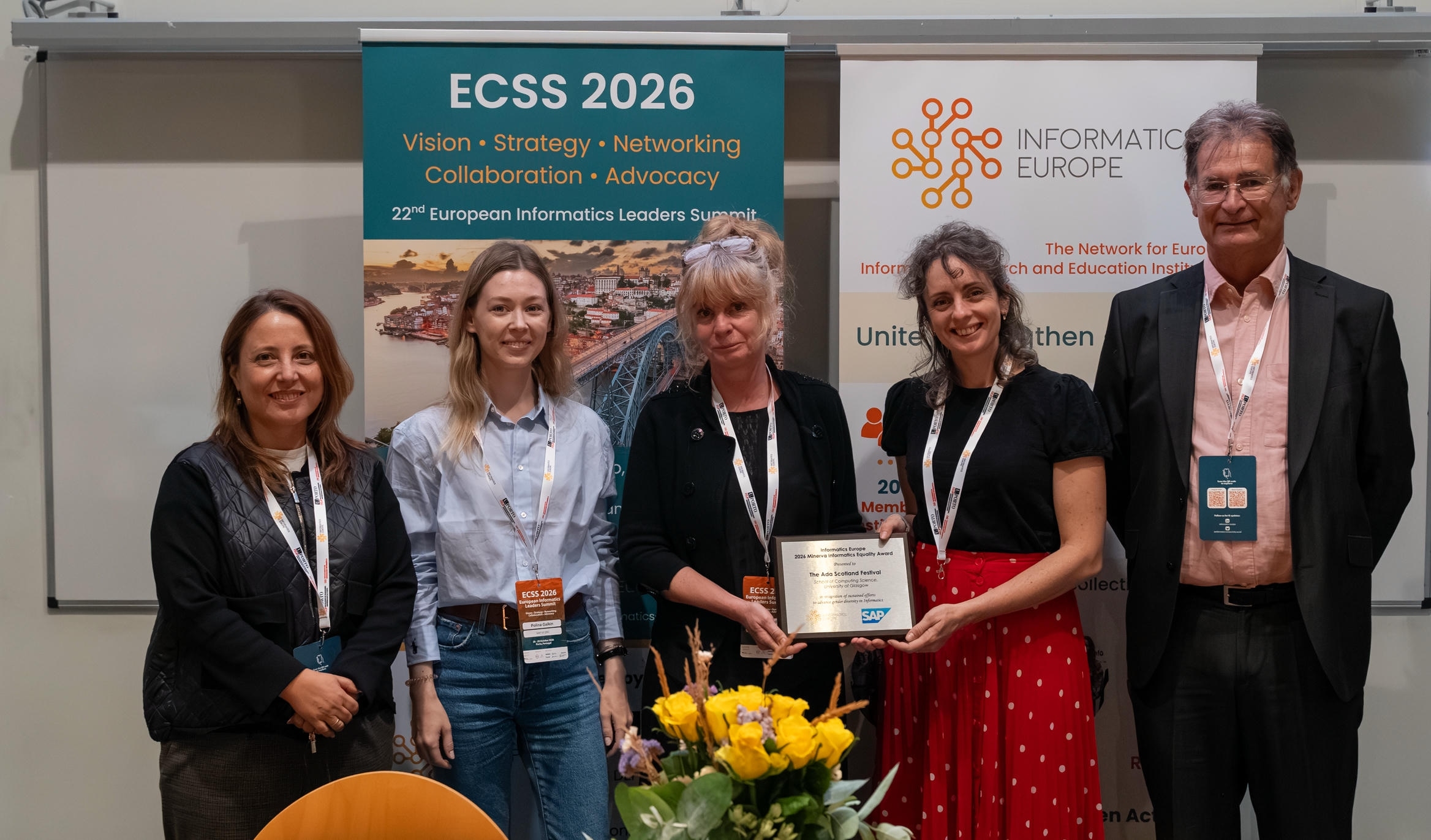
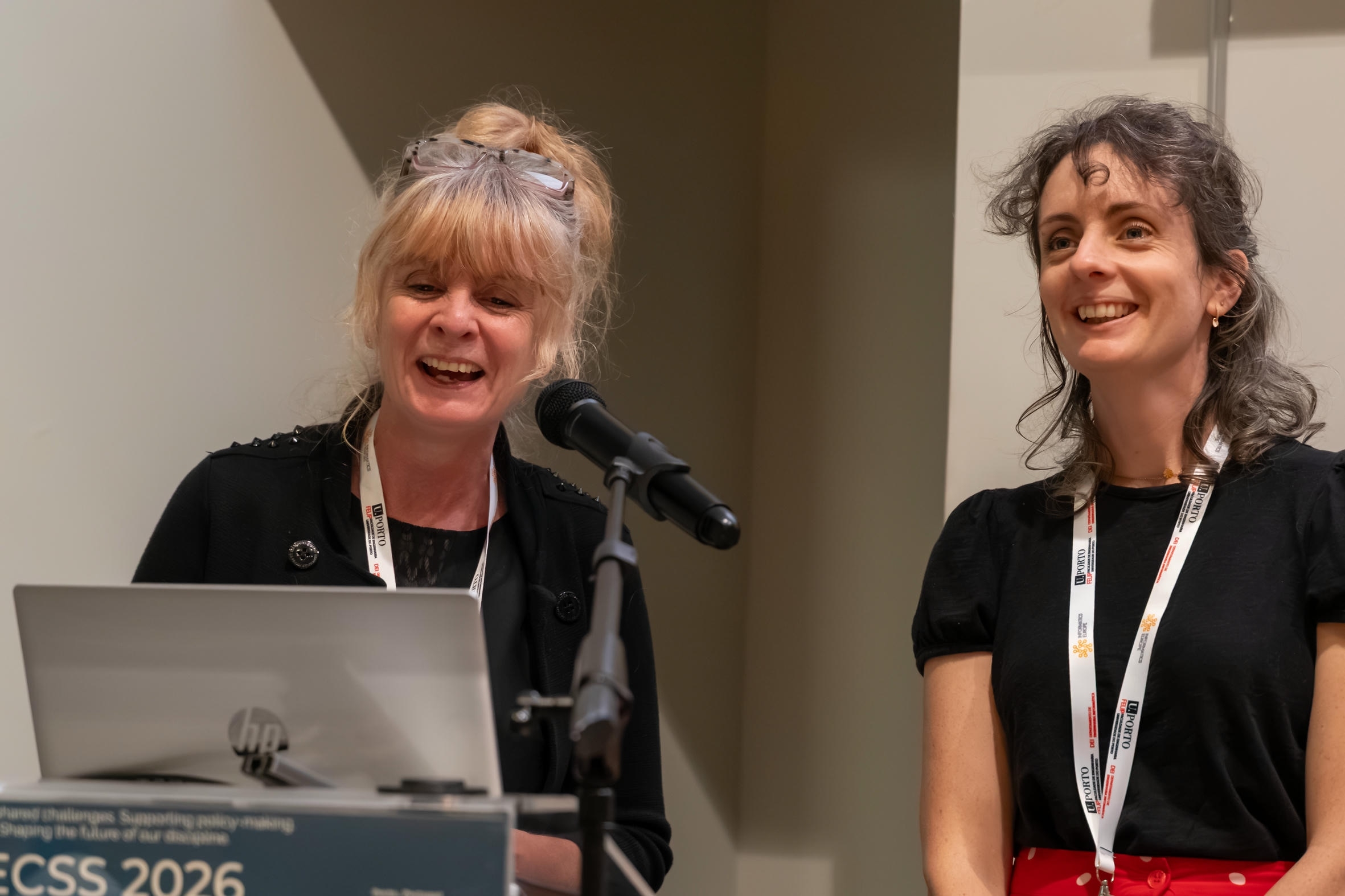
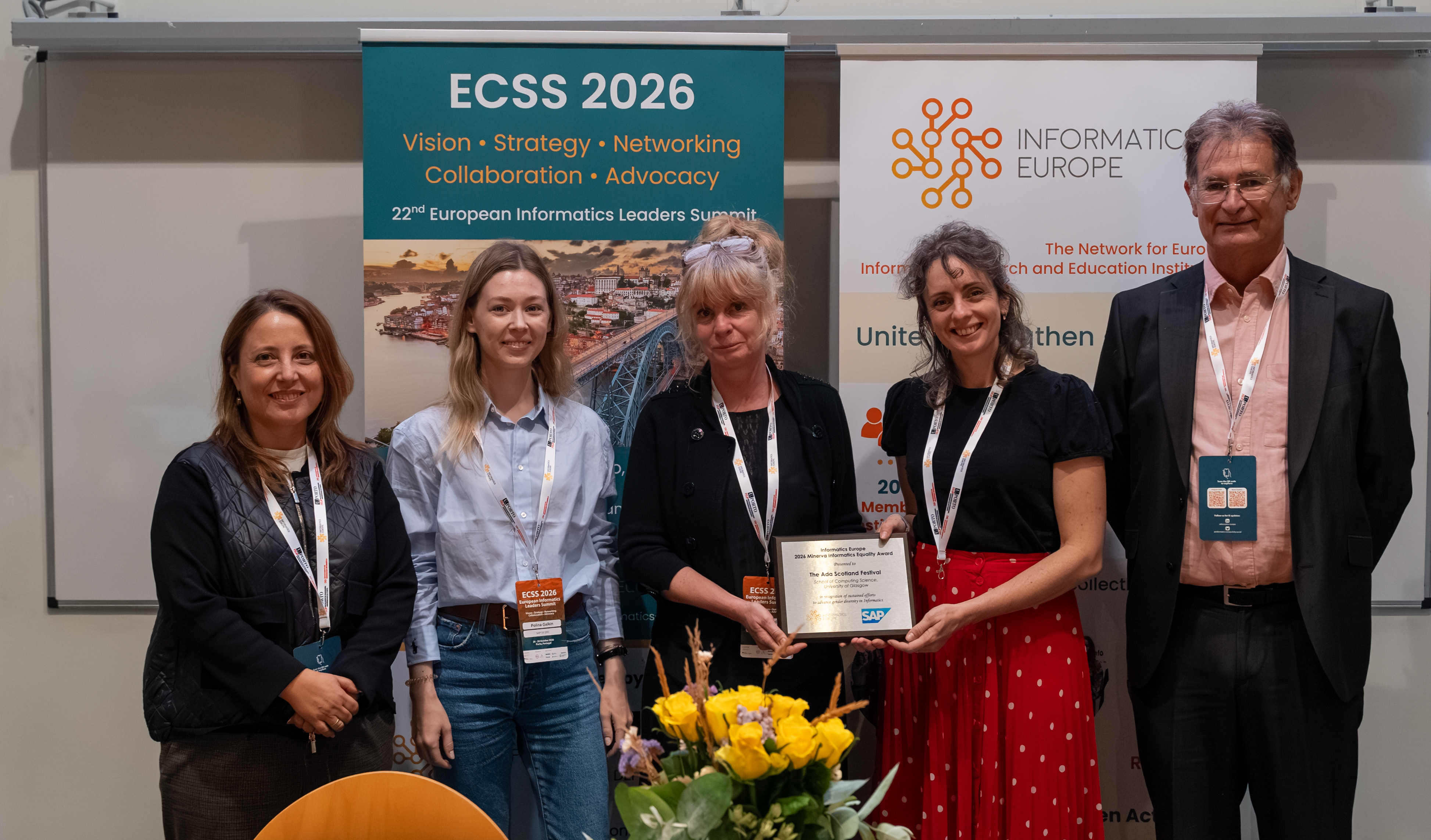
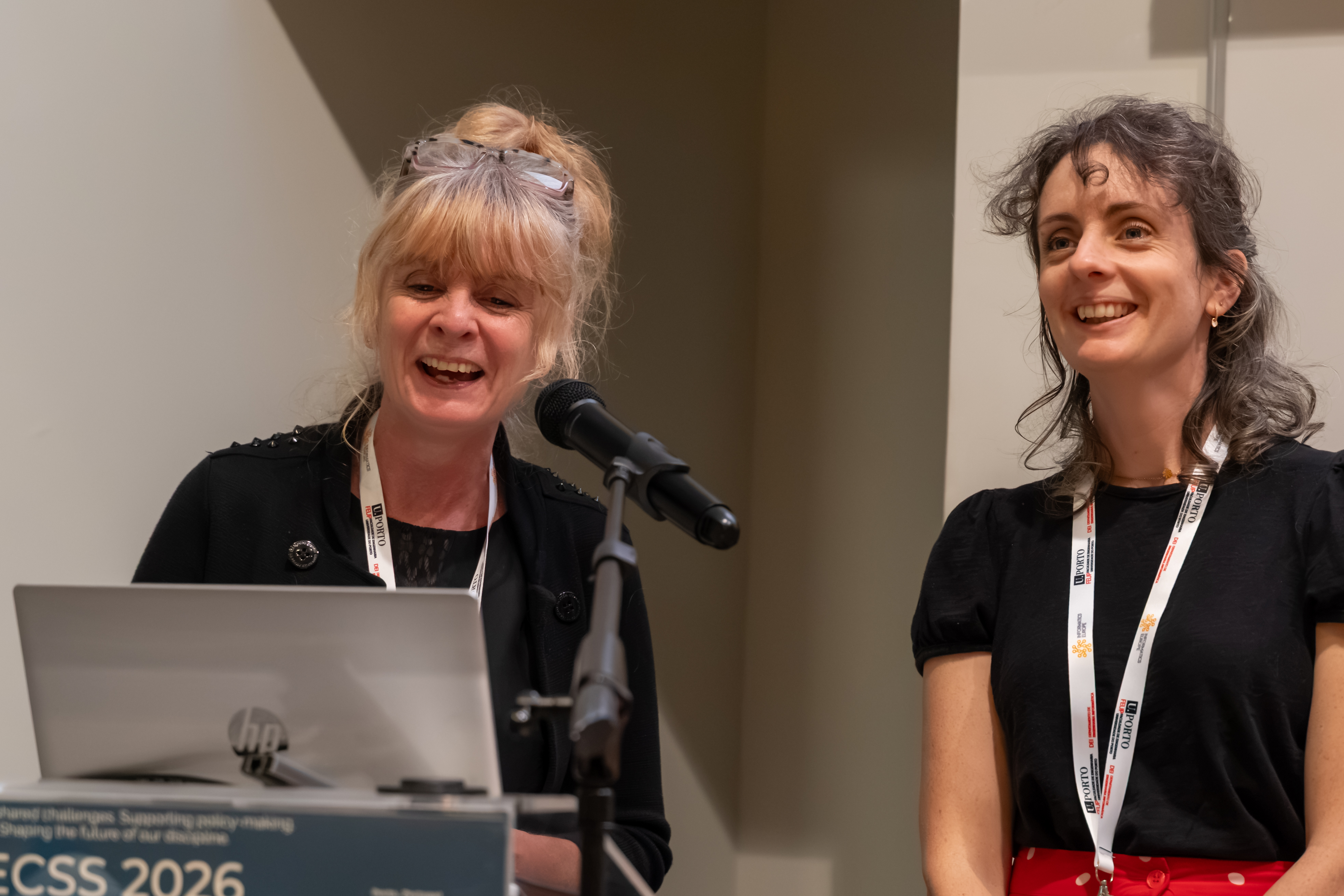
We also celebrated the 11th IE Minerva Informatics Equality Award (MIEA), welcoming SAP as the Award’s new sponsor. The Award recognises initiatives supporting women in Informatics education and research. The Ada Scotland Festival, which brings together schools, colleges, universities and employers to advance gender equality in Informatics, received the 2026 Award.
To learn more about this year’s winners and previous recipients, explore our BDA & MIEA webpages.
ECSS 2027 in Tallinn, Estonia
The next Summit, ECSS 2027, will take place in Tallinn (Estonia), co-hosted with IE member institute School of Information Technologies, Tallinn University of Technology. With its UNESCO-listed Old Town, vibrant start-up scene and reputation as one of Europe’s leading digital societies, Tallinn offers an inspiring setting to connect with peers from across Europe, discuss the next steps for our discipline and exchange ideas that will help shape its future.
Join the Informatics Europe Ambassador Network and help us broaden our community by introducing IE to colleagues and institutions, promoting our activities and collaboration across Europe. When your referral leads to a new institutional member within six months, you will receive complimentary registration for the next ECSS. Find out more about the IE Ambassador Network and get involved!
Beyond the Summit, there are many ways to stay connected and contribute to the future of Informatics in Europe. Explore Informatics Europe activities, including our Working Groups, where colleagues from across Europe come together to bridge research and policy, develop shared initiatives and support Informatics research and education. By taking part, you can help turn the discussions and connections sparked at ECSS into lasting collaboration and collective impact.
Save the date on your calendar: ECSS 2027, October 25th-27th. We look forward to welcoming you and your colleagues to Tallinn for our next annual flagship summit!














 Netlogica