
Software Research Working Group: Members
- Tanja Vos, Universitat Politécnica de Valencia, Spain (Chair)
- Paris Avgeriou, University of Groningen, Netherlands
- Luciano Baresi, Politecnico di Milano, Italy
- Michel Chaudron, Eindhoven University of Technology, Netherlands
- Přemek Brada, University of West Bohemia, Czech Republic
- Benoit Combemale, University of Rennes / INRIA, France
- Roberto Di Cosmo, INRIA, France
- Elisabetta Di Nitto, Politecnico di Milano, Italy
- Yvonne Dittrich, IT University of Copenhagen, Denmark
- Jesus M. Gonzalez-Barahona, Rey Juan Carlos University, Spain
- Timo Kehrer, University of Bern, Switzerland
- Filippo Lanubile, University of Bari / GRIN, Italy
- Gerry Longfils, University of Namur, Belgium
- Elena María Navarro, University of Castilla-La Mancha, Spain
- Kim Mens, Université catholique de Louvain, Belgium
- George Angelos Papadopoulos, University of Cyprus, Cyprus
- Gilles Perrouin, University of Namur, Belgium
- Ernesto Pimentel, Universidad de Málaga, Spain
- Azzurra Ragone, University of Bari / GRIN, Italy
- Malin Rosqvist, Mälardalen University, Sweeden
- Daniel Russo, Aalborg University, Denmark
- Ina Schieferdecker, TU Berlin, Germany
- Alexander Serebrenik, Eindhoven University of Technology, Netherlands
- Mikael Sjödin, Mälardalen University, Sweeden
- Tijs van der Storm, Centrum Wiskunde & Informatica (CWI), Netherlands
- Ernest Teniente, Universitat Politècnica de Catalunya, Spain
- Stefan Wagner, Technical University of Munich, Germany
Additional coalition members:
- Emil Alégroth, SAST
- Lionel Briand, LERO
- Jean-Michel Bruel, GDR-GPL
- Regina Hebig, FB-SWT
- Jürgen Mottok, FB-SWT
- Kurt Schneider, FB-SWT
- Anthony Ventresque, LERO
- Steffen Zschaler, MDENet
Software Research Working Group
Why Software Research Matters
Software underpins Europe's digital future. From AI to cybersecurity, from sustainability to healthcare, advances in software research drive innovation across all sectors. To fully harness this potential, stronger collaboration among European software research associations and institutes is essential.
Through the Software Research Working Group (WG), Informatics Europe (IE) supports efforts to build these connections. We contribute our network, expertise, and policy engagement to strengthen the visibility and impact of software research in European and national funding agendas.
👉 Our Mission: to elevate software research as a strategic priority in Europe by guiding policy dialogues and enabling cross-national collaboration.
Our Goals
Long-term vision:
- Influence future funding programmes to include dedicated software research topics and challenges.
- Act as a reference point for the European software research community when engaging with policymakers and funding agencies.
- Facilitate cross-national collaborations and coordinated research proposals that advance the software discipline in Europe.
Immediate Priorities:
- Establish a network to align strategies and present a unified position on the role of software research in shaping European and national research agendas.
- Draft a Strategic Research and Innovation Agenda (SRIA) for software research, aligned with the priorities of Horizon Europe and national research strategies.
- Collect endorsements from key academic, industrial and governmental stakeholders to support the SRIA and promote its adoption.
- Engage with National Contact Points (NCPs) and other policy makers in all participating countries to ensure they receive a similar and coherent message on the strategic importance of software research.
How We Work
The IE Software Research WG is part of a broader coalition founded by Informatics Europe and 12 national Informatics and software research associations across nine European countries, including: GRIN (IT), INRIA (FR), CHOOSE (CH), FB-SWT (DE), GDR-GPL (FR), GII (IT), LERO (IE), MDENet (UK), SAST (SE), SISTEDES (ES), Software Center (SE), VERSEN (NL).
Chair: Tanja Vos, Universitat Politécnica de Valencia, Spain
Members: See the full list below.
📌Recent Activities:
- ICSE2026 Future of Software Engineering paper accepted for discussion in Rio de Janeiro: Reclaiming Software Engineering as the Enabling Technology for the Digital Age
- In person workshop co-located with the Software Heritage 2026 Symposium
- In-person workshop co-located with ECSS 2025 in Rennes
Get Involved
Join us to support ongoing projects on Software Research.
Whether your focus is education, research, or policy, your contribution can help shape a stronger, more collaborative future for software innovation in Europe.
👉 Join the Working Group
- Tanja Vos, Universitat Politécnica de Valencia, Spain (Chair)
- Paris Avgeriou, University of Groningen, Netherlands
- Luciano Baresi, Politecnico di Milano, Italy
- Michel Chaudron, Eindhoven University of Technology, Netherlands
- Přemek Brada, University of West Bohemia, Czech Republic
- Benoit Combemale, University of Rennes / INRIA, France
- Roberto Di Cosmo, INRIA, France
- Elisabetta Di Nitto, Politecnico di Milano, Italy
- Yvonne Dittrich, IT University of Copenhagen, Denmark
- Jesus M. Gonzalez-Barahona, Rey Juan Carlos University, Spain
- Timo Kehrer, University of Bern, Switzerland
- Filippo Lanubile, University of Bari / GRIN, Italy
- Gerry Longfils, University of Namur, Belgium
- Elena María Navarro, University of Castilla-La Mancha, Spain
- Kim Mens, Université catholique de Louvain, Belgium
- George Angelos Papadopoulos, University of Cyprus, Cyprus
- Gilles Perrouin, University of Namur, Belgium
- Ernesto Pimentel, Universidad de Málaga, Spain
- Azzurra Ragone, University of Bari / GRIN, Italy
- Malin Rosqvist, Mälardalen University, Sweeden
- Daniel Russo, Aalborg University, Denmark
- Ina Schieferdecker, TU Berlin, Germany
- Alexander Serebrenik, Eindhoven University of Technology, Netherlands
- Mikael Sjödin, Mälardalen University, Sweeden
- Tijs van der Storm, Centrum Wiskunde & Informatica (CWI), Netherlands
- Ernest Teniente, Universitat Politècnica de Catalunya, Spain
- Stefan Wagner, Technical University of Munich, Germany
Additional coalition members:
- Emil Alégroth, SAST
- Lionel Briand, LERO
- Jean-Michel Bruel, GDR-GPL
- Regina Hebig, FB-SWT
- Jürgen Mottok, FB-SWT
- Kurt Schneider, FB-SWT
- Anthony Ventresque, LERO
- Steffen Zschaler, MDENet
Early Career Researchers: Outcomes
Past Editions of the Professional Development Workshop for Early Career Researchers
-
October 2025 – Held on 27 Oct in Rennes, France, as part of ECSS 2025.
Workshop slides and posters available here. -
October 2024 – Held on 28 Oct in Sliema, Malta, as part of ECSS 2024.
Workshop slides and posters available here. -
October 2023 – Held on 23 Oct in Edinburgh, UK, during ECSS 2023.
Featured a talk on "A Fresh Approach to Research Leadership" and a panel discussion on "How to Turn a Research Career into a Success".
Workshop slides and posters available here. -
October 2022 – Took place on 24 Oct in Hamburg, Germany, at ECSS 2022.
Included talks from academic and industry leaders, a breakout session, and an employer panel on the future of Informatics careers.
Workshop slides available here. -
October 2021 – Debut edition, held on 25 Oct in Madrid, Spain, as part of ECSS 2021.
Workshop slides and video recordings available here.
Terms and Conditions
SCHIER Definition
- The Summer School on Informatics Education Research 2025 (hereinafter: SCHIER 2025) is a short-term summer school event offered by Informatics Europe and UCLouvain, sponsored by IBM Research and FNRS, during 8-12 September 2025 covering sessions offering comprehensive training in research methods and tools to Informatics Education Research, fostering collaboration among researchers to establish a robust European Informatics Education Research community.
- SCHIER 2025 is hosted in person at the university campus of UCLouvain in Louvain-la-Neuve, Belgium.
- Description of SCHIER 2025 is available at the following link: https://www.informatics-europe.org/education/informatics-education-research-school/2025.html
Admission Requirements
Admissions Requirements to SCHIER 2025 are described under “Registration” at the following link: https://www.informatics-europe.org/education/informatics-education-research-school/2025.html#registration
Registration Fees and Payment
- SCHIER 2025 registration fees are as advertised on the website.
- Applicants will receive official email(s) confirming their admission status to SCHIER 2025 with registration and payment instructions. Basic registration fee and any other relevant fees must be paid within the period communicated in the payment instructions as indicated in the official invoice. If payment is not made in due time, the SCHIER 2025 Organising Committee reserves the right to cancel the admission and assign the place to another applicant.
- Participants from Informatics Europe’s member institutes benefit from a preferential basic registration fee.
Disclaimer for Personal Information
- Data provided by participants during registration will be secured from unauthorized access, according to the current EU regulation “GDPR”. Since the GDPR is based on an agreement, you can ask us to delete your data at any time. When you register for SCHIER 2025, you agree that we handle your registered data in the informatics-europe.org server.
- Informatics Europe will not sell or disclose your personal information (hereinafter: PI) to other third parties without your consent.
- Informatics Europe will use the PI to process your registration and communicate with you, and obtain your feedback in regards to SCHIER. In doing so, your data may be transferred throughout Informatics Europe, and shared with the SCHIER organising committee and program facilitators.
- In particular, once your registration is accepted and formalised, your PI will be shared with UCLouvain for organisational reasons, to plan your visit and process your access to the SCHIER venue.
Certificate
- A Certificate of Participation will be issued by Informatics Europe to all participants attending a course, if they satisfy the SCHIER 2025 attendance requirement.
- Each participant will receive a soft copy of the Certificate via email the week after the event.
ECTS Credits
- It will be up to the participant's home institution to decide how many ECTS credits will be awarded through attending SCHIER 2025, but the SCHIER organising committee will:
- Provide any necessary information to help the university of origin evaluate SCHIER 2025.
- Provide the participant with a Certificate of Participation (soft copy only), stating the courses attended and the number of hours completed.
- It will be the responsibility of the participants to contact the Registrar/Academic Secretary/Study Abroad Office of their home institutions to check how the hours completed and the grades obtained, if any, can be transferred into official credits.
Cancellation by Informatics Europe and UCLouvain
- Informatics Europe and UCLouvain reserve the right to cancel SCHIER 2025 due to unexpected reasons. The cancellation will be communicated to participants on the website and by email without delay.
- In that case, the basic registration fee will be fully refunded to the participant. Hotel fees are non-refundable.
- SCHIER 2025 is contingent upon reaching a minimum number of participants. It will proceed as scheduled unless this threshold is not met.
Cancellation by the Participant
- If the participant cancels enrolment more than four weeks before the start of SCHIER 2025, he/she will be reimbursed 50% of the basic registration fee;
- If the participant cancels within four weeks of the start of the SCHIER 2025 or during the SCHIER 2025, the basic registration fee will not be refunded.
- Hotel fees are non-refundable.
Insurance and other costs
- Participants attending SCHIER 2025 are responsible for purchasing the appropriate insurances (including but not limited to civil liability, accident and health insurance) for the entire SCHIER 2025 period.
- Participants shall assume all the costs associated with their participation in SCHIER 2025 (including but not limited to accommodation, travel, and living expenses).
- Note that some hotels can be booked at registration time via the SCHIER 2025 registration form at a preferential rate.
- SCHIER 2025 strongly recommends all participants get full travel insurance coverage.
Waiver of Responsibility
- Participation in SCHIER 2025 is voluntary and at your own risk. The organisers and host of SCHIER 2025, including the organising committee and affiliated institutions, are not liable for any personal injury, loss, or damage incurred during SCHIER 2025. Participants are responsible for their own safety and belongings. By registering for SCHIER 2025, you waive any claims against the organisers arising from participation.
Entry into force
- These regulations have been adopted by the SCHIER Organising Committee and entered into force on 16 May 2025.
Terms and Conditions reviewed and updated on 16 May 2025.
Terms and Conditions
SCHIER Definition
- Summer School on Informatics Education Research 2024 (hereinafter: SCHIER 2024) is a short-term summer school event offered by Informatics Europe and IBM Research Europe during 2-6 September 2024 covering sessions offering comprehensive training in research methods and tools to Informatics Education Research, fostering collaboration among researchers to establish a robust European Informatics Education Research community.
- SCHIER 2024 is hosted in person at IBM Innovation Studio & Think Lab Zurich in Rüschlikon, Switzerland.
- Description of SCHIER 2024 is available at the following link: https://www.informatics-europe.org/education/informatics-education-research-school.html
Admission Requirements
Admissions Requirements to SCHIER 2024 are described under “Registration” at the following link: https://www.informatics-europe.org/education/informatics-education-research-school.html#registration
Registration Fees and Payment
- SCHIER 2024 registration fees are as advertised on the website.
- Applicants will receive an official email confirming their admission status to SCHIER 2024 with payment instructions. Registration fees must be paid within the period communicated in the final registration system. If payment is not made in due time, the SCHIER 2024 Organising Committee reserves the right to cancel the admission and assign the place to another applicant.
- Participants from Informatics Europe’s member institutes benefit from a preferential price.
Disclaimer for Personal Information
- Data provided by participants during registration will be secured from unauthorized access, according to the current EU regulation “GDPR”. Since the GDPR is based on an agreement, you can ask us to delete your data at any time. When you register for SCHIER 2024, you agree that we handle your registered data in the informatics-europe.org server.
- Informatics Europe will not sell or disclose your personal information (hereinafter: PI) to other third parties without your consent.
- Informatics Europe will use the PI to process your registration and communicate with you, and obtain your feedback in regards to SCHIER. In doing so, your data may be transferred throughout Informatics Europe, IBM Research Europe and shared with the SCHIER organising committee and program facilitators.
- In particular, once your registration is accepted and formalised, your PI will be shared with IBM Think Lab for security reasons, to plan your visit and process your access to the SCHIER venue.
- THINKLab collects visitors' PI in order to operate, maintain and provide them with features and functions that enhance the THINKLab experience.
The IBM Client Center and THINKlab organizations aggregate metrics such as the number of attendees, unique visits to site and patterns of usage to improve content and usability. The PI data entered in this file will be entered into IBM's global event administration tool Briefing Source. It may be transferred, stored and processed in the United States and other countries in which IBM does business.
The PI data in Briefing Source will be stored on multiple servers for additional five years. After this period, it will be automatically removed. If the client chooses to withdraw their consent before the time is up, they can contact the THINKLab. The Briefing Source Team will remove all of their personal information within 30 days from the Briefing Source Tool. Once the data is removed it will not be possible to restore it. It is a legal requirement to keep a record of all IBM Research visitors and their nationality for five years so a PDF record of this file will be stored securely for 5 years after the year of the event and then be deleted.
Obligations of the Participant
- The participant shall comply with all the regulations applicable to IBM Innovation Studio & Think Lab Zurich. The IBM Innovation Studio & Think Lab Zurich reserves the right to exclude any participant who fails to comply with said regulations. In that case, the registration fee will not be reimbursed to the participant.
Certificate
- A Certificate of Participation will be issued by Informatics Europe to all participants attending a course, if they satisfy the SCHIER 2024 attendance requirement.
- Each participant will receive a soft copy of the Certificate via email the week after the event.
ECTS Credits
- It will be up to the participant's home institution to decide how many ECTS credits will be awarded through attending SCHIER 2024, but the SCHIER organising committee will:
- Provide any necessary information to help the university of origin evaluate SCHIER 2024.
- Provide the participant with a Certificate of Participation (soft copy only), stating the courses attended and the number of hours completed.
- It will be the responsibility of the participants to contact the Registrar/Academic Secretary/Study Abroad Office of their home institutions to check how the hours completed and the grades obtained, if any, can be transferred into official credits.
Cancellation by Informatics Europe and IBM Research Europe
- Informatics Europe and IBM Research Europe reserve the right to cancel SCHIER 2024 due to unexpected reasons. The cancellation will be communicated to participants on the website and by email without delay.
- In that case, the registration fee will be fully refunded to the participant.
- SCHIER 2024 is contingent upon reaching a minimum number of participants. It will proceed as scheduled unless this threshold is not met.
Cancellation by the Participant
- If the participant cancels enrolment more than four weeks before the start of SCHIER 2024, he/she will be reimbursed 50% of the registration fee;
- If the participant cancels within four weeks of the start of the SCHIER 2024 or during the SCHIER 2024, the registration fee will not be refunded.
Insurance and other costs
- Participants attending SCHIER 2024 are responsible for purchasing the appropriate insurances (including but not limited to civil liability, accident and health insurance) for the entire SCHIER 2024 period.
- Participants shall assume all the costs associated with their participation in SCHIER 2024 (including but not limited to accommodation, travel, and living expenses).
- SCHIER 2024 strongly recommends all participants get full travel insurance coverage.
Waiver of Responsibility
- Participation in SCHIER 2024 is voluntary and at your own risk. The organisers and host of SCHIER 2024, including the organising committee and affiliated institutions, are not liable for any personal injury, loss, or damage incurred during SCHIER 2024. Participants are responsible for their own safety and belongings. By registering for SCHIER 2024, you waive any claims against the organisers arising from participation.
Entry into force
- These regulations have been adopted by the SCHIER Organising Committee and entered into force on 12 April 2024.
- They may be updated at any time.
Terms and Conditions reviewed and updated on 13 May 2024.
Summer School on Informatics Education Research
- Ready to explore innovative teaching and learning methods in the digital age?
- Eager to connect with like-minded Informatics Education researchers and build lasting collaborations?
- Keen to learn cutting-edge research methods and practical skills for impactful work in Informatics Education?
Join our Summer School and immerse yourself in the Informatics Education Research field with peers and renowned experts from across Europe!

About Summer School on Informatics Education Research (SCHIER)
SCHIER is ideal for PhD students who are interested in Informatics Education Research. Post-docs and other researchers who are interested in exploring the issues and challenges involved in this field are also welcome.
The recent Recommendation of the Council of the EU highlights the urgent need for investing in Informatics Education in schools, emphasizing quality teaching methods, resources, and gender-balanced representation. Despite the presence of scattered individuals in the field, there's a lack of cohesive networking for Informatics Education Research across Europe, leading to fragmented communities and limited knowledge sharing.
SCHIER seeks to fill this void uniquely, as it stands as the first and only European school to focus on providing a comprehensive set of lectures on a broad range of topics which need to be mastered to do research in Informatics Education. All lectures are held by well-known international experts in their fields and the residential format will foster collaboration among participants, to establish a robust European Informatics Education Research community.
To read about the SCHIER initiative in full, please click here.
SCHIER 2025 will be announced soon - stay tuned!
What SCHIER 2024 Participants Say
"Excellent opportunity to get a comprehensive view of the scientific aspects of Informatics education and to build a network of researchers."
Sara Capecchi, University of Turin (Italy)
"Very good for PhD students at their beginning of study. Interesting topics and a very good place for networking with experts in their fields. Overall I feel full of new ideas for my research journey."
Jakub Krcho, Comenius University Bratislava (Slovakia)
"Highly prolific time with great talks and enlightenment moments that generated nice ideas for the future."
Natalia Silvis-Cividjian, Vrije Universiteit Amsterdam (the Netherlands)
"It is a good opportunity to find contacts from other countries and hear what is being done in your field."
Hanna Toom, Tallinn University of Technology (Estonia)
"Fruitful, informative, network sharing. Thank you indeed. You welcomed us with a smiling face and guided us well and in a helpful way during the organisation."
Emel TOPÇU, Bahçeşehir University (Turkey)
"It offers a deep dive into the subject with expert instructors, hands-on activities, and the opportunity to network with like-minded professionals, all of which make it an incredibly valuable learning experience."
Drishti Yadav, TU Wien (Austria)
"Very valuable opportunity to learn several aspects about the (Informatics Education Research) field. Excellent choice of topics and speakers. Hope to have new editions!"
Abuzer Yakaryilmaz, University of Latvia (Latvia)

Click here for more SCHIER 2024 photos


SCHIER 2024 Curriculum & Instructors
SCHIER 2024 offered expert instruction from distinguished scholars in both academia and industry, specializing in informatics and education research. Click the session titles below for more details about each session and instructor.
Learning Science with Eleni Kyza, Cyprus University of Technology (Cyprus)
Session description:
The learning sciences is an interdisciplinary field that explores the mechanisms and processes involved in human learning, frequently taking place in real-life contexts. This exploration entails a nuanced examination of individual and collaborative learning scenarios, seeking to understand various sociocultural contexts, and carefully considering how the design and utilization of artefacts and tools, including technology, can shape the learning experience.
The session will begin with a presentation of the foundational aspects of the learning sciences. It will offer a retrospective analysis of the field and will explain its defining characteristics. It will also discuss the distinctive characteristics of the learning sciences, drawing connections to seminal literature and influential scholars in the field, while providing illustrative examples of pioneering work.
About the instructor:
Dr. Eleni A. Kyza is a Professor of Information Society in the Department of Communication and Internet Studies at the Cyprus University of Technology, where she leads the Media, Cognition, and Learning Research Group (http://mcl.cut.ac.cy). She has a background in educational technology, cognitive science and the learning sciences, and a continuous interest in how digital technologies can support learning, critical reflection, and the development of active and informed citizens. She holds a PhD from the Learning Sciences program at Northwestern University, with a specialization in Cognitive Science, a master's degree in Technology in Education from the Harvard Graduate School of Education, a B.Sc. in Education, summa cum laude, with a concentration in Educational Media and Technology from Boston University, and a Teacher's Diploma from the Pedagogical Academy of Cyprus. Her research investigates technology-enhanced learning environments to support motivated, meaningful, and reflective practices. Her work has examined, among others, inquiry-based learning, teacher learning and professional development, scaffolding student learning, collaborative learning, and media & information literacy on social media. With her colleagues, she has developed and empirically investigated learning technologies, such as the web-based learning and teaching platform STOCHASMOS for promoting evidence-based reasoning in science education, TraceReaders, an augmented reality platform for scaffolding students’ inquiry learning in informal and non-formal contexts, and CompARe, a mixed reality (VR and AR) environment. She is the Editor-in-Chief of Instructional Science. She is the past President of the European Association for Research on Learning and Instruction (EARLI) (2021-2023), a past president of the International Society of the Learning Sciences (ISLS), and an Inaugural Fellow of the ISLS.
Learn more about Dr. Eleni A. Kyza.
Cognitive Science with Martin Fischer, University of Potsdam (Germany)
Session description:
The lecture will introduce the foundational concepts relative to the processes of human cognition, that is how people acquire knowledge and understanding such as brain, perception, attention, memory, learning, cognitive development, problem-solving, transfer effect and cognitive load while discussing also the various levels at which cognitive processes happen and how they are related.
About the instructor:
Martin Fischer is a professor of cognitive sciences with a background in attention research and motor control. He is an expert in numerical cognition. He is the leader of the Potsdam Embodied Cognition Group. After studying psychology at RWTH Aachen/Germany, Fischer worked in Massachusetts/USA from 1991-1996. He studied eye and body movements and their effects on spatial attention to obtain my PhD. After 3 years as a post-doc at the Ludwig-Maximilians-University in Munich/Germany, Fischer moved to the University of Dundee/Scotland. There he worked for 12 years on various interdisciplinary topics, such as poetry reception, humanoid robots and numerical cognition, before becoming a full professor of cognitive science at the University of Potsdam in 2011. Martin's current research focus is on embodied cognition.
Learn more about Martin Fischer.
Quantitative Methods with Mattia Monga, University of Milan (Italy)
Session description:
The lecture will address the main issues relative to providing quantitative measures on data collected during research. They cover both descriptive statistics (e.g. dependent and independent variables, descriptive graphics, numerical descriptions), which provides ways to quantify the actual data recorded, and inferential statistics (e.g. hypothesis testing, inferential tests), which allows to possibly extend our findings beyond the actual samples.
About the instructor:
Mattia Monga is an Associate Professor at Università degli Studi di Milano, Milan, Italy with the Department of Computer Science. He holds a PhD in Computer and Automation Engineering from Politecnico di Milano, Italy. He is one of the founders of the ALaDDIn group (http://aladdin.unimi.it) and the Deputy Director of the CINI National Laboratory on Computer Science and School.
Learn more about Mattia Monga.
Qualitative Methods with Inge Hutter, Erasmus University Rotterdam (the Netherlands)
Session description:
The lecture will address the various methods used for qualitative research, that is the kind of investigations where insights on activities, accounts and artefacts relative to the phenomena under study do not come from the mathematical methods which are the basis of quantitative research. Among the most relevant of these methods are interviews, focus groups, observational studies, content analysis, and data collection.
Learn more about the instructor Inge Hutter.
Responsible Tech with Elisabeth Daly, IBM Research Europe
Session description:
This session will provide an introduction to tech ethics and their implications, addressing also governance and risk models. Governance of AI Foundation Models will also be discussed.
About the instructor:
Elizabeth M. Daly is a Research Scientist leading the Interactive AI Group at the IBM Research Laboratory, Dublin. She is also an Adjunct Assistant Professor in the School of Computer Science and Statistics at Trinity College Dublin.
She received her Ph.D. in Computer Science from Trinity College Dublin in November 2007 with her thesis entitled 'Social Network Analysis for Routing in Disconnected Delay-Tolerant MANETs'. Before joining IBM Research - Dublin she was a post-doctoral researcher in the IBM Research Centre for Social Software in Cambridge, MA. There her work focused on the intersection of social networks and information systems. More recently her team is researching innovative solutions for interactive AI by introducing mechanisms to facilitate AI and humans negotiate a common objective. She is on the program committee of high impact conference such as RecSys, IUI, WWW, UMAP and ICWSM. She is currently serving on the Royal Irish Academy’s committee on Engineering and Computer Science.
Learn more about Elisabeth Daly.
Study Design with Ambrish Rawat, IBM Research Europe
Session description:
This session will address the identification of research questions, and their evaluation, formulation, articulation, and execution, using the approach of “Design Thinking for Research & Science”.
About the instructor: Ambrish Rawat is a Research Scientist in the AI Security & Privacy team at IBM. His research interests are at the cross-sections of security, privacy and Artificial Intelligence (AI). Most recently, he has worked on Privacy Enhancing Technologies (PETs) like Federated Learning and Differential Privacy. He is passionate about building trustworthy AI systems with security and privacy guarantees within the regulatory demands of GDPR as well as EU AI and Digital Acts.
He holds a Master of Philosophy in Machine Learning and Machine Intelligence from the University of Cambridge, UK, and a Master of Technology in Mathematics and Computing from the Indian Institute of Technology, Delhi (IIT Delhi). He joined IBM in 2016 and has since been leading and contributing to numerous efforts in AI and ML at the Dublin Research Lab.
His work has been published at top AI conferences and he's an active contributor to open source software projects. He have been recognised as Master Inventor at IBM for his contributions to IBM patent portfolio and has also received Research Division Award and several Outstanding Technical Accomplishment Awards for the contributions to the vast array of cutting-edge research at IBM.
Learn more about Ambrish Rawat.
Primary School Case Studies with Jane Waite, University of Cambridge (UK)
Session description:
This session will present one to two case studies published in the literature for this level of school (6 to 10 years old), analyze and discuss them, paying attention to biases and how to avoid them.
Learn more about the instructor Jane Waite.
Secondary School Case Studies with Jan Vahrenhold, University of Münster (Germany)
Session description:
This session will present one to two case studies published in the literature for this level of school (11 to 18 years old), analyze and discuss, paying attention to bias and how to avoid them.
About the instructor:
Jan Vahrenhold is Professor for Efficient Algorithms and Algorithm Engineering at the Westfälische Wilhelms-Universität Münster since 2012. His research focuses on algorithms and data structures for geometric problems, algorithm engineering with a focus on resource efficiency and computer science education.
Jan Vahrenhold is co-editor-in-chief of "Computer Science Education" and associate editor of "ACM Inroads" and "Journal of Computational Geometry". He has (co-)chaired several conferences in the field of computer science and computer science education, most recently the ACM International Computing Education Research Conference (ICER 2021/2022). He is member of the national consortium for the current "International Computer and Information Literacy Study" (ICILS 2023), member of the board of Informatics Europe, and speaker of the "Computer Science and Education" section of the German Informatics Society.
Learn more about Jan Vahrenhold.
Technology and Tools with Karthik Mukkavilli, IBM Research Europe
Session Description:
The lecture will present and discuss the role of tools and technology in Informatics Education and Informatics Education Research, by analyzing advantages and disadvantages. They will also cover research issues related to Human-Computer Interaction and AI-assisted education.
Learn more about Karthik Mukkavilli.
Pedagogical Approaches with Lauri Malmi, Aalto University (Finland)
Session Description:
The lecture will provide an introduction to the main pedagogical approaches, such as active learning, collaborative learning, cooperative learning and blended learning, which allow to describe and analyze the complex set of relationships developing between the teacher and students in the various learning contexts and for the different learning activities.
About the instructor:
Lauri Malmi has been a professor of computer science at Helsinki University of Technology and Aalto University since 2001. His main research field is computing education research. He is leading the Learning+Technology research group (LeTech) which mainly focuses on improving programming education in terms of building advanced learning tools to support students and teachers, as well as analyzing their impact on students’ learning results, motivation, studying practices and teachers’ work. The group is very actively researching novel AI-driven tools in this area. His interests also include research on educational technology to support engineering education. He received the ACM SIGCSE award for Outstanding Contribution to Computer Science Education in 2020 and was nominated as ACM distinguished member in 2023.
Learn more about Lauri Malmi.
Students’ Cases with SCHIER 2024 Scientific Committee
Session Description:
SCHIER participants will be asked to present one possible research topic, on which they plan to work or have already started to work, for a joint discussion. Depending on the number of students and proposals, the work can be done in groups.
Learn more about the Scientific Committee.
About SCHIER 2024 Location, Schedule & Format
SCHIER 2024 took place between 2 September and 6 September, supported by IBM Research Europe and hosted at their IBM Innovation Studio & Think Lab Zurich, in Rüschlikon.
SCHIER 2024 was structured as a residential in-person program, featuring one major theme for each morning or afternoon, outlined in the following table. The organization prioritized inclusivity to accommodate diverse backgrounds of students, spanning from those with backgrounds in Informatics/Science to those with a focus on education.
The first two days covered foundational theoretical and methodological aspects of research on teaching and learning, while the subsequent sessions delved into the more practical aspects of designing and implementing research in these areas. All sessions featured a first part with a more traditional, lecture-style, material and a second part focused more on practical and hands-on work.
The program was enhanced with a behind-the-scenes look at IBM's oldest and largest European research lab, featuring special visits to their Quantum Computing Lab and Nanotechnology Center.
| Mon, 2 Sep | Tue, 3 Sep | Wed, 4 Sep | Thu, 5 Sep | Fri, 6 Sep | |||||
|
Morning |
Learning Science | Quantitative Methods | Part 1: Responsible Tech Part 2: Study Design |
Secondary School (11-18) |
Pedagogical Approaches | ||||
| 13:00 - 14:00 Lunch Break | |||||||||
|
Afternoon Mon from 14:00-18:15, with a coffee break at 15:45-16:30 Tue-Fri from 14:00-18:00, with a coffee break at 15:45-16:15 |
Cognitive Science | Qualitative Methods | Primary School (6-10) Case Studies |
Technology and Tools | Students’ Cases | ||||
|
|
1800-1830 Visit IBM's Quantum Computing Lab / Nanotechnology Center |
Social Evening | 1800-1830 Visit IBM's Quantum Computing Lab / Nanotechnology Center |
||||||
Monday afternoon's coffee break featured a behind-the-scenes look at IBM's Think lab. On Tuesday, participants splited into two groups: one visited the Quantum Computing Lab, and the other the Nanotechnology Center from 18:00-18:30. The groups swapped location of visit on Thursday evening.
All sessions took place at IBM Innovation Studio & Think Lab Zurich (Säumerstrasse 4, 8803 Rüschlikon, Switzerland). SCHIER targets PhD students, Post-docs and any researcher interested in Informatics Education Research. Participants from IE member institutes enjoy reduced registration fees.
SCHIER 2024 FAQs
Eligibility & Registration
Who can participate in SCHIER?
SCHIER is addressed mainly to PhD students from all over the world wishing to work in the area of Informatics Education Research, but also to post-doctorates and other researchers interested to learn more about topics and challenges in this field. Participants specializing in other fields relevant to Informatics and/or Education are welcome. In exceptional cases, undergraduates are also welcome to participate.
Do I need a visa to participate in SCHIER?
Depending on your nationality, you need a visa to travel to Switzerland. You may find information about the visa requirement on the website of the State Secretariat for Migration. All visa procedures remain in the participant's responsibility and must be arranged before arriving in Switzerland.
Is accommodation provided by the host of SCHIER? Where can I stay during SCHIER?
Participants of SCHIER must organize accommodation themselves – it is not being provided by SCHIER and is not included in the registration fee. However, Zurich provides a large number of accommodation options, and IBM Innovation Studio and Think Lab, where SCHIER will take place, is easily accessible by car or public transport from central Zurich, taking only 15 minutes. Here are some possible options:
- Youth hostel, Zürich Wollishofen - direct public bus to the venue [view here]
- Meininger Hotel Zürich - multi-bedded rooms available [view here]
- Hotel Ibis, Adliswil [view here]
and further options can be found here: https://www.zurich.ibm.com/visitors/hotels_zh.html.
Program & Structure
Differences between the SCHIER curriculum and the research training I receive from other universities?
SCHIER is an intensive 5-day program that provides a concentrated learning experience with focused instruction from renowned international experts in Informatics Education Research, offering immediate insights and practical skills. There is no other international school like this in Europe. SCHIER offers international networking opportunities, connecting participants with experts and peers across Europe and beyond to exchange ideas and broaden their professional horizons.
Which language will SCHIER be held in?
SCHIER will be held in English. Applicants are not required to hold formal qualifications in English to take part in SCHIER.
Do I have to present a research contribution of my own at SCHIER?
Participants attending SCHIER will be asked to present one possible research topic, on which they plan to work or have already started to work, for a joint discussion. Depending on the number of students and proposals, the work can be done in groups.
Who is organizing SCHIER?
SCHIER is an Informatics Europe training school, sponsored and co-organized by IBM Research Europe.
Will I receive a certificate for participation in SCHIER?
Yes, an attendance of at least 4 of all 5 days is required for a certificate to be issued. The certificate will be issued by Informatics Europe.
Can I obtain any ECTS credits participating in SCHIER?
- It will be up to the participant's home institution to decide how many ECTS credits will be awarded through attending SCHIER 2024, but the SCHIER organising committee will:
- Provide any necessary information to help the university of origin evaluate SCHIER 2024.
- Provide the participant with a Certificate of Participation (soft copy only), stating the courses attended and the number of hours completed.
- It will be the responsibility of participants to contact the Registrar/Academic Secretary/Study Abroad Office of their home institutions to check how the hours completed and the grades obtained, if any, can be transferred into official credits.
SCHIER 2024 Scientific Committee
- Enrico Nardelli, Università di Roma "Tor Vergata", IE Education Research Working Group
- Mattia Monga, University of Milan (Italy)
- Ambrish Rawat, IBM Research Europe
- Mira Wolf-Bauwens, IBM Research Europe
SCHIER 2024 Organizing Committee
- Nuria Auguera, Informatics Europe Office
- Kit Wan Chui, Informatics Europe Office
- Sandra Caduff, IBM Research Europe
Contact Us
For any further enquiries, please do not hesitate to contact the
Summer School on Informatics Education Research (SCHIER)
- Ready to explore innovative teaching and learning methods in/for the digital age?
- Eager to connect with like-minded Informatics Education researchers and build lasting collaborations?
- Keen to learn cutting-edge research methods and practical skills for impactful work in Informatics Education?
The only Summer School in Europe dedicated to Informatics Education Research!
2026 Cohort: 7-11 September | University of Glasgow, Scotland, UK
Applications will open by mid-March.
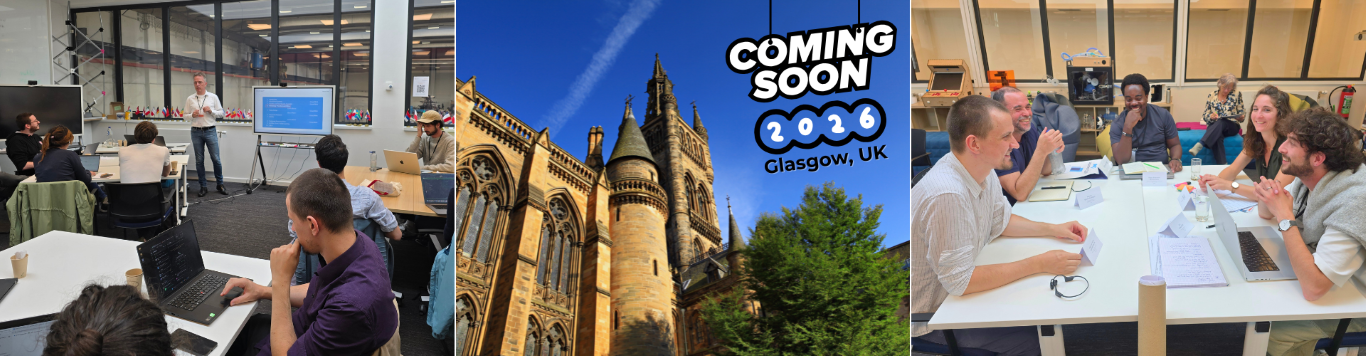
About SCHIER
SCHIER is an ideal venue for PhD students interested in Informatics Education Research. Post-docs and other researchers interested in exploring the issues and challenges involved in this field are equally welcome.
A Recommendation of the Council of the EU highlights the urgent need for investing in Informatics Education in schools, emphasizing quality teaching methods, resources, and gender-balanced representation. Despite the presence of scattered individuals in the field, there's a lack of cohesive networking for Informatics Education Research across Europe, leading to fragmented communities and limited knowledge sharing.
The SCHIER summer school series seeks to fill this void as the first and only European PhD school to focus on providing a comprehensive set of lectures on a broad range of topics which need to be mastered to do research in Informatics Education. The lectures are held by well-known international experts in their fields, and the residential format fosters collaboration among participants to establish a robust European Informatics Education Research community.
To read more about the SCHIER initiative in full, please click here.
Learn More about Previous Cohorts
What SCHIER Participants Say
"Excellent opportunity to get a comprehensive view of the scientific aspects of Informatics education and to build a network of researchers."
Sara Capecchi, University of Turin (Italy)
"Very good for PhD students at the beginning of their study. Interesting topics and a very good place for networking with experts in their fields. Overall I feel full of new ideas for my research journey."
Jakub Krcho, Comenius University Bratislava (Slovakia)
"Highly prolific time with great talks and enlightenment moments that generated nice ideas for the future."
Natalia Silvis-Cividjian, Vrije Universiteit Amsterdam (the Netherlands)
"It is a good opportunity to find contacts from other countries and hear what is being done in your field."
Hanna Toom, Tallinn University of Technology (Estonia)
"Fruitful, informative, network sharing. Thank you indeed. You welcomed us with a smiling face and guided us well and in a helpful way during the organisation."
Emel TOPÇU, Bahçeşehir University (Turkey)
"It offers a deep dive into the subject with expert instructors, hands-on activities, and the opportunity to network with like-minded professionals, all of which make it an incredibly valuable learning experience."
Drishti Yadav, TU Wien (Austria)
"Very valuable opportunity to learn several aspects about the (Informatics Education Research) field. Excellent choice of topics and speakers. Hope to have new editions!"
Abuzer Yakaryilmaz, University of Latvia (Latvia)
More about previous SCHIER cohorts here.
FAQs
Eligibility & Registration
Who can participate in SCHIER?
SCHIER is addressed mainly to PhD students from all over the world wishing to work in the area of Informatics Education Research, but also to post-doctorates and other researchers interested to learn more about topics and challenges in this field. Participants specializing in other fields relevant to Informatics and/or Education are welcome. In exceptional cases, undergraduates are also welcome to participate.
Do I need a visa to participate in SCHIER?
Depending on your nationality, you may need a visa to enter the country where SCHIER takes place. All visa and travel arrangements are the responsibility of the participant and must be completed before arrival.
Is accommodation provided by the host of SCHIER?
SCHIER participants are responsible for arranging their own accommodation themselves, which is not included in the basic registration fee. A list of recommended options is generally shared on the upcoming cohort webpage or communicated to admitted participants.
Program & Structure
What are the differences between the SCHIER curriculum and the research training I receive from other universities?
SCHIER is an intensive 5-day program that provides a concentrated learning experience with focused instruction from renowned international experts in Informatics Education Research, offering immediate insights and practical skills. There is no other international school like this in Europe. SCHIER offers international networking opportunities, connecting participants with experts and peers across Europe and beyond to exchange ideas and broaden their professional horizons in this area.
Which language will SCHIER be held in?
SCHIER will be held in English. Applicants are not required to hold formal qualifications in English to take part in SCHIER.
Do I have to present a research contribution of my own at SCHIER?
Participants attending SCHIER will be asked to present one possible research topic, on which they plan to work or have already started to work, for encouraging joint discussions and group work. They may also be asked to present a poster and presentation(s) during the event.
Will I receive a certificate for participation in SCHIER?
Yes, but an attendance of at least 4 of all 5 days is required for a certificate to be issued. The certificate will be issued by Informatics Europe.
Can I obtain any ECTS credits by participating in SCHIER?
- It will be up to the participant's home institution to decide how many ECTS credits will be awarded through attending SCHIER, but the SCHIER organising committee can:
- Provide any necessary information to help the university of origin evaluate SCHIER.
- Provide the participant with a Certificate of Participation (soft copy only), stating the courses attended and the number of hours completed.
- It will be the responsibility of participants to contact the Registrar/Academic Secretary/Study Abroad Office of their home institutions to check how the hours completed and the grades obtained, if any, can be transferred into official credits.
Contact Us
For any further enquiries, please do not hesitate to contact the
SCHIER is co-organised by the IE Education Research Working Group and the local host institution, with sponsorship from IBM Research Europe.
Summer School on Informatics Education Research (SCHIER) 2025
The second edition of SCHIER took place from 8 September to 12 September 2025, hosted by UCLouvain in Louvain-la-Neuve, Belgium, and sponsored by IBM Research Europe, FNRS and UCLouvain, .

SCHIER 2025 Format
The School was organised as a residential in-person event, with the overall high-level structure as described in the following table, featuring 4 major themes each taking two half days. Two themes, of a more general nature, covered qualitative and quantitative methods in Informatics Education research, while the other two focused more on the practicality of designing and implementing research in these areas. Each theme was split into two sessions. The first session was typically structured in a more traditional, lecture style, with material providing a broad view of the topic, followed by a second part focused more on practical and hands-on work and current examples. The second session instead picked one topic and went in-depth into it.
|
Monday |
Tuesday |
Wednesday |
Thursday |
Friday |
|
|
Morning |
Qualitative Methods (I) |
Qualitative Methods (II) |
Pedagogy and Tools (II) |
Quantitative Methods (I) |
Quantitative Methods (II) |
|
13:00-14:00 Lunch Break |
|||||
|
Afternoon |
Student Self-Presentations — Poster Session (16:15-18:00) |
Pedagogy and Tools (I) |
IBM Invited Presentation Structured Poster Discussions |
Study Design & Case Studies (I) |
Study Design & Case Studies (II) |
|
|
City Visit |
Social Dinner |
Social Event |
|
|
All morning sessions as well as the afternoon sessions on Tuesday, Thursday and Friday took place at UCLouvain’s OpenHub center. The Monday and Wednesday afternoon sessions were organised in the main hall of the Sainte-Barbe university auditoria within walking distance. Lunches took place in the university restaurant nearby and were included in the registration fee, as well as the social programme.
SCHIER 2025 Curriculum & Instructors
SCHIER 2025 offered expert instruction from distinguished scholars in both academia and industry, specializing in Informatics and education research. Click the session titles below for more details.
Qualitative Methods with Inge Hutter, Erasmus University Rotterdam (the Netherlands)
Session description:
This two-session lecture addresses various methods used for qualitative research, that is the kind of investigations where insights on activities, accounts and artefacts relative to the phenomena under study do not come from the mathematical methods which are the basis of quantitative research. Among the most relevant of these methods are interviews, focus groups, observational studies, content analysis, and data collection.
About the instructor:
Inge Hutter is professor of Participatory and Qualitative Research in Population and Development at the International Institute of Social Studies (ISS), The Hague, of Erasmus University Rotterdam (EUR). She is a cultural anthropologist and demographer by training and conducted qualitative research (anthropology) within a quantitative discipline (demography).
Her qualitative research projects formed the basis for her co-authored Sage book, Qualitative Research Methods, by Hennink, Hutter and Bailey (2011) of which a second edition appeared in 2020 with two additional chapters on the participatory (action) approach to qualitative research, co-authored with Christine Fenenga.
Inge is trained in several leadership styles through courses and workshops in: academic leadership; connecting leadership; professional communication from systemic work perspective; value-driven leadership and transformative leadership. She was also an instructor at SCHIER 2024.
Learn more about the instructor Inge Hutter.
Pedagogy and Tools with Andreas Mühling, IPN (Germany)
Session description:
This two-session lecture provides an introduction to the main learning theories (e.g., behaviorism, cognitivism, constructivism) and pedagogical approaches such as active learning, collaborative learning, cooperative learning and blended learning. They help describe and analyse the complex set of relationships developing between teachers and students across various learning contexts and for different learning activities. Examples of pedagogies specifically developed for teaching Informatics (e.g., pair programming, use-modify-create) and technical tools used within these (e.g., visualisation, gamification) are discussed in greater depth.
About the instructor:
Andreas Mühling is heading the computer science education research group at the Leibniz Institute for Mathematics and Science Education (IPN) and at Kiel University. He focuses on empirical research in K12 computer science with a focus on programming and AI literacy both from learners and teachers persepctives.
He has co-chaired several CSE related conferences, most recently Koli Calling 2023 and 2024, has organized docotoral consortia and serves as a steering board member for the WiPSCE conference. He also currently serves as Associate Editor for Computer Science Education, as part of the steering board of the German Informatics Society's CSE group and as co-speaker of its regional chapter.
Learn more about the instructor Andreas Mühling.
Quantitative Methods with Laura Trinchera, NEOMA Business School (France)
Session description:
This two-session course equips participants with essential statistical and data analysis skills for conducting research in Informatics Education. The first session covers key concepts in descriptive statistics, along with the reasoning behind statistical inference, including tests and confidence intervals, for validating findings at the population level. Participants also learn how to perform regression analysis and ANOVA. In the second session, we introduce the basics of psychometric scale use and the analysis of latent variable models, providing a foundation for working with survey data in educational research.
About the instructor:
Laura Trinchera is a Professor of Statistics and Data Science at NEOMA Business School in France. She holds a Master’s degree in Business and Economics (2004) and a PhD in Statistics (2008) from the University of Naples Federico II, Italy. Laura has been a visiting researcher at several esteemed institutions, including the University of California, Santa Barbara, the University of Michigan, Ann Arbor, the University of Hamburg, Charles University in Prague, HEC School of Management in Paris, and has served as an external lecturer at ESSEC Business School, Sciences Po Paris, and Sorbonne University in Abu-Dhabi. Her research has been published in internationally recognized journals, such as Structural Equation Modeling: A Multidisciplinary Journal, Journal of Production Economics, Journal of Organizational Behavior, Recherche et Applications en Marketing, International Journal of Information Management and Management Decision. She is the coordinator of the Data Science for Insights & Value Creation research group at NEOMA Business School.
Learn more about the instructor Laura Trinchera.
Study Design & Case Studies with Jan Vahrenhold, University of Münster (Germany)
Session description:
This two-session lecture addresses the identification, formulation, and articulation of research questions, discussing various ways they can be implemented, executed, and evaluated. They also cover how research papers should be written and reviewed. Additionally, a detailed analysis and discussion of one or two case studies published in the literature are provided. Special attention is paid to bias and unfounded assumptions, as well as strategies to avoid them.
About the instructor:
Jan Vahrenhold has been Professor for Efficient Algorithms and Algorithm Engineering at the University of Münster since 2012. His research focuses on algorithms and data structures for geometric problems, algorithm engineering with a focus on resource efficiency and computer science education.
Jan Vahrenhold is co-editor-in-chief of "Computer Science Education" and associate editor of "ACM Inroads". He has (co-)chaired several conferences in the field of computer science and computer science education, most recently the ACM International Computing Education Research Conference (ICER 2021/2022). He is a member of the national consortium for the "International Computer and Information Literacy Study" (ICILS 2028). He is also a current member of the Informatics Europe Board, and speaker of the "Computer Science and Education" section of the German Informatics Society. He was an instructor at SCHIER 2024.
Learn more about Jan Vahrenhold.
Student Self Presentations
Session description: Students attending the school are invited to very briefly (3 min. each) self present themselves: professional background and research topic(s) they are interested in.
Poster Session and Structured Poster Discussions
Session description:
Once accepted, participants are invited to submit a poster describing their work, which may focus on their PhD thesis or any topic of their current interest. These posters are evaluated by the Scientific Committee, and those accepted are presented for structured discussions among participants, guided by the Scientific Committee, on both Monday and Wednesday afternoons. Posters should indicatively contain the following elements:
- a description of the problem being addressed;
- why this problem has been chosen, overall research goals and specific research questions;
- the research methods applied or considered;
- a broad research plan (optionally with contingency alternatives);
- the current status of the work and any preliminary results obtained.
IBM Presentation "Education in Quantum Computing" by Fabio Scafirimuto, IBM Research
Session description:
The Wednesday afternoon session hosts an invited presentation on Education in Quantum Computing at IBM Quantum by Fabio Scafirimuto, IBM Quantum Education and Workforce Development EMEA Team Lead.
About the instructor:
Dr. Fabio Scafirimuto earned his Ph.D. from ETH Zurich while conducting research at the IBM Research Lab in Zurich, specializing in experimental quantum condensed matter physics with a focus on polaritonics. He later joined IBM Quantum’s Community Team, where he contributed to the development of educational content using Qiskit. Since 2021, he has led a team within IBM Quantum dedicated to workforce development, education, and advocacy across the EMEA region.
Registration
SCHIER 2025 targeted PhD students, Post-docs and any researcher interested in Informatics Education Research. Participants from IE member institutes benefit from reduced registration fees. The Summer School took place in person only, with limited spots available.
Basic Registration Fee
- Participants from IE member institutes: EUR 350
- Other participants: EUR 400
Read SCHIER general information, FAQs, and testimonials here.
The deadline has passed. Unfortunately, we cannot consider late applications anymore. Please stay tuned for future cohorts.
Check what is included in the SCHIER 2025 basic registration fee.
- Participation in all SCHIER 2025 sessions and activities during the 5-day program;
- Handouts and other relevant teaching materials;
- Coffee breaks and meals according to the schedule (lunch from Monday to Friday, all coffee breaks, social dinner on Tuesday evening, social event on Wednesday).
Not included: travel and accommodation costs (although a limited number of rooms can be booked at a preferential rate via the registration form for admitted participants).
Application Process
To apply for SCHIER 2025, participants are required to provide the following:
- Motivation letter (pdf): a written statement of motivation in English (max. 1 page).
- Curriculum vitae (pdf): max. 2 pages.
Applications will be reviewed by the SCHIER Scientific Committee (considering your relevant achievements and motivation) on a first-come-first-serve basis. Allocation of places (if positively reviewed) will take place in this order.
- Once admitted, participants will be requested to submit a short description (maximum 100 words) about themselves, which will be printed and distributed to other participants to help everyone become familiar with each other before the self-presentation session.
- Admitted participants will also be required to submit a poster for the structured discussions during the poster session, as outlined in the Curriculum section.
Confirmation of Admission
Around two weeks after your application submission, you will receive notification of your SCHIER 2025 final admission status, sent from our official email address:
Request for Visa Support Letters
Please note that, as a SCHIER participant, it will be your responsibility to ensure that you have the valid travel documents required to enter Belgium for the duration of SCHIER 2025 (and possible additional travel days before and after the program). For any questions concerning access to Belgian territory, please consult the FPS Interior website: https://dofi.ibz.be/en
Admitted SCHIER participants may request a support letter for visa application purposes during registration, if needed. Please allow up to 10 working days for processing. The SCHIER Organising Committee will not directly contact embassies and consulates on behalf of visa applicants.
Accommodations
Please note that accommodation is not included in the SCHIER basic registration fee. A registration link will be sent to admitted participants, which includes the option to book nearby hotels at an additional cost but with preferential rates. Participants are also welcome to make their own arrangements; however, availability may be very limited. Here are the hotel options available to admitted participants:
Option 1: 4* Hotel Martin's Louvain-la-Neuve - 10 rooms prebooked with breakfast included. Preferential rate valid until the end of June.
Option 2: 3* Hotel Ibis Styles Louvain-la-Neuve - 20 rooms prebooked with breakfast included. Preferential rate guaranteed until 7 August (more rooms can be requested upon availability).
Option 3: Gîte Mozaïk - 5 rooms in shared occupancy by max. 4 SCHIER participants, with breakfast included.
All options are available on a first-come, first-served basis.
SCHIER 2025 Scientific Committee
Formed by members of the IE Education Research Working Group
- Enrico Nardelli, Università di Roma "Tor Vergata", Italy (Chair)
- Violetta Lonati, Università di Milano, Italy
- Kim Mens, Université catholique de Louvain, Belgium
- Jan Vahrenhold, University of Münster, Germany
SCHIER 2025 Organising Committee
- Nuria Auguera, Informatics Europe Office
- Kit Wan Chui, Informatics Europe Office
- Kim Mens, Université catholique de Louvain, Belgium (local organisation)
- Olivier Goletti, Université catholique de Louvain, Belgium (local organisation)
- Benoit Donnet, Université de Liège, Belgium (local organisation)
Contact Us
SCHIER 2025 was co-organised by the IE Education Research Working Group and UCLouvain, with sponsorship from IBM Research Europe and FNRS.
For any further enquiries, please do not hesitate to contact the
Open Activities
The potential of Informatics Europe can go as far as our collective ambitions take it!
Discover ways to engage with our open activities (outlined below) and play a significant role in advancing Informatics Research and Education in Europe. Stay connected by signing up for our mailing lists for important updates and opportunities.
Your active involvement plays a key role in achieving the collective objectives we, as the Informatics Europe community, have set. Read our mission here.
Informatics Europe Awards
Nominations now open:
- Best Dissertation Award 2026
sponsored by Springer Nature
Deadline: 21 May (Thu)
Become an IE Award
IE Perspectives
IE flagship magazine and platform where the community’s impact, visibility, and shared resources come together.
- Inaugural Issue *NEW
- Call for Contributions
Deadline: 30 Apr
ECSS 2025 (Rennes, 27-29 Oct)
Our flagship summit for the leadership of the Informatics research community in Europe.
Save the date:
ECSS 2026 (Porto, Portugal, 26-28 Oct)
IE Higher Education Data Portal
Statistics covering over 20 countries across 12 academic years. Explore & contribute to your country's data gathering and quality control!
Training Schools
Focused study in a specific area of Informatics Research, closely related to Informatics Europe's mission and goals.
What's Next:
Summer School on
Informatics Education Research 2026
7-11 Sep, Glasgow, UK
Application Expected to Open by mid-March
Informatics Research & Education Directory
A comprehensive directory of European institutions leading research & education in Informatics. Help us ensure accuracy by keeping your institution's information up to date!
Informatics Job Platform
Post and find scientific positions in Informatics and closely related fields.
Academic Leadership Courses
Tailored for academic leaders in Informatics and related fields. Created by scientists, for scientists, at all experience levels.
Networking and collaborative work on strategic and trend-setting initiatives. Join us!
- Data Analysis & Reporting
- Diversity & Inclusion
- Early Career Researchers *NEW
- Education Research
- Ethics
- Green ICT
- Open Science
- Policy Recommendations
- Software Research *NEW
Nominate yourself or a colleague to actively engage in setting IE strategies. Hosting ECSS - Members Only
Bring Europe to your institution! Enhance global presence by co-hosting our flagship summit to advance informatics research and education throughout Europe!Department Assessment Service
Cutting-edge, unbiased approach led by top researchers. Let's tailor a solution to your needs.Publications & Statements
Precise, objective information to understand the field and guide informed, effective policy decisions. Recently published:
- Recommendations for the EC Digital Omnibus Package on AI and Data to Safeguard Academic and Education Interests
- Policy Statement and Call to Action on Open Access Publishing
- Minerva Informatics Equality Award Catalogue
Open Citations Letter: for comprehensive coverage of citations in our discipline.
Rome Declaration: advocates school curricula at all levels to include the principles of Informatics.
Joint Manifesto: supporting SCIE and CODDII to promote the Rome Declaration in Spain.Online Info Sessions
Interactive sessions with IE Board representatives, to clarify questions about IE and its membership.
Groundbreaking research and career insights in Informatics. Organized by our WGs and presented by well-known member institutes' speakers.
Diversity and Inclusion Working Group
Motivation
Each society is constituted by individuals that, by definition, are diverse one from the other. Diversity within any group or society is a winning factor as it implies the presence of different viewpoints and ideas that can significantly empower the group, which will be able to produce effective results thanks to such diversity. The main challenge is that diversity, in all its aspects, needs to be actively understood, respected, and preserved. In particular, diversity in race, gender, age, socio-economic status, religion, and physical abilities determine differences in behavior, ways of learning, as well as specific needs and constraints. Each group participant should be able to cope with these differences and act in a positive way in response to these.
In this context, Informatics Europe can operate at least at two levels.
- On the one side, we, as the Informatics community, need to ensure that software systems behave respecting diversity. This is particularly critical when considering machine learning algorithms that require training on data based on human characteristics or behavior, but also when designing the UI of software systems.
- On the other side, we, as a community of educators in Europe, should focus on how to take into account of diversity in the education process. While the European Commission is actively promoting the importance of ensuring gender equality, the broader area of diversity should be put under the lens as well. Proposals for the definition of best practices for education that take diversity into account in the admission, learning, and examination process could be analysed and disseminated through the various departments.
Long-term Goals
- Empower Informatics Europe members. to ensure the diversity dimension is considered in their education process.
- Contribute to designing software systems that behave respecting diversity.
- Defining best practices to cope with diversity through inclusion in Informatics.
WG Operation
- Chair: Simona Motogna, Babeş-Bolyai University, Romania.
- Secretary: Claire Matti, Haute école pédagogique du canton de Vaud, Switzerland.
- Monthly online meetings on every third Wednesday
(usually from 14:00 CET/CEST, exact time is confirmed by the Chair via email)
Current Activities
At present the working group is focused on collecting European initiatives on diversity and inclusion in Informatics Research and Education and building a network of interested parties. The following activities related to this goals:
Activity 1: Mapping of current initiatives
Map current initiatives, research projects, and tools to cope with diversity and promote inclusion.
Steps:
- Finalization of the survey to be used for mapping - completed
- Dissemination of the survey - completed
- Collection and analysis of results - completed, results available here
- Analysis of literature - in progress
- Preparation of a mapping paper.
Activity 2: Best Practices booklet
Develop a booklet about best practices in one of the areas that will be identified with the mapping study.
Steps:
- Definition of the booklet focus, including best practices coming from the Minerva Award - completed
- Preparation and review of the first draft - completed
- Finalization and release of the booklet- in progress
Activity 3: Repository creation
Create a repository of initiatives, research projects, and tools in Europe - waiting for responses and volunteers to contribute
Steps:
- Consolidation of the repository structure and rules for contribution.
- Dissemination of the repository to solicit contributions.
- Management of the incoming contributions.
Get Involved!
Would you like to join us in our current diversity initiatives or suggest a new task force to promote and enrich diversity in informatics? Join our Working Group here.
Visit our Diversity and Inclusion webpage to know more about initiatives and outcomes on the topic by the Informatics Europe community.
Current members:
- Simona Motogna, Babeş-Bolyai University, Romania (Chair)
- Claire Matti, Haute école pédagogique du canton de Vaud, Switzerland (Secretary)
- Erika Abraham, RWTH Aachen University, Germany
- Cristina Alcaraz, University of Malaga, Spain
- Oana Andrei, University of Glasgow, UK
- Pille Beldman, Tallinn University of Technology, Estonia
- Lola Burgueño, University of Malaga, Spain
- Antinisca Di Marco, University of L'Aquila, Italy
- Elisabetta Di Nitto, Politecnico di Milano, Italy
- María-del-Mar Gallardo-Melgarejo, University of Malaga, Spain
- Ana-Belén Gil-González, University of Salamanca, Spain
- Miguel Goulão, NOVA School of Science and Technology, NOVA LINCS, Portugal
- Matthew Grech-Sollars, University College London (UCL), UK
- Svetlana Hensman, TU Dublin, Ireland
- Francisco Iniesto, Universidad Nacional de Educación a Distancia (UNED), Spain
- Sarah Jane Delany, TU Dublin, Ireland
- Malvina Latifaj, Mälardalen University, Sweden
- Beate List, Google
- Cristina Manresa, Sociedad Científica Informática de España, Spain
- Estefanía Martín-Barroso, Universidad Rey Juan Carlos, Spain
- Davide Martinenghi, Politecnico di Milano, Italy
- Maristella Matera, Politecnico di Milano, Italy
- Maria Nisheva-Pavlova, Sofia University, Bulgaria
- Lili Nemec Zlatolas, University of Maribor, Slovenia
- Ayushi Rastogi, University of Groningen, Netherlands
- Larissa Schmid, Karlsruhe Institute of Technology (KIT), Germany
- Ute Schmid, University of Bamberg, Germany
- Florence Sèdes, SIF, France
- Alexander Serebrenik, Eindhoven University of Technology, the Netherlands
- Sirja Sulakatko, Tallinn University of Technology, Estonia
- Anna Szlávi, NTNU, Norway
- Carla Teixeira Lopes, University of Porto, Portugal
- Riccardo Torlone, Roma Tre University, Italy
- Marta Turcsanyi-Szabo, Eötvös Loránd University, Hungary
- Serena Versino, University of Pisa, Italy
- Claudio Zandron, Università di Milano-Bicocca, Italy
- ECSS 2025: Diversity and Inclusion Workshop
Read More
Date: October 2025
Details: Workshop description and presentation slides from the ECSS 2025 workshop, held in Rennes on 29 October 2025.
- Minerva Informatics Equality Award Catalogue
Download
Date: October 2025
Details: The Catalogue brings together a decade of best practices submitted to the Minerva Informatics Equality Award and celebrates European initiatives that advance gender equality in Informatics research and education. It classifies and analyses actions that support women at all career stages - from students to senior academics - offering searchable examples, tags, and impact indicators.
- Online event: "United for Impact: Women in Informatics"
Date: March 2025
Details: A special online event dedicated to celebrating and advancing the role of women in Informatics.
Featured Speakers:
- Prof. Letizia Jaccheri – ACM Distinguished Speaker, EUGAIN Action Chair
- Prof. Ana Lucia Varbanescu – ICT-Research Platform Netherlands (IPN) Equality, Diversity & Inclusion (EDI)
- Prof. Mathew Barr – Ada Scotland
- Prof. Maria Pia Giovannini – CDIT Roma, Italy.
- ECSS 2024: "Cultivating Diversity: Integrating Inclusive Design into Informatics Education" Workshop
Read More
Date: October 2024
Details: Workshop description and presentation slides from the ECSS 2024 workshop, organized jointly with Ethics WG, held in Malta on 29 October 2024.
- Survey About Diversity and Inclusion Initiatives Report
Download
Date: April 2024
Details: The report resulted from a mapping study conducted from December 2022 to assess ongoing diversity initiatives and collect information from university departments developing such projects. The report summarizes findings from 33 initiatives captured during this period.
- ECSS 2025: Diversity and Inclusion Workshop
Join and Contribute
Network and exchange expertise with informatics scientists and jointly shape the European agenda on the topic of your interest.



 Netlogica