The ECSS 2025 is closed for registration.
It is important that you and your institution are present in ECSS. We will transfer your registration to another name where necessary. Please refer to the FAQs for requirements and procedures.
Refer and be rewarded! Become an ambassador of Informatics Europe’s mission and receive complimentary registration for ECSS. Learn how here.
Please beware of email scams falsely claiming be from ECSS 2025 organisers/committees. Informatics Europe has not authorized any agency to handle travel or accommodation arrangements for attendees. All official communications regarding ECSS 2025 come only from "@informatics-europe.org" or "@irisa.fr" domains. If in doubts, please
The general registration fee for the ECSS 2025 (27-29 October) covers:
The registration for the Early Career Researchers Workshop ONLY covers the coffee break, lunch, and Welcome Reception on Monday, 27 October.
Standard registration:
EUR 600 (Members of Informatics Europe)
EUR 700 (Non-Members)
EUR 400 (PhD students)
Early Career Researchers Workshop ONLY:
EUR 70 (PhD students)
Spouses invitations for the Tuesday Mont-Saint Michel trip & gala dinner are not included in the registration fee, but are available for purchase through the registration system ("spouse/companion ticket", with a cost of 90 EUR).
* The registration fees include VAT. Please note that the amount of the bank transfer will have to include any bank fee related to the transfer and/or processing. General terms and conditions of the ECSS 2025 can be found here.
Only PhD candidates can register for either the Monday program or the entire ECSS 2025.
ECSS is Informatics Europe's annual three-day event devoted to crucial and timely strategic issues and trends in informatics education and research in Europe. The summit program aims to broaden participants' understanding of the discipline by addressing topics that may not initially appear directly relevant or of interest to them. ECSS participants value this variety of topics and activities over the three days, which enables them to forge new connections and gain fresh insights and ideas for their current and future work.
We strongly encourage every current and emerging leader for full participation to gain the most from this unique opportunity.
Depending on your nationality, you may need a visa to travel to France. It is the sole responsibility of the ECSS 2025 attendee to take care of their visa requirements. Attendees who require an entry visa must allow sufficient time for the application procedure. Attendees should contact the nearest embassy or consulate to determine the appropriate timing of their visa applications.
The ECSS General Organizing Committee can provide a letter of invitation to registered attendees for visa application purposes. If not selected this option during registration, please
Please allow up to 10 working days for letter processing, with requests handled in the order received. The letter of invitation does not financially obligate Informatics Europe or the University of Rennes in any way. All expenses incurred in relation to the ECSS 2025 attendance are the sole responsibility of the attendee. The ECSS General Organizing Committee will not directly contact embassies and consulates on behalf of visa applicants.
The paid ECSS registration fee minus an administration fee of EUR 30 will be refunded if cancellations are notified to the
No refund request will be considered after the end of the early bird registration period. However, a request can be made to transfer a registration to another participant, who will take over the booked arrangements in full. Please send your request to the
Refunds will not be given for unattended events or early termination of attendance. In cases of cancellations due to personal matters after the cancellation deadline, please consult your personal insurance.
A Certificate of Participation will be issued by Informatics Europe to all attendees who participated in ECSS 2025.
Each attendee will receive a soft copy of the Certificate via email around 10 working days after ECSS 2025. Only soft copies will be issued.
We believe in the strength of unity, which is why we have introduced an Informatics Europe Referral Program. Become our ambassador and you could earn a complimentary registration for the next ECSS. Check here for more information.
The ECSS 2025 was held in the Inria centre at Rennes University (IRISA) in Rennes, France.
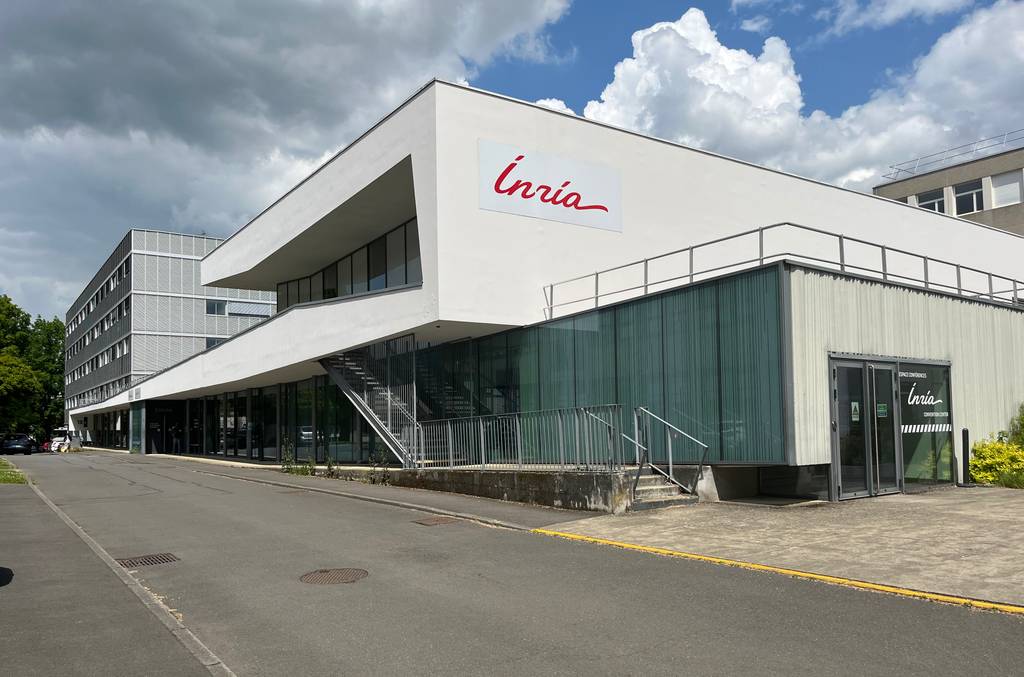
© Inria / Photo Kaksonen
Rennes can be easily reached by fast train from Paris in 1 hour and 25 minutes (~ 20 trains per day). Consequently, Rennes is conveniently accessible by train from any European city that has a possible connection with Paris. You can use the chronotrain website to find out which cities are connected to Rennes in less than 5 hours by train.
Rennes airport offers direct flights from the 5 hubs of Paris CDG, Amsterdam Schiphol, Frankfurt, Dublin and London. This makes it easy to reach Rennes from most oversea flights. Note that Paris CDG airport has a train station where you can directly reach Rennes by fast train in ~2 hours and 30 minutes (~ 8 trains per day). Amsterdam is also connected to Paris by train using Thalys, and London is connected to Paris by Eurostar trains. Also, Rennes train station is only 1 hour and 25 minutes from Paris, departing from Gare Montparnasse. Every day, 36 connections (TGV InOui & Ouigo) run between Rennes and Paris. And one in two TGV InOui trains runs non-stop. Book your train tickets between Paris and Rennes. Any purchased train ticket includes a seat reservation (slightly more comfortable in 1st class, slightly cheaper in 2nd class).
The train station of Rennes is at the south of the city center and is connected to the metro lines making everywhere downtown accessible in 3 minutes.
The city center of Rennes is reachable in about 30 minutes by public transport by taking the line C6. Prepare your trip using this link.


To revisit ECSS presentations, download the slides/posters available in the schedule below and on the individual session pages.
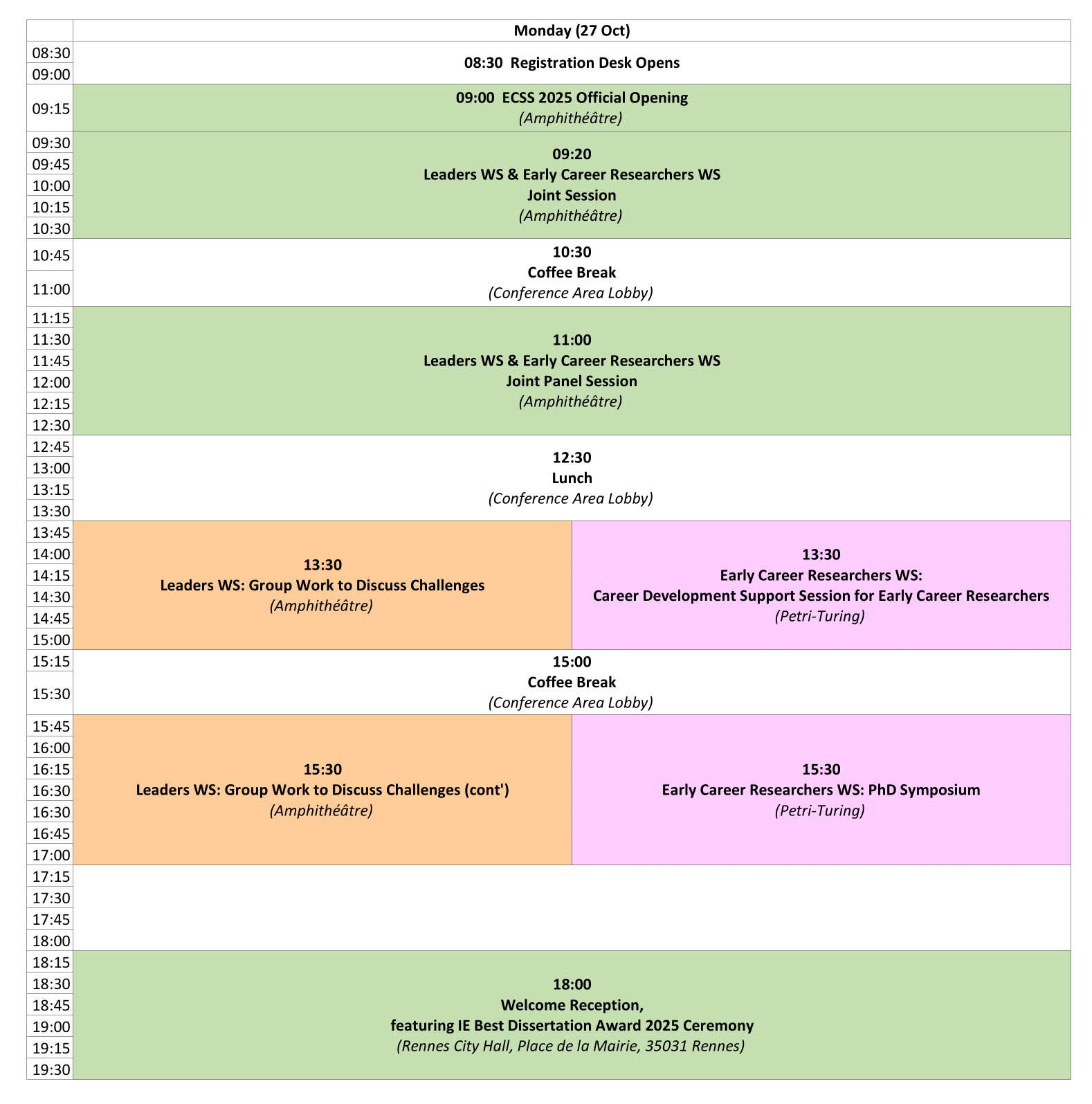
Monday, 27 October 2025
Room Plan
Two workshops run in parallel with a joint opening session and poster session during breaks.
Chairs: Ana C.R. Paiva, University of Porto (Portugal) and Jean-Marc Jézéquel, IRISA/University of Rennes (France)
09:20 - 10:30 Joint Session with Professional Development Workshop for Early Career Researchers
Featured Talks:
10:30 - 11:00 Coffee Break
11:00 - 12:30 Joint Panel Session with Professional Development Workshop for Early Career Researchers
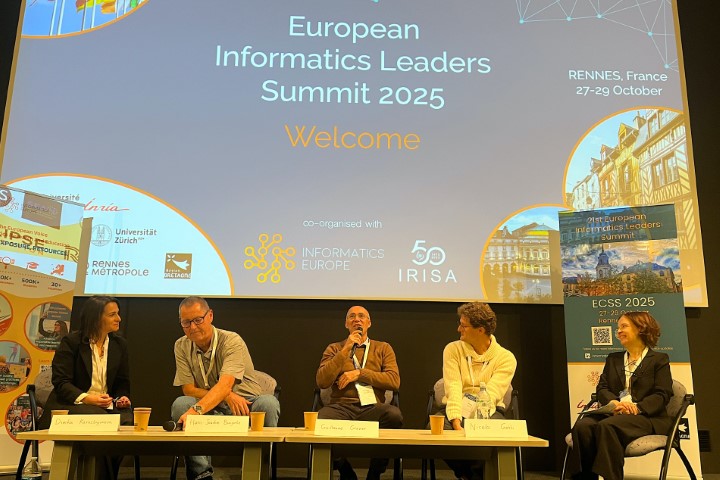
"Sharing Best Practices among Deans/Leaders — Identifying key challenges in adapting to change"
Panellists:
12:30 - 13:30 Lunch
13:30 - 15:00 Group Work to Discuss Challenges
15:00 - 15:30 Coffee Break
15:30 - 16:30 Group Work to Discuss Challenges (cont.)
16:30 - 17:00 Closing Remarks
Chairs: Dimka Karastoyanova, University of Groningen (the Netherlands), Elisabetta Di Nitto, Politecnico di Milano (Italy) and Gregor Engels, University of Paderborn (Germany).
09:00 - 10:30 Joint Session with Leaders Workshop
Featured Talks:
10:30 - 11:00 Coffee Break
11:00 - 12:30 Joint Panel Session with Leaders Workshop
"Sharing Best Practices among Deans/Leaders — Identifying key challenges in adapting to change"
12:30 - 13:30 Lunch
13:30 - 15:00 Career Development Support Session for Early Career Researchers
Panel of 2025 Best Dissertation Award Finalists:
15:00 - 15:30 Coffee Break
15:30 - 17:00 PhD Symposium
Featured Posters:
Coffee breaks on Monday are scheduled at 10:30 and 15:00, with lunch from 12:30 to 13:30, for both workshops.
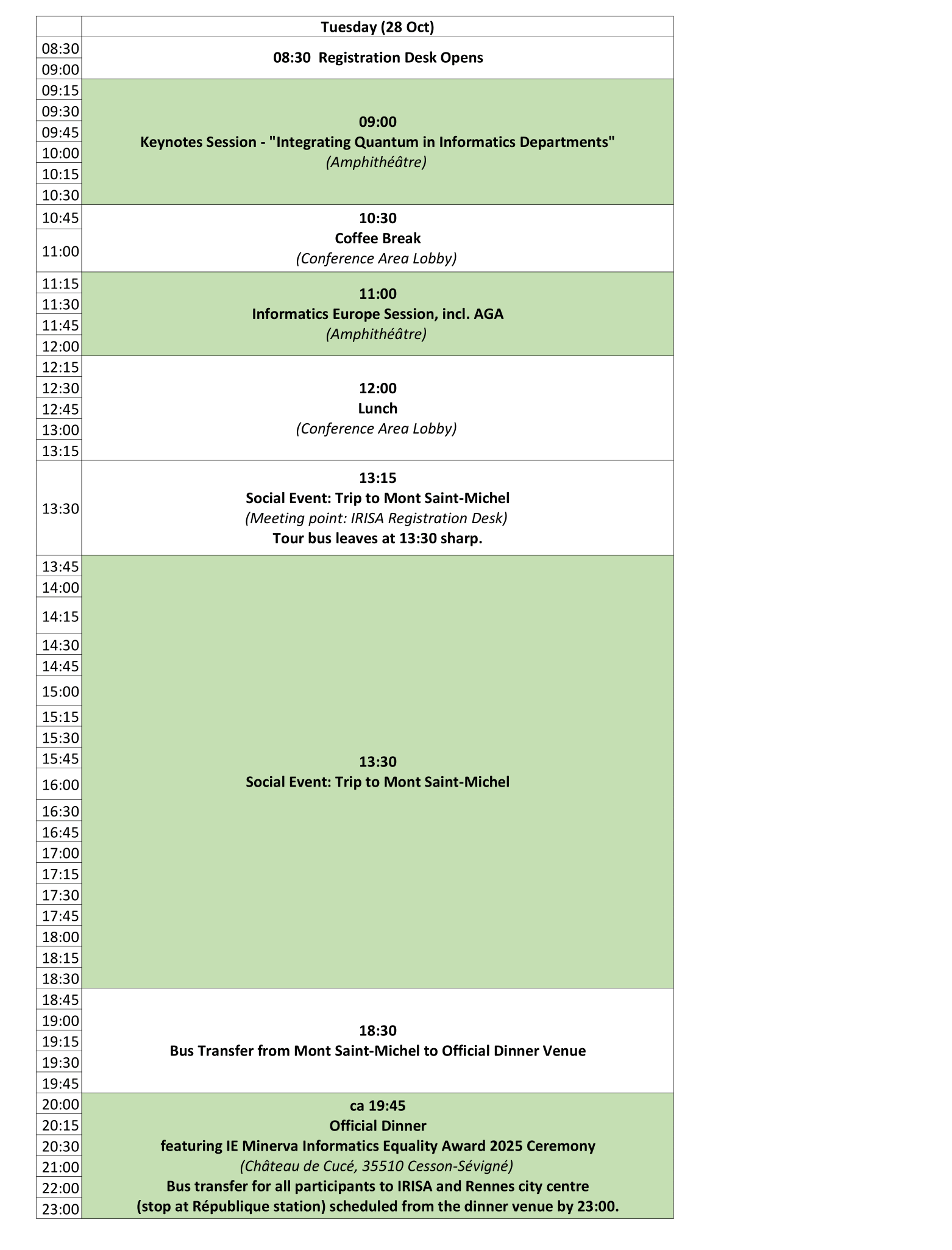
Tuesday, 28 October 2025
Room Plan
Chair: Jean-Marc Jézéquel, Informatics Europe / IRISA / University of Rennes (France)
09:00 - 09:30 Opening Session
09:30 - 10:30 Keynote Speaker Session
10:30 - 11:00 Coffee break
Chairs: Jean-Marc Jézéquel and Nuria Anguera, Informatics Europe
Guided tour with complimentary bus transfer.
Venue: Château de Cucé, 35510 Cesson-Sévigné
Featuring the 2025 Minerva Informatics Equality Award ceremony.
Tuesday’s coffee break is scheduled for 10:00, with lunch from 12:00 to 13:15.
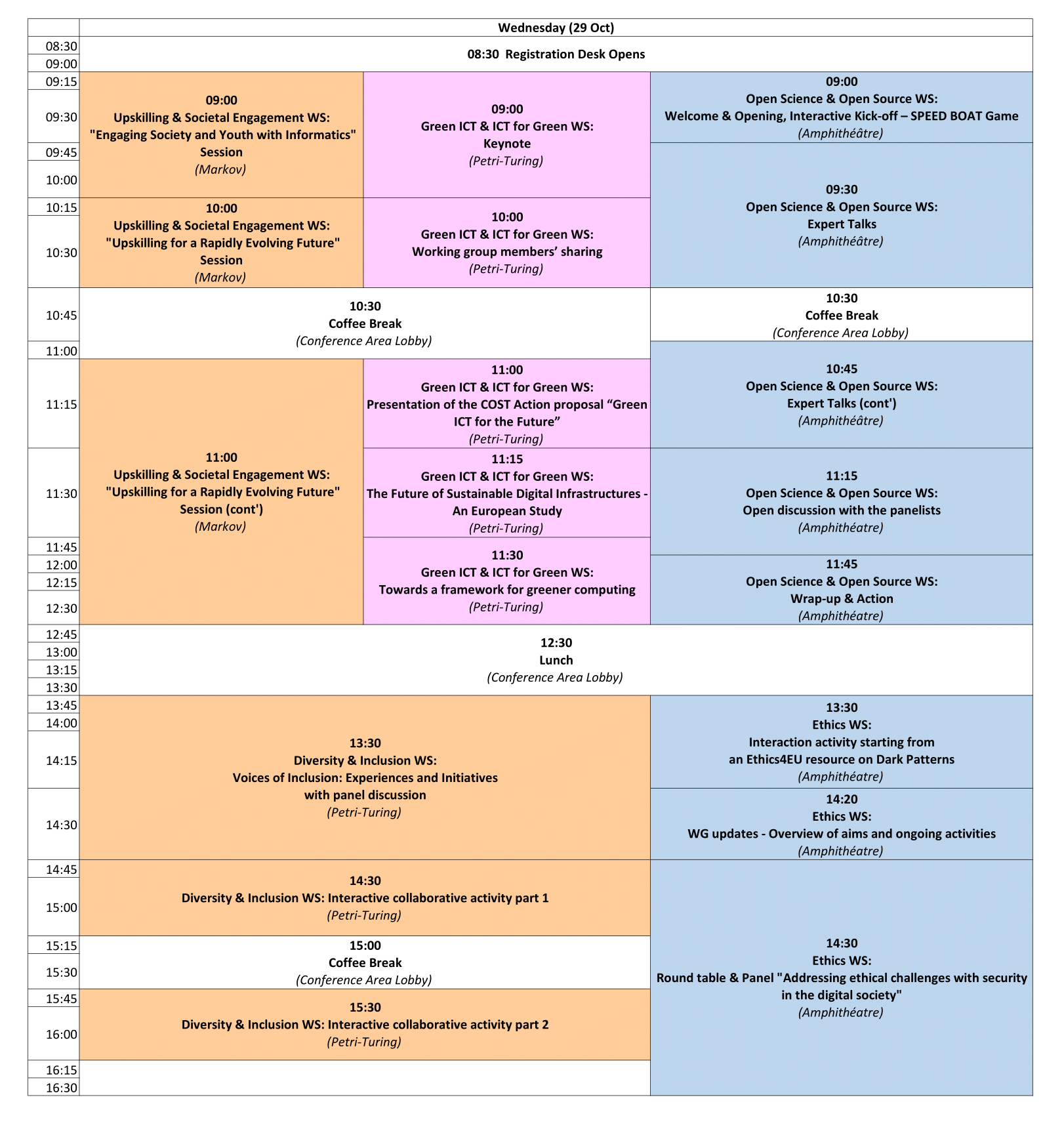
Wednesday, 29 October 2025
Room Plan
The day features three parallel workshops in the morning and two in the afternoon.
Chair: Heri Ramampiaro, NTNU (Norway)
co-organised with IE member National Informatics Associations (NIAs)
09:00 - 09:30 "Engaging Society and Youth with Informatics" Session
09:30 - 10:00 Panel Discussion
10:00 - 10:30 "Upskilling for a Rapidly Evolving Future" Session
10:30 - 11:00 Coffee break
11:00 - 11:15 "Upskilling for a Rapidly Evolving Future" Session (continued)
11:15 - 12:15 Panel Discussion
12:15 - 12:30 Closing Remarks
Chairs: Marco Aiello, University of Stuttgart (Germany) and Monica Vitali, Politecnico di Milano (Italy)
Supported by IE's Green ICT Working Group
9:00 - 10:00 Keynote
10:00 - 10:30 Working group members’ sharing
10:30 - 11:00 Coffee Break
11:00 - 11:15 Presentation of the COST Action proposal “Green ICT for the Future” [Slides]
by Rafael Capilla, Rey Juan Carlos University (Spain)
11:15 - 11:30 The Future of Sustainable Digital Infrastructures - An European Study [Slides]
by Sebastian Werner, TU Berlin (Germany)
11:30 - 12:30 Towards a framework for greener computing [Slides]
moderated by Workshop Chairs, an interactive and participative session involving the workshop’s speakers and all participants.
Chairs: Lenuta Alboaie, Alexandru Ioan Cuza University of Iași (Romania) and Philippe Krief, Eclipse Foundation
Supported by IE's Open Science Working Group
09:00 - 09:10 Welcome & Opening
09:10 - 09:30 Interactive Kick-off – SPEED BOAT Game
09:30 – 10:30 Expert Talks
10:30 - 10:45 Coffee Break
10:45 - 11:15 Expert Talks (cont')
11:15 - 11:45 Open discussion with the panelists
11:45 - 12:30 Wrap-up & Action
Chairs: Simona Motogna, Babeş-Bolyai University (Romania), Oana Andrei, University of Glasgow (UK) and Lola Burgueño, University of Malaga (Spain)
Supported by IE's Diversity & Inclusion Working Group
13:30 - 13:45 Voices of Inclusion: Experiences and Initiatives
13:45 – 14:30 Panel discussion
14:30 - 15:00 Interactive collaborative activity part 1: Co-design activity to propose change for inclusion in working spaces
15.00 - 15.30 Coffee break
15.30 - 16.00 Interactive collaborative activity part 2: Co-design activity to propose change for inclusion in working spaces
Chair: Covadonga Rodrigo (UNED, Spain)
Supported by IE's Ethics Working Group
13:30 – 14:20 Interaction activity starting from an Ethics4EU resource on Dark Patterns [Slides]
co-chaired by Monica Landoni, Università della Svizzera italiana (Switzerland)
14:20 – 14:30 WG updates: Overview of aims and ongoing activities
14:30 – 16:30 Round table & Panel: "Addressing ethical challenges with security in the digital society"
with an interactive exchange exploring perspectives from the WG members, as well as leaders across the Informatics Europe and ERCIM communities.
co-chaired by Emma Beauxis Aussalet, ERCIM & Vrije Universiteit (Netherlands) with panellists:
Wednesday's coffee break is scheduled at 10:30 and 15:00, and lunch at 12:30-13:30, for all workshops.
Each year, Informatics Europe organises a dedicated Leaders Workshop for heads of university schools, departments, and research labs in Informatics and related fields. The workshop provides a unique forum to exchange experiences and tackle the specific challenges of academic leadership.
The 2025 edition, open to all summit participants, took place on Monday, 27 October, and focused on the theme: How to cope with changes in Informatics departments?. The session spotlighted the urgent need for strategic planning in response to the fast-evolving landscape of Informatics research and education.
The workshop, co-chaired by Ana C.R. Paiva from University of Porto and Jean-Marc Jézéquel from IRISA / University of Rennes, opened with a joint session held in collaboration with the Professional Development Workshop for Early Career Researchers (ECRWS).
Speaker bios and abstracts are available on the ECSS speakers page by clicking their photos.
Read the workshop highlights here.
09:00 - 10:30 Joint Opening Session with Professional Development Workshop for Early Career Researchers
Welcome Speech:
Featured Talks:
10:30 - 11:00 Coffee Break
11:00 - 12:30 Joint Panel Session with Professional Development Workshop for Early Career Researchers
"Sharing Best Practices among Deans/Leaders — Identifying key challenges in adapting to change"
Panellists:
12:30 - 13:30 Lunch
13:30 - 15:00 Group Work to Discuss Challenges
15:00 - 15:30 Coffee Break
15:30 - 16:30 Group Work to Discuss Challenges (cont.)
16:30 - 17:00 Closing Remarks
*Please note that you may need to zoom out for the best photo viewing experience.
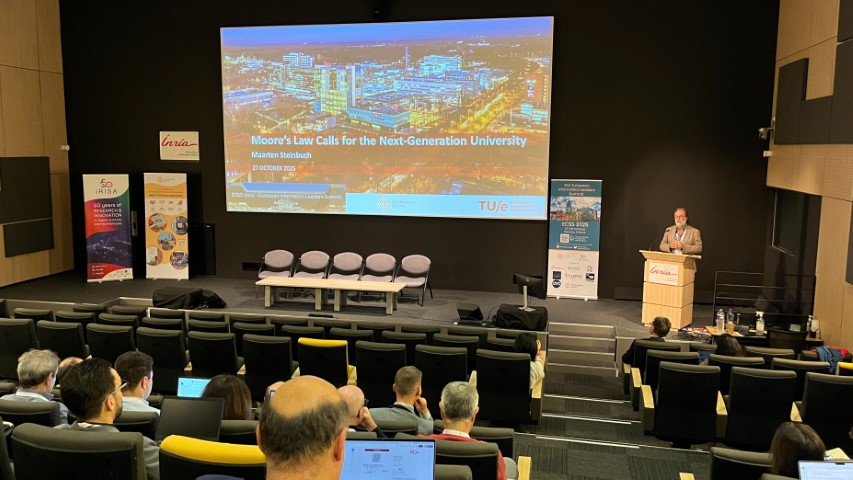
ECSS brings together leading voices in Informatics to share insights on emerging trends, challenges, and strategic priorities in research and education. The 2025 edition continued this tradition, showcasing thought leaders driving change across Europe.
Click a speaker’s photo to learn more. Further names and details will follow.
Manuel Wimmer is Full Professor and Head of the Department of Business Informatics – Software Engineering at JKU Linz, Austria. Since 2019, he is also the Program Director of the Business Informatics master study at JKU Linz.
He received his Ph.D. and his Habilitation from TU Wien. He has been a research associate at the University of Malaga, Spain, a visiting professor at the University of Marburg, Germany and at TU Munich, Germany, and an assistant professor at the Business Informatics Group (BIG), TU Wien, Austria.
From 2017-2023 he was leading the Christian Doppler Laboratory on Model-Integrated Smart Production (CDL-MINT). In this context, Manuel has developed different engineering approaches for digital twins.
He is the JKU Linz representative in the AutomationML society. He is co-author of the book Model-driven Software Engineering in Practice (Morgan & Claypool, 2nd edition, 2017).
For a list of scientific publications see the entries in DBLP and Google Scholar.
Manuel Wimmer is currently involved in the organization of the following scientific events:
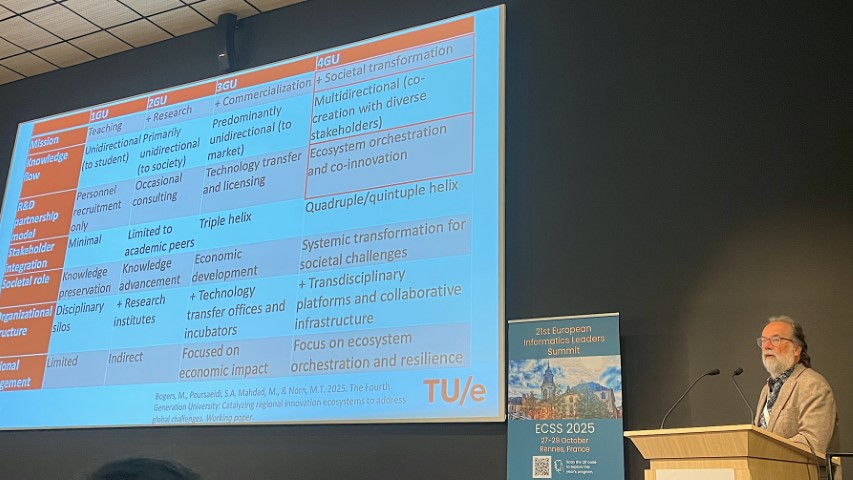
The exponential pace of computing power, as predicted by Moore’s Law, is driving rapid advancements in sensor technology, artificial intelligence, robotics, and mobility. Cars are evolving into iPads on wheels. Our robots are world champions robot-soccer, and surgical robots may soon outperform human surgeons.
But are we prepared to harness this wave of innovation? Can we keep pace—or even accelerate?
This changing landscape demands a new kind of academic institution: the *4th Generation University*. More than a place of learning and linear research, it is a dynamic hub of open innovation, actively engaging industry, government, and society. It fosters interdisciplinary collaboration and co-creation to tackle global challenges and generate sustainable value. By seamlessly integrating academia with real-world partners, the 4th Generation University becomes both a catalyst and connector—bridging knowledge, practice, and impact. It emphasizes both global reach and local relevance, uniting diverse stakeholders in a shared commitment to collaboration, innovation, and societal progress.
Short BioMaarten Steinbuch is a high-tech systems scientist, entrepreneur and communicator. He holds the chair of Systems & Control at Eindhoven University of Technology (TU/e), where he is Distinguished University Professor. He is also Scientific Director of Eindhoven Engine. The research of his group spans from automotive engineering to mechatronics, motion control, and fusion plasma control. He is most known for his work in the field of advanced motion control and mechatronics, as well as in surgical robotics. Steinbuch is a prolific blogger and a key opinion leader on the influence of new technologies on society. He is (co)-founder of 8 start-ups, of which three on surgical robotics.
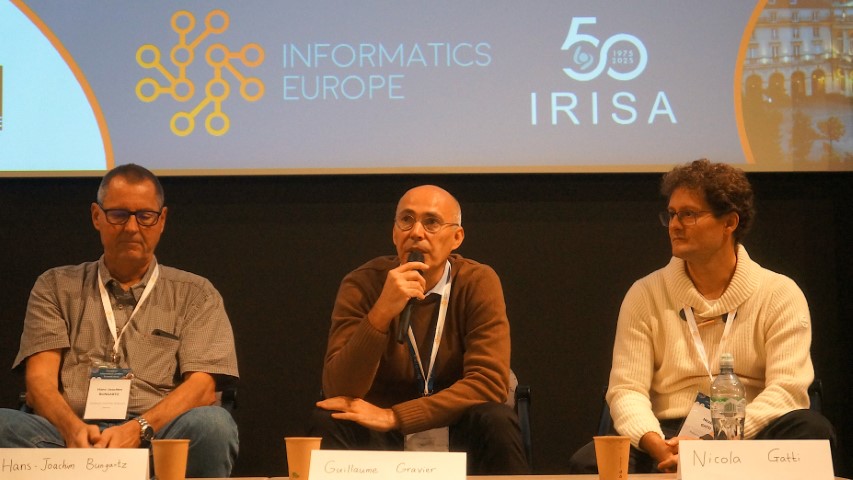
Nicola Gatti is a full professor of Computer Science and Engineering at Politecnico di Milano. His research activities are grounded in the Artificial Intelligence area. His main achievements come from algorithmic game theory, allocation problems and incentives, algorithmic social choice theory, multi-agent learning, and online learning. His contributions to these fields range from new algorithms and theoretical results to experimental analyses, implemented systems, and innovative real-world applications of AI techniques. He published more than 170 peer-reviewed archival research papers. He received several awards, including the 2011 AIxIA Marco Somalvico Award as the best Italian young researcher in AI, and the best paper award in several conferences, including the prestigious NeurIPS 2020 and Cooperative AI 2021 funded by Google Deepmind. He was elected as a EurAi Fellow (top <3% of the European AI scientists) in 2021 and awarded at IJCAI 2022.
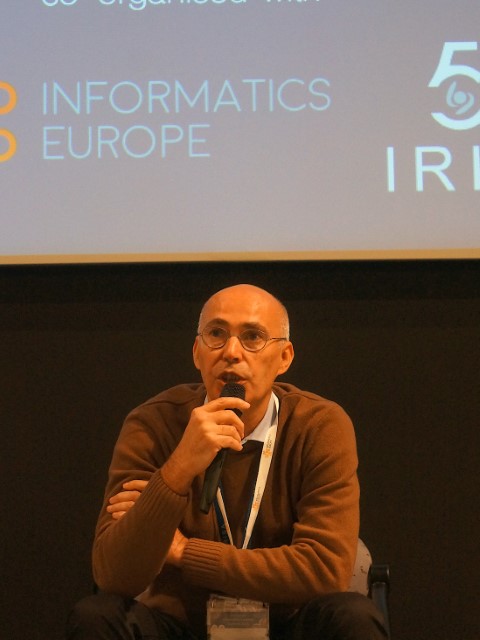
Guillaume Gravier is senior research scientist of CNRS (the French national research agency) at IRISA, of which he is the director. His research activities within the Linkmedia research group, common to IRISA and Inria Rennes, focus on content-based media analysis, indexing and linking. He has a background in probabilistic modeling for speech and language processing applied to multimedia content, and multimodal modeling. His current research interests are in media analytics, multimedia collection modeling, deep learning and multimodality, graph-based methods for multimedia content representation.
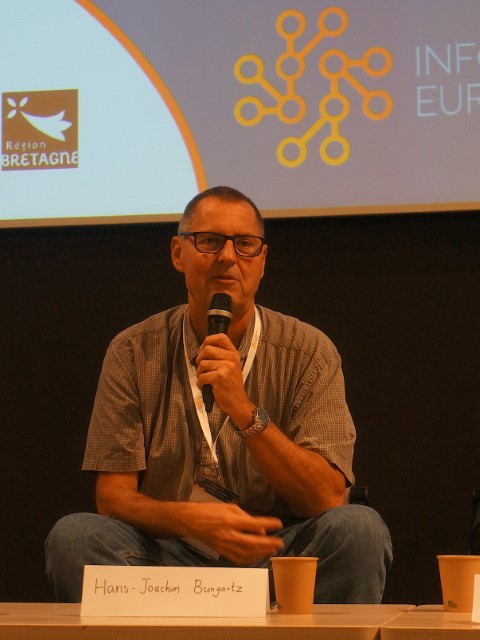
Professor Bungartz (* 1963) and his team conduct research on aspects of informatics in scientific computing along the entire simulation pipeline – from modeling to numerical algorithms and their efficient parallel implementation to HPC software and data analytics. The spectrum of applications for their research ranges from fluid mechanics, plasma physics and molecular dynamics to algorithms for quantum mechanical simulations.
His studies of mathematics, informatics and economics at TUM were followed by his doctorate (1992) and post-doctoral teaching qualification (Habilitation, 1998), after which he held a professorship in mathematics in Augsburg and an informatics Chair in Stuttgart before returning to TUM in 2004. He is a member of the board of directors of the Leibniz Supercomputing Centre, a member of the advisory board of several HPC centers and institutions, speaker of the BGCE elite study program and director of the Ferienakademie Sarntal. Professor Bungartz chaired the DFG Commission for IT Infrastructure for seven years, has been Chairman of the Executive Board of the German Research and Education Network from 2011 to 2020 and was a member of the Steering Committee of the Council for Doctoral Education of the European University Association from 2016 to 2022.
Concerning leadership service at TUM, H.-J. Bungartz was the Dean of Informatics from 2013 to 2022 and has been Dean of the new TUM School of Computation, Information and Technology (a merger of mathematics, informatics, and electrical & computer engineering) since 2022. Furthermore, he has been TUM Graduate Dean with responsibility of doctoral education university-wide since 2013.
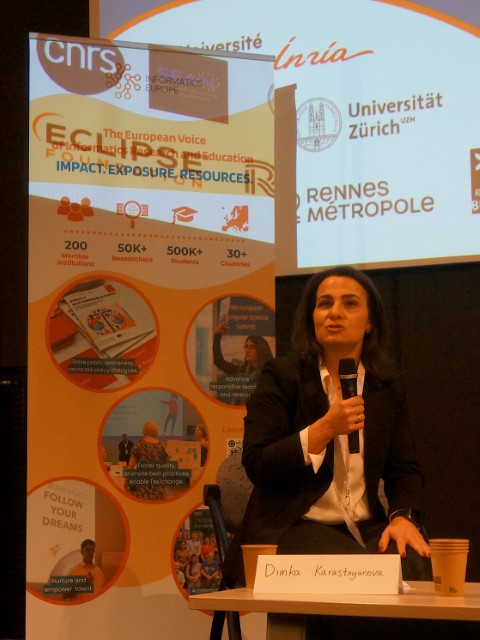
Dimka Karastoyanova is a full professor of Information Systems at the Computer Science Department of Bernoulli Institute for Mathematics, Computer Science and Artificial Intelligence at the University of Groningen, The Netherlands. Currently, she is the chair of the Board of the Bernoulli Institute. She was the head of the Computer Science Department from 2020 to 2024 and a vice-chair of the Bernoulli Board from 2024 to the end of August 2025. Since May 2025 Dimka is a member of the Board of IPN – the Dutch National Association for ICT Research. She holds a doctoral degree in Computer Science (received from the TU Darmstadt, Germany). Her current research and publications are in the areas of data-driven, service-based, process automation and performance improvement with focus on Processes for AI and AI for Processes finding application in fields like manufacturing, logistics, supply chain management, eScience, Data Science, healthcare and others. Her most prominent research topic currently is autonomic process performance improvement in the context of environmental sustainability. Dimka is an Associated Editor of Transactions of Services Computing and a member of the steering committee of EDOC. She is supporting the communities with organizing conferences, workshops and forums in different roles and is active as a reviewer for relevant conferences (e.g. BPM, EDOC, ICSOC, CoopIS), journals (TSC, JCC, TOSEM, Springer Computing, ACM TPDS, Information Systems, Computing Journal) and workshops. Dimka is leading the WG on Early Career Researchers of IE and is a co-organizer of the annual ECR workshop at ECSS for the last 3 years.
Andrea Cini is a researcher at Università della Svizzera italiana (USI). He is also SNSF Postdoc Fellow and visiting researcher at the University of Oxford and UiT the Arctic University of Norway. Andrea obtained his PhD from USI under the supervision of Prof. Cesare Alippi, with a thesis on graph deep learning methods for time series forecasting. His current research focuses on machine learning methods for time series and graph processing, with applications in healthcare and energy analytics. Andrea’s work has been published in top-tier machine learning venues, including JMLR, NeurIPS, ICML, and ICLR. He organized several workshops and tutorials on graph machine learning and related topics in international machine learning conferences. Andrea is one of the creators of Torch Spatiotemporal.
Federica Filippini received her M.Sc. degree in Mathematical Engineering and her Ph.D. degree cum laude in Information Technology at Politecnico di Milano. She is currently a post-doc researcher at the University of Milano-Bicocca, at the Deparment of Informatics, Systems and Communication. Her research interests include optimization problems applied to resource selection and scheduling in Cloud and distributed environments in the Computing Continuum.
Erasmo Purificato is a Scientific Project Officer at the European Centre for Algorithmic Transparency (ECAT) of the European Commission’s Joint Research Centre (JRC), focusing on trustworthy algorithmic systems and algorithmic fairness. He coordinated the study on the impact of Artificial Intelligence in scientific research. Erasmo holds a Ph.D. in Computer Science from the Otto von Guericke University Magdeburg (OVGU), with a dissertation entitled “Fairness Analysis of Graph Neural Networks for Behavioral User Modeling”. Previously, he worked as a Research Assistant in the Human-Centred Artificial Intelligence group at OVGU and the Leibniz Institute for Educational Media | Georg Eckert Institute (GEI) in Germany. He is author of several scientific contributions in top-tier journals, such as IJHCI, IEEE TVCG and MTAP, and top-tier conferences, such as RecSys, CIKM, SIGIR and UMAP. Erasmo recently won the Best Full Paper Award at RecSys 2025 with the paper “You Don’t Bring Me Flowers: Mitigating Unwanted Recommendation Through Conformal Risk Control”. He has co-organized workshops at ECIR, IUI, AIxIA and CHItaly conferences, and the IEEE International School on AI and Cognitive Technologies (ISACT). He served as a guest editor for IJHCS and DMKD journals, and on the organizing committees of several conferences like RecSys, UMAP, HT and IIR.
Drishti Yadav received her B.E. degree in Electrical and Electronics Engineering from Chhattisgarh Swami Vivekananda Technical University, Bhilai, India in 2017, and her M.Tech degree in Control and Instrumentation Engineering from Dr. B. R. Ambedkar National Institute of Technology Jalandhar, India in 2020. She completed her Ph.D. in Computer Science at TU Wien, Vienna, Austria in November 2024, under the supervision of Prof. Ezio Bartocci. During her doctoral studies, she served as a University Assistant in the Cyber-Physical Systems (CPS) research group at the Faculty of Informatics, TU Wien.
Currently, she is a Postdoctoral Researcher/Research Associate at the Interdisciplinary Centre for Security, Reliability and Trust (SnT) at the University of Luxembourg. Her research primarily revolves around fault-based testing and verification of safety-critical CPS. She is also interested in control systems engineering and optimization in general, with a soft spot for metaheuristics.
Gregor Engels held the Chair of Software Engineering and Information Systems at the University of Leiden, The Netherlands, from 1991 to 1997. Since then, he has been Professor of Computer Science at Paderborn University, Germany, until 2023.
He was also chairman of the Software Innovation Lab, the university part of the technology transfer institute SICP - Software Innovation Campus Paderborn at Paderborn University. He was a member of the board of Informatics Europe, a network organization of computer science departments from all over Europe.
Today he works as a strategic advisor in industrial and academic organizations, as a scientific reviewer, personal mentor and coach.
His research interests are in the area of socio-technical systems, model-driven software development, enterprise architecture, and software quality assurance. He is involved in many initiatives related to the impact of computing on the future of work, education, business, and society.
He has published more than 330 peer-reviewed scientific papers and supervised 50 Ph.D. dissertations. He has taught for more than 40 years at the undergraduate, graduate, and professional levels.
As large language models increasingly demonstrate their ability to generate functional software, the question arises: why should young people still learn to program? The answer lies not in code production itself, but in understanding, control, and creativity. Programming education cultivates computational thinking — the ability to analyze problems, design solutions, and reason about processes — which remains essential even when AI can write the syntax. Students who understand programming can evaluate, adapt, and responsibly use AI-generated code, rather than depend on it blindly. Learning to program therefore becomes the digital literacy of our time: it empowers individuals to think critically about technology, to innovate through human–AI collaboration, and to remain in control of the systems that increasingly shape our world.
Short BioMartin Hitz earned his doctorate in technical sciences in 1989 from TU Wien. Between 1987 and 1989, he spent several research stays at the Dipartimento di Elettronica of the Politecnico di Milano, followed by a year as a postdoctoral researcher at the Computer Science Department of the University of Ottawa from 1990 to 1991. Between 2000 and 2025, he has been a professor of Interactive Systems at the University of Klagenfurt. From 2001 to 2006, he was Vice-Rector, then Founding Dean of the Faculty of Technical Sciences (2007 to 2012). From 2012 to 2020, he was again a member of the rectorate as vice-rector. From 2022 to 2025, he chaired the Senate of the University of Klagenfurt. He is also vice-chairman of the Founding Convention of the Interdisciplinary Transformation University (IT:U) in Linz.
Martin initially worked in the fields of information systems, data modeling, software reuse, software metrics, and interactive simulation environments. At the University of Klagenfurt, he founded the Interactive Systems working group, which deals with HCI, non-classical user interfaces, and usability. Martin serves as a member of the boards of the Austrian Computer Society and of Informatik Austria (Austria's NIA).
Enrico Nardelli is a full professor of Informatics in the University of Roma "Tor Vergata", affiliated with the Department of Mathematics. Since April 2014 he is coordinating the project “Programma il Futuro“ for the introduction of basic concepts of informatics as a scientific subject in Italian schools, with emphasis on primary schools and on computational thinking. Programma il Futuro is a joint project bewteen the Italian Ministry of Education and CINI, the Italian national inter-university Consortium for Informatics. Since its inception, the project has led about three million Italian students (half of them in primary schools) to start learning the principle of informatics. He was the President of Informatics Europe from 2018-2023, the association of informatics departments and research laboratories in Europe and neighbouring areas and initiator of the Informatics for All Coalition.
The Société informatique de France (SIF) works to promote informatics in France through three main areas: teaching, mediation, and research. This presentation introduces the mediation activities implemented by the SIF in order to reach a wide audience, particularly young people. We will see that some of our actions are carried out directly with the target audience, such as organizing informatic activities without computers. Other more indirect actions, such as the mediation school, aim to provide the necessary tools so that non-initiates can in turn share their knowledge of informatics in a popularized and entertaining way.
Short BioConstance Thierry is an associate professor of computer science at the IRISA laboratory, affiliated with the University of Rennes (she is teaching at the IUT in Lannion).
Her research activities focus on the management and analysis of data from imperfect information sources, and more specifically on the modeling of human contributions. She is interested in modeling this imprecise and uncertain data using belief function theory.
She is currently a member of the board of administration of the Société informatique de France, where she is particularly interested in mediation activities and the place reserved for women in informatics.
In 2019 a deep reform modified the organization of High Schools in France and Informatics is introduced as a new scientific discipline. Among other objectives, the aim is to propose the option « Numérique et Sciences Informatiques » in more than 50% of high schools in a first time. The challenge is to have professors in informatics, at least 2000 with a deadline of 2 years. This presentation reports the way the upskilling of teachers in mathematics, physics or engineering sciences has been organized.
Short BioJean-Marc VINCENT is associate professor in Computer Science at the University of Grenoble. He received the agregation in mathematics in 1986 and a PhD thesis is Computer Science in 1990 from University of Paris XI (FRANCE). In 1991, he joined the INRIA-IMAG APACHE project at the University of Grenoble in the performance evaluation group. He is now member of GHOST INRIA Project in the Laboratory of Informatics in Grenoble.
His research interest deals with stochastic modeling and analysis of massively parallel or distributed computer systems. It includes : fundamental studies on dynamics of stochastic discrete event systems (Markovian models, (max,+)-algebra, stochastic ordering, stochastic automata networks); software simulation techniques with application to high speed networks (rare event estimation, quality of service...); measurement software tools that provide aggregated or disaggregated informations on the behavior of parallel or distributed program executions (software tracers, statistical on-line analyzers...).
From 2011 to be 1018 he has been the French director of the joint international laboratory LICIA between the INF department of UFRGS (Brazil) and the LIG (Laboratoire d'Informatique de Grenoble) and leads the Exase international team between Fapergs and Inria on Exascale computing.
In 2010, he initiates a first educational program in informatics for high school teachers and develop education programs in the Academic region of Grenoble. When the high school is reformed he was the member of the national leading bord for teachers upskilling in computer science.
Since 2021 he is member if the CA of the "Société Informatique de France" and member of the leader board on the domain of teachers education. He is also the co-funder of the national group Infosansordi (french version of CS-Unplugged).
Distributed systems are increasingly spanning worldwide, with digital services hosted all around the globe and often belonging to complex systems, utilizing many other services and hardware resources themselves. Along with this increase comes an alarming growth of energy consumption and carbon footprint. Despite the distributed systems’ complexity, understanding how they consume energy is important in order to hunt wasted Joules and reduce their environmental impact. This talk will present some challenges and research directions in the field of distributed systems in order to reach sustainability.
Short BioAnne-Cécile Orgerie is research scientist at CNRS, in the IRISA laboratory in Rennes, France. She got her PhD in Computer Science in 2011 in Lyon. She belongs to the Magellan team, dealing with large-scale distributed systems, Cloud computing and edge infrastructures. Her research interests include understanding, improving, and reducing the environmental impacts of distributed systems.
Photo © Xavier Pierre / CNRS Sciences informatiquesRafael Capilla is a full professor of Software Engineering at Rey Juan Carlos University of Madrid (Spain). His main research topics include software variability, software sustainability, architecture knowledge management, industry 4.0 and application of GenAI to software engineering. He has been involved in more than 12 special issues and is co-author of more than 150 publications. He was co-editor and co-author of the Springer book “Systems and Software Variability Management, Concepts, Tools and Experiences". Rafael has more than 20 years of teaching experience in two Spanish Universities and a professor in a master course at Chalmers University of Technology (Sweden). Currently, he is also adjunct professor at Lappeenranta University of Technology (Finland) since 2022. Rafael is associate editor for IEEE Software and leads the committee on technical activities and standards at IEEE Spain.
High computational (and energy) costs hinder broad use of Computational Fluid Dynamics in design and policy. I present a “computation-as-learning” framework where physics-informed surrogates—Physics Informed Neural Networks (PINNs), Point-Cloud PINN (PIPN), and a Geometry-Aware Neural Operator networks (PIGANO)—embed governing laws (incompressible Navier–Stokes in free flow, Darcy–Forchheimer in porous media) directly in the loss and are conditioned on geometry, material parameters, and boundary conditions. This enables the reuse of model with near-zero marginal inference cost across scenarios. As a minimal example, I show flows through-and-around porous bodies (3D windbreaks with tree canopies and buildings) using OpenFOAM-generated data: PIPN/PIGANO achieve low velocity/pressure error on seen and unseen shapes, accurately reproducing wakes. We conclude with a roadmap for responsible adoption—hybrid solver-surrogate loops, calibrated uncertainty, and end-to-end energy metrics—to deliver reliable speedups with a smaller environmental footprint.
Short BioGabriele Gianini is Full Professor at the Department of Informatics Systems and Communication (DISCo) of the University of Milano-Bicocca. He has held visiting positions at a number of international institutions, including INSA de Lyon, University of Passau, CERN, and FermiLab. From 2017 to 2020 he has been Senior Research Fellow at EBTIC/Khalifa University (UAE). Since 2018 he is Associate Editor of the journal "Data Science and Engineering" (DSEJ) - Springer, and of the “Journal of Imaging Science and Technology" (JIST) (Society for Imaging Science and Technology) for the Machine Learning area. Since 2016 he is Research Area Coordinator for "Information Modeling” within the French-German-Italian integrated international research network IRIXYS (International Research and Innovation Centre in Intelligent Digital Systems). Since 1992 has co-authored about 250 papers published in internationally refereed journals and conferences. Since 2024 he is member of the Green ICT Working Group of Informatics Europe.
The university of Namur is committed to combining education and research with human values. Thus, research carried out the Faculty of Computer Science naturally considers ethical and environmental concerns. This talk will explore recent research in this direction. First, we will see how to make search for neural models more diverse and sustainable by combining modeling, code generation and machine learning techniques. Then we show how software testing can inform us about the energy consumption of source code. Finally, we will explore energy-reduction strategies for neural networks.
Short BioGilles Perrouin is a FNRS Research associate (“chercheur qualifié”) at the Namur Digital Institute (NADI) and the Faculty of Computer Science of the University of Namur in Belgium. After he received his PhD jointly from the Universities of Luxembourg and Namur in 2007, he held several postdoctoral positions at the universities of Rennes, Luxembourg and Namur. His research interests involve quality assurance of variability-intensive, intelligent, complex systems and software testing techniques to achieve more ethical and sustainable machine learning. He is a member of IEEE and ACM. Since 2020, he is an associate editor at the ACM Transactions on Software Engineering and Methodology journal and the Software Testing, Verification and Reliability journal since 2024.
Sebastian is working as a senior researcher at the Information Systems Engineering chair at TU Berlin and was previously an interim professor in Software Engineering and Construction Methods at the University of Hamburg until September 2025. His research focuses on sustainable and maintainable software architecture engineering, with a particular interest in cloud applications and platforms. Here, he works on development and engineering methods, measurement and assessment tools, and also on the integration into large organizational contexts.
Boris is a long time open source enthusiast and contributor. Previously a methods and tools consultant for the industry, then a software engineering researcher, he joined the Eclipse Foundation in 2021 to help people and organisations adopt, understand and apply open source principles and best practices to their own projects. He has also been a maintainer of the OSPO Alliance since 2021. He lives in Europe.
“Open science” operates both as a general high-level vision for a certain idea of science and as a specific institutional agenda, promoted in particular by the European Commission and entrenched in UNESCO’s Recommendation on Open Science, adopted in 2021. A first step to understanding why open science matters – as a very practical challenge to scientific institutions and individual scientists everywhere – is to make the connections between the vision and the agenda. I will in particular rely on the recently completed work of the Horizon Europe OPUS project to explain the nature of the challenges that the open science agenda creates in terms of training, assessment, management and the dynamics of trust within scientific communities. But open science matters at another level too, which is critical assessment of its vision. I shall discuss this in particular within reference to the normative framework provided by the Universal Declaration of Human Rights and by the numerous international instruments anchored in it that define principles and in some cases operational guidelines for the institutional organization of science.
Short BioJohn Crowley is Chairman & CEO of the PHGD Group, which brings together a cluster of companies addressing the various dimensions of ideas and consultancy on environmental, social, cultural and technological transformations, as well as renewable energy solutions. He is a consultant for the Culture2030Goal Campaign and is leading its work on drafting a Culture Goal and designing its indicators. Before founding the PHGD Group, he spent 18 years at UNESCO, leading the Section for Research, Policy and Foresight from 2014 to 2021. He was previously responsible for ethics of science and technology and for global environmental change. Before joining UNESCO, he worked as an economist in the oil industry (1988-95) and as a research fellow at the French National Political Science Foundation (1995-2002). From 2002 to 2015, he was editor of the UNESCO-published International Social Science Journal. He is the author of several books and over 100 academic articles and book chapters on political theory, comparative politics, and international relations.
An alumnus of the Scuola Normale Superiore di Pisa, with a PhD in Computer Science from the University of Pisa, Roberto Di Cosmo was associate professor for almost a decade at Ecole Normale Supérieure in Paris. In 1999, he became a Computer Science full professor at University Paris Diderot, where he was head of doctoral studies for Computer Science from 2004 to 2009. President of the board of trustees and scientific advisory board of the IMDEA Software institute and chair of the Software chapter of the National Committee for Open Science in France, he is currently on leave at Inria.
His research activity spans theoretical computing, functional programming, parallel and distributed programming, the semantics of programming languages, type systems, rewriting and linear logic, and, more recently, the new scientific problems posed by the general adoption of Free Software, with a particular focus on static analysis of large software collections. He has published over 20 international journals articles and 50 international conference articles.
In 2008, he has created and coordinated the european research project Mancoosi, that had a budget of 4.4Me and brought together 10 partners to improve the quality of package-based open source software systems.
Following the evolution of our society under the impact of IT with great interest, he is a long term Free Software advocate, contributing to its adoption since 1998 with the best-seller Hijacking the world, seminars, articles and software. He created in October 2007 the Free Software thematic group of Systematic, that helped fund over 50 Open Source research and development collaborative projects for a consolidated budget of over 200Me. From 2010 to 2018, he was director of IRILL, a research structure dedicated to Free and Open Source Software quality.
He created in 2015, and now directs Software Heritage, an initiative to build the universal archive of all the source code publicly available, in partnership with UNESCO.
Yannis Ioannidis is the President of the Association of Computing Machinery (ACM). He is a Professor at the Department of Informatics and Telecom of the University of Athens as well as an Associated Faculty at the “Athena” Research and Innovation Center, where he also served as the President and General Director for 10 years. His research interests include Database and Information Systems, Data Science, Data Infrastructures and Digital Repositories, Recommender Systems and Personalization, and Interactive Digital Storytelling, topics on which he has published over 180 articles in leading journals and conferences and holds four patents. His work is often inspired by and applied to data management and analysis problems that arise in industrial environments or in the context of other scientific fields (Social Sciences and Humanities, Life Sciences, Physical Sciences) and the Arts. He is an ACM and IEEE Fellow, a member of Academia Europaea, and a recipient of several research, teaching, and service awards. He is a co-founder of OpenAIRE, the international data infrastructure for Open Science in Europe, the technology director of the EBRAINS European Research Infrastructure on neuroscience, the coordinator of the implementation of the EU Node of the European Open Science Cloud, as well as of several AI/data-driven spin-offs. He is also a co-chair of the Global Climate Hub of the UN Sustainable Development Solutions Network.
Investment in European Digital Sovereignty is important but unfortunately takes a very focused hardware-first approach, limiting software research and innovation to hardware needs. However, most of the value is in fact depending on having control over the higher-level software eco systems, eco systems that have significantly different business logic than the hardware-specific ones.
Without investment in higher-level software ecosystems, skills and research, Europe’s investments in chip design and manufacturing are reduced to production of commodity hardware where foreign powers can create lock-in effects through control over business-critical higher software layers. A bigger and more diverse European software environment, compliant with European values and legislation, is critical to avoid such outcomes.
In particular open source and its eco systems are key, for there is no software company today that can afford not relying partly on open source software. Unfortunately, these open source eco systems seem to be taken for granted and there seems to be a lack of understanding that they need nursing and curating. If we don't support European driven open source communities, we will have to rely on whatever the chineese and americans create and bow to their values.
Short BioPhD in Computer Science from the Royal Institute of Technology in Stockholm. President of ERCIM AISBL; more of which in the presentation. Business Manager at the Computer Science department of RISE Research Institutes of Sweden. AI researcher since 1987, but during the second half of the career sadly ending up in management and administration. Focused on the practical application of AI and its combination with other techniques such as planning and optimization.
The Université Grenoble Alpes (UGA) recently inaugurated its Open Source Program Office (OSPO). This presentation will offer an overview of the initiatives supporting open-source scientific communities, evaluate the impact of these actions, and discuss future directions aligned with the community’s evolving needs.
Short BioViolaine Louvet is a research engineer at the CNRS's Jean Kuntzmann Laboratory of Applied Mathematics in Grenoble. She joined the CNRS in 1999 after earning her PhD in applied mathematics. In 2015, she founded the GRICAD structure, bringing together the regional computing mesocentre and developing new support services for research data and software. In 2023, she joined the Jean Kuntzmann Laboratory, and became the CNRS Mathematics Institute's scientific delegate for computing and data. She is a member of the Source Code and Software College of the Committee for Open Science and serves as a Software Heritage ambassador. She is also actively involved in open science initiatives at the Université Grenoble Alpes, particularly through the Codes Données Grenoble Alpes unit.
Dr Matthew Grech-Sollars is an Associate Professor in Quantitative Neuroradiology at University College London and a Clinical Scientist (MRI Physics) at the National Hospital for Neurology and Neurosurgery, University College London Hospitals NHS Foundation Trust. Since joining UCL in 2022, he has established the Mental Health Working Group within UCL Computer Science, and is currently chairing the Department's Gender Equality Group, which holds an Athena Swan Gold award. Externally, Matthew co-chairs the MR Special Interest Group for the Institute of Physics and Engineering in Medicine (IPEM) and is a member of the Annual Meeting Program Committee for the International Society for Magnetic Resonance in Medicine (ISMRM).
Letizia Jaccheri is a Professor at the Norwegian University of Science and Technology (NTNU), Trondheim, Norway, specializing in Software Engineering. She earned her Ph.D. from Politecnico di Torino and a Master's from Università di Pisa. She has held several roles, including Department Head at NTNU and Adjunct Professor at UiT Tromsø.
Letizia has led numerous high-impact projects, such as the COST Action CA19122 EUGAIN with more than 150 participants from 40 different countries. She has supervised one hundred Master's and a dozen of Ph.D. students.
In 2022 she gets the Gender Equality Award at NTNU and ODA Award for her leadership in promoting gender equality in technology. As an ACM Distinguished Speaker and former board member of Informatics Europe, Letizia influences the field through her professional activities and international collaborations.
Malvina Latifaj is a postdoctoral researcher at the Academy of Innovation, Design and Engineering (IDT), Mälardalen University (MDU), Sweden. Originally from Albania, she completed a B.Sc. and M.Sc. in Computer Engineering there before moving to Sweden in 2019 to pursue a Magister in Software Engineering at MDU, followed by a Ph.D. in Computer Science (MDU, 2024). Her research interests include model-driven engineering, model transformations, metamodel evolution, model co-evolution and migration, and architectural decision making. She has served on program committees for select modeling tracks and workshops (e.g., SEAA’24, MASE’24, HowCom’23) and on the organising committees for MODELS 2023 and MDE4SA 2025. Malvina is passionate about collaborative, inclusive research environments and broadening participation in software engineering.
The EU AI Act has introduced a new compliance regime that is now firmly institutionalized, reshaping how artificial intelligence is conceived, developed, and deployed across Europe. For high-risk AI systems in particular, the regulation sets out rigorous requirements that directly influence the design and innovation processes within EU-funded projects and beyond. These obligations create both opportunities for more trustworthy AI and practical challenges for developers, regulators, and end-users alike. Drawing on concrete experiences from European high-risk AI initiatives, this keynote highlights the realities of operationalizing compliance. It explores how AP4AI self-assessments can serve as a practical tool to navigate complexity, align with the EU AI Act, and foster accountability in AI development.
Note: The Accountability Principles for AI (AP4AI) Project develops solutions to assess, review and safeguard the accountability of AI usage by internal security practitioners. https://www.ap4ai.eu/about
Short BioPetra Saskia Bayerl was Co-Director of the Centre of Excellence on Public Safety Management (CESAM) at Rotterdam School of Management, Erasmus University (Netherlands) as well as Associate Dean of Diversity at the same institution. She holds a master's degree in psychology, linguistics and organizational dynamics from universities in Germany and the USA and gained her PhD from Delft University of Technology, Faculty of Industrial Design Engineering (Netherlands). Her research addresses societal implications of emerging technologies and practices in the security domain and has appeared in numerous international journals, conferences and books. She has extensive experience in security-related EU-funded projects, both as researcher and as advisory board members and member of ethics committees, in a broad range of topics from radicalization and counter-terrorism to community policing and the management of crises.
Ethical design ensures users’ well-being, privacy, and autonomy in making informed decisions. Usability and accessibility design principles ensure ethics because they require essential aspects to be visible, understandable, controllable, recognizable, etc. Dark patterns intentionally violate these principles, making it possible to manipulate consumers into taking actions that do not correspond to their preferences. Dark patterns are aimed at modifying the underlying choice architecture. They alter decision space or manipulate the information flow to benefit the service providers rather than users. While these designs work in the short term, the companies extract profits, harvest data, and limit customer choice before users face consequences.
While maintaining professional ethics is the norm in other disciplines, UX design still requires more efforts to raise awareness among users, designers, and stakeholders. The presentation will focus on categorizations of dark patterns that distinguish them according to their implementation methods and consequences on users ' well-being. Further, the factors raising the awareness of designers, stakeholders, and end-users will be reviewed. We will provide an overview of the legal regulations that are obligatory for stakeholders. A way to raise prospective designers’ awareness will be presented on the example of how ethics topics are taught for the Vilnius University Software Engineering students. Finally, examples of tools for raising users’ awareness of ethics breaches will be discussed.
Short BioKristina Lapin is an associate professor at Vilnius University, Faculty of Mathematics and Informatics, Department of Computer Science. She is the chair of the Board of the Faculty of Mathematics and Informatics. She is also the chair of the Software Engineering Bachelor's Study Program Committee. She teaches human-computer interaction for bachelors and User Experience Engineering for masters in Software Engineering and Computer Science students. She is an author of the Human-Computer Interaction textbook for Lithuanian students. Research interests include human-computer interaction, balancing of usability and security, and design ethics. She participated in national and international research projects in educational, aeronautics, virtual worlds, and cybersecurity thematic areas.
The use of generative artificial intelligence tools is spreading and becoming more widespread in our society, with particular relevance in content generation and in their use by teenagers on social media. The latent dangers of misinformation have grown exponentially due to the massive use of social media, and it is in these spaces where the use of generative AI as a fundamental tool for misinformation has increased. This speech aims to present specific cases that demonstrate the application of this technology and its impact on the radicalization of opinions and extremism. In addition, these same tools are used illegally on these networks, leading to crimes of hate speech, bullying, harassment of young women, and even sexual blackmail. Some results from the project “Analysis of mobile applications from a data protection perspective: Cyber protection and cyber risks to citizens' information” will be presented, along with how to use AI to detect these situations and take appropriate action.
Short BioRafael Pastor is a professor at UNED. He served as Director of Technological Innovation at the UNED (responsible for developing the aLF learning platform and technological innovation processes) for five years (2004-2009) and also as Director of the UNED Center for Innovation and Technological Development from 2009 to 2011, where he was responsible for managing the UNED virtual campus and developing the aLF learning platform. He is currently Director of the ETSI School of Computer Science. He has directed and participated in several teaching innovation projects, summer courses, and continuing education programs. Throughout his scientific career as a researcher, he has participated in more than 20 R&D projects funded by public calls for proposals (regional, national, and international), some of which are particularly relevant to companies and/or administrations at the international level. He has also participated as a speaker and active member in nearly 60 international/national conferences, indexed in impact lists such as CORE (ERA), DBLP, and IEEE Explorer. His research experience is also reflected in more than 70 publications in international journals, 60 of which have a JCR/SJR impact factor, with 45 of them indexed in the Journal Citation Report (JCR). Additionally, he has been a member of several international scientific societies, including the IEEE (Education Society), where he holds the status of Senior Member. He is a collaborator/advisor to the AEPD (Spanish Data Protection Agency), through his participation in the advisory council “Espacio de Estudio sobre Inteligencia Artificial” (Study Space on Artificial Intelligence), and a member of the P2834 working group “Standard for Secure and Trusted Learning Systems”. He is one of eight Spanish researchers to hold an International Chair in Cybersecurity, funded by EU PTR funds and awarded through a competitive and public call by the National Cybersecurity Institute (INCIBE).
Our lives are guided by recommender systems, regardless of how susceptible we are to them. They are embedded in many aspects of our lives, e.g., from content recommendations to guided plans for smart-city infrastructure management. Where previously we had rule based, content based and collaborative filtering, with ML and especially LLMs we have considerations of multiple contexts; where we had more static approaches now we have learning and adaptive algorithms. With these advances new challenges are added to the old problems such as those of bias reinforcement and privacy issues, one of the important ones being the problem of explainability and accountability. In addition, raising awareness of the issues is an important social issue. We will look at multiple perspectives and multiple platform types, present the ethical issues that we have identified and ways to mitigate them. Examples include content recommenders like Youtube and identified issues, then crowdsourcing platforms and our results from a survey, recruitment platform examples to governmental decision-making with AI.
Short BioMirela Riveni is Assistant Professor in Information Information at the Bernoulli Institute, University of Groningen. She earned a Doctoral degree while working in the Distributed Systems Group, Institute of Information Systems, Vienna University of Technology, and a M.Sc. degree in Computer Networks at KTH -The Royal Institute of Technology. Her work includes provisioning and management mechanisms for automating Human Computation processes in adaptive systems with humans-in-the-loop. She has worked on ranking strategies for task-to-expert matching, trust and reputation models for crowdsourcing and social computing, team-formation mechanisms and adaptation strategies for systems that support social computing. Currently, she also works on large-scale network analysis, and specifically disinformation detection and (dis)information spreading analysis, as well as polarization and echo-chambers, mostly in decentralized systems. She works with network science metrics and graph-based algorithms, ML, and NLP. She is also interested in bias and discrimination issues in recommender systems with a special focus on privacy and ethical issues, on which she writes and gives talks as well. In addition, connected to the mentioned application areas, she is also investigating modeling and application of provenance in large scale network analysis, provenance of code, and provenance in workflows. On another research line, process management, and specifically mining and process adaptations are within her research work currently as well.
Accountability in the digital age is not something we deal with when something goes wrong but rather a requirement that we must think about before, during, and after the selection of solutions and their implementation. Accountability does not mean blaming others but taking responsibility for making decisions and ensuring a safe and transparent online environment. Accountability is the awareness that is the only constant in a dynamic digital age, in which we must understand each other and ensure the development of contextual instruments, guidelines, and other policies. In doing so, we create awareness of responsibility in the global community with various stakeholders, impart knowledge about responsibility, and research and develop instruments for responsibility.
We will focus on accountability in connection with artificial intelligence, emphasizing ethics, including cultural awareness and professional codes of ethics. These principles govern the behavior of a person or group in a business environment.
Like values, professional ethics determine the rules of how a person should behave towards others and institutions in the professional environment. These rules are presented as Professional Codes of Ethics for individual fields and maintain the highest standards of professional conduct. Their common characteristics are avoiding conflicts of interest, violations of confidentiality and privacy, and the law, providing knowledge for advancing technology, prudent use of information and maintaining the integrity of systems, and transferring fundamental ethical principles to computer professional activity. Of course, the rules are not an algorithm for solving ethical problems. They are only a basis for ethical decision-making and a demonstration of responsibility for supporting the public good.
Short BioTatjana Welzer Družovec is a researcher and a full professor at the University of Maribor, Faculty of Electrical Engineering and Computer Science. She is the head of the Data Technology Laboratory. Her research interests include cybersecurity including ethics, cultural and human factors of IT and cybersecurity, and intercultural communication. She is the national delegate for IFIP TC 11 and a member of the executive board of Slovenian Society Informatika. She has participated in numerous national and international research projects. Most international projects have been funded by the EC through various Horizon 2020 and Erasmus+ programs. She was a coordinator of the European University Alliance ATHENA at the University of Maribor and is still involved in its activities.
Her bibliography contains over 800 bibliographic items published in various scientific journals, including top JCR IF publications. She has published chapters in several books and has participated in numerous international conferences.
She has been and is a member of the committees of many international conferences and steering committees. With her team, she has organized and co-organized over 20 international conferences in Slovenia, and many invited events at various conferences worldwide. For her work she received the title of Congress Ambassador of Slovenia in 2019.
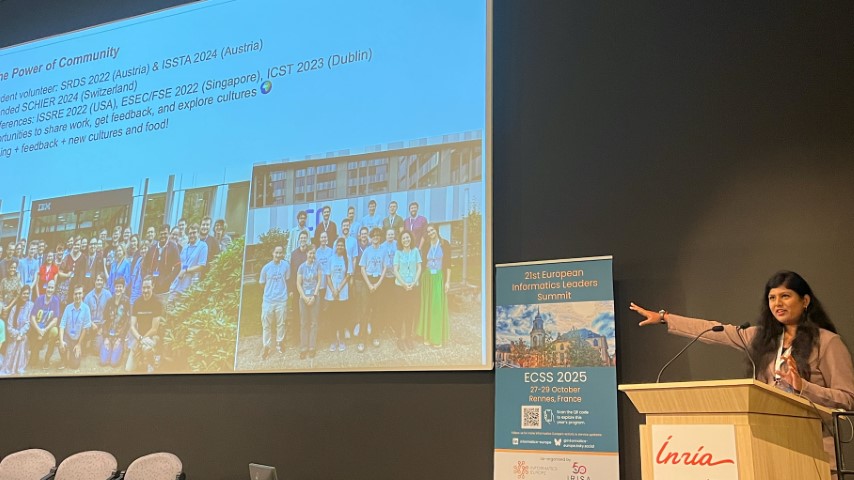
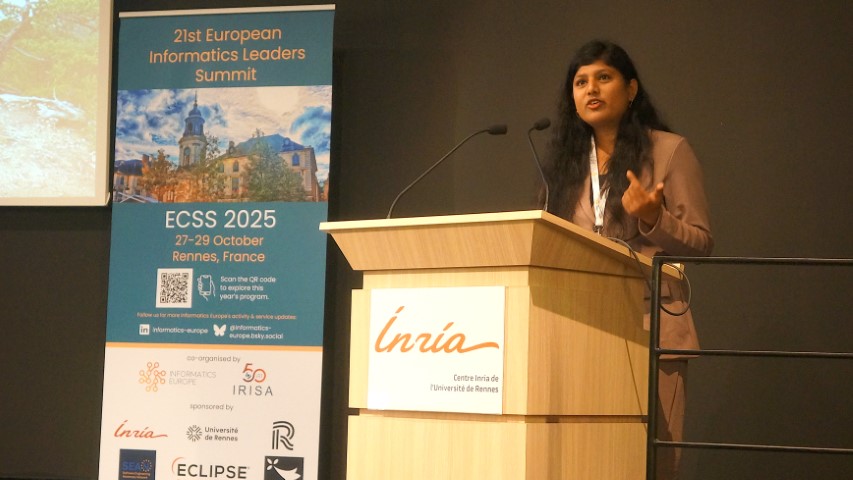
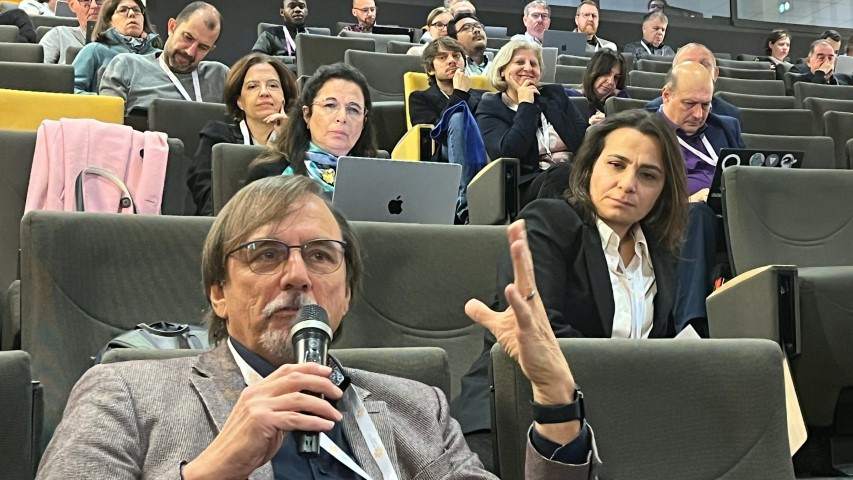
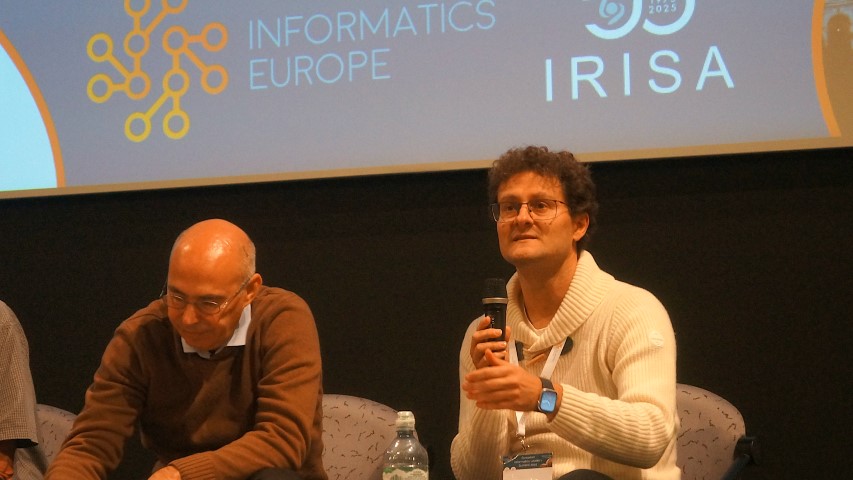
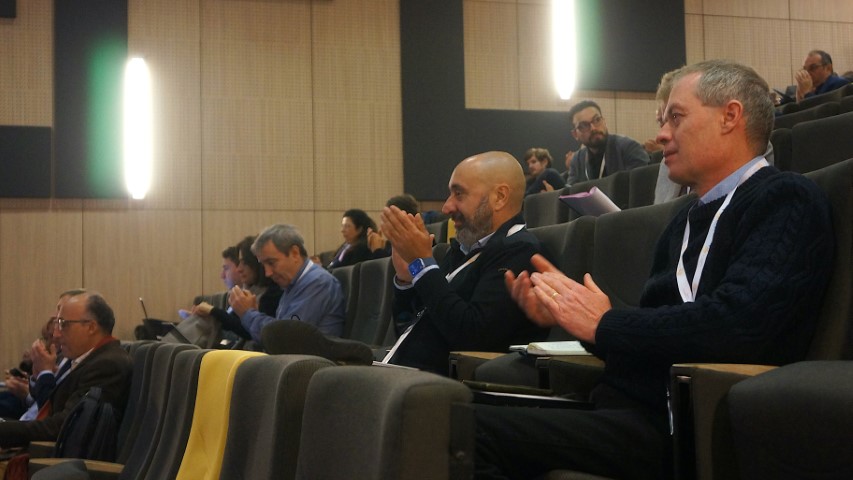
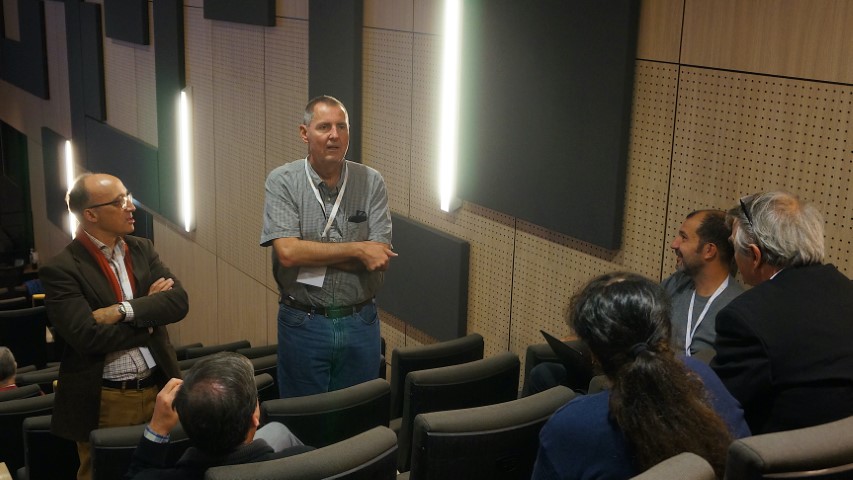
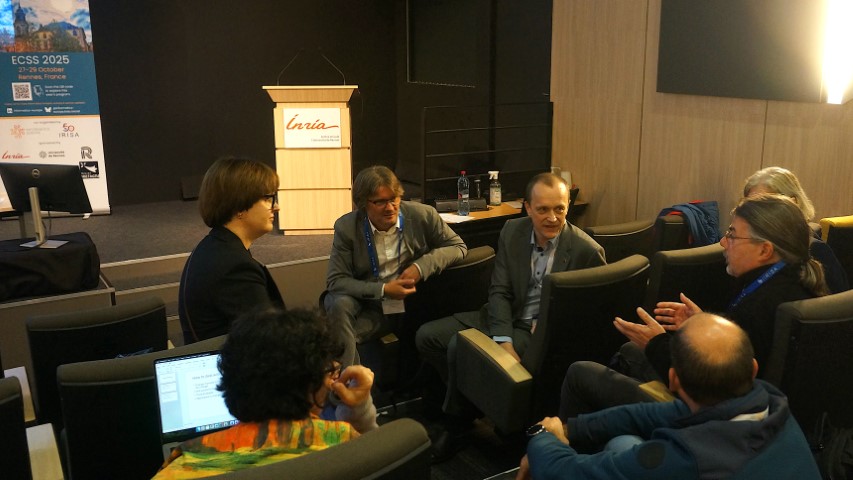
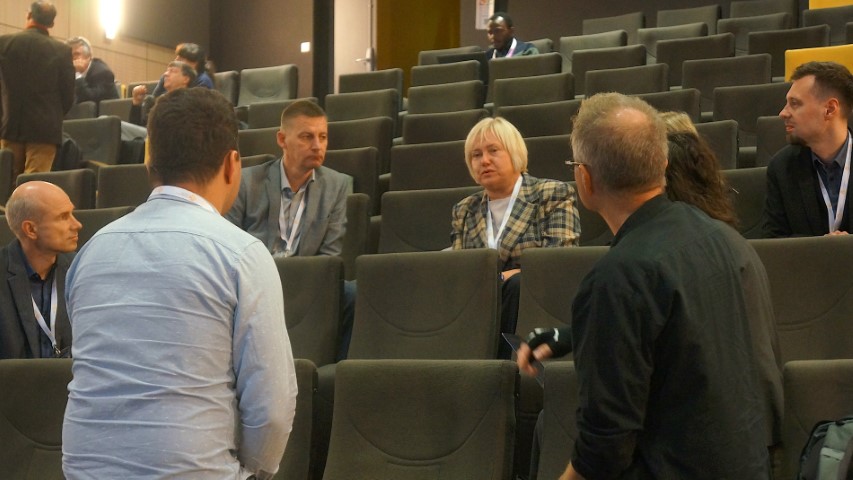
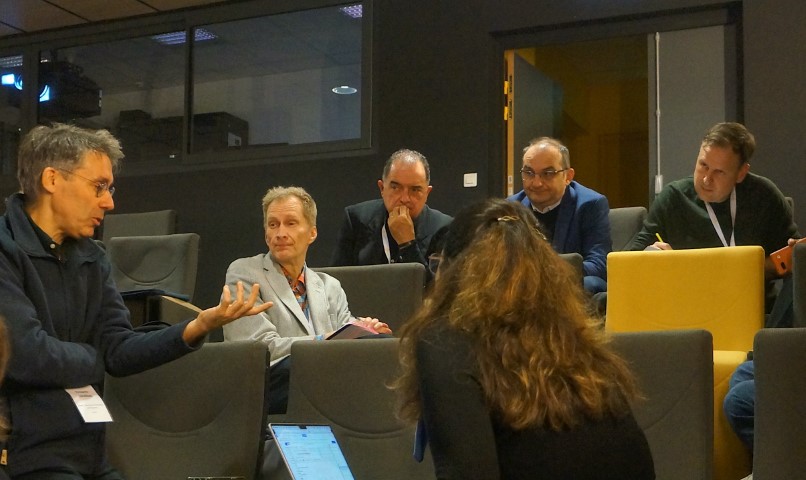
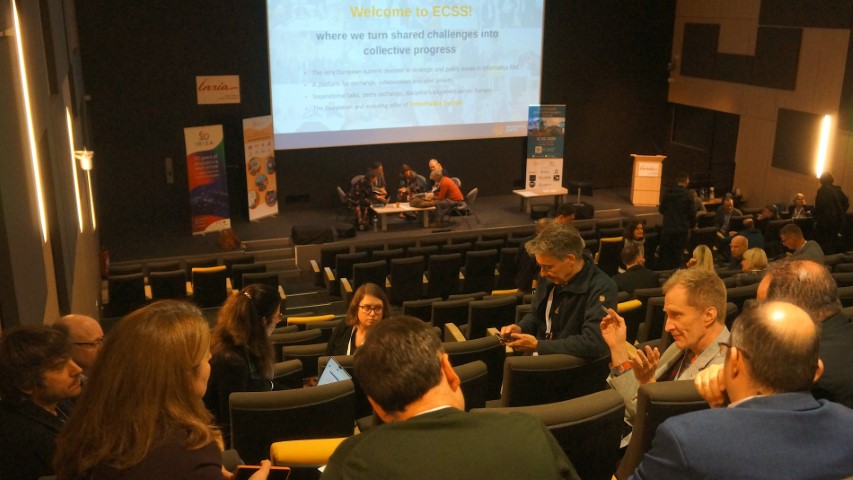
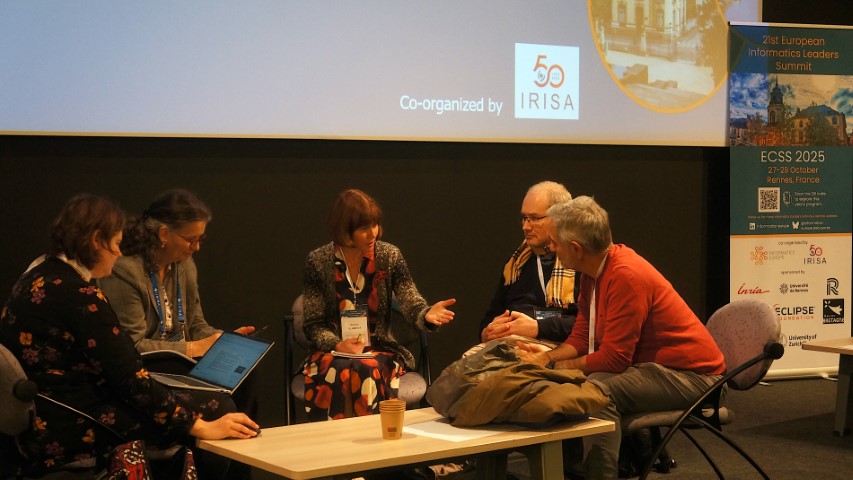
The 2025 edition of the European Informatics Leaders Summit was held from 27 to 29 October in Rennes, France, and was co-hosted by Informatics Europe and our member institution, IRISA, as part of its 50th anniversary celebrations.
ECSS is Europe's only forum dedicated to addressing timely strategic issues in Informatics research and education. Open to all and typically gathering 100–150 participants each year, it brings together department heads, deans, and other academic and industry leaders who drive the connection between Informatics research, education, and policy in Europe.
Since 2005, ECSS has built a reputation for high-level dialogue, influential speakers, and meaningful community impact. Unlike a traditional scientific conference, ECSS focuses on the strategic and managerial challenges facing Informatics institutions today, providing a unique arena for reflection, exchange, and collective action at institutional and policy levels.
Participants benefit from thought-provoking discussions, practical insights, and valuable networking with peers from across Europe and beyond.
ECSS 2025 was proudly sponsored by Inria, University of Rennes, University of Zurich, Eclipse Foundation, Rennes Métropole, Région Bretagne and Software Engineering Awareness Network.
ECSS speakers are among the world`s most distinguished academics, industry leaders, and decision-makers in the field. The event never fails to inform, inspire and engage its audience.
Learn directly from your peers, by sharing best practices, common challenges, and proven strategies to enhance the quality of Informatics research and education at the ECSS workshops.
Foster strategic connections with leaders and researchers across academia and industry to address key challenges and advance Informatics in Europe.
The European Informatics Leaders Summit - ECSS (named European Computer Science Summit until 2023) has been organised annually by Informatics Europe since 2005. In fact, the origins of Informatics Europe date back to the first ECSS held at ETH Zurich in 2005, when for the first time, heads of Informatics departments throughout Europe met to discuss critical issues and common concerns related to their discipline. Informatics Europe continues to organise the summit since then.
Today, ECSS still gathers deans, department chairs, and heads of research groups of leading European Computer Science and Informatics faculties, departments as well as public and private research institutes. Additional workshops and sessions in recent years have broadened the scope of the discussions to include all leaders and decision-makers in Informatics in Europe, both from academia and industrial research labs.
The Summit is devoted to all aspects of Informatics education and research: funding, entrepreneurship, management, career development, and policies.
The high calibre of the speakers, since the very first Summit in 2005, has established the ECSS as one of the most prominent meetings of the European Informatics community.
ECSS 2025, 27-29 Oct, Rennes. France
Save the dates for ECSS 2026:
26-28 Oct in Porto, Portugal

Uniting academia, industry, and policymakers, spanning over 30 countries, to advance Informatics education and research for positive societal change in Europe.
Netlogica design+programming