
Members Spotlight
The Members Spotlight is offering an overview of the activities, programs and news from our Informatics Europe members to the broader Informatics Community. Feel free to browse through the documents provided and find out more about what is going on at the various Informatics Departments, Faculties and Schools all over Europe.
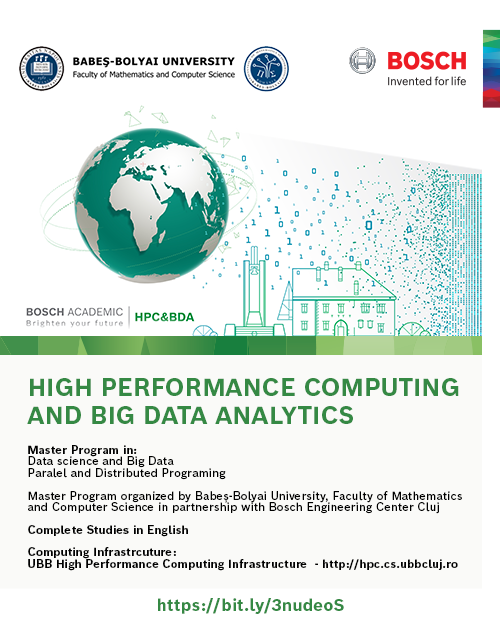
Babeş-Bolyai University - Master in High Performance Computing and Big Data Analytics
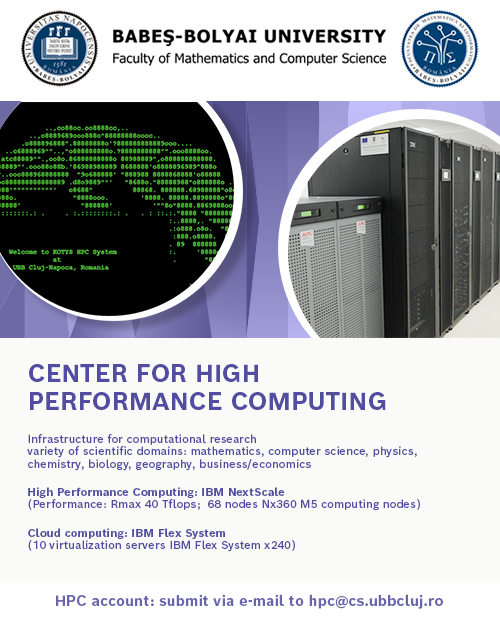
Babeş-Bolyai University - Center for High Performance Computing
Eötvös Loránd University - Faculty of Informatics
IMDEA - UPM - UCM - UAM - Inter-University Master's Program
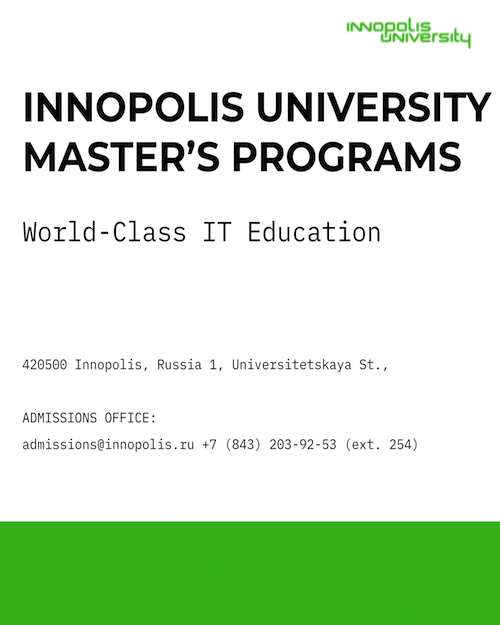
Innopolis University - Computer Science Master's Programs
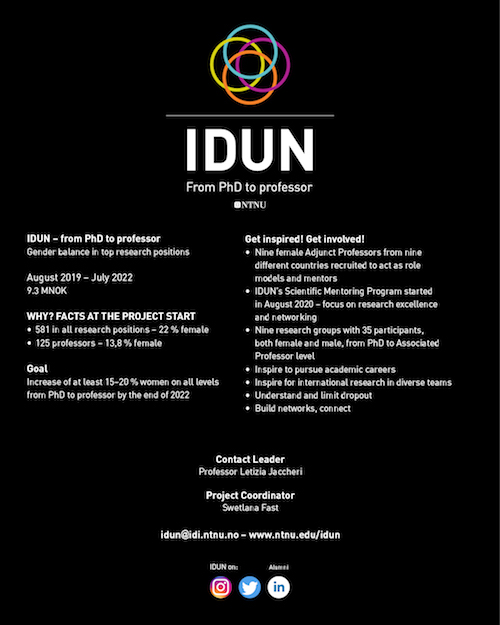
NTNU - IDUN - From PhD to Professor
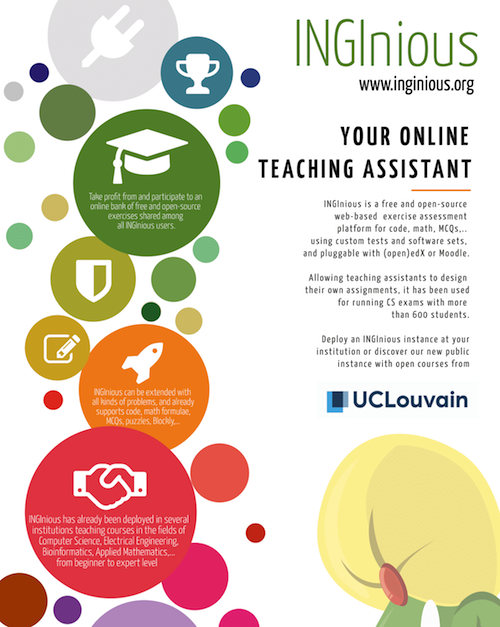
UCLouvain - INGInious Online Teaching Assistant
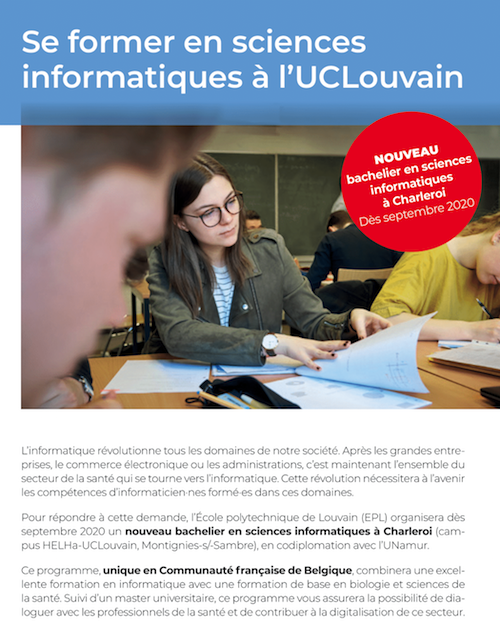
UCLouvain - Bachelor "Sciences Informatiques"
Universidad de Castilla-La Mancha - Degrees in Computer Engineering
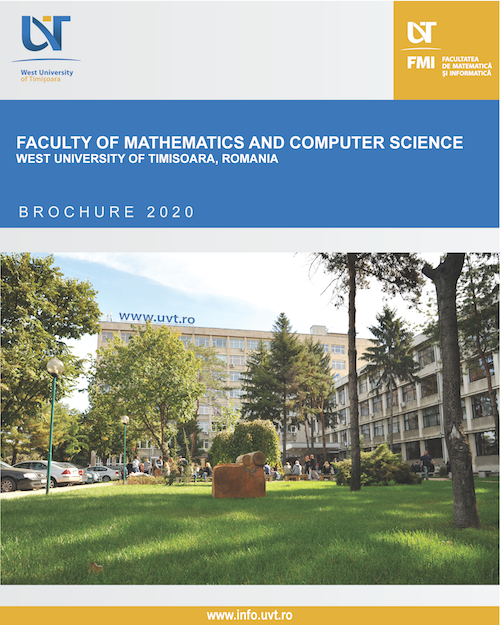
West University of Timişoara - Faculty of Mathematics and Computer Science
Informatics Europe Flyer
Informatics Europe - More Women in Research and Education


Diversity in Informatics Research and Education
Diversity in itself is an integral part of Informatics as a scientific discipline, few areas of knowledge are more impacted by the interplay with other disciplines. This diversity becomes evident when we consider so many well-established multidisciplinary Informatics areas such as Bioinformatics, Health Informatics, Business Informatics, Digital Humanities, Computational Biology, Computational Life Science, Geoinformatics, …). In spite of this natural diversity, the increasing emphasis on more interdisciplinarity raises nontrivial questions for Informatics research and education. Questions such as “Does Informatics as a field benefit from interdisciplinary collaboration?”, “In which interdisciplinary areas does Informatics have the biggest (potential for) impact?”, “Interdisciplinarity and core Informatics: friends or competitors?”, “How should interdisciplinary research and teaching (including doctoral education) be organised?” are being posed by many leaders in Informatics research and education and were considered along the three days of the ECSS.
Considering human diversity, Informatics takes also a distinctive place among other disciplines. The persistent and stark gender unbalance is pervasive in the academic environment and the research community as well as in the workforce, and present in almost all countries in the world. This poses a unique threat for the future sustainability of the field as well as for the economic development of societies that are more and more reliant in IT knowledge for their proper function and prospering.
On the morning of Tuesday, October 27, ECSS portraited two aspects of Informatics Research and Education Diversity, namely, Interdisciplinarity and Gender Balance. The Session was chaired by Letizia Jaccheri, Norwegian University of Science and Technology and Jaak Vilo, University of Tartu and featured two prominent keynote speakers:
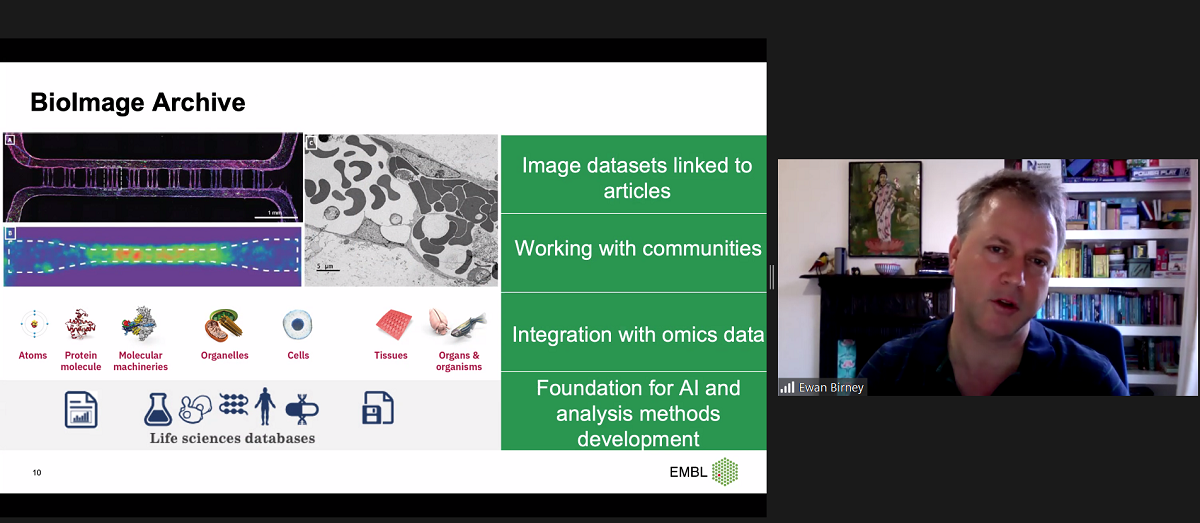
Ewan Birney, Director of the European Bioinformatics Institute at the European Molecular Biology Laboratory was presenting the successful example of the European Bioinformatics Institute in bringing together Computing and Biology and establishing a flourishing environment for the Computational Biology area to become a major driver in both fundamental life sciences research and increasingly applied research and healthcare in Europe.
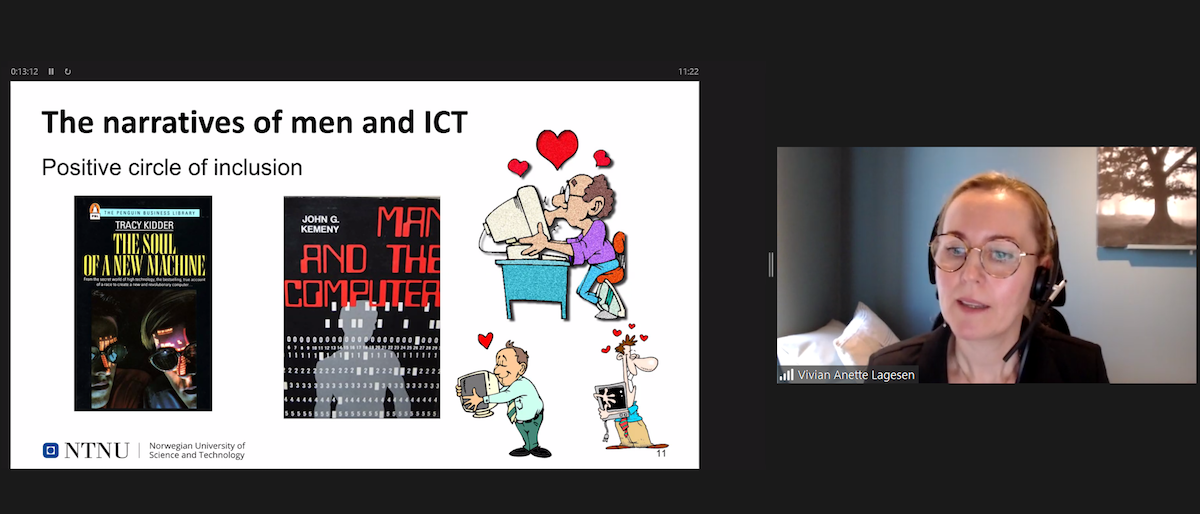
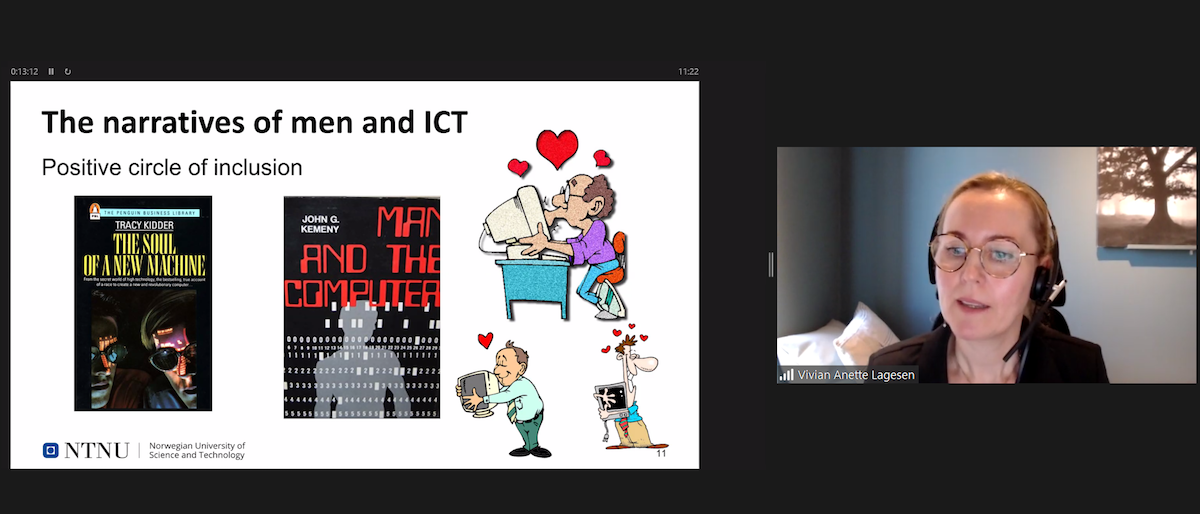
Vivian Anette Lagesen, Professor in Science and Technology Studies at the Norwegian University of Science and Technology was addressing the persistent underrepresentation of women in higher education in Informatics from the perspective of a social scientist. Aspects like the political, economic and scientific ramifications were considered as well as a critical appraisal of why in spite of this widespread concern and also much resources spent on getting more women in Informatics, the results have been rather poor and how policies can be better designed for better inclusion for (gender) diversity in Informatics?
National Associations Workshop
Informatics Europe organised an online workshop of National Informatics Associations on 28 October, as part of the online ECSS 2020 programme. It was a half-day morning session dedicated to the theme "Interdisciplinarity and Informatics" and conducted via Zoom.
The increasing emphasis on interdisciplinarity in science raises nontrivial questions for Informatics in at least the four dimensions of research, teaching, large-scale trends and societal aspects. Some concrete examples are: 'How does Informatics as a field benefit from interdisciplinary collaboration?', 'In which interdisciplinary areas does Informatics have the biggest impact?', 'Are interdisciplinarity and core Informatics friends or competitors?', 'How should interdisciplinary research and teaching, including doctoral education, be organised?'. The aim of the workshop was to share experiences and best practices in addressing such issues, and to discuss common concerns and opportunities in the area.
Participants can browse through the "Discussion Topics" that were addressed during the Workshop: www.informatics-europe.org/images/national-associations/ECSS_2020_NIA_Discussion_Topics.pdf.
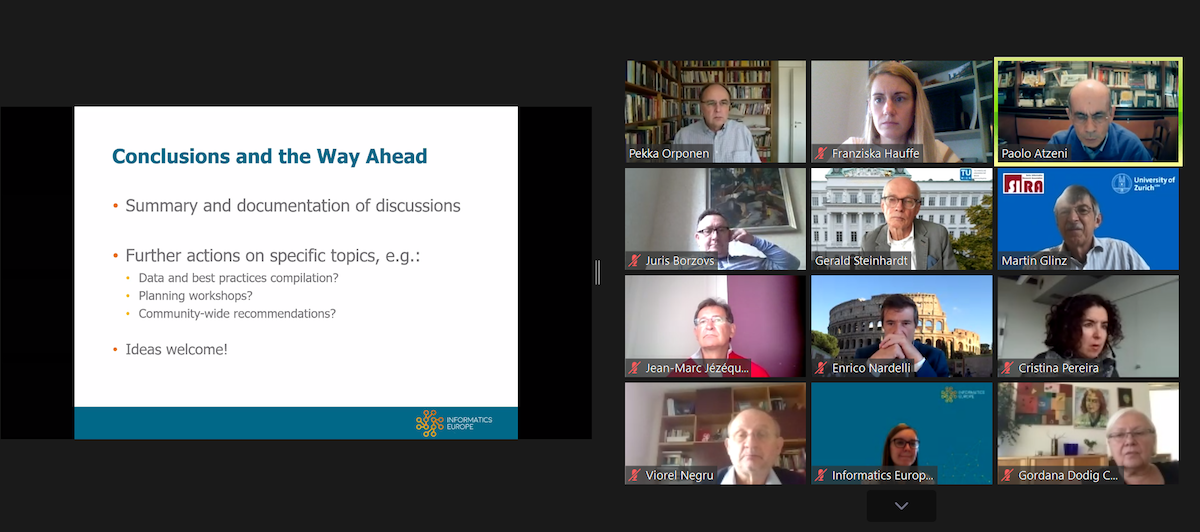
The workshop was chaired by Pekka Orponen, Aalto University, and Kim Mens, Université catholique de Louvain.
Workshop Schedule
09:00 – 09:10 Welcome and Introduction
09:10 – 09:50 Session 1 - Research (Chair: Gerald Steinhardt)
09:50 – 10:30 Session 2 - Education (Chair: Bart Demoen)
10:30 – 10:40 Coffee break
10:40 – 11:20 Session 3 - Large-scale Trends (Chair: Paolo Atzeni)
11:20 – 12:00 Session 4 - Societal Aspects (Chair: Martin Glinz)
12:00 – 12:30 Conclusions and the Way Ahead
WIRE Workshop
The slides and video recordings of talks given during the workshop are available for download on the agenda below
Why and how to improve gender balance at all stages of the career path in Informatics (Computer Science, Computing, IT, ITC) was the theme of the online workshop of the Informatics Europe working group on Women in Informatics Research and Education (WIRE) organised on 28 October, 13:30-17:30 , as part of the online ECSS 2020 programme.
The 2020 WIRE Workshop was divided in five interactive sessions, chaired by members of the WIRE Working Group, that addressed how gender balance affects the different career levels and what are possible actions for improvement and progress. Two sessions addressed the interplay of our actions with external stakeholders.
We joined together Academia, Industry and Policy (European Commission) for a fruitful debate on how these sectors can work together to inspire and promote change that can impact the access of women to higher education and their ability and prospects of leading succesfull and fulfilling careers in Informatics in Academia, Industry or other sectors.
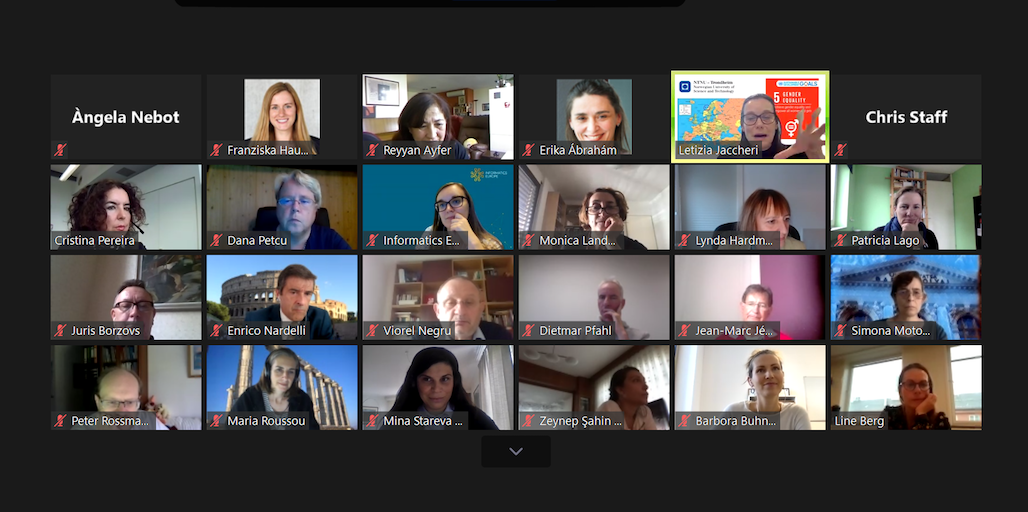
The workshop was chaired by Erika Ábrahám, RWTH Aachen University and Letizia Jaccheri, Norwegian University of Science and Technology with contribution of the members of the WIRE Working Group.
Attendance to the Workshop only was free of charge (attending other ECSS sessions involved registration and fee payment).
Workshop Schedule
13:30-13:40 Welcome/Setting Objectives for the Day
- Erika Ábrahám, RWTH Aachen University
- Letizia Jaccheri, Norwegian University of Science and Technology
13:40-14:20 Session 1 - Strategy, Communication and Policy (Chairs: Dana Petcu, Letizia Jaccheri)
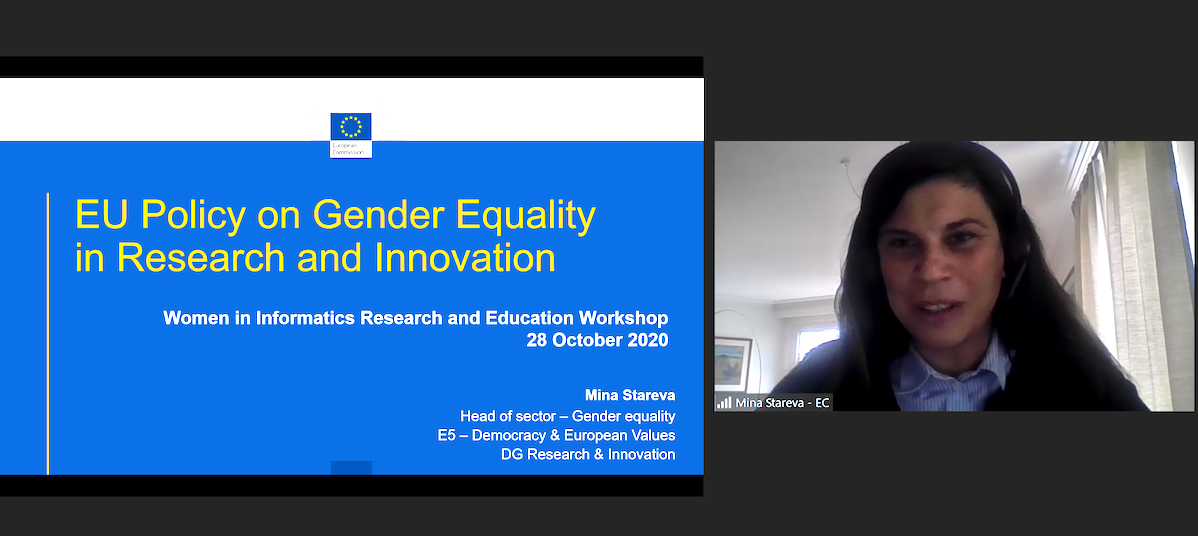
- "EU Support to Gender Equality in Research and Innovation” - Mina Stareva, European Commission, DG Research and Innovation
14:20-15:00 Session 2 - From School to University (Chairs: Line Berg, Bara Buhnova, Monica Landoni)
- "Getting to know what ICT is and can do: design for raising awareness of stereotypes" - Monica Landoni, Università della Svizzera italiana
- "Girl-friendly ICT education design: Czechitas summer school" - Bara Buhnova, Masaryk University
- "Recruiting girls to ICT studies: the Ada project" - Line Berg, Norwegian University of Science and Technology
15:00-15:15 Coffee/Tea Break
15:15 – 15:55 Session 3 - From Bachelor and Master to Ph.D. (Chairs: Erika Ábrahám, Ivica Crnkovic)
- "Volunteering to improve your prospects" - Ruth Lennon, Chair of ACM-W Europe
- "Practical and project work in Computer Science education" - Regina Hebig, University of Gothenburg
15:55 – 16:35 Session 4 - From Ph.D. to Professor (Chairs: Swetlana Fast, Steve Kremer)
- "The mentoring programme at Irisa (Rennes, France)" - Nicolas Markey, IRISA – CNRS
- "IDUN Scientific Mentoring Program" - Swetlana Fast, Norwegian University of Science and Technology
16:35 -17:15 Session 5 - Cooperation with Industry and Society (Chairs: Bara Buhnova, Lynda Hardman, Patricia Lago)
- "Lessons from Industry and Industry bodies" - Sharon Moore, IBM/BCSWomen
- "How to build a lasting relationship"- Jannie Minnema, MN
17:15-17:30 Conclusion and closing
Informatics Europe Session
To strengthen the network of members and allow them to participate actively in the main decisions regarding the strategy for future development of Informatics Europe, as well as keeping them informed of the main activities and outcomes of the organisations’ work, Informatics Europe organised an online special session on Tuesday, 27 October, afternoon.
The special session included:
- Dialogue with Members - Informatics Europe Activities and Outcomes where the progress and following important outcomes of Informatics Europe Working Groups and High-Level activities was presented:
- Higher Education Data Portal: New Data
- Academic Leadership Offers
- Statements and Feedbacks in 2020
- Digital Humanism - DIGHUM - Seminar Series
- Report on ECSS 2019 Creative Coffee Break
- Announcement ECSS 2021;
- Informatics Europe Annual General Assembly where members voted for Board elections and approval of financial reports and budget.
ECSS 2020 - Highlights
Deans, department heads, research directors, senior and junior academics, industry and public policymakers from all over Europe met online via Zoom, 26-28 October, for the 16th edition of the European Computer Science Summit, ECSS 2020. With the main theme 'Diversity in Informatics Research and Education', the summit was a platform of inspiring presentations and lively discussions tackling questions such as 'Does Informatics as a field benefit from interdisciplinary collaboration?', 'In which interdisciplinary areas does Informatics have the biggest (potential for) impact?', 'How should interdisciplinary research and teaching (including doctoral education) be organised?', and 'How diversity (gender and other dimensions) can help to strengthen Informatics Departments?'
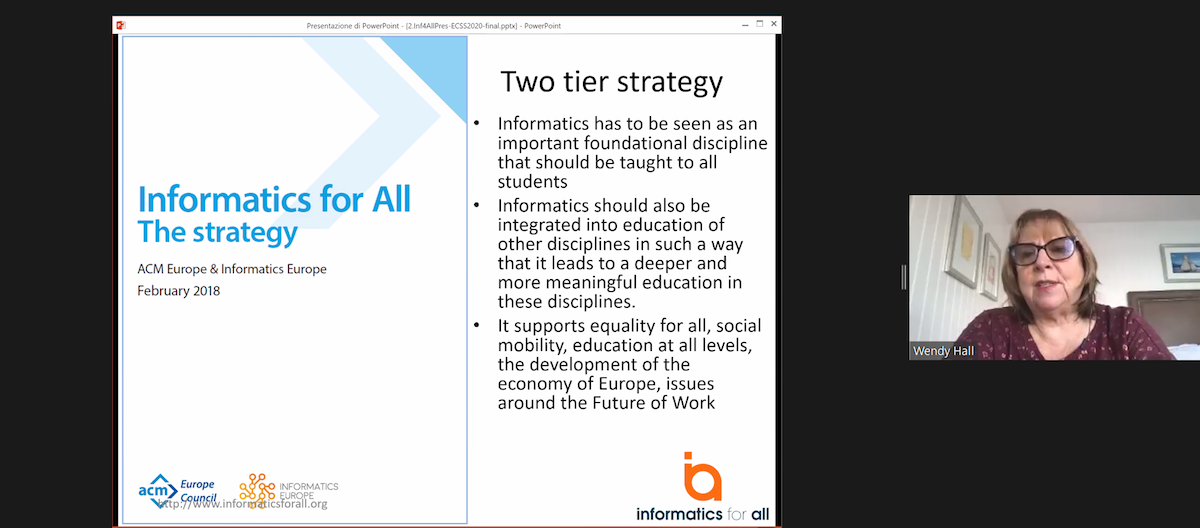
For the first time in its sixteen years of history, ECSS was held as a fully online event. The conference opened on 26 October with a special session on Informatics Education. The session was opened with an insightful speech by the Cabinet of the European Commissioner for Innovation, Research, Culture, Education and Youth, Mariya Gabriel, who was represented by Isidro Laso Ballesteros. The opening session was rounded up with three excellent talks on Informatics Education by Wendy Hall, Chair of the Informatics for All Steering Committee, Georgi Dimitrov, Project Leader for the update of the European Commission Digital Education Action Plan and Martin Zachariasen, Rector of the IT University of Copenhagen.
Leaders Workshop
2020 Leaders Workshop was chaired by Mehdi Jazayeri, Università della Svizzera italiana, and Harald Gall, University of Zurich. The central theme was 'Post-Pandemic Ways for Teaching and Research in Informatics', with focus on exploring the impact of the coronavirus pandemic on Informatics academic departments across Europe. The Workshop was divided in two sessions featuring speakers and discussants who shared their experiences and discussed actively with the audience. Each session also featured virtual breakout rooms where speakers, discussants and chairs had time for deeper interaction with the participants in smaller groups. Recordings of the different sessions, speakers’s slides as well as results of polls are available for download at the Leaders Workshop webpage.
Diversity in Informatics Research and Education
On the morning of Tuesday, 27 October, ECSS portraited two aspects of Informatics Research and Education Diversity, namely, Interdisciplinarity and Gender Balance. The session was chaired by Letizia Jaccheri, Norwegian University of Science and Technology and Jaak Vilo, University of Tartu and featured two prominent keynote speakers sharing their expert views and insights. Ewan Birney, Director of the European Bioinformatics Institute at the European Molecular Biology Laboratory presented the successful example of the European Bioinformatics Institute in bringing together Computing and Biology and establishing a flourishing environment for the Computational Biology and Bioinformatics areas to become a major driver in both fundamental and applied life sciences research and healthcare in Europe. Vivian Anette Lagesen, Professor in Science and Technology Studies at the Norwegian University of Science and Technology, on the other hand, addressed the persistent underrepresentation of women in higher education and research in Informatics and how academic departments can design and create policies for better gender inclusion and equality.
The video recordings and slides of their talks are available on the ECSS 2020 Conference Schedule webpage.
Award Ceremony
Beyond lively discussions and presentations, ECSS 2020 also included time for celebration. At a special Award Ceremony, Informatics Europe announced the project 'Master of IT' submitted by the Coordination Committee of three universities in Denmark (Aalborg University, Aarhus University and University of Southern Denmark) as the winner of the 2020 Best Practices in Education Award. The winner of the 5th Minerva Informatics Equality Award was the Department of Computer Science, University College London, United Kingdom, in recognition of outstanding support for the transition of female PhD and Postdoctoral Researchers into Faculty positions. Both awarded projects were highlighted in presentations by winner’s representatives attending the event.
Dialogue with Members - Informatics Europe Activities and Outcomes
To strengthen members network and allow them to influence future strategic decisions as well as to keep them informed of the main activities and outcomes of the organisations’ work in 2020, Informatics Europe organised an online special session on Tuesday, 27 October, afternoon.
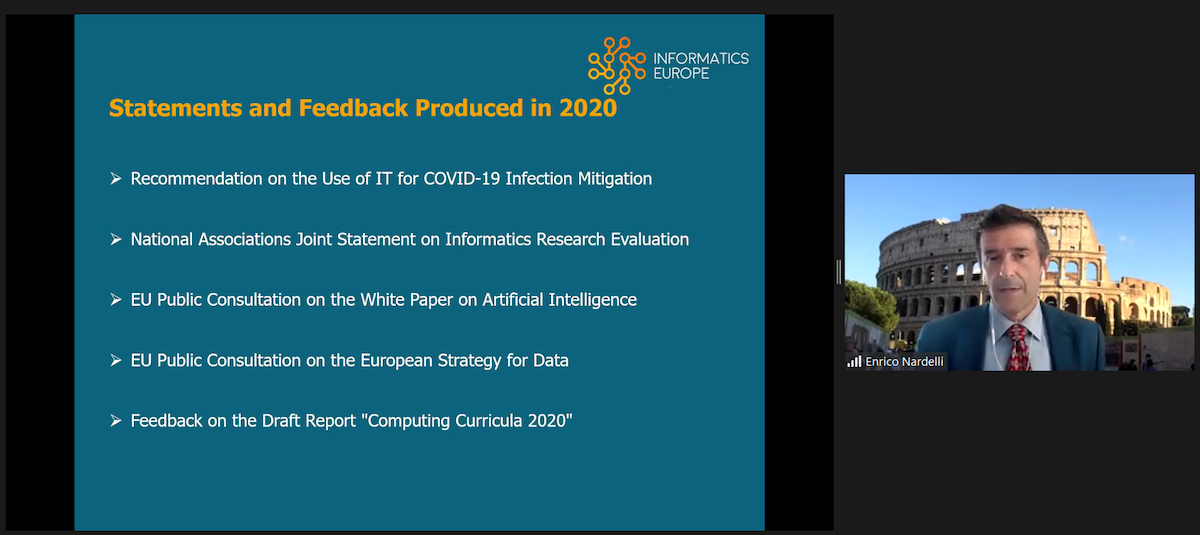
Initially, Svetlana Tikhonenko, from the Informatics Europe office, presented the new developments and data of the Informatics Europe Higher Education Data Portal. The online data portal publishing Informatics higher education statistics from over 20 countries over the past 9 years includes now new sessions with academic positions, career structure and salaries and descriptions of the different higher education system across Europe. The portal is a fundamental service that Informatics Europe offers to its members (raw data can be downloaded exclusively by our members) and the community. Following, Gregor Engels and Enrico Nardelli reported back about the new Academic Leadership Offers initiated by Informatics Europe in 2020, the Digital Humanism - DIGHUM - Seminar Series, the statements and feedback to EU consultations published in 2020 and a report on the ECSS 2019 Creative Coffee Break outcomes. To close the afternoon, the Informatics Europe Annual General Assembly was held, where members voted for Board elections and approved the financial reports and budget.
National Associations Workshop
On Wednesday, 28 October, Informatics Europe organised an online workshop of National Informatics Associations. The half-day morning session was dedicated to the theme ‘Interdisciplinarity and Informatics’. The workshop covered questions in four dimensions: research, education, large-scale trends and societal aspects and aimed at sharing experiences as well as best practices and discussing common concerns and opportunities in the area.
The video recording of the workshop is available on the ECSS 2020 National Associations Workshop webpage.
WIRE Workshop
Why and how to improve gender balance at all stages of the career path in Informatics (Computer Science, Computing, IT, ITC) was the theme of the online 2020 WIRE Workshop organised by the Informatics Europe working group on Women in Informatics Research and Education in the afternoon of 28 October. The 2020 WIRE Workshop was divided into five interactive sessions, chaired by members of the WIRE Working Group, that addressed how gender balance affects the different career levels and what are possible actions for improvement and progress. The event joined together Academia, Industry and Policy (European Commission) for a fruitful debate on how these sectors can work together to inspire and promote change that can impact the access of women to higher education and their ability and prospects of leading successful and fulfilling careers in Informatics in Academia, Industry or other sectors.
The video recordings and talks slides are available on the 2020 WIRE Workshop webpage.
The next Summit, ECSS 2021, will be held in Madrid, Spain, 25-27 October, co-organised by the Escuela Técnica Superior de Ingenieros Informáticos, Universidad Politécnica de Madrid and supported by CODDII – Spanish Council of Deans of Informatics. It will be again a unique opportunity to join your European peers to debate the future of our field and contribute to a stronger European Informatics community.
Save the dates on your calendar! ECSS 2021, 25-27 October 2021.
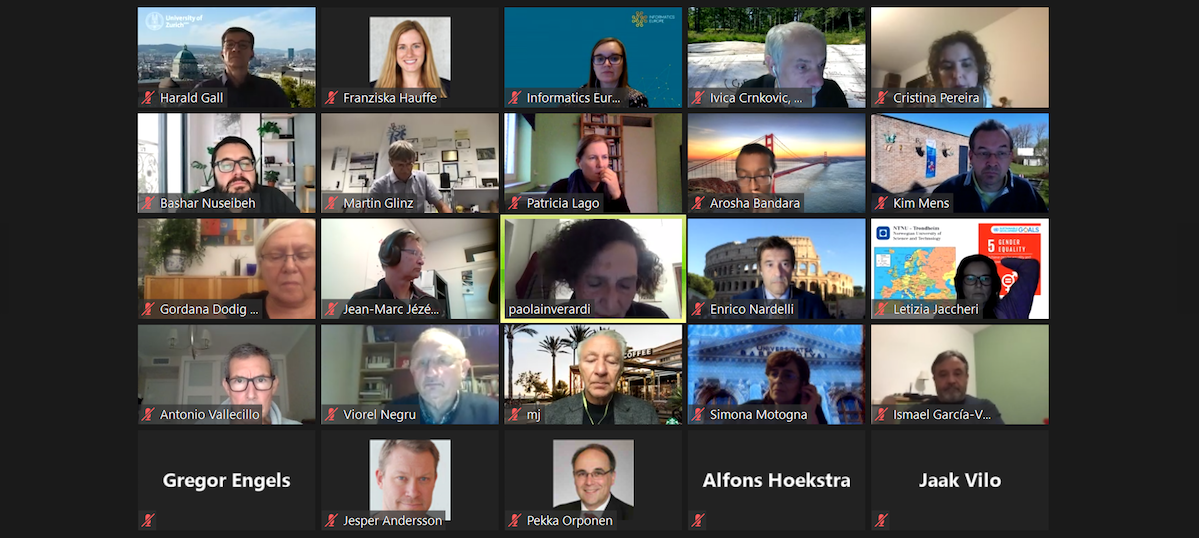
*Please note that the photos below are better seen when applying zoom out.





-
Wendy Hall presents the Informatics for All Coalition
*Please note that the photos are better seen when applying zoom out. -
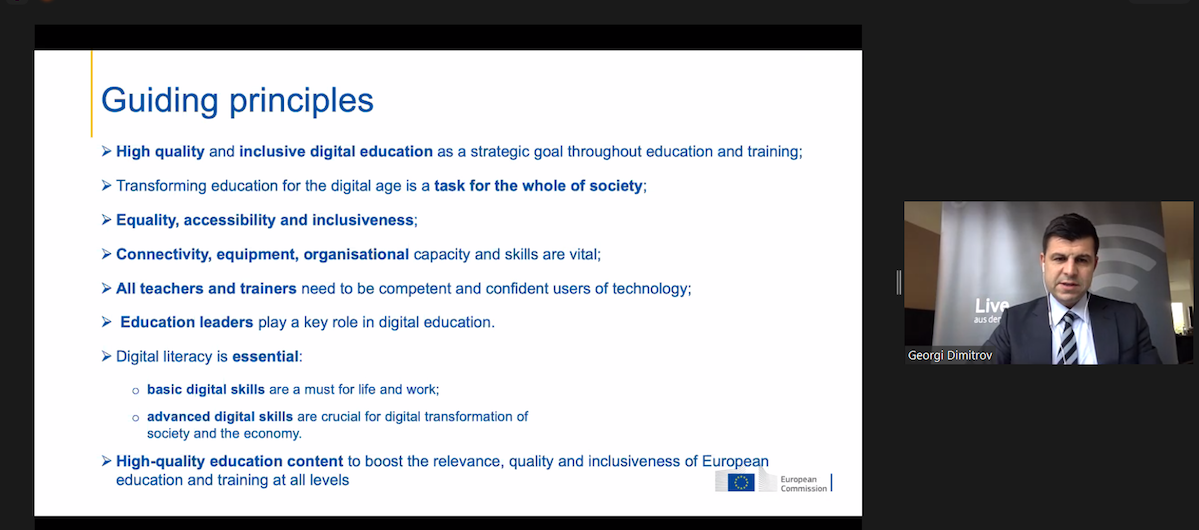
Georgi Dimitrov from European Commission talks about the Renewed Digital Education Action Plan
*Please note that the photos are better seen when applying zoom out. -
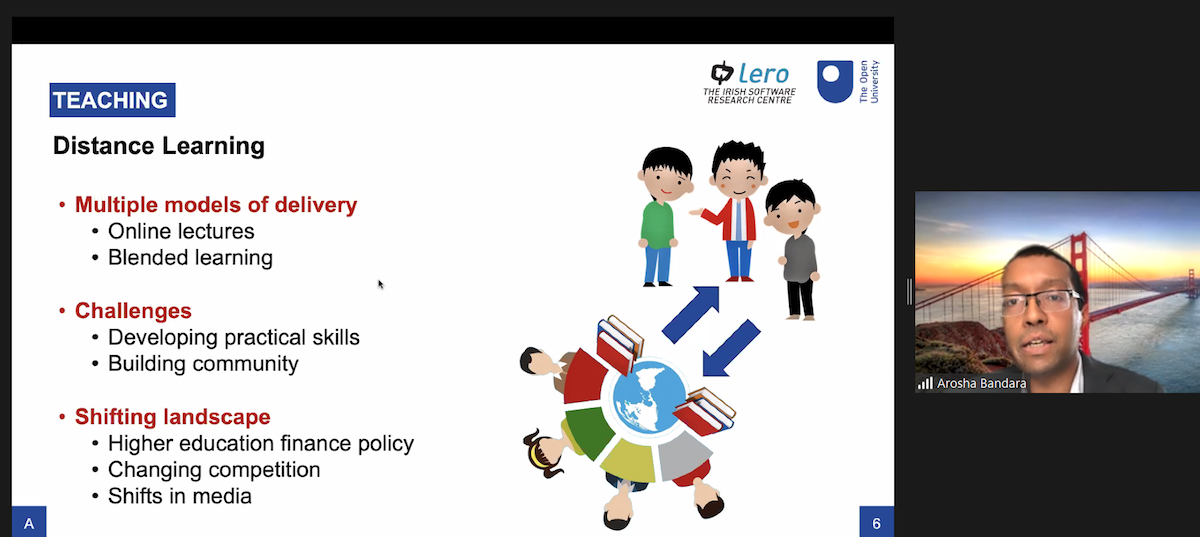
Arosha Bandara talks about pecularities of distance learning
*Please note that the photos are better seen when applying zoom out. -
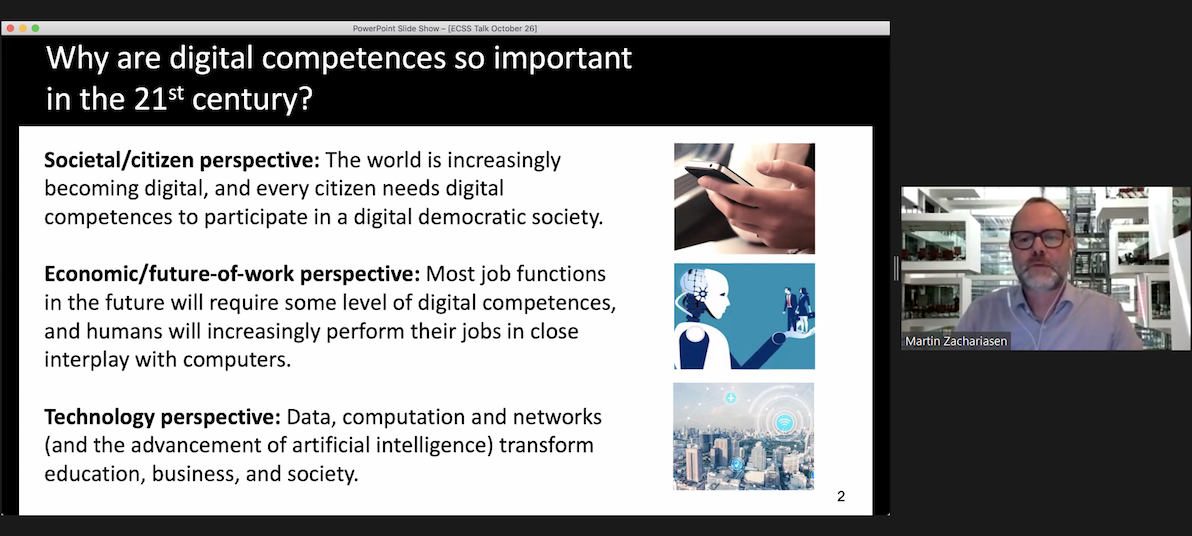
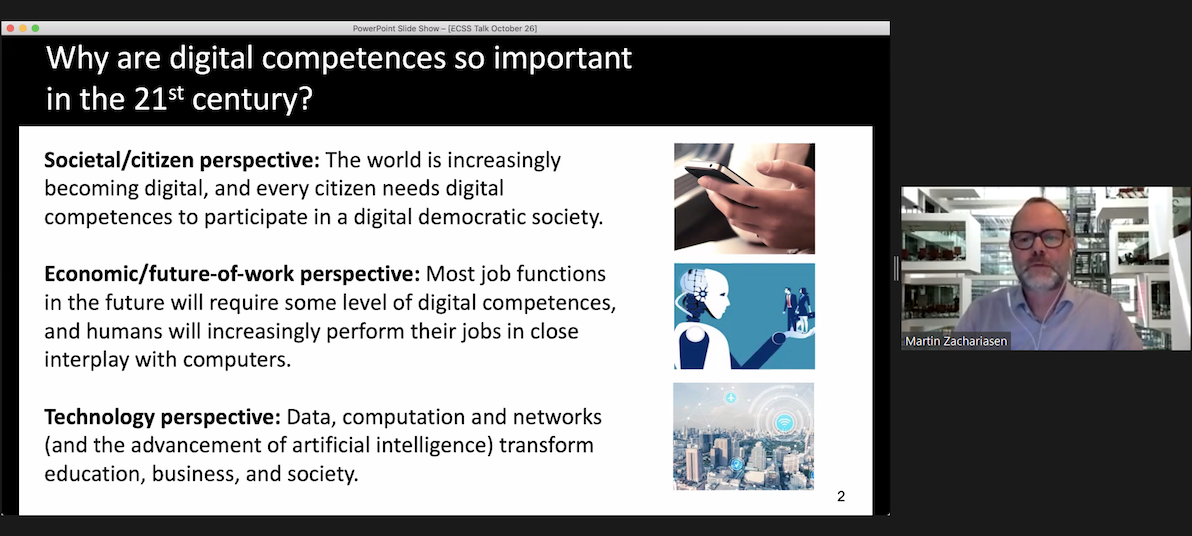
Martin Zachariasen explains why digital competences are so important in the 21st century
*Please note that the photos are better seen when applying zoom out. -
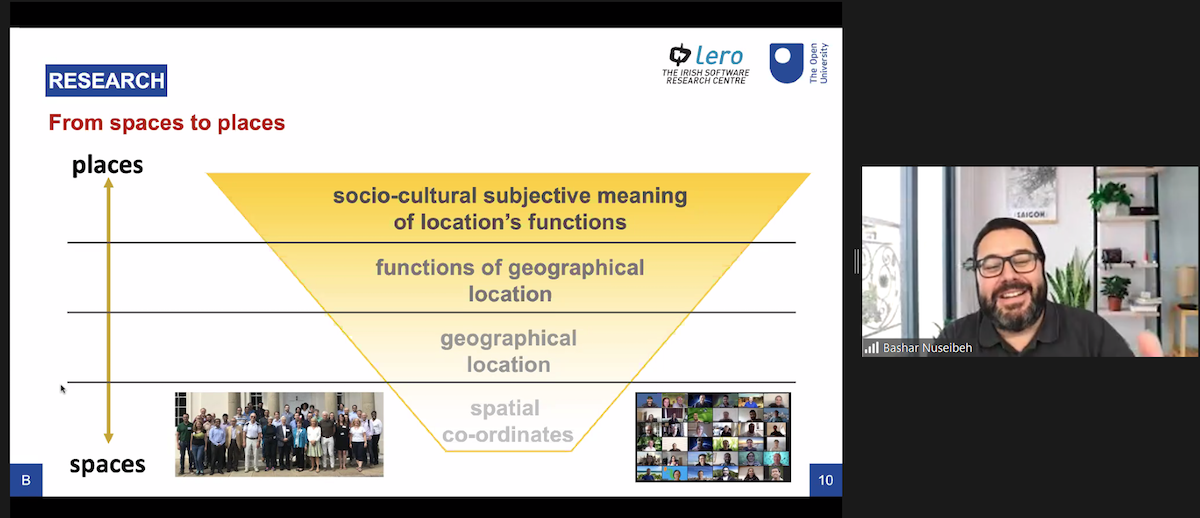
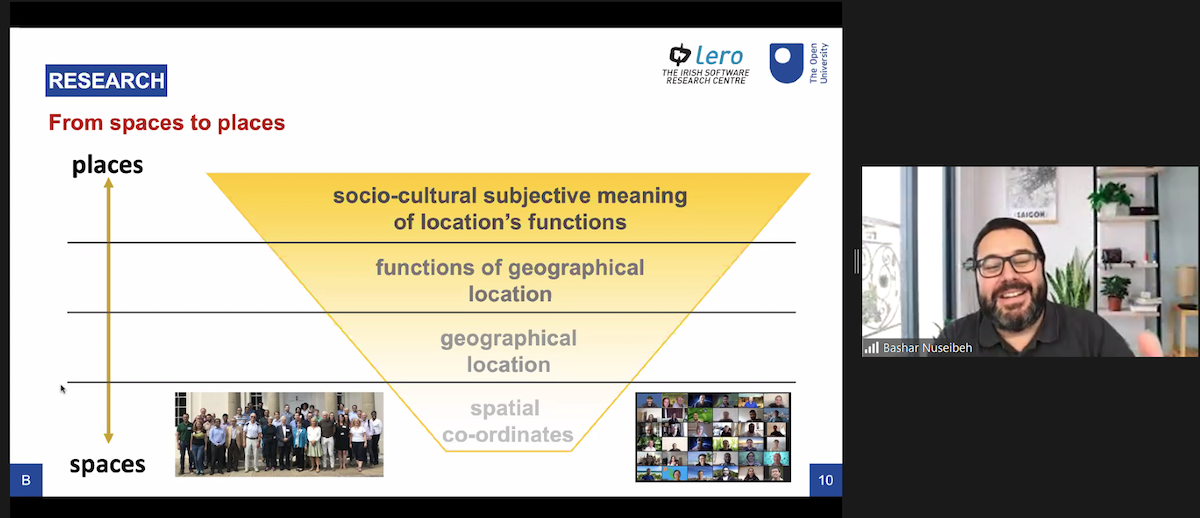
Bashar Nuseibeh explains how to succeed with virtual learning and research
*Please note that the photos are better seen when applying zoom out. -
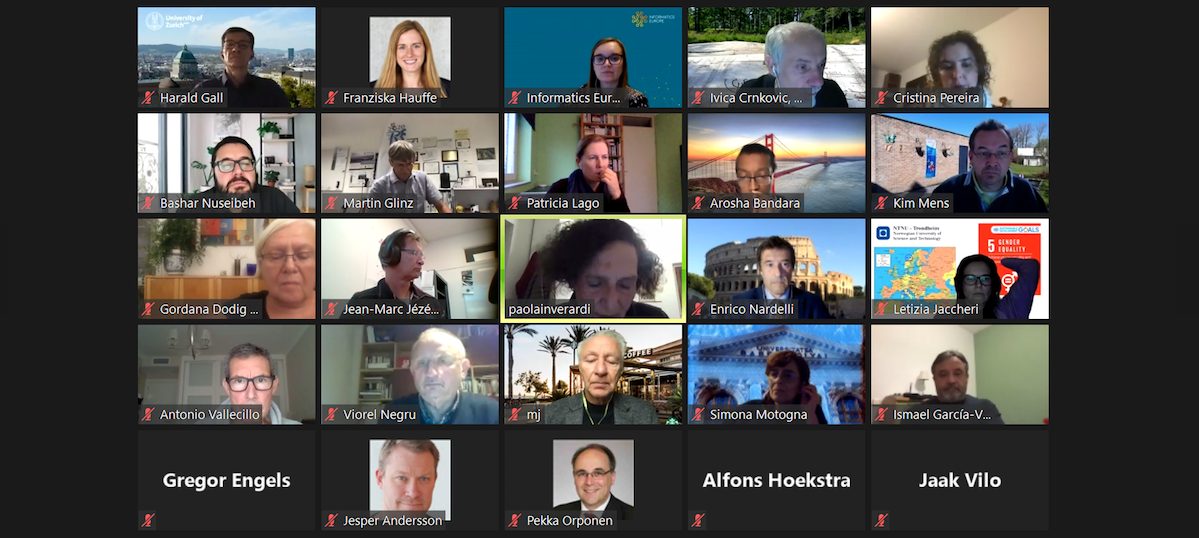
Participants of the Leaders Workshop
*Please note that the photos are better seen when applying zoom out. -
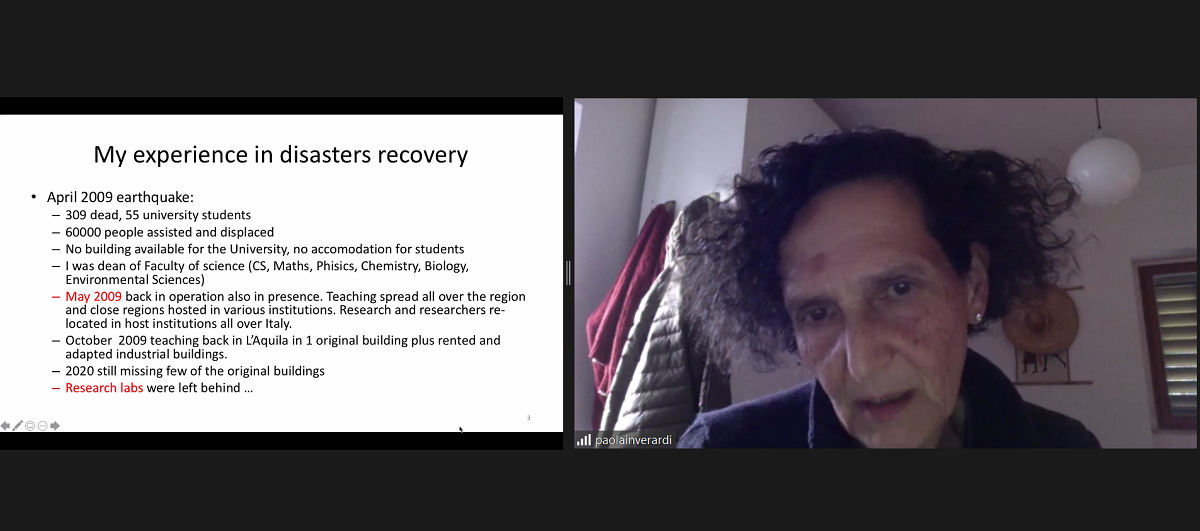
Paola Inverardi explains how to build a resilient academic environment
*Please note that the photos are better seen when applying zoom out. -
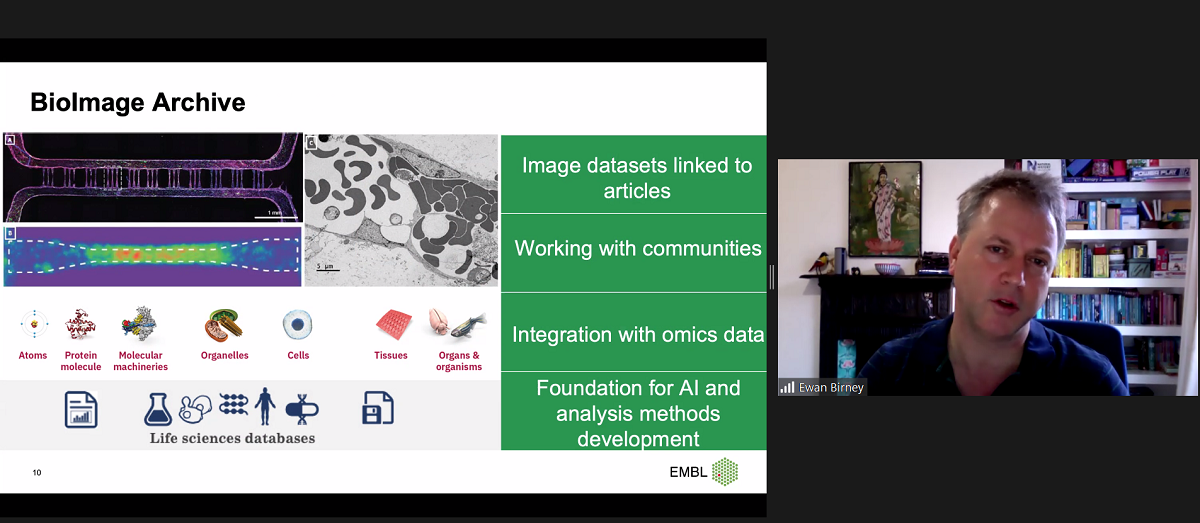
Ewan Birney talks about the computational biology in Europe
*Please note that the photos are better seen when applying zoom out. -
Vivian Anette Lagesen explains how to design for gender diversity
*Please note that the photos are better seen when applying zoom out. -
Enrico Nardelli presents statements and feedbacks produced by Informatics Europe in 2020
*Please note that the photos are better seen when applying zoom out. -
Participants of the National Associations Workshop
*Please note that the photos are better seen when applying zoom out. -
Mina Stareva from European Commission presents the EU policy on gender equality in research and innovation
*Please note that the photos are better seen when applying zoom out. -
Participants of the WIRE Workshop
*Please note that the photos are better seen when applying zoom out.


Awards Session
Every year, as part of the ECSS program, Informatics Europe organises an Award ceremony, where the winners of its annual awards are presented:
- The Best Practices in Education Award recognising educational initiatives across Europe that improve the quality of Informatics teaching and the attractiveness of the discipline.
- The Minerva Informatics Equality Award recognising best practices in departments or faculties of European universities and research labs that encourage and support the careers of women in Informatics research and education.
The award winners have the opportunity to present their achievements in a short talk during the Awards session.
Call for Participation
------------------------------------------------------------------------------------------------
ECSS 2020 - 16th European Computer Science Summit
“Diversity in Informatics Research and Education”
26 – 28 October 2020, Online Event
With an opening speech by Mariya Gabriel, European Commissioner for Innovation, Research, Culture, Education and Youth.
Registration Deadline 15 October 2020
------------------------------------------------------------------------------------------------
The European Computer Science Summit (ECSS) is the meeting place for anyone interested in issues of research, education and policy in Informatics.
For the first time in its sixteen years of history, ECSS is going to be a fully online event, the result of the Covid-19 health crisis that affected the whole continent and changed our way of living, working, networking and socializing.
While we understand the power of personal contact for effective networking, and ECSS is above all a networking event, we also see a unique opportunity in creating a space of discussion and learning from peers that can be much more pervasive. We hope that bringing ECSS to your offices and home-offices we will be able to reach more members in each member department, creating more interest to our activities and inspiring people to take action and participate in Informatics Europe activities and being more active at the European level.
The 16th edition - ECSS 2020 - will be held via Zoom, 26-28 October 2020. The conference will consist of the main Summit of three days composed of several complementary online events and sessions.
We are proud to announce that the conference will be opened on Monday, 26 October, with a speech by Mariya Gabriel, European Commissioner for Innovation, Research, Culture, Education and Youth. She will be opening the first session, on the topic Informatics Education, of the Workshop for Leaders of Informatics Research and Education. The session will include also presentations and discussions on the Informatics for All initiative and the European Commission Digital Education Action Plan.
The following sessions of the Leaders Workshop will focus on the central theme: “Post-Pandemic Ways for Learning and Researching in Informatics”. It will feature sessions in which renowned speakers will share their expertise with the audience in a webinar-style including virtual breakout rooms for a deeper Q&A.
On the morning of 27 October, two high-profile keynote speakers, Ewan Birney Director from the European Molecular Biology Laboratory - European Bioinformatics Institute and Vivian Lagesen from the Norwegian University of Science and Technology will be addressing two different aspects of “Diversity in Informatics Research and Education”, interdisciplinarity and gender balance. The session will be highly interactive, allowing attendees to pose questions and discuss with the speakers.
The afternoon session on 27 October will include presentations by the winners of the two Informatics Europe Annual Awards, Best Practices in Education and Minerva Informatics Equality. Rounding up Tuesday’s program a Dialogue with Members Session including the Informatics Europe Annual General Assembly will take place, where key topics of relevance to the community and the development of the organisation will be actively discussed.
The ECSS 2020 closes on Wednesday, 28 October, with two special workshops:
In the morning, the National Associations Workshop on "Interdisciplinarity and Informatics" will address how the increasing emphasis on interdisciplinarity in science affects the Informatics community in different European countries.
Closing the ECSS 2020, the WIRE Workshop will take place joining together Academia, Industry and Policy (European Commission) for an afternoon debate dedicated to the key topic of gender diversity in Informatics research and education.
The advanced conference schedule is available on the ECSS 2020 website.
Opening Keynote Speaker:
- Mariya Gabriel, European Commissioner for Innovation, Research, Culture, Education and Youth
Keynote Speakers:
- Ewan Birney, European Molecular Biology Laboratory (EMBL) - European Bioinformatics Institute
- Georgi Dimitrov, European Commission, Directorate General for Education and Culture
- Paola Inverardi, University of L’Aquila
- Vivian Anette Lagesen, Norwegian University of Science and Technology
- Arosha K. Bandara, The Open University
- Bashar Nuseibeh, The Open University & Lero, University of Limerick
- Martin Zachariasen, IT University of Copenhagen
Registration
Registrations are open until 15 October 2020.
Benefit for Informatics Europe Members: We will grasp the opportunity of the online format and have a special offer for Departments members of Informatics Europe. For member departments we will have a departmental registration, i.e. one paid registration per department allowing multiple members (Faculty, Researchers, Postdocs, PhD Students) of that department to attend the event simultaneously without paying individual fees.
For the details of the fees and how to register please visit our registration page.
About ECSS
ECSS conferences are devoted to important and timely strategic issues and trends regarding all aspects of Informatics, including research, education, entrepreneurship, funding, career development, management and policies. The key audience includes:
- Heads (deans, chairs) of academic Informatics (Computer Science, Computing, IT, ICT) departments (schools, faculties, institutes);
- Research directors and managers of research centres, institutes and laboratories, both in public institutions and in the industry;
- Faculty members and researchers from both academia and industry;
- Members of funding and governmental agencies at European, national, regional and local level;
- Experts, advisors and thinkers of numerous key issues like ethics, the relation between Informatics and other sciences, the discipline’s future and its influence on the academic world and society.
Committees
Conference Chairs
- Enrico Nardelli, Informatics Europe, University of Rome "Tor Vergata"
Program Chairs
- Jaak Vilo, University of Tartu
- Letizia Jaccheri, Norwegian University of Science and Technology
Chairs of the Leaders Workshop
- Mehdi Jazayeri, Università della Svizzera italiana
- Harald Gall, University of Zurich
Chairs of the WIRE Workshop
- Erika Ábrahám, RWTH Aachen University
- Letizia Jaccheri, NTNU
Chairs of the National Associations Meeting
- Pekka Orponen, Aalto University
- Kim Mens, Université catholique de Louvain
Organisational Committee
- Cristina Pereira, Informatics Europe
- Wieneke Emans, Informatics Europe
- Franziska Hauffe, Informatics Europe
- Svetlana Tikhonenko, Informatics Europe
How to Register
Registration Fees
The registration fee for the ECSS 2020 (26-28 October) covers participation in all online sessions of the Summit including the Leaders Workshop, the Session on the central theme Diversity in Informatics Research and Education, the Awards and Informatics Europe Sessions, the National Associations Workshop and the WIRE Workshop.
Prices
- € 60 (Member of Informatics Europe)
- € 100 (Non-Member)
Special Benefit for Informatics Europe Members
For members of Informatics Europe this year we had a departmental registration, i.e. one paid registration per member department allowed multiple faculty (or research) members of that department to attend the event simultaneously.
Note that all people attending needed to complete the registration procedure, but only one among them was the paying contact.
Registration for the ECSS 2020 is closed.
ECSS 2025 is organised by
 |
 |
Sponsored by
 |
 |
 |
 |
|
 |
  |
 |
Support ECSS
What's New
ECSS 2025, 27-29 Oct, Rennes. France
Save the dates for ECSS 2026:
26-28 Oct in Porto, Portugal



 Netlogica