

At Informatics Europe, we are celebrating 2 decades of joint achievements while continuing to shape the discipline's future.
With 200 member institutions in over 30 countries, Informatics Europe connects more than 50,000 researchers, promotes concerted positions, acts on shared priorities and supports policy-making in Informatics Education, Research and its Social Impact across Europe.
Visit the full list of member university departments, research labs and industrial members here.
 |
Our activities address strategic matters and emerging trends in informatics and related fields, fostering unity in the variety of our member institutions and promoting pan-European collaboration. As a non-profit membership association, our work is mainly performed by scientist volunteers who collaborate in working groups and ad-hoc task forces. Outcomes are endorsed by our community through its Board of Directors.
As a community of European leaders in Informatics Research, we empower each other to:
- Create opportunities for joint initiatives and knowledge exchange between academia & industry & society.
- Engage with society on the nature and impact of Informatics.
- Advocate for Informatics in European policy discussions.
- Promote quality standards and best practices in research, education, and knowledge transfer.
- Foster ethical and responsible Informatics teaching and research.
- Nurture talent and assure a pipeline of diverse leaders with a broad understanding of the discipline.
The potential of Informatics Europe can go as far as our collective ambitions take it!
You & your organization are key for IE
We have a common cause and a common interest. This is the reason for university departments, research labs and industrial organizations to join us, for their affiliated researchers to contribute our activities since 2005 and for National Informatics Associations (NIAs) to choose us for engaging in European discussions. This is a call to:
Current & Potential Members
Demonstrate your institute’s support by becoming a member and empower your researchers to engage in our activities for collaborative success in Informatics in Europe. As an Informatics Europe member, gain the opportunity to amplify your presence and influence decisions at the pan-European level, engage in learning and knowledge exchange with peer leaders, and enjoy exclusive IE members-only services. We welcome university departments, research labs and industrial organizations engaged in R&D activities leveraging advances in the field of Informatics.
The greatest membership benefits those who collaborate the most!
Students, PosDocs and recent graduates
Informatics Europe aims to nurture talent and assure a pipeline of diverse Informatics leaders with a broad understanding of the discipline.
Boost your career development with the Early Career Researchers WG and Academic Leadership Courses. Submit your nomination for the Best Dissertation Award. Increase your mobility opportunities with our Job Platform. Join a training school and bring your research to the next level.
More will follow soon!
Companies at large
Looking for a targeted and impactful approach to engage with the leaders in the European informatics research community other than the IE membership? Eager to recruit informatics talent across Europe? Explore our sponsoring opportunities.
Share our flyer with your colleagues to join forces and amplify our impact together as Informatics Europe!
Discover the impact of our initiatives and services first-hand
While some are exclusive to Informatics Europe members, many are open for the benefit of the wider Informatics community. Explore them in a snapshot:
- Utilize our Department Evaluation and Academic Leadership services;
- Access our extensive array of Publications and Policy Recommendations;
- Nominate deserving individuals for Awards celebrating achievements in gender inclusion, informatics education, and ground-breaking research;
- Boost your international visibility by collaborating with us on EU projects, presenting your latest research results in an Informatics-Europe hosted webinar, updating your information in our Research & Education Directory or featuring relevant activities on the ECSS members spotlight section;
- Engage in strategic and trend-setting discussions during our European Informatics Leaders Summit (ECSS).
- Take an active role in Working Group activities, including organizing related training schools and sessions during ECSS.
- Access the only in its kind Higher Education Data Portal, for pan-European benchmarking;
- Enhance your talent pool and career prospects through our Job Platform.
Keep up with IE's latest updates
Follow us on 


 and subscribe to our mailing list and bulletin here.
Latest News

New Strategic Agenda for Europe’s Software Future Presented in Brussels
The SRIA was launched on 23 September and formally presented to Thibaut Kleiner, Director for Future Networks at the European Commission’s DG CONNECT.
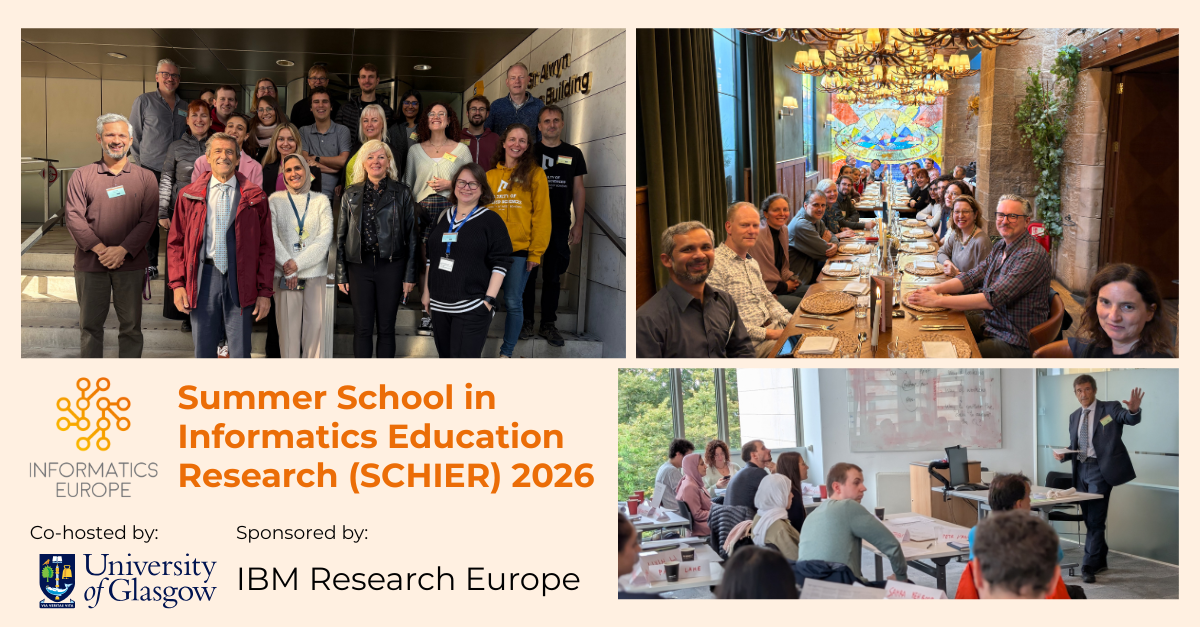
SCHIER 2026: Strengthening the Community of Informatics Education Researchers
Growing the next generation of Informatics Education researchers starts with creating opportunities to learn, exchange and connect.

ECSS 2026: Registration Now Open
Registration is now open for ECSS 2026, a unique summit for Europe’s Informatics community to address timely strategic and policy issues in Informatics research and education.
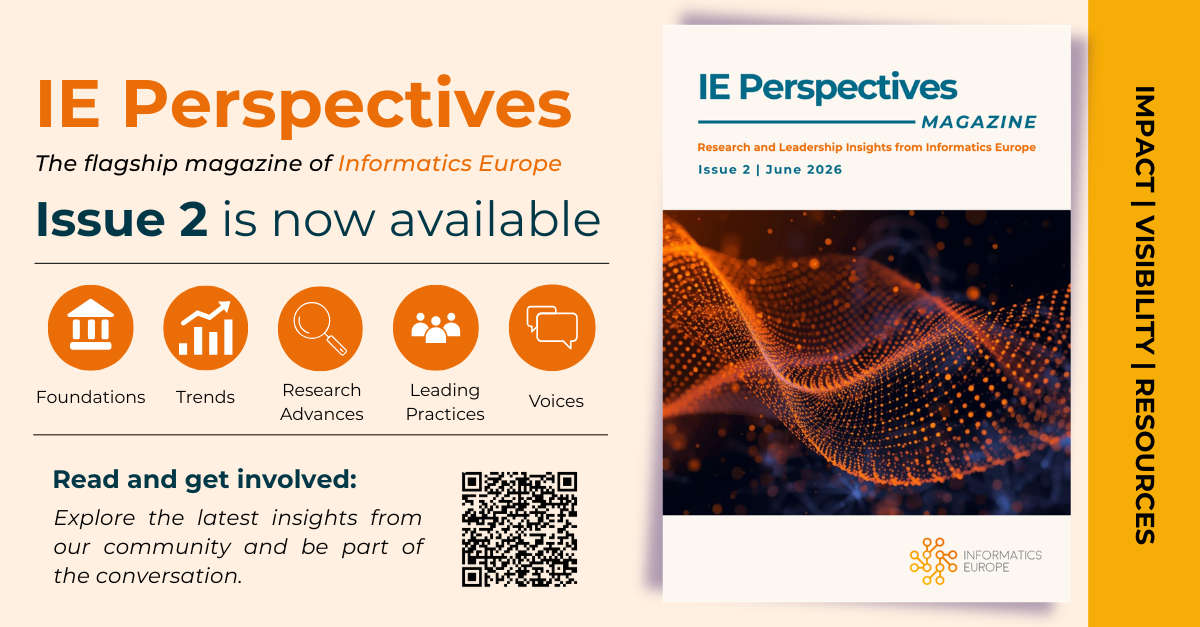
The Second IE Perspectives: Introducing New Section & Co-Editor-in-Chief
Discover the latest IE Perspectives, featuring a new "Foundations" section dedicated to stories of European curiosity-driven Informatics research that has shaped disciplines, technologies and society.
Recommendations
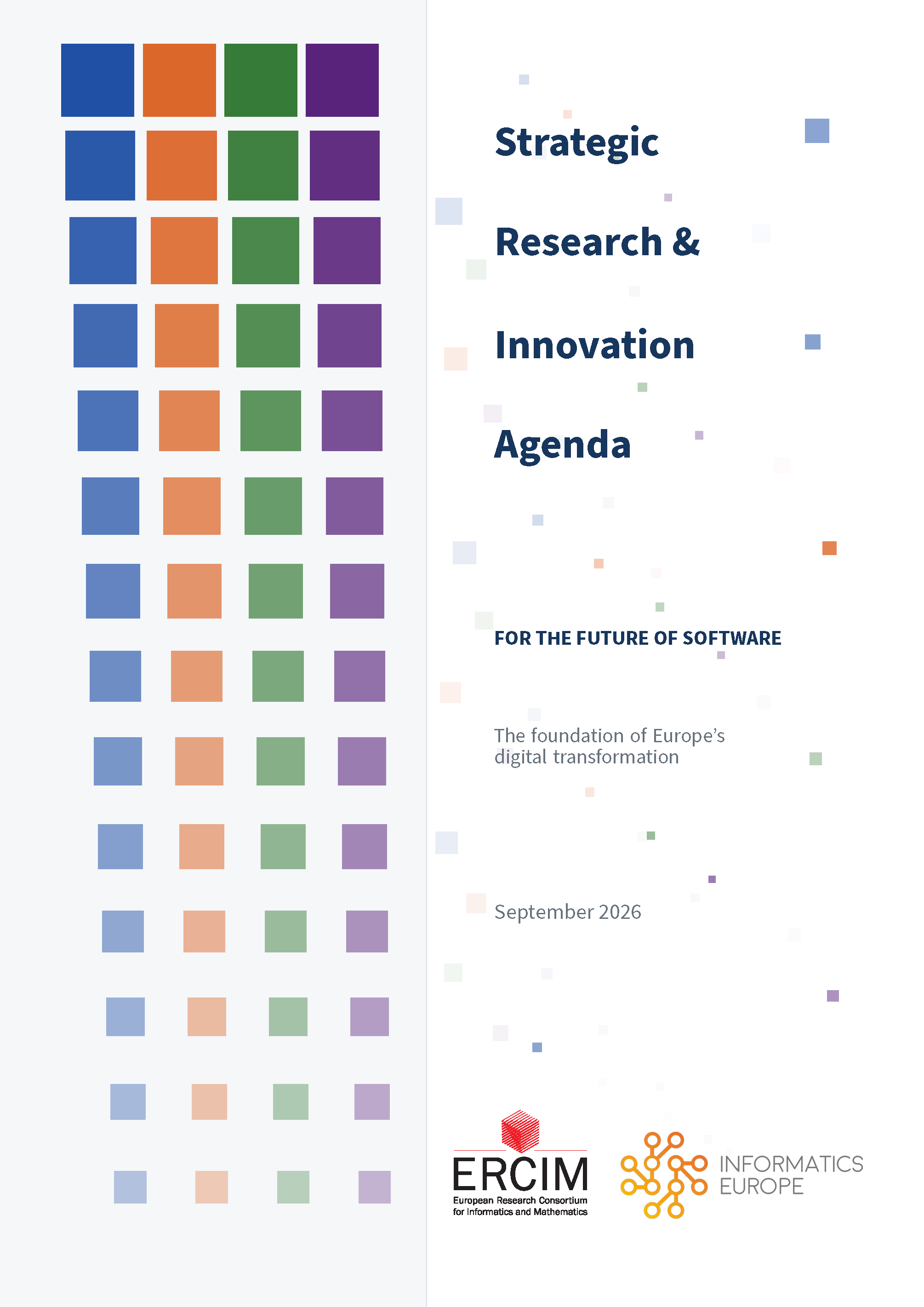
The Strategic Research and Innovation Agenda (SRIA) highlights the critical role of software in digital transformation and sets out a shared vision for strengthening Europe's software capabilities. It identifies key research, innovation, infrastructure, skills and policy priorities to ensure trustworthy, sustainable and sovereign software foundations for Europe’s digital future. Jointly developed by Informatics Europe and ERCIM.
Published in September 2026
The Board of Informatics Europe calls for policies to focus on the sources of harm and stresses measures should be technically feasible, demonstrably effective, and compatible with fundamental rights, preserving Europe’s leadership in balancing innovation, safety, and democratic values.
Published in May 2026
Informatics Europe calls for sustained support for curiosity-driven research and open scientific ecosystems. It emphasises the importance of foundational Informatics research for Europe’s long-term digital sovereignty, innovation capacity, and technological resilience, highlighting its contribution to breakthroughs in distributed systems, programming languages, AI, and beyond.
Published in May 2026
In response to the European Commission’s call for feedback on the proposals for regulations COM(2025)836 and COM(2025)837, which aim to simplify the digital legislative framework and the Digital Omnibus, Informatics Europe provides its recommendations aimed at strengthening AI research, education, and literacy in Europe, while supporting regulatory simplification, scientific sovereignty, and EU competitiveness.
Published in January 2026
Informatics Europe raises serious concerns about the rising costs and inequities of Gold Open Access publishing models. High APCs increasingly create a pay-to-publish system that disadvantages less-funded researchers and institutions. The statement calls for fairer pricing, stronger support for alternative publishing models such as Diamond and Green OA, and collective action to rebalance publishing toward transparency, equity, and academic integrity.
Published in November 2025
The Informatics for All (I4All) coalition welcomes the AI Literacy Framework as a timely and practical guide for teachers, praising its clear domains and useful classroom scenarios. To maximise impact, it recommends clearer terminology, stronger links to digital competence and Informatics, and a more realistic scope for the “Designing AI” domain.
The primary purpose of this book is to serve as a comprehensive guide, translating research into best practices to promote gender inclusivity in informatics. The handbook seeks to empower its readers, providing them with actionable recommendations to bridge the gender gap in informatics. This initiative aims to have an immediate impact on the informatics community, raising awareness and interest through its practical resources, and on the society bringing more women into informatics and technological studies and following career steps. This publication is based upon work from COST Action EUGAIN CA19122 (European Network for Gender Balance in Informatics), supported by COST (European Cooperation in Science and Technology).
Published in August 2025

The document presents a comprehensive set of recommendations for adapting student assessment methods in response to the growing influence of generative AI tools. It stems from the discussions held at “AI in Informatics Education and Professional Practice” workshop during ECSS 2024, organised in collaboration with National Informatics Associations.
Informatics Europe and member National Informatics Associations highlight a critical omission in the European Innovation Council (EIC) Work Programme 2025 - the absence of software as a key enabling technology. Despite being the backbone of digital innovation, software is overlooked, threatening Europe’s competitiveness, autonomy, and ability to tackle key challenges like cybersecurity and digital sustainability. This open letter underscores the urgent need for dedicated funding and public-private collaborations to strengthen Europe’s software research ecosystem. Read the full letter and join us in advocating for software as a core pillar of Europe’s innovation strategy.
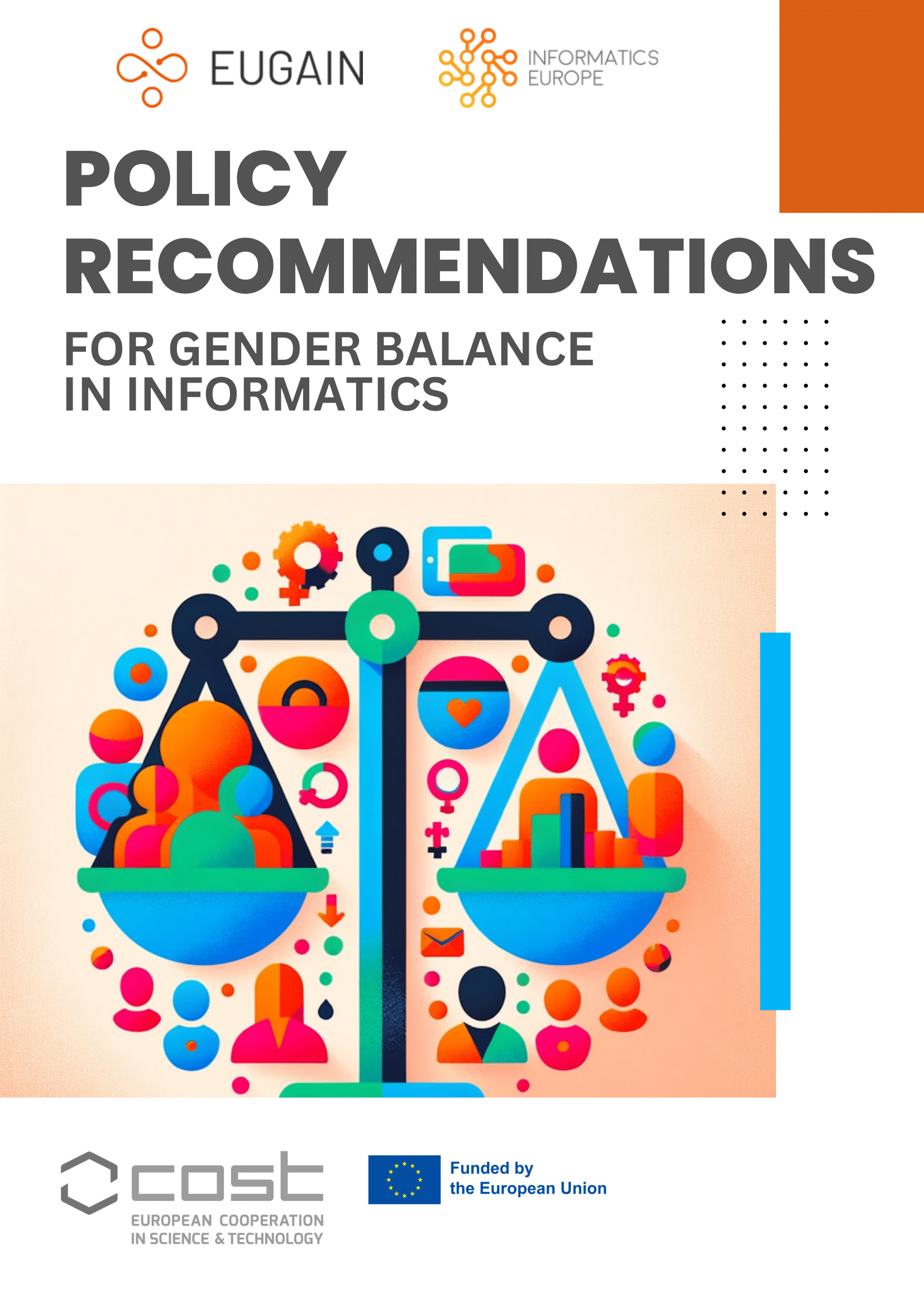
The booklet provides a set of policy recommendations directed to policymakers, at national and European level. It contains concise and practical measures that policymakers can adopt to support gender balance in Informatics. This publication is based upon work from COST Action EUGAIN CA19122 (European Network for Gender Balance in Informatics), supported by COST (European Cooperation in Science and Technology).
In response to the "European Commission Expert Group on the Interim Evaluation of Horizon Europe", Informatics Europe shares its feedback on Horizon Europe and its successor, FP10, emphasizing Informatics as a key priority to advance education, research excellence, and societal impact.
Policy statement prepared by the Board of Directors of Informatics Europe regarding the Cyber Resilience Act (CRA), a European regulatory initiative, aiming at increasing the quality and security standards of IT products.
There is a pressing need for guidelines and best practices for how to manage the impending transition and benefit from disruptive generative AI systems, such as the OpenAI tools ChatGPT and GitHub Copilot. With endorsement by our national informatics association members, IE offers in this short publication the analysis and recommendations to the informatics academic community in the area of informatics education.
This document summarizes the evolution of scientific publication models towards providing open access to research results and makes recommendations from an academic standpoint on future action paths. This document has been endorsed by the National Informatics Associations that are members of Informatics Europe at the time of publishing it.
This document focuses on pedagogical issues and related concerns that should be considered when using the Informatics Reference Framework for School for the development of concrete curricula.
It is, in fact, of utmost importance to have have concrete curricula designed to take into account particular situations and needs in each country, as well as accommodating age and appropriate stages of development of pupils. An informatics curriculum should be designed for all pupils; equality, diversity and inclusion issues are crucial, including the important issue of gender balance.
The Reference Framework was published in February 2022 as a report to support the advancement of informatics as a fundamental discipline for the 21st century. It is a publication of the Informatics for All coalition, of which Informatics Europe is one of the founding members since 2018.
This Reference Framework has been presented to European Commission and further discussed at a stakeholder consultation meeting, on 6th April in Brussels, in preparation for a Council Recommendation on improving the provision of digital skills in education and training.
Feedback provided by Informatics Europe to the European Commission for public consultation on the formulation of a set of principles to promote and uphold EU values in the digital space.
Submitted to the European Commission on 2 Sep 2021.
Feedback provided by Informatics Europe on the Draft Report of the Computing Curricula 2020 (CC2020) task force. CC2020 is a joint project launched by professional computing societies to examine the current curricular guidelines for academic degree programs in Computing and provide a vision for the future of Computing.
Submitted to the CC2020 Steering Committee on 15 June 2020.
Feeback provided by Informatics Europe to the European Commission Public Consultation Questionnaire regarding the White Paper on Artificial Intelligence - A European Approach.
Submitted to the European Commission on 11 June 2020.
Feedback provided by Informatics Europe to the European Commission Online Consultation Questionnaire regarding the European Strategy for Data.
Submitted to the European Commission on 29 May 2020.
Joint Statement on Informatics Research Evaluation issued by Informatics Europe and the undersigned National Informatics Associations.
Policy statement prepared by the Board of Directors of Informatics Europe regarding the use of tracking technology in the efforts to control COVID-19 infection spread.
The paper is one of the outcomes of the Informatics for All Initiative, devised jointly by Informatics Europe and ACM Europe with the purpose of giving due recognition to Informatics as an essential foundational discipline for education in the 21st century. The paper highlights the need for a two-tier strategy for Informatics education at all levels. The first tier takes the form of Informatics as a specialisation, i.e. a fundamental and independent school subject. The second tier would be the integration of Informatics with other school subjects. To achieve this goal, in both tiers research is needed to address what and how to teach (curriculum, methods and tools), and how to educate teachers. Important recommendations on Informatics, teacher issues and research are also provided.
Joint white paper of Informatics Europe Ethics Working Group and ACM Europe on automated decision making (ADM). The white paper reviews the principal implications of the coming widespread adoption of machine-learned automated decision making with a particular emphasis on its technical, ethical, legal, economic, societal and educational ramifications. The authors also give a number of recommendations that policy makers might wish to consider.




 Netlogica